
STATIC LEARNING ROUTE · UNGRADED PRACTICE
Excavation & buried services
Fictional Canal Yard project: a drainage trench runs beside an occupied block and a changing delivery route. You are the workface reviewer. Build an evidence-based recommendation; the site’s competent people retain design and release authority.
Read and practise without JavaScript or WebGL. This route does not record assessed game completion. Open the interactive course.
MISSION 1
Read beneath the surface
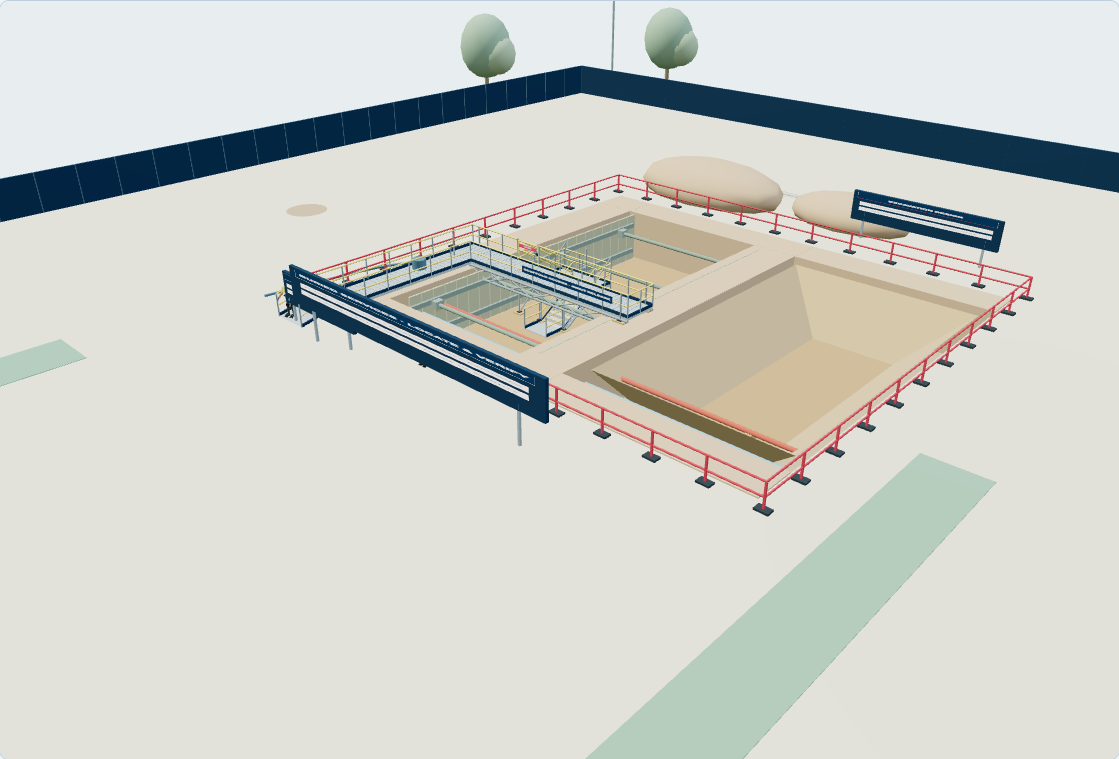

Identify unresolved service information and choose a pre-dig hold.
The dig line crosses coloured service indications, but a crew has only an old plan and expects every cable to be at a standard depth.
Buried services are cables, pipes and ducts below ground that carry electricity, gas, water, communications or other supplies. Excavation, drilling and even shallow ground penetration can damage them. Service planning combines records, competent locating and safe exposure so the actual route informs the work method.
The coloured indications across the dig line represent uncertainty that must be resolved, not permission to excavate between painted marks. A plan can be old, incomplete or schematic; a service may change level, have unrecorded branches or belong to someone other than the expected utility. Nominal UK installation depths, duct colours and surface features are clues only. Previous resurfacing and ground alteration can change cover, and apparently abandoned cables must not be assumed dead.
Use the HSG47 sequence of planning, locating and identifying, then safe excavation as connected activities. Obtain relevant owners’ information, survey competently with suitable locating equipment and understand what the instrument can and cannot detect. Repeat locating as work progresses and expose services by an appropriate controlled method to confirm their actual position and identity. Agree necessary isolation or owner involvement before the work, protect exposed services and define a stop if records, signals or ground evidence disagree. Hand tools or vacuum techniques also need a suitable method; neither is automatically harmless near vulnerable services.
People and harm
- Excavation workers can suffer burns, electric shock or harm from released contents.
- Plant operators may damage services without seeing the contact from the cab.
- Neighbours and other site teams may lose essential supplies or face a spreading release.
Controls
- Consider whether the design can avoid the service corridor, and obtain relevant utility and site information before ground penetration.
- Use trained locating personnel and suitable checked equipment, interpreting limitations and repeating surveys as the excavation develops.
- Confirm actual service position and identity through an agreed safe exposure method and necessary owner or isolation arrangements.
- Mark and protect verified services, control digging equipment and stop on unknown ducts, unexpected signals or discrepancies rather than guessing.
Verify
- Ask the team to explain what is known, what remains uncertain and why the locator may miss or misidentify a service.
- Compare current records, survey results and appropriate trial exposures along the actual route; never use a nominal depth as clearance.
- Check the authorised digging limits, equipment and response to a strike or unexpected service, including how people withdraw and obtain help.
Practise: Build a defensible pre-dig evidence pack
Review the model reasoning after trying it yourself
- Current owners’ plans and a competent locator survey cover the proposed line. — Useful evidence to reconcile
- An unexplained signal crosses the planned cut. — Unresolved hold point
- The crew assumes the cable must be below a standard depth. — Unreliable reassurance
- The latest drawing excludes the old yard extension. — Unresolved hold point
- A previous worker says there have never been any strikes. — Unreliable reassurance
- Appropriate trial exposure confirms position along relevant parts of the agreed route. — Useful evidence to reconcile
Decision check
A plan shows an electrical cable deeper than the planned shallow cut. The locator gives an unclear signal and the crew says the published typical depth proves it cannot be hit. What is the correct response to this service-depth assumption?
- Continue because a shallow cut cannot reach a normally installed cable.
- Use an excavator carefully because the unclear locator signal means the cable is probably absent.
- Hold the cut, resolve the survey discrepancy and establish actual services and a safe method before release.
Decision feedback
This follows the combined planning, locating and safe-exposure approach. Unknown location or identity is a reason to stop and reassess, not to average the evidence.
Transfer: Apply service verification to piling, drilling, fencing stakes and landscaping as well as trenches; any ground penetration can damage a hidden utility.
Source guidance
MISSION 2
Stay inside the protection
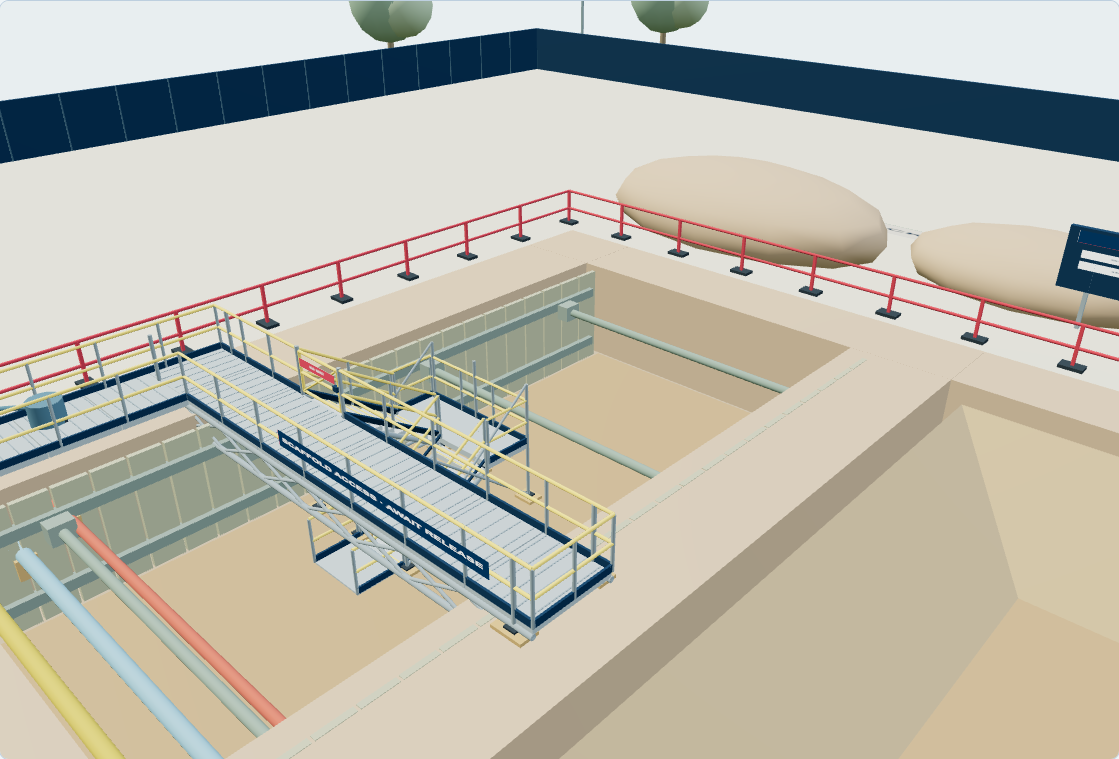
Explain collapse and falling-material mechanisms and identify exposed people.
The model shows a protected section. For the next dig stage, a worker proposes entering beyond that protection while the additional support is still to be installed.
A trench opens ground so people can install or maintain services and foundations. Removing soil changes its support and can expose people to collapse. Shoring, protective trench systems or site-specific slopes manage that risk only within their selected design, installation and working arrangement.
The model shows a protected trench section. The proposed next step would send a worker beyond that installed protection before additional support is ready. The short distance and brief duration do not reduce the weight of ground that could move. Ground can fail without useful warning, and a person may be buried, crushed or trapped before they can retreat. A trench box is a designed protective system, not proof that the whole excavation or every location beside it is supported.
At design and planning stage, consider avoiding the open excavation or reducing the need for people to enter. Where entry remains, select support or a site-specific batter using ground, water, depth, adjacent structures, surcharge, traffic and the intended installation sequence. Have the necessary equipment ready and install it using the competent method from safe positions. Check the system’s limits, ends, clearances and interfaces rather than improvising extensions. There is no universal shallow-depth exemption or safe slope for all ground. Keep the entry hold until the actual working position and safe access are protected and competently accepted.
People and harm
- Entrants can be buried or crushed where the excavation extends beyond installed protection.
- People installing or moving support may be exposed during an unsafe sequence.
- Nearby workers or would-be rescuers can be harmed by further ground movement.
Controls
- Consider trenchless or other designs that remove entry, then plan the minimum necessary open excavation and work positions.
- Select suitable support or a site-specific designed batter for actual ground, water, adjacent structures, loading and work sequence.
- Install the required protection using a competent planned sequence and suitable equipment before anyone enters the exposed area.
- Maintain controlled access, edge protection and change triggers; stop if support limits, ground condition or the planned arrangement are uncertain.
Verify
- Check the exact work position lies within the accepted protective arrangement, including ends, transitions and access points.
- Compare installed support, equipment limits and sequence with current ground, water, nearby loads and the design or competent specification.
- Ask the crew to identify the entry hold, who releases it and what changes would require them to withdraw and obtain reassessment.
Practise: Connect the failure with its consequence
Review the model reasoning after trying it yourself
- An entrant works beyond the installed protective system. — Ground/support failure
- Spoil is tipped towards the excavation lip. — Falling or moving material
- The stair exit is obstructed by a delivery. — Unsafe entry or escape
- Ground penetration proceeds across an unexplained utility signal. — Damaged service
Decision check
A worker needs to connect a pipe just beyond the trench box. The next support section has not arrived and the task is estimated to take two minutes. How should the supervisor decide on this short entry beyond the protection?
- Keep people out and establish the designed installation and protected working position before entry.
- Allow one experienced worker in while everyone watches the sides.
- Allow entry because a nearby trench box makes the entire trench safe.
Decision feedback
Exposure can be fatal on the first moment of entry. The task duration does not substitute for protection at the actual work position.
Transfer: Check the extent of protection for every staged operation: roof edge, machine guard, excavation support and exclusion zone must cover the real exposure.
Source guidance
MISSION 3
Trace the safe way in
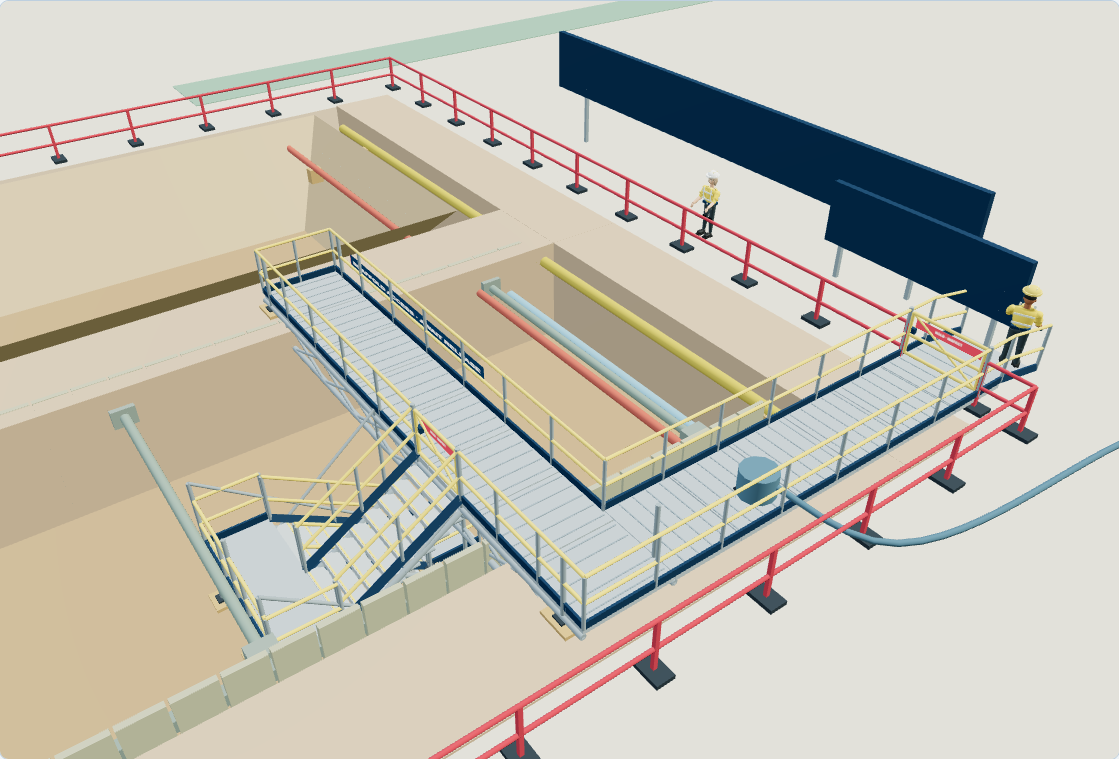
Verify the complete entry and escape route before recommending release.
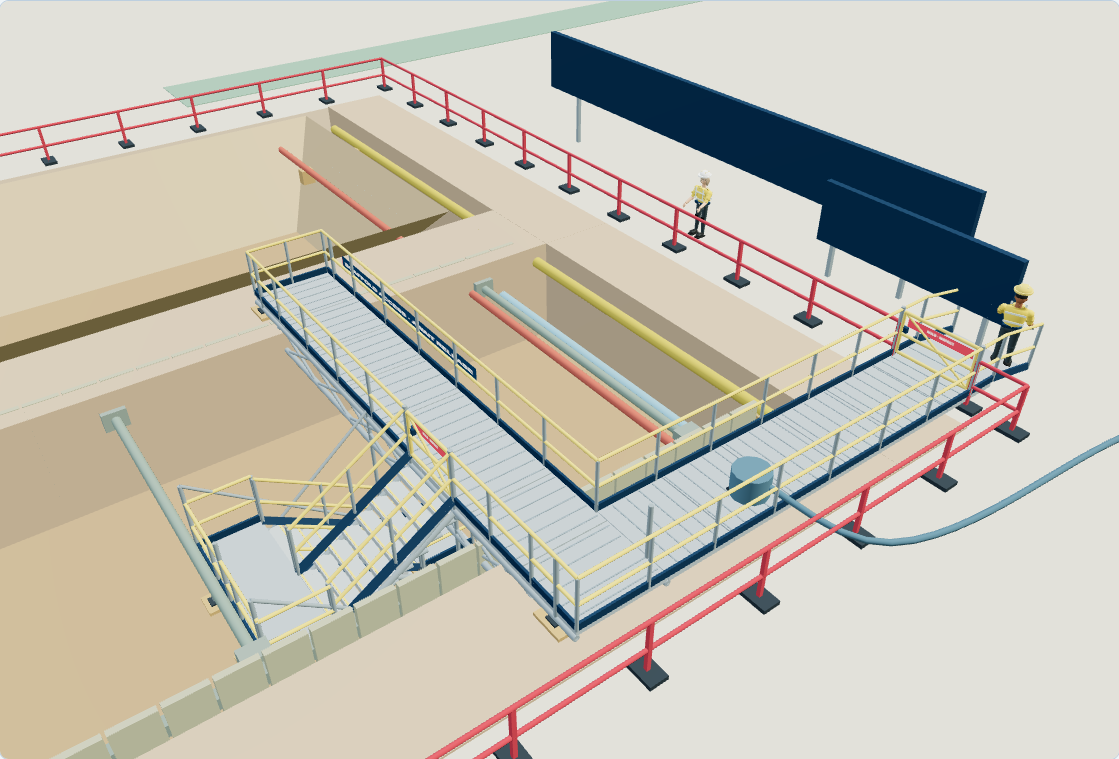
The scene now has a framed scaffold crossing, guarded approach and two-flight stair tower. Both access gates are closed: the route has not been released after rain and changed excavation arrangements.
The framed scaffold crossing and two-flight stair tower provide a protected route into and out of the excavation. Their supports carry people across changing ground. The approach, decks, gates, stairs and bottom landing must work together, and the closed gates currently show that entry has not been released.
The improved scene has a framed scaffold crossing, guarded approach and two-flight stair tower into the excavation. Both gates are closed because rain and changed excavation arrangements have not yet been checked. The closed route is a hold point, not a puzzle to bypass. A person needs a continuous safe journey: firm approach, supported crossing, secure deck, stair-head gate, handrailed flights, bottom landing and an unobstructed route back out.
The access loads are carried through bearings and ground that may also be affected by excavation changes. A familiar scaffold shape or displayed tag cannot establish its present stability. Competent design or a suitable recognised arrangement must cover the span, supports, loads and interfaces with excavation protection. Guardrails, toe boards, secured non-slip treads, suitable gates, light and headroom protect different parts of the journey. Coordinate scaffold and excavation inspections and rectify defects before release. Gates must control unauthorised entry without trapping people once the work area is occupied; maintain exit and planned rescue access throughout use.
People and harm
- Entrants can fall from a defective crossing, open edge or insecure stair tread.
- Workers below may be trapped if the return route becomes obstructed.
- People installing or inspecting access can be exposed if ground or scaffold bearings move.
Controls
- Keep the current access hold and people outside until competent excavation and scaffold checks resolve the changed conditions.
- Use the accepted scaffold and temporary-works arrangement for actual span, ground, bearings, support interfaces and expected loads.
- Maintain secured decks, effective edge protection, self-closing gates, handrailed stairs, lighting and clear landings throughout the route.
- Separate access from plant, communicate authorised release and keep outward escape and necessary rescue access usable whenever people enter.
Verify
- Trace the complete route from firm ground across the guarded crossing, through the gate, down both flights and onto the bottom landing.
- Check bearings, ties or other designed stability features, deck and tread fixings, gate operation, headroom and clear exit against the accepted arrangement.
- Confirm current competent inspection evidence and closed defects; ask the crew who released entry and when changing conditions require withdrawal.
Practise: Release the access route without bypassing the hold
Review the model reasoning after trying it yourself
- Keep the gates closed to entry and keep people outside the affected work area.
- Arrange competent checks of the changed excavation and the scaffold crossing/stair arrangement.
- Have defects corrected and verify the actual support, guarded route, gates and clear exit.
- Confirm the authorised entry release and brief everyone on limits and further stop triggers.
Decision check
The stair tower looks complete and carries an inspection tag, but both gates remain closed after overnight rain. A worker suggests climbing around the gate to begin pipework. What is the safe decision at this gated scaffold access hold?
- Keep the crew outside, obtain current competent checks of excavation and access, resolve defects and communicate release.
- Climb the gate carefully because the stairs are safer than the previous route.
- Open entry but lock both gates once everyone is below.
Decision feedback
The improved physical route still depends on current bearings, support and installed protection. A tag or complete-looking staircase cannot override a controlled hold.
Transfer: Walk the full route for temporary bridges, scaffold loading access and emergency exits, checking its structure, interfaces and outward escape.
Source guidance
MISSION 4
Water changes the job
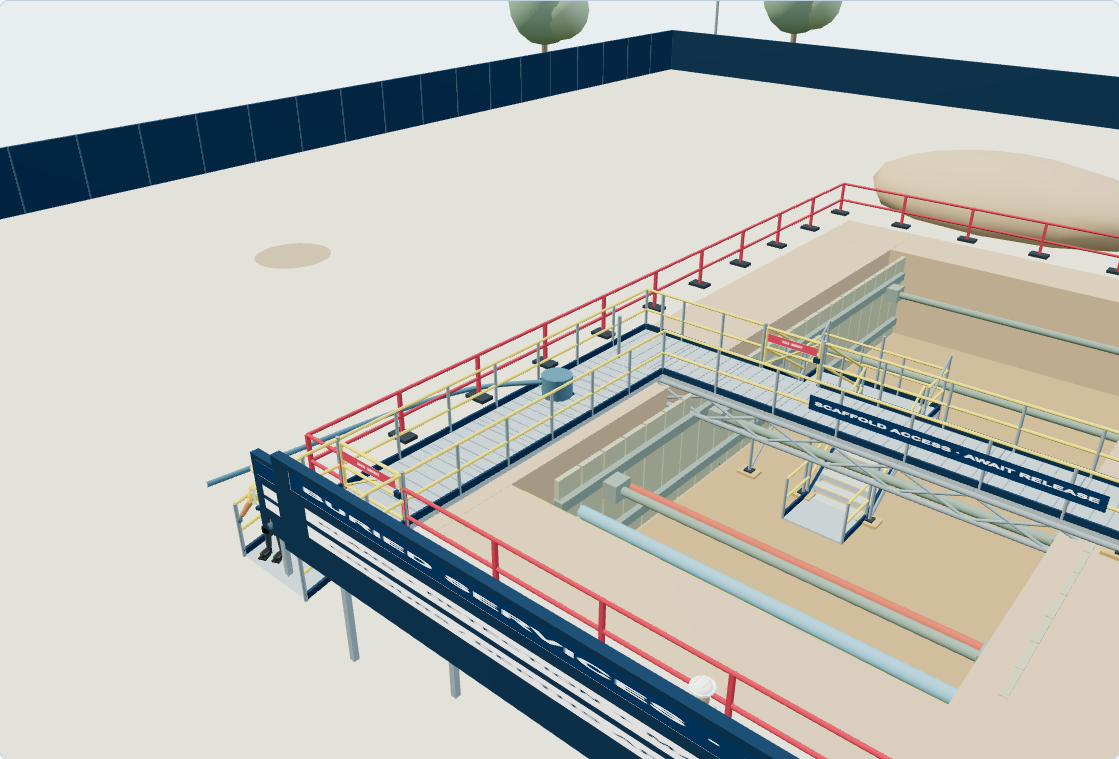
Recognise water and atmospheric changes and select reassessment evidence.
Water accumulates at the trench base; a fuel-powered pump is being considered beside a deep low point.
Dewatering removes or controls water so excavation work can take place within the accepted ground arrangement. Pumps, discharge and changing groundwater affect that system. Using combustion equipment can also introduce harmful exhaust, linking the visible water problem to air quality, stability and possible confined-space risks.
Water is collecting at the trench base, and the team is considering a fuel-powered pump near a deep low point. Pumping may appear to solve the visible problem while exhaust introduces an invisible one. Combustion gases can accumulate in low or poorly ventilated areas. Ground contamination or connected systems may add other hazardous atmospheres; open sky alone does not prove good air or prevent an excavation meeting the confined-space definition where its enclosed nature creates a reasonably foreseeable specified serious risk.
Assess the source and likely inflow, support condition, groundwater effects and planned discharge before entry or dewatering. Consider equipment that avoids combustion near the excavation and ensure any exhaust cannot reach workers. Pumping can change ground stability, so integrate the method with the temporary-works and geotechnical decisions rather than treating it as a separate housekeeping task. Where confined-space risks apply, avoid entry if possible and establish the suitable safe system, atmospheric controls and rescue arrangements before entry. Testing needs appropriate equipment, competence and an assessment of where and when to sample; a single favourable reading is not ongoing protection.
People and harm
- Entrants may be overcome by exhaust or another hazardous atmosphere in a low area.
- Workers can be trapped by rising water or ground affected by pumping.
- Other people may be exposed when they attempt an unplanned rescue into the excavation.
Controls
- Keep people out while water source, inflow, support condition and potential atmospheric risks are competently assessed.
- Plan dewatering with excavation stability, suitable equipment and a controlled discharge route; avoid combustion exhaust reaching low areas or access.
- Determine whether confined-space risks apply and establish the relevant avoidance, safe-system, atmosphere and rescue measures before dependent entry.
- Monitor changing inflow, weather, ground and equipment conditions, with clear withdrawal triggers and arrangements for failure or sudden flooding.
Verify
- Check pump location, power source, hoses and actual exhaust path against worker positions, air movement and nearby openings.
- Compare stability and water levels before and after pumping and confirm the discharge route meets the applicable drainage and pollution arrangements.
- Where atmospheric controls are required, verify competent sampling, suitable checked instruments, ongoing arrangements and a practicable rescue plan.
Practise: Choose the evidence needed after water enters the trench
Review the model reasoning after trying it yourself
- Competent review of water effects on ground, support and adjacent structures. — Select: Dewatering can change ground and loading; stability needs reassessment.
- A petrol pump positioned at the low point beside entrants. — Leave unselected: Combustion exhaust may accumulate; keep entry on hold and plan suitable pumping and atmospheric controls.
- A suitable dewatering and discharge arrangement that does not undermine the support. — Select: Removing water is a planned operation with stability and environmental interfaces.
- A clear assessment of atmospheric risks and any confined-space requirements. — Select: Excavations are not automatically confined spaces, but specified risks can make those arrangements necessary.
- Yesterday’s inspection signature, with today’s date added. — Leave unselected: A changed date cannot establish today’s conditions.
Decision check
A trench is open to the sky but deep enough for poor air movement. A petrol pump is placed at its lip, and a worker says a quick gas test yesterday was clear. What should determine whether this dewatering and entry arrangement can proceed?
- The open sky, because confined-space and exhaust risks only exist inside fully enclosed tanks.
- Current assessment of exhaust, inflow, stability and any confined-space risks, with suitable controls and rescue before entry.
- Yesterday’s test, because gases cannot change until the trench is backfilled.
Decision feedback
This addresses the whole system. Moving water without creating new exposure, and keeping conditions under review, matter more than a past reading.
Transfer: Use the same secondary-risk check for generators near buildings, ventilation changes and cleaning methods in pits or chambers.
Source guidance
MISSION 5
Earn the restart decision
Compare current conditions with records and justify a hold or restart recommendation.
The signed inspection predates overnight rain, altered support and a new vehicle route. The scaffold crossing and stair access are visibly gated off, awaiting checks of the changed excavation and access arrangement.
An excavation inspection checks the current ground and precautions so the next work period is based on observed conditions. The report records findings and actions. Changes such as rain, altered support or a new vehicle route require fresh consideration; the scaffold access also has its own inspection needs.
The signed report predates rain, altered support and a new vehicle route. The gated scaffold crossing and stair access remain closed while those changes are checked. The inspection signature is not wrong because conditions later changed; it is simply insufficient evidence for today’s decision. The competent person must understand the current excavation risks and be able to identify when supports, ground, loading, water or access are no longer suitable.
Excavation inspections are needed at the start of each shift and after relevant events affecting strength or stability or falls of material. Scaffold access has its own inspection scope, including before first use, at intervals no longer than seven days for the construction scaffold arrangement described here, and after circumstances liable to jeopardise safety. Coordinate the checks because excavation movement can affect scaffold bearings, but do not assume one inspection label covers every system. Record relevant findings and corrective actions, inform those responsible and withhold affected work until defects are remedied. A tag helps communicate status; the actual condition, required reports and closed actions support the release.
People and harm
- Entrants may rely on an inspection made before significant conditions changed.
- Scaffold users can be exposed when excavation movement affects crossing or stair bearings.
- Supervisors may release an unsafe area if records and physical conditions are confused.
Controls
- Maintain the entry hold until a competent person checks today’s excavation, support and relevant changes rather than renewing a date.
- Coordinate required excavation and scaffold inspections, including the effects of weather, ground loading and support changes on access bearings.
- Record findings, immediate controls and required corrective actions clearly, and give someone authority to withhold access until resolved.
- Communicate the accepted current status and stop triggers to the crew, keeping safe exit available during any occupied work period.
Verify
- Compare the report’s location, scope, time and conditions with today’s face, water, support, vehicle route and adjacent structures.
- Physically inspect the guarded crossing, secured deck, both gates, handrailed stair flights and clear bottom landing and return path.
- Confirm defects are closed with evidence and the crew understands who released entry; distinguish a status tag from the required inspection records.
Practise: The next shift wants access
Review the model reasoning after trying it yourself
- Fictional report EX-17 covers yesterday’s supported trench. Overnight rain and a new lorry route are recorded in the handover. — Maintain the hold and arrange an inspection of current conditions.
- A competent inspection identifies movement at a crossing bearing. A proposed delivery also places load near the edge. — Correct the bearing and loading arrangement through competent planning, then verify implementation.
- Corrective work is documented, but the crew has not been told the route limits and the return path is obstructed. — Keep the hold until escape access and the briefing are confirmed by the responsible person.
Decision check
The foreperson offers to update yesterday’s report date after rain so the team can open the gated stair route. The scaffold tag is still displayed. What makes a valid current release for this changed excavation and access?
- A new date on the existing report if no worker has yet reported an injury.
- The scaffold tag alone because it applies to both the trench and every supporting ground condition.
- Competent current inspection, necessary access checks, satisfactory defect closure and a clearly communicated release.
Decision feedback
This ties records to the actual installation and today’s hazards. The controlled hold remains until both excavation and access are suitable.
Transfer: Treat inspection evidence as time- and condition-specific for cranes, working platforms, scaffolds and machine safeguards as well as trenches.
Source guidance
Take it to work
Pre-task checklist — Identify a check that cannot yet be confirmed and explain the hold point.
Audit the evidence — Compare the fictional records with the workface; what evidence would close the gap?
Risk assessment library — Search “Supported trench excavation”. Compare scope and controls with this task. No item deep-link is assumed.
Build a task briefing — Search “Excavation stability and access”. Add this task’s stop trigger, reporting route and a comprehension question.
Use a real workplace resource only within your authorisation. This course uses fictional evidence and does not submit operating records.
Independent selected CN1 topic study, Great Britain baseline. Underlying source review limitations remain. Competent technical/site review before adoption; no NEBOSH approval or qualification award claimed.