Optional presentation practice. Choices and model launches do not write LMS grades, completion or certificates. This extension takes additional learning time.
1. Preventing workplace violence and aggression Prevent unsafe contact through work design and give workers a reliable way to withdraw and summon help.
2. Choose a learning route 3. Recognise abuse and threats as work risks Identify harm beyond visible physical injury.
Work-related violence includes abuse, threats and assault connected with the work. It can occur face to face, over a telephone or online. Physical injury is one possible outcome; fear, distress and other psychological effects can occur without a visible wound.
Work-related violence includes abuse, threats and assault connected with the work. It can occur face to face, over a telephone or online. Physical injury is one possible outcome; fear, distress and other psychological effects can occur without a visible wound. Do not require an injury before a worker can report.
Look at the actual interaction and work arrangement. Refusing service, handling valuables, isolated visits, queues or late closing can create different risks. Do not use a diagnosis, community or protected characteristic as a proxy for dangerous behaviour. Workers can report observable conduct and circumstances without deciding the other person’s intent or health. Recognising the risk allows prevention and support; it does not require workers to accept aggression as an ordinary part of their job.
4. The fictional case and decision boundary Identify harm beyond visible physical injury.
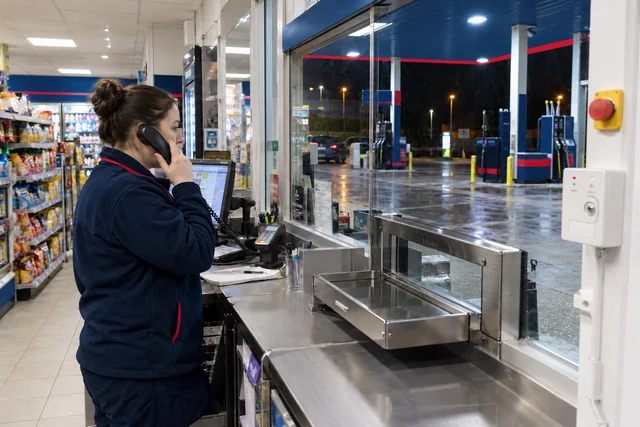
Task and setting Fictional case: a service counter faces long queues and disputed refusals. The late worker sits behind furniture that blocks withdrawal, an alarm reaches nobody after hours and abuse is dismissed because no physical injury occurred. Decision to practise The late counter assessment copies an office template. It does not examine refusal disputes, queue pressure, the blocked staff exit or who responds after security leaves. Evidence to consider Find triggers, escape and support without stereotyping.
5. Decision 1: interpret the evidence The late counter assessment copies an office template. It does not examine refusal disputes, queue pressure, the blocked staff exit or who responds after security leaves.
What should review focus on?
A generic statement that some customers are difficult. Only the overall annual incident total. The actual late interaction, triggers, withdrawal and reachable response. (supported response) Task and setting determine whether the proposed controls can work.
6. Reconsider the evidence What should review focus on?
A generic statement that some customers are difficult. Only the overall annual incident total. The actual late interaction, triggers, withdrawal and reachable response. (supported response) Task and setting determine whether the proposed controls can work.
7. Decision 1 explained Task and setting determine whether the proposed controls can work.
Find triggers, escape and support without stereotyping.
8. Assess the interaction and setting Find triggers, escape and support without stereotyping.
Assess the particular task: who interacts, what can trigger conflict, where people stand, how withdrawal works and who responds. Consult workers on the busiest, quietest and least-supported periods. Reports, near misses, complaints and alarm use can reveal issues that a daytime office inspection misses.
Assess the particular task: who interacts, what can trigger conflict, where people stand, how withdrawal works and who responds. Consult workers on the busiest, quietest and least-supported periods. Reports, near misses, complaints and alarm use can reveal issues that a daytime office inspection misses.
A routine counter service differs from a home visit, cash close or enforcement interview. Consider new starters, agency staff and people whose communication or mobility changes the practical escape arrangement. Base decisions on relevant facts and observable behaviour, not labels about a person or group. Separate routine service, foreseeable escalation and immediate emergency. Record the controls and review triggers so a changed staffing level or blocked exit leads to a new decision rather than blind use of a generic assessment.
9. Identify the prevention function Sort the cards. Drag each card, or use its labelled category selector.
Sort the cards. Drag each card, or use its labelled category selector.
Change furniture so staff can withdraw safely — Service and layout. Address trapping at source. Provide monitored help during late opening — Staffing and response. Cover must match actual exposure. Review threats and near misses without demanding injury — Reporting and learning. Signals can reveal weak controls early. 10. Compare the reasoning: Identify the prevention function Change furniture so staff can withdraw safely Service and layout Provide monitored help during late opening Staffing and response Review threats and near misses without demanding injury Reporting and learning
Sort the cards. Drag each card, or use its labelled category selector.
Change furniture so staff can withdraw safely — Service and layout. Address trapping at source. Provide monitored help during late opening — Staffing and response. Cover must match actual exposure. Review threats and near misses without demanding injury — Reporting and learning. Signals can reveal weak controls early. 11. Design out trapping and avoidable conflict Prioritise service, environment and staffing controls.
First avoid or redesign unnecessary conflict-prone contact where a safer service channel works. Clear information, realistic waiting arrangements and a workable refusal process can reduce preventable frustration. Consider suitable separation, visibility, staff space, accessible exits and support that matches the foreseeable event.
First avoid or redesign unnecessary conflict-prone contact where a safer service channel works. Clear information, realistic waiting arrangements and a workable refusal process can reduce preventable frustration. Consider suitable separation, visibility, staff space, accessible exits and support that matches the foreseeable event.
Workers should not have to move towards a threat to reach an alarm or exit. A second person is useful only if present, capable and assigned a safe role. Personal communication skills and devices support these controls; they cannot repair a trapping layout, impossible workload or unmonitored response. Keep dignity and accessibility in the design so one protective measure does not create another hazard. Have the responsible assessment determine proportionate arrangements rather than treat a generic barrier or script as universal protection.
Open the related fictional model case
12. Decision 2: choose the response The counter alarm lights up when pressed, but its receiving desk closes before the late shift. Cameras record the area and management calls that equivalent to live support.
What must be resolved?
A monitored and achievable response for the actual operating hours. (supported response) Only whether footage is sharp enough. Nothing because the alarm button illuminates. A device function or later evidence does not establish timely safe assistance.
13. Compare the consequences What must be resolved?
A monitored and achievable response for the actual operating hours. (supported response) Only whether footage is sharp enough. Nothing because the alarm button illuminates. A device function or later evidence does not establish timely safe assistance.
14. Decision 2 explained A device function or later evidence does not establish timely safe assistance.
Connect devices and information to a reliable response.
15. Test who answers and what follows Connect devices and information to a reliable response.
An alarm, radio, access-control system or camera has a defined function and limits. Check the actual conditions: can the worker use it safely, who receives the signal, what do they do and is help available at the relevant time?
An alarm, radio, access-control system or camera has a defined function and limits. Check the actual conditions: can the worker use it safely, who receives the signal, what do they do and is help available at the relevant time? Cameras may preserve evidence but cannot release an unsafe lone task.
Agree handover of material safety information with appropriate privacy controls. Share the facts needed for a work decision, not rumours or unnecessary clinical detail. Define cover, power or signal failure and escalation to emergency services. Test end to end, including breaks and closing periods. A lit button or clear recording proves only part of the system. If the response cannot protect the planned interaction, change or postpone it rather than rely on an unachievable promise of help.
16. Select safe response principles Choose every supported action. Leave the unsuitable actions unselected.
Choose every supported action. Leave the unsuitable actions unselected.
Leave an unsafe interaction without waiting for a script to fail — Supported action. Withdrawal is not conditional on proving de-escalation ineffective. Use an alarm only when it can be activated safely — Supported action. Do not approach danger to reach it. Pursue a threatening person to collect better evidence — Leave unselected. Life and safety come before property or evidence. 17. Compare the reasoning: Select safe response principles Leave an unsafe interaction without waiting for a script to fail Supported action Use an alarm only when it can be activated safely Supported action Pursue a threatening person to collect better evidence Leave unselected
Choose every supported action. Leave the unsuitable actions unselected.
Leave an unsafe interaction without waiting for a script to fail — Supported action. Withdrawal is not conditional on proving de-escalation ineffective. Use an alarm only when it can be activated safely — Supported action. Do not approach danger to reach it. Pursue a threatening person to collect better evidence — Leave unselected. Life and safety come before property or evidence. 18. Withdraw before danger escalates Distinguish safe communication from an obligation to confront.
If a worker feels unsafe, controls fail or violence may occur, use the agreed withdrawal and help route. Do not require permission or a failed attempt at calming the person before leaving danger.
If a worker feels unsafe, controls fail or violence may occur, use the agreed withdrawal and help route. Do not require permission or a failed attempt at calming the person before leaving danger. Call 999 where someone is in immediate danger or a crime is in progress, using the local emergency arrangement.
Calm communication can be a trained option while engagement remains safe, but it is not a duty to stay, negotiate with a weapon or recover property. Do not pursue, confront, resist robbery or collect evidence while danger continues. Use an alarm only if safe to activate. Specialist security or physical intervention requires separate lawful role-specific authorisation and competence. This course provides neither that authority nor techniques; life and safe withdrawal take priority over service, cash and evidence.
Open the related fictional model case
19. Decision 3: apply and review The late worker reports threats and an unusable exit. The first review asks why they were not more resilient and closes the matter after recommending another customer-service course.
What should review address?
Whether the incident can be excluded because nobody was hit. The task conditions, failed controls, suitable support and verified preventive changes. (supported response) Only the worker’s willingness to tolerate threats. A non-blaming system response learns from the arrangement and supports the worker.
20. Revisit the control or support boundary What should review address?
Whether the incident can be excluded because nobody was hit. The task conditions, failed controls, suitable support and verified preventive changes. (supported response) Only the worker’s willingness to tolerate threats. A non-blaming system response learns from the arrangement and supports the worker.
21. Decision 3 explained A non-blaming system response learns from the arrangement and supports the worker.
Connect non-blaming response with practical prevention.
22. Support reporting and change the work Connect non-blaming response with practical prevention.
After immediate safety and necessary help, use the workplace reporting and support routes. Record the relevant facts, context and uncertainty without blame. Preserve evidence only through safe authorised arrangements, with personal information protected.
After immediate safety and necessary help, use the workplace reporting and support routes. Record the relevant facts, context and uncertainty without blame. Preserve evidence only through safe authorised arrangements, with personal information protected. Support needs and any clinical assessment belong with appropriate services rather than a manager diagnosing trauma.
Review the task and control failures: queue information, staffing, layout, alarm response or repeated refusal disputes. A low report count can mean under-reporting, and asking workers to be tougher does not correct exposure. Agree owners and verify changes in the relevant operating period. The optional exercise follows a fictional late counter from service design to withdrawal and reporting; it does not submit an allegation, decide legal reporting or authorise confrontation or investigation.
23. Review the late counter Make a decision at each point and use the feedback before continuing.
Make a decision at each point and use the feedback before continuing.
Stage 1: What is the planning decision? The normal support desk is closed and the staff exit is obstructed.
Resolve or change the interaction before relying on the failed controls. — Supported choice. A generic assessment cannot release unsafe actual conditions. Proceed because cameras record incidents. — Reconsider. A recording does not provide an escape or live response. Tell the worker to be more confident. — Reconsider. Confidence cannot remove trapping or absent help. Stage 2: What should the supervisor do? The worker reports a threat but no physical injury.
Reject the report until an assault occurs. — Reconsider. Threats are relevant safety information. Support the worker and review relevant facts and controls through the proper route. — Supported choice. Learn without blame and preserve appropriate boundaries. Publish personal details in a team chat. — Reconsider. Share only needed information through suitable privacy arrangements. 24. Compare the reasoning: Review the late counter What is the planning decision? Resolve or change the interaction before relying on the failed controls. What should the supervisor do? Support the worker and review relevant facts and controls through the proper route.
Make a decision at each point and use the feedback before continuing.
Stage 1: What is the planning decision? The normal support desk is closed and the staff exit is obstructed.
Resolve or change the interaction before relying on the failed controls. — Supported choice. A generic assessment cannot release unsafe actual conditions. Proceed because cameras record incidents. — Reconsider. A recording does not provide an escape or live response. Tell the worker to be more confident. — Reconsider. Confidence cannot remove trapping or absent help. Stage 2: What should the supervisor do? The worker reports a threat but no physical injury.
Reject the report until an assault occurs. — Reconsider. Threats are relevant safety information. Support the worker and review relevant facts and controls through the proper route. — Supported choice. Learn without blame and preserve appropriate boundaries. Publish personal details in a team chat. — Reconsider. Share only needed information through suitable privacy arrangements. 25. Apply the lesson in a fictional workplace A customer is shouting while the receptionist has no obvious way to call for help.
Connect non-blaming response with practical prevention.
Open the related fictional model case
26. Take the learning into a fictional task Connect non-blaming response with practical prevention.
Task and people Fictional case: a service counter faces long queues and disputed refusals. The late worker sits behind furniture that blocks withdrawal, an alarm reaches nobody after hours and abuse is dismissed because no physical injury occurred. Control or support Connect devices and information to a reliable response. Check and review Connect non-blaming response with practical prevention.
27. Explain your reasoning without the answer sheet Use the supplied case facts. Explain why a choice fits the task and what remains uncertain. A points total or completed form cannot replace the required control or support arrangement.
28. Continue with the full course and Knowledge Hub Use the original course for its six lessons, required activities, final assessment and saved record. This optional companion does not change course grades, completion or certificates.
Enable JavaScript for interactive practice, or use the PowerPoint and its notes.


 All 50 presentations