SHARE Knowledge Hub
Level 3 Certificate in Assessing Vocational Achievement
The Level 3 Certificate in Assessing Vocational Achievement (CAVA) develops the skills to assess occupational competence at work and vocational learning in other settings. It is a useful benchmark for workplace assessors in health, safety and risk, alongside current subject expertise and the assessment rules for the work or qualification concerned.
Understanding Level 3 Certificate in Assessing Vocational Achievement
The Level 3 Certificate in Assessing Vocational Achievement (CAVA) develops the skills to assess occupational competence at work and vocational learning in other settings. It is a useful benchmark for workplace assessors in health, safety and risk, alongside current subject expertise and the assessment rules for the work or qualification concerned.
Why this matters at work
Record sufficient detail to support the decision: location/context, task, relevant standard, the observed actions and outcomes, questions/responses, evidence identifiers and limitations. If a safety intervention is required, record the factual event and its assessment consequence under the scheme rules, then arrange appropriate learning or another opportunity. Do not quietly replace the original observation with a successful narrative.
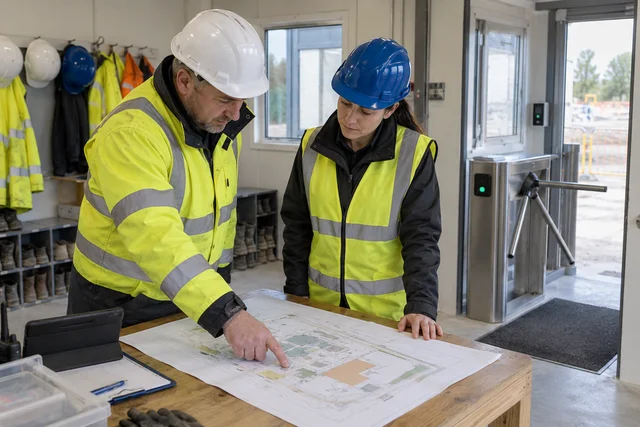
In the workplace context, the candidate assessor plans a routine inspection task against the actual occupational criteria. Observation records how each learner prepares, carries out the task, deals with a relevant finding and reports it. Work products and questions provide additional evidence, but a report is not treated as proof of an unobserved practical action. The candidate assessor gives feedback, identifies gaps and arranges further appropriate opportunities. The required occasions and range are checked against the chosen specification rather than inferred from the number of uploaded files.
How organisations manage this in practice
Agree access and protection: readiness and support needs; approved adjustments; supervision; task controls; communication; stop conditions; emergency arrangements; and any privacy restrictions. Establish the lawful basis and permissions for recordings. Keep sensitive personal information in the appropriate restricted record rather than copying it into every portfolio item.
An awareness course may check recognition and knowing when to stop or ask for help. Management learning may assess how someone allocates controls, reviews gaps and follows up. A practitioner programme may require specialist interpretation, observed practice and defensible technical decisions. These describe purpose, not automatic qualification levels. All three may involve knowledge, skills and behaviours.
Plan the observation with the learner and workplace controller. Identify the task, normal conditions, standard, evidence, permitted support, safety precautions and stop arrangements. Confirm that observation does not place the learner, assessor, colleagues or public at risk. The activity must remain subject to ordinary workplace authorisation; an assessment appointment is not permission to operate hazardous equipment. Observe what the learner actually does, the decisions made, the conditions and any relevant intervention. Distinguish direct observation from statements reported by another person. Use questioning or discussion to explore reasoning, contingencies and knowledge that the performance alone does not reveal. Avoid coaching the learner through an essential action and then recording independent competence. Record sufficient detail to support the decision: location/context, task, relevant standard, the observed actions and outcomes, questions/responses, evidence identifiers and limitations.
What does a workplace assessor do?
An assessor gathers evidence, compares it with an agreed standard and explains the decision. The question is not simply “Did this person attend training?” It is “What can this person demonstrate, under what conditions, and what still needs development?”
CAVA is a useful benchmark for learning to make those decisions fairly. For a safety trainer, supervisor or vocational assessor, its value lies in planning real assessments, checking evidence and giving clear feedback. SHARE recommends an appropriate assessor qualification such as CAVA where the role involves formal vocational assessment, together with the technical competence and approval required by the relevant scheme.
Assess learning
Check that someone understands an instruction or can demonstrate a skill after training.
Assess work
Observe what a person does in a genuine work setting, including decisions, controls and limits.
Support a defensible decision
Keep enough evidence for the learner, employer and quality assurer to understand what was judged and why.
CAVA does not make someone competent to assess every trade, piece of equipment or safety-critical task. An assessor needs current expertise in the subject and must work within the relevant assessment strategy. A qualification decision and an employer's permission to carry out work are separate decisions. ProQual qualification specification; HSE training and competence guidance.
What does the CAVA qualification involve?
CAVA combines knowledge of assessment principles with practical assessment of occupational competence in the workplace and vocational skills, knowledge and understanding in other settings.
This guide uses the ProQual CAVA specification as its main reference, with the common qualification structure cross-checked against NCFE and the Education and Training Foundation guidance. Confirm the awarding organisation, qualification number, current specification and centre arrangements before enrolling.
| Feature | What it means |
|---|---|
| Level and size | Level 3; 15 credits in the cited CAVA structure. This indicates qualification level and size, not permission to assess every subject. |
| Learning time | 84 guided learning hours and 150 total qualification hours in the cited ProQual and NCFE profiles. Total time includes independent learning and assessment; it is not a promised completion timetable. |
| Qualification numbers | ProQual: 600/2020/9. NCFE: 501/0885/2. These identify different awarding organisations' qualifications; do not interchange them on registration or certificates. |
| Structure | Three mandatory units: assessment principles, occupational competence in the work environment, and vocational skills, knowledge and understanding. |
| Practical access | You need suitable real learners, activities and opportunities to assess them. Confirm access, consent arrangements, workplace permission and observation of your own assessor practice before booking. |
| Entry and assessment | ProQual states no formal entry requirements and calls for initial assessment. NCFE lists a minimum age of 19. The chosen provider must confirm its own entry, support and practical arrangements. The ProQual route is internally assessed with external quality assurance. |
What do the three CAVA units cover?
The knowledge unit explains the reasoning behind assessment. The practical units require you to apply it. They are connected: a well-written account of assessment is not a substitute for the required practical evidence.
| Unit | Coverage in plain English | Health and safety application |
|---|---|---|
| Understanding the principles and practices of assessment D/601/5313 · 3 credits | Why assessment is used; methods and planning; learner involvement; evidence and decisions; quality assurance; records; legal, inclusive and reflective practice. | Explain why a quiz cannot establish practical equipment competence and how an observed assessment will be planned safely. |
| Assess occupational competence in the work environment H/601/5314 · 6 credits | Plan, carry out and record assessment of genuine occupational performance at work, using evidence that meets the applicable requirements. | Observe an appropriate routine inspection against actual workplace or qualification criteria, then question the learner about decisions and limits. |
| Assess vocational skills, knowledge and understanding F/601/5319 · 6 credits | Prepare and conduct vocational assessments in suitable learning settings, make judgements, give feedback and maintain records. | Assess a risk-control case study, a safe skills demonstration or a structured knowledge task where the applicable strategy permits it. |
Quality assurance is part of the required knowledge and practice; it is not a fourth mandatory CAVA unit. CAVA does not itself qualify someone to lead internal quality assurance. Use the actual unit criteria and evidence requirements for your portfolio, with the qualification-family guidance as supporting context.
What do I need to demonstrate in practice?
For each of the two practical units, the cited ProQual specification requires two assessments of each of two learners. Plan evidence for both units with the centre. Do not assume a single observation, a role-play or uploading several files meets that requirement. An activity may support more than one criterion only where its evidence genuinely meets each requirement and the centre accepts the mapping.
For the workplace unit, required performance evidence includes observation, work products and questioning. Additional forms such as professional discussion, witness evidence, learner accounts and recognition of prior learning support the specified coverage. Simulated performance cannot replace the required assessment of occupational competence at work. The occupational subject being assessed must not simply be another person's assessment practice.
For the vocational skills unit, the specification requires performance using at least three of its listed methods. The list includes skills tests, questions, assignments, projects, case studies, prior learning and assessments in simulated environments. A real learner undertaking an allowed simulated vocational task is different from role-playing an assessor for the CAVA portfolio. Confirm precisely what your centre accepts before arranging an exercise.
Keep the actual standard, plan, dated evidence, your judgement and feedback together. Your assessor must also be able to evaluate your assessment practice. Agree how that will be observed and authenticated. The vocational skills unit does not require you to design a qualification's assessments from scratch: prepare and use suitable approved methods. ProQual practical-unit evidence requirements.
How should an assessment run from start to finish?
Agree the assessment requirements, plan how evidence will be collected, judge it against the criteria and explain the decision to the learner. Keep a record that supports feedback, further assessment and review.
- Agree the standard. Identify the current unit or workplace standard, specific criteria, task and limits of the decision. Explain what a satisfactory outcome looks like.
- Prepare the person and the activity. Check readiness, prior learning, support needs, available opportunities and assessment risks. Agree methods, dates, evidence and the appeal route.
- Gather evidence. Observe suitable work, examine authentic products and ask questions that reveal understanding. Record what actually happened, including limits and interruptions.
- Make a reasoned judgement. Compare the evidence with every applicable criterion. Resolve contradictions and gaps. Do not average away a missing safety-critical requirement.
- Give useful feedback. Explain what was demonstrated, what is not yet supported and what happens next. Agree development and reassessment where needed.
- Record, quality assure and follow up. Preserve the evidence trail and decision. Follow centre checks before certification, and keep employer authorisation and ongoing workplace supervision separate.
This is SHARE's practical workflow, informed by the qualification requirements. The exact sequence and evidence rules must fit the chosen qualification or workplace system. Use SHAREassess to organise the qualification journey and competence, training, information and supervision guidance to connect it to work.
How should I choose evidence that supports the assessment decision?
Choose evidence that demonstrates the relevant criterion and is valid, authentic, current and sufficient. Use appropriate assessment methods and explain how the evidence supports the decision.
| Method | Use it to establish | Check before relying on it |
|---|---|---|
| Direct observation | How the person carries out a task, responds to conditions and follows controls. | The assessor can see enough, the activity is safe and representative, and the required performance is genuinely the learner's. |
| Work products | The quality of an inspection record, risk review, completed task or other relevant output. | Who produced it, what assistance was given, when it was produced and which criteria it supports. |
| Questions and professional discussion | Reasons, underpinning knowledge, contingencies and understanding of limits. | Use clear, non-leading questions. Record the substance of answers; discussion must not replace mandatory performance evidence. |
| Witness evidence | Relevant performance observed by someone else over time or in conditions the assessor did not attend. | The witness's competence, relationship, first-hand account, date and specific observations. The assessor retains the decision. |
| Recognition of prior learning | Relevant existing achievement that can meet current criteria. | Authenticity, current relevance and gaps. An old certificate is a starting point for review, not automatic exemption. |
| Tests and permitted simulations | Knowledge, decision-making or specified skills in a controlled setting. | The assessment strategy allows the method and it measures the intended outcome. A simulation cannot silently replace required workplace practice. |
Check the evidence, not just its volume. Is it relevant to the criterion (valid), the learner's own (authentic), still representative of current ability (current), and enough to support the decision (sufficient)? Reliable assessment also needs consistent interpretation and fair procedures. There is no universal rule that all evidence expires after two or three years: judge currency against the task, changes and applicable strategy.
Video can support a record, but does not prove identity, independence or context by itself. Follow approved remote-assessment arrangements, workplace permissions and privacy rules. Explain allowed assistance and AI use before assessment; investigate authenticity concerns fairly using evidence and centre procedures, rather than treating a detector score as proof.
How can I assess knowledge, skills and behaviours?
Knowledge is what a person understands; skills are what they can apply; behaviours are how they act in practice. KSBs help connect learning to work. Where an occupational or apprenticeship standard specifies KSBs, use its exact version and assessment plan. CAVA's own unit criteria still govern the CAVA award.
| Element | What to look for | Suitable evidence |
|---|---|---|
| Knowledge | Explains the purpose of the inspection, the relevant controls and when to escalate a concern. | Questions and a realistic case discussion, checked against the agreed standard. |
| Skills | Follows the safe inspection route, identifies relevant issues and produces a clear, accurate record. | Observation and the learner's own inspection output. |
| Behaviours | Reports honestly, respects limits and raises unresolved concerns even when under pressure. | Specific observed actions and corroborated follow-up, including the conditions in which the person worked. |
Do not turn behaviours into judgements about personality, confidence, accent or whether someone “fits in”. Describe actions linked to the standard. A person may need more opportunity to demonstrate a behaviour; one classroom answer cannot establish consistent practice over time. Official introduction to apprenticeship standards and KSBs.
Match assessment depth to the role
An awareness course may check recognition and knowing when to stop or ask for help. Management learning may assess how someone allocates controls, reviews gaps and follows up. A practitioner programme may require specialist interpretation, observed practice and defensible technical decisions. These describe purpose, not automatic qualification levels. All three may involve knowledge, skills and behaviours.
How can I keep the assessment safe?
Assessment is work and can introduce risks of its own. Before observing, agree responsibilities with the host: who controls the activity, who can stop it, how the assessor communicates and what happens if conditions change. Check the learner's prerequisites, supervision, equipment, access, emergency arrangements and the presence of other people.
Never create an uncontrolled hazard merely to test a response. Use an approved safe scenario where the strategy permits it. If genuine workplace evidence is required, arrange a suitable real opportunity; do not substitute an unsafe staged event or claim a simulation was live work.
- Stop if the person, equipment or conditions make the activity unsafe, or a necessary control is absent.
- Make the situation safe through the authorised workplace procedure. The assessor should not improvise outside their competence or authority.
- Record the facts, what was and was not observed, and any assistance or intervention.
- Agree the next step: development, changed controls or a new assessment opportunity. An interrupted assessment is not automatically evidence of learner failure; distinguish learner performance from unsafe conditions.
A completed assessment does not replace the employer's task risk assessment, statutory examinations, permits, medical requirements or authorisation where these apply. Explore risk assessment guidance and HSE's risk-management process.
How could a routine workplace inspection be assessed?
This Build Out UK example shows the decision process. It does not invent qualification criteria or certify the learner. The assessor must insert the applicable real standard and criteria before using this approach.
From a completed checklist to evidence of competence
Task material and setting: A learner inspects an agreed low-risk pedestrian area at an operating workplace using the current local inspection procedure. No defect or obstruction is created for the assessment.
People and prerequisites: The assessor knows the inspection standard and setting. The supervisor confirms the route, boundaries, permissions and stop arrangements. The learner understands the task and agreed support.
Before: Agree which criteria can be assessed, what will be observed, which work product will be retained and how understanding will be checked. Explain feedback and appeal routes.
During: Observe the learner following the safe route, checking the specified conditions and recording findings. Ask why a finding needs escalation and what the learner would do if access were unsafe. Retain the learner's dated record and your specific observations.
Hold or stop: Stop if moving plant enters the agreed pedestrian area or another unexpected risk appears. Follow the site's controls; do not continue simply to complete evidence.
Completion and hand back: The learner has recorded the finding clearly but has not identified who must act or when. If the actual standard requires that, the criterion is not yet supported. Explain the gap, arrange learning and collect suitable further evidence. The supervisor retains responsibility for the actual workplace issue.
Evidence: Keep the plan, criteria/version, observations, original inspection record, questions and answers, decision rationale, feedback and reassessment date. Link the real workplace action to its normal management process; a portfolio entry is not confirmation that the hazard has been resolved.
For CAVA, repeat the required assessment opportunities across the required learners and contexts. Do not claim this one example completes either practical unit.
How can I make assessment decisions people can understand and review?
Record which criteria are supported, the evidence used and the reasons for any outstanding judgement. Use the grading and result language required by the actual qualification. The cited ProQual CAVA is pass/fail, but that does not make every vocational qualification a binary scheme.
Useful feedback names the action and its effect: “Your inspection identifies the obstructed route, but the agreed escalation record is incomplete. Complete the required notification and demonstrate the escalation process at the next suitable opportunity.” Avoid vague comments such as “be more confident”. Let the learner ask questions and agree a clear next step and review date.
Internal quality assurance (IQA) checks the consistency and quality of assessment within the centre. External quality assurance checks the centre against awarding requirements. Standardisation helps assessors interpret standards consistently; it does not permit a group to waive criteria. Follow the centre's sampling arrangements and manage conflicts, including avoiding quality-assuring your own decisions.
Explain how to request clarification and appeal, who will review the concern independently, and the applicable deadlines. Keep records of changes rather than silently replacing a decision. CAVA supports assessor practice; IQA qualifications and authorisation are separate. Centre and qualification arrangements; Ofqual governance conditions; results and appeals conditions.
How do legal duties, inclusion and learner protection affect assessment?
The law helps define safe and fair assessment arrangements. It does not prescribe CAVA as a universal certificate for everyone who checks work. Apply the correct nation's rules and the provider's approved policies.
| Requirement | What it means in practice |
|---|---|
| Health and Safety at Work etc. Act 1974, section 2 Great Britain | Employers must provide necessary information, instruction, training and supervision. Use assessment to identify gaps and check effectiveness; the certificate alone does not discharge the duty. |
| Management Regulations 1999, regulation 13 Great Britain | Consider employee capabilities and adequate training. A person who has passed a course may still need task-specific instruction and supervision. |
| PUWER 1998, regulation 9 Great Britain | Training must address equipment use, risks and precautions. Select competent assessors and methods that can establish the required practical performance. |
| Management Regulations Northern Ireland 2000, regulation 13 Northern Ireland | Use the separate Northern Ireland training duty and check the corresponding subject-specific instruments. Do not apply GB citations as if they were UK-wide. |
| Equality Act 2010, section 20 Great Britain | Arrange reasonable adjustments where the relevant duty applies, with awarding approval where required. Change access or the permitted method without removing the competence requirement. Northern Ireland has a separate equality framework. |
| ICO data-protection guidance | Collect only necessary personal evidence, establish the lawful basis, restrict access and follow retention rules. Protect workplace and third-party information in photos, recordings and portfolios. |
Ask about support needs without trying to diagnose a condition. Agree appropriate adjustments before assessment and record approval. Do not assume every spoken or written method can be swapped: the method may itself be part of the competence standard. Separate access support from coaching that supplies the answer.
Agree the safeguarding reporting route before working with children or adults at risk. Listen, record and refer concerns through the appropriate procedure; do not investigate them yourself or promise absolute confidentiality. In an emergency, follow the emergency response arrangements. For the relevant setting, consult England's school and college guidance, Scotland's child-protection guidance, Wales' Keeping learners safe or Northern Ireland's education guidance. Check adult safeguarding separately. These documents do not have identical institutional scopes.
Ofqual's assessment conditions regulate awarding organisations in their scope. Centres implement their approved awarding-body requirements; the conditions are not a universal workplace assessment statute.
How can I choose the right assessment qualification route?
Before paying for a course, ask the provider to confirm the exact qualification and registration dates, approved centre status, learner access requirements, observation arrangements, fees and reassessment costs, reasonable-adjustment process, expected evidence and available support. Ask who arranges practical assessment opportunities if you are not already in an assessor role.
A knowledge-only assessor award can develop understanding, but it does not demonstrate practical assessor competence. A workplace-only or vocationally related award may fit a narrower role. CAVA covers both practical contexts in its cited structure. Check whether a newer or sector-specific route is more suitable and whether the intended awarding organisation or employer accepts it.
Teaching and assessing are connected but distinct. The Level 3 Award in Education and Training guide explains the teaching foundation. More experienced assessors may progress towards relevant IQA development. Keep technical CPD, assessment CPD, standardisation and the scope of your authorisation current.
Common questions
Is CAVA legally required for every workplace assessment?
No. The required qualification and experience depend on the task, sector and scheme. Formal qualification assessment must satisfy its awarding requirements. Employers must use competent people and suitable checks for the work concerned.
Can I complete it without access to learners?
The full certificate includes real practical assessment. Agree suitable learner access with the provider before enrolling; reading and written assignments alone do not meet all requirements.
Can I study online?
A provider may deliver learning online, but the practical evidence and observation requirements remain. Confirm its approved arrangements, including any remote observation, rather than assuming an online course is entirely theory.
Will CAVA make me an IQA or let me issue qualifications?
No. Internal quality assurance has its own competence and approval requirements. Qualification certification follows the approved centre and awarding-organisation process.
Does it let me assess any health and safety subject?
No. You also need current competence in the technical subject and must meet the relevant assessment strategy and approval requirements. Do not infer competence in high-risk work from an assessor certificate alone.
Which guidance documents and SHARE resources support assessment?
Use the detailed guide to plan the qualification journey, review evidence quality and build a clear workplace assessment process. It includes additional planning prompts and two learner examples. It supports the official specification; it is not an assessment answer book.