SHARE Knowledge Hub
Naturally Occurring Radioactive Material (NORM)
Naturally occurring radioactive material can concentrate in industrial scale, sludge, mineral products and waste; radon gas can also build up in workplaces. Exposure depends on the material, work method and route into the body, so identify the source, assess exposure and apply the correct Great Britain or Northern Ireland radiation rules before work.
Understanding Naturally Occurring Radioactive Material (NORM)
Naturally occurring radioactive material, or NORM, is material containing radionuclides that occur in the natural environment. In an industrial process these radionuclides may be brought to the surface, separated, concentrated in scale or residues, or moved to a place where people can receive a higher dose. This source addresses those work activities, the associated radioactive waste and workplace radon, while explaining the broader natural-radiation context.
Why this matters at work
Compare feasible changes by exposure pathway and the work they affect. Remote handling may reduce external dose, while enclosed cleaning and controlled waste handling reduce intake and spread. Verify that a proposed improvement does not create another hazard or shift exposure to cleaners. Keep the reasoned selection, monitoring method and review conditions with the risk assessment. A limit comparison alone cannot demonstrate ALARP.
Work may alter a natural exposure pathway. Extraction and processing can bring underground material to a work area; oil production can concentrate radium in scale; smelting can partition natural radionuclides into slag; an occupied basement may accumulate radon. The radiological assessment follows the change in exposure, not a simple natural-versus-artificial label.
How organisations manage this in practice
Restriction as low as reasonably practicable is a continuing design and control duty, subject to dose limits. External gamma exposure, inhalation and contamination need different barriers. Distance and shielding can reduce an external field but do not contain dust released during cleaning. Conversely, a clean/dirty boundary does not itself reduce a strong external field. Select the control sequence from the actual pathway and source and verify it under the task conditions; a mnemonic is a teaching aid rather than the legal standard.
The assessment must lead to decisions: whether the work can be eliminated or redesigned, which controls are required, whether an area needs designation, what monitoring and training are necessary, and what contingency arrangements are proportionate. A general corporate radiation policy or a laboratory report with no task link is not a prior risk assessment.
Require a formal review when material supplier, process chemistry, equipment, occupancy, building fabric or waste route changes. Close actions only after evidence shows the control works at the relevant task. Senior management should resource measurements and repairs, and workers should have a clear stop-work route.
What decisions come before disturbing possible NORM?
Identify the process and material, test or characterise it appropriately, establish whether radiation law applies, and plan exposure and waste controls before opening equipment.
A normal background reading or a generic label such as “natural” is not proof of safety. Seek historical process information and competent radiation advice where scale, sludge or dust may contain concentrated radionuclides. The legal notification route depends on activity, concentration and practice; it is not interchangeable with an environmental waste permit. Radon needs a workplace assessment and, where indicated, measurement.
Characterise scale before disturbing the pipe
Process deposits can concentrate naturally occurring radioactive material. The external-radiation, airborne-dust and surface-contamination questions need separate assessment before opening or cleaning equipment.

Characterise first
Establish the process history and competent characterisation of the deposits. An ordinary-looking pipe gives no reliable radiological result.
Avoid disturbance
Consider non-intrusive work or avoiding the task. The closed state in the sketch is an assessment starting point, not a declared safe state.
External exposure
Assess radiation from the material separately from whether particles can enter the body. Control arrangements depend on the measured and assessed circumstances.
Inhalation and contamination
Opening, cutting and cleaning can mobilise deposits. Plan containment, dust control, monitoring and clean/dirty boundaries with radiation-protection advice.
Controlled waste route
Characterise and manage deposits, tools, clothing and waste through the applicable controlled route; do not send unknown scale into ordinary waste.
Competent release
The work owner verifies the assessment, controls and release evidence. Radon in buildings has a separate measurement/assessment route; a pipe-scale result does not answer it.
Keep uncertain material undisturbed and seek competent radiation-protection advice. This schematic supplies no exemption level, dose calculation or disposal authorisation.
How can natural radioactivity harm people?
Natural radionuclides emit ionising radiation; risk rises when concentrated material is inhaled, ingested or handled at close range, or when radon and its decay products are inhaled.
Natural uranium and thorium decay series and potassium-40 are found in the environment. Industrial processes can concentrate radionuclides in pipe scale, sediments or residues. External gamma exposure may matter near some deposits; airborne dust and contamination create internal exposure routes. Radon is a gas that can accumulate indoors and contributes mainly through inhalation of its decay products. The significant pathway must be established for the actual material and task, not guessed from the word NORM.
The relevant outcomes are long-latency cancer risks. There may be no immediate symptom to warn of exposure. Radiation measurements and contamination checks therefore matter more than how the material looks or smells.

How can radiation from NORM and radon expose the body, and what does shielding change?
Interactive radiation explainer · SHAREhub environment
Read all five radiation, shielding and body-effect explanations
Alpha
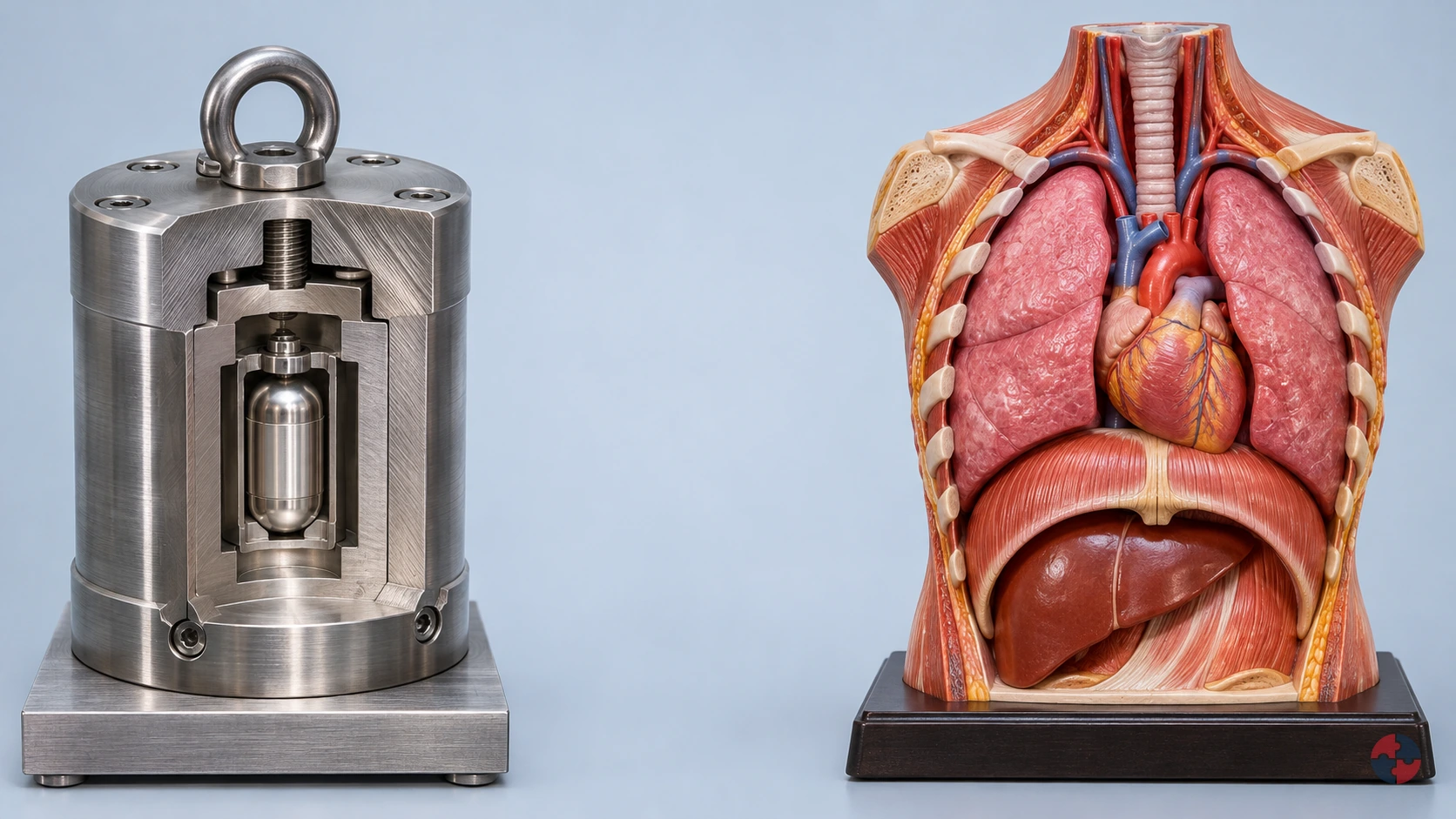
Typical sources: Alpha-emitting material Real example: radon and its radioactive decay products in buildings or underground workplaces. An unstable nucleus emits an alpha particle: two protons and two neutrons. The display holder is a teaching cutaway, not a radon container or an equipment design.
Travel and distance: A few centimetres in air Typical alpha particles rapidly lose energy in air. The illustrated track length is enlarged.
Penetration and exposure route: External: stops at the outer dead skin layer This applies to intact outer skin. Inside an airway or a wound, living cells have no such protective barrier.
Possible effects: A short, dense ionisation track can damage nearby cells. Inhaled radon decay products expose lung tissue and increase lung-cancer risk.
When radioactive material enters the body: Internal alpha: an airway deposit Illustrates an inhaled radioactive decay product near airway cells. Its short range concentrates energy locally; the exact organ dose depends on the radionuclide and where material is retained. 1 · A radioactive deposit is already inside The airway inset starts after an alpha-emitting radioactive decay product has been inhaled and deposited beside living cells. It can continue to emit radiation while it remains there. 2 · Follow a short track through local tissue The particle now starts inside the airway lining, rather than outside intact skin. It deposits energy densely over a short local track; short range does not make an internal alpha emitter harmless. 3 · Why an outside barrier cannot shield this deposit Paper outside the body cannot sit between the deposited emitter and adjacent cells. Containment and preventing intake address the exposure route; an exterior shield does not remove material already inside. 4 · Examine local cell interactions Nearby cells may receive energy that damages biological molecules, including DNA. Radon-related exposure can increase lung-cancer risk over time. The highlighted cells do not predict an immediate injury, a measured dose or a certain cancer outcome.
Shielding and control choices: Paper illustrates alpha stopping; preventing radioactive material entering the body is the crucial additional control. A paper barrier does not control airborne radon or contaminated dust.
Example sequence: 1 · See the source The teaching holder reveals alpha emissions. Radon-related exposure usually comes from radioactive gas and its decay products, not a visible glowing rock. 2 · Follow the short air track The particle deposits energy densely and stops over a short path. A few centimetres is a useful typical scale, not a clearance distance. 3 · Insert a barrier A sheet of paper stops the illustrated alpha track. The source remains radioactive even when no track reaches the body. 4 · Compare outside and inside Outside: the track stops at intact outer skin. Select internal exposure to see an airway deposit irradiate adjacent living cells. This body inset is a separate unshielded local comparison; it does not show the outcome of the selected barrier.
Compare barrier materials
- Air only: The short alpha track stops in air before distant tissue; close or internal exposure is a different situation. Material comparison only; thickness, energy and geometry are not calculated.
- Paper: Paper stops the illustrated alpha particles. Containment and control of intake still matter. Material comparison only; thickness, energy and geometry are not calculated.
- Plastic: Plastic stops the illustrated alpha particles. Containment and control of intake still matter. Material comparison only; thickness, energy and geometry are not calculated.
- Aluminium: Aluminium stops the illustrated alpha particles. Containment and control of intake still matter. Material comparison only; thickness, energy and geometry are not calculated.
- Lead: Lead stops the illustrated alpha particles. Containment and control of intake still matter. Material comparison only; thickness, energy and geometry are not calculated.
- Concrete: Concrete stops the illustrated alpha particles. Containment and control of intake still matter. Material comparison only; thickness, energy and geometry are not calculated.
- Water: Water stops the illustrated alpha particles. Containment and control of intake still matter. Material comparison only; thickness, energy and geometry are not calculated.
- Layered neutron barrier: Layered neutron barrier stops the illustrated alpha particles. Containment and control of intake still matter. Material comparison only; thickness, energy and geometry are not calculated.
Beta
Typical sources: Beta-emitting material Examples include radioactive tracers in laboratories and some industrial thickness gauges. This example shows beta-minus radiation: an electron emitted during nuclear decay. Generic teaching holder; real sources have purpose-designed containment and protection.
Travel and distance: Centimetres to metres, depending on energy Beta emitters have different energy distributions. Some beta particles travel several metres in air; low-energy examples travel much less.
Penetration and exposure route: Skin and superficial tissue; depth varies More energetic beta particles can reach living skin and the lens of the eye. Do not treat beta as harmless because it is less penetrating than gamma.
Possible effects: External beta exposure can injure skin or eyes at sufficient dose. Radioactive material inside the body can irradiate nearby tissue.
When radioactive material enters the body: Internal beta: a local deposit A simplified contaminated-tissue example. The same electron track now starts within the body. Actual distribution depends on the material; inhalation is not the only possible entry route. 1 · A beta emitter is already beside tissue This airway-cell example begins with radioactive material already deposited inside the body. Inhalation is one entry route; other materials can enter by swallowing or through wounds and distribute differently. 2 · Follow an electron from within the body The emitted beta electron scatters and loses energy in nearby tissue. Its finite local track depends on energy and tissue; the magnified drawing does not represent a fixed depth or organ dose. 3 · Separate outside shielding from internal exposure An external plastic panel cannot be placed between this deposited emitter and neighbouring cells. Preventing contamination entering the body matters; changing the outside panel cannot cancel an internal exposure. 4 · See local energy deposition and possible harm Interactions can affect cells close to the radioactive deposit. The amount and distribution of material, its emissions and retention determine exposure; a coloured track does not establish tissue injury or an individual cancer risk.
Shielding and control choices: Low atomic number plastic is a useful first comparison for beta shielding. Slowing beta particles can generate bremsstrahlung X-rays, especially in dense, high atomic number materials. A designed shield may need more than one layer.
Example sequence: 1 · See the beta emitter The electron starts at the nucleus. This is a beta-minus example; positron-emitting sources need additional explanation because annihilation photons are also produced. 2 · Follow the changing track Interactions scatter and slow the electron. Its travel depends strongly on starting energy, so there is no single range shared by all beta sources. 3 · Compare plastic and lead Plastic absorbs the illustrated beta track with less bremsstrahlung than a comparable high atomic number material. Lead is not an automatic first choice. 4 · See superficial energy deposition The enlarged skin section shows a finite electron track in tissue. Internal contamination places the emitter beside living cells; it changes the exposure route. This body inset is a separate unshielded local comparison; it does not show the outcome of the selected barrier.
Compare barrier materials
- Air only: Longer beta tracks may reach exposed skin; range changes with energy. Material comparison only; thickness, energy and geometry are not calculated.
- Paper is not a universal beta barrier: The example passes through paper. Very low energy beta emitters behave differently. Material comparison only; thickness, energy and geometry are not calculated.
- Low atomic number first layer: Plastic illustrates electron stopping while limiting bremsstrahlung production. Material comparison only; thickness, energy and geometry are not calculated.
- Electron stopping with a secondary-radiation check: Aluminium can stop beta particles; energy and shield thickness determine the result. Bremsstrahlung still needs consideration. Material comparison only; thickness, energy and geometry are not calculated.
- Stopping electrons can create X-rays: High atomic number lead can increase bremsstrahlung production. A real beta shield may start with plastic and use another layer for photons. Material comparison only; thickness, energy and geometry are not calculated.
- Concrete: Beta tracks lose energy in material; a substantial barrier can absorb the electrons. Secondary photons and real construction still need assessment. Material comparison only; thickness, energy and geometry are not calculated.
- Water: Beta tracks lose energy in material; a substantial barrier can absorb the electrons. Secondary photons and real construction still need assessment. Material comparison only; thickness, energy and geometry are not calculated.
- Layered barrier: Beta tracks lose energy in material; a substantial barrier can absorb the electrons. Secondary photons and real construction still need assessment. Material comparison only; thickness, energy and geometry are not calculated.
Gamma
Typical sources: Gamma-emitting radioactive source Industrial radiography uses shielded radioactive sources to inspect components such as pipe welds. A nucleus releases a photon as it moves to a lower energy state. Generic capsule in an illustrative cutaway; real radiography sources remain within engineered systems.
Travel and distance: Long-range: attenuates rather than ending at one distance Photons can cross substantial air gaps. Distance changes exposure but does not create a universal safe boundary.
Penetration and exposure route: Can reach deep organs or pass through the body Some photons interact and deposit energy; others pass through. Penetration depends on energy, tissue and geometry.
Possible effects: Energy deposited in tissue can damage cells and DNA. Risk depends on dose and exposed tissue; sufficiently high doses can also cause tissue injury.
Shielding and control choices: Lead and appropriately designed concrete barriers reduce photon transmission. Shielding attenuates the beam. It is misleading to show one standard sheet as stopping every gamma photon.
Example sequence: 1 · See a continuing radioactive emission The capsule emits gamma photons as radioactive decay proceeds. Turning off an electrical supply does not stop radioactive decay. 2 · Follow photons across the scene Unlike the short alpha path, photon transmission falls progressively. The scene is compressed and provides no safe-distance calculation. 3 · Reduce the transmitted beam Absorption and scattering in the barrier leave fewer illustrated forward tracks. Some transmission remains: real design checks also consider scattered radiation and openings. 4 · See interactions at different depths A penetrating photon can transfer energy inside the body. The highlighted points represent interactions, not a prediction of injury or cancer. This body inset is a separate unshielded local comparison; it does not show the outcome of the selected barrier.
Compare barrier materials
- Unshielded path: Photons can continue across the scene and into tissue. Distance and time influence exposure. Material comparison only; thickness, energy and geometry are not calculated.
- Paper gives little protection in this example: The illustrated photon beam largely continues. Paper is not an appropriate photon protection strategy. Material comparison only; thickness, energy and geometry are not calculated.
- Plastic: Some attenuation occurs, but this illustrative layer leaves substantial photon transmission. Energy and actual thickness matter. Material comparison only; thickness, energy and geometry are not calculated.
- Aluminium: Some attenuation occurs, but this illustrative layer leaves substantial photon transmission. Energy and actual thickness matter. Material comparison only; thickness, energy and geometry are not calculated.
- Dense photon barrier: Lead reduces forward transmission through absorption and scattering; some photons still transmit or scatter. Material comparison only; thickness, energy and geometry are not calculated.
- Structural photon shielding: A designed concrete barrier can reduce the field. Composition, thickness, joints and openings affect its performance. Material comparison only; thickness, energy and geometry are not calculated.
- Water also attenuates photons: A sufficient path through water reduces transmission. The small illustrated layer does not establish a protective thickness. Material comparison only; thickness, energy and geometry are not calculated.
- Assess the photon component separately: A neutron-oriented composite is not automatically a complete photon shield. Assess the materials and photon energies actually present. Material comparison only; thickness, energy and geometry are not calculated.
X-rays
Typical sources: Energised X-ray tube Medical and dental imaging, security screening, cabinet inspection and handheld X-ray fluorescence analysis. Electrons accelerated within a tube strike a target and produce X-ray photons. The beam appears only during the illustrated energised exposure. This is not a radioactive source capsule.
Travel and distance: No single stopping distance in air X-rays are photons. Beam energy, filtration, direction and scatter all affect transmission.
Penetration and exposure route: Can penetrate the body; absorption differs between tissues Differences in transmission allow diagnostic images. The examination uses a controlled, justified exposure.
Possible effects: X-rays can damage cells, so exposures are controlled. A normal diagnostic X-ray does not leave radiation stored inside a person or make them radioactive.
Shielding and control choices: Purpose-designed shielding such as lead or concrete reduces the primary and scattered X-ray field. X-rays are not always less penetrating than gamma rays: photon energy, not the name alone, governs their interactions.
Example sequence: 1 · Energise the teaching tube An electron beam meets the target; X-ray photons leave the tube window. A normal diagnostic tube produces its beam while energised. 2 · Follow a directed beam and scatter The illustrated beam travels through air. Some interactions redirect photons; this is why the forward beam alone does not describe every exposure. 3 · Place a designed photon barrier The barrier reduces transmission. Real installations account for equipment output, workload, occupants and scatter, with suitable expert advice. 4 · Compare tissue transmission Some photons cross the body and some interact. The beam ends when the diagnostic exposure ends; the patient does not retain the X-ray beam. This body inset is a separate unshielded local comparison; it does not show the outcome of the selected barrier.
Compare barrier materials
- Unshielded path: Photons can continue across the scene and into tissue. Distance and time influence exposure. Material comparison only; thickness, energy and geometry are not calculated.
- Paper gives little protection in this example: The illustrated photon beam largely continues. Paper is not an appropriate photon protection strategy. Material comparison only; thickness, energy and geometry are not calculated.
- Plastic: Some attenuation occurs, but this illustrative layer leaves substantial photon transmission. Energy and actual thickness matter. Material comparison only; thickness, energy and geometry are not calculated.
- Aluminium: Some attenuation occurs, but this illustrative layer leaves substantial photon transmission. Energy and actual thickness matter. Material comparison only; thickness, energy and geometry are not calculated.
- Dense photon barrier: Lead reduces forward transmission through absorption and scattering; some photons still transmit or scatter. Material comparison only; thickness, energy and geometry are not calculated.
- Structural photon shielding: A designed concrete barrier can reduce the field. Composition, thickness, joints and openings affect its performance. Material comparison only; thickness, energy and geometry are not calculated.
- Water also attenuates photons: A sufficient path through water reduces transmission. The small illustrated layer does not establish a protective thickness. Material comparison only; thickness, energy and geometry are not calculated.
- Assess the photon component separately: A neutron-oriented composite is not automatically a complete photon shield. Assess the materials and photon energies actually present. Material comparison only; thickness, energy and geometry are not calculated.
Neutrons
Typical sources: Neutron-emitting source Examples include specialist research, nuclear facilities and neutron gauges; an americium–beryllium capsule is one neutron-source type. Some high-energy medical accelerators produce secondary neutrons. Nuclear reactions can release uncharged neutrons. This teaching example represents a contained neutron source. Generic source representation; mixed neutron and gamma fields require specialist assessment.
Travel and distance: Energy-dependent; potentially highly penetrating Neutrons scatter and change energy. Neither a fixed air range nor a single lead sheet describes their behaviour.
Penetration and exposure route: Can irradiate deep tissue Neutrons transfer energy through nuclear interactions, producing charged particles that deposit energy locally.
Possible effects: Neutron interactions can damage tissue and increase cancer risk. Biological effect varies with neutron energy; counting tracks alone does not compare doses between radiation types.
Shielding and control choices: Hydrogen-rich material slows fast neutrons; a capture component can remove slowed neutrons. A designed barrier also considers photons. Capture and other interactions can produce secondary gamma radiation. Moderating a neutron is not the same as removing all radiation.
Example sequence: 1 · See an uncharged neutron leave the source The neutron starts from a nuclear process, not from the electron beam of an ordinary diagnostic X-ray tube. Real sources may emit gamma radiation as well. 2 · Follow scattering and changing energy A neutron can travel well beyond the short alpha path. Collisions can deflect it and reduce its energy, rather than simply making it vanish. 3 · Slow, capture and consider secondary photons Hydrogen-rich shielding illustrates moderation, followed by a capture component. A secondary gamma track reminds learners that the whole field must be assessed. 4 · See energy transferred to tissue nuclei An interaction creates an energetic charged recoil or reaction product. The short recoil track represents local energy deposition, not a visible wound or a dose estimate. This body inset is a separate unshielded local comparison; it does not show the outcome of the selected barrier.
Compare barrier materials
- No moderating or capture barrier: Neutrons can reach tissue. Scattering and energy changes make a universal air-range claim unsuitable. Material comparison only; thickness, energy and geometry are not calculated.
- Paper: This is not a complete fast-neutron protection strategy. A material effective for photons may perform poorly for neutrons. Material comparison only; thickness, energy and geometry are not calculated.
- Aluminium: This is not a complete fast-neutron protection strategy. A material effective for photons may perform poorly for neutrons. Material comparison only; thickness, energy and geometry are not calculated.
- Lead: This is not a complete fast-neutron protection strategy. A material effective for photons may perform poorly for neutrons. Material comparison only; thickness, energy and geometry are not calculated.
- Hydrogen-rich plastic moderates: Collisions with hydrogen help slow fast neutrons. Moderation alone does not guarantee capture or control secondary radiation. Material comparison only; thickness, energy and geometry are not calculated.
- Concrete can shield mixed fields: Hydrogen content and composition matter for neutrons; the design must also account for secondary photons. Material comparison only; thickness, energy and geometry are not calculated.
- Water illustrates moderation: Hydrogen helps slow neutrons. Some interactions produce secondary gamma radiation; a real barrier is assessed as a whole. Material comparison only; thickness, energy and geometry are not calculated.
- Moderation plus capture: Hydrogen-rich material slows fast neutrons and a capture component removes some slowed neutrons. Secondary gamma shielding may also be needed. Material comparison only; thickness, energy and geometry are not calculated.
Sources and how to interpret the model
Original teaching geometry and animation. The reference diagram is a layout inspiration; no third-party illustration has been copied. Coloured tracks, counts, timing and materials illustrate mechanisms rather than exposure measurements. This activity is not a radiation protection assessment or a design specification.
- Health and Safety Executive: Ionising radiation: protecting workers and others
- UK Health Security Agency: Basic concepts of radiation
- UK Health Security Agency: Living with radiation
- Health and Safety Executive: Radon in the workplace
- Health and Safety Executive: Introduction to radiation in the workplace
- Health and Safety Executive: Work with ionising radiation that requires registration
- Health and Safety Executive: Industrial radiography – managing radiation risks (IRP1)
- NHS: X-ray
- North Tees and Hartlepool NHS Foundation Trust: My X-ray Examination – What You Need to Know about Radiation and the Risks Involved
- Office for Nuclear Regulation: Shielding and dose rate safety assessment of transport packages (NS-TAST-GD-100)
- Office for Nuclear Regulation: Criticality safety assessment of transport packages (NS-TAST-GD-097)
- Health and Safety Executive: Radiation Protection Advisers
- Health and Safety Executive: Dose monitoring, assessment and recording
- UK Health Security Agency: Accidental neutron exposure in a medical setting: a case study
- Office for Nuclear Regulation: Step 4 assessment of radiological protection for the UK EPR (ONR-GDA-AR-11-025)
How should a task and exposure assessment work?
Start with the process history and a competent survey, then define affected people, exposure routes, controlled boundaries and measurements for each work stage.
Before opening a scaled pipe or cleaning a vessel, identify the deposit, accessible surfaces, possible airborne dust, nearby workers and waste path. In GB, consult a suitable radiation protection adviser under regulation 14 unless the Schedule 1 exception applies, with written appointment and scope where required. For NI, check the corresponding HSENI route; a generic adviser is not interchangeable with a suitable RPA. Select instruments and sampling for the radiation and contamination question. Record baseline, hold points and what would change the plan. Do not rely on a single external dose-rate reading to rule out an inhalation hazard.
For radon, assess whether the premises is in an affected area or occupied underground; use suitable long-term measurement where needed. HSE describes the workplace threshold as an annual average of 300 becquerels per cubic metre (Bq/m³). This is a regulatory trigger, not an acceptable target for all workplaces. HSE workplace radon guidance.
Assess occupied underground workplaces independently of an above-ground radon affected-area map. The responsible facilities manager commissions representative measurements in the rooms and locations actually occupied, records occupancy and relevant open-water features, and obtains laboratory/specialist interpretation toward an annual-average result. A materially elevated result requires an interim exposure decision while remediation is arranged. Name who maintains the remedial system and orders representative remeasurement; a short reading after opening doors is not annual-average clearance.
What failures make exposure more likely?
The common chain is an unrecognised source, disturbance or accumulation, then a missing containment or measurement barrier.
Dust route. Dry scraping or grinding scale can release contaminated dust; the worker and nearby trades may inhale it. Stop if material identity, containment or air controls are uncertain. Contact route. Poor segregation can transfer contamination to hands, clothing, vehicles or welfare areas; stop for a failed boundary. Radon route. A basement used more often after refurbishment may have an untested radon level; assess and measure before treating a previous result as current. Waste route. Residue placed into ordinary waste without characterisation can expose handlers and breach the applicable waste regime.
How can the hierarchy of controls reduce exposure to naturally occurring radioactive material?
Avoid unnecessary disturbance first; then contain the source, limit time and spread, verify conditions, and use protective equipment only as part of an assessed system.
How should controls interrupt the exposure chain? — part 1 of 2


Read the complete visual as text
- Avoid unnecessary disturbance first; then contain the source, limit…: Avoid unnecessary disturbance first; then contain the source, limit time and spread, verify conditions, and use protective equipment only as part of an assessed system.
- Use the HSE hierarchy to remove or substitute the…: Use the HSE hierarchy to remove or substitute the hazard where feasible, then use engineering separation, administrative measures and PPE for residual exposure. Keep each selected control effective through inspection, maintenance and worker feedback. The task-specific table below records the decision and stop point.
How should controls interrupt the exposure chain? — part 2 of 2


Read the complete visual as text
- For radon, building-level measures such as improved underfloor ventilation…: For radon, building-level measures such as improved underfloor ventilation or a radon sump may be appropriate after measurement and specialist design. Re-measure to confirm the result. A respirator used during a dusty maintenance task is not a general remedy for a radon-affected building.
- HSE prioritises eliminating and substituting hazards before engineering controls,…: HSE prioritises eliminating and substituting hazards before engineering controls, administrative controls and PPE, as explained in its five-level hierarchy of controls . SHARE uses ERICPD as a task-planning prompt: Eliminate; Reduce, including substitution; Isolate through engineered separation; Control with other engineered or administrative measures; PPE; and Discipline, meaning continued verification and maintenance. ERICPD is not a sixth HSE level or a separate legal duty. For NORM, a lower-dust removal method may be substitution after specialist assessment; limiting time or access is administrative and does not replace containment.
Use the HSE hierarchy to remove or substitute the hazard where feasible, then use engineering separation, administrative measures and PPE for residual exposure. Keep each selected control effective through inspection, maintenance and worker feedback. The task-specific table below records the decision and stop point.
For radon, building-level measures such as improved underfloor ventilation or a radon sump may be appropriate after measurement and specialist design. Re-measure to confirm the result. A respirator used during a dusty maintenance task is not a general remedy for a radon-affected building.
HSE prioritises eliminating and substituting hazards before engineering controls, administrative controls and PPE, as explained in its five-level hierarchy of controls. SHARE uses ERICPD as a task-planning prompt: Eliminate; Reduce, including substitution; Isolate through engineered separation; Control with other engineered or administrative measures; PPE; and Discipline, meaning continued verification and maintenance. ERICPD is not a sixth HSE level or a separate legal duty. For NORM, a lower-dust removal method may be substitution after specialist assessment; limiting time or access is administrative and does not replace containment.
How can the ERICPD hierarchy of controls reduce exposure to naturally occurring radioactive material?

| Five-level hierarchy | Feasibility and decision owner | Verification and stop point |
|---|---|---|
| Eliminate | Use non-intrusive inspection where feasible so radioactive scale or residues stay undisturbed; asset owner verifies inspection quality. | Method acceptance and task walk-through; hold if intrusive work resumes. Task source: HSE NORM guidance; HSE L121 ionising radiations ACOP. |
| Reduce | Choose a lower-dust removal or sampling method, subject to radiation and process assessment; radiation adviser checks added hazards. | Field trial and measured contamination; reject if airborne spread increases. Task source: HSE NORM guidance; HSE L121 ionising radiations ACOP. |
| Engineering | Contain residues, use source capture and shielding suited to the exposure pathway; engineer and radiation adviser verify design. | Containment integrity and monitoring; stop on release or failed barrier. Task source: HSE NORM guidance; HSE L121 ionising radiations ACOP. |
| Administrative | Mark controlled areas where required, set access, monitoring, waste and permit arrangements; manager checks local rules. | Survey and records; hold work when classification or disposal route is unknown. Task source: HSE L121 ionising radiations ACOP; HSENI ionising radiation information. |
| PPE | Use task-assessed protection for residual contamination | Pre-use checks and exposure review; withdraw on contamination or monitoring failure. Task source: HSE L121 ionising radiations ACOP; HSENI ionising radiation information. |
| Discipline / continuing assurance | Maintain training, dosimetry and corrective learning. |
How can the ISO 45001 hierarchy of controls reduce exposure to naturally occurring radioactive material?

| Five-level hierarchy | Feasibility and decision owner | Verification and stop point |
|---|---|---|
| Elimination | Use non-intrusive inspection where feasible so radioactive scale or residues stay undisturbed; asset owner verifies inspection quality. | Method acceptance and task walk-through; hold if intrusive work resumes. Task source: HSE NORM guidance; HSE L121 ionising radiations ACOP. |
| Substitution | Choose a lower-dust removal or sampling method, subject to radiation and process assessment; radiation adviser checks added hazards. | Field trial and measured contamination; reject if airborne spread increases. Task source: HSE NORM guidance; HSE L121 ionising radiations ACOP. |
| Engineering | Contain residues, use source capture and shielding suited to the exposure pathway; engineer and radiation adviser verify design. | Containment integrity and monitoring; stop on release or failed barrier. Task source: HSE NORM guidance; HSE L121 ionising radiations ACOP. |
| Administrative | Mark controlled areas where required, set access, monitoring, waste and permit arrangements; manager checks local rules. | Survey and records; hold work when classification or disposal route is unknown. Task source: HSE L121 ionising radiations ACOP; HSENI ionising radiation information. |
| PPE | Use task-assessed protection for residual contamination | Pre-use checks and exposure review; withdraw on contamination or monitoring failure. Task source: HSE L121 ionising radiations ACOP; HSENI ionising radiation information. |
| Administrative controls / continuing assurance | Maintain training, dosimetry and corrective learning. |
Read the practical categories separately: elimination removes the hazardous task/source; substitution replaces it with a suitable safer alternative; physical separation, containment and capture are engineering decisions. Duration/access/briefing are administrative measures, PPE covers residual exposure, and continued inspection, maintenance and verified action closure sustain the controls. Exposure monitoring or dosimetry measures exposure rather than protecting a person. The detailed text and records below distinguish these decisions; an overview illustration is not task authorisation.
How do time, distance and shielding control ionising-radiation exposure?
First avoid unnecessary radiation work and choose the strongest feasible source and engineering controls. Then reduce time in the radiation field, increase separation and use shielding designed for that source. These measures work together; none gives permission to work without an assessment, effective safeguards and the required competent advice.
For pipe scale, mineral residues or other suspected NORM, assess both external dose and the possibility of radioactive material spreading as dust, liquid or contamination. A reassuring external dose-rate reading does not by itself clear an intrusive opening or cleaning task.
Radiation-specific hierarchy of controls · Time · Distance · Shielding · Verification and stop points

Put these measures inside the control hierarchy
Elimination and substitution ask whether the work can avoid the radiation hazard or use a validated less hazardous method. Engineering measures act on the source or exposure path: shielding, containment, enclosures, interlocks, collimation and remote operation. Planning, access restrictions, exposure-time arrangements and supervision support those measures. PPE is a residual layer, not a substitute for a working enclosure or controlled boundary.
For Great Britain, IRR17 regulation 9 prioritises engineering controls and design features, then supporting systems of work, with PPE where further restriction is necessary. Northern Ireland has its own 2017 regulations and regulator. Keep exposure as low as reasonably practicable, not merely below a dose limit. ERICPD is a learning prompt; its six labels are not six separate statutory radiation-control levels. HSE L121; HSENI radiation requirements.
Time: reduce unnecessary exposure, not essential safety checks
For an unchanged external radiation field and body position, accumulated dose increases with the time spent there: dose = dose rate × exposure time. Half the time means half that task's dose only if the dose rate and all other relevant conditions stay the same. It does not mean the remaining dose is acceptable.
- Prepare tools, access, communications and the work sequence outside the exposure area. Rehearse an unfamiliar operation with the source absent or safely controlled.
- Use source-off servicing, remote adjustment or remote observation where feasible. An X-ray generator stops producing X-rays when correctly de-energised; a radioactive source remains radioactive and needs its assessed containment or shielding arrangements.
- Include setup, repeat exposures, waiting, fault-finding and hand-back in the plan. Do not shorten essential surveys or rush a retrieval to meet an arbitrary time allowance.
- Use monitoring and dosimetry appropriate to the assessment. A dosimeter records or indicates exposure; it does not shield the wearer. Shorter shifts or rotating people do not replace feasible engineering controls.
Illustration: completing the same operation in 5 rather than 10 minutes in an unchanged field halves its external dose contribution. These invented durations explain proportionality; neither is a permitted working time. If shielding, source position or operating power changes, the original comparison no longer predicts the result.
Distance: separate the person from the radiation source
Remote controls, suitable handling arrangements, layout and verified exclusion boundaries can reduce the need to stand close to a source. Consider hands and eyes as well as whole-body position, other workers, occupied rooms and people on the far side of a wall. Establish the actual boundary from a competent assessment and appropriate measurements, not from a rule of thumb.
For a small photon source approximating a point, with unchanged output and negligible attenuation or scatter, the inverse-square model gives dose rate proportional to 1 / distance². Distance is measured from the source, not an arbitrary cabinet edge. This is an approximate physical model, not a universal radiation rule. UK government training reference: time, distance and shielding (physical principles only, not current operating instructions).
| Distance from the source | Relative dose rate | Interpretation |
|---|---|---|
| Reference distance r | 1, or 100% | A comparison baseline, not a safe starting position. |
| Twice that distance, 2r | 1/4, or 25% | One-quarter of the reference rate under the stated assumptions. |
| Three times that distance, 3r | 1/9, about 11% | One-ninth of the reference rate under the same assumptions. |
Where this model is insufficient: an extended source, a collimated beam, nearby scattering surfaces, shielding and leakage paths can change the relationship. Alpha and beta ranges also depend on energy and the material traversed. Do not apply the point-source model to inhaled radioactive material, room-wide radon, laser beams or near-field EMFs.
Shielding: match the barrier to the source and exposure pathway
A shield is an engineered system, not simply a heavy object placed nearby. Its material, thickness, geometry and joints depend on radiation type, energy, source strength, workload, occupancy and scattered or secondary radiation. Doors, viewing windows, service penetrations and maintenance changes can undermine the design. Commissioning and subsequent checks must demonstrate the required restriction of exposure.
- Alpha: contain the material
- Alpha particles have low external penetration, but radioactive material inhaled, swallowed or entering a wound can irradiate living tissue internally. A paper demonstration is not a workplace protection plan. Prevent release, spread and intake through the assessed containment, handling and contamination-control arrangements.
- Beta: consider secondary X-rays
- Beta shielding depends on particle energy. Low-atomic-number material such as suitable plastic is often considered to limit bremsstrahlung, the X-rays produced as electrons slow down. Additional photon shielding may be needed. Do not select a lead-only barrier by assumption.
- Gamma and X-rays: attenuate the photon field
- Designed lead, steel, concrete or other suitable barriers reduce photon transmission. They do not create a universal zero-radiation boundary. Beam energy, scatter, leakage, exposure geometry and the complete installation determine the required protection.
- Neutrons: moderation, capture and secondary radiation
- Hydrogen-rich materials such as water or suitable polyethylene can slow fast neutrons. A design may also need capture materials and protection against secondary gamma radiation. Slowing a neutron is not the same as absorbing it; specialist design and verification are essential.
The radiation-type and barrier examples explain these differences qualitatively. They do not calculate a shield thickness or certify a material for a particular source.
Why radon and contamination need more than time, distance and shielding
External irradiation means radiation reaches the body from outside. Contamination means radioactive material is on or in a person, object or place; both can occur together. A lead screen outside the body does not stop irradiation from material already inhaled or swallowed. Control the release and intake pathway, not just the external dose rate.
Radon is a gas distributed through indoor air, not a small point source in a corner. Moving a desk a little further from a wall or wearing ordinary PPE is not a general radon remedy. Measure the building, use suitable assessed remediation or ventilation and remeasure. Occupancy restrictions may be part of an interim assessed plan, but do not replace the necessary building and radiation-protection response. HSE workplace radon guidance.
Who verifies the plan, and when must work stop?
- Before release: the responsible employer identifies the source, radiation type, exposure routes and foreseeable failures. Obtain the required radiation-protection advice, establish the operating limits and confirm competent personnel, surveys, safeguards, local rules and contingency arrangements appropriate to the work.
- During work: the authorised team maintains the boundary and source control, uses the specified monitoring and follows the approved sequence. The supervisor acts on unexpected readings, access changes and repeat exposures rather than assuming the original estimate still holds.
- Stop and secure: a failed interlock, damaged shield, unexpected alarm, suspected source-return failure, contamination release or unauthorised entry requires the agreed stop and escalation procedure. Keep people clear. Do not improvise source recovery or approach an unknown source.
- Before restart: the responsible competent people confirm source status, effective controls and any required dose or contamination assessment. Record defects, corrective action, survey results and the authorised hand-back. Absence of symptoms is not evidence that an exposure was acceptable.
Before opening the pipe spool in the worked example, the responsible owner obtains the material/exposure information and an accepted containment, monitoring and waste route. No disturbance begins merely because standing further away reduced one external reading.
Learning boundary: this explanation supports understanding, not source handling, emergency recovery, clinical diagnosis or a personal dose assessment. Use the task-specific risk assessment and current regulator requirements. Specialist radiation-protection review of this teaching addition remains pending.
Sources and scope for these control principles
- HSE L121: Work with ionising radiation. Regulation 9 control order, engineering safeguards, competent advice and verification. Second edition 2018; specialist application and current law must be checked.
- HSE IRP1: Industrial radiography - managing radiation risks. Planning, alternative NDT, coordinated site control, source safeguards, surveys and contingency arrangements. Original teaching example, not an approved work pack.
- UK government radiation training: time, distance and shielding. 2012 training publication used only for stable physical principles and relative comparisons. Not current law, an operating instruction, a shield design or a safe-time/distance authority.
- HSE: Radon in the workplace. Workplace measurement, remediation, competent advice, interim exposure restriction and remeasurement. Not a personal dose conversion.
- HSENI: Ionising Radiation Regulations. Separate Northern Ireland regulatory route; GB legislation is not presented as the NI instrument.
- Shielding and dose rate safety assessment of transport packages (NS-TAST-GD-100). Specialist physics: beta bremsstrahlung, photon attenuation, neutron scattering/capture and secondary gamma radiation. These principles are not a transport design calculation.
- Criticality safety assessment of transport packages (NS-TAST-GD-097). Hydrogenous materials including water and polyethylene moderate neutrons; only this physical principle is used here.
- Step 4 assessment of radiological protection for the UK EPR (ONR-GDA-AR-11-025). Primary UK design assessment: hydrogenous and boronated local neutron shields, concrete hydrogen content and combined neutron/gamma performance; paragraphs 149–151.
Which GB and NI duties can apply?
Great Britain and Northern Ireland have separate Ionising Radiations Regulations 2017; applicability to NORM depends on the specified practices and thresholds, while radon has a workplace 300 Bq/m³ trigger. HSE workplace radon guidance gives the GB 300 Bq/m³ annual-average route; HSENI guidance gives the NI regulator route.
HSE says the Great Britain Ionising Radiations Regulations 2017 (IRR17) apply to NORM work when the Schedule 7 Part 2 activity or concentration conditions are met. HSENI provides the equivalent Northern Ireland notification, registration or consent route under its 2017 regulations. A competent assessment must decide the category for the actual practice; not every naturally radioactive object requires notification. Occupational radiation rules and environmental controls answer different questions. In England, radioactive-substances activities may also need an environmental permit under the non-nuclear RSR regime. Scotland uses the Scottish environmental regulator, Wales uses the Welsh environmental regulator and Northern Ireland uses DAERA for their respective radioactive-substances and waste routes; check the current rule and authorisation for the actual material and location.
Radon workplaces above the annual average threshold require the applicable regulator route and controls. Work below that trigger can still need assessment and improvement under general health and safety duties. The site must verify jurisdiction, current regulations and exposure conditions.
| Place | Situation | Route and decision |
|---|---|---|
| GB | Industrial NORM above applicable Schedule 7 Part 2 values | Use HSE IRR17 risk assessment and the applicable notification or registration route. Sources: HSE. |
| NI | Industrial NORM above applicable Schedule 7 Part 2 values | Use HSENI IRR(NI)17 assessment and its notification or registration route. Sources: HSENI. |
| GB | Radon annual average above 300 Bq/m³ | Apply IRR17, notify HSE and control exposure. Sources: HSE. |
| NI | Radon annual average above 300 Bq/m³ | Notify HSENI under IRR(NI)17 and control exposure. Sources: HSENI. |
| England | Radioactive residue or waste | Check the Environment Agency environmental-permit route separately from occupational controls. Sources: GOV.UK. |
| Scotland | Radioactive residue or waste | Check the SEPA authorisation for accumulating or disposing of radioactive waste; have a competent adviser confirm the actual material and activity before transfer or disposal. Source: GOV.UK Scotland waste authorisation. |
| Wales | Radioactive residue or waste | Identify Natural Resources Wales as the environmental regulator for radioactive-waste disposal; have a competent adviser confirm the permit or exemption route before transfer or disposal. Source: GOV.UK Wales regulator route. |
| NI | Radioactive residue or waste | Check DAERA radioactive-substances and disposal route. Sources: DAERA/NIEA. |
Record the occupational category before work. A suitable specialist identifies the practice and radionuclides, then tests concentration and total activity against the applicable Schedule 7 table. For ordinary NORM not processed for radioactive, fissile or fertile properties, use Part 2. If both initial thresholds are exceeded, quantities over 1,000 kg require registration; at 1,000 kg or less, the column-4 test distinguishes notification from registration. Keep the activity evidence, quantity and decision in the work pack. Follow HSE radionuclide notification/registration decision guide; NI work follows HSENI’s equivalent route. Notification is not technical approval. HSE consent for specified practices identifies specified practices that can require consent, including qualifying disposal facilities or significant discharges; neither the word NORM nor an environmental permit establishes that category.
Use NRW non-nuclear radioactive substances for the Welsh environmental decision and SEPA radioactive substances authorisations for Scotland. The Scottish EASR scheme is separate from occupational permission. England/Wales use the EPR 2016 environmental framework; NI uses its radioactive-substances framework under RSA 1993. Check the applicable exemption conditions and receiving-site acceptance before dispatch; a residue is not automatically permit-free or automatically subject to a permit.
What should supervisors verify before and during work?
Check the source assessment, applicable authorisation, boundary, instruments, contamination controls and disposal route against the actual job.
Pre-start evidence includes a material characterisation or a reasoned hold for further testing, a task radiation assessment, competent advice, approved method, calibrated monitoring instruments and a defined waste route. During work, confirm containment and monitoring at the point of disturbance and stop on unexpected readings, dust escape or unplanned material. Afterward, survey the work area and equipment, package and label material according to the assessed route, and record clearance and hand-back. For radon, keep measurement locations, occupancy and post-remediation results.
How could BuildOut Ltd handle unknown pipe scale?

In this maintenance example, the supervisor holds a vessel-opening job until the scale has been characterised and the employer has accepted the task controls after suitable radiation-protection and radioactive-waste advice on their respective scopes.
BuildOut pipe-scale maintenance decision — part 1 of 3


Read the complete visual as text
- 1. Task and setting: A contractor must replace a pipe spool at a mineral-processing site. Old records mention radioactive scale, but the new work pack contains no survey. This is a worked example, not an approved site method.
- 2. People and prerequisites: The contractor, nearby trades and waste handlers may be affected. BuildOut confirms the plant isolation and asks a competent radiation specialist to review process history and characterise the deposit before disturbance.
- 3. Before the task: The site isolates the spool, prevents disturbance and sets an access boundary. The specialist determines the relevant external-dose and contamination checks, regulatory route, containment method and waste destination. The supervisor briefs the affected people and checks monitoring instruments.
BuildOut pipe-scale maintenance decision — part 2 of 3


Read the complete visual as text
- 1. Check during work: The task leader supervises the first opening under the approved contained method. Monitoring and boundary checks continue as assessed. Workers use the task-specific protection selected by the radiation assessment.
- 2. Stop, hold or refer: No opening begins without characterisation and an approved control and waste route. Unexpected dust outside containment, an unexplained reading or changed cleaning method stops the task for reassessment.
BuildOut pipe-scale maintenance decision — part 3 of 3


Read the complete visual as text
- 1. Completion and hand-back: The team checks the area and equipment for contamination, packages residue through the authorised route and has the site authority confirm the plant can return to service. A later proposal for abrasive cleaning triggers a fresh assessment.
- 2. Retained evidence: Retain material findings, task assessment, competent advice, instrument checks, monitoring results, waste route, defect and corrective-action record and signed hand-back.
BuildOut pipe-scale maintenance decision
Task, material and setting: A contractor must replace a pipe spool at a mineral-processing site. Old records mention radioactive scale, but the new work pack contains no survey. This is a worked example, not an approved site method.
People and prerequisites: The contractor, nearby trades and waste handlers may be affected. BuildOut confirms the plant isolation and asks a competent radiation specialist to review process history and characterise the deposit before disturbance.
Before: The site isolates the spool, prevents disturbance and sets an access boundary. The specialist determines the relevant external-dose and contamination checks, regulatory route, containment method and waste destination. The supervisor briefs the affected people and checks monitoring instruments.
During: The task leader supervises the first opening under the approved contained method. Monitoring and boundary checks continue as assessed. Workers use the task-specific protection selected by the radiation assessment.
Hold or stop: No opening begins without characterisation and an approved control and waste route. Unexpected dust outside containment, an unexplained reading or changed cleaning method stops the task for reassessment.
Completion and hand-back: The team checks the area and equipment for contamination, packages residue through the authorised route and has the site authority confirm the plant can return to service. A later proposal for abrasive cleaning triggers a fresh assessment.
Evidence: Retain material findings, task assessment, competent advice, instrument checks, monitoring results, waste route, defect and corrective-action record and signed hand-back.
Transfer to an occupied basement: A facilities manager checks whether the underground workplace needs long-term radon measurement, records the rooms and occupancy, and seeks competent interpretation of the annual average. A result above the applicable GB 300 Bq/m³ trigger prompts the IRR17 route and engineered reduction such as an assessed ventilation or radon remedy; the manager verifies the remedy by remeasurement before treating the space as controlled. The NI employer follows the HSENI route rather than copying a GB notification form. HSE workplace radon and HSENI notification guidance support the separate decisions.
What competence does each level need?
Awareness for exposed workers, practical task competence for handlers, and specialist radiation judgement for assessment and authorisation are different requirements.
Workers and nearby contractors should recognise a hold label, maintain boundaries and report unexpected dust or readings. Task operators should demonstrate the approved containment, monitoring and contamination checks under supervision. Supervisors should test work packs, stop conditions and hand-back. Managers must fund surveys, controls, waste arrangements and corrective action. A radiation protection adviser or other specialist supports decisions where the law or complexity requires it; a generic safety course is not evidence of that expertise. Record who assessed each person, the task scope and the changes that trigger reassessment.
| Role | Learning and decision | Evidence and reassessment |
|---|---|---|
| Worker or contractor | Recognise suspect deposits, boundaries, contamination and stop conditions. | Demonstrates approved task and reporting route; reassess after task change. Supervisor observes recognition and withdrawal; retain task observation and recheck after changed deposit or boundary. |
| Task leader or supervisor | Check characterisation, containment, instrument and hand-back. | Observed briefing and field check; revisit after unexpected reading. Operations manager witnesses survey briefing, hold and hand-back; keep the field check and revisit after an unexpected reading. |
| Manager or waste owner | Resource survey, authorised route, waste characterisation and corrective action. | Samples traceable job and waste records; review after process change. Senior dutyholder samples the authorisation and waste trail; keep review and corrective actions after a process or permit change. |
| Radiation specialist or adviser | Assess pathways, legal category, monitoring and dose controls within competence. | Named appointment or scope, technical review and current professional competence. Competent technical lead checks the adviser’s scope, method and records; recheck when measurement method, law or material changes. |
In GB, the employer must consult a suitable radiation protection adviser (RPA) on compliance with the Ionising Radiations Regulations unless the Schedule 1 exception applies. Where consultation is required, appoint the RPA in writing and state its scope; a generic safety adviser does not establish that suitability. The employer retains the task-authorisation decision. Obtain appropriate radioactive waste adviser advice for environmental scope/exemption and waste-route uncertainty; exposure advice and waste advice are distinct competencies. HSE L121, regulation 14 and guidance
How should NORM enter management assurance?
The register should link each source and task to its exposure pathway, control owner, measurement, waste decision and reassessment trigger.
HSE explains that a formal health and safety management system is optional. The employer must still plan, control, check and improve the measures for this task. Review source characterisation, monitoring trends and waste-route records after a process change or failed control; hold transfer until the correct regulator and authorisation are confirmed.
Why can a reassuring dose-rate reading leave the job on hold?
It may not establish contamination, airborne intake or the radionuclide content relevant to the planned disturbance and waste route.
In an illustrative maintenance job, a scaled pipe has a modest external survey result. The crew proposes dry scraping inside a temporary tent. The competent radiation specialist must first decide what the reading represents and whether disturbing the scale creates airborne material or spreads contamination. An external dose-rate measurement does not automatically answer either question. See HSE NORM guidance.
Use process history and appropriate characterisation to connect the material, task and exposure route. The assessor selects instruments and sampling methods for those questions and records their limitations. The crew does not convert an external reading into a safe dust concentration or infer that ordinary-looking scale is non-radioactive. See HSE L121 ionising radiations ACOP.
Avoid unnecessary disturbance; consider replacing or removing an intact component through an assessed route. Where disturbance is justified, containment, controlled handling and suitable monitoring must be designed for the task. Do not invent clearance values from this educational example. Missing characterisation or an uncertain boundary keeps that part of the work on hold for competent advice. See HSE L121 ionising radiations ACOP.
Decision basis: HSE NORM guidance. HSE L121 ionising radiations ACOP. The scenario and suggested records are illustrative; apply the source within its stated jurisdiction and the assessed work.
What does an annual-average radon trigger mean for a short reading?
A short reading cannot simply be substituted for the annual-average evidence specified by the workplace radon guidance.
What does an annual-average radon trigger mean for a short reading? — part 1 of 2


Read the complete visual as text
- A short reading cannot simply be substituted for the…: A short reading cannot simply be substituted for the annual-average evidence specified by the workplace radon guidance.
- An occupied basement has one spot reading after its…: An occupied basement has one spot reading after its doors have been left open. That result may help investigate conditions, but it does not on its own establish the annual-average exposure basis. Record occupied areas, working patterns, measurement duration and relevant building conditions, and obtain advice on a suitable measurement plan. See HSE workplace radon .
What does an annual-average radon trigger mean for a short reading? — part 2 of 2


Read the complete visual as text
- If remedial building measures are installed, verify their operation…: If remedial building measures are installed, verify their operation and re-measure using an appropriate method. A lower result obtained under temporarily favourable ventilation should not be treated as proof that the remedy remains effective during normal occupancy. GB and NI regulator requirements must be checked separately; the 300 Bq/m³ discussion is not a universal clearance value for pipe scale, dust or waste. See HSENI ionising radiation information .
- Decision basis: HSE workplace radon . HSENI ionising radiation…: Decision basis: HSE workplace radon . HSENI ionising radiation information . The scenario and suggested records are illustrative; apply the source within its stated jurisdiction and the assessed work.
An occupied basement has one spot reading after its doors have been left open. That result may help investigate conditions, but it does not on its own establish the annual-average exposure basis. Record occupied areas, working patterns, measurement duration and relevant building conditions, and obtain advice on a suitable measurement plan. See HSE workplace radon.
If remedial building measures are installed, verify their operation and re-measure using an appropriate method. A lower result obtained under temporarily favourable ventilation should not be treated as proof that the remedy remains effective during normal occupancy. GB and NI regulator requirements must be checked separately; the 300 Bq/m³ discussion is not a universal clearance value for pipe scale, dust or waste. See HSENI ionising radiation information.
Decision basis: HSE workplace radon. HSENI ionising radiation information. The scenario and suggested records are illustrative; apply the source within its stated jurisdiction and the assessed work.
Which decisions must be kept separate at hand-back?
Accept the workplace exposure controls, the cleaned work boundary and the environmental waste route as distinct questions.
Learning check: a maintainer says that a sealed drum is safe to send to any waste contractor. The correct response is that packaging and controlled storage do not establish the material's characterisation, permit or exemption position or the receiving facility's acceptance. Keep the waste within the assessed route while the responsible specialist resolves those decisions. See HSE NORM guidance.
Learning check: an England permit is offered as evidence for a Northern Ireland job. The learner must identify the mismatch and use the relevant regulator and law. Scotland and Wales also have their own environmental routes. Occupational radiation assessment and environmental authorisation should not be merged into a single jurisdiction-neutral approval. See England non-nuclear RSR permits.
For hand-back, record the survey or monitoring evidence, remaining restrictions, people responsible and any changed conditions requiring review. Preserve the uncertainty explicitly so that a second contractor cannot mistake an incomplete assessment for permission to grind, demolish or dispose of the material. See DAERA radiation overview.
Decision basis: HSE NORM guidance. England non-nuclear RSR permits. DAERA radiation overview. The scenario and suggested records are illustrative; apply the source within its stated jurisdiction and the assessed work.
Which terms matter in this topic?
The terms separate the material, exposure pathway and legal control route.
| Term | Expansion or meaning | Use here |
|---|---|---|
| NORM | Naturally Occurring Radioactive Material | Natural radionuclides concentrated or handled in work. |
| Radon | Naturally occurring radioactive gas | Workplace inhalation exposure, distinct from solid NORM. |
| IRR17 | Ionising Radiations Regulations 2017 | Separate GB and NI occupational regulations. |
| Bq/m³ | Becquerels per cubic metre | Radon activity concentration in air. |
| RSR | Radioactive Substances Regulation | Environmental route, separate from occupational exposure controls. |
| PPE | Personal protective equipment | Last-line task protection after stronger controls. |
| HSE | Health and Safety Executive | Great Britain workplace regulator; use its guidance within scope. |
| HSENI | Health and Safety Executive for Northern Ireland | Northern Ireland workplace regulator; NI duties have separate instruments. |
| GB | Great Britain | England, Scotland and Wales; distinguish the NI legal route. |
| NI | Northern Ireland | Use the Northern Ireland legislation and regulator route. |
| ERICPD | Eliminate; Reduce; Isolate; Control; PPE; Discipline | SHARE planning prompt; Discipline means maintaining controls, not blame. |
| ACOP | Approved Code of Practice | Official code with its own scope and legal context; distinguish it from legislation. |
| DAERA | Department of Agriculture, Environment and Rural Affairs | Northern Ireland environmental authority for the relevant route. |