Full public teaching and readers are free without an account. A free learner account is required for saved LMS progress and recorded assessment. Completion and any course-completion certificate depend on the configured LMS conditions. Open the course overview.
Lesson 1
Understand the system before trusting the log
Explain why water-system knowledge must include actual branches and use patterns.
Actual fictional SHAREsimulate hotel model: Water & pool plant. The stated case supplies the conditions; the image does not prove a defect or control state.
Connect drawings, use and control evidence
Water-control decisions depend on knowing the actual system. A schematic that omits an extension, little-used outlet or altered branch can leave the monitoring programme incomplete. Compare the current installation and use with the competent risk assessment and written control scheme; raise discrepancies rather than filling a log as if the system were unchanged.
An out-of-use room, changed occupancy or modified plumbing can alter conditions. The relevant programme must define what is checked, by whom, at which locations and how failures are escalated. A completed form at the wrong location cannot establish control of an unrepresented branch.
Keep records that support decisions: the actual location, method, result, relevant limits, action and verification. This course does not supply universal temperature or chemical-treatment set points. Those details must come from the competent system-specific arrangements and current guidance.
Work through this separate hotel case
A maintenance worker finds an unmarked branch serving a rarely used changing-room shower.
Apply the same control test whenever the activity, users, product, staffing or conditions change. Maintain an accurate surveyed schematic and asset-linked control scheme, with controlled change and competent review of redundant or low-use branches. Check connected areas: Restricted water treatment, dosing oversight, domestic-water management and maintenance.
Evidence to establish: Compare the actual installation, changes and control points with the risk assessment. Verify the revised schematic and effective control coverage on site. Compare drawings with physical tracing, outlet schedules and maintenance records and confirm all relevant branches have an assigned control and owner.
How can the hierarchy of controls control Legionella growth and harmful aerosol exposure?
The written scheme explains how the risk assessment will be controlled in daily practice.
A written control scheme should be practical enough for the people using it. It should identify the system, responsible roles, control measures, monitoring, frequencies, action levels, cleaning, disinfection, sampling if needed, record keeping and escalation.
The scheme should also explain what to do when controls fail. For example, if hot water does not reach the required temperature, the issue should not sit as a note in a contractor report for three months. It needs risk assessment, interim controls, repair ownership and verification.
Use ERICPD with the five-level hierarchy to choose physical water-system controls. L8 requires a scheme of control where risk exists, while HSG274 gives system-specific technical advice. Every selected measure needs an owner, check, failure action and record; flushing alone does not compensate for a badly designed stagnant system.
Temperature, treatment or other performance criteria.
Defines what good looks like.
Monitoring frequency
Daily, weekly, monthly, quarterly or annual tasks as appropriate.
Keeps checks consistent.
Action levels
What triggers repair, cleaning, restriction or escalation.
Prevents passive logging.
Schematic
System layout and high-risk points.
Helps find stagnation and dead legs.
Contractor duties
Scope, reporting, escalation and competence.
Controls outsourced work.
Record retention
Which records are kept and for how long.
Supports audit and investigation.
How can the ERICPD hierarchy of controls control Legionella growth and harmful aerosol exposure?
ERICPD is a planning crossmap. Its prompts do not add a sixth rung or rank Isolate above engineering. Discipline verifies and sustains every control level.
Worked activity: Task application for Legionella Management
Activity and release context
The scheme should also explain what to do when controls fail. For example, if hot water does not reach the required temperature, the issue should not sit as a note in a contractor report for three months. It needs risk assessment, interim controls, repair ownership and verification.
Remove unused outlets and dead legs where feasible, or remove an unnecessary aerosol-producing system.
Water-system designer verifies drawings and commissioning; unidentified dead legs trigger survey and hold of affected use.
Reduce
Substitution
Replace a high-aerosol or stagnant arrangement with a lower-risk design where the service need permits.
Dutyholder and designer compare service and scald needs; unassessed replacement is not commissioned.
Isolate / Control
Engineering controls
Maintain circulation and temperature or a validated alternative treatment, and contain aerosol at the source.
Responsible person checks temperatures, treatment and equipment; loss of the defined barrier triggers access/use restrictions.
Control
Administrative controls
Map assets, flush low-use outlets as specified, clean/descale and record sentinel checks and corrective actions.
Competent operator signs actual checks; a missing or failed check goes to the responsible person the same day.
PPE
PPE
For specialist cleaning, specify task-suitable protection for residual aerosol and treatment chemicals.
Competent contractor checks the method and PPE; damaged kit or unplanned aerosol stops the task.
Discipline
Sustaining all levels
Audit records, trends and contractor work; review after system change, failed controls or suspected illness.
Dutyholder samples evidence and closes defects; repeat failure prompts redesign and competent review.
How can the ISO 45001 hierarchy of controls control Legionella growth and harmful aerosol exposure?
The hierarchy of controls in ISO 45001:2018 comes under Clause 8.1.2 (Eliminating hazards and reducing OH&S risks), which is located within Clause 8 ("Operation").
Worked activity: Task application for Legionella Management
Activity and release context
The scheme should also explain what to do when controls fail. For example, if hot water does not reach the required temperature, the issue should not sit as a note in a contractor report for three months. It needs risk assessment, interim controls, repair ownership and verification.
Remove unused outlets and dead legs where feasible, or remove an unnecessary aerosol-producing system.
Water-system designer verifies drawings and commissioning; unidentified dead legs trigger survey and hold of affected use.
Reduce
Substitution
Replace a high-aerosol or stagnant arrangement with a lower-risk design where the service need permits.
Dutyholder and designer compare service and scald needs; unassessed replacement is not commissioned.
Isolate / Control
Engineering controls
Maintain circulation and temperature or a validated alternative treatment, and contain aerosol at the source.
Responsible person checks temperatures, treatment and equipment; loss of the defined barrier triggers access/use restrictions.
Control
Administrative controls
Map assets, flush low-use outlets as specified, clean/descale and record sentinel checks and corrective actions.
Competent operator signs actual checks; a missing or failed check goes to the responsible person the same day.
PPE
PPE
For specialist cleaning, specify task-suitable protection for residual aerosol and treatment chemicals.
Competent contractor checks the method and PPE; damaged kit or unplanned aerosol stops the task.
Discipline
Sustaining all levels
Audit records, trends and contractor work; review after system change, failed controls or suspected illness.
Dutyholder samples evidence and closes defects; repeat failure prompts redesign and competent review.
Applied case
A maintenance worker finds an unmarked branch serving a rarely used changing-room shower.
Decision and explanation
Keep the system assessment current and have competent personnel correct unmanaged branches.
This controls the relevant exposure rather than relying on appearance or reassurance. Compare drawings with physical tracing, outlet schedules and maintenance records and confirm all relevant branches have an assigned control and owner. The omitted branch is precisely outside that evidence. Reconcile the real system and extend the competent assessment and controls. An unplanned modification can affect other outlets and control conditions. Use a competent surveyed change process.
Lesson 2
Protect against scalding and infection together
Coordinate water hygiene and scald prevention without improvised temperature changes.
Actual fictional SHAREsimulate hotel model: Water & pool plant. The stated case supplies the conditions; the image does not prove a defect or control state.
Avoid solving one hazard by creating another
Water hygiene and scald prevention are connected design and operating questions. Lowering a whole system temperature without competent review can undermine a water-hygiene strategy; relying only on a hot-water warning can leave a vulnerable guest exposed. The solution needs to address the system, the outlet, the intended user and the verified protective function.
Pool treatment introduces separate chemical and mechanical hazards. Product compatibility, containment, access control, dosing equipment and isolation must be managed together. A change of product or component needs competent review of the intended arrangement, not a judgement based on container colour or a similar-looking connection.
A chemical release is an emergency boundary. Raise the alarm and keep people away under the local plan; do not enter an affected plant room to investigate or rescue without the authorised specialist arrangements. Receiving this awareness training does not make someone competent to dose, isolate, maintain or enter a hazardous atmosphere.
Work through this separate hotel case
After a scald complaint, someone proposes reducing the central hot-water setting for the whole hotel.
Apply the same control test whenever the activity, users, product, staffing or conditions change. Coordinate the water risk assessment, temperature or treatment strategy, assessed outlet protection and maintenance without uncontrolled local changes. Check connected areas: Restricted water treatment, dosing oversight, domestic-water management and maintenance.
Evidence to establish: Review outlet protection and whole-system microbial controls together. Verify outlet safety and system control evidence before authorising use. Review measured upstream and user-outlet performance, relevant low-use sections and documented evidence that a change has not compromised either control objective.
How can the hierarchy of controls control Legionella growth and harmful aerosol exposure?
The written scheme explains how the risk assessment will be controlled in daily practice.
A written control scheme should be practical enough for the people using it. It should identify the system, responsible roles, control measures, monitoring, frequencies, action levels, cleaning, disinfection, sampling if needed, record keeping and escalation.
The scheme should also explain what to do when controls fail. For example, if hot water does not reach the required temperature, the issue should not sit as a note in a contractor report for three months. It needs risk assessment, interim controls, repair ownership and verification.
Use ERICPD with the five-level hierarchy to choose physical water-system controls. L8 requires a scheme of control where risk exists, while HSG274 gives system-specific technical advice. Every selected measure needs an owner, check, failure action and record; flushing alone does not compensate for a badly designed stagnant system.
Temperature, treatment or other performance criteria.
Defines what good looks like.
Monitoring frequency
Daily, weekly, monthly, quarterly or annual tasks as appropriate.
Keeps checks consistent.
Action levels
What triggers repair, cleaning, restriction or escalation.
Prevents passive logging.
Schematic
System layout and high-risk points.
Helps find stagnation and dead legs.
Contractor duties
Scope, reporting, escalation and competence.
Controls outsourced work.
Record retention
Which records are kept and for how long.
Supports audit and investigation.
How can the ERICPD hierarchy of controls control Legionella growth and harmful aerosol exposure?
ERICPD is a planning crossmap. Its prompts do not add a sixth rung or rank Isolate above engineering. Discipline verifies and sustains every control level.
Worked activity: Task application for Legionella Management
Activity and release context
The scheme should also explain what to do when controls fail. For example, if hot water does not reach the required temperature, the issue should not sit as a note in a contractor report for three months. It needs risk assessment, interim controls, repair ownership and verification.
Remove unused outlets and dead legs where feasible, or remove an unnecessary aerosol-producing system.
Water-system designer verifies drawings and commissioning; unidentified dead legs trigger survey and hold of affected use.
Reduce
Substitution
Replace a high-aerosol or stagnant arrangement with a lower-risk design where the service need permits.
Dutyholder and designer compare service and scald needs; unassessed replacement is not commissioned.
Isolate / Control
Engineering controls
Maintain circulation and temperature or a validated alternative treatment, and contain aerosol at the source.
Responsible person checks temperatures, treatment and equipment; loss of the defined barrier triggers access/use restrictions.
Control
Administrative controls
Map assets, flush low-use outlets as specified, clean/descale and record sentinel checks and corrective actions.
Competent operator signs actual checks; a missing or failed check goes to the responsible person the same day.
PPE
PPE
For specialist cleaning, specify task-suitable protection for residual aerosol and treatment chemicals.
Competent contractor checks the method and PPE; damaged kit or unplanned aerosol stops the task.
Discipline
Sustaining all levels
Audit records, trends and contractor work; review after system change, failed controls or suspected illness.
Dutyholder samples evidence and closes defects; repeat failure prompts redesign and competent review.
How can the ISO 45001 hierarchy of controls control Legionella growth and harmful aerosol exposure?
The hierarchy of controls in ISO 45001:2018 comes under Clause 8.1.2 (Eliminating hazards and reducing OH&S risks), which is located within Clause 8 ("Operation").
Worked activity: Task application for Legionella Management
Activity and release context
The scheme should also explain what to do when controls fail. For example, if hot water does not reach the required temperature, the issue should not sit as a note in a contractor report for three months. It needs risk assessment, interim controls, repair ownership and verification.
Remove unused outlets and dead legs where feasible, or remove an unnecessary aerosol-producing system.
Water-system designer verifies drawings and commissioning; unidentified dead legs trigger survey and hold of affected use.
Reduce
Substitution
Replace a high-aerosol or stagnant arrangement with a lower-risk design where the service need permits.
Dutyholder and designer compare service and scald needs; unassessed replacement is not commissioned.
Isolate / Control
Engineering controls
Maintain circulation and temperature or a validated alternative treatment, and contain aerosol at the source.
Responsible person checks temperatures, treatment and equipment; loss of the defined barrier triggers access/use restrictions.
Control
Administrative controls
Map assets, flush low-use outlets as specified, clean/descale and record sentinel checks and corrective actions.
Competent operator signs actual checks; a missing or failed check goes to the responsible person the same day.
PPE
PPE
For specialist cleaning, specify task-suitable protection for residual aerosol and treatment chemicals.
Competent contractor checks the method and PPE; damaged kit or unplanned aerosol stops the task.
Discipline
Sustaining all levels
Audit records, trends and contractor work; review after system change, failed controls or suspected illness.
Dutyholder samples evidence and closes defects; repeat failure prompts redesign and competent review.
Applied case
After a scald complaint, someone proposes reducing the central hot-water setting for the whole hotel.
Decision and explanation
Obtain a coordinated competent solution for both scald prevention and water hygiene.
This may conceal a local defect and undermine system hygiene. Obtain competent coordinated assessment before changing the strategy. This controls the relevant exposure rather than relying on appearance or reassurance. Review measured upstream and user-outlet performance, relevant low-use sections and documented evidence that a change has not compromised either control objective. An upstream target does not establish safe guest-facing outlet performance. Address both the reported scald risk and microbial control.
Lesson 3
Start with an accurate picture of the water system
Connect the assessment and control scheme to the actual installation and its use.
Actual fictional SHAREsimulate hotel model: Water & pool plant. The stated case supplies the conditions; the image does not prove a defect or control state.
Start with an accurate picture of the water system
A water system changes as rooms, outlets and equipment are added, removed or used differently. The assessment and control scheme need to describe the actual installation, including relevant storage, circulation, branches and outlets. A schematic is a tool for understanding that system; an outdated drawing can hide a part that receives different use or is not reached by the existing control arrangement.
Use competent system-specific assessment to identify the relevant hazards and controls. Changes in occupancy, a long-unused room, a temporary closure or altered pipework can change conditions without changing the appearance of the outlet. Do not assume that a reading at one place establishes control everywhere. Identify the question each check is intended to answer and what a change requires before the affected use is released.
In the fictional hotel, a refurbishment adds a branch not shown on the schematic. Record the discrepancy, identify the affected use and obtain the competent review and verification required by the actual arrangements. A contractor invoice or a tidy installation cannot establish water-hygiene control. Keep the relevant restriction and ensure the next shift understands it until the authorised person can justify release.
How can the hierarchy of controls control Legionella growth and harmful aerosol exposure?
The written scheme explains how the risk assessment will be controlled in daily practice.
A written control scheme should be practical enough for the people using it. It should identify the system, responsible roles, control measures, monitoring, frequencies, action levels, cleaning, disinfection, sampling if needed, record keeping and escalation.
The scheme should also explain what to do when controls fail. For example, if hot water does not reach the required temperature, the issue should not sit as a note in a contractor report for three months. It needs risk assessment, interim controls, repair ownership and verification.
Use ERICPD with the five-level hierarchy to choose physical water-system controls. L8 requires a scheme of control where risk exists, while HSG274 gives system-specific technical advice. Every selected measure needs an owner, check, failure action and record; flushing alone does not compensate for a badly designed stagnant system.
Temperature, treatment or other performance criteria.
Defines what good looks like.
Monitoring frequency
Daily, weekly, monthly, quarterly or annual tasks as appropriate.
Keeps checks consistent.
Action levels
What triggers repair, cleaning, restriction or escalation.
Prevents passive logging.
Schematic
System layout and high-risk points.
Helps find stagnation and dead legs.
Contractor duties
Scope, reporting, escalation and competence.
Controls outsourced work.
Record retention
Which records are kept and for how long.
Supports audit and investigation.
How can the ERICPD hierarchy of controls control Legionella growth and harmful aerosol exposure?
ERICPD is a planning crossmap. Its prompts do not add a sixth rung or rank Isolate above engineering. Discipline verifies and sustains every control level.
Worked activity: Task application for Legionella Management
Activity and release context
The scheme should also explain what to do when controls fail. For example, if hot water does not reach the required temperature, the issue should not sit as a note in a contractor report for three months. It needs risk assessment, interim controls, repair ownership and verification.
Remove unused outlets and dead legs where feasible, or remove an unnecessary aerosol-producing system.
Water-system designer verifies drawings and commissioning; unidentified dead legs trigger survey and hold of affected use.
Reduce
Substitution
Replace a high-aerosol or stagnant arrangement with a lower-risk design where the service need permits.
Dutyholder and designer compare service and scald needs; unassessed replacement is not commissioned.
Isolate / Control
Engineering controls
Maintain circulation and temperature or a validated alternative treatment, and contain aerosol at the source.
Responsible person checks temperatures, treatment and equipment; loss of the defined barrier triggers access/use restrictions.
Control
Administrative controls
Map assets, flush low-use outlets as specified, clean/descale and record sentinel checks and corrective actions.
Competent operator signs actual checks; a missing or failed check goes to the responsible person the same day.
PPE
PPE
For specialist cleaning, specify task-suitable protection for residual aerosol and treatment chemicals.
Competent contractor checks the method and PPE; damaged kit or unplanned aerosol stops the task.
Discipline
Sustaining all levels
Audit records, trends and contractor work; review after system change, failed controls or suspected illness.
Dutyholder samples evidence and closes defects; repeat failure prompts redesign and competent review.
How can the ISO 45001 hierarchy of controls control Legionella growth and harmful aerosol exposure?
The hierarchy of controls in ISO 45001:2018 comes under Clause 8.1.2 (Eliminating hazards and reducing OH&S risks), which is located within Clause 8 ("Operation").
Worked activity: Task application for Legionella Management
Activity and release context
The scheme should also explain what to do when controls fail. For example, if hot water does not reach the required temperature, the issue should not sit as a note in a contractor report for three months. It needs risk assessment, interim controls, repair ownership and verification.
Remove unused outlets and dead legs where feasible, or remove an unnecessary aerosol-producing system.
Water-system designer verifies drawings and commissioning; unidentified dead legs trigger survey and hold of affected use.
Reduce
Substitution
Replace a high-aerosol or stagnant arrangement with a lower-risk design where the service need permits.
Dutyholder and designer compare service and scald needs; unassessed replacement is not commissioned.
Isolate / Control
Engineering controls
Maintain circulation and temperature or a validated alternative treatment, and contain aerosol at the source.
Responsible person checks temperatures, treatment and equipment; loss of the defined barrier triggers access/use restrictions.
Control
Administrative controls
Map assets, flush low-use outlets as specified, clean/descale and record sentinel checks and corrective actions.
Competent operator signs actual checks; a missing or failed check goes to the responsible person the same day.
PPE
PPE
For specialist cleaning, specify task-suitable protection for residual aerosol and treatment chemicals.
Competent contractor checks the method and PPE; damaged kit or unplanned aerosol stops the task.
Discipline
Sustaining all levels
Audit records, trends and contractor work; review after system change, failed controls or suspected illness.
Dutyholder samples evidence and closes defects; repeat failure prompts redesign and competent review.
Applied case
A newly refurbished shower room is supplied by a branch missing from the water-system drawing.
Decision and explanation
The actual system and affected use, followed by competent assessment, updated controls and relevant verification.
The actual system and affected use, followed by competent assessment, updated controls and relevant verification. In the fictional hotel, a refurbishment adds a branch not shown on the schematic. Record the discrepancy, identify the affected use and obtain the competent review and verification required by the actual arrangements. A contractor invoice or a tidy installation cannot establish water-hygiene control. Keep the relevant restriction and ensure the next shift understands it until the authorised person can justify release.
Lesson 4
Review scald prevention and infection control together
Avoid solving an outlet problem by making an unsupported change to the whole system.
Actual fictional SHAREsimulate hotel model: Water & pool plant. The stated case supplies the conditions; the image does not prove a defect or control state.
Review scald prevention and infection control together
A person can be harmed by unsafe hot-water contact while a different change to the system can affect infection control. Those risks must be assessed together through the actual competent arrangements. The appropriate temperatures, devices, checks and responses depend on the system and users. This awareness course does not specify a universal setting or authorise a worker to alter controls.
At the point of use, consider who may be exposed, their ability to recognise or respond to the condition and how the outlet is used. Report an excessively hot or unreliable outlet and maintain the relevant restriction. The response should address the cause and the protective arrangement, rather than asking every guest to test the water or turning down a central setting without assessing the wider effects.
In the fictional hotel, a complaint leads to a proposal to adjust the central system immediately. Refer that change to the competent responsible people, identify affected outlets and verify the required conditions before release. A completed maintenance visit does not demonstrate that both risk pathways are controlled. Record the actual evidence, any limitation and the agreed follow-up so another shift does not make a conflicting adjustment.
How can the hierarchy of controls control Legionella growth and harmful aerosol exposure?
The written scheme explains how the risk assessment will be controlled in daily practice.
A written control scheme should be practical enough for the people using it. It should identify the system, responsible roles, control measures, monitoring, frequencies, action levels, cleaning, disinfection, sampling if needed, record keeping and escalation.
The scheme should also explain what to do when controls fail. For example, if hot water does not reach the required temperature, the issue should not sit as a note in a contractor report for three months. It needs risk assessment, interim controls, repair ownership and verification.
Use ERICPD with the five-level hierarchy to choose physical water-system controls. L8 requires a scheme of control where risk exists, while HSG274 gives system-specific technical advice. Every selected measure needs an owner, check, failure action and record; flushing alone does not compensate for a badly designed stagnant system.
Temperature, treatment or other performance criteria.
Defines what good looks like.
Monitoring frequency
Daily, weekly, monthly, quarterly or annual tasks as appropriate.
Keeps checks consistent.
Action levels
What triggers repair, cleaning, restriction or escalation.
Prevents passive logging.
Schematic
System layout and high-risk points.
Helps find stagnation and dead legs.
Contractor duties
Scope, reporting, escalation and competence.
Controls outsourced work.
Record retention
Which records are kept and for how long.
Supports audit and investigation.
How can the ERICPD hierarchy of controls control Legionella growth and harmful aerosol exposure?
ERICPD is a planning crossmap. Its prompts do not add a sixth rung or rank Isolate above engineering. Discipline verifies and sustains every control level.
Worked activity: Task application for Legionella Management
Activity and release context
The scheme should also explain what to do when controls fail. For example, if hot water does not reach the required temperature, the issue should not sit as a note in a contractor report for three months. It needs risk assessment, interim controls, repair ownership and verification.
Remove unused outlets and dead legs where feasible, or remove an unnecessary aerosol-producing system.
Water-system designer verifies drawings and commissioning; unidentified dead legs trigger survey and hold of affected use.
Reduce
Substitution
Replace a high-aerosol or stagnant arrangement with a lower-risk design where the service need permits.
Dutyholder and designer compare service and scald needs; unassessed replacement is not commissioned.
Isolate / Control
Engineering controls
Maintain circulation and temperature or a validated alternative treatment, and contain aerosol at the source.
Responsible person checks temperatures, treatment and equipment; loss of the defined barrier triggers access/use restrictions.
Control
Administrative controls
Map assets, flush low-use outlets as specified, clean/descale and record sentinel checks and corrective actions.
Competent operator signs actual checks; a missing or failed check goes to the responsible person the same day.
PPE
PPE
For specialist cleaning, specify task-suitable protection for residual aerosol and treatment chemicals.
Competent contractor checks the method and PPE; damaged kit or unplanned aerosol stops the task.
Discipline
Sustaining all levels
Audit records, trends and contractor work; review after system change, failed controls or suspected illness.
Dutyholder samples evidence and closes defects; repeat failure prompts redesign and competent review.
How can the ISO 45001 hierarchy of controls control Legionella growth and harmful aerosol exposure?
The hierarchy of controls in ISO 45001:2018 comes under Clause 8.1.2 (Eliminating hazards and reducing OH&S risks), which is located within Clause 8 ("Operation").
Worked activity: Task application for Legionella Management
Activity and release context
The scheme should also explain what to do when controls fail. For example, if hot water does not reach the required temperature, the issue should not sit as a note in a contractor report for three months. It needs risk assessment, interim controls, repair ownership and verification.
Remove unused outlets and dead legs where feasible, or remove an unnecessary aerosol-producing system.
Water-system designer verifies drawings and commissioning; unidentified dead legs trigger survey and hold of affected use.
Reduce
Substitution
Replace a high-aerosol or stagnant arrangement with a lower-risk design where the service need permits.
Dutyholder and designer compare service and scald needs; unassessed replacement is not commissioned.
Isolate / Control
Engineering controls
Maintain circulation and temperature or a validated alternative treatment, and contain aerosol at the source.
Responsible person checks temperatures, treatment and equipment; loss of the defined barrier triggers access/use restrictions.
Control
Administrative controls
Map assets, flush low-use outlets as specified, clean/descale and record sentinel checks and corrective actions.
Competent operator signs actual checks; a missing or failed check goes to the responsible person the same day.
PPE
PPE
For specialist cleaning, specify task-suitable protection for residual aerosol and treatment chemicals.
Competent contractor checks the method and PPE; damaged kit or unplanned aerosol stops the task.
Discipline
Sustaining all levels
Audit records, trends and contractor work; review after system change, failed controls or suspected illness.
Dutyholder samples evidence and closes defects; repeat failure prompts redesign and competent review.
Applied case
A guest reports an excessively hot shower, and an untrained colleague proposes lowering the central system temperature.
Decision and explanation
Restrict the affected use and obtain competent system-specific assessment and correction.
Restrict the affected use and obtain competent system-specific assessment and correction. In the fictional hotel, a complaint leads to a proposal to adjust the central system immediately. Refer that change to the competent responsible people, identify affected outlets and verify the required conditions before release. A completed maintenance visit does not demonstrate that both risk pathways are controlled. Record the actual evidence, any limitation and the agreed follow-up so another shift does not make a conflicting adjustment.
Lesson 5
Control access and work in the treatment plant
Chemical hazard pictograms · examples and checksOptional reference · all nine symbols · does not change assessment requirements
READ THE LABEL · UNDERSTAND THE TASK
Recognise the symbol. Read the full label. Assess the actual task.
Examples illustrate possible uses of a symbol, not the classification of every formulation. A product can carry several pictograms. Check its current label, hazard statements and matching safety data sheet (SDS).
Pool plant: use competent product-specific controls and keep incompatible treatment chemicals apart.
CLP/GHS hazard pictograms: meanings and illustrative examples
Pictogram and hazard
What it can mean
Example and question before work
ExplosiveGHS01
Explosion, blast or projection hazards; also certain self-reactive substances and organic peroxides.
Example: Certain fireworks or reactive chemical products.Ask: Does the authorised task account for impact, heat and the product’s stability limits?
FlammableGHS02
Can ignite; also used for certain self-heating, pyrophoric or water-reactive hazards.
Example: Petrol or some solvent-based products.Ask: What could release vapour or ignite it during this task, including nearby work?
OxidisingGHS03
Can cause or intensify fire; some strong oxidisers present an explosion hazard.
Example: Oxygen or certain oxidising chemicals.Ask: What incompatible materials and contamination must the assessed storage and connection keep apart?
Gas under pressureGHS04
Pressurised gas may burst if heated; refrigerated gas can cause cold burns.
Example: Compressed-gas cylinders.Ask: Have the gas identity, cylinder, connection and pressure or temperature hazards been checked?
CorrosiveGHS05
May damage metals, cause severe skin burns or cause serious eye damage; read the stated hazard.
Example: Certain drain cleaners, acids or alkalis.Ask: Which contact and splash routes must be prevented in this actual handling or dilution task?
Acute toxicityGHS06
Can be toxic or fatal after short exposure through the stated route.
Example: Methanol or certain pesticide products.Ask: Which exposure routes and emergency arrangements does this product’s information identify?
Harmful / irritantGHS07
May indicate harmful acute toxicity, irritation, skin sensitisation, drowsiness or dizziness; also ozone-layer hazards.
Example: Some detergents or cleaning products.Ask: What do the hazard statements say? Do not dismiss this as a harmless or mild product.
Serious health hazardGHS08
Can indicate cancer, genetic or reproductive harm, organ damage, respiratory sensitisation or aspiration hazard.
Example: Petrol or some sensitising chemical products.Ask: Which particular health effect is stated, and how does the task prevent the relevant exposure?
Hazardous to the environmentGHS09
Hazardous to aquatic life, potentially with long-lasting effects.
Example: Certain pesticides, biocides or fuels.Ask: How will the assessed arrangements prevent release to drains, water or soil?
Read beyond the picture · Open a prompt to compare the explanation.
Is the exclamation mark the same as the chest-starburst symbol?
No. The two symbols communicate different groups of hazards. Read the actual hazard statements: skin sensitisation and respiratory sensitisation are not interchangeable, and neither symbol specifies the complete task controls.
Does a bottle with no pictogram prove the task is safe?
No. Work may generate hazardous dust, fume or mist, and exposure depends on the task. Resolve missing or conflicting identification before use. A pictogram is not a compatibility chart or a complete workplace risk assessment.
Which information turns recognition into a useful work decision?
Match the product and SDS revision. Read the hazard statements and relevant SDS sections for handling, storage, exposure control, emergencies and reactivity together. Then check the actual task assessment and controls. A safety data sheet is not itself a COSHH assessment.
Fisher Scientific UK · BP2618 range · CAS 67-63-0 Revision 19 · 13 October 2023
This learning example refers to the identified supplier edition. It is not a replacement SDS or confirmation that this is the latest sheet for a product you hold. Obtain the current matching supplier SDS before real use.
Below is SHARE’s learning annotation, not a rebranded supplier document or a complete safety data sheet.
Identity
Propan-2-ol / isopropanol; the referenced sheet identifies a laboratory-grade product.
Section 2 signals
Danger; flame and exclamation-mark pictograms. H225, H319 and H336 identify flammability, eye irritation and possible drowsiness/dizziness.
Section 3 composition
The referenced sheet lists isopropyl alcohol above 95% by weight.
Section 8 decision
Engineering measures and several glove-material options appear. Check the complete conditions; no single glove or respirator is selected by this lesson.
Section 9 example
A 12°C closed-cup flash point is listed. This is product data, not a workplace exposure reading or an automatic safe-temperature limit.
Explore every section
1. Identification
Match the product, supplier, intended use and emergency contact to the actual container. A familiar chemical name alone may not identify a formulation.
2. Hazards identification
Read classification, pictograms, signal word and hazard/precautionary statements together. Identify the routes and outcomes the task must prevent.
3. Composition / ingredients
Check concentration and relevant ingredients. A diluted mixture, hardener or changed formulation may need different information and assessment.
4. First-aid measures
Prepare product-specific first-aid arrangements and ready access to the full sheet. Do not replace the workplace emergency procedure with a memory exercise.
5. Firefighting measures
Provide the relevant information to the site fire-planning route. An SDS does not authorise an untrained worker to fight a chemical fire.
6. Accidental release
Plan who raises the alarm, isolates the area and deals with a spill within their training. Confirm available equipment and the boundary for specialist help.
7. Handling and storage
Translate the supplier conditions into the actual transfer, storage, access and housekeeping method. Consider other work and incompatible neighbours.
8. Exposure controls / PPE
Read exposure limits, engineering controls and residual PPE together. Check jurisdiction, units and averaging period. Verify control performance and exact glove/RPE suitability.
9. Physical / chemical properties
Consider volatility, flash point, state and other relevant properties at the actual temperature and method. Odour is not a reliable exposure measurement.
10. Stability / reactivity
Identify incompatible materials, conditions to avoid and possible decomposition. Check the whole process and waste stream, not just separate containers.
11. Toxicological information
Connect the health effects to possible inhalation, skin, eye and ingestion exposure. Use competent advice where specialist interpretation is needed.
12. Ecological information
Plan to prevent environmental release, including drains and water. Lack of a fish/tree symbol does not grant permission to discharge.
13. Disposal considerations
Specify the responsible waste route for the product, contaminated materials and containers. Do not assume evaporation or dilution is an acceptable disposal method.
14. Transport information
Check transport classification through the relevant competent route. Supply pictograms and transport labels have different functions.
15. Regulatory information
Identify relevant restrictions and market scope, then check workplace duties separately. A regulatory entry is not a completed COSHH assessment.
16. Other information
Check revision history, abbreviations and supporting statements. Trace material changes into the assessment, instructions, storage and briefing.
Worked COSHH application · fictional laboratory proposal
Define the proposed use
Fictional laboratory task: wipe small parts for 10 minutes twice per shift, using a proposed 50mL working quantity at ambient temperature. Record the exact product, method, location, people and frequency. These are exercise assumptions, not authorised operating limits.
Find the exposure and application differences
Compare a controlled dispensing/wiping proposal with spraying the same liquid over an open surface near other work. Spray, surface area, ventilation, duration, splashes and nearby people change the assessment even though the SDS is unchanged. Confirm the proposed use is suitable.
Work through the control hierarchy
First ask whether the task can avoid the chemical or use a verified safer method. If it remains necessary, assess release prevention, suitable dispensing, enclosure or ventilation before residual PPE. Do not invent a dilution or declare a small quantity safe.
Specify and verify the real controls
Use sections 7–10 together with competent task assessment. Identify ventilation performance, compatible equipment and the exact glove selection/breakthrough evidence for the job. Consider fire and explosion controls alongside health exposure. Do not copy a generic PPE line and call the work controlled.
Plan the whole job
Include setup, transfer, use, cleaning, storage, waste, maintenance and foreseeable upset. Identify who is exposed, who owns each action, training, first aid, spill arrangements and the separate emergency response boundary.
Record, brief and review
Record significant findings, remaining actions and evidence needed before release. Check controls in use. Reassess for changed product, concentration, quantity, temperature, spraying, location, equipment, symptoms, incidents or new supplier information.
Worked decision: HOLD the proposed task until the matching product/use information, exposure and ignition assessment, control verification and emergency arrangements are resolved by the responsible competent people. This learning example does not issue an operational assessment or authorise work.
Separate awareness reporting from chemical handling, dosing and specialist intervention.
Actual fictional SHAREsimulate hotel model: Water & pool plant. The stated case supplies the conditions; the image does not prove a defect or control state.
Control access and work in the treatment plant
Water-treatment plant can combine chemical, electrical, mechanical and atmospheric hazards. A locked door or a label is one part of an arrangement, not proof that every activity inside is safe. Establish who may enter, what tasks they are authorised to perform and what information and competence those tasks require. Staff who receive an alarm should know how to report and maintain the boundary without improvising a repair.
Chemical control depends on reliable identification, appropriate storage, compatibility and the actual transfer or dosing system. Do not mix products, connect an unidentified container or assume similarly named products are interchangeable. Follow the actual assessment, instructions and emergency arrangements. If the condition is uncertain, prevent unintended use and obtain the responsible competent assistance rather than using smell or an improvised test.
Contractor work also needs coordination with the hotel’s operation. Identify the affected service, isolation or other safe state, access restrictions and who controls release. Verify the work and system condition before returning the plant and connected facilities to use. This learning supports recognition, communication and verification questions; it does not teach a dosing recipe, chemical response or specialist plant maintenance method.
How can the ISO 45001 hierarchy of controls guide COSHH exposure controls before relying on health surveillance?
Choose prevention and reliable engineering control before procedures or PPE; verify the actual equipment and task.
For isocyanate two-pack spray paint, assess a non-isocyanate coating or off-site process first. If spraying remains, use an enclosed extracted booth with clearance time and suitable air-fed breathing equipment, plus controlled gun cleaning, training and checks. The HSE spray-painter guide specifies these controls; HSENI COSHH sets the NI hierarchy. Stop spraying for failed extraction, unknown clearance time or missing air supply; do not rely on a better mask alone.
On a small screen, scroll this table sideways to read all columns.
How can the ERICPD hierarchy of controls guide COSHH exposure controls before relying on health surveillance?
ERICPD is a planning crossmap. Its prompts do not add a sixth rung or rank Isolate above engineering. Discipline verifies and sustains every control level.
Worked activity: Task application for What should you know about COSHH control measures and health surveillance?
Activity and release context
For isocyanate two-pack spray paint, assess a non-isocyanate coating or off-site process first. If spraying remains, use an enclosed extracted booth with clearance time and suitable air-fed breathing equipment, plus controlled gun cleaning, training and checks. The HSE spray-painter guide specifies these controls; HSENI COSHH sets the NI hierarchy. Stop spraying for failed extraction, unknown clearance time or missing air supply; do not rely on a better mask alone.
Specify non-spray or off-site finished part if feasible.
Designer records option; hold spray if safe no-spray route works.
Substitute / reduce
Select compatible lower-hazard coating after assessment.
Coatings engineer approves; stop on unknown chemistry.
Engineering / isolate and control
Extracted booth with verified clearance and safe air supply.
Booth lead tests; stop on failed extraction or air.
Administrative / discipline
COSHH assessment, cleaning, maintenance and access control.
Supervisor inspects; hold on failed clearance.
PPE / PPE
Task-specific air-fed RPE and skin protection.
Trainer checks; no spray if protection fails.
How can the ISO 45001 hierarchy of controls guide COSHH exposure controls before relying on health surveillance?
The hierarchy of controls in ISO 45001:2018 comes under Clause 8.1.2 (Eliminating hazards and reducing OH&S risks), which is located within Clause 8 ("Operation").
Worked activity: Task application for What should you know about COSHH control measures and health surveillance?
Activity and release context
For isocyanate two-pack spray paint, assess a non-isocyanate coating or off-site process first. If spraying remains, use an enclosed extracted booth with clearance time and suitable air-fed breathing equipment, plus controlled gun cleaning, training and checks. The HSE spray-painter guide specifies these controls; HSENI COSHH sets the NI hierarchy. Stop spraying for failed extraction, unknown clearance time or missing air supply; do not rely on a better mask alone.
Specify non-spray or off-site finished part if feasible.
Designer records option; hold spray if safe no-spray route works.
Substitute / reduce
Select compatible lower-hazard coating after assessment.
Coatings engineer approves; stop on unknown chemistry.
Engineering / isolate and control
Extracted booth with verified clearance and safe air supply.
Booth lead tests; stop on failed extraction or air.
Administrative / discipline
COSHH assessment, cleaning, maintenance and access control.
Supervisor inspects; hold on failed clearance.
PPE / PPE
Task-specific air-fed RPE and skin protection.
Trainer checks; no spray if protection fails.
HSE five-level hierarchy complements ERICPD. For this spray process, the competent designer specifies the booth/extraction for the actual coating, spray load, workpiece geometry, mist generation, air supply and discharge. Competent commissioning verifies installed compatibility and effective exposure control under representative conditions and records performance benchmarks, acceptance, user instructions and maintenance duties before use; see HSE LEV commissioning. MR2 (January2025) supports measured/displayed clearance time, negative-pressure containment, breathing-air quality and equipment checks. Before each job, check extraction, airlines, RPE and damage; monitor booth condition and performance during use, and reassess process changes. Keep maintenance, clearance and examination results and act on defects. Stop failed extraction or unsafe air supply; correct the cause, recheck required performance and clearance, and authorise restart only when control is restored.
Applied case
An unfamiliar chemical container arrives for the pool plant and the usual authorised operator is absent.
Decision and explanation
Hold use until identification, compatibility and the approved competent operating arrangement are established.
Hold use until identification, compatibility and the approved competent operating arrangement are established. Contractor work also needs coordination with the hotel’s operation. Identify the affected service, isolation or other safe state, access restrictions and who controls release. Verify the work and system condition before returning the plant and connected facilities to use. This learning supports recognition, communication and verification questions; it does not teach a dosing recipe, chemical response or specialist plant maintenance method.
Lesson 6
Make a monitoring record support a decision
Evaluate the location, method, reliability and response behind a recorded result.
Actual fictional SHAREsimulate hotel model: Water & pool plant. The stated case supplies the conditions; the image does not prove a defect or control state.
Make a monitoring record support a decision
A recorded result is useful when it can be related to the control question. Identify the system or outlet, the time and conditions, the method and equipment, the person carrying out the check and the action that follows. A full row of numbers without those connections can hide rather than resolve uncertainty. Do not copy results, fill missing values from memory or treat a display as evidence for another part of the system.
Consider changes and conflicts. An out-of-date instrument check, a missing location or a result inconsistent with another reliable observation requires an appropriate response under the control scheme. Keep the actual limits and escalation with the competent arrangements; the course provides no substitute threshold. If a restriction is needed, communicate it to the people controlling rooms, bookings or facility access.
Verify the corrective action at the relevant point and under the required conditions. Closing a work order may show that work was completed, but the release still needs the evidence required by the scheme. Record remaining limitations and the review trigger. A successful learning exercise or certificate cannot supply an operating result that was never measured.
How should isolation be verified?
Verification proves the isolation is effective at the point of work, not just applied somewhere upstream.
Verification is the difference between a hopeful isolation and a controlled job. Electrical work needs proving dead; process work may need depressurisation, drain/vent checks, gas testing, sampling, pressure indication, bleed verification, flushing, purging or visual confirmation of blinds. See HSG253 - The safe isolation of plant and equipment.
Verification should be independent enough for the risk. A person should not simply trust the same label or drawing that could be wrong. Where consequences are high, independent verification and authoriser challenge are essential.
Hazard
Verification method
Common failure
Electrical energy
Test for dead with approved voltage indicator.
Tester not proved before/after or wrong circuit tested.
Pressure
Check gauges, vents, drains and bleed points.
Blocked gauge line gives false reading.
Flammable atmosphere
Gas test after purge and before line break.
Single test misses later vapour return.
Toxic/corrosive contents
Sample, drain, flush, isolate and PPE.
Dead leg or trapped pocket remains.
Mechanical movement
Try-start where safe, block and physical check.
Stored gravity/hydraulic energy not controlled.
Blind/spade
Visual check and blind list verification.
Wrong size/rating or wrong location.
Learning check: two apparent protections
A locked but wrongly identified isolator does not protect the work point. A correctly identified boundary still requires proof of every relevant energy/feed and each specified DBB barrier, with accepted evidence and a safe discharge destination. If identity or proof is missing, hold the intrusive work and use the roles/competence route. Do not turn this check into a generic valve-operating sequence or invent acceptance pressures.
Applied case
A monitoring entry has a value and initials but no location, while two outlets are under investigation.
Decision and explanation
A reliable link between the result, the relevant location and the control decision.
A reliable link between the result, the relevant location and the control decision. Verify the corrective action at the relevant point and under the required conditions. Closing a work order may show that work was completed, but the release still needs the evidence required by the scheme. Record remaining limitations and the review trigger. A successful learning exercise or certificate cannot supply an operating result that was never measured.
Lesson 7
Pool chemicals are stored incompatibly
Use product-specific compatibility information and a competent chemical assessment. Arrange suitable segregation, containment, ventilation, access control and dedicated identifiable equipment. A common bund or shared transfer hose can defeat separation. Only trained authorised personnel should handle products under the established method.
Actual fictional SHAREsimulate hotel model: Water & pool plant. The stated case supplies the conditions; the image does not prove a defect or control state.
Understand the activity and how harm develops
Pool treatment chemicals can react dangerously if incompatible products meet through spills, shared tools or incorrect connections. An acid contacting hypochlorite is a serious release scenario. Storage separation must account for leaked liquids and drainage as well as the labels on intact containers.
Use product-specific compatibility information and a competent chemical assessment. Arrange suitable segregation, containment, ventilation, access control and dedicated identifiable equipment. A common bund or shared transfer hose can defeat separation. Only trained authorised personnel should handle products under the established method.
The plant room supports both guest-facing leisure and building water systems. A local change may affect rooms and public areas elsewhere. Coordinate competent work, restrictions, product information and hand-back with the people running the hotel so that a plant-room decision cannot silently release an unsafe guest activity.
Recognise the evidence boundary
Question
Case evidence
What is observed?
Acid and disinfectant delivery containers share an unsegregated storage position.
How can harm occur?
An incompatible spill or connection can release harmful gas or cause burns.
What information is needed?
Check product identities, safety information and designed storage and connection arrangements.
Protect, manage and verify
Purpose
Practical application
Immediate protection
Use compatible segregated storage and trained handling under the approved system.
Accountable work arrangement
Use compatible segregated storage and trained handling under the approved system. Separate incompatible products and spill paths, use dedicated equipment and verified connections, and prevent unauthorised access or product substitution. Provide compatible storage, containment and designed dispensing or dosing. Agree the responsible person and safe interim arrangement for chemical stores. Reopen or restart only when the relevant verification below has been accepted.
Release verification
Verify delivery, labelling and connections before accepting the chemical change.
Apply this at work
Apply the same control test whenever the activity, users, product, staffing or conditions change. Separate incompatible products and spill paths, use dedicated equipment and verified connections, and prevent unauthorised access or product substitution. Check connected areas: Restricted water treatment, dosing oversight, domestic-water management and maintenance.
How can the ISO 45001 hierarchy of controls guide COSHH exposure controls before relying on health surveillance?
Choose prevention and reliable engineering control before procedures or PPE; verify the actual equipment and task.
For isocyanate two-pack spray paint, assess a non-isocyanate coating or off-site process first. If spraying remains, use an enclosed extracted booth with clearance time and suitable air-fed breathing equipment, plus controlled gun cleaning, training and checks. The HSE spray-painter guide specifies these controls; HSENI COSHH sets the NI hierarchy. Stop spraying for failed extraction, unknown clearance time or missing air supply; do not rely on a better mask alone.
On a small screen, scroll this table sideways to read all columns.
How can the ERICPD hierarchy of controls guide COSHH exposure controls before relying on health surveillance?
ERICPD is a planning crossmap. Its prompts do not add a sixth rung or rank Isolate above engineering. Discipline verifies and sustains every control level.
Worked activity: Task application for What should you know about COSHH control measures and health surveillance?
Activity and release context
For isocyanate two-pack spray paint, assess a non-isocyanate coating or off-site process first. If spraying remains, use an enclosed extracted booth with clearance time and suitable air-fed breathing equipment, plus controlled gun cleaning, training and checks. The HSE spray-painter guide specifies these controls; HSENI COSHH sets the NI hierarchy. Stop spraying for failed extraction, unknown clearance time or missing air supply; do not rely on a better mask alone.
Specify non-spray or off-site finished part if feasible.
Designer records option; hold spray if safe no-spray route works.
Substitute / reduce
Select compatible lower-hazard coating after assessment.
Coatings engineer approves; stop on unknown chemistry.
Engineering / isolate and control
Extracted booth with verified clearance and safe air supply.
Booth lead tests; stop on failed extraction or air.
Administrative / discipline
COSHH assessment, cleaning, maintenance and access control.
Supervisor inspects; hold on failed clearance.
PPE / PPE
Task-specific air-fed RPE and skin protection.
Trainer checks; no spray if protection fails.
How can the ISO 45001 hierarchy of controls guide COSHH exposure controls before relying on health surveillance?
The hierarchy of controls in ISO 45001:2018 comes under Clause 8.1.2 (Eliminating hazards and reducing OH&S risks), which is located within Clause 8 ("Operation").
Worked activity: Task application for What should you know about COSHH control measures and health surveillance?
Activity and release context
For isocyanate two-pack spray paint, assess a non-isocyanate coating or off-site process first. If spraying remains, use an enclosed extracted booth with clearance time and suitable air-fed breathing equipment, plus controlled gun cleaning, training and checks. The HSE spray-painter guide specifies these controls; HSENI COSHH sets the NI hierarchy. Stop spraying for failed extraction, unknown clearance time or missing air supply; do not rely on a better mask alone.
Specify non-spray or off-site finished part if feasible.
Designer records option; hold spray if safe no-spray route works.
Substitute / reduce
Select compatible lower-hazard coating after assessment.
Coatings engineer approves; stop on unknown chemistry.
Engineering / isolate and control
Extracted booth with verified clearance and safe air supply.
Booth lead tests; stop on failed extraction or air.
Administrative / discipline
COSHH assessment, cleaning, maintenance and access control.
Supervisor inspects; hold on failed clearance.
PPE / PPE
Task-specific air-fed RPE and skin protection.
Trainer checks; no spray if protection fails.
HSE five-level hierarchy complements ERICPD. For this spray process, the competent designer specifies the booth/extraction for the actual coating, spray load, workpiece geometry, mist generation, air supply and discharge. Competent commissioning verifies installed compatibility and effective exposure control under representative conditions and records performance benchmarks, acceptance, user instructions and maintenance duties before use; see HSE LEV commissioning. MR2 (January2025) supports measured/displayed clearance time, negative-pressure containment, breathing-air quality and equipment checks. Before each job, check extraction, airlines, RPE and damage; monitor booth condition and performance during use, and reassess process changes. Keep maintenance, clearance and examination results and act on defects. Stop failed extraction or unsafe air supply; correct the cause, recheck required performance and clearance, and authorise restart only when control is restored.
Applied case
Two incompatible pool products sit in one shared spill tray because it is the only empty space.
Decision and explanation
Use compatible segregated storage and trained handling under the approved system.
This controls the relevant exposure rather than relying on appearance or reassurance. Trace delivery, storage and connection for each product and check that a leak cannot reach an incompatible store, drain or shared tool. Lids do not eliminate foreseeable leakage or handling errors. Restore compatible segregation and suitable separate containment. Residual product can create a reaction. Use dedicated verified equipment and the approved product-specific handling method.
Lesson 8
Dosing equipment is changed without safe isolation
Use a competent system-specific method that identifies every energy and chemical source. Secure isolation, deal safely with trapped pressure and contents, and verify the correct product and line before opening or reconnecting. A permit records authorisation but does not physically isolate a pipe.
Actual fictional SHAREsimulate hotel model: Water & pool plant. The stated case supplies the conditions; the image does not prove a defect or control state.
Understand the activity and how harm develops
Chemical dosing work can expose a person to electrical, pressure and chemical energy. An idle dosing pump may restart automatically, while trapped liquid can remain in a line after shutdown. Similar-looking tubing and connectors also create a cross-connection route between incompatible products.
Use a competent system-specific method that identifies every energy and chemical source. Secure isolation, deal safely with trapped pressure and contents, and verify the correct product and line before opening or reconnecting. A permit records authorisation but does not physically isolate a pipe.
The plant room supports both guest-facing leisure and building water systems. A local change may affect rooms and public areas elsewhere. Coordinate competent work, restrictions, product information and hand-back with the people running the hotel so that a plant-room decision cannot silently release an unsafe guest activity.
Recognise the evidence boundary
Question
Case evidence
What is observed?
A dosing component is due for replacement while pressure and chemical energy remain uncertain.
How can harm occur?
Unexpected flow or chemical release can injure the maintainer.
What information is needed?
Confirm the complete isolation boundary and safe work instructions with competent personnel.
Protect, manage and verify
Purpose
Practical application
Immediate protection
Defer intervention until secure isolation and safe conditions are verified.
Accountable work arrangement
Defer intervention until secure isolation and safe conditions are verified. Require authorised competent maintenance with secure isolation, verified depressurisation and chemical control, correct identification and controlled reinstatement. Provide compatible storage, containment and designed dispensing or dosing. Agree the responsible person and safe interim arrangement for dosing isolation. Reopen or restart only when the relevant verification below has been accepted.
Release verification
Record safe handback, restored safeguards and competent functional testing.
Apply this at work
Apply the same control test whenever the activity, users, product, staffing or conditions change. Require authorised competent maintenance with secure isolation, verified depressurisation and chemical control, correct identification and controlled reinstatement. Check connected areas: Restricted water treatment, dosing oversight, domestic-water management and maintenance.
How should isolation be verified?
Verification proves the isolation is effective at the point of work, not just applied somewhere upstream.
Verification is the difference between a hopeful isolation and a controlled job. Electrical work needs proving dead; process work may need depressurisation, drain/vent checks, gas testing, sampling, pressure indication, bleed verification, flushing, purging or visual confirmation of blinds. See HSG253 - The safe isolation of plant and equipment.
Verification should be independent enough for the risk. A person should not simply trust the same label or drawing that could be wrong. Where consequences are high, independent verification and authoriser challenge are essential.
Hazard
Verification method
Common failure
Electrical energy
Test for dead with approved voltage indicator.
Tester not proved before/after or wrong circuit tested.
Pressure
Check gauges, vents, drains and bleed points.
Blocked gauge line gives false reading.
Flammable atmosphere
Gas test after purge and before line break.
Single test misses later vapour return.
Toxic/corrosive contents
Sample, drain, flush, isolate and PPE.
Dead leg or trapped pocket remains.
Mechanical movement
Try-start where safe, block and physical check.
Stored gravity/hydraulic energy not controlled.
Blind/spade
Visual check and blind list verification.
Wrong size/rating or wrong location.
Learning check: two apparent protections
A locked but wrongly identified isolator does not protect the work point. A correctly identified boundary still requires proof of every relevant energy/feed and each specified DBB barrier, with accepted evidence and a safe discharge destination. If identity or proof is missing, hold the intrusive work and use the roles/competence route. Do not turn this check into a generic valve-operating sequence or invent acceptance pressures.
Applied case
A contractor starts replacing a dosing hose while the automatic controller remains enabled.
Decision and explanation
Defer intervention until secure isolation and safe conditions are verified.
This controls the relevant exposure rather than relying on appearance or reassurance. Inspect the isolation and verification evidence, line and product identity and leak/function checks before a documented hand-back to operation. Paperwork cannot substitute for the physical safe state. Verify all relevant energy and chemical sources before exposure. A display state does not establish secure isolation, pressure removal or chemical clearance. Complete the system-specific safe method.
Lesson 9
Chemical release draws an untrained responder inside
Raise the alarm, prevent entry and move people according to the assessed emergency arrangements, considering wind and ventilation pathways where relevant. Call emergency services with product and location information from a safe place. Only the planned competent specialist response can decide about hazardous entry and recovery.
Actual fictional SHAREsimulate hotel model: Water & pool plant. The stated case supplies the conditions; the image does not prove a defect or control state.
Understand the activity and how harm develops
A chemical release may affect the plant room and adjoining public areas. Someone entering to investigate a smell or retrieve a colleague may become a second casualty. Ordinary first-aid competence or a disposable mask does not establish capability to enter a hazardous chemical atmosphere.
Raise the alarm, prevent entry and move people according to the assessed emergency arrangements, considering wind and ventilation pathways where relevant. Call emergency services with product and location information from a safe place. Only the planned competent specialist response can decide about hazardous entry and recovery.
The plant room supports both guest-facing leisure and building water systems. A local change may affect rooms and public areas elsewhere. Coordinate competent work, restrictions, product information and hand-back with the people running the hotel so that a plant-room decision cannot silently release an unsafe guest activity.
Locate the lungs, branching airways and diaphragm below them. The cutaway reveals structures normally hidden by the chest wall.
Trace the source-to-breathing-zone route in this lesson. Which change would prevent the contaminant reaching the person?
educational illustration · healthy anatomy; enlarged details and teaching colours.
Recognise the evidence boundary
Question
Case evidence
What is observed?
A chemical alarm sounds and a colleague offers to enter the plant room to investigate.
How can harm occur?
An unprotected entrant or rescuer may be overcome by the release.
What information is needed?
Use remote information and the emergency plan without entering the suspect atmosphere.
Protect, manage and verify
Purpose
Practical application
Immediate protection
Withdraw, prevent entry and summon the designated specialist response.
Accountable work arrangement
Withdraw, prevent entry and summon the designated specialist response. Provide clear no-entry and evacuation arrangements, accessible product information, trained alarm actions and a coordinated specialist emergency response. Provide reliable alarm, communication, access and other equipment appropriate to the emergency. Agree the responsible person and safe interim arrangement for plant entry. Reopen or restart only when the relevant verification below has been accepted.
Release verification
Competent clearance and controlled fault correction precede re-entry or restart.
Apply this at work
Apply the same control test whenever the activity, users, product, staffing or conditions change. Provide clear no-entry and evacuation arrangements, accessible product information, trained alarm actions and a coordinated specialist emergency response. Check connected areas: Restricted water treatment, dosing oversight, domestic-water management and maintenance.
How should rescue capability be governed?
Rescue capability should be treated as a controlled emergency function with defined people, equipment, maintenance, drills and review.
Rescue arrangements need the same discipline as entry controls. The organisation should know which types of entry require non-entry retrieval, internal rescue, breathing apparatus, specialist contractors, external emergency-service liaison or a combination. The plan should match the geometry of the space and the likely condition of the casualty.
Drills should test credible scenarios, not comfortable ones. A good drill asks whether communications work, whether equipment reaches the casualty, whether the casualty can be extracted through the access point, whether rescuers are protected and whether the response time is realistic.
Rescue capability governance
Capability
Management requirement
Evidence
Rescue plan library
Plans matched to space classes and tasks.
Task-specific rescue sheets.
People
Competent rescue personnel available during entry.
Training, authorisation and rota.
Equipment
Suitable and maintained retrieval, BA/RPE, communication and first-response kit.
Inspection and maintenance records.
Drills
Scenario-based practice and debrief.
Drill report and action close-out.
External liaison
Emergency services know site access and hazards where relevant.
Emergency plan and liaison notes.
Review
Weaknesses escalated and resourced.
Management review and improvement plan.
Applied case
A strong chemical smell comes from the plant room and someone inside has stopped responding.
Decision and explanation
Withdraw, prevent entry and summon the designated specialist response.
This controls the relevant exposure rather than relying on appearance or reassurance. Exercise the alarm and communication chain, including stopping guest access, locating product information and meeting responders without entering the release area. A cleaning mask does not make the atmosphere safe. Prevent further casualties and summon the planned specialist emergency response. This can expose more people and spread the release. Use safe remote information and the emergency arrangement.
Lesson 10
Domestic water schematic omits a branch
Have competent people verify the actual system and update the risk assessment, schematic and control scheme together. Trace how changes are handed over from contractors to the responsible water person. Do not remove or modify pipework informally; assess the effect on the wider distribution system.
Actual fictional SHAREsimulate hotel model: Water & pool plant. The stated case supplies the conditions; the image does not prove a defect or control state.
Understand the activity and how harm develops
A schematic that omits a water branch can leave outlets outside the monitoring and maintenance scheme. A plant-room log may look complete while a stagnant or poorly controlled section remains unexamined. Building alterations, room closures and unknown dead legs can create a mismatch between the drawing and the real system.
Have competent people verify the actual system and update the risk assessment, schematic and control scheme together. Trace how changes are handed over from contractors to the responsible water person. Do not remove or modify pipework informally; assess the effect on the wider distribution system.
The plant room supports both guest-facing leisure and building water systems. A local change may affect rooms and public areas elsewhere. Coordinate competent work, restrictions, product information and hand-back with the people running the hotel so that a plant-room decision cannot silently release an unsafe guest activity.
Recognise the evidence boundary
Question
Case evidence
What is observed?
The revised schematic matches the labelled domestic-water branches; check its monitoring coverage.
How can harm occur?
Unrecognised low-flow pipework can escape monitoring and support microbial growth.
What information is needed?
Compare the actual installation, changes and control points with the risk assessment.
Protect, manage and verify
Purpose
Practical application
Immediate protection
Keep the system assessment current and have competent personnel correct unmanaged branches.
Accountable work arrangement
Keep the system assessment current and have competent personnel correct unmanaged branches. Maintain an accurate surveyed schematic and asset-linked control scheme, with controlled change and competent review of redundant or low-use branches. Maintain the system-specific treatment, circulation, outlet and physical safety design. Agree the responsible person and safe interim arrangement for water branch. Reopen or restart only when the relevant verification below has been accepted.
Release verification
Verify the revised schematic and effective control coverage on site.
Apply this at work
Apply the same control test whenever the activity, users, product, staffing or conditions change. Maintain an accurate surveyed schematic and asset-linked control scheme, with controlled change and competent review of redundant or low-use branches. Check connected areas: Restricted water treatment, dosing oversight, domestic-water management and maintenance.
How can the hierarchy of controls control Legionella growth and harmful aerosol exposure?
The written scheme explains how the risk assessment will be controlled in daily practice.
A written control scheme should be practical enough for the people using it. It should identify the system, responsible roles, control measures, monitoring, frequencies, action levels, cleaning, disinfection, sampling if needed, record keeping and escalation.
The scheme should also explain what to do when controls fail. For example, if hot water does not reach the required temperature, the issue should not sit as a note in a contractor report for three months. It needs risk assessment, interim controls, repair ownership and verification.
Use ERICPD with the five-level hierarchy to choose physical water-system controls. L8 requires a scheme of control where risk exists, while HSG274 gives system-specific technical advice. Every selected measure needs an owner, check, failure action and record; flushing alone does not compensate for a badly designed stagnant system.
Temperature, treatment or other performance criteria.
Defines what good looks like.
Monitoring frequency
Daily, weekly, monthly, quarterly or annual tasks as appropriate.
Keeps checks consistent.
Action levels
What triggers repair, cleaning, restriction or escalation.
Prevents passive logging.
Schematic
System layout and high-risk points.
Helps find stagnation and dead legs.
Contractor duties
Scope, reporting, escalation and competence.
Controls outsourced work.
Record retention
Which records are kept and for how long.
Supports audit and investigation.
How can the ERICPD hierarchy of controls control Legionella growth and harmful aerosol exposure?
ERICPD is a planning crossmap. Its prompts do not add a sixth rung or rank Isolate above engineering. Discipline verifies and sustains every control level.
Worked activity: Task application for Legionella Management
Activity and release context
The scheme should also explain what to do when controls fail. For example, if hot water does not reach the required temperature, the issue should not sit as a note in a contractor report for three months. It needs risk assessment, interim controls, repair ownership and verification.
Remove unused outlets and dead legs where feasible, or remove an unnecessary aerosol-producing system.
Water-system designer verifies drawings and commissioning; unidentified dead legs trigger survey and hold of affected use.
Reduce
Substitution
Replace a high-aerosol or stagnant arrangement with a lower-risk design where the service need permits.
Dutyholder and designer compare service and scald needs; unassessed replacement is not commissioned.
Isolate / Control
Engineering controls
Maintain circulation and temperature or a validated alternative treatment, and contain aerosol at the source.
Responsible person checks temperatures, treatment and equipment; loss of the defined barrier triggers access/use restrictions.
Control
Administrative controls
Map assets, flush low-use outlets as specified, clean/descale and record sentinel checks and corrective actions.
Competent operator signs actual checks; a missing or failed check goes to the responsible person the same day.
PPE
PPE
For specialist cleaning, specify task-suitable protection for residual aerosol and treatment chemicals.
Competent contractor checks the method and PPE; damaged kit or unplanned aerosol stops the task.
Discipline
Sustaining all levels
Audit records, trends and contractor work; review after system change, failed controls or suspected illness.
Dutyholder samples evidence and closes defects; repeat failure prompts redesign and competent review.
How can the ISO 45001 hierarchy of controls control Legionella growth and harmful aerosol exposure?
The hierarchy of controls in ISO 45001:2018 comes under Clause 8.1.2 (Eliminating hazards and reducing OH&S risks), which is located within Clause 8 ("Operation").
Worked activity: Task application for Legionella Management
Activity and release context
The scheme should also explain what to do when controls fail. For example, if hot water does not reach the required temperature, the issue should not sit as a note in a contractor report for three months. It needs risk assessment, interim controls, repair ownership and verification.
Remove unused outlets and dead legs where feasible, or remove an unnecessary aerosol-producing system.
Water-system designer verifies drawings and commissioning; unidentified dead legs trigger survey and hold of affected use.
Reduce
Substitution
Replace a high-aerosol or stagnant arrangement with a lower-risk design where the service need permits.
Dutyholder and designer compare service and scald needs; unassessed replacement is not commissioned.
Isolate / Control
Engineering controls
Maintain circulation and temperature or a validated alternative treatment, and contain aerosol at the source.
Responsible person checks temperatures, treatment and equipment; loss of the defined barrier triggers access/use restrictions.
Control
Administrative controls
Map assets, flush low-use outlets as specified, clean/descale and record sentinel checks and corrective actions.
Competent operator signs actual checks; a missing or failed check goes to the responsible person the same day.
PPE
PPE
For specialist cleaning, specify task-suitable protection for residual aerosol and treatment chemicals.
Competent contractor checks the method and PPE; damaged kit or unplanned aerosol stops the task.
Discipline
Sustaining all levels
Audit records, trends and contractor work; review after system change, failed controls or suspected illness.
Dutyholder samples evidence and closes defects; repeat failure prompts redesign and competent review.
Applied case
A maintenance worker finds an unmarked branch serving a rarely used changing-room shower.
Decision and explanation
Keep the system assessment current and have competent personnel correct unmanaged branches.
This controls the relevant exposure rather than relying on appearance or reassurance. Compare drawings with physical tracing, outlet schedules and maintenance records and confirm all relevant branches have an assigned control and owner. The omitted branch is precisely outside that evidence. Reconcile the real system and extend the competent assessment and controls. An unplanned modification can affect other outlets and control conditions. Use a competent surveyed change process.
Lesson 11
Scald protection and water hygiene are treated separately
Assign coordinated responsibility for user safety and water hygiene. Competent changes should consider storage, distribution, outlet conditions and foreseeable users, including guests with additional needs. Recheck both outcomes after any alteration; one acceptable reading cannot establish that the entire system and every outlet are controlled.
Actual fictional SHAREsimulate hotel model: Water & pool plant. The stated case supplies the conditions; the image does not prove a defect or control state.
Understand the activity and how harm develops
Scald protection and microbial control must work together across the water system. Lowering stored hot-water temperature without assessment may undermine hygiene, while correct upstream temperatures do not automatically protect every guest at the outlet. Mixing equipment and low-use downstream sections also need suitable maintenance and review.
Assign coordinated responsibility for user safety and water hygiene. Competent changes should consider storage, distribution, outlet conditions and foreseeable users, including guests with additional needs. Recheck both outcomes after any alteration; one acceptable reading cannot establish that the entire system and every outlet are controlled.
The plant room supports both guest-facing leisure and building water systems. A local change may affect rooms and public areas elsewhere. Coordinate competent work, restrictions, product information and hand-back with the people running the hotel so that a plant-room decision cannot silently release an unsafe guest activity.
Recognise the evidence boundary
Question
Case evidence
What is observed?
A proposed temperature change solves outlet comfort but bypasses the water-hygiene review.
How can harm occur?
Reducing scald exposure can inadvertently weaken microbial control if the system is changed poorly.
What information is needed?
Review outlet protection and whole-system microbial controls together.
Protect, manage and verify
Purpose
Practical application
Immediate protection
Obtain a coordinated competent solution for both scald prevention and water hygiene.
Accountable work arrangement
Obtain a coordinated competent solution for both scald prevention and water hygiene. Coordinate the water risk assessment, temperature or treatment strategy, assessed outlet protection and maintenance without uncontrolled local changes. Maintain the system-specific treatment, circulation, outlet and physical safety design. Agree the responsible person and safe interim arrangement for water plant. Reopen or restart only when the relevant verification below has been accepted.
Release verification
Verify outlet safety and system control evidence before authorising use.
Apply this at work
Apply the same control test whenever the activity, users, product, staffing or conditions change. Coordinate the water risk assessment, temperature or treatment strategy, assessed outlet protection and maintenance without uncontrolled local changes. Check connected areas: Restricted water treatment, dosing oversight, domestic-water management and maintenance.
How can the hierarchy of controls control Legionella growth and harmful aerosol exposure?
The written scheme explains how the risk assessment will be controlled in daily practice.
A written control scheme should be practical enough for the people using it. It should identify the system, responsible roles, control measures, monitoring, frequencies, action levels, cleaning, disinfection, sampling if needed, record keeping and escalation.
The scheme should also explain what to do when controls fail. For example, if hot water does not reach the required temperature, the issue should not sit as a note in a contractor report for three months. It needs risk assessment, interim controls, repair ownership and verification.
Use ERICPD with the five-level hierarchy to choose physical water-system controls. L8 requires a scheme of control where risk exists, while HSG274 gives system-specific technical advice. Every selected measure needs an owner, check, failure action and record; flushing alone does not compensate for a badly designed stagnant system.
Temperature, treatment or other performance criteria.
Defines what good looks like.
Monitoring frequency
Daily, weekly, monthly, quarterly or annual tasks as appropriate.
Keeps checks consistent.
Action levels
What triggers repair, cleaning, restriction or escalation.
Prevents passive logging.
Schematic
System layout and high-risk points.
Helps find stagnation and dead legs.
Contractor duties
Scope, reporting, escalation and competence.
Controls outsourced work.
Record retention
Which records are kept and for how long.
Supports audit and investigation.
How can the ERICPD hierarchy of controls control Legionella growth and harmful aerosol exposure?
ERICPD is a planning crossmap. Its prompts do not add a sixth rung or rank Isolate above engineering. Discipline verifies and sustains every control level.
Worked activity: Task application for Legionella Management
Activity and release context
The scheme should also explain what to do when controls fail. For example, if hot water does not reach the required temperature, the issue should not sit as a note in a contractor report for three months. It needs risk assessment, interim controls, repair ownership and verification.
Remove unused outlets and dead legs where feasible, or remove an unnecessary aerosol-producing system.
Water-system designer verifies drawings and commissioning; unidentified dead legs trigger survey and hold of affected use.
Reduce
Substitution
Replace a high-aerosol or stagnant arrangement with a lower-risk design where the service need permits.
Dutyholder and designer compare service and scald needs; unassessed replacement is not commissioned.
Isolate / Control
Engineering controls
Maintain circulation and temperature or a validated alternative treatment, and contain aerosol at the source.
Responsible person checks temperatures, treatment and equipment; loss of the defined barrier triggers access/use restrictions.
Control
Administrative controls
Map assets, flush low-use outlets as specified, clean/descale and record sentinel checks and corrective actions.
Competent operator signs actual checks; a missing or failed check goes to the responsible person the same day.
PPE
PPE
For specialist cleaning, specify task-suitable protection for residual aerosol and treatment chemicals.
Competent contractor checks the method and PPE; damaged kit or unplanned aerosol stops the task.
Discipline
Sustaining all levels
Audit records, trends and contractor work; review after system change, failed controls or suspected illness.
Dutyholder samples evidence and closes defects; repeat failure prompts redesign and competent review.
How can the ISO 45001 hierarchy of controls control Legionella growth and harmful aerosol exposure?
The hierarchy of controls in ISO 45001:2018 comes under Clause 8.1.2 (Eliminating hazards and reducing OH&S risks), which is located within Clause 8 ("Operation").
Worked activity: Task application for Legionella Management
Activity and release context
The scheme should also explain what to do when controls fail. For example, if hot water does not reach the required temperature, the issue should not sit as a note in a contractor report for three months. It needs risk assessment, interim controls, repair ownership and verification.
Remove unused outlets and dead legs where feasible, or remove an unnecessary aerosol-producing system.
Water-system designer verifies drawings and commissioning; unidentified dead legs trigger survey and hold of affected use.
Reduce
Substitution
Replace a high-aerosol or stagnant arrangement with a lower-risk design where the service need permits.
Dutyholder and designer compare service and scald needs; unassessed replacement is not commissioned.
Isolate / Control
Engineering controls
Maintain circulation and temperature or a validated alternative treatment, and contain aerosol at the source.
Responsible person checks temperatures, treatment and equipment; loss of the defined barrier triggers access/use restrictions.
Control
Administrative controls
Map assets, flush low-use outlets as specified, clean/descale and record sentinel checks and corrective actions.
Competent operator signs actual checks; a missing or failed check goes to the responsible person the same day.
PPE
PPE
For specialist cleaning, specify task-suitable protection for residual aerosol and treatment chemicals.
Competent contractor checks the method and PPE; damaged kit or unplanned aerosol stops the task.
Discipline
Sustaining all levels
Audit records, trends and contractor work; review after system change, failed controls or suspected illness.
Dutyholder samples evidence and closes defects; repeat failure prompts redesign and competent review.
Applied case
After a scald complaint, someone proposes reducing the central hot-water setting for the whole hotel.
Decision and explanation
Obtain a coordinated competent solution for both scald prevention and water hygiene.
This controls the relevant exposure rather than relying on appearance or reassurance. Review measured upstream and user-outlet performance, relevant low-use sections and documented evidence that a change has not compromised either control objective. An upstream target does not establish safe guest-facing outlet performance. Address both the reported scald risk and microbial control. This may conceal a local defect and undermine system hygiene. Obtain competent coordinated assessment before changing the strategy.
Lesson 12
A busy hotel shift: justify each release
Recognise incompatible chemicals, isolation gaps and release emergencies; maintain the correct boundaries.
Actual fictional SHAREsimulate hotel model: Water & pool plant. The stated case supplies the conditions; the image does not prove a defect or control state.
Resolve the connected hotel case
A plant-room alteration is missing from the water schematic. A replacement dosing component is due during hotel opening, incompatible chemicals have been stored together and a guest reports excessively hot outlet water. Set separate protective holds and coordinate a competent system-level review before changing or releasing controls.
Separate the affected activities before deciding what may proceed. For each, state the observed condition, people who could be harmed, mechanism of harm and the control actually available. Do not assume that resolving one concern releases a different task. Identify uncertainty explicitly and preserve the relevant restriction while the responsible competent person resolves it.
Compare the reasoning below with the facts in the combined case. These are teaching examples with their own stated conditions; they do not add unstated defects or measurements to the case. Use the same evidence questions to decide which controls matter and what must be verified.
In the fictional hotel, a refurbishment adds a branch not shown on the schematic. Record the discrepancy, identify the affected use and obtain the competent review and verification required by the actual arrangements. A contractor invoice or a tidy installation cannot establish water-hygiene control. Keep the relevant restriction and ensure the next shift understands it until the authorised person can justify release.
In the fictional hotel, a complaint leads to a proposal to adjust the central system immediately. Refer that change to the competent responsible people, identify affected outlets and verify the required conditions before release. A completed maintenance visit does not demonstrate that both risk pathways are controlled. Record the actual evidence, any limitation and the agreed follow-up so another shift does not make a conflicting adjustment.
Contractor work also needs coordination with the hotel’s operation. Identify the affected service, isolation or other safe state, access restrictions and who controls release. Verify the work and system condition before returning the plant and connected facilities to use. This learning supports recognition, communication and verification questions; it does not teach a dosing recipe, chemical response or specialist plant maintenance method.
Verify the corrective action at the relevant point and under the required conditions. Closing a work order may show that work was completed, but the release still needs the evidence required by the scheme. Record remaining limitations and the review trigger. A successful learning exercise or certificate cannot supply an operating result that was never measured.
Build a release and handover decision for each issue. Name the responsible role, immediate protection, information still needed and objective condition for release. Explain what remains held to the people controlling the next use. A signed form, completed course or commercial deadline cannot manufacture the missing evidence. Where the relevant control has been verified, record precisely what that decision covers and what change would trigger another review.
Control and verification for the assigned activities
Pool chemicals are stored incompatibly: Use compatible segregated storage and trained handling under the approved system. Verification: Verify delivery, labelling and connections before accepting the chemical change.
Dosing equipment is changed without safe isolation: Defer intervention until secure isolation and safe conditions are verified. Verification: Record safe handback, restored safeguards and competent functional testing.
Chemical release draws an untrained responder inside: Withdraw, prevent entry and summon the designated specialist response. Verification: Competent clearance and controlled fault correction precede re-entry or restart.
Domestic water schematic omits a branch: Keep the system assessment current and have competent personnel correct unmanaged branches. Verification: Verify the revised schematic and effective control coverage on site.
Scald protection and water hygiene are treated separately: Obtain a coordinated competent solution for both scald prevention and water hygiene. Verification: Verify outlet safety and system control evidence before authorising use.
How can the ISO 45001 hierarchy of controls guide COSHH exposure controls before relying on health surveillance?
Choose prevention and reliable engineering control before procedures or PPE; verify the actual equipment and task.
For isocyanate two-pack spray paint, assess a non-isocyanate coating or off-site process first. If spraying remains, use an enclosed extracted booth with clearance time and suitable air-fed breathing equipment, plus controlled gun cleaning, training and checks. The HSE spray-painter guide specifies these controls; HSENI COSHH sets the NI hierarchy. Stop spraying for failed extraction, unknown clearance time or missing air supply; do not rely on a better mask alone.
On a small screen, scroll this table sideways to read all columns.
How can the ERICPD hierarchy of controls guide COSHH exposure controls before relying on health surveillance?
ERICPD is a planning crossmap. Its prompts do not add a sixth rung or rank Isolate above engineering. Discipline verifies and sustains every control level.
Worked activity: Task application for What should you know about COSHH control measures and health surveillance?
Activity and release context
For isocyanate two-pack spray paint, assess a non-isocyanate coating or off-site process first. If spraying remains, use an enclosed extracted booth with clearance time and suitable air-fed breathing equipment, plus controlled gun cleaning, training and checks. The HSE spray-painter guide specifies these controls; HSENI COSHH sets the NI hierarchy. Stop spraying for failed extraction, unknown clearance time or missing air supply; do not rely on a better mask alone.
Specify non-spray or off-site finished part if feasible.
Designer records option; hold spray if safe no-spray route works.
Substitute / reduce
Select compatible lower-hazard coating after assessment.
Coatings engineer approves; stop on unknown chemistry.
Engineering / isolate and control
Extracted booth with verified clearance and safe air supply.
Booth lead tests; stop on failed extraction or air.
Administrative / discipline
COSHH assessment, cleaning, maintenance and access control.
Supervisor inspects; hold on failed clearance.
PPE / PPE
Task-specific air-fed RPE and skin protection.
Trainer checks; no spray if protection fails.
How can the ISO 45001 hierarchy of controls guide COSHH exposure controls before relying on health surveillance?
The hierarchy of controls in ISO 45001:2018 comes under Clause 8.1.2 (Eliminating hazards and reducing OH&S risks), which is located within Clause 8 ("Operation").
Worked activity: Task application for What should you know about COSHH control measures and health surveillance?
Activity and release context
For isocyanate two-pack spray paint, assess a non-isocyanate coating or off-site process first. If spraying remains, use an enclosed extracted booth with clearance time and suitable air-fed breathing equipment, plus controlled gun cleaning, training and checks. The HSE spray-painter guide specifies these controls; HSENI COSHH sets the NI hierarchy. Stop spraying for failed extraction, unknown clearance time or missing air supply; do not rely on a better mask alone.
Specify non-spray or off-site finished part if feasible.
Designer records option; hold spray if safe no-spray route works.
Substitute / reduce
Select compatible lower-hazard coating after assessment.
Coatings engineer approves; stop on unknown chemistry.
Engineering / isolate and control
Extracted booth with verified clearance and safe air supply.
Booth lead tests; stop on failed extraction or air.
Administrative / discipline
COSHH assessment, cleaning, maintenance and access control.
Supervisor inspects; hold on failed clearance.
PPE / PPE
Task-specific air-fed RPE and skin protection.
Trainer checks; no spray if protection fails.
HSE five-level hierarchy complements ERICPD. For this spray process, the competent designer specifies the booth/extraction for the actual coating, spray load, workpiece geometry, mist generation, air supply and discharge. Competent commissioning verifies installed compatibility and effective exposure control under representative conditions and records performance benchmarks, acceptance, user instructions and maintenance duties before use; see HSE LEV commissioning. MR2 (January2025) supports measured/displayed clearance time, negative-pressure containment, breathing-air quality and equipment checks. Before each job, check extraction, airlines, RPE and damage; monitor booth condition and performance during use, and reassess process changes. Keep maintenance, clearance and examination results and act on defects. Stop failed extraction or unsafe air supply; correct the cause, recheck required performance and clearance, and authorise restart only when control is restored.
How can the hierarchy of controls control Legionella growth and harmful aerosol exposure?
The written scheme explains how the risk assessment will be controlled in daily practice.
A written control scheme should be practical enough for the people using it. It should identify the system, responsible roles, control measures, monitoring, frequencies, action levels, cleaning, disinfection, sampling if needed, record keeping and escalation.
The scheme should also explain what to do when controls fail. For example, if hot water does not reach the required temperature, the issue should not sit as a note in a contractor report for three months. It needs risk assessment, interim controls, repair ownership and verification.
Use ERICPD with the five-level hierarchy to choose physical water-system controls. L8 requires a scheme of control where risk exists, while HSG274 gives system-specific technical advice. Every selected measure needs an owner, check, failure action and record; flushing alone does not compensate for a badly designed stagnant system.
Temperature, treatment or other performance criteria.
Defines what good looks like.
Monitoring frequency
Daily, weekly, monthly, quarterly or annual tasks as appropriate.
Keeps checks consistent.
Action levels
What triggers repair, cleaning, restriction or escalation.
Prevents passive logging.
Schematic
System layout and high-risk points.
Helps find stagnation and dead legs.
Contractor duties
Scope, reporting, escalation and competence.
Controls outsourced work.
Record retention
Which records are kept and for how long.
Supports audit and investigation.
How can the ERICPD hierarchy of controls control Legionella growth and harmful aerosol exposure?
ERICPD is a planning crossmap. Its prompts do not add a sixth rung or rank Isolate above engineering. Discipline verifies and sustains every control level.
Worked activity: Task application for Legionella Management
Activity and release context
The scheme should also explain what to do when controls fail. For example, if hot water does not reach the required temperature, the issue should not sit as a note in a contractor report for three months. It needs risk assessment, interim controls, repair ownership and verification.
Remove unused outlets and dead legs where feasible, or remove an unnecessary aerosol-producing system.
Water-system designer verifies drawings and commissioning; unidentified dead legs trigger survey and hold of affected use.
Reduce
Substitution
Replace a high-aerosol or stagnant arrangement with a lower-risk design where the service need permits.
Dutyholder and designer compare service and scald needs; unassessed replacement is not commissioned.
Isolate / Control
Engineering controls
Maintain circulation and temperature or a validated alternative treatment, and contain aerosol at the source.
Responsible person checks temperatures, treatment and equipment; loss of the defined barrier triggers access/use restrictions.
Control
Administrative controls
Map assets, flush low-use outlets as specified, clean/descale and record sentinel checks and corrective actions.
Competent operator signs actual checks; a missing or failed check goes to the responsible person the same day.
PPE
PPE
For specialist cleaning, specify task-suitable protection for residual aerosol and treatment chemicals.
Competent contractor checks the method and PPE; damaged kit or unplanned aerosol stops the task.
Discipline
Sustaining all levels
Audit records, trends and contractor work; review after system change, failed controls or suspected illness.
Dutyholder samples evidence and closes defects; repeat failure prompts redesign and competent review.
How can the ISO 45001 hierarchy of controls control Legionella growth and harmful aerosol exposure?
The hierarchy of controls in ISO 45001:2018 comes under Clause 8.1.2 (Eliminating hazards and reducing OH&S risks), which is located within Clause 8 ("Operation").
Worked activity: Task application for Legionella Management
Activity and release context
The scheme should also explain what to do when controls fail. For example, if hot water does not reach the required temperature, the issue should not sit as a note in a contractor report for three months. It needs risk assessment, interim controls, repair ownership and verification.
Remove unused outlets and dead legs where feasible, or remove an unnecessary aerosol-producing system.
Water-system designer verifies drawings and commissioning; unidentified dead legs trigger survey and hold of affected use.
Reduce
Substitution
Replace a high-aerosol or stagnant arrangement with a lower-risk design where the service need permits.
Dutyholder and designer compare service and scald needs; unassessed replacement is not commissioned.
Isolate / Control
Engineering controls
Maintain circulation and temperature or a validated alternative treatment, and contain aerosol at the source.
Responsible person checks temperatures, treatment and equipment; loss of the defined barrier triggers access/use restrictions.
Control
Administrative controls
Map assets, flush low-use outlets as specified, clean/descale and record sentinel checks and corrective actions.
Competent operator signs actual checks; a missing or failed check goes to the responsible person the same day.
PPE
PPE
For specialist cleaning, specify task-suitable protection for residual aerosol and treatment chemicals.
Competent contractor checks the method and PPE; damaged kit or unplanned aerosol stops the task.
Discipline
Sustaining all levels
Audit records, trends and contractor work; review after system change, failed controls or suspected illness.
Dutyholder samples evidence and closes defects; repeat failure prompts redesign and competent review.
Applied case
A plant-room alteration is missing from the water schematic. A replacement dosing component is due during hotel opening, incompatible chemicals have been stored together and a guest reports excessively hot outlet water. Set separate protective holds and coordinate a competent system-level review before changing or releasing controls.
Decision and explanation
Separate the affected tasks, maintain necessary restrictions and verify each release with its responsible competent owner.
One resolved issue does not release another. Match actual controls and evidence to each task and preserve the restriction and release conditions through handover.
Lesson 13
Take a verified action into the workplace
Connect one actual task to an owner, evidence and a clear release or escalation decision.
Actual fictional SHAREsimulate hotel model: Water & pool plant. The stated case supplies the conditions; the image does not prove a defect or control state.
Turn awareness into a practical question
Independent hotel, pool and leisure awareness using the fictional Riverside model. GB workplace guidance; apply corresponding NI and nation-specific arrangements. England-specific fire guidance is labelled. Learning does not establish practical competence, clinical advice, specialist work or operational authority.
Choose one relevant operation from the course. Describe the people at risk, the mechanism of harm and the exact condition that needs controlling. Separate an observation from a conclusion. A display, signature, badge or clean appearance answers only a limited question.
Use the included practice resources to prepare a fictional task brief, risk review or verification question. Decide which competent role owns the decision and which evidence must be available before the affected activity is released. Keep guest protection and staff protection as distinct decisions where both apply.
At work, use your actual approved arrangements. Report uncertainty and preserve the relevant hold, restriction or safe state while it is resolved. Confirm that the action addressed the original harm route and check whether another shift, product, cleaning task or maintenance change could reintroduce it.
Course completion records awareness learning. It does not establish practical competence, authorise pool operation, intrusive maintenance, chemical dosing or emergency entry.
How can the ISO 45001 hierarchy of controls guide COSHH exposure controls before relying on health surveillance?
Choose prevention and reliable engineering control before procedures or PPE; verify the actual equipment and task.
For isocyanate two-pack spray paint, assess a non-isocyanate coating or off-site process first. If spraying remains, use an enclosed extracted booth with clearance time and suitable air-fed breathing equipment, plus controlled gun cleaning, training and checks. The HSE spray-painter guide specifies these controls; HSENI COSHH sets the NI hierarchy. Stop spraying for failed extraction, unknown clearance time or missing air supply; do not rely on a better mask alone.
On a small screen, scroll this table sideways to read all columns.
How can the ERICPD hierarchy of controls guide COSHH exposure controls before relying on health surveillance?
ERICPD is a planning crossmap. Its prompts do not add a sixth rung or rank Isolate above engineering. Discipline verifies and sustains every control level.
Worked activity: Task application for What should you know about COSHH control measures and health surveillance?
Activity and release context
For isocyanate two-pack spray paint, assess a non-isocyanate coating or off-site process first. If spraying remains, use an enclosed extracted booth with clearance time and suitable air-fed breathing equipment, plus controlled gun cleaning, training and checks. The HSE spray-painter guide specifies these controls; HSENI COSHH sets the NI hierarchy. Stop spraying for failed extraction, unknown clearance time or missing air supply; do not rely on a better mask alone.
Specify non-spray or off-site finished part if feasible.
Designer records option; hold spray if safe no-spray route works.
Substitute / reduce
Select compatible lower-hazard coating after assessment.
Coatings engineer approves; stop on unknown chemistry.
Engineering / isolate and control
Extracted booth with verified clearance and safe air supply.
Booth lead tests; stop on failed extraction or air.
Administrative / discipline
COSHH assessment, cleaning, maintenance and access control.
Supervisor inspects; hold on failed clearance.
PPE / PPE
Task-specific air-fed RPE and skin protection.
Trainer checks; no spray if protection fails.
How can the ISO 45001 hierarchy of controls guide COSHH exposure controls before relying on health surveillance?
The hierarchy of controls in ISO 45001:2018 comes under Clause 8.1.2 (Eliminating hazards and reducing OH&S risks), which is located within Clause 8 ("Operation").
Worked activity: Task application for What should you know about COSHH control measures and health surveillance?
Activity and release context
For isocyanate two-pack spray paint, assess a non-isocyanate coating or off-site process first. If spraying remains, use an enclosed extracted booth with clearance time and suitable air-fed breathing equipment, plus controlled gun cleaning, training and checks. The HSE spray-painter guide specifies these controls; HSENI COSHH sets the NI hierarchy. Stop spraying for failed extraction, unknown clearance time or missing air supply; do not rely on a better mask alone.
Specify non-spray or off-site finished part if feasible.
Designer records option; hold spray if safe no-spray route works.
Substitute / reduce
Select compatible lower-hazard coating after assessment.
Coatings engineer approves; stop on unknown chemistry.
Engineering / isolate and control
Extracted booth with verified clearance and safe air supply.
Booth lead tests; stop on failed extraction or air.
Administrative / discipline
COSHH assessment, cleaning, maintenance and access control.
Supervisor inspects; hold on failed clearance.
PPE / PPE
Task-specific air-fed RPE and skin protection.
Trainer checks; no spray if protection fails.
HSE five-level hierarchy complements ERICPD. For this spray process, the competent designer specifies the booth/extraction for the actual coating, spray load, workpiece geometry, mist generation, air supply and discharge. Competent commissioning verifies installed compatibility and effective exposure control under representative conditions and records performance benchmarks, acceptance, user instructions and maintenance duties before use; see HSE LEV commissioning. MR2 (January2025) supports measured/displayed clearance time, negative-pressure containment, breathing-air quality and equipment checks. Before each job, check extraction, airlines, RPE and damage; monitor booth condition and performance during use, and reassess process changes. Keep maintenance, clearance and examination results and act on defects. Stop failed extraction or unsafe air supply; correct the cause, recheck required performance and clearance, and authorise restart only when control is restored.
How can the hierarchy of controls control Legionella growth and harmful aerosol exposure?
The written scheme explains how the risk assessment will be controlled in daily practice.
A written control scheme should be practical enough for the people using it. It should identify the system, responsible roles, control measures, monitoring, frequencies, action levels, cleaning, disinfection, sampling if needed, record keeping and escalation.
The scheme should also explain what to do when controls fail. For example, if hot water does not reach the required temperature, the issue should not sit as a note in a contractor report for three months. It needs risk assessment, interim controls, repair ownership and verification.
Use ERICPD with the five-level hierarchy to choose physical water-system controls. L8 requires a scheme of control where risk exists, while HSG274 gives system-specific technical advice. Every selected measure needs an owner, check, failure action and record; flushing alone does not compensate for a badly designed stagnant system.
Temperature, treatment or other performance criteria.
Defines what good looks like.
Monitoring frequency
Daily, weekly, monthly, quarterly or annual tasks as appropriate.
Keeps checks consistent.
Action levels
What triggers repair, cleaning, restriction or escalation.
Prevents passive logging.
Schematic
System layout and high-risk points.
Helps find stagnation and dead legs.
Contractor duties
Scope, reporting, escalation and competence.
Controls outsourced work.
Record retention
Which records are kept and for how long.
Supports audit and investigation.
How can the ERICPD hierarchy of controls control Legionella growth and harmful aerosol exposure?
ERICPD is a planning crossmap. Its prompts do not add a sixth rung or rank Isolate above engineering. Discipline verifies and sustains every control level.
Worked activity: Task application for Legionella Management
Activity and release context
The scheme should also explain what to do when controls fail. For example, if hot water does not reach the required temperature, the issue should not sit as a note in a contractor report for three months. It needs risk assessment, interim controls, repair ownership and verification.
Remove unused outlets and dead legs where feasible, or remove an unnecessary aerosol-producing system.
Water-system designer verifies drawings and commissioning; unidentified dead legs trigger survey and hold of affected use.
Reduce
Substitution
Replace a high-aerosol or stagnant arrangement with a lower-risk design where the service need permits.
Dutyholder and designer compare service and scald needs; unassessed replacement is not commissioned.
Isolate / Control
Engineering controls
Maintain circulation and temperature or a validated alternative treatment, and contain aerosol at the source.
Responsible person checks temperatures, treatment and equipment; loss of the defined barrier triggers access/use restrictions.
Control
Administrative controls
Map assets, flush low-use outlets as specified, clean/descale and record sentinel checks and corrective actions.
Competent operator signs actual checks; a missing or failed check goes to the responsible person the same day.
PPE
PPE
For specialist cleaning, specify task-suitable protection for residual aerosol and treatment chemicals.
Competent contractor checks the method and PPE; damaged kit or unplanned aerosol stops the task.
Discipline
Sustaining all levels
Audit records, trends and contractor work; review after system change, failed controls or suspected illness.
Dutyholder samples evidence and closes defects; repeat failure prompts redesign and competent review.
How can the ISO 45001 hierarchy of controls control Legionella growth and harmful aerosol exposure?
The hierarchy of controls in ISO 45001:2018 comes under Clause 8.1.2 (Eliminating hazards and reducing OH&S risks), which is located within Clause 8 ("Operation").
Worked activity: Task application for Legionella Management
Activity and release context
The scheme should also explain what to do when controls fail. For example, if hot water does not reach the required temperature, the issue should not sit as a note in a contractor report for three months. It needs risk assessment, interim controls, repair ownership and verification.
Remove unused outlets and dead legs where feasible, or remove an unnecessary aerosol-producing system.
Water-system designer verifies drawings and commissioning; unidentified dead legs trigger survey and hold of affected use.
Reduce
Substitution
Replace a high-aerosol or stagnant arrangement with a lower-risk design where the service need permits.
Dutyholder and designer compare service and scald needs; unassessed replacement is not commissioned.
Isolate / Control
Engineering controls
Maintain circulation and temperature or a validated alternative treatment, and contain aerosol at the source.
Responsible person checks temperatures, treatment and equipment; loss of the defined barrier triggers access/use restrictions.
Control
Administrative controls
Map assets, flush low-use outlets as specified, clean/descale and record sentinel checks and corrective actions.
Competent operator signs actual checks; a missing or failed check goes to the responsible person the same day.
PPE
PPE
For specialist cleaning, specify task-suitable protection for residual aerosol and treatment chemicals.
Competent contractor checks the method and PPE; damaged kit or unplanned aerosol stops the task.
Discipline
Sustaining all levels
Audit records, trends and contractor work; review after system change, failed controls or suspected illness.
Dutyholder samples evidence and closes defects; repeat failure prompts redesign and competent review.
Applied case
The shift action log says “training completed, issue closed”. It records no condition check, restriction status or task owner.
Decision and explanation
The accountable person verifies the task-specific control and records the justified decision.
Learning supports the decision; evidence that the relevant control works is needed before the responsible person closes the action.
Match the nine hazard symbols
End-of-course revision · Drag each symbol to its hazard name, or use the menu on each card with touch or keyboard. This is practice alongside the separate final assessment.
Acute toxicity
Corrosive
Explosive
Flammable
Gas under pressure
Harmful / irritant
Hazardous to the environment
Oxidising
Serious health hazard
Match all nine symbols, then check your choices.
Need the reference table?Chemical hazard pictograms · examples and checksOptional reference · all nine symbols · does not change assessment requirements
READ THE LABEL · UNDERSTAND THE TASK
Recognise the symbol. Read the full label. Assess the actual task.
Examples illustrate possible uses of a symbol, not the classification of every formulation. A product can carry several pictograms. Check its current label, hazard statements and matching safety data sheet (SDS).
CLP/GHS hazard pictograms: meanings and illustrative examples
Pictogram and hazard
What it can mean
Example and question before work
ExplosiveGHS01
Explosion, blast or projection hazards; also certain self-reactive substances and organic peroxides.
Example: Certain fireworks or reactive chemical products.Ask: Does the authorised task account for impact, heat and the product’s stability limits?
FlammableGHS02
Can ignite; also used for certain self-heating, pyrophoric or water-reactive hazards.
Example: Petrol or some solvent-based products.Ask: What could release vapour or ignite it during this task, including nearby work?
OxidisingGHS03
Can cause or intensify fire; some strong oxidisers present an explosion hazard.
Example: Oxygen or certain oxidising chemicals.Ask: What incompatible materials and contamination must the assessed storage and connection keep apart?
Gas under pressureGHS04
Pressurised gas may burst if heated; refrigerated gas can cause cold burns.
Example: Compressed-gas cylinders.Ask: Have the gas identity, cylinder, connection and pressure or temperature hazards been checked?
CorrosiveGHS05
May damage metals, cause severe skin burns or cause serious eye damage; read the stated hazard.
Example: Certain drain cleaners, acids or alkalis.Ask: Which contact and splash routes must be prevented in this actual handling or dilution task?
Acute toxicityGHS06
Can be toxic or fatal after short exposure through the stated route.
Example: Methanol or certain pesticide products.Ask: Which exposure routes and emergency arrangements does this product’s information identify?
Harmful / irritantGHS07
May indicate harmful acute toxicity, irritation, skin sensitisation, drowsiness or dizziness; also ozone-layer hazards.
Example: Some detergents or cleaning products.Ask: What do the hazard statements say? Do not dismiss this as a harmless or mild product.
Serious health hazardGHS08
Can indicate cancer, genetic or reproductive harm, organ damage, respiratory sensitisation or aspiration hazard.
Example: Petrol or some sensitising chemical products.Ask: Which particular health effect is stated, and how does the task prevent the relevant exposure?
Hazardous to the environmentGHS09
Hazardous to aquatic life, potentially with long-lasting effects.
Example: Certain pesticides, biocides or fuels.Ask: How will the assessed arrangements prevent release to drains, water or soil?
Read beyond the picture · Open a prompt to compare the explanation.
Is the exclamation mark the same as the chest-starburst symbol?
No. The two symbols communicate different groups of hazards. Read the actual hazard statements: skin sensitisation and respiratory sensitisation are not interchangeable, and neither symbol specifies the complete task controls.
Does a bottle with no pictogram prove the task is safe?
No. Work may generate hazardous dust, fume or mist, and exposure depends on the task. Resolve missing or conflicting identification before use. A pictogram is not a compatibility chart or a complete workplace risk assessment.
Which information turns recognition into a useful work decision?
Match the product and SDS revision. Read the hazard statements and relevant SDS sections for handling, storage, exposure control, emergencies and reactivity together. Then check the actual task assessment and controls. A safety data sheet is not itself a COSHH assessment.

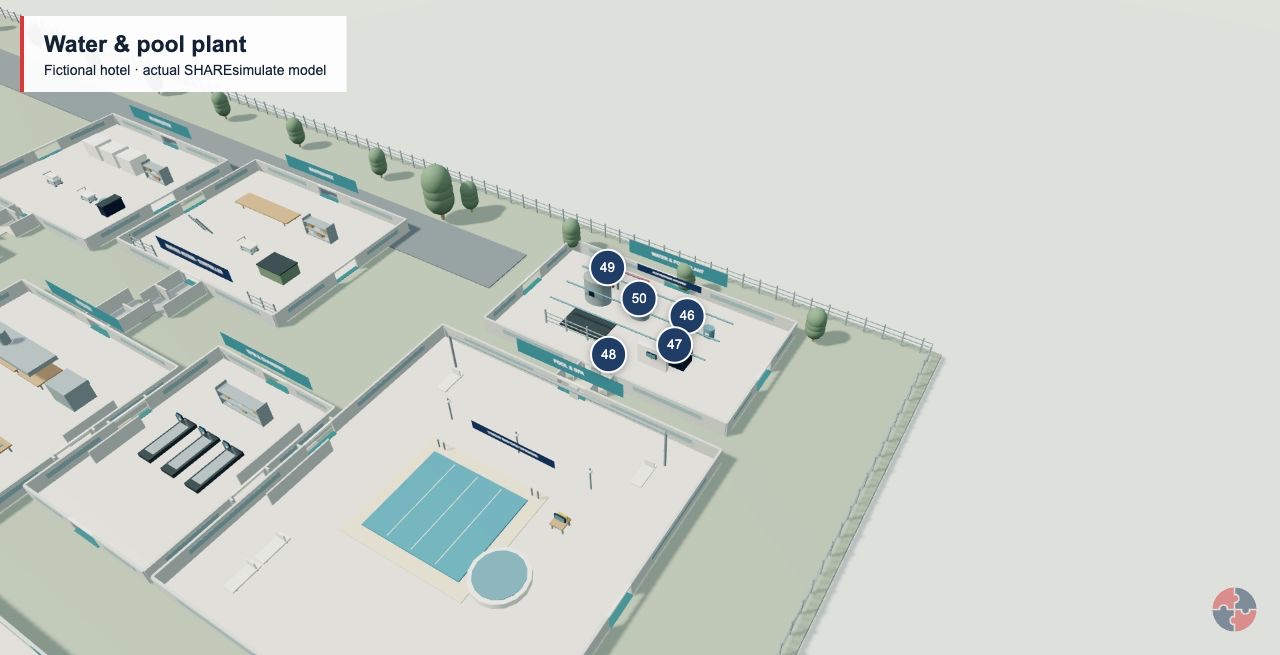
 READ THE LABEL · UNDERSTAND THE TASK
 Explosive
 Flammable
 Oxidising
 Gas under pressure
 Corrosive
 Acute toxicity
 Harmful / irritant
 Serious health hazard
 Hazardous to the environment

