SHARE Knowledge Hub
Violence-Related Injuries
Violence-related injuries include physical harm and psychological effects after work-related abuse, threats or assault; witnesses can be affected too. A push, bite or robbery can cause obvious wounds, hidden head or limb injury, or distress that appears later. Make the scene safe, use emergency or clinical help when indicated, and correct the work conditions that allowed harm before anyone returns to exposure.
What are violence-related injuries?
They are physical or psychological effects after work-related abuse, threats or assault, including effects on the person directly involved and on witnesses.
Physical effects can include pain, bruising, cuts, bleeding, bites, scratches, head impact, fractures, sprains or strains. Psychological effects can include shock, fear, anger, sleep or concentration difficulty and reluctance to return. These descriptions are signs or reported experiences, not diagnoses. Threats and abuse still need prevention and support even where no physical injury is visible. This page does not classify a crime, determine liability or replace clinical assessment.
- Make the scene safe Withdraw from ongoing violence and call 999 when danger or serious injury requires it.
- Provide trained first aid Care for bleeding, head injury, bites or other harm within competence; do not delay clinical advice.
- Use separate routes Clinical, police, safeguarding, workplace reporting and privacy decisions have different owners.
- Prevent recurrence Preserve facts after care, correct failed controls and verify a safe return before repeating exposure.
What is the first decision after violence or suspected injury?
Decide whether danger is still present: withdraw or shelter, call 999 for a crime in progress or immediate danger, and only approach to help when it is safe and within the emergency plan.
Do not pursue a person, recover property, search for a weapon, block an exit, improvise restraint or remain to gather evidence. Move other people away and give emergency services the location, continuing threat, injuries and access information. If danger has ended, prevent repeat contact, obtain first aid and decide whether urgent medical assessment is needed. A duress alarm supports a response only when it can be used safely. See GOV.UK Contact the police.
| Gate | Action |
|---|---|
| Violence continuing, weapon concern, crime in progress or immediate danger | Withdraw or shelter and call 999. GOV.UK police emergency route |
| Life-threatening injury or person unresponsive | Call 999 and follow dispatcher/first-aid guidance. UK emergency numbers |
| Danger ended but injury possible | Secure against repeat contact; first aid and clinical triage. HSE first aid at work |
| No visible injury after threat | Offer welfare, record and review; do not assume no harm. HSE violence reporting and learning |
Immediate care and follow-up are separate decisions
First establish whether it is safe to help and get emergency assistance for immediate danger or serious injury. The preserved bleeding model illustrates a limited first-aid distinction; it is not a complete violence-injury assessment or a diagnostic tool.

Protect the scene and summon help
Do not expose yourself or others to continuing violence. Use the emergency arrangements and call 999 where there is immediate danger or a serious medical emergency. Follow the emergency-call advice; do not delay care to complete an incident form.
Use first aid within competence
Recognise severe bleeding and obtain urgent help. Preserve the model’s distinction between an ordinary bleeding wound and an embedded object: do not remove an embedded object. The visual flow is directional, not a colour-coded diagnosis or instruction to use a device.
Consider injuries beyond bleeding
Head or neck concerns, bites and blood or body-fluid exposure can need prompt professional assessment even without dramatic visible bleeding. Use the relevant first-aid and clinical route for the circumstances; a model cannot rule out hidden injury.
Organise support and prevention alongside care
Arrange appropriate reporting, police or safeguarding involvement and support without holding up first aid or clinical contact. Preserve evidence sensitively and review the work arrangements, help response and withdrawal route before resuming the affected activity.
For immediate danger or a serious medical emergency, call 999. These teaching scenes do not replace emergency advice or a competent first-aid assessment.
Who owns each decision after the immediate danger?
One incident can require several owners: operations controls the work, first aiders provide immediate help, clinicians assess health, police investigate crime and safeguarding, human resources (HR), insurers and regulators decide their own routes.
Name an incident lead but do not merge authority. A supervisor can stop work and arrange care without waiting for a diagnosis. A first aider does not decide Reporting of Injuries, Diseases and Dangerous Occurrences Regulations (RIDDOR). Police reporting does not replace the internal record. An insurer does not authorise unsafe restart. HR must not use a welfare conversation as an investigation interview.
Which injury patterns require attention?
Treat mechanism, symptoms and change over time as prompts for safe escalation, not as proof of a diagnosis.
A person may have more than one concern, and stress can make recall difficult. Record what is observed and reported, when it began and whether it changes. Seek clinical advice for concerning or worsening symptoms, hidden injury, significant force, medicines or health conditions that may alter risk, or uncertainty about safe activity. Do not ask someone to prove pain or distress by continuing work.
What first aid should be given?
Use the trained workplace first-aid response, stay within competence, call emergency or urgent clinical help when indicated and hand over clearly; first aid is not a remote diagnosis or a substitute for treatment.
Check danger before approaching. Use suitable protective measures, gain consent where the person can decide, and follow current training and dispatcher instructions. Record the help given and handover, but keep health detail confidential. Do not invent treatment, medication, restraint, mandatory observation time or return criteria. Employers must base first-aid people, equipment, location and specialist capability on the assessed workplace risk in GB and NI. See HSE First aid in work overview.
| Do | Do not |
|---|---|
| Use current training, equipment and emergency plan. | Attempt care that exposes the helper to violence or blood. Source |
| Call 999 or the appropriate clinical route promptly. | Delay care to photograph, interview or complete a form. Source |
| Give factual handover: mechanism, symptoms, change and actions. | State a diagnosis or promise the injury is minor. Source |
| Respect consent, dignity and privacy. | Force examination, treatment or disclosure. Source |
When does a head injury need emergency or urgent assessment?
After a head impact, call 999 for unconsciousness, a seizure, inability to stay awake, or new problems with vision, hearing, speech, balance, sensation or strength. Do not ask a layperson to grade a neurological sign as “serious”. Use the nation-labelled emergency and urgent-assessment branches below, and escalate immediately if emergency signs or safe transport are uncertain.
Do not grade an injury from one observation or let an injured person drive when urgent assessment is indicated. Northern Ireland government guidance gives more detailed severe-head-injury cues; these are NI health-information examples, not a single GB-wide triage rule. Record the mechanism and changes for emergency or clinical staff.
England: emergency and urgent branches
NHS: Head injury and concussion (England): 999 cues include persistent unconsciousness, inability to stay awake, seizure, sensory or neurological changes, fluid or blood from the ears, high-speed impact, a fall exceeding 1 metre or 5 stairs, or a penetrating/dented head wound. The current NHS page also places changed behaviour in its 999 branch. For vomiting, dizziness, blood-thinning conditions or medication, intoxication at the injury or other worrying symptoms, use NHS 111 promptly unless an emergency cue applies. Follow the linked full criteria; do not drive yourself to A&E.
Northern Ireland: keep the nidirect branches separate
The linked nidirect severe-head-injury page directs 999 for its listed cues, including unconsciousness even briefly, confusion, seizure, speech or wakefulness difficulty, sensory change, repeated vomiting, ear/nose blood or clear fluid, memory loss, characteristic bruising and coordination difficulty. It separately directs hospital assessment for an intentionally inflicted head injury, previous brain surgery, clotting problems or blood-thinning medication, intoxication and certain high-force impacts. An intentional injury is a hospital-assessment reason; it is not by itself an automatic ambulance rule. Follow emergency-service instructions and do not let the injured person drive.
Wales: use the Welsh assessment branch
NHS 111 Wales: Head injury and concussion: call 999 for the listed emergency cues, including unconsciousness that continues, wakefulness difficulty, seizure, sensory or neurological problems, fluid/bleeding from the ears, falls exceeding 1 metre or 5 stairs, high-speed impact or a penetrating/dented wound. It directs A&E for recovered unconsciousness, vomiting, persistent headache, behaviour or memory change, intoxication, clotting risks or previous brain surgery. Call 999 if safe transport is unavailable; use 111 if unsure what to do. Do not drive yourself.
Scotland: use the Scottish service
NHS inform: Head injury and concussion routes. Call 999 for an emergency; for urgent care that is not an emergency, contact NHS 24 on 111. Keep Scottish clinical routing separate from the England and NI lists. The named clinical reviewer must verify the complete Scottish criteria and all four local routes before publication.
Clinical ownership: this source-labelled guidance does not confer clinical approval. Trained first aid and clinician diagnosis remain separate; worsening signs or uncertainty must not wait for a manager, form or publication review.
How should bleeding and wounds be handled?
Use trained first aid, control bleeding and call 999 for uncontrolled severe bleeding or other immediate danger.
Do not remove an embedded object. Protect helpers from blood exposure, and hand over wound mechanism, contamination and observed change to a clinical service. NI government wound advice gives local escalation detail; use the live urgent route for the person’s location.
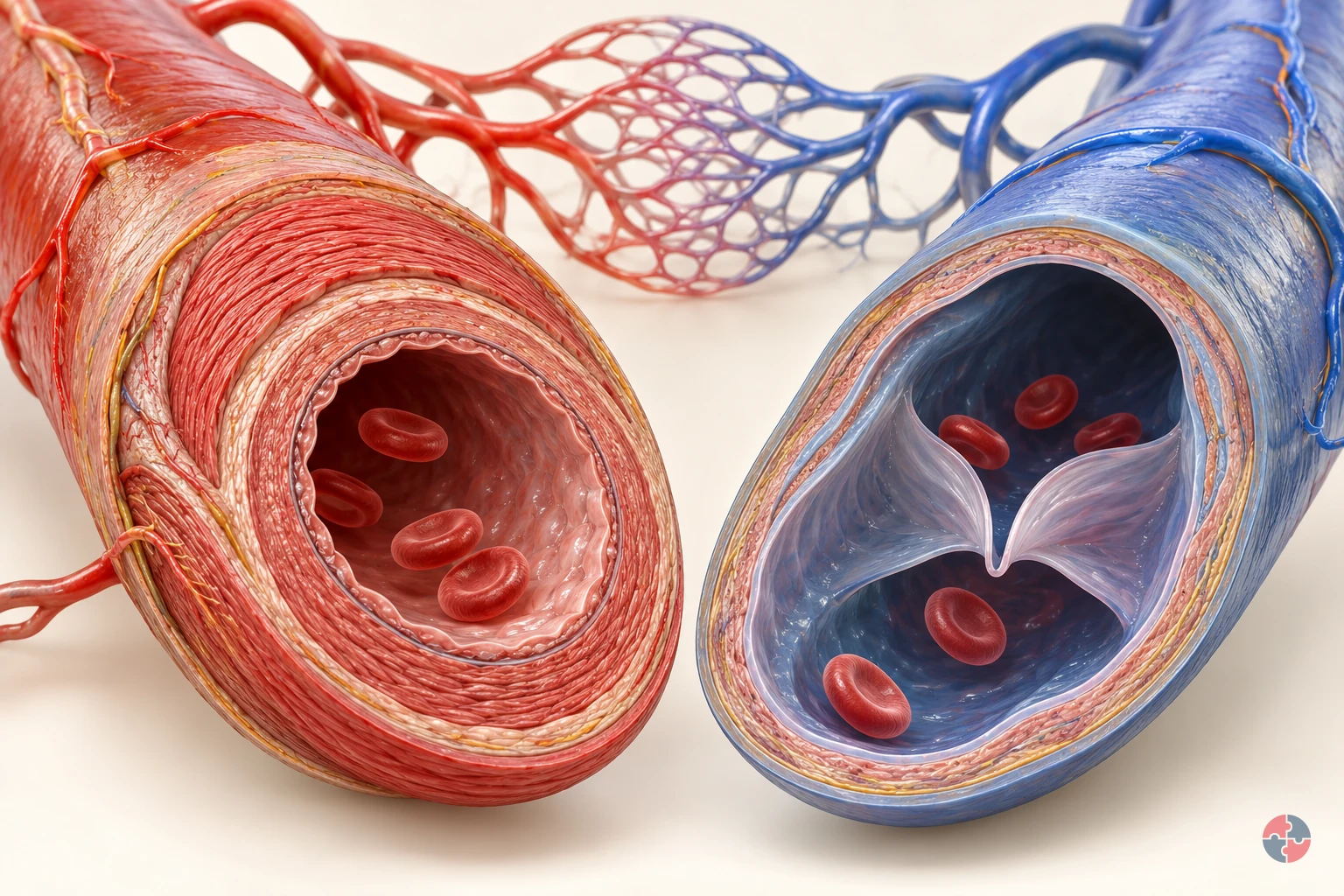

How do blood vessels work, and what should you do when bleeding is serious?
Interactive anatomy · Blood vessels and bleeding first aid · Updated 2026-10-23
Read all anatomy and process explanations without the viewer
Adult external limb examples. Not paediatric, obstetric, internal, eye, neck, chest or abdominal wound instruction. Amount, speed, control and condition guide urgency. No blood-colour grade, mandatory vessel identification, numerical blood-loss limit or loss calculator. Optional arterial/venous appearance cards omitted: they add little to the decision and can encourage unsafe identification delay. Do not enter unresolved machinery, electrical, traffic or sharp-object danger to reach a casualty. Ordinary pressure and embedded-object pressure are separate states. Around-object markers must not overlap the object; never probe or remove it. No universal scored choice to add or remove a soaked dressing. Maintain effective pressure and follow the selected reviewed training procedure and 999 directions. No universal leg elevation, independent walking or return-to-work clearance. No improvised belt/string exercise, placement geometry, packing every wound, loosening schedule, device dose or practical certificate. A quiz result does not authorise a device procedure. Emergency text uses 999; the general UK emergency alternative is 112. For non-emergency wound concerns use a GP or local urgent-care route, avoiding a universal NHS 111 instruction. Offer text-only before injury imagery. No gore, spray, alarm, distress audio, timed score, speed reward or emergency advice behind a pass mark. These are simplified original teaching scenes, not a diagnosis or substitute for live emergency instructions or hands-on skills.
Artery
Carries blood away from the heart. Pressure in arteries varies with the pumping cycle. Direction, not blood colour, defines an artery. University Hospitals Bristol NHS: Circulation information for patients and families, printed pages 36–38 · Manchester University NHS Foundation Trust: Blood vessels
Arterial wall
A strong, elastic wall accommodates pressure. The magnified wall surrounds an open lumen. This teaching cutaway does not display measured wall thickness or flow. University Hospitals Bristol NHS: Circulation information for patients and families, printed pages 36–38
Vein
Returns blood towards the heart. Venous return generally operates at lower pressure than the arterial supply. A vein injury can still cause dangerous bleeding. University Hospitals Bristol NHS: Circulation information for patients and families, printed pages 36–38 · NHS England / NHS ambulance services: Ten Second Triage: non-clinical responders supplementary information, bleeding section
Venous valve example
Many veins have valves that limit backward flow. This example is not present in every vein. The valve is shown inside the return vessel. University Hospitals Bristol NHS: Circulation information for patients and families, printed pages 36–38
Capillary network
Tiny vessels link small arterial and venous branches. Capillaries connect small arterial and venous branches close to the tissues. The network is greatly enlarged so its connections and exchange role can be discussed. Compare it with the larger-vessel labels rather than judging real vessel size from the screen. The model does not measure flow or use this network to determine the seriousness of a wound. University Hospitals Bristol NHS: Circulation information for patients and families, printed pages 36–38 · Manchester University NHS Foundation Trust: Blood vessels
Exchange wall
A very thin wall supports exchange with tissues. A thin vessel wall separates blood from surrounding tissue while allowing exchange of substances. Oxygen and nutrients can move towards tissues and wastes towards the blood. Follow that normal boundary before comparing the wound-opening example. Exchange through a normal wall is different from blood escaping through damaged vessels, and the illustration does not measure either process. University Hospitals Bristol NHS: Circulation information for patients and families, printed pages 36–38
Skin surface
A shallow graze can injure small surface vessels. This is a controlled minor-injury example, not a prediction that every shallow-looking wound is harmless. NHS: Cuts and grazes · North West Ambulance Service NHS Trust: Cuts and grazes: ambulance academy
Wound opening
A tissue break can let blood escape. The restrained wound icon identifies an opening. Its size or colour cannot establish the amount of blood already lost. NHS: Cuts and grazes · NHS England / NHS ambulance services: Ten Second Triage: non-clinical responders supplementary information, bleeding section
Pressure area
Ordinary-wound example: firm pressure over the bleeding area. Use a suitable dressing or clean folded cloth. An embedded object changes the pressure location; keep effective pressure and follow emergency guidance. NHS: Cuts and grazes · London Ambulance Service NHS Trust: Bystander Bleed Control: a London Joint Position Statement
Embedded object
Leave it in place and press around it. In this forearm example, pressure areas sit on either side without pressing onto the glass. Do not remove it or probe the wound. NHS: Cuts and grazes · NHS 111 Wales: First aid: heavy bleeding and shock sections
Circulating volume
Major blood loss threatens supply to vital organs. Shock means inadequate circulation, not simply feeling frightened. The volume symbol gives no safe-loss threshold or diagnosis. NHS 111 Wales: First aid: heavy bleeding and shock sections
Limb tourniquet: training context
An escalation device for appropriate life-threatening limb bleeding. Some uncontrolled arm or leg bleeding needs a suitable device and trained or emergency-directed response. This label does not show where or how to apply one. London Ambulance Service NHS Trust: Bystander Bleed Control: a London Joint Position Statement · Health and Safety Executive: First aid at work: L74, 2024 amendment
Open the complete process transcript
The process, step by step
Follow the circulation loop
Follow the direction arrows from an artery, through the capillary network and towards a vein. Arteries carry blood away from the heart; veins return it towards the heart. Capillaries connect the smaller branches and provide an exchange region near tissues. Compare these roles before opening the wound view so that normal circulation remains the reference. The vessels are enlarged and separated for teaching; their screen size and colour do not identify the seriousness of an actual wound. Trace the connected loop rather than treating each vessel as a separate container. University Hospitals Bristol NHS: Circulation information for patients and families, printed pages 36–38 · Manchester University NHS Foundation Trust: Blood vessels
What to watch: Follow the artery, capillary-network and vein labels in sequence, using the direction arrows to connect the three structures.
Why it matters: Normal circulation depends on connected supply, exchange and return. Understanding the loop makes the later wound explanation clearer without relying on blood colour or an assumed vessel type to judge an injury.
Explore this step: Trace the direction through all three vessel labels and describe each vessel’s normal role.
Compare the vessel walls
Compare the arterial wall, the valve example inside a vein and the much thinner capillary exchange wall. Each has a different role: the arterial wall accommodates pumping pressure, the valve example limits backward movement in that vein, and the thin exchange wall separates blood from nearby tissue. Many veins have valves, but this example is not present in every vein. The capillary is greatly enlarged for visibility. Compare structure with function without reading the illustrated wall thickness or opening as a measurement of an individual’s blood vessels. University Hospitals Bristol NHS: Circulation information for patients and families, printed pages 36–38
What to watch: Locate the arterial wall, the venous-valve example and the capillary exchange wall, comparing their labelled functions rather than screen dimensions.
Why it matters: Different vessel structures support different functions within the same circulation. The comparison explains those roles without making the model a way to identify a bleeding vessel or measure its pressure from appearance.
Explore this step: Select each structure and match its label to pressure accommodation, limited backward flow or exchange.
Separate exchange from an injury
At a capillary, substances normally pass across a thin boundary between blood and tissue. That exchange is not the same as blood escaping from an open wound. Compare the exchange-wall label with the wound-opening label: one explains normal transport, while the other identifies a break through which blood can leave damaged vessels. The simplified pictures make the distinction visible without measuring a loss of blood. Return to the vessel network after examining the opening so that the injury is understood against the normal connected circulation. University Hospitals Bristol NHS: Circulation information for patients and families, printed pages 36–38 · NHS: Cuts and grazes
What to watch: Compare the capillary exchange-wall label with the separate wound-opening label, keeping the normal boundary and the tissue break distinct.
Why it matters: Normal exchange supplies tissues while blood remains within the circulation. A wound is a different event, so the amount and control of bleeding cannot be inferred from the normal capillary illustration.
Explore this step: Describe the difference between crossing the normal exchange boundary and escaping through an injured vessel.
Look at the wound and the person
This supported forearm shows where the skin is broken. Judge the amount and speed of bleeding, whether it is controlled and how the person is. Severe bleeding needs pressure and 999 immediately; this close-up is an explanation, not a waiting stage. The wound and circulating-volume labels connect the local opening with the wider circulation. Their illustrated size or colour does not measure how much blood has been lost or establish that the person is safe. NHS: Cuts and grazes · NHS England / NHS ambulance services: Ten Second Triage: non-clinical responders supplementary information, bleeding section · North West Ambulance Service NHS Trust: Cuts and grazes: ambulance academy
What to watch: Compare the skin break and wound opening with the circulating-volume label, keeping the person’s overall condition in view.
Why it matters: A small drawing cannot establish the seriousness of bleeding or the person’s condition. The visual explanation supports understanding without creating an extra assessment stage before the existing immediate emergency response.
Explore this step: Compare the wound and circulation labels without treating completion of this step as a condition for accessing emergency help.
See sustained pressure through a dressing
Watch the hand settle onto the dressing and hold it against the wound. The visual compression explains pressure; reduced illustrated flow does not prove bleeding is controlled. Keep pressure and emergency help going for severe bleeding. Select Embedded object to see the separate pressure-around example. In that example the pressure areas remain beside the object, not on it; leave the object in place. The comparison explains an existing boundary, not a new procedure or a reason to delay 999. NHS: Cuts and grazes · London Ambulance Service NHS Trust: Bystander Bleed Control: a London Joint Position Statement · NHS 111 Wales: First aid: heavy bleeding and shock sections
What to watch: Locate the dressing and pressure-area labels, then compare them with the separate embedded-object example and its pressure areas.
Why it matters: The pressure location matters when an object is embedded. Comparing the two examples preserves that distinction while keeping continuous pressure and emergency help ahead of completing the teaching sequence.
Explore this step: Read the ordinary-wound and embedded-object captions side by side, keeping their different pressure locations distinct.
Practise the next decision
Try the four adult scenarios. Every answer has an explanation. Emergency help remains available without completing the sequence or passing a quiz. Compare the wording of the wound, embedded-object and training-context labels before reading the answer feedback. The scenarios are decision explanations, not permission to attempt a device technique or a substitute for training. Keep the existing severe-bleeding priority in view: pressure and 999 immediately, with no requirement to finish this activity first. NHS: Cuts and grazes · London Ambulance Service NHS Trust: Bystander Bleed Control: a London Joint Position Statement · Health and Safety Executive: First aid at work: L74, 2024 amendment
What to watch: Compare the pressure-area, embedded-object and training-context labels with the scenario wording before reading the explanation for an answer.
Why it matters: Feedback explains why different situations need different decisions. Finishing the activity is neither proof of practical competence nor a prerequisite for emergency help, and the existing immediate response hierarchy remains unchanged.
Explore this step: Explore a scenario and compare its explanation with the relevant label; emergency help remains independent of the activity.
Mechanisms and their limits
Larger-vein injury: severe bleeding can occur A damaged larger vein can lose substantial blood. Lower normal vessel pressure does not make an uncontrolled wound safe. Help and effective pressure take priority over identifying the vessel. No blood-colour or flow-pattern test is used to decide urgency. The neutral diagram neither estimates blood loss nor predicts injury depth. Severe continuing bleeding is urgent regardless of the vessel. University Hospitals Bristol NHS: Circulation information for patients and families, printed pages 36–38 · London Ambulance Service NHS Trust: Bystander Bleed Control: a London Joint Position Statement · NHS England / NHS ambulance services: Ten Second Triage: non-clinical responders supplementary information, bleeding section
NHS ambulance advice on bystander bleeding control
HSE workplace first-aid provision
Arterial injury: act without waiting for a pattern An arterial opening can cause serious blood loss. This is a separate example of uncontrolled limb bleeding; the safe response does not wait for bright blood or spurting. Severe venous bleeding can also be life-threatening; these cards are not a ranking of urgency. No spraying animation, pressure value or safe blood-loss quantity is shown. Device demonstration is gated. Continue immediate bleeding control and emergency communication; do not stop effective pressure to search for or improvise a tourniquet. University Hospitals Bristol NHS: Circulation information for patients and families, printed pages 36–38 · London Ambulance Service NHS Trust: Bystander Bleed Control: a London Joint Position Statement · NHS England / NHS ambulance services: Ten Second Triage: non-clinical responders supplementary information, bleeding section
NHS ambulance bleeding-control guidance
HSE needs assessment and additional training
Larger-vein injury: severe bleeding can occur — follow the anatomy
Look at: The larger vein beneath the wound.
What changes: A cut vein can release a substantial volume of blood.
Why it matters: Severe blood loss is possible even without bright spurting blood.
What to do: Apply firm direct pressure, call 999 for severe bleeding and follow the visible emergency guidance.
Heavy bleeding from a sheet-metal laceration
An adult cuts a forearm on sheet metal; machinery is stopped, the area is safe and their sleeve is rapidly soaking. The 48-second playback allows time to read each explanation. It is not a treatment timer: severe bleeding needs immediate pressure and 999 throughout. This chosen larger-vein diagram must not be treated as a bystander diagnosis. Severe venous bleeding can be life-threatening, and colour is not the triage rule.
Begin pressure and help now With the area safe, apply firm pressure and ask the helper to call 999 and bring the kit. Do not send the person away alone or wait to identify the bleeding vessel. London Ambulance Service NHS Trust: Bystander Bleed Control: a London Joint Position Statement · NHS: Cuts and grazes
A deeper opening can injure a larger vessel The opening and nearby vessel are enlarged to explain a possible source of bleeding. In the real situation, pressure and the call for help continue while this cutaway is explained. University Hospitals Bristol NHS: Circulation information for patients and families, printed pages 36–38 · NHS England / NHS ambulance services: Ten Second Triage: non-clinical responders supplementary information, bleeding section
Continuing loss threatens circulation Bleeding continues at the wound in this severe example. Lower normal venous pressure does not make it safe. The visual amount is illustrative; act on continuing loss and the person’s condition. NHS 111 Wales: First aid: heavy bleeding and shock sections · NHS England / NHS ambulance services: Ten Second Triage: non-clinical responders supplementary information, bleeding section
Hold pressure and continue emergency communication The hand settles onto the dressing and keeps pressure in place. Reduced illustrated flow is not proof of control. Follow 999, report deterioration and use the separate pressure-around example if an object remains embedded. London Ambulance Service NHS Trust: Bystander Bleed Control: a London Joint Position Statement · NHS: Cuts and grazes · NHS: When to call 999
Arterial injury: act without waiting for a pattern — follow the anatomy
Look at: The injured artery and the blood leaving the wound.
What changes: An artery can lose blood rapidly because it carries blood under pressure.
Why it matters: Uncontrolled bleeding can become life-threatening; do not wait for a particular colour or pattern.
What to do: Call 999 and apply firm direct pressure; press around an embedded object and leave it in place.
Uncontrolled limb bleeding after a power-tool injury
An adult has severe forearm bleeding after a power-tool injury. The tool is isolated, a helper is calling 999 and direct pressure has not controlled the loss. The 48-second playback allows time to read each explanation. It is not a treatment timer: severe bleeding needs immediate pressure and 999 throughout. No vessel naming or colour test is required. The practical-device layer and both high-risk content branches remain disabled; this example teaches no placement, packing or loosening procedure.
The scene is safe and help is already being called Firm pressure is being maintained while 999 receives the location and report of uncontrolled limb bleeding. If alone, follow the call handler using speakerphone where possible. London Ambulance Service NHS Trust: Bystander Bleed Control: a London Joint Position Statement · NHS: When to call 999
One arterial-injury example The wound is enlarged to explain an arterial-injury example. Do not wait to name the vessel or look for a particular blood colour or pattern before helping. Pressure and emergency communication continue. University Hospitals Bristol NHS: Circulation information for patients and families, printed pages 36–38 · NHS England / NHS ambulance services: Ten Second Triage: non-clinical responders supplementary information, bleeding section
Act on loss and the person’s condition The wound remains an emergency because bleeding is uncontrolled despite pressure. The red highlight locates the illustrated injury; it does not measure loss or predict when the person will deteriorate. London Ambulance Service NHS Trust: Bystander Bleed Control: a London Joint Position Statement · NHS 111 Wales: First aid: heavy bleeding and shock sections · NHS England / NHS ambulance services: Ten Second Triage: non-clinical responders supplementary information, bleeding section
Escalate through live emergency guidance Keep pressure over the dressing and tell 999 that bleeding remains uncontrolled. Follow their directions. Appropriate equipment needs the relevant training; this model does not demonstrate packing or a device procedure. London Ambulance Service NHS Trust: Bystander Bleed Control: a London Joint Position Statement · Health and Safety Executive: First aid at work: L74, 2024 amendment · NHS: When to call 999
Read the practice situations and all answer explanations
BL-Q1: What should happen immediately?
An adult cuts their forearm on sheet metal. The machinery is stopped and the area is safe. Blood is flowing heavily and rapidly soaking their sleeve. They are awake; a helper is beside you.
Apply firm pressure and ask the helper to call 999 and bring the first-aid kit. — Correct. Begin bleeding control while the helper calls. Keep helping where it is safe, and follow emergency directions.
Decide whether the blood is bright or dark first. — Do not delay for colour or vessel identification. Heavy continuing loss already needs urgent action.
Wash the wound thoroughly before controlling the bleeding. — Cleaning is for the appropriate minor-care stage. It must not delay pressure and help for severe bleeding.
Send them alone to the first-aid room. — Keep assistance with them. Sending them away alone delays control and risks deterioration without support.
London Ambulance Service NHS Trust: Bystander Bleed Control: a London Joint Position Statement · NHS 111 Wales: First aid: heavy bleeding and shock sections · NHS England / NHS ambulance services: Ten Second Triage: non-clinical responders supplementary information, bleeding sectionBL-Q1-control: What should you do next?
The bleeding now appears controlled while the ambulance is on its way. The person says they feel better.
Keep monitoring them, maintain control and follow emergency advice. — Correct. Stay with them, watch for changes and tell the call handler if bleeding restarts or their condition worsens.
Cancel help because they feel better. — Feeling better does not establish that the earlier heavy loss was harmless. Follow emergency advice rather than cancelling independently.
Send them back to work to see whether they cope. — An apparent improvement is not medical clearance. Keep assistance with them.
London Ambulance Service NHS Trust: Bystander Bleed Control: a London Joint Position Statement · NHS 111 Wales: First aid: heavy bleeding and shock sections · NHS: When to call 999BL-Q2: What is suitable for this described injury?
An adult has a shallow knee graze, a small amount of oozing, no embedded object and feels well. Simple pressure stops the bleeding.
Gently rinse with clean water, dry and cover with an appropriate dressing. — Correct for this controlled minor wound. Keep the dressing clean and watch for problems; changed symptoms need changed advice.
Use a tourniquet. — A controlled superficial graze does not call for this escalation device.
Scrub the raw surface hard. — Clean gently. Harsh scrubbing is not the advised minor-wound care.
Ignore it because capillary injuries never need care. — Minor wounds still need cleaning, protection and monitoring. The label does not remove infection risk.
NHS: Cuts and grazes · North West Ambulance Service NHS Trust: Cuts and grazes: ambulance academyBL-Q2-contamination: What is the appropriate follow-up?
The small graze remains dirty after gentle cleaning, or later becomes increasingly painful, swollen or produces pus.
Seek prompt professional advice through a GP or the local urgent-care route. — Correct. Persistent contamination or possible infection needs assessment. Mention feeling unwell or fever when asking for help.
Keep ignoring it because the original bleeding was small. — Small initial blood loss does not rule out an infection or a wound that needs treatment.
Scrub the wound deeply or remove embedded material yourself. — Do not probe or force out embedded material. Seek professional wound care.
NHS: Cuts and grazes · Bradford District Care NHS Foundation Trust: Looking after your woundBL-Q2-uncontrolled: What should replace the minor-wound advice?
The situation has changed: the bleeding will not stop. This is no longer the controlled minor graze described at the start.
Apply firm pressure and obtain emergency help now. — Correct. Bleeding that will not stop needs urgent assessment. Call 999, keep effective pressure and follow the call handler.
Carry on with minor cleaning and wait for the quiz score. — The new warning sign overrides the minor branch. Do not let cleaning or a score delay help.
Assume a graze cannot cause a serious problem. — The current bleeding and condition determine the response, not the original label.
NHS: Cuts and grazes · London Ambulance Service NHS Trust: Bystander Bleed Control: a London Joint Position StatementBL-Q3: What is appropriate for this explicit trained scenario?
A power-tool injury causes heavy lower-leg bleeding. The tool is isolated, a helper has called 999 and firm pressure has not controlled the loss. A trained responder has the commercial tourniquet they have practised using.
Escalate with the specified device according to training and emergency guidance. — Correct for this specified life-threatening limb-bleeding scenario and trained responder. Continue emergency communication. Use approved hands-on training for the practical procedure; this activity does not demonstrate or authorise it.
Repeat ineffective pressure indefinitely without reporting the continuing loss. — Continuing major loss needs prompt escalation and an update to 999, not indefinite repetition without reassessment.
Wait until the blood looks bright red. — Colour does not determine the indication. The severe uncontrolled bleeding is already the concern.
Use the device merely because the injury is painful. — Pain alone is not the indication. The scenario specifies serious limb bleeding that pressure has not controlled.
London Ambulance Service NHS Trust: Bystander Bleed Control: a London Joint Position Statement · Health and Safety Executive: First aid at work: L74, 2024 amendment · NHS: When to call 999BL-Q3-untrained: What should you do while emergency help is coming?
The same leg wound is still bleeding heavily despite pressure. You have not been trained in the device in the trauma kit.
Tell 999 that pressure is failing, keep assistance with the person and follow the call handler’s guidance. — Correct. Clearly report the continuing loss and available kit. Follow live emergency guidance; this activity does not teach placement or substitute for device instructions and training.
Stop pressure to search for a belt or string to improvise a device. — Do not abandon pressure to find or improvise a tourniquet. Keep emergency communication and effective bleeding control.
Say you cannot help at all because you do not hold a device certificate. — You can summon help, maintain pressure and follow emergency instructions. A quiz certificate is not the boundary for calling or assisting.
London Ambulance Service NHS Trust: Bystander Bleed Control: a London Joint Position Statement · Health and Safety Executive: First aid at work: L74, 2024 amendment · NHS: When to call 999BL-Q4: What should you do?
An adult has a large piece of glass embedded in the forearm. The area is secured, but bleeding continues around it.
Leave the glass in place, apply pressure around it and obtain emergency help. — Correct. Keep pressure away from the object. This is a forearm illustration; it does not teach treatment of eye, neck, chest or abdominal wounds.
Pull it out to make a dressing fit. — Do not remove the object yourself. Removing it can worsen the injury or bleeding.
Press on the glass or probe for its tip. — Do not push on it or probe. Pressure should be around the object while emergency help is arranged.
NHS: Cuts and grazes · NHS 111 Wales: First aid: heavy bleeding and shock sectionsBL-Q4-deterioration: What should you do?
The person with the embedded glass becomes cold, clammy and weak.
Update 999, continue appropriate bleeding control, keep them warm and monitor responsiveness and breathing. — Correct. These may be warning signs of serious circulatory deterioration. Act and update the call handler; you do not need to diagnose shock.
Treat it only as fright and leave them to settle. — After significant bleeding, weakness and clamminess must not be dismissed as an emotional reaction.
Make them walk around or raise their injured limb regardless of other injuries. — Avoid unnecessary movement. Positioning must account for injuries and emergency advice; there is no universal leg-raising answer.
NHS 111 Wales: First aid: heavy bleeding and shock sections · NHS: Broken leg · NHS: When to call 999Sources and how the model is made
The opening images are AI-generated anatomical illustrations. The interactive 3D models and labelled SVG diagrams use original procedural artwork. These teaching images are not medical scans or diagnostic tools. Source references support the learner explanations and do not grant artwork rights.
- University Hospitals Bristol NHS: Circulation information for patients and families, printed pages 36–38 — Normal arterial/venous direction, elastic wall, valve example and capillary exchange only. NHS-hosted patient/family resource; no congenital management advice or illustration copied.
- Manchester University NHS Foundation Trust: Blood vessels — Arteries, veins and capillaries and their normal function; no first-aid procedure.
- NHS: Cuts and grazes — Controlled minor wound cleaning/covering, gloves, pressure, embedded-object exception and when urgent/emergency assessment is needed. Current page checked; no universal soaked-dressing, elevation, medication or tourniquet rule adopted.
- London Ambulance Service NHS Trust: Bystander Bleed Control: a London Joint Position Statement — 21 August 2024 NHS-led joint statement: continuous pressure, 999, training, specific tourniquet knowledge and uncontrolled limb bleeding. Do not stop pressure to find or improvise a tourniquet. London position, not a product demonstration or certification.
- NHS 111 Wales: First aid: heavy bleeding and shock sections — Heavy bleeding, embedded objects, physiological shock, warmth and emergency communication only. Older general page; unrelated procedures, universal elevation and its recovery-position wording are not adopted. Current dedicated cardiac-arrest source controls gasping.
- University Hospital Southampton NHS Foundation Trust / Wessex Trauma Network: Adult major trauma guidelines: tourniquet handover — Professional context only: record application time, alert receiving team and require urgent clinical reassessment. Hospital conversion/release schedules, device pressures, placement, drugs and surgical procedures are not learner instructions. Explicit layperson post-application wording requires named trainer review.
- NHS England / NHS ambulance services: Ten Second Triage: non-clinical responders supplementary information, bleeding section — April 2023 major-incident training context: not every life-threatening bleed is pulsatile. Used only to avoid blood-pattern delay. No triage, wound-packing or multiple-casualty algorithm taught.
- North West Ambulance Service NHS Trust: Cuts and grazes: ambulance academy — Basic gentle minor-graze care and 999 for heavy bleeding that does not stop. Child-facing explanation used only for general care principles; adult severe-bleeding decisions use the NHS ambulance statement.
- Bradford District Care NHS Foundation Trust: Looking after your wound — Definition of skin wound and infection-awareness context. Its district-nursing dressing plan is not substituted for the separate minor-injury branch or emergency control.
- NHS: Broken leg — Possible fracture limits movement and weight bearing; supports avoiding universal limb elevation or walking after limb trauma. No fracture manipulation taught.
- Health and Safety Executive: First aid at work: L74, 2024 amendment — Needs assessment, additional equipment and training, including wound packing and tourniquets for life-threatening bleeding; paragraphs 39 and 72–73 and Appendix 4. HSE does not approve this activity or training provider.
- NHS: When to call 999 — Emergency call-handler directions, staying with the person and updating 999 when their condition changes. No universal NHS 111 advice for every UK nation.
- NHS 111 Wales: Cardiac arrest — Dedicated adult recognition and response: unresponsive and abnormal breathing, including gasping, immediate 999, CPR and AED. Qualified review must approve combined traumatic bleeding/airway branches.
What should happen after a bite, scratch or body-fluid exposure?
Move to safety, give first aid within competence and seek prompt clinical assessment for a human bite that breaks skin or a possible blood exposure.
Do not infer infection from an injury. The NI government bite page sets out NI clinical cues; GB workers should use their current local urgent-care service for case-specific advice. HSE bloodborne-virus procedures still govern workplace exposure response.
How should suspected sprains, strains or fractures be handled?
Protect the person from further harm and obtain urgent clinical advice for a suspected fracture, changed limb shape, loss of sensation or inability to bear weight.
Do not force movement or diagnose a sprain from the appearance alone. In a medical emergency call 999. NI government information describes local fracture and sprain routes; elsewhere use the live local service.
How should psychological effects be recognised without diagnosis?
Check immediate safety, offer practical support and use urgent services if a person is in immediate danger or cannot remain safe.
Record what the person reports without diagnosing a condition or deciding fitness from one conversation. Offer a confidential clinical or occupational-health route and review work controls. The NI mental-health emergency page supports NI service routing; other nations require their current local service.
When is safeguarding action needed?
Contact the organisation’s competent safeguarding lead promptly about a possible child or adult-at-risk concern; this table is a contact-and-recording aid, not a statement of statutory thresholds. Immediate danger still goes to 999.
Safeguarding can arise from the injury, the alleged aggressor, repeat contact, coercion, domestic abuse, care relationships or other people at the scene. Preserve safety and necessary information without requiring the injured person to make a complete disclosure immediately. Explain the limits of confidentiality. Thresholds, agencies and terminology differ across England, Wales, Scotland and Northern Ireland, so a competent local lead must decide and record the route.
| Concern | Action |
|---|---|
| Immediate danger or crime in progress | 999 and emergency safeguarding plan. Sources: GOV.UK; NI reporting a crime |
| Child or adult at risk may remain exposed | Contact the competent safeguarding lead, who verifies the current local statutory route before use. Source: GOV.UK staff-record privacy |
| Worker-on-worker or domestic context | Safety plus safeguarding/HR/specialist route; no forced mediation. Source: GOV.UK staff-record privacy |
| Uncertainty | Escalate to competent lead and record why; do not ignore. Source: GOV.UK staff-record privacy |
Evidence boundary: staff-record privacy guidance supports necessary, secure records; it does not establish safeguarding thresholds or agencies. Before relying on a local response plan, the competent lead must verify nation- and sector-specific statutory routes, decision owners and out-of-hours contacts. This page does not replace that verification. Preserve the limits of confidentiality and never require forced mediation.
How should injury and incident information be handled?
Collect and share the minimum accurate information needed for care, safety, reporting and fair process, with a lawful basis, restricted access, retention control and an explanation to the affected person where possible.
Keep clinical detail separate from operational controls. A supervisor may need functional restrictions but not a diagnosis. Police or safeguarding sharing must be necessary and proportionate; urgent safety can take priority over routine approval, but the decision should be recorded. Do not place medical details, allegations or graphic images in broad-access logs or warning flags. Do not promise absolute confidentiality when disclosure may be necessary to protect someone.
What evidence should be preserved after care begins?
Preserve original, dated and attributable material that explains the event, injuries reported, controls and response, without delaying rescue, treatment or safeguarding.
Record time, place, observable words and actions, mechanism, reported symptoms, first aid, emergency calls, witnesses, staffing, alarms and scene changes. Put a lawful retention hold on relevant closed-circuit television (CCTV), body-worn footage, messages, access logs and calls before routine deletion. Keep original files and metadata; do not crop, annotate or circulate the only copy. Do not photograph an injury without a clear purpose, consent or legal basis. Keep accounts independent and avoid repeated retelling.
When should the police route be used?
Call 999 for a crime in progress or immediate danger; use online reporting or 101 for a past non-emergency crime, including the NI police route in Northern Ireland.
Do not require an injured worker to make an immediate non-emergency report as a condition of support. Preserve contact details and evidence, explain available routes and follow police directions where they take control. The employer can report or share information where lawful and necessary, especially where others remain at risk, but must not promise a charging outcome. Police reporting does not replace safeguarding, internal safety action, RIDDOR or an employment process.
| Situation | Route |
|---|---|
| Violence happening, offender nearby or immediate danger | 999. Sources: GOV.UK; NI reporting a crime |
| Past assault or threat with no immediate danger | Police online or 101. Source: GOV.UK |
| NI non-emergency | NI police online or 101. Source: NI reporting a crime |
| Worker unsure or not ready | Offer support; assess risk to others and lawful employer action. Source: HSE |
What should the internal injury and incident record contain?
Start with a short, accessible factual record, then add care, route and control decisions without requiring a polished statement from the injured person.
Record what happened, when and where, people needing help, current danger, mechanism, observed or reported effects, first aid, medical route, emergency or police calls and immediate controls. Mark uncertainty and source. Offer paper, digital, supported or alternative-manager routes. Keep the clinical record confidential and link only necessary functional information. Record threats and near misses as well as injury so prevention is not driven only by severity.
How should the incident be investigated without blame?
Investigate immediate, underlying and organisational causes after urgent needs are met, and test whether corrected controls prevent repeat harm rather than focusing only on the injured worker or aggressor.
Examine service design, staffing, workload, layout, known warnings, information sharing, supervision, alarms, withdrawal authority and management decisions. Keep fact gathering separate from welfare and disciplinary interviews where possible. Do not infer that de-escalation failure, distress, absence or memory gaps caused the event. Protect fair process for all parties and co-ordinate with police without contaminating evidence.
Which routes must remain separate?
Internal safety records, police crime reporting, safeguarding, clinical and occupational-health care, GB or NI RIDDOR, employment, civil and insurer routes answer different questions.
A police report is not a medical diagnosis. Treatment does not decide RIDDOR. A RIDDOR report is not an admission of liability. HR action must be fair and does not replace immediate controls. Insurer notification follows policy terms and does not authorise restart. Civil claims need jurisdiction-specific advice. Record the owner and rationale for each route, including decisions not to use it.
| Route | Question |
|---|---|
| Clinical/OH | What care, advice or functional adjustment is needed? |
| Internal safety | What happened and what work controls must change? |
| Police/safeguarding | What crime or protective action applies? |
| RIDDOR | Does the jurisdiction-specific statutory threshold apply? |
| Employment/civil/insurer | What fair process, claim, advice or notification applies? |
How do GB and Northern Ireland RIDDOR thresholds differ?
GB and Northern Ireland have separate RIDDOR regimes: confirm location, responsible person, work connection, physical injury category and incapacity period rather than copying one rule across the UK.
In GB, HSE says work-related violence is reportable when it causes death, a specified injury, or a physical injury preventing normal duties for more than seven days; over-three-day work injuries must be recorded. In NI, HSENI applies the 1997 regulations: non-consensual work-related violence causing death, a major injury or more than three days of incapacity is reportable. NI serious events may require notification without delay and the prescribed report. Personal disputes unconnected with work can fall outside RIDDOR. Psychological effects alone do not become reportable simply because they are serious; use the exact applicable categories and competent advice. See HSE RIDDOR reporting route. Northern Ireland: HSENI accident reporting.
| Workplace | Threshold summary | Route |
|---|---|---|
| England, Scotland or Wales | Death, specified injury or over-seven-day physical incapacity; record over-three-day work injury. | HSE or relevant GB enforcing authority. Source |
| Northern Ireland | Death, major injury or over-three-day incapacity from non-consensual violence arising from work. | HSENI or relevant district council. Source |
| Any UK location | Internal recording, police, support and insurer routes may be broader. | Organisation plus separate competent owners. Source |
What immediate welfare should be offered?
Offer privacy, a safe contact, medical help, practical assistance, safe travel and a chosen companion, while including witnesses and responders who may also be affected.
Ask what the person needs now and again later. Explain processes and choices. Do not leave someone alone because an injury looks minor, require them to finish a shift, send them home to an unsafe situation, or make support conditional on a statement or police report. Consider communication, disability, language, caring responsibilities and whether a different manager is appropriate. Support is not a substitute for correcting the work.
What does trauma-informed contact look like?
Use safety, choice, clear information, privacy and paced contact; avoid forcing an account, diagnosing trauma or requiring counselling.
People react differently, and effects can change. Ask permission before detailed questions, explain why information is needed and avoid repeated retelling. Offer counselling, peer, union, GP, occupational health (OH) or specialist victim support where available, but do not present one service as mandatory treatment. Provide updates even when there is no final outcome. Avoid labels such as resilient, unfit or recovered unless a qualified decision within role supports them.
How should absence, continued work and return be decided?
Agree safe work and adjustments with the person, using clinical or occupational-health advice where needed; do not invent a universal clearance, fixed recovery period or automatic return to the same exposure.
A manager controls work and can remove exposure immediately. government employment guidance describes a private return conversation, support, phased return and reasonable adjustments as possible tools; a return meeting is not universally a legal requirement. OH can advise on function, risks and adjustments with consent. Consider contact restrictions, location, hours, travel, workload, buddying, time for treatment and alternative duties. Review after work resumes and retain the right to pause. Absence or return does not prove severity, fault or fitness for every task.
What controls must be corrected before exposure resumes?
Correct the source, environment, staffing, information and emergency-response failures that allowed the incident or worsened the injury; support or training alone is not enough.
Verify safe exits, staffing, queue or appointment design, visit planning, cash exposure, access control, alarms, first-aid coverage, responder time, safeguarding and current risk information. Apply improvements to similar tasks and locations. If a known threat remains, do not return the person to that contact while relying only on confidence, resilience or de-escalation. Release work through a named operational owner after field verification, not because the injured person feels pressure to return. See HSE Control measures to prevent violence and aggression.
| Failure | Correction | Release evidence |
|---|---|---|
| Trapped or isolated worker | Layout, location, staffing or remote alternative. | Observed exit and response test. Source |
| Delayed first aid or emergency response | Needs assessment, cover, kit, access and call plan. | Scenario test across shifts. Source |
| Known warning not acted on | Information, review owner and contact controls. | Current lawful briefing and decision. Source |
| Worker blamed for escalation | Investigation and management-system action. | Leadership review and worker feedback. Source |
What should happen after a push and head impact at reception?
Riverside should end the threat, call 999 for emergency signs, obtain urgent clinical advice for concerning symptoms, support the worker and preserve CCTV only after care is under way.
At Riverside Leisure Ltd, a worker is pushed while leaving the counter and hits their head. A colleague does not confront or pursue the person. The duty manager secures the staff area, calls 999 if danger continues or emergency head-injury signs are present, and follows trained first aid. The worker is not asked to drive, finish the shift, diagnose concussion or make a full statement. CCTV, roster, alarm and queue records are preserved, and the reception design is corrected before normal work resumes.
| Gate | Action |
|---|---|
| Current danger | Withdraw, protect others and call 999. |
| Emergency head-injury sign | 999 and dispatcher guidance. |
| Other worrying symptom | the nation-specific urgent assessment route in the head-injury section. |
| After care | Support, separate routes, evidence and corrected controls. |
Riverside reception head-impact response
Task material and setting: Evening reception refusal; worker is pushed while withdrawing and hits their head.
People and prerequisites: Worker, colleague, duty manager, members; safe staff area, first-aid cover and emergency call plan.
Before: Queue, exit, staffing, alarm, first-aid and responder access checked.
During: No confrontation or pursuit; danger gate first, then trained first aid and clinical escalation.
Hold or stop: Stop public contact; 999 for ongoing danger or emergency head-injury signs.
Completion and hand back: Care and support arranged; evidence held; reception controls verified before release.
Evidence: Incident/first-aid record, symptoms reported, calls, CCTV original, roster, alarm timeline and action verification.
How should a human bite during a home visit be handled?
The visitor should leave, wash and cover broken skin within first-aid competence, obtain prompt clinical and blood-exposure advice, and use safeguarding and reporting routes without diagnosing infection.
A Riverside community worker is bitten on the hand during an escalating home visit. They do not restrain the person or remain to finish the visit. The co-ordinator confirms safety, calls emergency help if danger continues, starts the local bite and blood-exposure pathway, and arranges safe travel. The organisation shares only necessary information with clinicians and safeguarding leads. Future contact is paused until risk, venue and staffing controls are reassessed.
| Decision | Action |
|---|---|
| Can the worker leave safely? | Withdraw and activate visit/emergency plan. |
| Skin broken or hand/head/face involved? | First aid and urgent clinical advice. |
| Blood/body-fluid concern? | Use local urgent BBV exposure pathway. |
| Safeguarding or repeat risk? | Competent lead and revised contact plan. |
Riverside home-visit bite response
Task material and setting: Community wellbeing visit at a private home; escalating behaviour leads to a bite on the hand.
People and prerequisites: Visiting worker, co-ordinator, first aider/clinical route and safeguarding lead; check-in and withdrawal plan.
Before: Visit risk, information, location, contact, transport and overdue response confirmed.
During: Worker leaves without restraint, pursuit or forced completion; immediate danger uses 999.
Hold or stop: No further contact until clinical needs and violence controls are decided.
Completion and hand back: Wound/exposure route completed, support agreed and future venue/staffing reviewed.
Evidence: Visit plan, check-in log, factual account, care/referral record, safeguarding/police route and verified controls.
What should happen after a robbery-related bleeding injury?
Workers should not resist or pursue; once safe, a trained responder controls bleeding within competence and calls 999 when it is severe or cannot be stopped.
During closing at Riverside, a worker cuts their palm on damaged counter glass while moving away from a robbery threat. Colleagues do not chase the person or recover cash. They secure the staff area, call 999 for the live crime and injury, avoid removing anything embedded and follow trained bleeding-control guidance. Care and transport take priority over photographs. Police, CCTV, insurer, RIDDOR and internal investigation decisions remain separate.
| Phase | Action |
|---|---|
| Threat current | Withdraw/shelter, do not resist or pursue, call 999. |
| Bleeding severe or uncontrolled | 999 and trained pressure/dressing response. |
| Object embedded or function/sensation affected | Do not remove; emergency assessment. |
| After care | Preserve scene and records, support people and correct closing controls. |
Riverside closing bleeding response
Task material and setting: Leisure-centre reception closing with limited cash; robbery threat and hand wound from damaged glass.
People and prerequisites: Two workers, duty manager and first-aid/emergency responders; reduced cash, secure retreat and tested call route.
Before: Cash exposure, staffing, retreat, kit, gloves, communication and responder access checked.
During: No resistance or pursuit; safety and 999 gate before first aid.
Hold or stop: Stop all work; severe/uncontrolled bleeding or embedded object uses emergency care.
Completion and hand back: Clinical handover, welfare, police and evidence controls; no reopening until source controls verified.
Evidence: First-aid record, emergency/police reference, CCTV original, transaction/roster, scene changes and corrective-action test.
How should violence injury first-aid arrangements be planned?
Use the first-aid needs assessment to provide people, equipment, access and escalation capability for foreseeable violence injuries across locations, shifts, lone work and travel.
Consider life-threatening bleeding, head injury, bites, blood exposure, musculoskeletal injury, psychological need, responder safety, ambulance access, remote locations and absence cover. In GB, HSE L74 was amended in 2024 to emphasise mental health and life-threatening bleeding in needs assessment. NI has separate 1982 regulations and HSENI guidance. A kit without trained coverage, a locked room, or an appointed person expected to deliver clinical care outside competence is not adequate. Test the complete call and handover chain. See HSE L74 First aid at work: Guidance on regulations.
| Need | Verify |
|---|---|
| People | Competence and cover for all shifts/locations. Source |
| Equipment | Risk-based kit, PPE and accessible location. Source |
| Communication | 999/local clinical route, address and access information. Source |
| Special hazards | Bleeding, bites/BBV, remote/lone and psychological needs. Source |
| Review | Incident, near miss, staffing, site or guidance change. Source |
Transfer the plan across settings. A shop with a public counter needs rapid separation and first-aid access; a lone home visitor needs a check-in and location-aware rescue plan; a transport worker on a remote route needs reliable communications and realistic responder time; a care setting may need person-specific behaviour planning and safeguarding. In each setting, identify the exposed worker or witness, credible injury mechanism, fastest safe clinical route and evidence that help can actually reach the person.
How should injury response and prevention be assured?
Test the danger, first-aid, medical, communication and support routes in realistic conditions, and verify that incident learning changes the work rather than producing paperwork alone.
Sample nights, lone work, public contact, home visits and cash close. Check emergency-service access, first-aid coverage, kit condition, alarm response, privacy, clinical exposure contacts and worker knowledge. Compare injury records with threats and near misses to find under-reporting. Track care and control actions without publishing health details. Low injury numbers, a stocked kit, CCTV or training attendance do not prove that danger or response is controlled.
Which legal and support routes apply in GB and Northern Ireland?
GB and Northern Ireland use separate health-and-safety, first-aid, RIDDOR, employment/equality and support routes; identify the work location and issue before applying a law, form or service.
England, Scotland and Wales share the 1974 Act, 1999 Management Regulations, 1981 First-Aid Regulations and GB RIDDOR. Scotland has distinct criminal justice and victim-support arrangements. NI uses the 1978 Order, 2000 NI Management Regulations, 1982 NI First-Aid Regulations and NI RIDDOR 1997. government health guidance urgent routes and safeguarding structures vary by nation. Police, civil, employment and insurer routes remain separate. Obtain jurisdiction-specific legal and clinical advice for an actual case. See Health and Safety at Work (Northern Ireland) Order 1978.
| Location | Safety and reporting | Support boundary |
|---|---|---|
| England | GB HSWA/MHSWR, first aid and RIDDOR. | NHS England urgent routes; England/Wales victim and employment routes. Source |
| Wales | GB HSWA/MHSWR, first aid and RIDDOR. | NHS 111 Wales urgent routes; England/Wales victim and employment routes. Source |
| Scotland | GB HSWA/MHSWR, first aid and RIDDOR. | Scottish health service and Scottish victim/criminal routes. Source |
| Northern Ireland | 1978 Order, NI MHSWR, first aid and RIDDOR 1997. | NI health, equality/employment and victim-support routes. Source |
Health-service links by nation: NHS: Head injury and concussion (England); NHS 111 Wales: Head injury and concussion; NHS inform: Head injury and concussion routes; the existing nidirect head-injury route is specific to Northern Ireland. Emergency 999 remains available; urgent services and clinical criteria must be read in their own national scope.
What competence and training are needed?
Training must match the assessed role: workers withdraw and summon help, first aiders provide trained care, supervisors control the scene and managers coordinate lawful specialist routes.
Workers need emergency, alarm, first-aid-location and reporting information. First aiders need risk-matched training and must know their limits. Supervisors need scene safety, 999 handover, privacy and support skills. Investigators need evidence and non-blaming methods. Managers need GB/NI route separation, safeguarding, consent and adjustment boundaries. Specialist restraint or physical-intervention roles require separate legal, clinical and operational governance; this page does not authorise them. Reassess competence when the work, equipment, location or guidance changes.
| Role | Demonstrated capability |
|---|---|
| Worker/witness | Gets safe, raises alarm and reports facts. |
| First aider/appointed person | Provides assessed help or summons care within role. |
| Supervisor/security | Controls danger, access and repeat exposure without pursuit. |
| Manager/HR/safeguarding/OH | Uses separate fair, confidential and competent routes. |
| Investigator | Preserves evidence and identifies system causes without blame. |
Demonstrate competence by role: a worker locates a safe exit and raises the alarm; a first aider confirms scene safety and makes a clear clinical handover within training; a supervisor protects others and separates care from evidence collection; a manager routes the GB or NI reporting question to a competent person. Record the scenario, assessor and gaps, then reassess after a new injury pattern, change of shift or failed emergency drill.
How can HSE guidance support injury prevention and learning?
Use HSE violence, first-aid, human-factors and investigation guidance after immediate safety and care are secured.
HSG48 helps identify work-system causes and HSG245 links evidence to corrections. First-aid arrangements and emergency services address immediate harm; neither an investigation nor a management-system label proves recovery or a safe return. Recheck the workface before repeating the contact.
How could Riverside Leisure Ltd manage violence-related injuries?

Riverside puts immediate safety and care first, then uses separate clinical, police, safeguarding, reporting, employment and insurance routes while operations corrects the work that allowed harm.
Operations owns scene and service controls. First aiders act within assessed competence. The duty manager coordinates emergency access and welfare. Security manages repeat danger without deciding treatment. HR and safeguarding use fair specialist routes. Occupational health advises on function and adjustments. The privacy lead controls injury records and disclosure. Leadership tests corrected controls. This is not an approved policy, diagnosis or site-specific emergency plan.
What do the acronyms and key terms mean?
Expand abbreviations at first use and distinguish legal, clinical and operational decisions.
| Acronym or term | Full expansion | Practical meaning |
|---|---|---|
| Symptom or reported effect | — | What a person experiences or reports. Not a diagnosis or proof of cause. |
| First aid | — | Immediate assistance within trained workplace arrangements. Not medical treatment or clearance. |
| Clinical assessment | — | Health-professional evaluation and advice. Does not decide police, RIDDOR or employment outcome. |
| Trauma-informed | — | Contact prioritising safety, choice and avoiding avoidable re-traumatisation. Not a trauma diagnosis or treatment claim. |
| Functional advice | — | Information about tasks or adjustments a person can manage. Share minimum necessary detail with consent. |
| RIDDOR | Reporting of Injuries, Diseases and Dangerous Occurrences Regulations | A separate GB or Northern Ireland statutory incident-reporting route; it does not decide civil liability. |
| PPE | personal protective equipment | Residual protection chosen for the actual task; never a replacement for removing or engineering out risk. |
| CCTV | closed-circuit television | Use the stated full term when assigning a task, record or specialist route. |
| OH | occupational health | Use the stated full term when assigning a task, record or specialist route. |
| A&E | accident and emergency | Use the stated full term when assigning a task, record or specialist route. |
| HR | human resources | Use the stated full term when assigning a task, record or specialist route. |
Unlock another resource
You have used this month’s two free downloads. Publish a post in your own words to unlock one more resource, or choose SHARE Individual for 10 downloads per month.
You decide whether to share. If you do, use the relevant platform disclosure tools and do not make claims you do not genuinely hold.