SHARE Knowledge Hub
Violence at Work
Violence at work covers work-related abuse, threats and assaults, including incidents that cause psychological harm without a visible injury. Risk grows when a worker must refuse a service, handle valuables, work alone or cannot withdraw safely. Assess the actual task, prevent conflict and exposure through service and workplace design, and give workers a reliable route to leave and summon help; call 999 when danger is immediate.
Understanding Violence at Work
HSE defines work-related violence as an incident in which a person is abused, threatened or assaulted in circumstances relating to their work. It includes verbal and online abuse, threats, intimidation and physical assault. Violence is not an unavoidable part of public-facing, caring, enforcement, retail, transport or lone work. Employers must assess foreseeable risk, consult workers, implement effective controls, provide training and support, record and learn from incidents, and review arrangements.
Why this matters at work
After safety is restored, offer first aid and urgent medical assessment according to injury and exposure. Consider head injury, strangulation, bites, puncture, blood or body-fluid contact and shock even where marks are limited; the injuries chapter gives deeper pathways. Ask what the worker needs, arrange safe transport and relief from duty, and do not require an immediate detailed account beyond essential facts if they are distressed.
Work-related violence includes abuse, threats and assaults arising in connection with work. It can occur face to face, by phone or online and can cause psychological harm without a visible injury. Look at activities involving refusal of services, money, enforcement, waiting times, distress, lone work and unpredictable contact. Include agency workers, contractors, travelling staff and witnesses. Do not wait for a serious assault or dismiss repeated abuse as part of a customer-facing job. Consult workers and review incident patterns, locations, times and trigger situations. Reduce exposure through service design, information, staffing, layout, secure access and reliable ways to leave or summon help. Tailor controls to the setting and avoid measures that create entrapment or discriminatory assumptions. Record the risks, chosen controls, responsibilities and review triggers. Training can support a system but cannot compensate for workers having no escape route or an alarm that nobody answers. Check controls during the shifts and tasks where risk actually occurs.
How organisations manage this in practice
Senior leadership sets a clear position that violence and abuse are not accepted as part of the job and supplies resources to redesign work. A competent owner coordinates assessment, security, occupational health, human resources, safeguarding, facilities, data protection and worker consultation. Operational managers control staffing, information and daily conditions. Workers report and follow controls. Security personnel support the service but do not own every prevention duty.
Access control should distinguish public, staff, vulnerable and high-risk areas while supporting emergency exit. Use reception design, visitor identification, controlled doors, zoning, duress codes and trained security proportionate to risk. Avoid visible measures that unnecessarily escalate tension or create false reassurance. Security contracts must define response, authority, handover, safeguarding, evidence and coordination with staff and police.
Agree clear stop and escalation conditions and how continuity of essential care will be managed by the responsible service. Test contact and response arrangements and brief every affected worker, including temporary cover. Record incidents and whether controls were effective, avoiding unnecessary or stigmatising personal detail. Offer support after threats as well as injury. Review promptly after any change in behaviour or circumstances. If the employer cannot control the risk with the available arrangement, escalate to managers and competent specialists able to change the service rather than repeatedly instructing workers to be more resilient.
How can I practise this topic in 3D?


An aggressive customer at the counter

An angry driver pressures the gate marshal

Reception worker cannot summon help
All related inspection points 4 across 4 locations
Garage workshop 1 inspection point
Construction site 1 inspection point
Riverside Leisure 1 inspection point
Recover materials. Protect people. 1 inspection point
Practice in the SHAREhub environment. Browser practice is separate from workplace competence and formal learning records.
What counts as violence at work?
HSE defines it broadly as work-related incidents where a person is abused, threatened or assaulted; this includes face-to-face, telephone and online conduct, not only physical injury.
Best-practice guide: Violence at Work
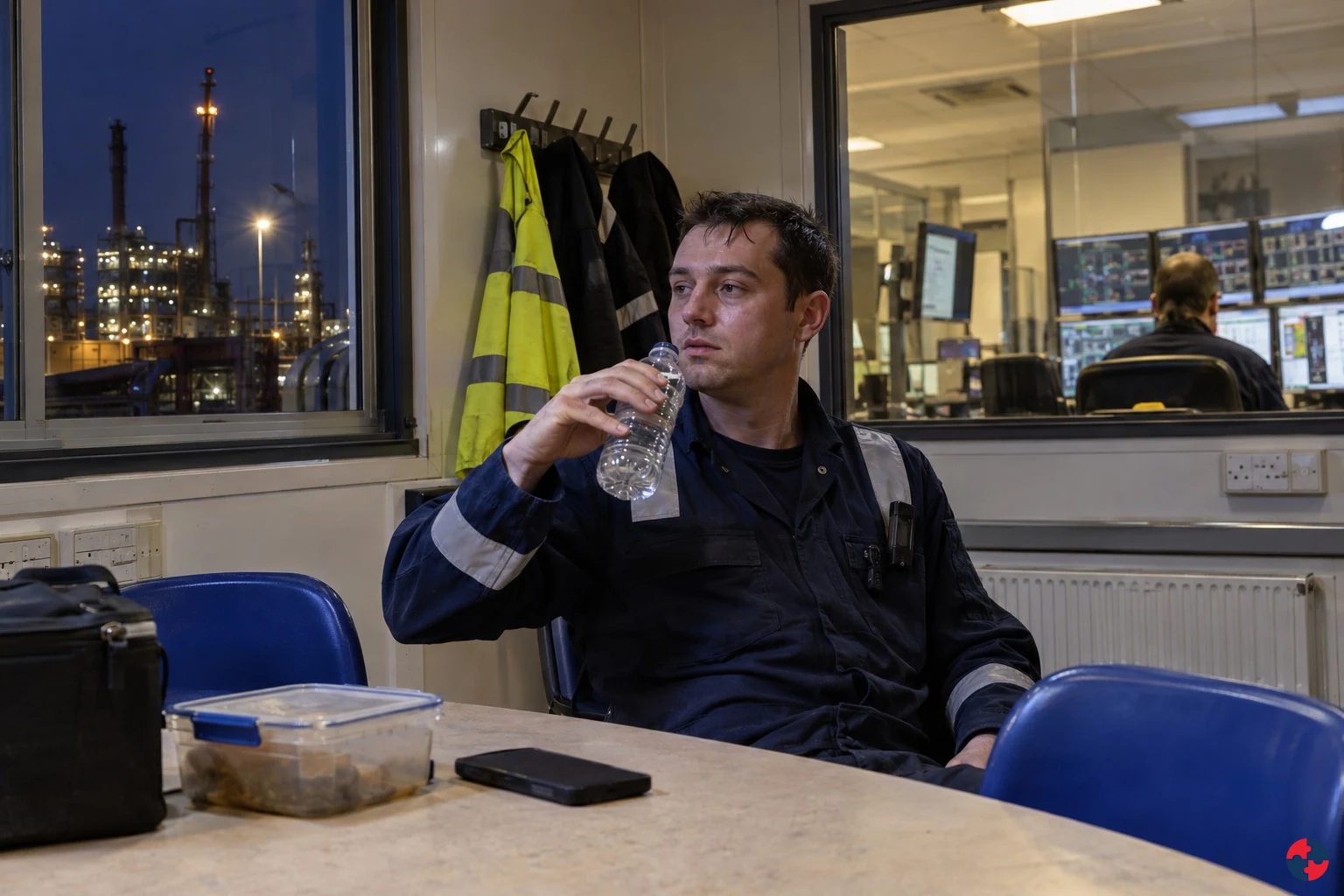
What counts as violence at work?
HSE defines it broadly as work-related incidents where a person is abused, threatened or assaulted; this includes face-to-face, telephone and online conduct, not only physical injury. Violence at work covers work-related abuse, threats and assaults, including incidents that cause psychological harm without a visible injury.
Turn violence at work knowledge into a decision
Violence at work covers work-related abuse, threats and assaults, including incidents that cause psychological harm without a visible injury. Risk grows when a worker must refuse a service, handle valuables, work alone or cannot withdraw safely. Queue/service data, roster, alarm test, incident account, CCTV hold, police reference if any and action verification.
Riverside evening reception response
A customer shouts and makes a credible threat after a booking failure; worker keeps distance and ends contact. Account for people, offer support, preserve footage and verify changes before normal service.
Who and what circumstances can face higher risk?
Risk rises through the interaction of the task, people, place, time, service conditions and available support; job title or a label such as vulnerable worker is not a substitute for that assessment.
Choose controls for violence at work
Eliminate or redesign: Remote option, cashless process, different location or no lone visit. Environment and collective protection: Visibility, separation, exits, secure staff space and lighting. Organisation and staffing: Queue, appointment, two-person task, escalation and security. Personal skills and devices: Communication, de-escalation, radio and alarm. Read the full control table for qualifications, ownership and verification. Use the actual task and applicable jurisdiction; existing technical approval remains unchanged.
Use the full violence at work lesson
Use the full topic for the decision points, practical examples, detailed control tables and source scope. HSE guidance applies to Great Britain; use HSENI for the Northern Ireland route and the source’s stated jurisdiction. A simplified guide does not change the page’s technical-review or approval status.

Read all six steps as text
1. What counts as violence at work?
HSE defines it broadly as work-related incidents where a person is abused, threatened or assaulted; this includes face-to-face, telephone and online conduct, not only physical injury.
- Avoid / redesign: Remote option, cashless process, different location or no lone visit.
- Control the task: Queue, appointment, two-person task, escalation and security.
- Verify before release: Check access and equality effects.
HSE defines it broadly as work-related incidents where a person is abused, threatened or assaulted; this includes face-to-face, telephone and online conduct, not only physical injury. Violence at work covers work-related abuse, threats and assaults, including incidents that cause psychological harm without a visible injury.
Apply it: Which part of this plan would you check at the workface before authorising the task?
2. Turn violence at work knowledge into a decision
Use the evidence to improve the actual work arrangement.
- Change at source: Remote option, cashless process, different location or no lone visit.
- Make it observable: Check access and equality effects.
- Keep useful evidence: Queue/service data, roster, alarm test, incident account, CCTV hold, police reference if any and action verification.
Violence at work covers work-related abuse, threats and assaults, including incidents that cause psychological harm without a visible injury. Risk grows when a worker must refuse a service, handle valuables, work alone or cannot withdraw safely. Queue/service data, roster, alarm test, incident account, CCTV hold, police reference if any and action verification.
Apply it: What evidence would show that the change improves this task, rather than only completing a record?
3. Riverside evening reception response
Example: a practical application of the existing topic lesson.
- Setting: Resolve bookings and entry at an evening leisure-centre reception with a growing queue.
- Act: Confirm peak cover, waiting information, access control, safe staff route and emergency roles.
- Hold / review: Pause service, withdraw to staff space and call 999 if violence is happening or danger is immediate.
A customer shouts and makes a credible threat after a booking failure; worker keeps distance and ends contact. Account for people, offer support, preserve footage and verify changes before normal service.
Apply it: At which point would you hold this example, and what evidence would allow it to proceed?
4. Who and what circumstances can face higher risk?
Connect the task, the route to the person and the control that can fail.
- Task and exposure assessment: Risk rises through the interaction of the task, people, place, time, service conditions and available support; job title or a label such as vulnerable worker is not a substitute for that assessment.
- Relevant work and service circumstances: Relevant circumstances include public contact, refusing or enforcing a decision, handling medicines, money or valuables, delivering bad news, delays, queues, intoxication, distress, lone or late work, home visits, isolated travel and access to personal information.
- Access and support needs: New starters, trainees, agency workers, people working alone and workers whose communication, disability or experience affects escape or help may need different controls.
Risk rises through the interaction of the task, people, place, time, service conditions and available support; job title or a label such as vulnerable worker is not a substitute for that assessment.
Apply it: Who could be exposed, including other trades, cleaners, maintainers and people nearby?
5. Choose controls for violence at work
Start with the stronger practicable options and verify their effect.
- Eliminate or redesign: Remote option, cashless process, different location or no lone visit.
- Environment and collective protection: Visibility, separation, exits, secure staff space and lighting.
- Organisation and staffing: Queue, appointment, two-person task, escalation and security.
- Personal skills and devices: Communication, de-escalation, radio and alarm.
Eliminate or redesign: Remote option, cashless process, different location or no lone visit. Environment and collective protection: Visibility, separation, exits, secure staff space and lighting. Organisation and staffing: Queue, appointment, two-person task, escalation and security. Personal skills and devices: Communication, de-escalation, radio and alarm. Read the full control table for qualifications, ownership and verification. Use the actual task and applicable jurisdiction; existing technical approval remains unchanged.
Apply it: Which stronger option can be used here, and who will verify it before accepting the remaining risk?
6. Use the full violence at work lesson
Follow the official sources below and retain the task-specific evidence.
- Official guidance: HSE Violence and aggression at work overview
- Official guidance: GOV.UK workplace bullying and harassment
- Task decision: Queue/service data, roster, alarm test, incident account, CCTV hold, police reference if any and action verification.
Use the full topic for the decision points, practical examples, detailed control tables and source scope. HSE guidance applies to Great Britain; use HSENI for the Northern Ireland route and the source’s stated jurisdiction. A simplified guide does not change the page’s technical-review or approval status.
Apply it: Which official source and full-topic section will you use to resolve the next decision?
Threats, intimidation, sexual or discriminatory abuse, stalking, attempted assault, spitting, biting, robbery and weapon incidents can require prevention and response even when nobody is injured. Personal disputes, domestic abuse, bullying or harassment may fall outside HSE's work-related-violence definition or primary remit, but an employer may still need immediate safety, police, safeguarding, HR, equality and support action. This page does not classify a crime or decide civil or employment liability.
- Design safer contact Remove avoidable confrontation and provide space, exits, staffing and a tested call-for-help route.
- Check before contact Confirm the assessed task, people, information, exit and response capacity on each shift.
- Withdraw on escalation End contact, move to safety and use the emergency route; de-escalation is not a guarantee.
- Support and correct Care for affected people, preserve facts, remove repeat exposure and test the revised controls.
Who and what circumstances can face higher risk?
Risk rises through the interaction of the task, people, place, time, service conditions and available support; job title or a label such as vulnerable worker is not a substitute for that assessment.
Relevant circumstances include public contact, refusing or enforcing a decision, handling medicines, money or valuables, delivering bad news, delays, queues, intoxication, distress, lone or late work, home visits, isolated travel and access to personal information. New starters, trainees, agency workers, people working alone and workers whose communication, disability or experience affects escape or help may need different controls. Do not stereotype a diagnosis, community or protected characteristic as dangerous.
Design help and withdrawal into the task
An illustrative staffed reception shows how queue management, controlled access and a clear withdrawal route can work together. It is separate from the existing forecourt photograph; neither scene proves that an alarm has been tested or that a layout suits every service.

Assess circumstances without blaming people
Review the actual service, interactions, waiting, refusals, late work, isolated travel and other exposure circumstances. Consider support and access needs without treating disability, communication differences or inexperience as a control failure or a predictor of violence.
Provide a usable physical arrangement
Assess the queue, staff positions, controlled staff access and a clear rear withdrawal route. A barrier or screen must suit the interaction and avoid trapping staff. Do not publish this illustrative layout as a dimensioned security design.
Test help and practise withdrawal
Agree when to pause service, withdraw and seek assistance. Test the alarm and response with the people who will receive it; a button or a phone in a picture proves neither connection nor response. Call 999 when there is immediate danger.
Include remote contact and follow-up
Provide arrangements for abusive calls, online messages and personal-information concerns as well as face-to-face contact. Record and review incidents, support affected people and change the work controls; do not rely on de-escalation training alone.
Do not enter danger to retrieve property or continue an unsafe interaction. The guidance does not teach restraint, confrontation or security intervention techniques.
How should the violence risk assessment be built?
Assess each credible task and setting: who interacts, what may trigger conflict, where escape and help are, what previous reports show, who may be affected differently and whether the proposed controls work in practice.
Consult workers, contractors and representatives, including people working at the highest-risk times and places. Observe the work and review abuse, threat, assault, near-miss, complaint, absence and alarm data without using low reports as proof of low risk. Separate routine, foreseeable escalation and emergency states. Assign controls, owners and review triggers. A generic office assessment cannot release a late home visit, enforcement interview or cash close. See HSE Violence at work: assessing the risks.
| Assessment layer | Minimum evidence |
|---|---|
| Task and service | Purpose, decision points, refusal/enforcement and expected contact. HSE Violence at work: assessing the risks |
| Person-specific where justified | Relevant known behaviour, triggers and lawful safeguards, not diagnosis-based assumptions. HSE Violence at work: assessing the risks |
| Place and time | Layout, exits, isolation, transport, closing and response time. HSE Violence at work: assessing the risks |
| Control performance | Staffing, alarm, check-in, communication and worker feedback. HSE Violence at work: assessing the risks |
| Review | After incidents, threats, changed service, layout, staffing or intelligence. HSE Violence at work: assessing the risks |
Which work contexts need distinct controls?
Public-facing, lone, mobile, home-visit, enforcement, healthcare, cash and valuable-handling work share a violence risk but need different prevention and emergency arrangements.
Public-facing services can create conflict around waiting, eligibility, access or refusal. Home visits limit control over layout and who is present. Enforcement can involve authority and disputed outcomes. Healthcare and care settings may require person-specific care planning and lawful sharing. Cash, medicines, equipment or valuable goods can attract robbery. Controls must fit the actual task; no sector example is a ready-made local assessment. See HSE Examples of ways to prevent violence.
| Context | Priority control |
|---|---|
| Reception, retail or service desk | Manage expectations, queues, visibility, barrier/reach and rapid help. HSE Examples of ways to prevent violence |
| Lone, mobile or home visit | Screen, choose location/time, check in and provide overdue action. HSE Examples of ways to prevent violence |
| Enforcement or inspection | Plan authority, information, joint attendance and withdrawal. HSE Examples of ways to prevent violence |
| Healthcare or care | Care/task assessment, trigger information, staffing and safeguarding. HSE Examples of ways to prevent violence |
| Cash, medicines or valuables | Reduce exposure, visibility, predictable movement and resistance pressure. HSE Examples of ways to prevent violence |
The harm chain changes by sector: a retail refusal may escalate across a counter; a care visit may become unsafe in an unfamiliar home; a transport inspector may face a crowd on a platform; and a hospitality closer may face robbery around cash. For each, identify the person exposed, the likely trigger, the escape route and the person who will answer an alarm. The local assessment must also test late shifts, temporary staff and response time.
What is the prevention hierarchy?
First remove or redesign conflict-prone work; then use collective workplace and service controls, adequate staffing, communication and tested emergency arrangements. Personal skills and devices support those controls; resistance or absorbing aggression is never a control tier.
Avoid unnecessary face-to-face refusal, cash or isolated contact where a safer channel works. Reduce foreseeable frustration through clear information and service design. Separate workers from reach or weapons where proportionate, provide exits and visible support, and resource the response. Training, scripts and alarms support the system but cannot repair an unsafe layout, impossible workload, lone deployment or slow response. Physical intervention is specialist and risk-specific; this page does not authorise it. See HSE Control measures to prevent violence and aggression.
| Control level | Examples | Limit |
|---|---|---|
| Eliminate or redesign | Remote option, cashless process, different location or no lone visit. | Check access and equality effects. HSE Control measures to prevent violence and aggression |
| Environment and collective protection | Visibility, separation, exits, secure staff space and lighting. | Must fit foreseeable behaviour and emergency response. HSE Control measures to prevent violence and aggression |
| Organisation and staffing | Queue, appointment, two-person task, escalation and security. | Needs resources and field verification. HSE Control measures to prevent violence and aggression |
| Personal skills and devices | Communication, de-escalation, radio and alarm. | Supporting controls, not a safety guarantee. HSE Control measures to prevent violence and aggression |
How should the place and service be designed?
Design out trapping, surprise and avoidable frustration: provide clear information, good visibility, protected staff space, accessible exits and a response route that works at the busiest and quietest times.
Consider queues, appointment delays, noise, privacy, entrances, interview-room furniture, counter reach, blind spots, car parks, transport and closing. Workers should not have to move toward a threat to reach an alarm or exit. In rooms where aggression is foreseeable, position people so workers can withdraw without blocking the other person. Preserve dignity and accessibility; a fortress-like design can create other risks and does not replace service and staffing controls.
What staffing and communication arrangements are needed?
Staffing must match the foreseeable event and response, with clear roles, rapid help, handover of material risk information and no pressure to continue unsafe contact alone.
Set who leads, who calls emergency services, who supports other people, who meets responders and who preserves records. Cover breaks, arrivals, closures, remote areas, temporary and agency staff, language or communication needs and likely responder travel time. A second person who is untrained, unavailable or unable to intervene safely is not an effective two-person control. Test radios, coded messages and handovers in realistic noise and coverage conditions.
How can risk information be shared lawfully and fairly?
Share only the safety facts needed for a defined work decision; keep sensitive staff records secure and access restricted.
Record the reason for sharing, who needs the information, and how long it is needed. A request from police or another agency needs its own lawful basis and competent privacy review; the staff-record guide alone does not authorise every disclosure. Use task controls without circulating diagnosis, allegations or unnecessary personal detail.
What can alarms, CCTV and access controls do?
Technology can deter, summon help, restrict access or preserve evidence only when it is selected for the risk, maintained, tested, understood and connected to a reliable human response.
A personal alarm does not prevent assault. A fixed alarm is weak if the worker cannot reach it. closed-circuit television (CCTV) may preserve evidence but cannot release an unsafe lone task. Access control can delay an intruder but may affect escape. Define who receives each alert, how they verify it, when they call police, what happens in a coverage or power failure and how quickly help can arrive. Test end to end, not just the button or battery.
What must be checked before higher-risk contact starts?
Confirm the task, people, current information, location, staffing, escape, communication, check-in and emergency response match the assessment; change or postpone the contact when they do not.
For a visit or mobile task, verify identity and purpose, known behaviour relevant to safety, who may be present, safe meeting place, travel and parking, expected duration, contact intervals and overdue action. For a public service, confirm staffing, queue information, barriers, alarms and security coverage. For cash or valuables, reduce visible holdings and predictable movement. The worker must know the withdrawal point and have authority to use it.
| Gate | Release evidence |
|---|---|
| Information | Current task/visitor/visit risk and lawful briefing. |
| People | Competence, staffing and responder identified. |
| Place | Exit, safe area, lighting and transport checked. |
| Communication | Device and check-in tested; overdue owner ready. |
| Authority | Worker can end contact without seeking permission during danger. |
What should workers and supervisors monitor during contact?
Monitor changes in behaviour, crowding, intoxication, unexpected people, isolation, blocked exits, communication failure and service conditions; act early by changing the task, adding support or withdrawing.
Do not require workers to diagnose intent or a health condition. They can act on observable facts and how safe the situation feels. A calm interaction can change rapidly, and a previously flagged person may present no current threat. Supervisors should respond when asked and must not direct a worker back into danger to complete service, recover property, enforce a rule or collect evidence.
Is de-escalation a safety guarantee?
No. De-escalation is a trained option for situations that remain safe enough to engage; it does not require a worker to stay, cure aggression, negotiate with a weapon or replace environmental and staffing controls.
Useful skills can include calm and clear communication, listening, acknowledging concerns, allowing space, avoiding argument and offering realistic choices. Use only within role, training and local procedure. The person may not respond, and some conduct is too dangerous for engagement. If the worker feels unsafe, the exit is threatened, violence is imminent or the approach is not working, stop trying to calm the situation and withdraw or summon emergency help. Generic scripts can sound provocative or impossible in real conditions.
When should a worker withdraw or call emergency services?
Withdraw to an agreed safe place whenever the worker feels unsafe, controls fail or violence may occur; call 999 when a crime is in progress or someone is in immediate danger, and use online reporting or 101 for non-emergencies.
Do not block or confront the aggressor, pursue them, resist a robbery, recover cash or property, enforce a ban or collect footage while danger continues. Life comes before property and evidence. Withdraw immediately when unsafe; no worker needs permission or a failed de-escalation attempt before leaving. Use a duress alarm only if it can be activated safely. If leaving is impossible, follow the local shelter or lockdown plan and provide location and threat information to emergency services when safe. NI uses NI police 999 for emergencies and 101 or online routes for non-emergencies. Local emergency plans must define responders, safe areas and accessibility. See GOV.UK Contact the police.
Any specialist security or physical-intervention duty must be separately authorised under applicable law, a task-specific risk assessment, defined duties, demonstrated competence and a specific approved procedure. This page does not authorise restraint, confrontation, pursuit, property recovery or physical intervention.
| Trigger | Immediate action |
|---|---|
| Attack, credible imminent threat, weapon or immediate danger | Escape or shelter, call 999, give location and live risk. GOV.UK Contact the police |
| Alarm/check-in failure during higher-risk lone work | End task and follow overdue/emergency plan. GOV.UK Contact the police |
| Robbery demand | Prioritise life; do not resist or pursue. GOV.UK Contact the police |
| Past threat with no immediate danger | Preserve details and use police online/101 plus internal route. GOV.UK Contact the police |
What should happen immediately after an incident?
Move people to safety, call emergency services when needed, arrange appropriate first aid or medical care, account for affected workers and witnesses, protect against repeat contact and preserve evidence without delaying welfare.
A manager should meet responders, protect privacy, arrange safe travel or accompaniment, record immediate facts and notify safeguarding, security, HR, insurer or regulator routes as applicable. Do not require the affected person to confront the alleged aggressor, finish the shift, clean the scene or produce a polished statement immediately. If blood or bodily fluid exposure occurred, use the local urgent clinical exposure route. This page does not prescribe treatment.
| Priority | Action |
|---|---|
| Ongoing danger | 999, withdrawal/shelter and scene control. Sources: GOV.UK; NI reporting a crime |
| Physical or health concern | First aid and clinical assessment appropriate to need. Source: HSE |
| Repeat or targeted risk | Restrict contact lawfully and brief those who need controls. Source: HSE |
| Evidence | Protect originals after people are safe. Source: HSE |
| Notifications | Use separate police, safeguarding, regulator, insurer and internal routes. Source: HSE |
How should welfare and safeguarding be handled?
Offer practical, respectful choices and use the named safeguarding route when a child or adult at risk may be harmed; immediate safety is not postponed while teams debate ownership.
Ask what the affected person needs now, such as a trusted contact, quiet space, medical help, safe transport, language support or a different manager. Explain what information may need to be shared and with whom, without promising absolute confidentiality. Safeguarding thresholds and agencies differ by jurisdiction and sector, so the local lead must decide and record the route. Do not mediate a serious threat, sexual violence, domestic abuse or coercion simply because both people work together.
What evidence should be preserved?
Preserve original, dated and attributable material that shows what happened, what was known, how controls operated and what response followed; keep copies secure and limit access.
Record time, place, observable words and actions, injuries or damage, witnesses, staffing, layout, alarms, calls, decisions and uncertainties. Put a retention hold on relevant CCTV, body-worn footage, messages, call recordings, access logs and visit/check-in data before routine deletion. Preserve original files and metadata; do not crop, annotate or circulate them as the only copy. Keep witness accounts independent and avoid repeated retelling. Follow police directions and privacy advice for disclosure.
How should incidents be recorded and investigated?
Make reporting quick and accessible for abuse, threats, near misses and assaults, then investigate immediate and underlying causes without treating the worker's behaviour as the whole explanation.
A short initial record is enough to start. Offer paper, digital or supported routes and an alternative manager where needed. Investigate service design, staffing, information, environment, supervision, alarms, previous signals and management decisions as well as the event sequence. Separate fact gathering from emotional support so a person is not pressured to retell for multiple purposes. Protect fair process for everyone and verify corrective action in the field.
| Stage | Output |
|---|---|
| Initial capture | What, when, where, who, immediate risk and support need. Source: HSE |
| Evidence gathering | Original records and independent accounts. Source: HSE |
| Analysis | Immediate, underlying and organisational causes. Source: HSE |
| Action | Source control, owner, due date and affected areas. Source: HSE |
| Verification | Observed effectiveness and worker feedback. Source: HSE |
Which reporting and case routes must stay separate?
Internal incident recording, police crime reporting, safeguarding, GB or NI Reporting of Injuries, Diseases and Dangerous Occurrences Regulations (RIDDOR), civil claims, employment processes and insurer notification answer different questions; one does not replace or automatically decide another.
Record internally even where no external threshold is met. Police decide crime investigation; employers should not promise prosecution. RIDDOR asks whether a defined work-related event meets the relevant statutory threshold. HR and equality processes must remain fair and may continue separately from police action with legal advice. Civil liability and compensation are separate again. Insurer notification follows policy terms. A report is not an admission of liability.
| Route | Question |
|---|---|
| Internal | What happened, who needs support and what controls must change? |
| Police | Is there a crime or immediate threat requiring police action? |
| Safeguarding | Is a child or adult at risk and what protective action is required? |
| RIDDOR | Does the jurisdiction-specific statutory threshold apply? |
| Employment/equality | How is the allegation handled fairly under the correct regime? |
| Civil/insurance | What claim, liability or coverage issue requires specialist advice? |
How do GB and Northern Ireland violence reporting thresholds differ?
GB and Northern Ireland have separate RIDDOR regimes: check the place, responsible person, work connection, injury category and time threshold rather than copying one form or rule across the UK.
In GB, HSE says work-related violence is reportable when it causes death, a specified injury, or a physical injury preventing normal duties for more than seven days; work-related over-three-day injuries must be recorded. In NI, HSENI applies the 1997 regulations: non-consensual work-related violence causing death, a major injury or more than three days' incapacity is reportable. For NI reportable deaths, major injuries and dangerous occurrences, notify without delay and report within ten days; over-three-day injuries must also be reported within ten days. Personal disputes unconnected with work may fall outside RIDDOR in both systems. Keep an internal record and assess other routes regardless. See HSE RIDDOR reporting route. Northern Ireland: HSENI accident reporting.
| Workplace | External threshold summary | Route |
|---|---|---|
| England, Scotland or Wales | Death, specified injury or over-seven-day physical injury from work-related violence; record over-three-day work injury. | HSE or relevant GB enforcing authority. HSE Reporting and learning from violent incidents |
| Northern Ireland | Death, major injury or over-three-day incapacity from non-consensual violence arising from work. | HSENI or relevant district council through NI route. HSENI accident reporting |
| Any UK location | Internal reporting may be broader than RIDDOR. | Organisation system plus police/safeguarding as applicable. HSE RIDDOR reporting route |
Today’s deadline owner: the responsible person checks jurisdiction, reportable category, incident date and submission evidence today. In GB, relevant serious categories require notification without delay and receipt of the report within ten days; over-seven-day incapacity is reported within fifteen days. Use HSE: When do I need to report an incident? and the linked HSENI procedure. Count consecutive calendar days under the relevant authority’s rules, including rest days, rather than counting only scheduled shifts. Police, safeguarding and insurer notices remain separate.
What does trauma-informed follow-up look like?
Provide safety, choice, clear information, privacy and paced support without diagnosing a condition, demanding a particular emotional response or forcing the person to repeatedly recount the event.
People, including witnesses, react differently and may want different support at different times. Offer a trusted contact, practical help, confidential counselling or external services where available, occupational-health advice and clinical care when appropriate. Explain processes and updates. Do not offer psychologically focused debriefing to prevent or treat PTSD, whether compulsory or voluntary. Practical voluntary support and a factual operational review have different purposes. Avoid promises that someone will recover by a date, or describing normality, resilience or fitness without qualified assessment. Monitor work-related causes and control them; support is not a substitute for prevention.
Clinical evidence for this distinction: NICE NG116, recommendation 1.6.5: psychologically focused debriefing. Keep choice, practical help and confidential access to qualified care; a factual safety review must not require an emotional retelling.
How should a safe return or continued work be decided?
Agree temporary or lasting work controls with the worker and relevant specialists; do not require automatic return to the same person, place or task and do not invent clinical clearance.
Consider safe travel, different contact or location, adjusted hours, buddying, communication, security, leave and phased duties. Occupational health or a clinician may advise on health and adjustments, but management remains responsible for controlling work. Protect confidentiality and review the plan after actual work begins. Return is not evidence that harm was minor, and absence is not evidence of incapacity for every task. If a known threat remains, the organisation must control it before exposure resumes.
How should repeat aggression at a reception desk be prevented?
Riverside should redesign the waiting and refusal process, protect reach and exits, resource peak periods and give reception workers rapid withdrawal and help rather than relying on a calm script.
At Riverside Leisure Ltd, members queue at evening reception after an online booking failure. Previous shouting was logged but not analysed. The manager publishes accurate wait and refund information, moves high-value items, widens separation, keeps an exit to staff space, adds peak cover and tests the alarm-to-response chain. A worker ends contact and withdraws when a customer makes a credible threat. The manager supports staff, preserves CCTV and reviews whether police or reporting routes apply.
| Gate | Action |
|---|---|
| Before opening | Information, layout, staffing, alarm and escalation checked. |
| During queue | Monitor delay and crowding; add support or pause service. |
| Threat or attempted reach | Withdraw, summon help and call 999 if danger is immediate. |
| After | Support, evidence, route decisions and verified redesign. |
Riverside evening reception response
Task material and setting: Resolve bookings and entry at an evening leisure-centre reception with a growing queue.
People and prerequisites: Reception workers, duty manager, members and bystanders; clear information, protected counter, exit, staffing and tested alarm response.
Before: Confirm peak cover, waiting information, access control, safe staff route and emergency roles.
During: A customer shouts and makes a credible threat after a booking failure; worker keeps distance and ends contact.
Hold or stop: Pause service, withdraw to staff space and call 999 if violence is happening or danger is immediate.
Completion and hand back: Account for people, offer support, preserve footage and verify changes before normal service.
Evidence: Queue/service data, roster, alarm test, incident account, CCTV hold, police reference if any and action verification.
Failed-alarm scenario: if the alarm test fails or the responder is unavailable, the duty manager confirms who protects the public area and how reception pauses. Workers retain the protected retreat and accessible exit; they do not remain exposed to compensate for failed cover. Restore staffing and the tested communication-to-responder chain before normal service resumes.
How should a higher-risk home visit be planned?
Screen the specific visit, share necessary safety information, choose a safer location or joint attendance where risk cannot be controlled and give the visitor a tested check-in and withdrawal route.
A Riverside community wellbeing worker is asked to visit after a previous contractor reported threats at the address. The coordinator verifies the report rather than copying a vague warning, consults the safeguarding and privacy leads, and moves the meeting to a controlled site unless joint attendance is justified. The worker has location, time and overdue arrangements and parks for exit. An unexpected person and blocked route trigger withdrawal; no one is asked to complete the visit or obtain a signature.
| Decision | Action |
|---|---|
| Information sufficient? | Verify behaviour and controls; avoid diagnosis or speculation. |
| Home location necessary? | Use controlled venue or remote option where suitable. |
| Lone visit defensible? | Add trained colleague/security/police liaison or postpone. |
| Conditions change? | Leave and activate overdue/emergency response. |
Riverside higher-risk home visit gate
Task material and setting: Community wellbeing visit at a private address after a recorded threat.
People and prerequisites: Visiting worker, coordinator, safeguarding/privacy leads and any joint attendee; verified risk information and reliable contact.
Before: Decide venue, staffing, information share, parking, check-in times and overdue response.
During: An unexpected person arrives and blocks the planned route; worker ends the visit and leaves if able.
Hold or stop: Do not enter or continue when information, exit, contact or agreed staffing no longer matches the plan.
Completion and hand back: Confirm worker safe, support them, record facts and reassess future contact.
Evidence: Referral, verified flag, visit decision, check-in log, account and safeguarding/police action where applicable.
What should happen during a robbery threat at closing?
Life takes priority over cash or property: workers should follow the assessed robbery procedure, avoid resistance or pursuit, use duress only when safe and call 999 when a crime is in progress or someone is in immediate danger.
Riverside reduces visible cash, varies collection only within a controlled process, closes with adequate staffing and provides a secure retreat. During a demand, workers do not challenge, lock in or chase the person. After the person leaves, they secure access only when safe, call police, arrange welfare and medical response, preserve the scene, transaction records and footage, and avoid discussing descriptions together. Cash handling does not justify improvised restraint or heroics.
| Phase | Action |
|---|---|
| Prevention | Minimise cash/value, visibility and predictable movement. |
| Threat | Do not resist or pursue; protect life and use safe alarm/999 route. |
| After departure | Do not touch the scene unnecessarily; account for people and preserve evidence. |
| Recovery | Support staff, review controls and route insurer/police/reporting decisions. |
Riverside closing robbery response
Task material and setting: Closing a leisure-centre reception with a small cash holding and limited public presence.
People and prerequisites: Two closing workers and duty manager; reduced cash, secure area, safe exit, tested duress and police procedure.
Before: Remove avoidable value, confirm staffing, communication and secure transfer arrangements.
During: A person threatens staff and demands cash; workers prioritise life, do not resist and use help only when safe.
Hold or stop: Stop all routine work, do not pursue, and call 999 while danger or the crime is current.
Completion and hand back: Account for people, arrange care, preserve scene/footage and release only after police and management direction.
Evidence: Transaction log, access/CCTV originals, independent accounts, police reference, welfare and control review.
How should prevention and response be assured?
Test the controls where and when risk occurs, compare reports with worker experience, sample response times and verify that incidents change service design rather than producing training-only actions.
Review public contact, late shifts, lone visits, enforcement activity, care interfaces and cash movement. Look for under-reporting, normalised abuse, repeat locations or people, alarms with no owner, vague flags, agency workers missing briefings, workers discouraged from withdrawal and people returned to unchanged conditions. Trend verbal abuse and near misses as well as injuries. Check actions in the field and with affected workers. Low incident numbers, CCTV coverage or course attendance do not prove control.
Which legal and support routes apply in GB and Northern Ireland?
GB and Northern Ireland use separate health and safety, RIDDOR, employment/equality and support routes; identify the work location and issue before applying a law, form or service.
Great Britain and Northern Ireland use separate health and safety, reporting, criminal and employment-law routes. Apply the instrument for the workplace and obtain jurisdiction-specific advice for discrimination or harassment issues.
| Location | Safety/reporting baseline | Employment and victim support |
|---|---|---|
| England and Wales | GB HSWA/MHSWR and GB RIDDOR. | government employment guidance/Equality Act routes; England and Wales victim services. Source |
| Scotland | GB HSWA/MHSWR and GB RIDDOR. | government employment guidance/GB employment route; Scottish criminal justice and victim support. Source |
| Northern Ireland | 1978 Order, NI MHSWR and NI RIDDOR 1997. | Separate NI equality/employment and victim-support routes. Source |
What competence and training are needed?
Training must match the assessed task and give workers practical authority to prevent, withdraw, communicate and report; attendance at a generic conflict course is not proof of competence or safety.
Workers need to recognise foreseeable changes, use communication and alarms, keep an exit, end contact and call for help. Supervisors need dynamic staffing, support and incident skills. Security or physical-intervention roles require specialist selection, legal boundaries, scenario practice and oversight. Managers need fair process, safeguarding and privacy routes. Test performance in realistic settings and include temporary, agency, cleaning and maintenance workers. Refresh when risk or controls change, not by an invented universal expiry date. See HSE Control measures to prevent violence and aggression.
| Audience | Demonstrated capability |
|---|---|
| Worker | Uses prevention, withdrawal, alarm and reporting routes. HSE Control measures to prevent violence and aggression |
| Supervisor | Changes staffing/service and leads immediate response. HSE Control measures to prevent violence and aggression |
| Security specialist | Works within assessed role, law and escalation. HSE Control measures to prevent violence and aggression |
| Manager/HR/safeguarding | Protects people while preserving fair, lawful process. HSE Control measures to prevent violence and aggression |
| Investigator | Gathers facts without blame or evidence contamination. HSE Control measures to prevent violence and aggression |
Assess capability in a realistic scenario, not attendance alone. A worker should demonstrate how to end contact, withdraw and summon help; a supervisor should adjust staffing and protect others; a security specialist should show the limits of an approved intervention; and a manager should route safeguarding, privacy and reporting questions without making a clinical or criminal finding. Record who assessed each role and repeat the check when the task, site, threat or control changes.
How can HSE guidance support prevention and learning?
Use HSE violence, human-factors and investigation guidance to improve work design, reporting and response.
HSG48 directs attention to job and organisational conditions; HSG245 connects incident evidence to corrective action; HSE stress guidance supports organisational prevention. None replaces an assessment of the actual contact, staffing, exits and emergency capacity, or the separate GB and NI legal routes.
How could Riverside Leisure Ltd manage this?

Riverside Leisure Ltd would treat threats and abuse as work-related risks, strengthen prevention and response arrangements and support staff after incidents.
Riverside Leisure Ltd · practical example
Design support for a receptionist facing aggression
The key lesson Violence at work includes threats and verbal abuse as well as physical attacks; a risk-control response should not wait for an injury.
The situation: A late-shift receptionist reports repeated aggressive behaviour when guests dispute charges. The reception layout limits retreat and the person covering the shift is unsure who responds to the assistance call.
Why this matters: Predictable service disputes, lone working, layout and delayed assistance can combine to leave a worker exposed.
How Riverside Leisure Ltd would manage it
- Take the reports seriously — Hotel Manager. Record the circumstances and immediate protection needed, listening without blaming the receptionist. Use emergency-service help where there is immediate danger and avoid expecting staff to confront an aggressor.
- Examine the conditions — Health and Safety Adviser. Review timing, triggers, staffing, cash or payment procedures, layout and previous incidents with affected workers. Include agency and night staff rather than assuming daytime arrangements cover them.
- Improve prevention — Operations Director. Resource appropriate changes to staffing, service procedures and the reception environment. Resolve the identified risk factors instead of relying solely on de-escalation training.
- Make assistance reliable — Duty Manager. Confirm the assessed communication and response arrangements, including who is available and what staff should do to reach safety. Practise them safely and explain the limits of each person's role.
- Support and learn — HR and Training Coordinator. Offer appropriate support after an event, retain necessary information securely and review the controls. Track repeated locations or circumstances and check whether improvements reduce exposure.
When the conditions change
- Recognise the trigger
- A threat develops or the agreed assistance and safe-working arrangements are unavailable.
- Make the immediate decision
- Withdraw from immediate danger and suspend the affected service where necessary under the local response plan.
- Verify the next step
- The Duty Manager checks that the agreed assistance response, communications, safe withdrawal arrangements and suitable staff cover work for the actual late shift.
What good looks like
The late shift has a credible way to obtain help and withdraw, staff report threats, and managers can show preventive changes based on those reports.
Evidence to look for: Incident patterns, worker consultation, risk assessment, assistance checks, response briefings and action review.
Common mistake to avoid: Describing routine abuse as part of customer service and recording only physical injuries.
Apply this to your work: Could the newest person on your late shift explain how help will actually reach them?
Guidance behind the management approach: HSE: protecting workers from violence and aggression. Use the topic's legal and technical guidance for the applicable work and location.
Operations owns service design, layout and staffing. Supervisors verify alarms and respond to withdrawal. Security advises on credible threats and access. HR and safeguarding run fair specialist routes. Occupational health advises on work effects and adjustments. The privacy lead controls risk flags and disclosure. Leadership reviews trends and verifies source controls. This is not an approved Riverside policy, clinical plan or site-specific emergency arrangement.
What do the acronyms and key terms mean?
Expand abbreviations at first use and distinguish legal, clinical and operational decisions.
| Acronym or term | Full expansion | Practical meaning |
|---|---|---|
| Work-related violence | — | Work-linked abuse, threat or assault under HSE framing. Not every personal dispute or all bullying law. |
| Threat | — | Words or conduct indicating possible harm. Credibility and immediacy are fact-specific. |
| De-escalation | — | Communication intended to reduce escalation. Optional trained measure, not a guarantee. |
| Duress alarm | — | Means of discreetly summoning an agreed response. Does not prevent violence by itself. |
| Safeguarding | — | Action to protect a child or adult at risk. Use the named local statutory route. |
| Trauma-informed | — | Support that prioritises safety, choice and avoids avoidable re-traumatisation. Not a diagnosis or treatment claim. |
| RIDDOR | Reporting of Injuries, Diseases and Dangerous Occurrences Regulations | A separate GB or Northern Ireland statutory incident-reporting route; it does not decide civil liability. |
| PPE | personal protective equipment | Residual protection chosen for the actual task; never a replacement for removing or engineering out risk. |
| CCTV | closed-circuit television | Use the stated full term when assigning a task, record or specialist route. |
| HR | human resources | Use the stated full term when assigning a task, record or specialist route. |
Unlock another resource
You have used this month’s two free downloads. Publish a post in your own words to unlock one more resource, or choose SHARE Individual for 10 downloads per month.
You decide whether to share. If you do, use the relevant platform disclosure tools and do not make claims you do not genuinely hold.