
Equipment integrity and maintenance
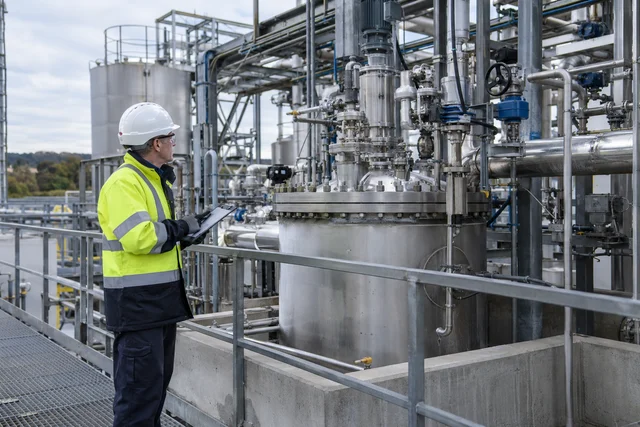

Connect equipment condition, maintenance choices and reliable proof to the containment and protective functions that people depend on.
Free training · Approx. 70–105 minutes
Public teaching and practice are free. Use a free learner account in Moodle for confirmed saves and recorded assessment. A certificate of completion depends on completing the required learning, scoring at least 80% and answering every critical safety question correctly.
Your practical case
A fictional solvent blending business has a damp insulated return line, a growing maintenance backlog and an overdue shutdown-valve test. A production meeting must distinguish known plant condition from reassurance and choose an accountable hold, review and hand-back route.
Process operators, supervisors, maintenance planners, contractors and managers who need topic awareness.
Independent SHAREhub awareness. This course does not provide a NEBOSH qualification, accreditation or authority to operate, design, isolate, test or maintain plant. Use competent site arrangements for real work.
What you will learn
- Link an asset to a credible major-accident scenario.
- Distinguish maintenance strategies and the evidence each produces.
- Recognise when inspection, proof testing or temporary repair leaves uncertainty.
- Identify defensible work control, change review and hand-back evidence.
Course outline
Understand the asset
- Start with the function that must surviveExplain integrity using a containment boundary and its credited safeguards.
- Read the damage mechanismDistinguish a visible warning from a measurement of remaining integrity.
- Identify safety-critical equipmentPrioritise an item by the accident scenario and function it supports.
Choose a maintenance strategy
- Match the strategy to the failureCompare preventive, condition-based and corrective maintenance.
- Know what inspection can showInterpret an inspection result within its method, coverage and acceptance basis.
Manage impaired integrity
- Prove the safety functionDistinguish component servicing from testing the credited protective path.
- Treat a backlog as a barrier issueExplain why missed work and deferrals require an explicit decision.
- Keep temporary repairs temporaryRecognise the conditions and limits of an engineered temporary repair.
Control intervention
- Reassess changed serviceIdentify changes that can invalidate an integrity assumption.
- Plan work around the live plantConnect maintenance scope to isolation and concurrent work.
Assure the return to service
- Verify hand-back, not just repairDistinguish job completion from equipment readiness.
- Build an integrity decision packCombine mechanism, barrier status and accountable follow-up in a new case.
Practise and test your reasoning
12 lesson decisions and 6 required activities use evidence sorting, matching, sequencing, branching choices and applied checks. Dragging has equivalent labelled controls. The 20-question final assessment requires 80% and every critical answer, after all learning requirements are complete.
Use the linked risk assessment, toolbox talk, policy and assurance resources with their included fictional exercises. Points and module badges help show progress; they do not replace the assessment requirements.
Duration estimates include teaching, activities, checks and assessment. Your pace and retries may vary.
Sources and scope
Independent awareness study · PSM topic 2.3. Independent SHAREhub learning; this is not the NEBOSH qualification.
Presentation and model workshop
Use the same course imagery, worked decisions and historical case in a 28-slide teaching companion. Practise classification, compare explained choices and inspect the linked model case.
Open the interactive presentation workshop · Download PowerPoint
This optional companion does not replace the required course activities or final assessment.