
SHARE Expertise · On-site exercises
Emergency preparedness training
Put your emergency plans into practice with realistic, controlled on-site drills. SHARE develops scenarios around your organisation's risks, observes how teams respond and helps turn the learning into stronger emergency arrangements.
Based in the West of Scotland, supporting organisations across the UK and beyond.
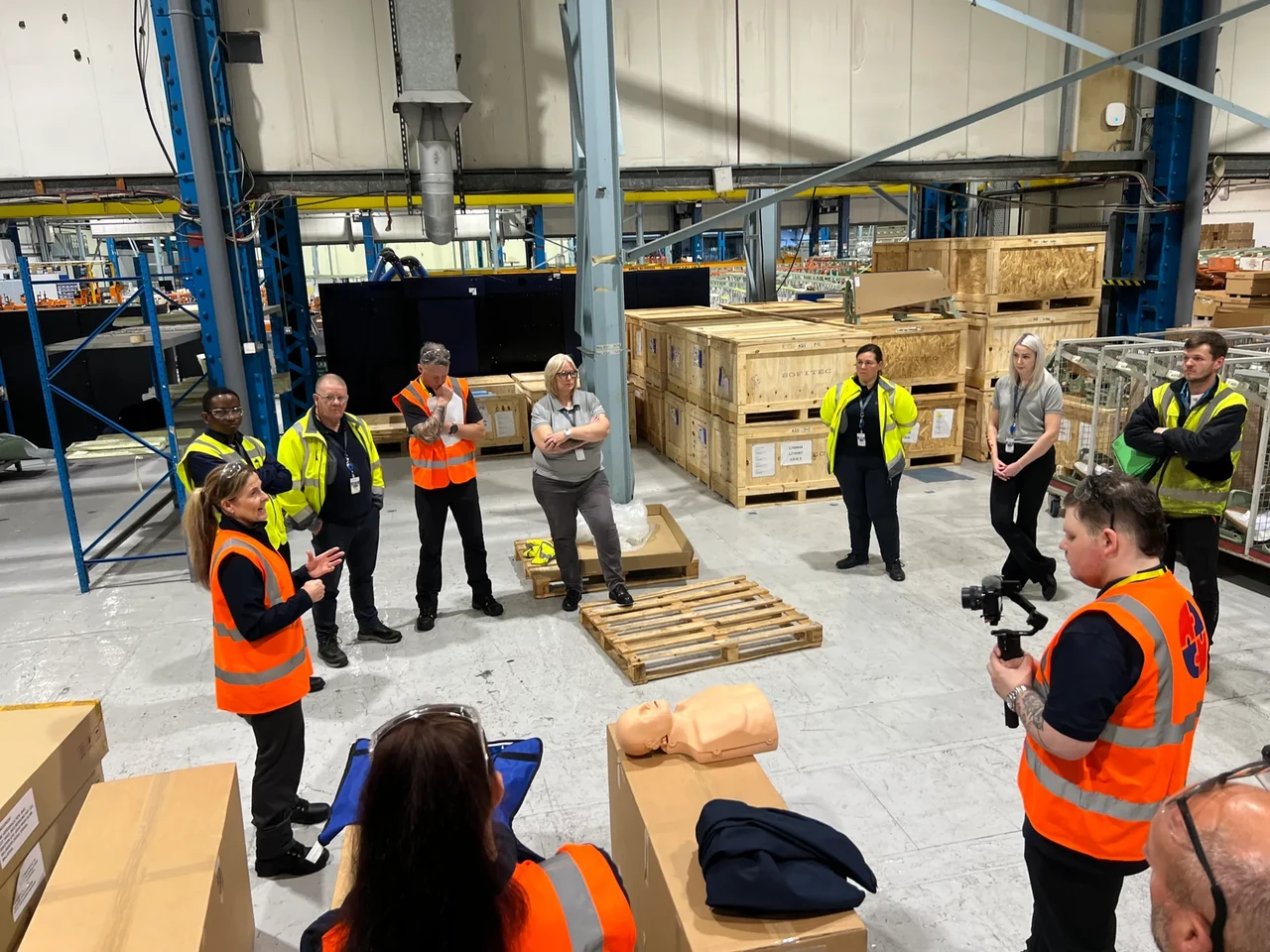
Practice with purpose
Test the plan, the people and the response
A written procedure cannot show how an alarm, handover or evacuation will work under pressure. A well-planned exercise helps you identify what works, where people need support and which arrangements need attention.
Our emergency preparedness training is for employers, site managers, safety teams, facilities leads, fire wardens, first aiders and incident-response teams. We work with you to test fire, first aid and other credible emergencies arising from your operations, premises and people. Exercises can be focused on one team or coordinated across departments, contractors and shifts, within an agreed scope.
We create scenario ideas, liaise with your key people, plan the activities and bring the agreed situations to life on site. Every exercise activity receives a short report with feedback and specific actions to improve emergency preparedness.
From scenario to improvement
Your exercise, step by step
We agree the objectives and boundaries before delivery, so everyone understands what is being tested and how the exercise will be controlled.
Understand your organisation's risks
Review your emergency plans, risk assessments, site layout, workforce and previous incidents or drills. Discuss the hazards, response roles, vulnerable people, visitors, shared premises and operational constraints that matter to your organisation.
Create relevant scenario ideas
Develop credible situations and agree what success would look like. A scenario might test alarm raising, first-aid mobilisation, evacuation, incident control, communication or a handover. We select the exercise format to fit the objective: a discussion-based rehearsal, a focused practical drill or a coordinated live-play exercise.
Liaise and plan the activities
Work with site contacts, managers and response teams to agree timing, participants, equipment, observers, notifications and business disruption. Produce an exercise brief with the scenario sequence, planned prompts, observation points, safe boundaries and the arrangements for a real emergency.
Run realistic, controlled on-site situations
Use agreed role-play, training equipment and simulated information to bring the scenario into live action. Options include simulated electrocution noises, water-vapour training smoke and casualty or witness role-play delivered by our team or hired actors. Teams practise their own procedures in their working environment. An exercise controller manages the scenario and observers record decisions, communication and response actions against the agreed objectives.
Review actions in an on-site hot debrief
Bring participants and observers together immediately after completion, once the site is safe and normal arrangements are restored. Discuss what happened, what worked, what was difficult and what should change. Capture practical observations in a supportive, learning-focused discussion.
Receive your feedback and action report
Receive a short written report covering the activity, outcomes, strengths, gaps and prioritised recommendations. Specific actions identify the improvement needed, a proposed responsible role and suggested timescale for you to confirm. Where appropriate, agree a follow-up check or repeat exercise to test the change.
Built around your workplace
Scenarios that reflect your risks
These are starting points, not a fixed package. We select and adapt scenarios with you; specialist hazards require suitable expertise and safe simulation arrangements.
| Scenario | What teams practise | What we observe |
|---|---|---|
| Fire alarm and evacuation | Raise the alarm, follow safe escape routes, support people with evacuation needs and assemble for a headcount. | Role clarity, safe movement, accounting for visitors and contractors, and escalation of missing-person information without unsafe re-entry. |
| Simulated first-aid emergency | Recognise a casualty scenario, call for trained help, locate equipment and practise an agreed response using training aids. Practise triage and treatment prioritisation in first-aid and casualty scenarios based on your workplace hazards, operations or processes, within participants' training and competence. | Access to first aiders, communication, equipment readiness, scene safety, casualty triage and treatment priorities, and the quality of the simulated emergency-services handover. |
| Simulated chemical spill or release | Recognise the event, raise the alarm, protect people, communicate substance information and activate the site's agreed response. | Escalation, exclusion boundaries, information availability and whether teams recognise the limits of their training. No live hazardous release is used. |
| Workplace incident or serious injury | Coordinate first aid, keep others clear, communicate the location and make access available for a simulated responder handover. | Incident control, coordination between teams, access arrangements and whether the response avoids creating further casualties. |
| Simulated electrical incident | Respond to an electrical-incident scenario using simulated electrocution noises and a role-player or training aid, without energising equipment or exposing anyone to electricity. | Recognition of danger, avoidance of unsafe contact, escalation and coordination with the site's competent electrical personnel and first aiders. |
| Power loss or severe weather | Respond to an agreed disruption, contact key people, check welfare and make decisions using the organisation's continuity arrangements. | Alternative communications, escalation thresholds, support for isolated workers and safe decisions on stopping or restarting work. |
| Combined or changing scenario | Respond to planned developments such as an unavailable key person, incomplete information or a blocked route represented by an exercise prompt. | Decision-making, resilience of roles and communication, and coordination across shifts or departments. Real escape routes remain safe. |
First-aid exercises reinforce existing competence; they do not replace an accredited first-aid qualification. Specialist rescue, firefighting or hazardous-material intervention is not assumed to be within your team's capability and is only considered within an explicitly agreed, competent scope.
Authentic, not uncontrolled
Realistic exercises with safe boundaries
The exercise itself is planned and risk assessed. Real emergency protection remains available throughout.
Sound, training smoke and people who bring the scenario to life
We can use simulated electrocution sound effects and real water-vapour training smoke to make an agreed scenario more authentic. Our team can act as casualties, witnesses or other scenario participants, or actors can be hired in where the exercise needs additional role-players. We agree these options, availability, costs and the level of realism with you during planning.
- Agree an exercise controller, stop signal, real-emergency procedure, first-aid cover and participant welfare arrangements before starting.
- Use safe role-play and training props rather than live fire, hazardous releases or exposure to uncontrolled plant, electricity, traffic or other risks.
- Electrical effects are sound simulations only: no person is electrocuted and no live electrical fault is created. Agree sound levels, advance warnings and suitable adjustments for participants.
- Use water-vapour training smoke only with suitable equipment and an agreed assessment of visibility, respiratory sensitivities, ventilation, slips, electrical equipment and alarm activation. Keep safe escape available, agree any interaction with detection or monitoring systems and stop the effect if conditions become unsuitable.
- Brief SHARE staff and hired actors on their roles, safe boundaries, participant welfare and the stop signal. Simulated casualties remain under exercise control.
- Agree alarm arrangements and notify relevant site contacts, neighbours or monitoring providers where needed. No emergency call is made as part of a drill unless it has been explicitly arranged with the receiving service.
- Keep escape routes, essential protection and genuine emergency response available. Suspend the exercise if an actual incident occurs.
- Consider accessibility, health, language and wellbeing needs. Any reduced-notice elements are subject to agreed safeguards; realism is not a reason to distress participants.
- Agree photography, confidentiality and report handling. Feedback focuses on improving systems and supporting people, not on blame.
A useful record of learning
Clear feedback. Specific actions.
Every activity receives a short report, giving your organisation an evidence-based starting point for improvement.
Your report includes
- The agreed scenario, objectives, scope and any exercise limitations.
- A concise account of the response, with observed strengths and areas needing attention.
- Key points from the immediate on-site hot debrief.
- Specific improvement actions, priorities, proposed responsible roles and suggested timescales for your organisation to confirm.
- Suggested verification, refresher training or re-testing where needed.
For example, if a drill shows that the assembly-point headcount does not include contractors, the action might be to revise the sign-in and roll-call arrangements, brief the responsible team and verify the change during the next exercise. Completion is confirmed by your organisation; the report does not declare legal compliance or guarantee performance in a real incident.
Plan the right exercise
What we need from you
Start with your site's risks and what you want the exercise to achieve.
Tell us your sector, location, premises, main hazards, participant numbers and response roles. Share the relevant emergency plans, risk assessments and learning from previous events, together with preferred dates, shift patterns, accessibility needs and operational restrictions. We will discuss the scope, scenario options, preparation, delivery and reporting before you commit.
Related training: Fire Warden Training, First Aid at Work, Inclusive Emergency Evacuation and On-site Safety Training.
Background guidance: HSE emergency procedures and UK exercising best-practice guidance. These inform exercise planning; SHARE's service is not described as government approved.
Plan your emergency response exercise
Emergency preparedness enquiry
Put your emergency plan to the test
Discuss a realistic on-site exercise, a focused response drill or a programme of scenarios for your organisation.