SHARE Knowledge Hub
Just Culture
Just culture is a fair, evidence-led response to errors, violations and reports of weak controls. It helps people speak up while managers examine work design and make proportionate accountability decisions. A matrix can structure questions, but it cannot decide intent or discipline without evidence and competent judgement.
Understanding Just Culture
Just culture is a fair, evidence-led response to errors, violations and reports of weak controls. It helps people speak up while managers examine work design and make proportionate accountability decisions. A matrix can structure questions, but it cannot decide intent or discipline without evidence and competent judgement.
Why this matters at work
A failure to wear RPE or hearing protection should be examined in context: suitability, fit, supply, comfort, task design, supervision and whether stronger source controls were reasonably practicable. Do not blame a worker for disease while ignoring faulty extraction or excessive exposure. Equally, deliberate refusal of a properly selected, available critical control can be addressed through a fair process.
Just culture must cover ill health as well as sudden accidents. A worker may report cough, hand numbness, hearing change or stress linked to work. Treat the report as a signal to assess exposure and controls, not as proof of personal weakness or poor resilience. The source may be dust, vibration, noise, workload or a combination. Health surveillance and clinical assessment have their own rules and confidentiality requirements.
How organisations manage this in practice
A manufacturing plant finds that operators bypass a guard to clear frequent product jams. A weak response would discipline the last operator and leave the jam mechanism unchanged. A just-culture review asks who designed the access, whether the safe isolation method fits production cycles, how often jams occur, and whether supervisors saw the bypass before the event. HSE human-factors guidance supports examining work design and management signals as well as the act.
A warehouse picker reports that a conveyor guard is loose. A supervisor postpones repair until the weekend and tells staff to avoid that side. Days later a worker reaches through and is injured. A just-culture investigation examines the guard defect, repair priority, temporary controls, task design and supervisory decision as well as the worker's reach. The earlier report is crucial evidence of what management knew.
A warehouse team repeatedly misses end-of-shift battery-charging checks. A near miss reveals damaged equipment. Managers initially call the team inattentive. Interviews show twelve-hour overtime shifts, an overloaded checklist and no clear owner when agency workers rotate. The review should address fatigue, task design, staffing and equipment maintenance before attributing blame to the last signer.
How can I practise this topic in 3D?


A near miss goes unreported
All related inspection points 1 across 1 location
Garage workshop 1 inspection point
Practice in the SHAREhub environment. Browser practice is separate from workplace competence and formal learning records.
What are the key facts about just culture?
Just culture is useful only when it changes decisions, conversations and evidence.
Best-practice guide: Just Culture
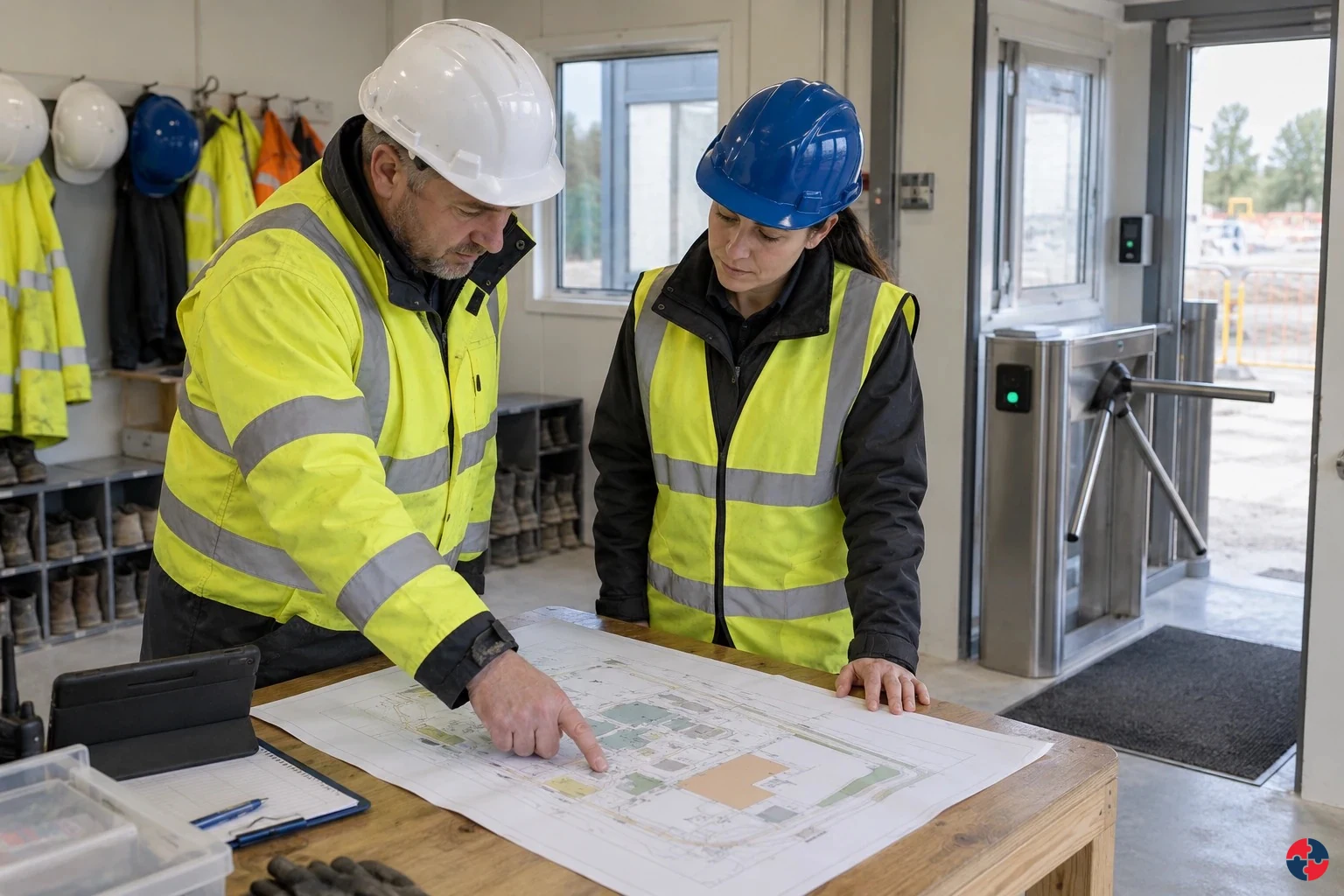
What are the key facts about just culture?
Just culture is useful only when it changes decisions, conversations and evidence. Just culture is a fair, evidence-led response to errors, violations and reports of weak controls.
Turn just culture knowledge into a decision
Just culture is a fair, evidence-led response to errors, violations and reports of weak controls. It helps people speak up while managers examine work design and make proportionate accountability decisions. Culture review, rule map and weak-signal register.
the process operator worked example
Assessing: the process operator maps life-critical rules, common drift areas and reporting barriers through worker interviews, audits and incident review. Evidence / response: Culture review, rule map and weak-signal register. Analysing: Incidents are reviewed for job, individual and organisational factors before accountability decisions are made. Evidence / response: Investigation reports and just-culture prompt form.
Warning signs and actions
People say nothing bad ever happens: Reporting may be suppressed. Investigations conclude operator error: Human factors may be ignored. Similar cases get different responses: Fairness and consistency are weak.
Choose controls for just culture
Eliminate: Redesign receiving and storage so pedestrians never need to enter the delivery vehicle lane: move picking, welfare access and unloading to a protected side of the building with a separate physical route. Reduce: Replace a reversing-dependent delivery pattern with drive-through or one-way circulation where geometry permits, or move unloading to a dock that avoids pedestrians entering the vehicle envelope. Isolate: Install fixed pedestrian barriers and protected crossings at measured sight lines; separate doors and gates from vehicle openings, protect waiting areas, and use adequate lighting and physical speed control. Control: Use a traffic plan, booking slots, speed limits, trained marshals where needed, visitor-driver briefing and a temporary stop rule when pedestrian routes are obstructed. PPE: Provide high-visibility clothing where assessment shows it improves conspicuity, with task-suitable footwear and weather protection. Read the full control table for qualifications, ownership and verification. Use the actual task and applicable jurisdiction; existing technical approval remains unchanged.
Use the full just culture lesson
Use the full topic for the decision points, practical examples, detailed control tables and source scope. HSE guidance applies to Great Britain; use HSENI for the Northern Ireland route and the source’s stated jurisdiction. A simplified guide does not change the page’s technical-review or approval status.

Read all six steps as text
1. What are the key facts about just culture?
Just culture is useful only when it changes decisions, conversations and evidence.
- Avoid / redesign: Redesign receiving and storage so pedestrians never need to enter the delivery vehicle lane: move picking, welfare access and unloading to a protected side of the building with a separate physical route.
- Control the task: Install fixed pedestrian barriers and protected crossings at measured sight lines; separate doors and gates from vehicle openings, protect waiting areas, and use adequate lighting and physical speed control.
- Verify before release: Hold or stop for unprotected crossing, unsafe reversing or an ineffective barrier.
Just culture is useful only when it changes decisions, conversations and evidence. Just culture is a fair, evidence-led response to errors, violations and reports of weak controls.
Apply it: Which part of this plan would you check at the workface before authorising the task?
2. Turn just culture knowledge into a decision
Use the evidence to improve the actual work arrangement.
- Change at source: Redesign receiving and storage so pedestrians never need to enter the delivery vehicle lane: move picking, welfare access and unloading to a protected side of the building with a separate physical route.
- Make it observable: Hold or stop for unprotected crossing, unsafe reversing or an ineffective barrier.
- Keep useful evidence: Culture review, rule map and weak-signal register.
Just culture is a fair, evidence-led response to errors, violations and reports of weak controls. It helps people speak up while managers examine work design and make proportionate accountability decisions. Culture review, rule map and weak-signal register.
Apply it: What evidence would show that the change improves this task, rather than only completing a record?
3. the process operator worked example
Example: a practical application of the existing topic lesson.
- Assessing: the process operator maps life-critical rules, common drift areas and reporting barriers through worker interviews, audits and incident review.
- Analysing: Incidents are reviewed for job, individual and organisational factors before accountability decisions are made.
- Implementing: A review panel separates safety learning, HR process and serious misconduct escalation using clear decision criteria.
Assessing: the process operator maps life-critical rules, common drift areas and reporting barriers through worker interviews, audits and incident review. Evidence / response: Culture review, rule map and weak-signal register. Analysing: Incidents are reviewed for job, individual and organisational factors before accountability decisions are made. Evidence / response: Investigation reports and just-culture prompt form.
Apply it: At which point would you hold this example, and what evidence would allow it to proceed?
4. Warning signs and actions
Connect the task, the route to the person and the control that can fail.
- People say nothing bad ever happens: Reporting may be suppressed.
- Investigations conclude operator error: Human factors may be ignored.
- Similar cases get different responses: Fairness and consistency are weak.
People say nothing bad ever happens: Reporting may be suppressed. Investigations conclude operator error: Human factors may be ignored. Similar cases get different responses: Fairness and consistency are weak.
Apply it: Who could be exposed, including other trades, cleaners, maintainers and people nearby?
5. Choose controls for just culture
Start with the stronger practicable options and verify their effect.
- Eliminate: Redesign receiving and storage so pedestrians never need to enter the delivery vehicle lane: move picking, welfare access and unloading to a protected side of the building with a separate physical route.
- Reduce: Replace a reversing-dependent delivery pattern with drive-through or one-way circulation where geometry permits, or move unloading to a dock that avoids pedestrians entering the vehicle envelope.
- Isolate: Install fixed pedestrian barriers and protected crossings at measured sight lines; separate doors and gates from vehicle openings, protect waiting areas, and use adequate lighting and physical speed control.
- Control: Use a traffic plan, booking slots, speed limits, trained marshals where needed, visitor-driver briefing and a temporary stop rule when pedestrian routes are obstructed.
- PPE: Provide high-visibility clothing where assessment shows it improves conspicuity, with task-suitable footwear and weather protection.
Eliminate: Redesign receiving and storage so pedestrians never need to enter the delivery vehicle lane: move picking, welfare access and unloading to a protected side of the building with a separate physical route. Reduce: Replace a reversing-dependent delivery pattern with drive-through or one-way circulation where geometry permits, or move unloading to a dock that avoids pedestrians entering the vehicle envelope. Isolate: Install fixed pedestrian barriers and protected crossings at measured sight lines; separate doors and gates from vehicle openings, protect waiting areas, and use adequate lighting and physical speed control. Control: Use a traffic plan, booking slots, speed limits, trained marshals where needed, visitor-driver briefing and a temporary stop rule when pedestrian routes are obstructed. PPE: Provide high-visibility clothing where assessment shows it improves conspicuity, with task-suitable footwear and weather protection. Read the full control table for qualifications, ownership and verification. Use the actual task and applicable jurisdiction; existing technical approval remains unchanged.
Apply it: Which stronger option can be used here, and who will verify it before accepting the remaining risk?
6. Use the full just culture lesson
Follow the official sources below and retain the task-specific evidence.
- Official guidance: HSE: managing human failures
- Official guidance: HSE: organisational culture
- Task decision: Culture review, rule map and weak-signal register.
Use the full topic for the decision points, practical examples, detailed control tables and source scope. HSE guidance applies to Great Britain; use HSENI for the Northern Ireland route and the source’s stated jurisdiction. A simplified guide does not change the page’s technical-review or approval status.
Apply it: Which official source and full-topic section will you use to resolve the next decision?
Fair accountability
People are treated fairly according to evidence, context, intent and risk.
Learning before judgement
Investigations ask why the behaviour made sense at the time before deciding accountability.
Not no-blame
Evidence of conscious disregard of serious risk, an intentional rule departure or intent to harm may require a separate, proportionate conduct review. Intent to act, intent to breach a rule, awareness of risk and intent to harm are different questions; none is established merely by the outcome.
System conditions matter
Poor design, workload, supervision, incentives and procedures can shape behaviour.
Consistency builds trust
Similar events should be assessed using similar principles.
Reporting is a health signal
Low reporting can mean fear, fatigue, cynicism or poor leadership response.
What is just culture in plain English?
Just culture asks: was this a human mistake, a system-induced drift, an at-risk choice, reckless behaviour or deliberate harm?
A blame culture asks 'who did it?' and often stops there. A no-blame culture can create the opposite problem by avoiding accountability altogether. Just culture sits between the two. It asks what happened, what the person was trying to do, what they knew, what pressures existed, what controls were usable, whether the behaviour was normalised and whether the organisation had tolerated drift. HSE human-failure guidance (GB) distinguishes the work conditions and behaviours that a fair response must examine.
The aim is not to protect poor behaviour. The aim is to make the response proportionate and useful. If the problem was a confusing procedure, poor training and production pressure, disciplining one worker will not fix the risk. If the problem was a deliberate decision to bypass a life-critical control after clear instruction, the response must address accountability and system protection.
| Question | Why it matters | Example |
|---|---|---|
| What was intended? | Intent helps distinguish mistake from deliberate act. | Worker selected wrong valve believing it was correct. |
| What did the person know? | Knowledge affects accountability. | Training covered the rule and worker had signed competence. |
| What pressures existed? | Production, fatigue or supervision can shape behaviour. | Team skipped a test to meet loading deadline. |
| Was this normal practice? | Routine drift may indicate system acceptance. | Everyone bypasses alarm during start-up. |
| What did leaders reinforce? | Culture is shaped by response to trade-offs. | Managers praised output but ignored permit quality. |
Why is just culture not the same as no blame?
Just culture protects learning, but it also protects standards.
No-blame language can be attractive after an incident, but it can be too simplistic. Some events involve genuine slips, lapses or mistakes. Some involve unclear expectations or poor design. Some involve at-risk decisions that have become normal because supervisors tolerated them. Some involve reckless or deliberate disregard. HSE human-failure guidance (GB) distinguishes error from deliberate rule-breaking.
A mature organisation can say two things at once: the system must be improved, and some behaviours may still be unacceptable. The point is to decide that based on evidence rather than anger, embarrassment or pressure to find a culprit.
| Response style | What it sounds like | Risk |
|---|---|---|
| Blame-first | Find who caused it and punish them. | People hide bad news and system causes remain. |
| No-blame | Nobody is ever accountable. | Standards can weaken and reckless behaviour may be excused. |
| Just culture | Understand context, learn from the system and apply fair accountability. | Requires skill, consistency and leadership discipline. |
| Learning culture | Use reported events to improve controls. | Needs trust, action close-out and visible feedback. |
| Accountability culture | People understand decision rights and consequences. | Needs clear rules and proportional response. |
How do human factors support just culture?
Human factors prevent the lazy conclusion that an incident was simply operator error.
The Health and Safety Executive (HSE) frames human factors around job, individual and organisational factors. This means a just-culture review should consider task design, workload, interface design, procedure usability, fatigue, competence, communication, supervision, staffing, incentives, leadership messages and organisational priorities. HSE human-failure guidance (GB) provides the error and violation distinctions behind this review.
The phrase 'human error' is usually the start of the investigation, not the end. A worker may have made an error, but the professional question is what made that error likely, hard to detect or hard to recover from.
| Factor | Question to ask | Possible evidence |
|---|---|---|
| Job | Was the task designed so a competent person could reliably do it? | Procedure review, walkdown and workload assessment. |
| Individual | Was the person trained, competent, fit and supported? | Training, supervision, fatigue and role clarity records. |
| Organisation | Did pressures, incentives or culture make the behaviour likely? | Production targets, leadership messages and reporting history. |
| Equipment/interface | Were controls, alarms and labels usable? | Human-machine interface review and alarm logs. |
| Recovery | Could the error be detected and corrected? | Independent checks, alarms, peer checks and supervision. |
How does human performance affect this work?
Compare possible explanations without inferring intention from the outcome. Use the context and evidence questions to support a fair review. This teaching overview is not a culpability scoring system or a disciplinary decision tool.
Select any box to open its explanation below. You can also use the grouped text headings. Several explanations can stay open for comparison.

Original SHARElearn teaching overview. Arrows show groupings, not a causal sequence. Examples are fictional; no box establishes an actual cause, diagnosis or responsibility.
Inspect the full-size overview (new tab)
Start with the work context
Human performance in context
Human factors considers how the job, the individual and the organisation interact. A human action is a starting point for inquiry, not a complete explanation.
Fictional example: A pump control is operated incorrectly. The team examines what the operator could see, the control layout and the work arrangements.
Investigate and improve: Reconstruct the information and options available at the time. Ask what made the action understandable and what would prevent or tolerate it.
Unintended errors
An action or decision goes wrong without an intended departure from the expected method. Distinguish doing the wrong action from choosing an unsuitable plan.
Fictional example: A person intends to stop pump A but presses the adjacent control for pump B.
Investigate and improve: An outcome alone does not establish intent. Compare the person’s account, task sequence, equipment and available records; retain uncertainty.
Unintended errors: actions and decisions
Skill-based action errors
A familiar task is intended correctly but its execution goes wrong through a slip or lapse. Experienced people can be affected.
Fictional example: A routine restart is interrupted and the person resumes at the wrong point.
Investigate and improve: Examine distractions, task design and place-keeping aids. Repeating training alone does not remove the conditions that permit these errors.
Slips of action
The intended action is clear, but a different action is performed.
Fictional example: While reaching to stop a pump, a person operates a similar-looking neighbouring switch.
Investigate and improve: Check control spacing, identification, feedback, visibility and interruption. Consider clearer separation or error-tolerant design, with competent review and testing.
Lapses of memory
A needed step is forgotten or the person loses their place.
Fictional example: After an interruption, a person omits a required check while believing the sequence is complete.
Investigate and improve: Check the interruption and restart arrangements. Consider point-of-use prompts, reliable step records and proportionate independent checks for critical steps.
Mistakes in planning or judgement
The chosen action is carried out as intended, but the plan or judgement is unsuitable.
Fictional example: A person selects a familiar response to a warning, believing it fits the present conditions.
Investigate and improve: Check what was known, what the rule covered and how the situation was understood. Consider information, decision support and task-specific competence.
Rule-based mistakes
A remembered rule is misapplied, or an unsuitable rule is used. An apparently missing good rule also needs inquiry: was it known, understood and applicable?
Fictional example: A response suitable for pump A is applied to pump B even though their isolation requirements differ.
Investigate and improve: Inspect the actual procedure and its scope, access and revision. Explore interpretation. Missing a step does not by itself prove a deliberate deviation.
Knowledge-based mistakes
An unfamiliar situation is approached through reasoning without a suitable established solution; the resulting judgement is wrong.
Fictional example: An unusual pump condition is interpreted using incomplete information, leading to an inappropriate response.
Investigate and improve: Examine information gaps and available support. Improve escalation, diagnostic aids and arrangements for obtaining competent advice before uncertain work proceeds.
Deliberate deviations: understand why
Deliberate deviations / violations
A rule or procedure is knowingly departed from. The departure is intentional; harm need not be intended. Establish this distinction through evidence.
Fictional example: A required verification is knowingly bypassed to continue a task.
Investigate and improve: Ask why the rule was bypassed, whether it was workable and what the organisation encouraged or tolerated. Fair accountability and system improvements can both be needed.
Routine deviations
Departures become the usual way work is carried out.
Fictional example: A team commonly skips a required handover check and supervisors accept the practice.
Investigate and improve: Compare written arrangements with everyday work, including management knowledge and response. Make the safe method workable and verify that practice changes.
Situational deviations
A departure is associated with conditions such as time pressure, insufficient resources or unsuitable equipment. These conditions do not authorise unsafe work.
Fictional example: The correct equipment is unavailable and a deadline encourages an improvised shortcut.
Investigate and improve: Check resources, conflicting targets and whether people can stop and escalate. Remove the pressure or constraint rather than treating the shortcut as the solution.
Exceptional deviations
A departure occurs in unusual circumstances outside normal practice. This label is not an automatic justification.
Fictional example: During an unfamiliar equipment upset, a person knowingly bypasses a rule while trying to restore operation.
Investigate and improve: Reconstruct the situation and information available. Review abnormal-event preparation, support, escalation and protection; do not infer malicious intent from the outcome.
Check factors across every branch
Performance influencing factors
Conditions affecting performance can sit within the job, the individual or the organisation. Consider them across errors and deviations.
Fictional example: A difficult control layout combines with an interrupted shift and a production target.
Investigate and improve: Identify specific conditions, their evidence and how they interacted. Do not turn a list of factors into unsupported causal conclusions.
Job and task factors
Consider the work itself: equipment, interface design, instructions, workload, environment, timing and communication.
Fictional example: Two similar controls are poorly lit while alarms and interruptions compete for attention.
Investigate and improve: Observe representative work safely, compare intended and actual demands, and test feasible design changes with the people doing the task.
Individual factors
Consider relevant knowledge, experience, abilities and current needs fairly. Observed behaviour does not establish a health diagnosis or intent.
Fictional example: A newly assigned worker does not understand an unfamiliar alarm; a colleague also reports yawning after a long shift.
Investigate and improve: Check induction, understanding, shift and welfare information through appropriate private routes. Yawning alone proves neither fatigue nor the cause of an event; seek competent support when needed.
Organisational factors
Consider staffing, resources, supervision, targets, planning, culture, change management and learning from earlier events.
Fictional example: A known leak remains open because repair responsibility is unclear and closure is recorded without checking the work.
Investigate and improve: Trace decisions, ownership and earlier warnings. Improve the underlying arrangements and verify effectiveness, rather than closing the investigation at “operator error”.
Try the evidence questions
Choose one fictional pump or travel example. What is observed, what remains a hypothesis, which job or organisational factor needs checking, and what improvement would you test? Explain what evidence would change your view.
Explore at your own pace. These are optional thinking prompts: this page does not save answers, assess performance or create a learning record.
Sources and scope
Original SHARElearn overview informed by HSE guidance. The diagram groups concepts for learning; it does not model a causal sequence. Guidance checked 1 November 2026.
Continue with the incident and accident investigation course. The course outline explains its learning, optional reflections and completion requirements.
What behaviour types should a just-culture review distinguish?
Different behaviour types need different responses.
An error is unintended: a technician may press the wrong adjacent control, forget a step after interruption or choose a mistaken method from incomplete information. A violation is an intentional departure from a rule, but HSE notes that it may be shaped by poor design, impractical rules or pressure and is not automatically malicious. Establish the action and conditions before deciding the response. HSE human-failure guidance (GB) explains slips, lapses, mistakes and violations.
A fair process avoids treating all unwanted outcomes the same. A slip is not the same as a knowingly unsafe shortcut. A knowledge-based mistake is not the same as sabotage. A routine violation may say more about leadership tolerance and poor work design than about one worker's character.
The classification should be evidence-led. The question is not what label sounds convenient, but what the evidence shows about intent, knowledge, choice, pressures, normal practice and system design.
The first error and violation terms below follow HSE’s human-failure explanation. “At-risk”, “reckless” and “deliberate harm” are illustrative labels for an employer’s fair-review process, not HSE categories or automatic findings of misconduct. A case may contain several contributing factors; formal action needs its own evidence, policy and competent employment-law review.
| Behaviour type | Meaning | Typical response |
|---|---|---|
| Slip or lapse | Unintended action or memory failure. | Improve design, checks, prompts, workload and recovery. (see HSE human failure) |
| Mistake | Wrong plan or decision based on understanding at the time. | Improve training, information, procedures and decision support. (see HSE human failure) |
| At-risk behaviour | Risky choice where harm is not fully appreciated or risk is normalised. | Coach, reset standards and remove incentives for drift. |
| Routine violation | Rule-breaking has become normal or tolerated. | Review supervision, practicality of rules and leadership signals. (see HSE human failure) |
| Reckless conduct | Conscious disregard of substantial and unjustifiable risk. | Formal accountability and system protection. |
| Deliberate harm or malicious act | Intentional action to cause harm. A serious intentional rule departure does not by itself establish malicious intent; assess the evidence and applicable conduct process separately. | Urgent formal response and safeguarding/security route. |
How should culpability matrices be used?
A culpability matrix is a consistency aid, not a substitute for judgement.
A matrix can help managers ask the same core questions each time: was the action intentional, were rules clear, was the person trained, did others do the same thing, was there pressure, was the risk obvious, were controls usable and was the behaviour reckless or malicious? HSE HSG245 (GB) supports evidence-led incident investigation before actions are chosen.
The danger is using a matrix mechanically. If the evidence is weak, if human resources (HR) and legal boundaries are sensitive, or if the event involves serious harm, the review needs competent support. The matrix should help structure the conversation; it should not decide the outcome on its own.
| Prompt | Why it matters | Evidence to review |
|---|---|---|
| Intent | Distinguishes accident, mistake and deliberate act. | Statements, timeline and task context. |
| Knowledge | Shows whether expectations were understood. | Training, briefings, competence and procedure access. |
| Rule clarity | Unclear rules weaken accountability. | Procedure, permit, signage and supervisor communication. |
| Normalisation | Common drift indicates organisational tolerance. | Observations, past audits and worker interviews. |
| Pressure | Production, staffing or fatigue can shape behaviour. | Rosters, deadlines, workload and messages. |
| Risk awareness | Obvious life-critical risk differs from hidden complexity. | Risk assessment, previous events and hazard communication. |
| System design | Poor tools or interfaces can set people up to fail. | Work design, HMI, ergonomics and recovery controls. |
What is the difference between a poor and good just-culture response?
The difference is visible in how leaders respond to bad news.
Imagine a near miss where a supervisor permits a shortcut around an isolation hold point to recover lost production time. A poor response blames the technician who followed the instruction and closes the event with a reminder to follow procedures. The same pressures remain. HSE HSG245 (GB) supports examining immediate and underlying causes rather than stopping at a person’s act.
A good response examines why the shortcut was requested, whether production targets conflicted with isolation rules, whether hold points were practical, whether similar drift had happened before, how supervisors were trained and whether workers felt able to stop the job.
| Situation | Poor response | Good just-culture response |
|---|---|---|
| Permit step skipped | Discipline the worker only. | Review permit design, supervision, production pressure and accountability. |
| Alarm ignored | Tell operators to pay attention. | Review alarm load, priority, training, interface and staffing. |
| PPE not worn | Issue blanket warning. | Ask whether PPE is suitable, available, compatible and enforced. |
| Near miss not reported | Blame workers for silence. | Ask whether previous reports led to action or punishment. |
| Repeated violation | Treat each case separately. | Identify routine drift, rule practicality and leadership tolerance. |
How can the same incident be handled three different ways?
A realistic scenario helps managers understand the difference between blame, no accountability and mature just culture.
Consider a maintenance job at a fuel terminal where a permit hold point required isolation verification before loosening a flange. The job was running late, a supervisor wanted the line returned to service, and a technician began loosening bolts after a verbal assurance rather than a documented prove-zero check. A small weep was noticed before anyone was harmed. HSE HSG245 (GB) provides the investigation route for the sequence shown below.
The immediate decision is to stop the job, secure the line and confirm the release has been controlled. The investigation lead then establishes what the technician and supervisor knew, checks the isolation evidence, asks how often the hold point is missed and tests whether schedule pressure or permit design made the shortcut seem normal. Only after those facts are checked should a separate competent decision consider individual accountability and system actions. Resuming intrusive maintenance requires proved and maintained isolation and authorised work controls. Monitor and re-prove isolation during work and after relevant interruptions as the assessed procedure requires; pressure return or uncertainty stops the work. Returning plant to service is a later decision after completion, controlled reinstatement and authorised operational hand-back. Proved isolation alone cannot authorise plant restart.
The same facts can produce very different cultural outcomes. A mature response protects people, learns from the system and still asks whether standards were knowingly bypassed.
| Response route | What happens | Message it sends | Learning and accountability outcome |
|---|---|---|---|
| Blame response | The technician is disciplined quickly because they touched the flange before evidence was complete. | Reporting bad news is dangerous and supervisors may stay hidden. | The visible person is blamed, but production pressure, permit design and isolation assurance may remain weak. |
| No-blame but no-accountability | The event is described as a system failure only and no one reviews the supervisor's instruction or life-critical rule breach. | Standards may be flexible when the job is inconvenient. | Learning may identify paperwork issues, but deliberate or reckless drift can be normalised. |
| Mature just-culture response | The review builds a timeline, interviews both people, checks permit usability, supervision, pressure, competence and previous drift before deciding actions. | People can report honestly, but life-critical controls still matter. | System actions improve permit hold points and planning; accountability action is proportionate to evidence, intent and risk. |
| What the record captures | The event record separates facts, human factors, barrier weaknesses, accountability decision and verified actions. | Decisions are evidence-led rather than emotional. | The organisation can learn consistently from future events and defend why it responded as it did. |
How can the hierarchy of controls turn safety reports into action on underlying hazards?
People report weak signals when they believe the organisation will respond fairly and usefully.
Consider a logistics loading bay where a visiting driver reports that pedestrians repeatedly cross a blind vehicle route during deliveries. The immediate risk is a person being struck or crushed. The supervisor thanks the reporter, holds conflicting movements and uses the site traffic plan to establish a safe temporary route; the report is not treated as an accusation against the driver. HSE workplace-transport guidance (GB) supports separating pedestrians from vehicles in the reported bay.
The transport manager checks the actual pedestrian and vehicle movements with drivers, warehouse staff and contractors. If a walkway has been blocked by stock or delivery pressure is driving shortcuts, a reminder to “take care” is too weak. Change the layout or segregation where feasible, restore clear routes and lighting, brief everyone who uses the bay, then verify the arrangement during a busy delivery period.
Record who owns the temporary hold, permanent change and field check. Tell the reporter and workforce what was found and changed. Compare later observations, near misses and reporting confidence; an initial increase in reports may show that people trust the route enough to speak up, not that risk has necessarily risen.
Reporting confidence is fragile. Workers notice what happens after someone raises a concern. If reports disappear into a system, if workers are blamed, if managers only react after injuries, or if actions are not closed, reporting falls.
Just culture improves reporting by making the response predictable: listen, protect confidentiality where appropriate, investigate context, give feedback, fix controls and apply accountability fairly.
| Indicator | What it may show | Management action |
|---|---|---|
| Near-miss reports increase | Trust may be improving or risk may be changing. | Review themes and close actions. |
| Same team never reports | Fear, cynicism or poor access may exist. | Speak with workers and simplify routes. |
| Anonymous reports rise | People may not feel safe being named. | Review trust, confidentiality and leadership response. |
| Reports lack quality | People may not know what useful detail looks like. | Coach on factual reporting and examples. |
| Actions overdue | Learning loop is broken. | Assign ownership and visible feedback. |
A fair response to the driver report must change the exposure, not just thank the reporter. The HSE five-level hierarchy starts with removing or substituting the hazard before physical separation, administrative measures and PPE. ERICPD adds an explicit check on isolation and whether chosen controls stay in place. The reporting process supports the physical control but cannot replace it.
When the usual reporting route is unsafe
If the line manager is implicated or the normal route feels unsafe, use the organisation’s nominated independent reporting contact, another appropriate senior manager or the published whistleblowing route; a worker or trade-union representative can help identify the route. Keep urgent danger escalation active while the report is considered.
The receiving manager should name a case owner outside the concern, agree safe contact and feedback arrangements, restrict access to those who need the information, explain any limits to confidentiality and record the next update. Do not promise absolute secrecy. The case owner checks for retaliation, such as unexplained changes to shifts, treatment or opportunities, and escalates concerns independently; check again after the safety action closes.
A near-miss report, personal grievance and legally protected disclosure can overlap, but they are not interchangeable. Statutory protection depends on the applicable conditions, including the disclosure, person and route; reporting does not confer blanket immunity for unrelated conduct. For GB read Acas whistleblowing law guidance and Acas responding to a disclosure. For NI use nidirect protected-disclosure guidance; obtain competent advice where the route or protection is uncertain.
Blind delivery route: five worked control levels
The reported conflict occurs when a vehicle turns through a blind bay while pedestrians cross to pick stock. A high-visibility vest may help a driver notice someone but cannot remove the vehicle path or stopping-distance problem. The manager must test the layout with the people who use it during a busy delivery period and give the reporter an account of the physical change.
Choose the activity
How can the ERICPD hierarchy of controls reduce vehicle risks after a pedestrian near-miss report?

ERICPD is a planning mnemonic, not a literal effectiveness ranking of these particular examples. Here, Isolate means physical separation and protected routes; Control means engineered measures such as lighting, sight lines and speed control. Administrative delivery holds and briefings support those measures. “Discipline” means sustaining and checking agreed controls, not punitive discipline; a time-separated traffic hold remains an administrative control. The ESEAP view keeps administrative controls before PPE.
| Control level | Control for this activity | Owner and verification | Stop / restart decision |
|---|---|---|---|
| Eliminate | Redesign receiving and storage so pedestrians never need to enter the delivery vehicle lane: move picking, welfare access and unloading to a protected side of the building with a separate physical route. Check that the removed crossing is not simply recreated at another doorway. If any crossing remains, elimination has not been achieved and stronger lower-level controls are still needed. | Site manager tests the layout with drivers and staff at peak load. If any crossing remains, continue down the hierarchy; do not close the report as “worker error”. Basis: HSE workplace-transport guidance supports this control choice. | Hold or stop for unprotected crossing, unsafe reversing or an ineffective barrier. Restart only after site owner accepts the changed layout with workers and drivers. |
| Reduce | Replace a reversing-dependent delivery pattern with drive-through or one-way circulation where geometry permits, or move unloading to a dock that avoids pedestrians entering the vehicle envelope. Check swept paths, vehicle sizes, new blind spots and emergency access before adoption. | Transport manager approves the trial with representative vehicles and records new hazards. Reject a route change that merely moves conflict to another doorway. Basis: HSE workplace-transport guidance supports this control choice. | Hold or stop for unprotected crossing, unsafe reversing or an ineffective barrier. Restart only after site owner accepts the changed layout with workers and drivers. |
| Isolate / Control | Install fixed pedestrian barriers and protected crossings at measured sight lines; separate doors and gates from vehicle openings, protect waiting areas, and use adequate lighting and physical speed control. Design the barrier ends so people cannot simply step into the blind zone. Recheck during deliveries, not only on an empty yard. | Facilities owner checks barrier condition, illumination and route observations; transport manager verifies vehicle manoeuvres. Hold conflicting movements for a blocked walkway or damaged separation. Basis: HSE workplace-transport guidance supports this control choice. | Hold or stop for unprotected crossing, unsafe reversing or an ineffective barrier. Restart only after site owner accepts the changed layout with workers and drivers. |
| Control / Discipline | Use a traffic plan, booking slots, speed limits, trained marshals where needed, visitor-driver briefing and a temporary stop rule when pedestrian routes are obstructed. If a physical route change is not yet feasible, time-separate deliveries from crossing use and close the crossing during vehicle movement; treat this as an administrative interim control, verify it at each delivery and keep the permanent redesign open. Ask the reporter and affected workers whether the fix works. | Shift lead owns temporary closure and informs all users; manager records action closure. Repeated shortcuts signal design or workload problems that require another control change. Basis: HSE workplace-transport guidance supports this control choice. | Hold or stop for unprotected crossing, unsafe reversing or an ineffective barrier. Restart only after site owner accepts the changed layout with workers and drivers. |
| PPE | Provide high-visibility clothing where assessment shows it improves conspicuity, with task-suitable footwear and weather protection. Visibility cannot remove a driver’s blind spot, stop a vehicle or substitute for a barrier; dark, rain and glare may limit its benefit. | Supervisor checks issue and condition, but never reopens an unsafe crossing because people are wearing hi-vis. Basis: HSE PPE hierarchy supports this control choice. | Hold or stop for unprotected crossing, unsafe reversing or an ineffective barrier. Restart only after site owner accepts the changed layout with workers and drivers. |
How can the ISO 45001 hierarchy of controls reduce vehicle risks after a pedestrian near-miss report?

| Control level | Control for this activity | Owner and verification | Stop / restart decision |
|---|---|---|---|
| Elimination | Redesign receiving and storage so pedestrians never need to enter the delivery vehicle lane: move picking, welfare access and unloading to a protected side of the building with a separate physical route. Check that the removed crossing is not simply recreated at another doorway. If any crossing remains, elimination has not been achieved and stronger lower-level controls are still needed. | Site manager tests the layout with drivers and staff at peak load. If any crossing remains, continue down the hierarchy; do not close the report as “worker error”. Basis: HSE workplace-transport guidance supports this control choice. | Hold or stop for unprotected crossing, unsafe reversing or an ineffective barrier. Restart only after site owner accepts the changed layout with workers and drivers. |
| Substitution | Replace a reversing-dependent delivery pattern with drive-through or one-way circulation where geometry permits, or move unloading to a dock that avoids pedestrians entering the vehicle envelope. Check swept paths, vehicle sizes, new blind spots and emergency access before adoption. | Transport manager approves the trial with representative vehicles and records new hazards. Reject a route change that merely moves conflict to another doorway. Basis: HSE workplace-transport guidance supports this control choice. | Hold or stop for unprotected crossing, unsafe reversing or an ineffective barrier. Restart only after site owner accepts the changed layout with workers and drivers. |
| Engineering controls | Install fixed pedestrian barriers and protected crossings at measured sight lines; separate doors and gates from vehicle openings, protect waiting areas, and use adequate lighting and physical speed control. Design the barrier ends so people cannot simply step into the blind zone. Recheck during deliveries, not only on an empty yard. | Facilities owner checks barrier condition, illumination and route observations; transport manager verifies vehicle manoeuvres. Hold conflicting movements for a blocked walkway or damaged separation. Basis: HSE workplace-transport guidance supports this control choice. | Hold or stop for unprotected crossing, unsafe reversing or an ineffective barrier. Restart only after site owner accepts the changed layout with workers and drivers. |
| Administrative controls | Use a traffic plan, booking slots, speed limits, trained marshals where needed, visitor-driver briefing and a temporary stop rule when pedestrian routes are obstructed. If a physical route change is not yet feasible, time-separate deliveries from crossing use and close the crossing during vehicle movement; treat this as an administrative interim control, verify it at each delivery and keep the permanent redesign open. Ask the reporter and affected workers whether the fix works. | Shift lead owns temporary closure and informs all users; manager records action closure. Repeated shortcuts signal design or workload problems that require another control change. Basis: HSE workplace-transport guidance supports this control choice. | Hold or stop for unprotected crossing, unsafe reversing or an ineffective barrier. Restart only after site owner accepts the changed layout with workers and drivers. |
| PPE | Provide high-visibility clothing where assessment shows it improves conspicuity, with task-suitable footwear and weather protection. Visibility cannot remove a driver’s blind spot, stop a vehicle or substitute for a barrier; dark, rain and glare may limit its benefit. | Supervisor checks issue and condition, but never reopens an unsafe crossing because people are wearing hi-vis. Basis: HSE PPE hierarchy supports this control choice. | Hold or stop for unprotected crossing, unsafe reversing or an ineffective barrier. Restart only after site owner accepts the changed layout with workers and drivers. |
How can the ERICPD hierarchy of controls prevent a release when investigating a reported passing valve?

| Control level | Control for this activity | Owner and verification | Stop / restart decision |
|---|---|---|---|
| Eliminate | Investigate the reported passing isolation valve without opening a pressurised line: use external diagnostics or plan replacement within a fully shut-down and emptied system if practicable. Remove redundant branch connections that repeatedly require line breaks. The goal is to remove this release opportunity from the job. | Process owner documents the diagnostic or redesign decision. If intrusive work remains, a specific release scenario and isolation plan are required. Basis: HSE HSG253 supports this control choice. | Hold or stop for passing isolation, pressure or unverified plant state. Resume intrusive work only with proved, maintained isolation and authorised work controls. Return plant to service only after completed work, controlled reinstatement, required tests and authorised operations hand-back. |
| Reduce | Substitute the intrusive in-situ line-break task with removal of a manufacturer-approved, pre-isolated replaceable module or an off-line repair method, so inspection and repair occur away from the pressurised process. Check interfaces, new joints, trapped volumes and handling risks; a different valve model alone is not a lower-risk method. | Technical authority reviews design and management of change. Hold if the substitute has unproved isolation performance or an unsafe bleed destination. Basis: HSE HSG253 supports this control choice. | Hold or stop for passing isolation, pressure or unverified plant state. Resume intrusive work only with proved, maintained isolation and authorised work controls. Return plant to service only after completed work, controlled reinstatement, required tests and authorised operations hand-back. |
| Isolate / Control | Identify every connected source, then use the engineered isolation specified for this service: suitable valves, double isolation and bleed or positive blanking as required by the approved plan. Lock positions, drain and vent to a safe destination under the assessed procedure, and prove zero pressure and isolation integrity before opening. Maintain, monitor and re-prove the isolation during work and after relevant interruptions as that procedure requires. Pressure return, a passing valve or uncertainty stops the work; do not treat the first proof as a permanent safe-state guarantee. Provide suitable gas detection and area segregation; remote emergency isolation protects against a release but does not replace positive maintenance isolation. | Authorised isolator and independent checker sign the isolation certificate and proof; maintenance lead checks the workface. Passing valve, pressure return or uncertain drawing stops line-breaking. Basis: HSE HSG253 supports this control choice. | Hold or stop for passing isolation, pressure or unverified plant state. Resume intrusive work only with proved, maintained isolation and authorised work controls. Return plant to service only after completed work, controlled reinstatement, required tests and authorised operations hand-back. |
| Control / Discipline | Use a permit with a marked line diagram, simultaneous-operations check, gas-testing plan, toolbox walk-through, hold points and a clear hand-back. Investigate why the valve was passing and whether prior reports were acted on; tell the reporter what changed. Avoid disciplining the person who surfaced a barrier defect. | Permit issuer confirms each hold; manager tracks repair and checks for similar valves. Suspend work if the permit boundary or control ownership changes. Basis: HSE HSG253 supports this control choice. | Hold or stop for passing isolation, pressure or unverified plant state. Resume intrusive work only with proved, maintained isolation and authorised work controls. Return plant to service only after completed work, controlled reinstatement, required tests and authorised operations hand-back. |
| PPE | Select splash, chemical or flame-resistant clothing and respiratory protection according to the specific fluid and residual exposure assessment, with escape arrangements where relevant. Such PPE may reduce injury after a small unexpected release but cannot control a continuing pressurised discharge. | Supervisor checks fit, compatibility and emergency route. If release occurs, withdraw and use the emergency plan; PPE never permits continuing an unproven line break. Basis: HSE PPE hierarchy supports this control choice. | Hold or stop for passing isolation, pressure or unverified plant state. Resume intrusive work only with proved, maintained isolation and authorised work controls. Return plant to service only after completed work, controlled reinstatement, required tests and authorised operations hand-back. |
How can the ISO 45001 hierarchy of controls prevent a release when investigating a reported passing valve?

| Control level | Control for this activity | Owner and verification | Stop / restart decision |
|---|---|---|---|
| Elimination | Investigate the reported passing isolation valve without opening a pressurised line: use external diagnostics or plan replacement within a fully shut-down and emptied system if practicable. Remove redundant branch connections that repeatedly require line breaks. The goal is to remove this release opportunity from the job. | Process owner documents the diagnostic or redesign decision. If intrusive work remains, a specific release scenario and isolation plan are required. Basis: HSE HSG253 supports this control choice. | Hold or stop for passing isolation, pressure or unverified plant state. Resume intrusive work only with proved, maintained isolation and authorised work controls. Return plant to service only after completed work, controlled reinstatement, required tests and authorised operations hand-back. |
| Substitution | Substitute the intrusive in-situ line-break task with removal of a manufacturer-approved, pre-isolated replaceable module or an off-line repair method, so inspection and repair occur away from the pressurised process. Check interfaces, new joints, trapped volumes and handling risks; a different valve model alone is not a lower-risk method. | Technical authority reviews design and management of change. Hold if the substitute has unproved isolation performance or an unsafe bleed destination. Basis: HSE HSG253 supports this control choice. | Hold or stop for passing isolation, pressure or unverified plant state. Resume intrusive work only with proved, maintained isolation and authorised work controls. Return plant to service only after completed work, controlled reinstatement, required tests and authorised operations hand-back. |
| Engineering controls | Identify every connected source, then use the engineered isolation specified for this service: suitable valves, double isolation and bleed or positive blanking as required by the approved plan. Lock positions, drain and vent to a safe destination under the assessed procedure, and prove zero pressure and isolation integrity before opening. Maintain, monitor and re-prove the isolation during work and after relevant interruptions as that procedure requires. Pressure return, a passing valve or uncertainty stops the work; do not treat the first proof as a permanent safe-state guarantee. Provide suitable gas detection and area segregation; remote emergency isolation protects against a release but does not replace positive maintenance isolation. | Authorised isolator and independent checker sign the isolation certificate and proof; maintenance lead checks the workface. Passing valve, pressure return or uncertain drawing stops line-breaking. Basis: HSE HSG253 supports this control choice. | Hold or stop for passing isolation, pressure or unverified plant state. Resume intrusive work only with proved, maintained isolation and authorised work controls. Return plant to service only after completed work, controlled reinstatement, required tests and authorised operations hand-back. |
| Administrative controls | Use a permit with a marked line diagram, simultaneous-operations check, gas-testing plan, toolbox walk-through, hold points and a clear hand-back. Investigate why the valve was passing and whether prior reports were acted on; tell the reporter what changed. Avoid disciplining the person who surfaced a barrier defect. | Permit issuer confirms each hold; manager tracks repair and checks for similar valves. Suspend work if the permit boundary or control ownership changes. Basis: HSE HSG253 supports this control choice. | Hold or stop for passing isolation, pressure or unverified plant state. Resume intrusive work only with proved, maintained isolation and authorised work controls. Return plant to service only after completed work, controlled reinstatement, required tests and authorised operations hand-back. |
| PPE | Select splash, chemical or flame-resistant clothing and respiratory protection according to the specific fluid and residual exposure assessment, with escape arrangements where relevant. Such PPE may reduce injury after a small unexpected release but cannot control a continuing pressurised discharge. | Supervisor checks fit, compatibility and emergency route. If release occurs, withdraw and use the emergency plan; PPE never permits continuing an unproven line break. Basis: HSE PPE hierarchy supports this control choice. | Hold or stop for passing isolation, pressure or unverified plant state. Resume intrusive work only with proved, maintained isolation and authorised work controls. Return plant to service only after completed work, controlled reinstatement, required tests and authorised operations hand-back. |
How should just culture shape incident investigations?
Investigations should separate learning, accountability and legal/HR process without pretending they are unrelated.
The investigator should first preserve perishable evidence and speak to workers without promising an outcome. Compare the written procedure with work as normally done, check the supervisor’s instructions and the organisation’s past response to similar deviations. Assign actions to a named owner and test whether the revised control works; a reminder alone does not correct an unusable permit or poor equipment design. HSE HSG245 (GB) sets out evidence-led investigation and corrective action.
A just-culture investigation collects evidence before judgement. It builds a timeline, interviews respectfully, examines task conditions, tests procedures against work as done, checks supervision and considers organisational drivers.
If formal conduct issues may arise, the organisation should protect fairness by involving HR/legal competence, keeping records factual and avoiding premature labels. The safety investigation still needs to learn how risk controls failed.
An illustrative fair-response sequence has separate decision owners. The shift supervisor first makes the work safe and preserves records. An investigator gathers accounts and tests the work system without promising a conduct outcome. A competent, separate conduct decision maker reviews intent, knowledge, usable rules and comparable cases under the organisation’s policy; a reporter’s honesty is not itself evidence of culpability. The action owner then changes the failed control and checks it in use before closing the safety finding. HSE HSG245 supports the investigation and corrective-action stages, while any formal employment decision needs its own competent process.
| Investigation element | Question | Good evidence |
|---|---|---|
| Timeline | What happened before, during and after the event? | Time-stamped records, interviews and logs. (see HSE HSG245) |
| Task context | What was the person trying to achieve? | Job plan, work order, permit and local conditions. (see HSE HSG245) |
| Work-as-done | How is this work normally carried out? | Observation, worker interviews and audit history. (see HSE HSG245) |
| Decision pressure | What trade-offs were present? | Targets, downtime, staffing and supervision notes. (see HSE HSG245) |
| Behaviour classification | What does evidence show about intent, knowledge and risk awareness? | Culpability prompt record and review panel notes. |
| Actions | What will reduce recurrence? | System actions, accountability actions and verification. (see HSE HSG245) |
Separate employment-process checklist
The safety-learning owner retains the evidence and corrective-action record. A separately appointed employment-process owner applies the relevant policy and jurisdiction; HSG245 is not disciplinary authority.
- Establish the facts promptly and impartially. Where practicable, use different people for investigation and the disciplinary hearing.
- If there is a case to answer, notify the allegations, possible consequences and relevant evidence, and allow preparation and a response.
- At a formal disciplinary hearing, apply the applicable right to accompaniment. An investigatory interview does not automatically carry that statutory right; check policy, reasonable adjustments and the circumstances.
- Reach a reasoned, proportionate decision and communicate it in writing, with the action, reasons and appeal route.
- Arrange an impartial appeal, with an uninvolved manager where possible, and record the outcome separately from safety-action closure.
For Great Britain use the current Acas Code of Practice (published 11 March 2015, checked 19 October 2026). The 2026 consultation proposal is a proposal and is not the operative Code. Northern Ireland has a separate framework: follow nidirect disciplinary guidance and its Labour Relations Agency Code route.
Fair response: owners, evidence and two routes
- Make safe · supervisor.
Control immediate exposure and preserve records; this is not a conduct finding. - Gather facts · investigator.
Build a timeline, test system conditions and record uncertainty. Return for more evidence where a conclusion is unsupported. - Two routes · separate owners.
Safety owner changes failed controls. Employment owner considers any justified conduct case under the fair process; allow response and appeal. Neither route substitutes for the other. - Verify and feed back · action owner.
Check controls in use and give privacy-aware feedback. An appeal or new evidence returns to the appropriate decision owner; do not erase the safety action.

How should the selected controls be checked in practice?
Major accident prevention depends on people reporting weak signals before barriers fail.
In process safety, the early warnings are often small: alarms bypassed, permit steps compressed, corrosion readings questioned, valve passing, gas detector nuisance alarms, isolation drawings out of date or operators quietly working around a poor interface. HSE human-failure guidance (GB) supports examining the conditions around a missed hold point or bypass.
A blame-first culture drives those signals underground. A just culture makes it safer to speak up while still maintaining life-critical standards. That combination is essential in high-hazard operations.
| Weak signal | Blame response | Just-culture response |
|---|---|---|
| Operator reports a near miss during start-up | Ask why they made the error. | Review procedure, alarm load, staffing, handover and training. |
| Technician admits a permit hold point was missed | Punish admission. | Investigate pressure, supervision, permit usability and accountability. |
| Valve passing is normalised | Tell team to be more careful. | Review isolation standard, maintenance backlog and risk acceptance. |
| Alarm bypass left in place | Find one person to blame. | Review override register, shift handover, authorisation and proof testing. |
| Worker stops job against production pressure | Treat as delay. | Recognise positive intervention and review planning. |
A passing isolation valve is both a barrier defect and a test of reporting culture. Treat the report as a stop signal, then work down the hierarchy for the actual line-break exposure. “Discipline” in ERICPD means sustaining the agreed checks and a fair response to deliberate misconduct after facts are established; it is not a reason to blame someone for reporting a defect.
Passing valve and line-break: five worked control levels
The passing valve report precedes maintenance on a fuel line. If work starts on an assumed isolation, the released fluid may expose workers to fire, toxicity or pressure injury depending on the substance. Fair reporting matters because it triggers a hold early enough to redesign the work or prove a positive isolation; it does not make an unproved line break acceptable.
What evidence shows just culture is working?
Evidence should show that reporting, learning, accountability and system improvement are visible and trusted.
Trust cannot be inferred from a low incident count. Compare reporting by team and shift with confidential worker feedback, investigation quality, repeat events and the closure of physical or organisational actions. Where one team has stopped reporting, a manager should speak with workers and representatives, test for retaliation or silence, and verify that reporting leads to visible changes. HSE organisational-culture guidance (GB) supports looking beyond report counts to worker experience and management response.
Use the loading-bay report to test the complete loop: did the supervisor hold conflicting movements, did the transport owner change the pedestrian route, did drivers and pickers observe the change at a busy delivery, and did the reporter hear what was done? For a passing isolation valve, check whether line-breaking stayed on hold until a proved safe state was recorded and whether similar valves were examined. A closed action on a dashboard does not establish either physical control or reporting confidence.
| Evidence | What it may indicate | Quality check |
|---|---|---|
| Reporting trends | Weak signals have been recorded, but frequency alone cannot show the true risk or trust. | Are reports increasing in quality and followed by action? |
| Investigation quality | The investigation considered task context and human factors if the underlying evidence is present. | Do reports avoid unsupported 'operator error' conclusions? |
| Decision records | Reasons for accountability decisions were documented for comparison and challenge. | Are similar cases treated similarly? |
| Worker feedback | Workers shared perceptions of reporting and response; check whose voices are missing. | Do surveys and discussions show psychological safety? |
| Action close-out | An action was marked complete; field observation must show the control changed exposure. | Are actions verified, not just assigned? |
| Leadership review | Leaders saw themes and assigned resources; later checks must test their decisions. | Are themes discussed at management review? |
Which legal duties support fair reporting and learning?
Just culture is a management approach, not a named statutory duty. Health and safety law requires risk control and worker consultation; fair incident handling helps an organisation learn whether those arrangements work.
Use the law of the workplace location. In Great Britain, the Health and Safety at Work etc Act 1974 and Management of Health and Safety at Work Regulations 1999 underpin safe systems and risk management. Northern Ireland has its own 1978 Order and 2000 Management Regulations. Consultation also follows separate GB and NI instruments. These routes do not prescribe a culpability matrix or remove employment-law process where conduct is considered. HSE consultation guidance (GB) covers involving workers in health and safety decisions; Northern Ireland guidance is linked in the table.
| Jurisdiction and route | Application to just culture | Boundary |
|---|---|---|
| Great Britain — 1974 Act and 1999 Management Regulations | Manage work risks and examine whether controls and systems remain effective. | Neither mandates a just-culture model. |
| Northern Ireland — 1978 Order and 2000 Management Regulations | Use the NI duty route for risk management and safe work. | Do not cite GB Management Regulations as NI law. |
| Great Britain — HSE consultation guidance | Involve workers or their representatives in health and safety matters. | Check which GB consultation regulations apply to the workforce. |
| Northern Ireland — HSENI consultation guidance | Consult employees on health and safety matters under the NI route. | Use competent employment advice for a separate conduct decision. |
How could Crownway Fuels Ltd manage this in practice?

Crownway Fuels Ltd would use just culture to protect reporting confidence while holding life-critical standards.
Crownway Fuels Ltd is a fuel terminal where small deviations can become major accident precursors. The business wants workers to report weak signals, but it also needs clear accountability for reckless bypassing of isolation, hot-work, confined-space or ignition-control rules. HSE HSG245 (GB) supports separating the incident facts, causes and corrective actions.
| Management element | How the business would manage it | Evidence to review |
|---|---|---|
| Assessing | Crownway maps life-critical rules, common drift areas and reporting barriers through worker interviews, audits and incident review. | Culture review, rule map and weak-signal register. |
| Analysing | Incidents are reviewed for job, individual and organisational factors before accountability decisions are made. | Investigation reports and just-culture prompt form. |
| Implementing | A review panel separates safety learning, HR process and serious misconduct escalation using clear decision criteria. | Terms of reference and decision records. |
| Training | Managers practise fair interviews, evidence-led decisions, challenge conversations and recognition of positive stop-work actions. | Manager training and scenario assessments. |
| Checking | Reporting trends, repeated deviations, decision consistency and action close-out are reviewed through assurance meetings. | Dashboard and management review minutes. |
| Learning | Where drift is found, Crownway improves procedures, staffing, equipment, supervision and performance standards rather than relying on reminders. | Action tracker and revised standards. |
What training supports fair decisions?
Competence is role-specific: everyone should know how to report, while supervisors, investigators and senior decision makers need progressively stronger evidence-handling and judgement skills.
Use scenarios and observed decisions rather than attendance alone. A worker demonstrates a safe report or stop; a supervisor demonstrates a calm first response; an investigator separates facts, human factors and allegations; a manager challenges consistency and verifies that action has changed conditions. Review learning after contested decisions, repeated drift and changes to work or policy.
Calibrate supervisors with the same case rather than asking each to invent a fairness threshold. Give two managers the missed-isolation-hold scenario, the same permit and work-pressure evidence, and ask them separately what must stop immediately, what remains unknown and who should decide conduct. Compare their reasoning before any case is closed. Where the answers differ, improve the decision prompts and supervision; then check whether the physical isolation hold and feedback to the reporter actually changed practice. HSE human-failure guidance supports examining conditions and error types before selecting controls.
| Role | Learning and assessment | Assessor and record | Evidence and reassessment trigger |
|---|---|---|---|
| Workers and contractors | Report a concern and use the stop route in a realistic scenario. | Supervisor observes a reporting scenario; briefing and observation record. | Observed explanation or exercise; review after silence or retaliation concern. |
| Supervisors | Protect people, preserve facts, listen without a premature label and escalate. | Manager observes a first-response exercise; feedback record. | Scenario assessment and case feedback; review after a poor first response. |
| Investigation leads and worker representatives | Build a timeline, test work as done and distinguish error from deliberate deviation. | Competent investigation lead reviews a case file and interview method. | Reviewed investigation and action quality; reassess after a disputed case. |
| Managers and HR advisers | Separate safety learning from fair employment process, compare cases and resource actions. | Senior manager and HR lead review decision rationale and action record. | Documented decision rationale and verified action; review on inconsistency or rule change. |
| Safety specialists and auditors | Test source scope, reporting confidence, barrier health and action effectiveness. | Peer specialist reviews audit sampling and source rationale. | Audit sampling and worker feedback; review when trends conflict. |
How should learners study just culture?
Strong answers connect just culture to human factors, reporting, learning, leadership and accountability. The table gives practical examples, evidence expectations and common decision points so the section can be used for learning, supervision, audit and review.
| Prompt | Strong answer should include | Weak answer |
|---|---|---|
| Define just culture | Fair accountability, learning, trust and distinction between error and reckless conduct. | Do not blame people. |
| Explain human factors | Job, individual and organisation shape behaviour. | Human error causes accidents. |
| Use a matrix | Aid for consistency, not automatic decision tool. | Score the person and punish. |
| Link to reporting | Fair response increases near-miss and weak-signal reporting. | More reports mean more accidents. |
| Apply to process safety | Weak signals, drift, life-critical rules and barrier health. | Culture is posters. |
How should fair reporting and action be assured?
Judge the response by whether people can report weak signals, a physical or organisational control changes, and the decision is checked in practice.
For a reported blind delivery route, the manager verifies that pedestrians and vehicles are separated during a busy period, not merely that the reporter was thanked. HSE workplace-transport guidance supports traffic separation, while HSE culture guidance supports examining reporting conditions.
For a passing isolation valve, the operations owner holds the affected line break until a safe state is proved and similar defects are considered. The investigator preserves facts and examines work conditions; a separate competent decision maker handles any conduct question under the organisation’s policy. HSE HSG245 supports evidence-led investigation and checking corrective action.
Compare action records with field observations and worker feedback. Falling report numbers alone do not show that risk or trust has improved; a closed dashboard action does not prove a route or valve is safe.
What warning signs show just culture is weak?
Warning signs include silence, blame language, inconsistent discipline and repeated drift.
If one shift stops reporting after a visible disciplinary case, the manager should not assume that risk has fallen or that discipline caused the silence. Speak with workers and representatives, compare the event response with similar cases, and check whether the underlying vehicle route or isolation defect was fixed. Assign an independent review where fairness is contested; restore the physical safeguard and explain the decision in a form that protects personal information. HSE culture guidance supports checking the conditions that shape reporting.
| Warning sign | What it suggests | Action |
|---|---|---|
| People say nothing bad ever happens | Reporting may be suppressed. | Review trust, routes and feedback. |
| Investigations conclude operator error | Human factors may be ignored. | Review job, individual and organisational factors. |
| Similar cases get different responses | Fairness and consistency are weak. | Use evidence-led decision review. |
| Life-critical rule drift is tolerated | Standards are unclear or unenforced. | Reset expectations and fix system pressures. |
| Managers punish bad news | Reporting confidence will fall. | Coach leaders and protect reporting. |
| Actions do not close | Learning loop is broken. | Strengthen ownership and verification. |
Where a manager may be suppressing reports, use the independent reporting and retaliation-check route. A named owner should follow up privately, test whether the physical safeguard changed and check whether reporting or treatment of the reporter worsened after closure.
What do the acronyms and key terms mean?
These terms identify the controls, decisions and records discussed above.
| Term | Meaning | Plain-English use |
|---|---|---|
| HR | Human resources | People-management advisers in a separate fair conduct process. |
| HSE | Health and Safety Executive | Great Britain workplace health and safety regulator. |
| HSENI | Health and Safety Executive for Northern Ireland | Northern Ireland workplace health and safety regulator. |
| Slip or lapse | Unintended action or omission | Look at task design, interruption and recovery controls. |
| Violation | Deliberate departure from a rule | Investigate why it happened; it is not automatically malicious. |
| Just culture | Fair accountability with learning | Examine evidence and system conditions before deciding a response. |
Unlock another resource
You have used this month’s two free downloads. Publish a post in your own words to unlock one more resource, or choose SHARE Individual for 10 downloads per month.
You decide whether to share. If you do, use the relevant platform disclosure tools and do not make claims you do not genuinely hold.