SHARE Knowledge Hub
Incident Investigation and Root Cause Analysis
Incident investigation reconstructs what happened, which controls failed and why the organisation allowed the failure to persist. Root cause analysis tests system and human-factor explanations against evidence rather than stopping at the last person’s action. Strong findings lead to owned controls, verified closure and learning across similar work, especially where a near miss reveals major-accident potential.
Understanding Incident Investigation and Root Cause Analysis
Incident investigation reconstructs what happened, which controls failed and why the organisation allowed the failure to persist. Root cause analysis tests system and human-factor explanations against evidence rather than stopping at the last person’s action. Strong findings lead to owned controls, verified closure and learning across similar work, especially where a near miss reveals major-accident potential.
Why this matters at work
The causal analysis should distinguish hazard, route, dose or intensity, duration, individual susceptibility and management of exposure. It should also test whether warning signs were recognised and acted on: failed LEV tests, repeated dermatitis, noise surveys, vibration action points or fatigue concerns. This is not an exercise in attributing a percentage of illness to a named employer without specialist evidence. Its prevention outcome is to control current and future exposure for all affected people.
The chapter applies to accidents, near misses, dangerous occurrences, cases of occupational ill health and failures of safety-critical controls. Scale the inquiry to the credible worst consequence, recurrence potential and learning opportunity, not just the injury sustained this time. A scaffold collapse with no injury or a toxic-gas alarm that prevented exposure may justify a substantial investigation. A small event can reveal a common systemic weakness. Public exposure and repeated similar events warrant careful attention.
How organisations manage this in practice
Where permanent work takes time, define interim controls with an owner, start date, expiry or review date and operating limits. Interim arrangements may include stopping a task, reducing inventory, restricting access, adding independent checks or increasing monitoring. They should be feasible and verified in the field; repeated extension without senior review can turn a temporary measure into a fragile normal practice.
Prefer changes that depend less on perfect individual performance: eliminate an unnecessary hazardous task, redesign access, substitute a safer material, engineer separation, interlock, contain, automate or make a failure state safe. Administrative controls such as permits, instructions, training and supervision remain important but should be specific, feasible and supported by equipment and staffing. PPE and emergency response are part of a layered system, not a substitute for upstream control where that is reasonably practicable.
An action plan should convert findings into changes with a named owner who has authority and resources, a due date proportionate to risk, an interim control, a deliverable and an effectiveness test. Distinguish immediate containment, medium-term correction and system-wide improvement. A recommendation that says review procedure or remind staff is incomplete unless it identifies the specific changed decision, equipment, task, standard or competence outcome.
How can I practise this topic in 3D?
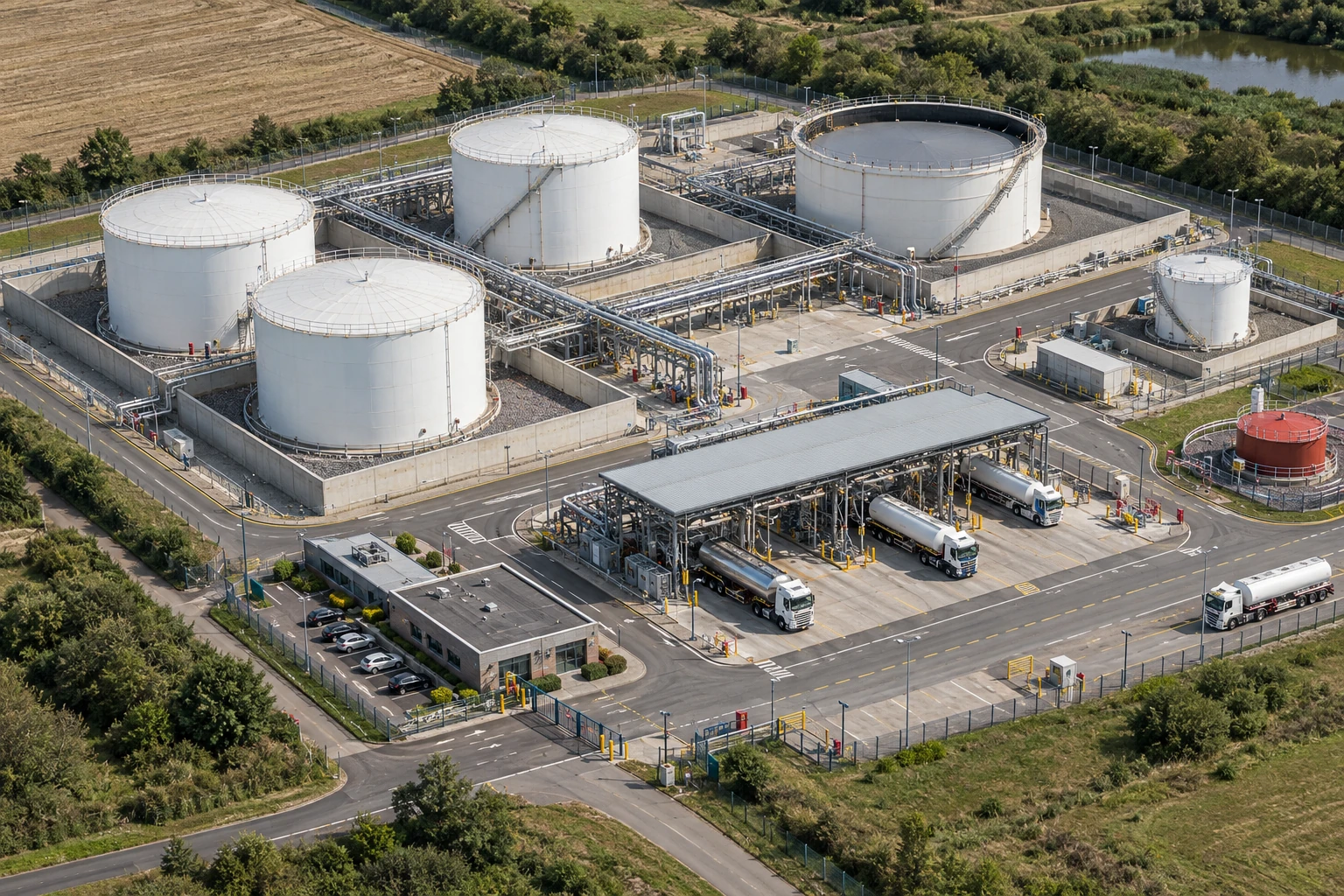

A near-overfill action is closed after a briefing only
All related inspection points 3 across 1 location
Crown Fuels terminal 3 inspection points
Practice in the SHAREhub environment. Browser practice is separate from workplace competence and formal learning records.
Five Whys worked examples: follow the explanation
Five Whys starts with a clear event or problem and asks what led to it. Each answer becomes a further question. There may be several paths, and a useful enquiry may take fewer or more than five questions. Check every link against evidence, consider alternatives and stop where the evidence runs out. A neat chain is a way to organise an explanation; it is not proof that the explanation is right.
Open the Five Whys investigation tool
Open the Five Whys tool and choose the named example to explore its complete branches, evidence, alternatives, next checks and actions. The descriptions and PDF links here do not load an example into or replace your current project.
BuildOut: an excavator arm strikes a scaffold
In this invented refurbishment-site case, an excavator arm strikes a scaffold return during drainage work, displacing a ledger and damaging a standard. No injury occurs. The first explanation is the physical contact: the moving arm enters the scaffold space. Asking what made that possible takes the investigation beyond the last movement or the operator alone.
The worked investigation develops five connected paths, containing 18 explanations in total. It tests a changed scaffold layout, the planned machine position and clearance, marshalling and stop arrangements, competing work in the same area, and follow-up of an earlier near clash. Some explanations are shared by more than one path; a branched Five Whys analysis keeps those connections visible.

Open the full-size landscape Five Whys image (new tab)
Read the complete Five Whys map in text
Event: During drainage works, an excavator arm struck a scaffold return at the Build Out UK refurbishment site, displacing a ledger and damaging a scaffold standard. No injury occurred in this worked scenario.
- W1 — explains the event: The moving excavator arm entered the scaffold space and transferred impact energy into its members.
- W2 — explains W1: The arm movement required by the selected operating position overlapped the scaffold return.
- W3 — explains W2: A scaffold return had been added after the original drainage work area was planned.
- W4 — explains W3: The change was handed over within the scaffold package but did not trigger a new plant/scaffold clearance review.
- W5 — explains W4: The site change-control process did not assign an owner to reassess interfaces between scaffold alterations and plant work.
- W6 — explains W2: The excavator was positioned for access to the trench without a verified safe movement envelope beside the scaffold.
- W7 — explains W6: The work assessment used a generic excavator method and a training-card check instead of confirming this machine could safely perform this task in this space.
- W8 — explains W7: The plant-work release process checked documents were present but did not require evidence of a workable, site-specific plant plan.
- W9 — explains W1: No effective clearance check or stop intervened before the arm reached the scaffold.
- W10 — explains W9: The marshaller moved to deal with a delivery and could no longer observe the arm/scaffold interface.
- W11 — explains W10: The team had not practised a clear stop-and-replan response when the marshaller could not maintain the agreed position or contact.
- W12 — explains W11: Competence and supervision assurance relied on certificates and briefing attendance without checking the team’s ability to manage this interface.
- W13 — explains W9: Drainage plant work and a delivery were allowed to compete for the same constrained work area.
- W14 — explains W13: The daily coordination meeting reviewed each trade’s output but did not review the combined scaffold, delivery and excavator interface.
- W15 — explains W14: The site coordination system did not give a named person responsibility for resolving and verifying shared-work-area conflicts before work started.
- W16 — explains W1: An earlier near clash at this work front did not lead to a sustained change in the operating arrangement.
- W17 — explains W16: The earlier action was closed after a toolbox talk without checking separation or movement clearance at the work front.
- W18 — explains W17: The incident-learning system allowed action closure without evidence that the control had been implemented and was effective.
Every link needs supporting and contradictory evidence, alternatives and a next check. The full tool record retains these details and its six open actions.
- A change to the scaffold. The arm movement overlapped a scaffold return added after the original plan. The scaffold handover did not trigger a new plant/scaffold review, and change control did not assign an owner to reassess the interface.Example path: W1 → W2 → W3 → W4 → W5
- A plan that was not checked at the workface. The operating position had no verified movement envelope beside the scaffold. A generic method and training-card check were accepted without confirming that this machine could perform this task in this space.Example path: W1 → W2 → W6 → W7 → W8
- The lost view and stop arrangement. No effective clearance check or stop intervened. The marshaller dealt with a delivery and lost the necessary view; the team had not practised how to stop and replan when contact could not be maintained. Assurance relied on certificates and attendance rather than that task capability.Example path: W1 → W9 → W10 → W11 → W12
- Competing activities in a shared work area. Drainage work and a delivery competed for constrained space. Trade-by-trade planning missed the combined interface, and no named person owned the resolution and field verification of the conflict.Example path: W1 → W9 → W13 → W14 → W15
- An earlier warning that did not change the work. An earlier near clash was followed by a toolbox talk, with no check of changed separation or movement clearance. The action system permitted closure without evidence of implementation and effectiveness. This shorter path shows why five questions are not a target.Example path: W1 → W16 → W17 → W18
The example links its findings to six open actions, including competent plant/scaffold assessment, a workable revised plan, clear stop arrangements, named coordination and verified action close-out. Its E01-E09 records are synthetic teaching evidence. Supported means supported within that example, not verified at a real site; the case does not establish actual clearances, scaffold capacity or authority to restart.
In the tool, choose BuildOut excavator example.
Jefferson Memorial: trace a recurring problem beyond its symptom
This familiar teaching account begins with deteriorating marble at the Jefferson Memorial. It connects the proposed marble wear with repeated detergent cleaning, then traces the proposed cleaning demand through sparrow droppings, birds feeding on spiders, spiders feeding on midges and insects gathering around evening lights. It illustrates how following questions beyond a visible symptom can suggest a different kind of possible intervention.
In the tool, the five links below are explicitly unconfirmed historical hypotheses. The account is retained from the Carnegie Mellon SEI teaching source; it is not an operational National Park Service investigation record. Each link needs its own checks and alternatives.
The five proposed links in the teaching account:
- Repeated detergent cleaning contributes to wear of the marble.
- Bird droppings make frequent cleaning necessary.
- Sparrows gather to feed on spiders at the memorial.
- Spiders gather where midges provide food.
- Evening lighting attracts midges to the memorial.
Changing the lighting is an open candidate trial, requiring evidence, conservation advice and agreement from the responsible site team. The retained example establishes no exact switch-on delay, cost saving or proven permanent solution. Later National Park Service work on biofilm and restoration is separate context; it does not confirm or disprove this earlier chain. The learning point is to test the explanation and branch where necessary, rather than accept a memorable story as a finding.
In the tool, choose Jefferson Memorial example.
Retained teaching source: Carnegie Mellon SEI, Five Whys (2003), printed page 176. Later context: National Park Service, Jefferson Memorial Restoration.
Method reference: ASQ: Five Whys and Five Hows.
What are the key facts about investigation and root cause analysis?
A good investigation explains the event, the failed controls and the management learning.
Use a fishbone to explore possible causes
A fishbone (Ishikawa or cause-and-effect diagram) groups possible contributors around a clearly stated event. Its branches help you look across the work system rather than stopping at one person or one explanation. Categories are prompts for enquiry: their position, the number of branches and a completed diagram do not prove a cause.
- State the event precisely, separating what happened from assumptions about why it happened.
- Choose categories that fit the work. Add possible causes and subcauses, and consider how branches interact.
- Test each explanation against supporting evidence, contradictions and alternatives. Record the next check and uncertainty; keep unsupported ideas provisional.
- Link supported findings to owned actions. Check both implementation and effectiveness, and revisit the diagram when new evidence changes the explanation.
Worked example from the Fishbone tool: excavator arm strikes scaffold
During drainage works, an excavator arm contacts a scaffold return, displacing a ledger and damaging a standard. No injury occurs in this worked example. The tool groups the same 18 explanations used in the BuildOut Five Whys case into six editable categories, retaining their W cross-references and six linked actions. Below is one selected explanation from each category.

Open the full-size fishbone diagram (new tab)
Read the examples and test the evidence
People & teamwork - F9 / W9
- Possible contributor
- No effective clearance check or stop intervened before the arm reached the scaffold.
- Example evidence
- Worked-example evidence only: E02 accounts describe continued slewing after the marshaller lost the necessary view; E07 briefing contains no demonstrated stop-on-loss-of-contact arrangement.
- Limits and alternatives
- A marshaller cannot compensate for a physically unsuitable working area. A clearance control must be achievable and verified.
- Next check
- Establish what the operator and marshaller could see and what signals, aids and stop rules were actually available.
Plant & equipment - F1 / W1
- Possible contributor
- The moving excavator arm entered the scaffold space and transferred impact energy into its members.
- Example evidence
- Worked-example evidence only: E01 photographs show matching contact marks; E02 operator and witness accounts place the arm at the damaged bay.
- Limits and alternatives
- Do not infer collapse or injury: neither occurred in the scenario. A mechanical malfunction remains an alternative until the actual machine is checked.
- Next check
- Reconstruct the movement safely from records and geometry; preserve relevant machine checks. Do not recreate the contact with people exposed.
Planning & methods - F7 / W7
- Possible contributor
- The work assessment used a generic excavator method and a training-card check instead of confirming this machine could safely perform this task in this space.
- Example evidence
- Worked-example evidence only: E05 example assessment lists excavation and PPE but no configuration/obstruction check or practical site-specific review.
- Limits and alternatives
- A valid operator training record is useful; it does not prove the working area is suitable.
- Next check
- Compare the method with actual ground conditions, attachment, reach, visibility and surrounding work.
Workplace & interfaces - F3 / W3
- Possible contributor
- A scaffold return had been added after the original drainage work area was planned.
- Example evidence
- Worked-example evidence only: E04 revised scaffold sketch and erection handover post-date the drainage layout.
- Limits and alternatives
- A scaffold alteration can be necessary and safe in itself; the issue is its effect on the combined work area.
- Next check
- Compare the installed scaffold, revisions and the current plant work plan.
Information & learning - F17 / W17
- Possible contributor
- The earlier action was closed after a toolbox talk without checking separation or movement clearance at the work front.
- Example evidence
- Worked-example evidence only: E09 closure evidence is an attendance sheet; no changed-layout check or effectiveness observation is attached.
- Limits and alternatives
- A briefing can support controls, but does not demonstrate that the physical interface was corrected.
- Next check
- Check actual completed actions and ask workers whether anything changed in practice.
Management & assurance - F18 / W18
- Possible contributor
- The incident-learning system allowed action closure without evidence that the control had been implemented and was effective.
- Example evidence
- Worked-example evidence only: E06 action-closeout standard and E09 record require a completion signature but no effectiveness test.
- Limits and alternatives
- Do not assume all actions were ineffective; use a wider sample to test the system finding.
- Next check
- Revise closeout requirements and review other high-potential near-miss actions.
Turn the finding into an action - F18 / W18
Require suitable implementation evidence and a separate effectiveness check before high-potential incident actions are verified closed.
- Example owner
- Health and safety manager
- Example action status
- open - not verified closed
- Implementation check
- Review the updated action workflow and reopen any earlier actions whose effectiveness is unsupported.
- Effectiveness check
- Audit a sample of high-potential actions after four weeks; verify physical changes and worker understanding rather than signature counts.
In the tool, choose BuildOut excavator example to explore all 18 explanations, evidence checks and six actions. Use Diagram inputs or Written inputs to inspect or develop the branches. The example is a separate project; opening this guide does not load it into or change your current work.
Method references: ASQ: Fishbone diagrams, HSE: Investigating accidents and incidents (HSG245).
Use a bowtie to communicate investigation findings
Once the investigation has built an evidence-based understanding of what happened and which controls failed, a bowtie can help communicate those findings. Show the threats, the loss-of-control event, the preventive controls that were missing, weakened or failed, and the recovery controls that limited, or failed to limit, the consequences.
A bowtie can be a useful visual in an investigation report, briefing or learning summary. Link the diagram to the supporting evidence and actions, and distinguish confirmed failures, remaining uncertainties and proposed improvements. Keep the timeline and detailed analysis alongside it: the diagram communicates the understanding the investigation has developed.
Method and reporting examples: CAA: bowtie communication and report outputs (aviation context), HSSIB: a bowtie in an investigation report (Figure 5; healthcare example).
Best-practice guide: Incident Investigation and Root Cause Analysis
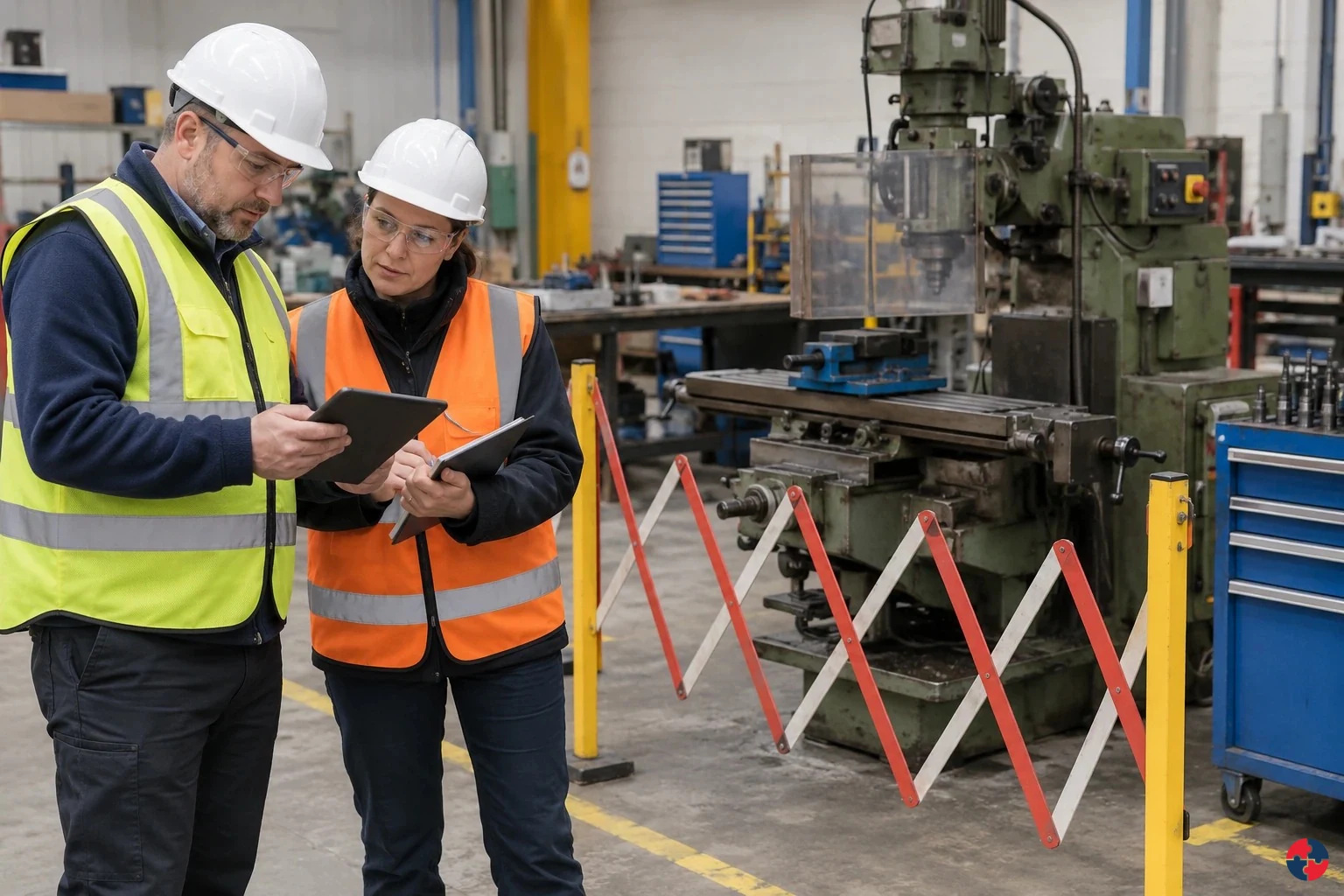
What are the key facts about investigation and root cause analysis?
A good investigation explains the event, the failed controls and the management learning. Incident investigation reconstructs what happened, which controls failed and why the organisation allowed the failure to persist.
Turn incident investigation and root cause analysis knowledge into a decision
Incident investigation reconstructs what happened, which controls failed and why the organisation allowed the failure to persist. Root cause analysis tests system and human-factor explanations against evidence rather than stopping at the last person’s action. Retain the evidence log, causal map, revised documents, field verification and later effectiveness check.
Flammable-liquid line break
Build the timeline and test isolation, tagging, drawing control, pressure and supervision against evidence. The asset manager approves corrected tagging, permit hold point and drawing control before return to service.
What harm chain should an investigation reconstruct?
Start with the hazardous source and the route to people or the environment, then test each preventive, detecting and mitigating barrier. The investigation should explain both the actual outcome and a credible worse outcome without inventing certainty.
Choose controls for incident investigation and root cause analysis
Elimination: Remove the need to open the line by redesigning sampling or maintenance access if technically valid. Substitution: Substitute an assessed lower-hazard cleaning medium where compatible. Separately minimise inventory and pressure before the planned opening; quantity/pressure reduction is not substitution and does not prove isolation. Engineering: Specify positive or otherwise justified proved isolation, with a safe vent/drain destination. Administrative: Revise permit, handover, drawings and role checks from the root cause; audit actual work after change. Personal protection: Splash PPE protects only residual release; it is not a replacement for containment. Read the full control table for qualifications, ownership and verification. Use the actual task and applicable jurisdiction; existing technical approval remains unchanged.
Use the full incident investigation and root cause analysis lesson
Use the full topic for the decision points, practical examples, detailed control tables and source scope. HSE guidance applies to Great Britain; use HSENI for the Northern Ireland route and the source’s stated jurisdiction. A simplified guide does not change the page’s technical-review or approval status.

Read all six steps as text
1. What are the key facts about investigation and root cause analysis?
A good investigation explains the event, the failed controls and the management learning.
- Avoid / redesign: Remove the need to open the line by redesigning sampling or maintenance access if technically valid.
- Control the task: Specify positive or otherwise justified proved isolation, with a safe vent/drain destination.
- Verify before release: Engineering validates process function; stop if the redesign leaves an untested hazard.
A good investigation explains the event, the failed controls and the management learning. Incident investigation reconstructs what happened, which controls failed and why the organisation allowed the failure to persist.
Apply it: Which part of this plan would you check at the workface before authorising the task?
2. Turn incident investigation and root cause analysis knowledge into a decision
Use the evidence to improve the actual work arrangement.
- Change at source: Remove the need to open the line by redesigning sampling or maintenance access if technically valid.
- Make it observable: Engineering validates process function; stop if the redesign leaves an untested hazard.
- Keep useful evidence: Retain the evidence log, causal map, revised documents, field verification and later effectiveness check.
Incident investigation reconstructs what happened, which controls failed and why the organisation allowed the failure to persist. Root cause analysis tests system and human-factor explanations against evidence rather than stopping at the last person’s action. Retain the evidence log, causal map, revised documents, field verification and later effectiveness check.
Apply it: What evidence would show that the change improves this task, rather than only completing a record?
3. Flammable-liquid line break
Example: a practical application of the existing topic lesson.
- Setting: Maintenance line breaking at a fuel facility after a small release from a wrongly opened drain.
- Act: Make safe, preserve the scene, secure permit, drawings, tag history and prior near-miss actions.
- Hold / review: Hold restart if isolation cannot be independently verified or the same deficient permit remains in use.
Build the timeline and test isolation, tagging, drawing control, pressure and supervision against evidence. The asset manager approves corrected tagging, permit hold point and drawing control before return to service.
Apply it: At which point would you hold this example, and what evidence would allow it to proceed?
4. What harm chain should an investigation reconstruct?
Connect the task, the route to the person and the control that can fail.
- Source / exposure: Start with the hazardous source and the route to people or the environment, then test each preventive, detecting and mitigating barrier.
- Possible consequence: The investigation should explain both the actual outcome and a credible worse outcome without inventing certainty.
- Control failure: For example, a wrongly opened drain on a fuel system releases liquid; vapour can form, reach a worker and ignite, causing immediate burns, smoke inhalation or blast injury.
Start with the hazardous source and the route to people or the environment, then test each preventive, detecting and mitigating barrier. The investigation should explain both the actual outcome and a credible worse outcome without inventing certainty.
Apply it: Who could be exposed, including other trades, cleaners, maintainers and people nearby?
5. Choose controls for incident investigation and root cause analysis
Start with the stronger practicable options and verify their effect.
- Elimination: Remove the need to open the line by redesigning sampling or maintenance access if technically valid.
- Substitution: Substitute an assessed lower-hazard cleaning medium where compatible. Separately minimise inventory and pressure before the planned opening; quantity/pressure reduction is not substitution and does not prove isolation.
- Engineering: Specify positive or otherwise justified proved isolation, with a safe vent/drain destination.
- Administrative: Revise permit, handover, drawings and role checks from the root cause; audit actual work after change.
- Personal protection: Splash PPE protects only residual release; it is not a replacement for containment.
Elimination: Remove the need to open the line by redesigning sampling or maintenance access if technically valid. Substitution: Substitute an assessed lower-hazard cleaning medium where compatible. Separately minimise inventory and pressure before the planned opening; quantity/pressure reduction is not substitution and does not prove isolation. Engineering: Specify positive or otherwise justified proved isolation, with a safe vent/drain destination. Administrative: Revise permit, handover, drawings and role checks from the root cause; audit actual work after change. Personal protection: Splash PPE protects only residual release; it is not a replacement for containment. Read the full control table for qualifications, ownership and verification. Use the actual task and applicable jurisdiction; existing technical approval remains unchanged.
Apply it: Which stronger option can be used here, and who will verify it before accepting the remaining risk?
6. Use the full incident investigation and root cause analysis lesson
Follow the official sources below and retain the task-specific evidence.
- Official guidance: HSE HSG245 Investigating accidents and incidents
- Official guidance: HSE HSG65 Managing for health and safety
- Task decision: Retain the evidence log, causal map, revised documents, field verification and later effectiveness check.
Use the full topic for the decision points, practical examples, detailed control tables and source scope. HSE guidance applies to Great Britain; use HSENI for the Northern Ireland route and the source’s stated jurisdiction. A simplified guide does not change the page’s technical-review or approval status.
Apply it: Which official source and full-topic section will you use to resolve the next decision?
Facts before conclusions
Secure evidence, identify witnesses and understand the timeline before deciding why the event happened.
Work as done matters
Compare the documented method with what people actually had to do in real conditions.
Human factors are central
Look at workload, competence, procedures, supervision, design, communication and pressure.
Root cause is a system question
Do not stop at 'worker failed to follow procedure' if the procedure was unusable, unknown or impossible to follow.
Actions must be verified
Closed actions are not enough; the organisation should check the control works in practice.
Why investigate incidents and near misses?
Investigations protect people by learning from harm, near misses and weak signals before the same conditions recur.
The best investigations are learning tools. They help an organisation see weaknesses in risk assessment, design, maintenance, competence, supervision, contractor control, procedures, communication and leadership. A near miss can be as valuable as an accident because the event pathway is visible without the same level of harm.
Investigation quality is also a credibility issue. Regulators, insurers, courts, worker representatives, families and senior leaders may all look at whether the organisation understood the event and acted proportionately.
- Prevent recurrence — Identify what must change before the same pathway repeats. Better practice: actions linked to causes and verified at the workface.
- Improve controls — Test whether risk assessment and controls matched work as done. Better practice: revised controls, permits, inspections or maintenance.
- Support people — Communicate with injured people, witnesses and affected teams respectfully. Better practice: support record and communication log.
- Meet duties — Support reporting, consultation, records and enforcement readiness. Better practice: RIDDOR decision, investigation file and legal register link.
- Strengthen culture — Show that reporting leads to fair learning. Better practice: feedback to workforce and just-culture review.
What harm chain should an investigation reconstruct?
Start with the hazardous source and the route to people or the environment, then test each preventive, detecting and mitigating barrier. The investigation should explain both the actual outcome and a credible worse outcome without inventing certainty.
For example, a wrongly opened drain on a fuel system releases liquid; vapour can form, reach a worker and ignite, causing immediate burns, smoke inhalation or blast injury. A small spill without ignition is still a warning about containment and isolation. Longer respiratory effects after smoke exposure require clinical assessment. A damaged valve tag, uncertain drawing or previous near miss is a weak signal that may predate the event.
Stop the affected operation, protect people, preserve evidence where safe and check similar equipment before restart. The investigation owner should record what was known, what is uncertain, which barriers need temporary assurance and who can authorise hand-back.
What should happen immediately after an incident?
The first priorities are life safety, emergency response, scene control, evidence preservation and escalation.
Investigation must never delay first aid, emergency response or making the area safe. Once people are protected, the scene should be preserved as far as reasonably possible. Equipment settings, isolation status, permits, alarms, photographs, closed-circuit television (CCTV), witness names and environmental conditions can disappear quickly.
The organisation should also decide whether the event needs Reporting of Injuries, Diseases and Dangerous Occurrences Regulations (RIDDOR) review, regulatory notification, insurer notification, specialist technical support, occupational health, human resources (HR), legal privilege consideration or family/victim liaison.
- Make safe — Prevents further injury or escalation. Evidence to retain: Emergency response log and isolation status.
- Care for people — Protects injured people and witnesses. Evidence to retain: First-aid, medical and support records.
- Preserve scene — Keeps facts available before clean-up or restart. Evidence to retain: Photos, barrier tape, equipment status and access log.
- Capture early facts — Memory and conditions change quickly. Evidence to retain: Initial witness list, timeline and supervisor note.
- Escalate — Serious events need the right competence and reporting review. Evidence to retain: Notification record and investigation level decision.
At the evidence-collection decision
Preserve necessary functional medical/support facts through authorised restricted arrangements. Do not copy unrestricted clinical records into the general investigation folder; decide lawful access, purpose and retention before collection.
How should an incident be categorised and reviewed?
Start with what is known. Record the type of event, its actual consequences and any reporting duties separately. One event can have several labels. These labels help organise the record; credible potential harm and recurrence still guide investigation depth and the team needed.
This is not an exhaustive list. Categories can overlap and may change as the investigation unfolds: new evidence, a diagnosis, treatment, time away from normal duties or environmental effects can change the picture. Record the initial category and each revision, with the date, reason and supporting evidence. Review protective action and reporting promptly as facts emerge; do not wait for the final investigation report.
What happened?
- Incident
- In this guide, a broad label for an unplanned work event, including a near miss, an accident or an event causing other loss. Terminology varies: HSG245 uses adverse event as its umbrella term and distinguishes accidents from incidents. Check the definitions used in your organisation.
- Near miss
- An event that caused no injury or ill health but had the potential to do so, such as a falling tool narrowly missing a person. No injury does not mean low investigation priority.
- Accident
- An unintended event causing injury or ill health. For RIDDOR accident reporting, check the narrower requirement for an identifiable event causing physical injury; gradual exposure is considered through the relevant ill-health route.
- Property damage
- Damage to a building, vehicle, equipment, materials or other property, whether or not anyone is injured. A vehicle striking an empty storage rack may also reveal serious potential for injury.
- Environmental incident
- A spill, release or other event that harms, or threatens to harm, water, land, air or wildlife. Assess containment, impact and the correct environmental reporting route for the UK nation and incident; a RIDDOR check does not replace this.
- Occupational ill health
- A health condition caused or made worse by work, including conditions that develop over time. Obtain appropriate clinical advice and check whether a diagnosed condition meets the relevant statutory reporting criteria.
What was the outcome for the person?
First-aid, medical-treatment, restricted-duty and lost-time labels are common internal performance measures. Apply your organisation’s written definitions consistently; they are not interchangeable with statutory RIDDOR categories.
- First-aid case
- An injury managed with first-aid care only under the organisation’s classification, for example a minor cut initially cleaned and dressed. Review the label if the diagnosis or care changes.
- Medical-treatment case
- An injury requiring treatment beyond the first-aid boundary in the organisation’s scheme. Attendance at a clinic or hospital alone does not establish this label or whether an event is RIDDOR-reportable.
- Restricted-duty case
- A person remains at work or returns to work but cannot perform their normal duties because of the injury. Record the actual restrictions and dates; being present at work does not rule out statutory incapacity.
- Lost-time injury (LTI)
- A work-related injury resulting in time away from work under the organisation’s lost-time definition. Record absence and inability to perform normal duties accurately. An internal LTI count is not itself a RIDDOR decision.
- Fatality
- An event resulting in a person’s death. Activate the emergency response and urgent escalation arrangements, preserve evidence when safe and have the responsible person check statutory notification duties immediately.
Does a statutory reporting category apply?
- RIDDOR-reportable event
- An event meeting the applicable Reporting of Injuries, Diseases and Dangerous Occurrences Regulations. Relevant categories include work-related deaths, specified injuries in Great Britain (major injuries in Northern Ireland), qualifying incapacity, certain diagnosed occupational diseases and listed dangerous occurrences. The responsible person checks the criteria and reporting deadline; not every workplace event is reportable.
- Over-three-day injury / incapacity
- Great Britain: more than 3 consecutive days away from work or unable to do normal duties triggers recording; this threshold alone does not require a RIDDOR report. Northern Ireland retains an over-three-day reporting threshold for qualifying work-related injuries. Check the applicable jurisdiction rather than using the GB threshold in NI.
- Over-seven-day injury / incapacity
- Great Britain: a work-related accident causing a worker to be away from work or unable to do normal duties for more than 7 consecutive days is reportable. Exclude the accident day and include weekends and rest days. HSE states a 15-day reporting deadline. Northern Ireland uses its separate over-three-day rules.
- Dangerous occurrence
- A particular event listed in the applicable RIDDOR regulations that may need reporting even without injury, such as some equipment failures. A near miss is not automatically a statutory dangerous occurrence; check the listed conditions.
How to make and review the classification
- Protect people and identify the event. Arrange care, control continuing danger and preserve evidence when safe. Record what happened and when, who or what was affected, and what is still uncertain. A category label must never delay the response.
- Record several dimensions separately. Describe the event type, actual injury or loss, treatment and normal-duty restrictions, environmental effects and credible potential harm. Keep the investigation-depth decision separate from injury statistics and the statutory reporting decision.
- Check the correct reporting route. Identify the UK jurisdiction, work-relatedness, the person’s work status and the applicable reportable category. Ask the responsible person to check current criteria, exclusions and deadlines. Check environmental, sector and permit reporting separately where relevant.
- Keep the classification live. Review after new evidence, clinical information, changes in treatment or normal-duty incapacity, and emerging damage or pollution. Retain the original entry and add a dated revision showing the evidence, reason, decision-maker and any reporting update. Do not erase the history or wait for investigation closure.
Count incapacity and check the reporting deadline
Great Britain: count incapacity, not just shifts missed
For the over-seven-day test, count consecutive days during which the injury prevents normal work. Exclude the accident day; include weekends and rest days. Restricted duties can count even when the person attends work. More than seven means at least eight consecutive days. Do not wait for that threshold if a different reportable category already applies.
Recording and reporting are different decisions
In GB, over-three-day incapacity requires a record; that duration alone does not trigger a RIDDOR report. The GB over-seven-day category has a 15-day reporting deadline. Other reportable events can require notification without delay. Northern Ireland retains its separate over-three-day reporting rule; use HSENI guidance rather than copying GB thresholds or deadlines.
First aid can become a different injury outcome
Example: a worker receives first aid after a vehicle clips a storage rack. Record the accident, property damage and provisional first-aid outcome, alongside the credible potential for a rack collapse.
Later treatment or a diagnosis may change the internal injury category. Track actual normal-duty incapacity, including restricted work, and review reportability under the correct jurisdiction. A later revision does not make the initial entry disappear, and severe potential still warrants an appropriate inquiry.
One event can be both damage and an environmental incident
Example: a vehicle damages a pipe and liquid reaches a surface-water drain. There may be property damage and an environmental incident even if nobody is injured.
Identify the substance, route and known or possible effects through competent arrangements. Check the correct national environmental reporting route and any relevant permit requirements. A RIDDOR decision and an environmental notification are separate checks; do not assume one replaces the other.
What should the classification record contain?
- A stable incident reference, event date/time/location, known facts and immediate protective actions.
- The event labels, actual outcome, credible potential and relevant organisational definitions; mark provisional judgements clearly.
- Treatment and inability to do normal duties, with relevant dates. Keep only necessary health information in the investigation record and use authorised restricted arrangements for clinical details.
- The jurisdiction, responsible person, reporting decision and rationale, deadline, report reference and any later update.
- Each change of category: previous and revised label, new evidence, who made the decision, when it was made and the next review trigger.
Current official definitions and reporting guidance
Reporting sources checked 2026-11-01. Check current criteria and deadlines for the event and jurisdiction. HSG245 supplies investigation terminology and method; its historical reporting references are not the current reporting test.
How should investigation levels be selected?
Investigation depth should match actual harm, potential harm, complexity and learning value.
A low-consequence event with clear facts may need a simple supervisor review. A high-potential near miss, major injury, dangerous occurrence, repeated event or process safety deviation needs deeper investigation, technical support and management oversight.
Potential severity matters. A dropped spanner that misses a person, a failed isolation, a gas detector alarm or a vehicle near miss may deserve serious investigation even where no injury occurred.

Read the matrix as an accessible table
| Recurrence if nothing changes | Limited harm | Serious harm | Life-changing or fatal harm |
|---|---|---|---|
| Likely / repeated | Detailed — inquiry | Comprehensive — inquiry | Comprehensive — urgent inquiry |
| Possible | Targeted — inquiry | Detailed — inquiry | Comprehensive — inquiry |
| Unlikely | Brief local — review and record | Targeted — inquiry | Detailed — escalate for review |
- Level 1: local learning — Minor injury, low-potential near miss or simple defect. Supervisor review, short record and local action close-out.
- Level 2: formal investigation — Lost-time injury, repeated event, high-potential near miss or control failure. Manager/health-and-safety-team-led investigation, interviews, evidence file and action plan.
- Level 3: serious or specialist — Fatality, specified injury, major potential, fire/explosion, toxic release, structural failure or regulatory interest. Independent or senior-led team with technical specialists, formal report and executive review.
- Process safety review — Loss of containment, failed safety-critical barrier, alarm flood, override, trip failure or permit/isolation weakness. Barrier analysis, human factors review, safety-critical action tracking and management review.
This page’s escalation scheme
Level 1/2/3 and the process-safety review category are an illustrative SHARE/company escalation scheme. HSG245 uses minimal, low, medium and high investigation levels. Resolve overlap by escalating for worst credible consequences, recurrence likelihood, complexity and specialist needs even where the actual injury was minor. The seven-stage workflow is an operational expansion of HSG245’s four steps.
Who should be on the investigation team?
The team should have enough independence, competence, operational knowledge and worker voice to understand the event fairly.
A good team often includes someone who knows the work, someone who understands investigation method, someone with technical competence, a manager with authority to resource actions and, where appropriate, a worker representative. Serious events may need external specialists or legal support.
The team should avoid conflicts of interest. A person directly responsible for the failed control may provide evidence, but should not be the only person judging the investigation.
- Investigation lead — Controls scope, process, evidence and report quality. Needs enough authority and method competence.
- Supervisor or operational expert — Explains task conditions and work as done. Should not dominate witness evidence.
- health and safety adviser — Supports legal, control and investigation standards. Should challenge generic causes.
- Technical specialist — Understands plant, equipment, chemistry, structures or systems. Needed for complex or safety-critical failures.
- Worker representative — Supports worker voice and trust. Needs access to facts and confidentiality boundaries.
- Senior sponsor — Resources actions and removes barriers. Should not steer findings to protect reputation.
What is the step-by-step investigation process?
A strong process moves from facts to analysis, controls, action and verified learning.
HSG245 gives a simple and durable structure: gather information, analyse the information, identify risk control measures, and build and implement an action plan. At a real site, each step needs a named owner, recorded evidence and a decision about the controls to change.
The order matters. If the team jumps straight to causes, it may miss evidence. If it writes actions before understanding the cause, it may close the report while the risk remains.
| Step | What to do | Output |
|---|---|---|
| 1. Scope the investigation | Define event, potential severity, investigation level, team, boundaries and immediate risks. | Terms of reference and investigation plan. |
| 2. Gather information | Collect scene evidence, documents, photos, records, statements, data and physical evidence. | Evidence log and timeline. |
| 3. Analyse information | Compare work as planned with work as done, identify immediate and underlying causes. | Timeline, causal map and barrier review. |
| 4. Identify risk controls | Decide which controls failed, were missing or were inadequate. | Control gap list and hierarchy review. |
| 5. Create actions | Set specific actions with owners, dates, resources and verification method. | Action plan and tracker. |
| 6. Communicate learning | Brief affected teams and update risk assessments, procedures and training. | Learning brief and document updates. |
| 7. Verify effectiveness | Check completed actions work in practice and risk has reduced. | Field verification and management review. |
What evidence should be gathered?
Evidence should show what happened, what controls existed and how the work was actually done.
Evidence is broader than witness statements. It can include photographs, plant status, alarms, permits, maintenance history, training records, risk assessments, inspections, CCTV, environmental conditions, drawings, samples, isolation logs, competence records, contractor documents and previous incidents.
A good evidence log records what was collected, who collected it, where it came from, when it was collected and any limitations.
- People evidence — For example: Witness interviews, supervisor account, injured person account, worker representative input. Explains work as done, perceptions, pressure and communication.
- Physical evidence — For example: Damaged guard, broken tool, failed hose, product sample, dropped object. May show mechanism of failure.
- Document evidence — For example: Risk assessment, method statement, permit, isolation certificate, maintenance record. Shows work as planned and control requirements.
- Digital evidence — For example: CCTV, access control, telematics, alarm log, control-room data. Supports timeline and sequence.
- Environmental evidence — For example: Lighting, noise, weather, temperature, housekeeping, congestion. Shows context and performance influencing factors.
- History — For example: Previous near misses, audits, defects, complaints and overdue actions. Shows whether the event was foreseeable.
Illustrative evidence-register row
Example record E-04: original control-system event log; source system and export location; collector and collection time; known clock offset; restricted read-only original; named working-copy location; access/custody history; limitation “alarm clock not yet reconciled with CCTV”. Preserve CCTV and control data before routine overwrite through lawful access and proportionate retention.
Collect only necessary functional medical facts for the investigation. Keep clinical/support records in the authorised restricted process and link the necessary finding rather than copying unrestricted health records into the investigation folder.
The Four P's of Evidence Gathering
People, Positions, Parts and Papers help you check that evidence gathering covers people, the scene, equipment and records.

Open the full-size visual (new tab) · Download the Four P's visual (PNG)

Use the Four P's as a prompt to gather a rounded account: People, Positions, Parts and Papers. They complement the other evidence categories on this page. The groupings overlap: a photograph can record a position or part, while an electronic maintenance log is both documentary and digital. Keep the source, time, original record and limits clear, and compare evidence before deciding what it establishes.
1. People
Gather accounts from injured people, direct eyewitnesses, managers, colleagues and others connected with the work activity. First check care, welfare, communication and representation needs. Obtain an initial account as soon as it is reasonably practicable; emergency help and a person's wellbeing take priority. Explain your role and how the notes may be used, ask open and neutral questions, and follow the agreed arrangements for recording.
Record the person's own words, the date and time, where they were, what they could see or hear, and what they learned from someone else. Seek initial accounts separately so that discussion does not replace individual recollection. Invite corrections and preserve earlier versions. Confidence, seniority or agreement between accounts does not by itself establish accuracy.
2. Positions
Document where people, tools, machinery, guards, controls, materials and barriers were before, during and immediately after the event. Distinguish what was directly observed from positions reconstructed later from accounts or records. Where safe access is authorised, use photographs, sketches and measurements with a clear orientation, scale where appropriate, date, time and source.
Scene information may change during rescue, first aid, emergency response or clean-up. Never delay protective action to preserve a photograph. Record what was moved, by whom, when and why, and identify which view shows the changed scene. Do not move items back or stage a live reconstruction to make the picture look like the assumed event.
3. Parts
Identify and examine the equipment, tools, materials and components relevant to the event. Record equipment identity, visible condition, control settings and the state of guards, restraints, safety switches, connections and other relevant features. Preserve items and their original condition through the authorised evidence and access arrangements; record changes and continuity of handling.
Mechanical failure, a broken component, a structural defect or a damaged safety device is a possibility to investigate, not a conclusion to assume. Establish whether the condition existed before the event, resulted from it or arose later. Isolation, dismantling, sampling and testing need the appropriate competent person, safe method and authority. An image or a learner activity does not authorise any of those operations.
4. Papers
Review the relevant risk assessments, safe systems of work (SSoW), standard operating procedures (SOPs), training and competence records, maintenance and inspection logs, permits to work, plans, change records and briefings. Paper and electronic records both count. Identify the version, date, owner and intended scope, and establish whether it applied to the people, equipment and activity at the time.
Compare the documented arrangements with accounts, physical conditions and digital evidence to understand whether controls were adequate, available and followed in practice. A signed form or training certificate is not proof that the work followed the intended system or that a person could perform the actual task safely. Preserve originals, access restrictions and material contradictions rather than editing the record to fit an early explanation.
Practise evidence gathering in the incident and accident investigation course.
Source context: HSE HSG245: Investigating accidents and incidents. The Four P's provide an additional coverage prompt alongside the four-stage investigation method.
How should interviews be carried out?
Interviews should be fair, calm, structured and designed to understand facts rather than force admissions.
People remember events differently, especially after shock. Interviewers should explain the purpose, avoid blame language, use open questions first, ask one question at a time, let the witness draw or describe the task, and check understanding. Leading questions can contaminate evidence.
Interviews should explore task, equipment, environment, instructions, training, supervision, time pressure, communication, previous warnings and what would have made the safe action easier.
- Set the tone — Better practice: explain learning purpose, confidentiality limits and support. Starting with blame or discipline.
- Open questions — Better practice: ask 'Tell me what happened from your point of view'. Asking 'Why did you do that?' first.
- Sequence — Better practice: build a timeline before interpretation. Jumping straight to causes.
- Context — Better practice: ask about workload, equipment, supervision and constraints. Focusing only on the last action.
- Check back — Better practice: read back key points and confirm accuracy. Putting words into the witness's mouth.
- Close respectfully — Better practice: ask what could prevent recurrence and explain next steps. Leaving people anxious or unsupported.
How should information be analysed?
Analysis should connect immediate events to underlying and root causes.
The event should be mapped as a timeline first. Then the team can identify where controls failed, where assumptions were wrong and where decisions made sense to people at the time. Good analysis asks why the event was possible, not only why the last person acted as they did.
Common categories include unsafe conditions, unsafe acts, equipment failure, management system weakness, human factors, organisational change, contractor interface, communication, competence and leadership decisions.
- Immediate cause — For example: Worker slipped on oil. Why was oil on the floor and why was it not controlled?
- Underlying cause — For example: Leak had been reported but not repaired. Why was defect management ineffective?
- Root/system cause — For example: Maintenance backlog was normalised and risk-ranked poorly. Why did the management system allow safety-critical defects to remain open?
- Human factor — For example: Procedure was hard to use in poor lighting. How did job design influence behaviour?
- Organisational factor — For example: Production pressure discouraged shutdown. What leadership decision shaped the conditions?
What is root cause analysis in practice?
Root cause analysis identifies the deeper system conditions that allowed the event pathway to exist.
A root cause is not always a single cause. Incidents usually have a network of causes: a technical weakness, a procedure weakness, a supervision gap, a competence issue, a maintenance backlog, a poor design decision and a culture signal may all combine.
If the only root cause is written as 'operator error', the investigation is probably unfinished. The better question is why the error was possible, likely, unrecovered or consequential.
- Was the control suitable? — Design and selection. For example: Guard allowed access to moving part.
- Was the control used? — Work as done and supervision. For example: Permit was issued but isolation was not verified.
- Was the control maintained? — Asset integrity. For example: local exhaust ventilation (LEV) airflow was below design but not escalated.
- Was competence real? — Training and experience. For example: New worker signed training but had never done the task.
- Was drift normalised? — Culture and leadership. For example: Near misses were known but accepted as part of the job.
- Was learning closed? — Assurance and review. For example: Previous action was closed without field verification.
How does human performance affect this work?
Use this overview after gathering evidence about the task. A human-failure label is a starting point for further enquiry: test the intention, the information available and the working conditions before reaching a causal finding.
Select any box to open its explanation below. You can also use the grouped text headings. Several explanations can stay open for comparison.

Original SHARElearn teaching overview. Arrows show groupings, not a causal sequence. Examples are fictional; no box establishes an actual cause, diagnosis or responsibility.
Inspect the full-size overview (new tab)
Start with the work context
Human performance in context
Human factors considers how the job, the individual and the organisation interact. A human action is a starting point for inquiry, not a complete explanation.
Fictional example: A pump control is operated incorrectly. The team examines what the operator could see, the control layout and the work arrangements.
Investigate and improve: Reconstruct the information and options available at the time. Ask what made the action understandable and what would prevent or tolerate it.
Unintended errors
An action or decision goes wrong without an intended departure from the expected method. Distinguish doing the wrong action from choosing an unsuitable plan.
Fictional example: A person intends to stop pump A but presses the adjacent control for pump B.
Investigate and improve: An outcome alone does not establish intent. Compare the person’s account, task sequence, equipment and available records; retain uncertainty.
Unintended errors: actions and decisions
Skill-based action errors
A familiar task is intended correctly but its execution goes wrong through a slip or lapse. Experienced people can be affected.
Fictional example: A routine restart is interrupted and the person resumes at the wrong point.
Investigate and improve: Examine distractions, task design and place-keeping aids. Repeating training alone does not remove the conditions that permit these errors.
Slips of action
The intended action is clear, but a different action is performed.
Fictional example: While reaching to stop a pump, a person operates a similar-looking neighbouring switch.
Investigate and improve: Check control spacing, identification, feedback, visibility and interruption. Consider clearer separation or error-tolerant design, with competent review and testing.
Lapses of memory
A needed step is forgotten or the person loses their place.
Fictional example: After an interruption, a person omits a required check while believing the sequence is complete.
Investigate and improve: Check the interruption and restart arrangements. Consider point-of-use prompts, reliable step records and proportionate independent checks for critical steps.
Mistakes in planning or judgement
The chosen action is carried out as intended, but the plan or judgement is unsuitable.
Fictional example: A person selects a familiar response to a warning, believing it fits the present conditions.
Investigate and improve: Check what was known, what the rule covered and how the situation was understood. Consider information, decision support and task-specific competence.
Rule-based mistakes
A remembered rule is misapplied, or an unsuitable rule is used. An apparently missing good rule also needs inquiry: was it known, understood and applicable?
Fictional example: A response suitable for pump A is applied to pump B even though their isolation requirements differ.
Investigate and improve: Inspect the actual procedure and its scope, access and revision. Explore interpretation. Missing a step does not by itself prove a deliberate deviation.
Knowledge-based mistakes
An unfamiliar situation is approached through reasoning without a suitable established solution; the resulting judgement is wrong.
Fictional example: An unusual pump condition is interpreted using incomplete information, leading to an inappropriate response.
Investigate and improve: Examine information gaps and available support. Improve escalation, diagnostic aids and arrangements for obtaining competent advice before uncertain work proceeds.
Deliberate deviations: understand why
Deliberate deviations / violations
A rule or procedure is knowingly departed from. The departure is intentional; harm need not be intended. Establish this distinction through evidence.
Fictional example: A required verification is knowingly bypassed to continue a task.
Investigate and improve: Ask why the rule was bypassed, whether it was workable and what the organisation encouraged or tolerated. Fair accountability and system improvements can both be needed.
Routine deviations
Departures become the usual way work is carried out.
Fictional example: A team commonly skips a required handover check and supervisors accept the practice.
Investigate and improve: Compare written arrangements with everyday work, including management knowledge and response. Make the safe method workable and verify that practice changes.
Situational deviations
A departure is associated with conditions such as time pressure, insufficient resources or unsuitable equipment. These conditions do not authorise unsafe work.
Fictional example: The correct equipment is unavailable and a deadline encourages an improvised shortcut.
Investigate and improve: Check resources, conflicting targets and whether people can stop and escalate. Remove the pressure or constraint rather than treating the shortcut as the solution.
Exceptional deviations
A departure occurs in unusual circumstances outside normal practice. This label is not an automatic justification.
Fictional example: During an unfamiliar equipment upset, a person knowingly bypasses a rule while trying to restore operation.
Investigate and improve: Reconstruct the situation and information available. Review abnormal-event preparation, support, escalation and protection; do not infer malicious intent from the outcome.
Check factors across every branch
Performance influencing factors
Conditions affecting performance can sit within the job, the individual or the organisation. Consider them across errors and deviations.
Fictional example: A difficult control layout combines with an interrupted shift and a production target.
Investigate and improve: Identify specific conditions, their evidence and how they interacted. Do not turn a list of factors into unsupported causal conclusions.
Job and task factors
Consider the work itself: equipment, interface design, instructions, workload, environment, timing and communication.
Fictional example: Two similar controls are poorly lit while alarms and interruptions compete for attention.
Investigate and improve: Observe representative work safely, compare intended and actual demands, and test feasible design changes with the people doing the task.
Individual factors
Consider relevant knowledge, experience, abilities and current needs fairly. Observed behaviour does not establish a health diagnosis or intent.
Fictional example: A newly assigned worker does not understand an unfamiliar alarm; a colleague also reports yawning after a long shift.
Investigate and improve: Check induction, understanding, shift and welfare information through appropriate private routes. Yawning alone proves neither fatigue nor the cause of an event; seek competent support when needed.
Organisational factors
Consider staffing, resources, supervision, targets, planning, culture, change management and learning from earlier events.
Fictional example: A known leak remains open because repair responsibility is unclear and closure is recorded without checking the work.
Investigate and improve: Trace decisions, ownership and earlier warnings. Improve the underlying arrangements and verify effectiveness, rather than closing the investigation at “operator error”.
Try the evidence questions
Choose one fictional pump or travel example. What is observed, what remains a hypothesis, which job or organisational factor needs checking, and what improvement would you test? Explain what evidence would change your view.
Explore at your own pace. These are optional thinking prompts: this page does not save answers, assess performance or create a learning record.
Sources and scope
Original SHARElearn overview informed by HSE guidance. The diagram groups concepts for learning; it does not model a causal sequence. Guidance checked 1 November 2026.
Continue with the incident and accident investigation course. The course outline explains its learning, optional reflections and completion requirements.
Which investigation methods help?
Methods help structure thinking, but judgement matters more than the diagram.
Five Whys is useful for simple chains if it is not used mechanically. Fishbone diagrams help organise causes across people, plant, process, environment and management. Barrier analysis is powerful where a hazard should have been prevented, detected, controlled or mitigated. Bow-tie thinking helps connect causes, top event, consequences and barriers.
For complex process safety events, methods may need to be combined with timeline analysis, human factors review, management-of-change review, alarm/permit/isolation review and technical inspection.
- Five Whys — Simple causal chains and supervisor learning. Stopping at worker behaviour or one neat answer.
- Fishbone — Brainstorming broad cause categories. Too many possible causes without evidence.
- Barrier analysis — Events where controls should have stopped harm. Listing barriers without checking effectiveness.
- Bow-tie review — Major accident hazards and high-potential events. Generic barriers that are not safety-critical or verified.
- Timeline — Complex events with changing conditions. Missing times, assumptions or conflicting evidence.
- Human factors review — Tasks involving workload, alarms, procedures, fatigue or communication. Treating human factors as soft opinion rather than evidence.
How should barrier learning be captured?
Process safety investigations should identify which prevention, detection, control, mitigation and emergency barriers failed or were missing.
A major accident investigation should not stop at the immediate release or ignition. It should ask which barriers were expected to prevent the event, which barriers detected it, which controlled escalation, which mitigated harm, and which emergency arrangements worked or failed. See HSE HSG245 Investigating accidents and incidents.
Barrier learning should update the risk register, safety-critical task list, performance standards, inspection plan, maintenance plan, training and audit schedule.
| Barrier type | Investigation question | Evidence |
|---|---|---|
| Prevention | What should have stopped the event starting? | Design, isolation, permit, maintenance or operating limit. |
| Detection | What should have warned people? | Alarm, gas detector, inspection, trend or observation. |
| Control | What should have limited escalation? | Trip, interlock, shutdown, relief, segregation or supervision. |
| Mitigation | What should have reduced consequence? | Fire protection, bund, PPE, evacuation or emergency isolation. |
| Emergency response | Did response match the scenario? | Drill record, response log and debrief. |
| Assurance | Who checked the barrier was healthy before the event? | Audit, inspection, test, verification and overdue actions. |
How should investigation findings change controls?
A line-break investigation should identify how release was possible and choose the strongest practicable change to the task. Prevent the opening where possible, then verify isolation, containment and supervision before the work resumes.
| Control priority | Task-specific option and feasibility | Owner, verification, failure and stop point |
|---|---|---|
| Elimination | Remove the need to open the line by redesigning sampling or maintenance access if technically valid. | Engineering validates process function; stop if the redesign leaves an untested hazard. |
| Substitution | Substitute an assessed lower-hazard cleaning medium where compatible. Separately minimise inventory and pressure before the planned opening; quantity/pressure reduction is not substitution and does not prove isolation. | Process owner checks drain and compatibility records; hold for unexplained residual pressure. |
| Engineering | Specify positive or otherwise justified proved isolation, with a safe vent/drain destination. | The approved isolation scheme identifies planner, implementer, checker and release authority, with independent checking where the risk requires it and independence from the implementation being checked. Verify at the break; stop for a passing valve or wrong line. |
| Administrative | Revise permit, handover, drawings and role checks from the root cause; audit actual work after change. | Action owner observes the next job; reopen the finding if the barrier is bypassed. |
| Personal protection | Splash PPE protects only residual release; it is not a replacement for containment. | Supervisor checks selection and condition; do not authorise opening with unproved isolation. |
These are illustrative controls for the stated task, to be selected and verified by a competent local dutyholder. HSG253 - The safe isolation of plant and equipment supports the topic-specific risk route; the exact engineering design and stop decision require site approval.
What makes investigation actions effective?
Actions should be specific, proportionate, risk-based, owned and verified.
Weak actions sound like reminders: 'retrain staff', 'be more careful', 'communicate better'. Strong actions change the conditions that made the event possible: redesign access, change maintenance priority, rewrite a permit hold point, add supervisor verification, improve procurement or fix a monitoring gap.
Actions should be ranked by risk and checked after completion. A photo of a sign is not evidence that behaviour or control reliability has changed.
- Brief all staff — May not change the failed control. Better practice: update task method, brief the change and observe work as done.
- Remind workers to isolate — Blames memory. Better practice: add independent isolation verification and permit hold point.
- Repair equipment — Fixes immediate defect only. Better practice: review inspection frequency, backlog priority and failure trend.
- Review risk assessment — Vague and hard to verify. Better practice: revise specific controls, owner, date and field check.
- Discipline operative — May miss system weakness. Better practice: investigate competence, supervision, pressure and procedure usability first.
What is the difference between a poor and good investigation?
This comparison helps managers spot whether the investigation is blaming the last person or improving the system.
A poor investigation often feels quick and tidy because it stops at the most visible behaviour: someone slipped, someone forgot, someone bypassed, someone did not look. That may describe the final moment, but it rarely explains why the workplace allowed that failure to happen, go undetected or cause harm.
A good investigation is usually more uncomfortable because it tests the organisation. It asks whether the task was realistic, whether supervision saw work as done, whether procurement bought suitable equipment, whether maintenance defects were tolerated, whether training created competence, and whether leaders created pressure that made the weak choice more likely.
- Opening mindset — Weak practice: find who caused it. Better practice: understand what happened, why it made sense at the time and what must change.
- Evidence — Weak practice: one supervisor statement and a short form. Better practice: timeline, witnesses, photos, task records, permits, maintenance history and previous learning.
- Human behaviour — Weak practice: worker failed to follow the rule. Better practice: checks whether the rule was known, usable, supervised, resourced and realistic.
- Root cause — Weak practice: carelessness, complacency or lack of attention. Better practice: underlying job, equipment, competence, workload, communication and management-system weaknesses.
- Actions — Weak practice: retrain, remind or discipline. Better practice: change the control, verify it at the workface and review whether similar tasks are affected.
- Learning — Weak practice: report filed and closed. Better practice: risk assessment, procedure, audit, training, procurement, supervision and leadership review updated.
What should an investigation report contain?
The report should be clear enough for leaders to act and for future reviewers to understand the evidence.
A good report does not need dramatic writing. It should be factual, structured and evidence-based. It should separate facts from assumptions, explain limitations and connect findings to actions.
The report should also capture what was not known. Uncertainty is better than pretending the evidence proves more than it does.
- Executive summary — Explain event, consequence, potential and headline learning. Evidence to retain: Can a senior leader understand the risk quickly?
- Scope and method — Define investigation level, team and evidence used. Evidence to retain: Are limitations stated?
- Timeline — Show sequence of events and decisions. Evidence to retain: Are times and sources clear?
- Findings — Present immediate, underlying and root/system causes. Evidence to retain: Are findings evidence-based?
- Controls and barriers — Show what failed, was missing or was ineffective. Evidence to retain: Are controls linked to risk assessment?
- Actions — Set owners, dates, priorities and verification. Evidence to retain: Will actions prevent recurrence?
- Learning and communication — Show how learning will be shared and reviewed. Evidence to retain: Is feedback planned for affected workers?
How should learning be assured?
Learning is only real when actions are implemented, verified and reviewed for effectiveness.
- Action close-out — Ask: Has the action been completed as intended? Evidence to retain: Owner sign-off, photos, records or system change.
- Effectiveness verification — Ask: Does the control work in the field? Evidence to retain: Observation, inspection, audit or test.
- Trend review — Ask: Have similar events reduced? Evidence to retain: Near-miss, audit and incident trend data.
- Management review — Ask: Have leaders removed recurring system barriers? Evidence to retain: Review minutes and resourcing decisions.
- Worker feedback — Ask: Do workers understand the learning and trust the process? Evidence to retain: Briefing feedback and consultation log.
How does root cause analysis work in a process safety scenario?
A scenario shows why investigation must look beyond the final act.
A technician opens a drain during maintenance and a small flammable liquid release occurs. The local view is that the technician opened the wrong valve. A stronger investigation finds that the valve tag was damaged, the line-break permit did not require independent verification, the isolation drawing was out of date, a previous near miss was closed with a briefing only, and production pressure encouraged quick handback.
The root causes are therefore not just individual action. They include tagging, drawing control, permit quality, isolation verification, previous learning, supervision and leadership signals.
- Immediate cause — Weak practice: technician opened wrong valve. Better practice: wrong valve opened during line breaking.
- Underlying cause — Weak practice: worker did not pay attention. Better practice: damaged tag, similar valve layout and poor lighting increased error likelihood.
- Permit weakness — Weak practice: permit was signed. Better practice: permit lacked independent isolation verification and drain-specific hold point.
- System weakness — Weak practice: previous near miss closed. Better practice: previous learning was not embedded into permit rules or audits.
- Action — Weak practice: retrain technician. Better practice: improve tagging, drawing control, permit hold point, supervisor verification and audit sampling.
Flammable-liquid line break
Task, material and setting: Maintenance line breaking at a fuel facility after a small release from a wrongly opened drain.
People and prerequisites: An independent investigator assembles the operator, permit owner, engineer and worker account without presuming blame.
Before: Make safe, preserve the scene, secure permit, drawings, tag history and prior near-miss actions.
During: Build the timeline and test isolation, tagging, drawing control, pressure and supervision against evidence.
Hold or stop: Hold restart if isolation cannot be independently verified or the same deficient permit remains in use.
Completion and hand back: The asset manager approves corrected tagging, permit hold point and drawing control before return to service.
Evidence: Retain the evidence log, causal map, revised documents, field verification and later effectiveness check.
Test a proposed cause against evidence
Exercise assumptions: the drawing revision predates a new feed, the change handover has no recipient acknowledgement, and the walkdown finds the additional connection. Check the alternative that the drawing was current but the wrong asset was selected. If the evidence supports failed change handover, assign its document-control owner, require acknowledged issue at the next change, and observe a later planner/isolator walkdown to test whether the revision reaches the workface. Retain uncertainty until those facts are established.
Which GB and Northern Ireland duties affect investigation?
There is no single blanket duty to use one root-cause method for every event. Employers must manage risk and act on known control failures; specified events follow GB RIDDOR 2013 or the separate NI reporting regulations 1997 according to where the event occurred.
| Jurisdiction | Duty route | Investigation implication |
|---|---|---|
| Great Britain | Management Regulations 1999 and RIDDOR 2013 where triggered. | Review the assessment and controls; make the statutory report without waiting for a full investigation. Official text and guidance: Management of Health and Safety at Work Regulations 1999; RIDDOR 2013 |
| Northern Ireland | Management Regulations (NI) 2000 and RIDDOR (NI) 1997 where triggered. | Use the separate NI classification and forms; preserve facts and correct the risk. Official text and guidance: Management of Health and Safety at Work Regulations (NI) 2000; RIDDOR (NI) 1997 |
HSG245 is a useful step-by-step workbook, but its old reporting references must be read alongside current GB or NI RIDDOR guidance. Witness health information and sensitive evidence should be shared only with those who need it for the investigation and response.
How could Crownway Fuels Ltd manage this in practice?

Crownway Fuels Ltd would investigate a high-potential event by preserving evidence, testing explanations and verifying changes to the controls that failed.
Crownway Fuels Ltd · practical example
Learn from a fuel release that caused no injury
The key lesson An immediate event describes what happened; causal analysis examines why the defences and management arrangements did not prevent it.
The situation: Suppose a tanker delivery releases fuel before the transfer is stopped. Nobody is injured. Crownway would still consider the potential for escalation and investigate the work system as well as the actions immediately before the release.
Why this matters: A release with no injury may expose a weakness capable of causing a much more serious event. Investigating potential harm and barrier performance helps the business learn before chance produces a worse outcome.
How Crownway Fuels Ltd would manage it
- Make safe and escalate — Shift Supervisor. Follow the site emergency arrangements, protect people and raise the event promptly. The Site Manager preserves relevant evidence when safe and arranges a separate competent review of any applicable reporting duties.
- Gather the facts — Health and Safety Lead. Set a proportionate investigation with suitable technical input. Build a timeline from operator and driver accounts, delivery information, equipment records and available alarm or maintenance data; distinguish observations from assumptions.
- Test the explanations — Investigation team. Examine equipment condition, connections, instructions, workload, supervision and contractor interfaces. Check evidence for and against possible causes and identify gaps. Do not end the enquiry simply by labelling someone careless.
- Assign useful changes — Operations Director. Give each necessary control improvement an owner, priority and completion evidence. Address design, maintenance or work planning where indicated; a general reminder to take care does not resolve an identified system weakness.
- Confirm the change works — Site Manager. Use the appropriate competent verification and later observation to check the revised arrangement. Share relevant learning with other sites and update the risk and work-control records before closing the effectiveness review.
When the conditions change
- Recognise the trigger
- A fuel release indicates that an important transfer control may have failed.
- Make the immediate decision
- The affected operation remains restricted as required by the emergency and operating arrangements while the relevant control condition is unresolved.
- Verify the next step
- The authorised operational decision follows competent verification of the necessary controls; the investigation and longer-term effectiveness review remain separately tracked.
What good looks like
The findings explain how the event developed and which safeguards need strengthening. Each action has evidence of implementation and a check that it addresses the identified cause; uncertainty remains visible.
Evidence to look for: Event timeline, evidence log, competing explanations, control-failure analysis, assigned actions and effectiveness checks.
Common mistake to avoid: Closing the investigation at “operator error” or closing an action because a reminder was issued, without testing its effect on the failure mechanism.
Apply this to your work: For your last near miss, can you show what changed and how someone checked that the change worked?
Guidance behind the management approach: HSE HSG245: investigating accidents and incidents. Use the topic's legal and technical guidance for the applicable work and location.
Crownway Fuels Ltd is a fuel storage and distribution business. For Crownway, a spill, gas alarm, failed isolation, road tanker near miss or hot-work deviation can be a warning about major accident barriers, not just a local error.
- Assessing — Crownway classifies events by actual harm, potential harm, barrier failure and regulatory/reporting need. Incident triage matrix and escalation record.
- Analysing — Formal investigations use timelines, interviews, evidence logs, barrier review and human factors prompts. Investigation file, causal map and evidence register.
- Implementing — Actions are tied to safety-critical barriers, procedures, maintenance, competence and permit controls. Action tracker with barrier owner and due date.
- Training — Supervisors and investigators are trained in HSG245, interviews, Five Whys and just-culture principles. Competence matrix and scenario assessment.
- Oversight — Senior leaders review high-potential incidents, overdue actions and repeat themes. Monthly health, safety, security and environment (HSSE) review and action ageing dashboard.
- Learning — Findings update risk registers, permit audits, operating procedures and emergency drills. Updated risk register, procedure change and learning brief.
How does this topic align with ISO 45001?
Use these examples to connect the relevant clauses to your own occupational health and safety management system. For each clause, identify the person responsible, the control in use and the evidence that it works.
Scroll across the table to read all four columns.
| ISO 45001 clause | How it applies | What to put in place | How to verify it works |
|---|---|---|---|
| 10.2 Incidents and corrective action | A release can reveal a failure in the work system even when no one is injured. The response includes addressing immediate consequences, investigating causes and checking corrective action. | Make the situation safe through the site arrangements, preserve evidence and investigate what allowed fuel to escape. Look for similar weaknesses elsewhere and assign corrective actions. | The timeline and evidence support the identified control failures. Follow-up observations and records show whether the revised control works and whether similar transfers were checked. |
| 5.4 Worker consultation and participation | Worker participation helps investigators understand what people could see, know and do under the conditions at the time. | Involve affected workers in reconstructing the transfer and testing explanations. Give them time and a safe route to describe workload, equipment and coordination problems. | Investigation notes distinguish worker observations from assumptions. Workers can explain which findings changed the arrangements and how they helped check the changes. |
| 8.1.2 Hierarchy of controls | Investigation findings can point to changes higher in the hierarchy of controls, including equipment design and how the job is organised. | When a release exposes an unreliable connection or work sequence, evaluate options that reduce the opportunity for the error or loss of containment before deciding on revised training or instructions. | The corrective-action record explains why the selected control addresses the cause. A competent check and observation of the revised work show how it performs. |
Selected applications of ISO 45001:2018 with Amendment 1:2024. Use the current standard for a full assessment and check the legal duties that apply to the work and location.
ISO 45001:2018 · 2024 climate action amendment · ISO 45002 implementation guidance · ISO technical committee clause FAQ
What investigation competence does each role need?
The investigation level and the person’s authority determine the learning needed. A witness needs a safe route to report; a lead investigator needs evidence, analysis and fair-interview skill.
Use a real near miss to test each role. A witness should give an accurate account without being asked to assign blame; an investigator should preserve evidence, compare failed barriers and consider alternative explanations; the action owner should demonstrate the repaired control at the workface. Reassess the team after a repeat event or an action that did not prevent recurrence. HSE HSG245 provides an investigation method, while current jurisdiction-specific reporting rules remain a separate check.
| Role and learning | Demonstration and assessor | Record and reassessment trigger |
|---|---|---|
| Workers and witnesses: immediate reporting, scene safety and factual accounts. | Supervisor tests response to a near miss without coaching the answer. | Induction and scenario observation; revisit after reporting failure. |
| Supervisor: first response, evidence preservation and potential-harm triage. | Investigation lead observes a simulated event response. | Triage record; reassess after incident or role change. |
| Investigator: interviews, timeline, barrier testing and uncertainty. | Competent technical lead reviews a real or simulated investigation file. | Scope of authorisation and peer review; refresh after weak analysis. |
| Manager: resource actions and approve verified restart. | Senior reviewer challenges a high-potential action plan. | Decision, owner and closure record; revisit after recurrence. |
| Specialist or auditor: technical failure analysis and independent assurance. | Peer tests assumptions, source scope and action effectiveness. | Technical review and audit trail; update after new plant or evidence. |
How should management check and improve these controls?
HSE’s Plan, Do, Check, Act approach helps an organisation plan controls, put them into use, check performance and correct failures. It is management guidance, not a substitute for the GB or Northern Ireland legal duties that apply to the task.
Assign an owner to each underlying control failure, fund the stronger corrective action and verify effectiveness in the actual task before closing the investigation. HSE management guidance
How should learners use this page for PSM and Diploma study?
Strong answers explain the investigation process, causes, barriers, human factors and action verification.
- Outline an investigation process — Better practice: scene safety, evidence, interviews, timeline, analysis, actions and verification. Weak practice: fill in an accident form.
- Explain root cause — Better practice: immediate, underlying and system causes with evidence. Weak practice: find who caused it.
- Use barrier thinking — Better practice: prevention, detection, control, mitigation, emergency and assurance barriers. Weak practice: add more training.
- Discuss human factors — Better practice: job, individual and organisational factors. Weak practice: human error.
- Write actions — Better practice: specific, owned, risk-ranked and verified. Weak practice: remind workers.
What warning signs show investigations are weak?
Weak investigation systems usually produce repeat events, blame, vague actions and poor learning.
Repeated “operator error” conclusions or overdue corrective actions should prompt the investigation lead to revisit failed barriers and work conditions. Sample the physical change at the task and close it only after the responsible owner shows that it works.
- Every cause is human error — Human factors and system causes are being missed. Add cause-layer and task-analysis review.
- Actions say retrain or remind — Controls may not be changed. Challenge action quality and verification.
- Near misses are not investigated — High-potential learning is being wasted. Use potential-severity triage.
- Evidence is missing — Investigation started too late or scene was not preserved. Improve immediate response and evidence log.
- Same event repeats — Actions were not effective or not verified. Reopen learning and escalate management review.
What do the acronyms and key terms mean?
These terms keep the investigation focused on event mechanisms and verified controls.
| Term | Full form | Meaning here |
|---|---|---|
| RIDDOR | Reporting of Injuries, Diseases and Dangerous Occurrences Regulations | Separate GB 2013 and NI 1997 reporting routes. |
| HSG245 | Investigating accidents and incidents | HSE workbook for investigation steps. |
| PPE | Personal protective equipment | Residual protection after stronger controls. |
| Barrier | Process safety term | Measure that prevents, detects or limits an unwanted event. |
| Root cause | Investigation term | System condition that allowed the event and can be changed. |
| HSE | Health and Safety Executive | Great Britain safety regulator. |
| HSENI | Health and Safety Executive for Northern Ireland | Northern Ireland safety regulator. |
| HSG65 | Managing for health and safety | HSE management-system guidance. |
| HSG48 | Reducing error and influencing behaviour | HSE human factors guidance. |
| CCTV | Closed-circuit television | Potential event evidence, retained lawfully. |
| HR | Human resources | Support for fair process and people matters. |
| HSSE | Health, safety, security and environment | Company investigation and assurance function. |
| RCA | Root cause analysis | Evidence-based analysis of deeper conditions. |
| LEV | Local exhaust ventilation | Engineered extraction barrier where relevant. |
Which Crownway Fuels documents support this topic?
Open an editable document, read the preview, or find its place in the Crownway hierarchy. 7 resources relate to this page.
Fictional Crownway Fuels examples for English forecourts, with a separate illustrative bulk terminal. Check site applicability, permissions and actual controls before adapting any document for use.
Incident reporting investigation and learning policy (7)
- Incident reporting investigation and learning policy (CWF-POL-INC · Completed fictional example)
Set company expectations, responsibilities and resources for incident reporting investigation and learning.
Read preview · Download DOCX · Show in hierarchy - Incident reporting investigation and learning procedure (CWF-PRO-INC · Completed fictional example)
Explain who does what, in what sequence, the control rationale, evidence, escalation and safe restart conditions.
Read preview · Download DOCX · Show in hierarchy - Accident near miss release and barrier failure report (CWF-FRM-INC-01 · Blank editable master)
Provide the site/task-specific accident near miss release and barrier failure report and retain its controlled output.
Read preview · Download DOCX · Show in hierarchy - RIDDOR COMAH and environmental reporting decision (CWF-CHK-INC-01 · Blank editable master)
Provide the site/task-specific riddor comah and environmental reporting decision and retain its controlled output.
Read preview · Download DOCX · Download PDF · Show in hierarchy - Incident investigation and causal analysis (CWF-FRM-INC-02 · Blank editable master)
Provide the site/task-specific incident investigation and causal analysis and retain its controlled output.
Read preview · Download DOCX · Show in hierarchy - Corrective actions lessons and effectiveness review (CWF-REG-INC-01 · Blank register with separate fictional worked entries)
Provide the site/task-specific corrective actions lessons and effectiveness review and retain its controlled output.
Read preview · Download XLSX · Show in hierarchy - Cross site safety alert and learning acknowledgement (CWF-FRM-INC-03 · Blank editable master)
Provide the site/task-specific cross site safety alert and learning acknowledgement and retain its controlled output.
Read preview · Download DOCX · Show in hierarchy
Unlock another resource
You have used this month’s two free downloads. Publish a post in your own words to unlock one more resource, or choose SHARE Individual for 10 downloads per month.
You decide whether to share. If you do, use the relevant platform disclosure tools and do not make claims you do not genuinely hold.