SHARE Knowledge Hub
Machinery control measures
Machinery controls separate people from dangerous movement or stop it before access is possible. Select and check safeguards for production, setting, cleaning and maintenance, including foreseeable intervention and stored energy.
Owner: SHARE Knowledge Hub editorial team.
Understanding Machinery control measures
Machinery controls separate people from dangerous movement or stop it before access is possible. Select and check safeguards for production, setting, cleaning and maintenance, including foreseeable intervention and stored energy.
Why this matters at work
For each hazard, describe the harm mechanism, access frequency, likely duration, severity, speed of movement and possibility of avoidance. Do not use an injury-free history as evidence that a high-consequence trap is controlled. The risk assessment should identify existing safeguards, their limitations and the additional action owner.
A safeguard may depend on sensors, relays, controllers, contactors, valves, brakes and software. The whole safety function must achieve the required risk reduction, not merely use a component sold as safety-rated. Competent designers should specify and validate the function for the machine and hazard.
How organisations manage this in practice
Exposure changes with the task: production feeding, adjustment, jam clearing, tool change, cleaning, lubrication, inspection, repair and testing. A person may bypass a device because the intended work cannot be performed with it in place; this is a design and management signal to investigate, not merely a disciplinary issue.
Use a defined safe mode with appropriate reduced speed or force, guard conditions, enabling device and restricted access as required by competent design. Avoid an ordinary button that can be taped down. Releasing the control must produce the intended stop before a person can reach the hazard.
After a defect, repair or change, verify the affected function before release. Review intervals when faults recur, use intensifies or conditions change. Keep maintenance logs current where provided and ensure tests can be performed without exposing the tester to the hazard.
Machinery safeguards must also manage material expelled from the process, broken tooling, unstable workpieces and components that rupture. A light curtain can detect a person but cannot contain a flying fragment. Choose containment, clamping, speed control and inspection for the credible impact and travel path.
PUWER requires equipment to be maintained in an efficient state, efficient order and good repair, and inspection where installation conditions or deterioration may create risk. Set inspection and test arrangements from the machine's hazards, manufacturer instructions, use, environment and failure history; do not assign one universal interval to every guard and device. Operator pre-use checks should find missing panels, loose fixings, damaged cables, obstructed sensing fields and obvious stop faults. Competent periodic tests should examine interlocks, guard locking, stopping time, safety circuits, emergency stops and the integrity of records at a depth appropriate to risk. A successful test is evidence for the particular function and condition tested. Record method, result, acceptance limit, defects, restrictions, owner and close-out.
What do machinery control measures actually do?
They keep people away from dangerous movement, or stop that movement before a person can reach it. Effective safeguarding must work during production, setting, cleaning, fault finding and maintenance, including foreseeable mistakes.
Best-practice guide: Machinery control measures
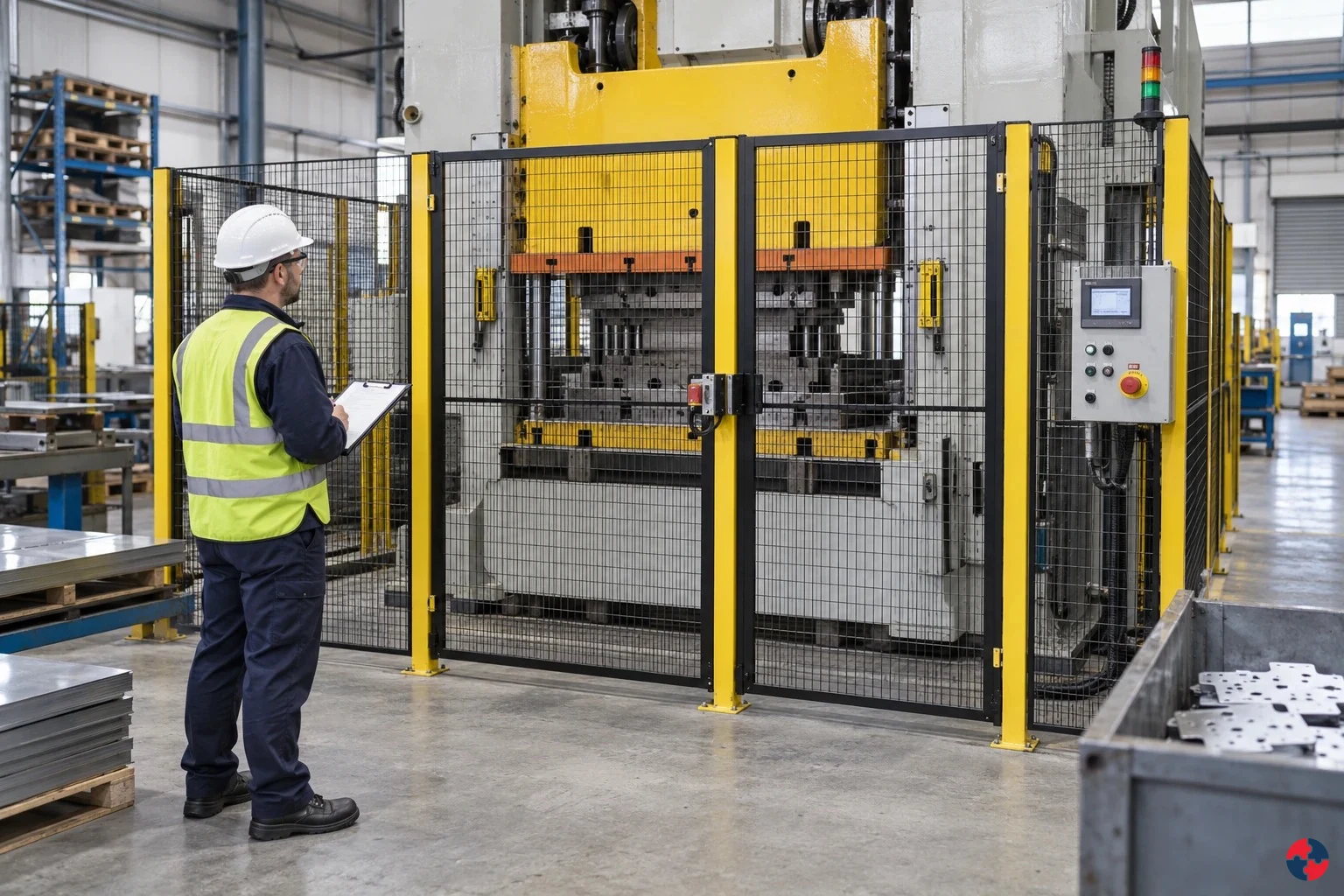
What do machinery control measures actually do?
They keep people away from dangerous movement, or stop that movement before a person can reach it. Effective safeguarding must work during production, setting, cleaning, fault finding and maintenance, including foreseeable mistakes. Machinery controls separate people from dangerous movement or stop it before access is possible.
Turn machinery control measures knowledge into a decision
Machinery controls separate people from dangerous movement or stop it before access is possible. Select and check safeguards for production, setting, cleaning and maintenance, including foreseeable intervention and stored energy. Retain the defect report, isolation and contractor handover records required by the local system, repair and safety-function results, release authority and any revised instruction.
Clearing a conveyor jam at the site team
Only the authorised technician accesses the specified area after the hold point is released. Keep the isolation and access controls effective while clearing material with the specified tools. Remove tools and waste, account for all people, refit the guard and have safety functions checked by the authorised person using the specified protected test procedure.
Mechanism injury and stop signs
Exposure route 1: Routine conveyor feed: clothing or a hand enters an in-running nip. Exposure route 2: Cutter access after stop: tool coasts while a door opens. Workpiece breaks or is expelled from a machine.: Impact, puncture or eye injury, potentially serious.
Choose controls for machinery control measures
Eliminate: Compare suitable feed or transfer redesign that removes recurrent nip access during normal operation. Reduce: Compare a technically suitable alternative material, process or feed arrangement that reduces the assessed harm route. Isolate: Use suitable guarding and protective functions through the relevant PUWER order and competent machine assessment. Control: Provide the authorised safe task method, separate secure isolation/stored-energy arrangements for intervention, competent roles and defect escalation. PPE: Select appropriate residual eye, hearing, foot or other protection for assessed hazards, considering entanglement risk. Read the full control table for qualifications, ownership and verification. Use the actual task and applicable jurisdiction; existing technical approval remains unchanged.
Use the full machinery control measures lesson
Use the full topic for the decision points, practical examples, detailed control tables and source scope. HSE guidance applies to Great Britain; use HSENI for the Northern Ireland route and the source’s stated jurisdiction. A simplified guide does not change the page’s technical-review or approval status.

Read all six steps as text
1. What do machinery control measures actually do?
They keep people away from dangerous movement, or stop that movement before a person can reach it.
- Avoid / redesign: Compare suitable feed or transfer redesign that removes recurrent nip access during normal operation.
- Control the task: Use suitable guarding and protective functions through the relevant PUWER order and competent machine assessment.
- Verify before release: Verify normal operation, cleaning and foreseeable jam intervention; moving routine access elsewhere is not elimination.
They keep people away from dangerous movement, or stop that movement before a person can reach it. Effective safeguarding must work during production, setting, cleaning, fault finding and maintenance, including foreseeable mistakes. Machinery controls separate people from dangerous movement or stop it before access is possible.
Apply it: Which part of this plan would you check at the workface before authorising the task?
2. Turn machinery control measures knowledge into a decision
Use the evidence to improve the actual work arrangement.
- Change at source: Compare suitable feed or transfer redesign that removes recurrent nip access during normal operation.
- Make it observable: Verify normal operation, cleaning and foreseeable jam intervention; moving routine access elsewhere is not elimination.
- Keep useful evidence: Retain the defect report, isolation and contractor handover records required by the local system, repair and safety-function results, release authority and any revised instruction.
Machinery controls separate people from dangerous movement or stop it before access is possible. Select and check safeguards for production, setting, cleaning and maintenance, including foreseeable intervention and stored energy. Retain the defect report, isolation and contractor handover records required by the local system, repair and safety-function results, release authority and any revised instruction.
Apply it: What evidence would show that the change improves this task, rather than only completing a record?
3. Clearing a conveyor jam at the site team
Example: a practical application of the existing topic lesson.
- Setting: the site team, the worked example company, uses an enclosed powered conveyor to move bagged building materials in a covered distribution bay.
- Act: Stop the conveyor, restrict access and establish why it jammed.
- Hold / review: Stop for an unknown feed, residual pressure, unstable load, missing guard, defeated switch, unexpected movement or missing person during hand-back.
Only the authorised technician accesses the specified area after the hold point is released. Keep the isolation and access controls effective while clearing material with the specified tools. Remove tools and waste, account for all people, refit the guard and have safety functions checked by the authorised person using the specified protected test procedure.
Apply it: At which point would you hold this example, and what evidence would allow it to proceed?
4. Mechanism injury and stop signs
Connect the task, the route to the person and the control that can fail.
- Exposure route 1: Routine conveyor feed: clothing or a hand enters an in-running nip.
- Exposure route 2: Cutter access after stop: tool coasts while a door opens.
- Workpiece breaks or is expelled from a machine.: Impact, puncture or eye injury, potentially serious.
Exposure route 1: Routine conveyor feed: clothing or a hand enters an in-running nip. Exposure route 2: Cutter access after stop: tool coasts while a door opens. Workpiece breaks or is expelled from a machine.: Impact, puncture or eye injury, potentially serious.
Apply it: Who could be exposed, including other trades, cleaners, maintainers and people nearby?
5. Choose controls for machinery control measures
Start with the stronger practicable options and verify their effect.
- Eliminate: Compare suitable feed or transfer redesign that removes recurrent nip access during normal operation.
- Reduce: Compare a technically suitable alternative material, process or feed arrangement that reduces the assessed harm route.
- Isolate: Use suitable guarding and protective functions through the relevant PUWER order and competent machine assessment.
- Control: Provide the authorised safe task method, separate secure isolation/stored-energy arrangements for intervention, competent roles and defect escalation.
- PPE: Select appropriate residual eye, hearing, foot or other protection for assessed hazards, considering entanglement risk.
Eliminate: Compare suitable feed or transfer redesign that removes recurrent nip access during normal operation. Reduce: Compare a technically suitable alternative material, process or feed arrangement that reduces the assessed harm route. Isolate: Use suitable guarding and protective functions through the relevant PUWER order and competent machine assessment. Control: Provide the authorised safe task method, separate secure isolation/stored-energy arrangements for intervention, competent roles and defect escalation. PPE: Select appropriate residual eye, hearing, foot or other protection for assessed hazards, considering entanglement risk. Read the full control table for qualifications, ownership and verification. Use the actual task and applicable jurisdiction; existing technical approval remains unchanged.
Apply it: Which stronger option can be used here, and who will verify it before accepting the remaining risk?
6. Use the full machinery control measures lesson
Follow the official sources below and retain the task-specific evidence.
- Official guidance: HSE Introduction to machinery safety
- Official guidance: HSE L22 Safe use of work equipment
- Task decision: Retain the defect report, isolation and contractor handover records required by the local system, repair and safety-function results, release authority and any revised instruction.
Use the full topic for the decision points, practical examples, detailed control tables and source scope. HSE guidance applies to Great Britain; use HSENI for the Northern Ireland route and the source’s stated jurisdiction. A simplified guide does not change the page’s technical-review or approval status.
Apply it: Which official source and full-topic section will you use to resolve the next decision?
A rotating shaft can catch clothing and pull a person in; a belt meeting a roller creates an in-running nip; a ram can crush someone against the machine frame. Injury can occur faster than a person can react. A guard is a physical barrier. A protective device detects access or requires a controlled action and sends a safety signal. Its effectiveness depends on the whole machine, including the brake, control system and restart arrangements.
The danger zone includes reachable space above, below, behind and between machines. A machine that has stopped may still contain pressure, a raised load, a tensioned spring, hot material or a coasting tool. Treat these as separate energy sources. Noise, vibration, dust, fumes and heat also need their own controls; guarding contact points alone does not prevent long-term hearing or respiratory harm.
Start with the task and the people: operators, cleaners, maintainers, contractors and anyone nearby. Explain how the hazard could reach each person, then select a barrier that breaks that path. HSE Introduction to machinery safety and HSE L22 Safe use of work equipment explain this approach.
Keep the guard and energy-control questions separate
A conveyor’s nip-point guard protects normal operation. Maintenance may also involve electrical, pneumatic, raised-load and upstream energy paths that need task-specific control and verification.

Normal operation
Assess access to the nip and the required physical guarding/protection for foreseeable operation and interference.
Maintenance boundary
Identify every relevant source, stored energy and connected/upstream operation; use the suitable authorised isolation and verification arrangements.
Return to operation
Verify completion, restored safeguards and the authorised hand-back before restart.
A stopped conveyor or closed guard alone is not proof of isolated energy. The drawing is not a maintenance procedure.
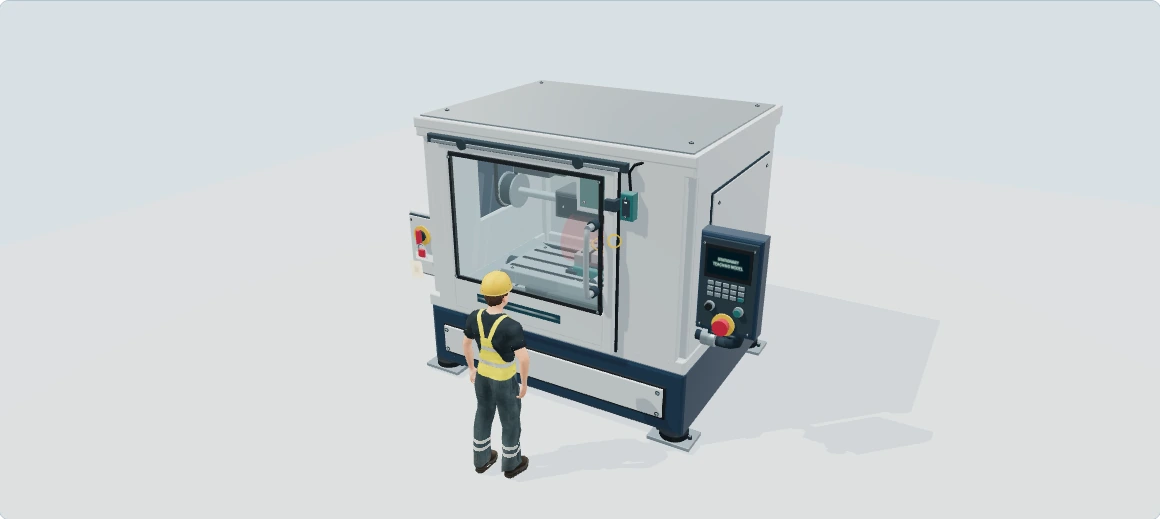

Machinery guarding: trace the energy to the harm
Explore the working zone, guards, interlock, transmission, controls and energy isolator. Compare production work, cleaning and maintenance without treating a stopped machine as safely isolated.
Checksheets and risk assessments
Risk assessment forms
Risk assessment examples
Forms and tools
Full written walkthrough — all 8 steps
1. Identify the dangerous movement
What is happening: The cutaway exposes the workholding and cutter so you can inspect where contact could occur. It does not open or enable the real machine.
How harm can occur: A cutter can sever tissue; rotating parts can wind in hair or clothing; moving workholding can crush a hand.
Best practice to apply: Identify the task, all exposed people and the machinery’s intended operating limits. Keep the actual danger zone inaccessible.
2. Inspect the enclosure and access
What is happening: Inspect the enclosure, viewing panel and access edges. The visual cutaway changes only the drawing.
How harm can occur: A missing, damaged or unsuitable guard may allow reach into dangerous movement or fail to contain an ejected item.
Best practice to apply: Check the actual guard, fixing, condition and suitability. Do not infer reach distances or containment performance from this model.
3. Understand an interlock’s role
What is happening: The access interlock is a separate protective function. Its presence does not establish the reliability or stopping performance of the actual system.
How harm can occur: Defeating an interlock can permit access while hazardous movement is possible. Run-down may continue after a stop request.
Best practice to apply: Verify required protective functions through competent assessment and maintenance. Do not bypass them or use the cutaway as a working configuration.
4. Find the transmission hazards
What is happening: Inspect the drive and the cover around it. Dangerous movement can exist beyond the obvious working point.
How harm can occur: Belts, pulleys and rotating shafts can entangle, draw in or trap people during production or servicing.
Best practice to apply: Keep appropriate transmission guarding in place. Plan access and maintenance with the equipment information and actual energy sources.
5. Separate control stops from isolation
What is happening: The control panel and emergency stop act through control functions. The energy isolator is physically separate.
How harm can occur: A stopped display may conceal live energy or allow an unexpected restart; an emergency stop does not remove every energy source.
Best practice to apply: Use the required stop arrangements for operation and the actual safe isolation procedure for intrusive access.
6. Control hazardous energy for access
What is happening: Locate the separate isolator and the points where electrical, pneumatic, hydraulic, gravitational or mechanical energy may remain.
How harm can occur: Unexpected energisation, stored pressure or a falling component can cause shock, crushing or impact.
Best practice to apply: Identify, isolate, secure and verify the relevant energies using competent task-specific arrangements. The pictured lock is not proof that a machine is safe.
7. Plan cleaning and material handling
What is happening: Consider how material is loaded, held, removed and cleaned without bringing a person into danger.
How harm can occur: An inadequately held item can be ejected; reaching to clear swarf or a blockage can expose hands and clothing.
Best practice to apply: Use suitable workholding and handling methods. Stop and follow the safe system when a blockage or abnormal condition occurs.
8. Protect the people around the machine
What is happening: The operator’s work position and surrounding access affect people other than the person at the controls.
How harm can occur: Visitors, cleaners and nearby trades may enter a danger area or be struck by an ejected item.
Best practice to apply: Check layout, access, instruction, competence and supervision. Review the machine after changes and before returning it to service.
Illustrative awareness learning. The model does not design equipment, authorise work, verify safe conditions or complete a real inspection.
The wider workplace has its own account and subscription access. Exploring this lesson does not grant access, record course completion or authorise work.
How can I practise this topic in 3D?
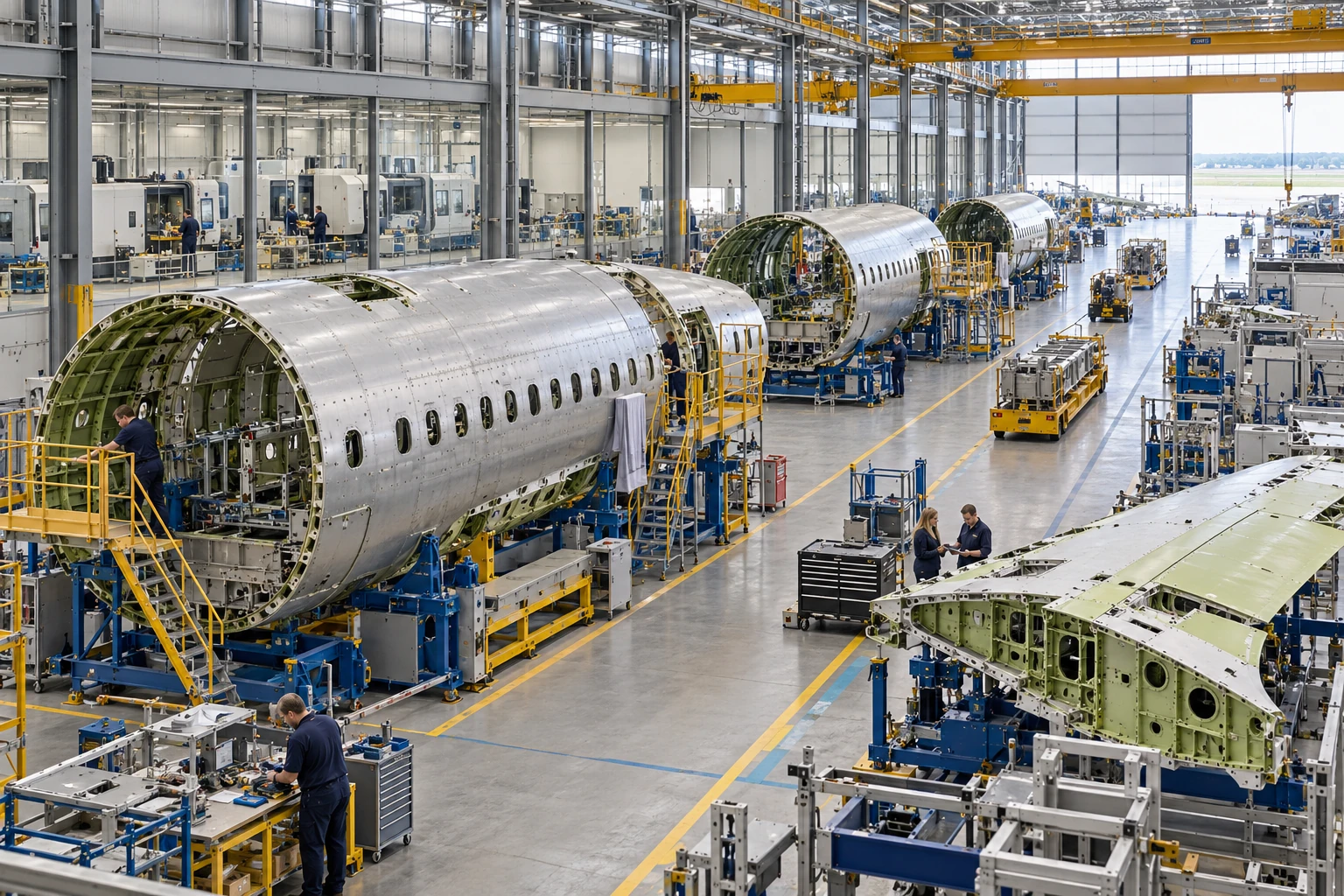
Fastener and tool FOD inside an assembly
All related inspection points 2 across 1 location
Aerosystems Engineering 2 inspection points
Practice in the SHAREhub environment. Browser practice is separate from workplace competence and formal learning records.
What injuries can failed machinery controls cause?
A person is harmed when dangerous motion or an ejected object reaches them, or when a hidden energy source moves a stopped machine. The mechanism and likely injury determine the safeguard and stop point.
| Task and route | Likely harm | Warning sign | Stop or escalate |
|---|---|---|---|
| Routine conveyor feed: clothing or a hand enters an in-running nip. | Drawing-in can crush tissue, fracture bones or amputate a limb. | Guard opening, damage, repeated jamming or changed feed. | Stop and quarantine; do not reach in or bypass guarding. |
| Cutter access after stop: tool coasts while a door opens. | Blade contact can cause severe cuts or amputation. | Longer run-down, altered braking or unverified interlock. | Hold access and competent validation of stopping and guarding. |
| Workpiece breaks or is expelled from a machine. | Impact, puncture or eye injury, potentially serious. | Damaged tool, unstable stock, missing enclosure. | Stop and assess containment and workholding. |
| Maintenance on a raised or pressurised part. | Unexpected movement or release can crush, inject or burn. | Unknown energy, drifting support or pressure remaining. | No entry until all sources are controlled and safe state verified. |
| Poorly controlled associated dust or noise over repeated use. | Breathing problems or hearing damage may develop over time; assess the actual material and exposure. | Failed extraction, rising noise or complaints. | Stop if a required control fails; obtain exposure-specific assessment. |
Severity changes with speed, force, tool condition, access timing and exposure duration. A safeguard that prevents hand contact may still leave an ejection or emission route. Identify every route before release. HSE Introduction to machinery safety and HSE Maintenance of work equipment explain these mechanisms.
How should controls be chosen in the right order?
First remove the need to approach danger through machine and process design. For remaining dangerous parts, apply the Provision and Use of Work Equipment Regulations (PUWER) guarding hierarchy: fixed enclosing guards where practicable, then other guards or protective devices, then protective appliances where needed. Information, instruction, training and supervision support every level.
Selecting a safeguard
2 linked parts. Follow the question numbers and complete the applicable route.
Part 1 of 2 · Questions 1–3

Continue · Part 2 of 2 · Questions 4–5


Read the complete visual as text
- Start: Use the actual task and current evidence. Serious immediate danger takes the appropriate emergency route first.
- Question 1: Can design remove the hazard or need for access? Decision owner: Supervisor and competent machinery engineer.
- YES — NO DANGER REMAINS: Implement and verify the design, then complete the all-modes check. Owner: Supervisor and competent machinery engineer. CONTINUE → QUESTION 5.
- YES — SOME DANGER REMAINS: Implement the improvement; assess the remaining dangerous parts. Owner: Supervisor and competent machinery engineer. CONTINUE → QUESTION 2.
- NO: Assess fixed enclosing guarding. Owner: Supervisor and competent machinery engineer. CONTINUE → QUESTION 2.
- UNKNOWN — HOLD: The designer obtains the missing design and task evidence. Owner: Supervisor and competent machinery engineer. HOLD → REPEAT QUESTION 1 AFTER CORRECTION.
- Question 2: Is fixed enclosing guarding practicable? Decision owner: Supervisor and competent machinery engineer.
- YES: Select a suitable fixed enclosure, then check every access route and operating state. Owner: Supervisor and competent machinery engineer. CONTINUE → QUESTION 5.
- NO / ONLY IN PART: Use it where practicable and assess remaining exposure. Owner: Supervisor and competent machinery engineer. CONTINUE → QUESTION 3.
- UNKNOWN — HOLD: The competent engineer assesses the remaining exposure and practical guard arrangement. Owner: Supervisor and competent machinery engineer. HOLD → REPEAT QUESTION 2 AFTER CORRECTION.
- Question 3: Can other guards or protective devices control the remaining exposure? Decision owner: Supervisor and competent machinery engineer.
- YES: Engineer and validate the complete safeguard, then check all access and operating states. Owner: Supervisor and competent machinery engineer. CONTINUE → QUESTION 5.
- NO / ONLY IN PART: Use suitable protection where practicable; assess remaining protective-appliance needs. Owner: Supervisor and competent machinery engineer. CONTINUE → QUESTION 4.
- UNKNOWN — HOLD: Obtain specialist safeguarding assessment and validation evidence. Owner: Supervisor and competent machinery engineer. HOLD → REPEAT QUESTION 3 AFTER CORRECTION.
- Question 4: Can protective appliances with remaining guards control the task? Decision owner: Supervisor and competent machinery engineer.
- YES: Confirm suitable safe feeding with supporting information, instruction, training and supervision. Owner: Supervisor and competent machinery engineer. CONTINUE → QUESTION 5.
- NO / UNKNOWN — HOLD: Redesign or hold the task. Information, instruction and training cannot substitute for required guarding. Owner: Supervisor and competent machinery engineer. HOLD → REPEAT QUESTION 4 AFTER CORRECTION.
- Question 5: Are all access routes and operating states controlled? Decision owner: Supervisor and competent machinery engineer.
- YES: The competent owner documents the selection and releases only the defined task. Owner: Supervisor and competent machinery engineer. OUTCOME → RECORD AND HAND OVER.
- NO / UNKNOWN — HOLD: Hold and reassess cleaning, run-down, maintenance, whole-body access and foreseeable misuse. Owner: Supervisor and competent machinery engineer. HOLD → REPEAT QUESTION 5 AFTER CORRECTION.
- Outcome: Record the stated outcome, evidence and receiving authority. A hold has no automatic restart; the relevant check must be satisfied after competent correction.
- Stop and escalation boundary: This learning route supplies no design value, operating setting, clinical diagnosis or site permission. The actual procedure, jurisdiction and competent local authority govern.
For example, move a lubrication point outside the enclosure or redesign feeding so a hand never follows material towards a roller. Where access remains necessary, choose a safeguard for the actual activity, speed, stopping performance and possible access routes. Convenience or familiarity alone does not justify choosing a weaker control. L22 regulation 11 and Appendix 1 explain the GB hierarchy; HSENI provides the NI equivalent route.
| Measure | What it does | Critical limitation |
|---|---|---|
| Fixed enclosing guard | A secured physical enclosure prevents access to dangerous parts. Removal requires tools unless permanently fixed. | Check openings, reach routes, strength and fixings. Plan safe access for cleaning and maintenance; do not remove it for production. |
| Interlocked movable guard | Opening the guard stops the relevant hazardous function; the function cannot operate while that guard is open. | If run-down allows access before danger ends, guard locking or another validated solution is needed. Closing a normal interlocked guard must not itself restart the machine. |
| Adjustable or self-adjusting guard | Covers as much of a tool as the task allows, for example on an appropriate manually fed machine. | Correct setting and complementary protection remain essential. It is not a reason to expose the rest of the tool unnecessarily. |
| Light curtain or pressure-sensitive device | Detects approach or presence and initiates the designed safety response. | It is not a physical barrier against ejected objects. Safe positioning, total stopping time, undetected access and restart prevention require competent design. |
| Two-hand control or hold-to-run | A correctly designed two-hand system requires both hands; hold-to-run requires continuous actuation. | Two-hand controls protect only the person using them. Neither device automatically protects others or makes exposed powered work safe. |
| Jig, holder or push-stick | Positions or moves material while keeping the body away from the tool. | Use with the required guards and safe method. A push-stick is not a general substitute for practicable guarding. |
Personal protective equipment (PPE) can address residual eye, hearing or other exposure, but cannot stop crushing or entanglement. Select clothing and PPE against the task and manufacturer instructions: loose clothing, jewellery, hair and some gloves can be drawn into rotating parts. Never issue a blanket instruction to wear gloves around exposed rotation.
How can the hierarchy of controls prevent access to machinery hazards and dangerous movement?
Remove the need to reach a dangerous part before selecting a guard. Where the task still exposes people, contain the danger with suitable fixed guarding or another engineered safeguard; use safe work methods and training to support that protection. PPE addresses remaining exposure and cannot stop entanglement or crushing.
For a conveyor transfer, first change the feed or clearing arrangement so routine access to the nip is unnecessary. Enclose the nip where access is not needed. If access is necessary, select and validate an appropriate interlocked guard or protective device for the actual stopping and restart behaviour. Then define the authorised cleaning and isolation method, checks and defect route. Eye or hearing protection may be needed for other residual hazards but cannot replace the nip safeguard. The general hierarchy and the specific PUWER order for dangerous parts answer different questions: assess the task and foreseeable intervention, then choose and verify the machinery protection. Northern Ireland has its own PUWER route. This sequence is practical guidance, not a claim that an acronym or voluntary standard creates a duty.
ERICPD means Eliminate, Reduce (including substitution), Isolate, Control, PPE and Discipline. The five-level hierarchy groups measures as elimination, substitution, engineering controls, administrative controls and PPE. They overlap: isolation is usually an engineering measure; control can include engineered and administrative measures. Discipline means maintaining and checking the controls, supervising the method and learning from defects, rather than blaming someone or accepting weaker protection.
How can the ERICPD hierarchy of controls prevent access to machinery hazards and dangerous movement?

| ERICPD and five-level position | Intervention and owner | Verification, failure and stop point |
|---|---|---|
| Eliminate / elimination | Compare suitable feed or transfer redesign that removes recurrent nip access during normal operation. | Verify normal operation, cleaning and foreseeable jam intervention; moving routine access elsewhere is not elimination. |
| Reduce / substitution when replacing a hazard; otherwise engineering or administrative risk reduction | Compare a technically suitable alternative material, process or feed arrangement that reduces the assessed harm route. | Assess new hazards, actual performance and transferred intervention. A slower machine or smaller load is not automatically safe. |
| Isolate / engineering | Use suitable guarding and protective functions through the relevant PUWER order and competent machine assessment. | Validate actual access, stopping/run-down, foreseeable faults and restart. Unknown safeguard performance, bypass or a defect holds the affected task; no generic distance or performance level is supplied. |
| Control / engineering and administrative | Provide the authorised safe task method, separate secure isolation/stored-energy arrangements for intervention, competent roles and defect escalation. | An emergency stop or interlock is not secure isolation. Verify the actual method and handback through authorised competent people; this example supplies no isolation procedure. |
| PPE / PPE | Select appropriate residual eye, hearing, foot or other protection for assessed hazards, considering entanglement risk. | Verify suitability and use. PPE cannot prevent contact with a moving nip/blade or contain an uncontrolled load; gloves are not assumed safe near rotating parts. |
| Discipline / sustained engineering and administrative controls | Managers maintain protective functions and competence, prevent unsupported bypass and review defects or changed tasks. | Retain original maintenance/inspection and restoration evidence. Production success or an absence of accidents does not prove safeguard effectiveness. |
How can the ISO 45001 hierarchy of controls prevent access to machinery hazards and dangerous movement?

| ERICPD and five-level position | Intervention and owner | Verification, failure and stop point |
|---|---|---|
| Eliminate / elimination | Compare suitable feed or transfer redesign that removes recurrent nip access during normal operation. | Verify normal operation, cleaning and foreseeable jam intervention; moving routine access elsewhere is not elimination. |
| Reduce / substitution when replacing a hazard; otherwise engineering or administrative risk reduction | Compare a technically suitable alternative material, process or feed arrangement that reduces the assessed harm route. | Assess new hazards, actual performance and transferred intervention. A slower machine or smaller load is not automatically safe. |
| Isolate / engineering | Use suitable guarding and protective functions through the relevant PUWER order and competent machine assessment. | Validate actual access, stopping/run-down, foreseeable faults and restart. Unknown safeguard performance, bypass or a defect holds the affected task; no generic distance or performance level is supplied. |
| Control / engineering and administrative | Provide the authorised safe task method, separate secure isolation/stored-energy arrangements for intervention, competent roles and defect escalation. | An emergency stop or interlock is not secure isolation. Verify the actual method and handback through authorised competent people; this example supplies no isolation procedure. |
| PPE / PPE | Select appropriate residual eye, hearing, foot or other protection for assessed hazards, considering entanglement risk. | Verify suitability and use. PPE cannot prevent contact with a moving nip/blade or contain an uncontrolled load; gloves are not assumed safe near rotating parts. |
| Discipline / sustained engineering and administrative controls | Managers maintain protective functions and competence, prevent unsupported bypass and review defects or changed tasks. | Retain original maintenance/inspection and restoration evidence. Production success or an absence of accidents does not prove safeguard effectiveness. |
The comparison is an original illustrative application of the general HSE hierarchy, not a machine-specific method, permit or design approval. The employer must choose measures for the actual work and jurisdiction. Apply the separate Northern Ireland legal route where relevant; the local assessment and competent technical decision govern release.
How do you know a safeguard is suitable?
A safeguard must prevent the identified harm, remain effective in the working environment and allow the job to be done without encouraging bypass. Its presence or a green indicator alone is not proof of protection.
Stop before access


Read the complete visual as text
- Danger can remain after the stop: An enclosed cutter may coast after a stop signal. Opening an interlocked door is insufficient if a person can reach the tool before the dangerous function is safe.
- Engineer the access timing: The engineer needs measured stopping performance, access and reach information, the complete control function and the applicable machine requirements.
- Hold when the evidence is missing: Use a validated guard-locking or other suitable safeguarding solution where necessary. Include whole-body access and escape. This schematic assigns no time, distance or performance level.
Check construction, strength, secure attachment, suitable openings and distance from danger, resistance to bypass, necessary visibility and maintenance access. Include trapping hazards created by a powered guard itself. For a control-based safeguard, a specialist must verify the safety function, foreseeable failures, stop behaviour and restart prevention as a complete system. Dust, reflective surfaces, vibration, washdown and a changed layout can invalidate a device or installation.
Worked selection decision: an enclosed cutter needs routine loading access and its tool continues to coast after a stop signal. A movable interlocked door is proposed. The engineer establishes the worst-case stopping performance and whether anyone can reach the tool before it is safe. If access could be gained too soon, a simple stop-on-opening interlock is insufficient: use a validated guard-locking or alternative safeguarding solution. If those facts are unknown, do not release the machine. Guard locking must itself account for whole-body access and escape where relevant.
No universal guard gap, light-curtain distance, stopping time or control-system performance level is given here. The designer needs the machine-specific risk assessment, current applicable standard, device instructions and measured system performance. The historical HSE HSG180 Light curtains and light beam devices remains useful for principles but its 1999 references must not be treated as a current design specification.
Information needed before selecting a safeguard
Illustrative cutter selection brief: the supervisor records the access opening, foreseeable reach and whole-body access; the engineer establishes measured worst-case run-down and ejection risks; the designer resolves protective function, reset location and complete validation evidence. Unknown access or stopping behaviour holds selection/release. A maintainer’s protected function check confirms the specified response in service; it does not replace validation of the complete design. No generic distance or performance level is supplied.
What should happen before during and after use?
Use a machine only when the task is authorised, its safeguards are effective and the operator knows how to stop and report a problem. Stop when a protection measure is missing, defeated, damaged or unreliable; keep the equipment out of use until competent assessment and release.
Before starting
Confirm the machine, material, operating mode and surroundings match the assessed task. Check guards and fixings, clear space and access routes, workpiece support, extraction where required and the status of maintenance or isolation. Carry out only the functional checks defined by the manufacturer and local safe procedure, from a protected position. Never test a safeguard with a hand or other body part in danger. Confirm required inspections and the operator’s task-specific instruction.
During the task
Keep guards in place and use the intended feeding equipment. Watch for repeated jams, changed stopping behaviour, unusual movement, damaged controls or people entering the area. Do not hold an interlock defeated, bridge a device or improvise access to meet production targets. Repeated nuisance trips need investigation of the task and machine design, not removal of protection.
Stopping and handover
Use the planned stopping procedure. For cleaning, adjustment or entry into danger, follow the machine-specific isolation method. Report defects precisely, identify the machine and safeguard, and prevent unauthorised reuse. A shift handover must identify incomplete work, changed settings and any restriction still in force. HSE PUWER overview and HSE Inspection of work equipment support these checks.
Why is an emergency stop not isolation?
An emergency stop or an open interlocked guard can stop movement without securely disconnecting energy. Before someone enters a danger zone for intervention, the planned method must prevent unexpected movement, release or reconnection, including stored energy.
A stop is not isolation


Read the complete visual as text
- Stopped, with energy connected: A stop command can leave electricity, compressed air, gravity and other stored energy available. No person enters the danger zone in this state.
- Secure every relevant source: The authorised maintainer follows the machine-specific isolation schedule, controls reconnection and dissipates or restrains stored energy. A raised component needs its designed support.
- Verify before access: Use the approved proving method for the actual sources and task. A stopped motor, emergency stop, pressure gauge or green indicator alone does not prove a safe state.
Identify every energy source and connected machine. Bring equipment to the specified safe state, isolate the relevant supplies, secure against reconnection and release or restrain stored energy by the approved method. Verify that the identified hazards are controlled before access. A raised part may fall when pressure is removed: provide the designed support before the step that could let it fall. A try-start alone does not prove electrical deadness or remove gravity and pressure hazards.
Coordinate personal and group protection for everyone involved, including contractors and shift changes. Re-energise only through the agreed hand-back: account for people and tools, restore safeguards, remove locks under the authorised procedure and confirm a safe controlled restart. Electrical isolation and testing require appropriate electrical competence. Powered fault finding is an exceptional planned task for competent specialists using designed safe modes and additional protection; production staff must not improvise it. HSE Maintenance of work equipment and L22 regulation 19 explain the distinctions.
How does this work during a real interruption?

Treat a blockage as a change from production to intervention. Reaching through an opening or pressing the emergency stop does not make clearing it safe. Establish the isolation and access method before anyone approaches the dangerous parts.
Guarding and access


Read the complete visual as text
- Enclose the nip: A fixed enclosure prevents approach to the conveyor drive and transfer nip. A visible guard is only useful if its construction, attachment and access geometry suit the actual machine.
- Check every approach: Assess access over, under, around and between barriers. The unoccupied inset identifies possible routes; it gives no universal opening or separation dimension.
- Keep the access safeguard effective: Normal production has the interlocked gate closed. Cleaning, setting and jam clearing require their own assessed method. A guard defect means stop, prevent use and report it.
A jam or safeguard defect
2 linked parts. Follow the question numbers and complete the applicable route.
Part 1 of 2 · Questions 1–3

Continue · Part 2 of 2 · Questions 4–6


Read the complete visual as text
- Start: Jam or safeguard defect found
- Question 1: Immediate danger or injury? Decision owner: Supervisor and competent machinery engineer.
- YES — EMERGENCY: Raise the alarm and obtain emergency help. Use a safely accessible stop only if possible; keep clear and follow the competent machine rescue plan. Do not improvise restart or reversal. Owner: Supervisor and competent machinery engineer. STOP / REFER → APPROPRIATE RESPONSE.
- NO: Continue the remaining checks; this does not release the task. Owner: Supervisor and competent machinery engineer. CONTINUE → QUESTION 2.
- UNKNOWN — PROTECT FIRST: Raise the alarm and obtain emergency help. Use a safely accessible stop only if possible; keep clear and follow the competent machine rescue plan. Do not improvise restart or reversal. Owner: Supervisor and competent machinery engineer. STOP / REFER → APPROPRIATE RESPONSE.
- Question 2: Safe to stop from outside danger? Decision owner: Supervisor and competent machinery engineer.
- YES: Stop and prevent use before the intervention assessment. Owner: Supervisor and competent machinery engineer. CONTINUE → QUESTION 3.
- NO / UNKNOWN — HOLD: Keep clear, prevent approach and obtain competent help; work remains held. Owner: Supervisor and competent machinery engineer. HOLD → REPEAT QUESTION 2 AFTER CORRECTION.
- Question 3: Authorised intervention method and all energy known? Decision owner: Supervisor and competent machinery engineer.
- YES: Apply the approved isolation and verify the task-specific safe state. Owner: Supervisor and competent machinery engineer. CONTINUE → QUESTION 4.
- NO / UNKNOWN — HOLD: The supervisor and competent maintainer hold access until the actual method, sources and isolation/proving arrangements are established. Owner: Supervisor and competent machinery engineer. HOLD → REPEAT QUESTION 3 AFTER CORRECTION.
- Question 4: Safe state verified for everyone? Decision owner: Supervisor and competent machinery engineer.
- YES: Perform only the authorised task while maintaining protection. Owner: Supervisor and competent machinery engineer. CONTINUE → QUESTION 5.
- NO / UNKNOWN — HOLD: No access. The competent maintainer resolves the unproved source or personal-protection gap before this check is repeated. Owner: Supervisor and competent machinery engineer. HOLD → REPEAT QUESTION 4 AFTER CORRECTION.
- Question 5: People clear and safeguards restored and checked? Decision owner: Supervisor and competent machinery engineer.
- YES: Prepare the controlled hand-back and authorised restart. Owner: Supervisor and competent machinery engineer. CONTINUE → QUESTION 6.
- NO / UNKNOWN — HOLD: Retain the safe state. Correct and verify the defect; repeat this check only after competent correction. Owner: Supervisor and competent machinery engineer. HOLD → REPEAT QUESTION 5 AFTER CORRECTION.
- Question 6: Authorised restart successful? Decision owner: Supervisor and competent machinery engineer.
- YES: The authorised person records release, the cause and any repeat-jam review. Owner: Supervisor and competent machinery engineer. OUTCOME → RECORD AND HAND OVER.
- NO / UNKNOWN — HOLD: Stop and reassess the failed or uncertain response. No production release. Owner: Supervisor and competent machinery engineer. HOLD → REPEAT QUESTION 6 AFTER CORRECTION.
- Outcome: Record the stated outcome, evidence and receiving authority. A hold has no automatic restart; the relevant check must be satisfied after competent correction.
- Stop and escalation boundary: This learning route supplies no design value, operating setting, clinical diagnosis or site permission. The actual procedure, jurisdiction and competent local authority govern.
Clearing a conveyor jam at BuildOut Ltd
Task material and setting: BuildOut Ltd, the worked example company, uses an enclosed powered conveyor to move bagged building materials in a covered distribution bay. A torn bag jams a transfer point. The desired outcome is to clear the jam and restore normal movement without exposing anyone to the in-running nip or a pneumatic diverter. This is an illustrative decision sequence, not a machine-specific method.
People and prerequisites: The operator, authorised maintenance technician, nearby packers and a contractor may be affected. The supervisor coordinates the area. The technician needs the correct machine identification, current isolation diagram and instructions, a method for the actual material and verified task competence. The contractor confirms the interface with linked equipment.
Before: Stop the conveyor, restrict access and establish why it jammed. Identify the electrical drive, pneumatic diverter, linked feeds and any material that could fall. Follow the approved isolation and stored-energy procedure, securing against reconnection and verifying safety before access. If isolation cannot be established, hold the job for a competent engineer.
During: Only the authorised technician accesses the specified area after the hold point is released. Keep the isolation and access controls effective while clearing material with the specified tools. Do not reach into a neighbouring live conveyor or command a test movement while anyone is exposed. Reassess if the jam conceals damage or the material differs from the instructions.
Hold or stop: Stop for an unknown feed, residual pressure, unstable load, missing guard, defeated switch, unexpected movement or missing person during hand-back. The supervisor keeps the line unavailable; the engineer resolves the technical uncertainty. If injury or entrapment occurs, follow the emergency response and do not attempt an improvised powered release.
Completion and hand back: Remove tools and waste, account for all people, refit the guard and have safety functions checked by the authorised person using the specified protected test procedure. Complete the agreed lock-removal and restart sequence, notify affected teams and observe the trial from a safe location before production resumes.
Evidence: Retain the defect report, isolation and contractor handover records required by the local system, repair and safety-function results, release authority and any revised instruction. Investigate repeated jams as a design or maintenance issue instead of normalising intervention.
How the decision changes in other situations
Routine feeding: leave enclosing guards in place and use the designed feed system. New bag size or material: confirm compatibility before trialling; unknown residues or dust require substance information and appropriate controls. Damaged guard: withdraw the affected equipment; a warning sign is not substitute protection. Cleaning contractor: agree exactly which connected equipment is isolated, who holds protection and who can release it. Powered diagnosis: stop the ordinary intervention route and obtain a specialist method. These variations change the assessment and hold points rather than create permission to bypass a device.
What training and evidence of competence does each role need?
Awareness, practical operation, specialist intervention and management decisions require different learning and proof. Training supports effective safeguards; attendance alone never makes a machine safe.
Check competence on the equipment and task actually authorised. A new worker may only need to recognise a dangerous condition; an operator needs supervised practice; a maintainer needs assessed isolation and technical skill. Supervisors, purchasers and advisers must demonstrate their own decisions. No universal machinery certificate or renewal period is created by this page.
| Role | Learning | Demonstrated competence | Assessor and record | Reassessment trigger |
|---|---|---|---|---|
| Nearby or new staff | Recognise danger zones, exclusion signs, defect reporting and emergency alarm; awareness is not operating authority. | Can point out a failed guard and the reporting route during a walkthrough. | Supervisor observes and records induction scope. | New machine, changed route or unsafe observation. |
| Operator | Learn this machine, material, operating modes, protected checks and stop conditions through instruction and supervised practice. | Demonstrates normal use and a safe stop without defeating protection. | Authorised supervisor assesses on the actual task; scope recorded. | Change in task, equipment, incident or lost familiarity. |
| Setter or maintainer | Learn setup, isolation, stored energy, exceptional powered diagnosis and hand-back within defined authority. | Practical demonstration and documented sign-off for the machine and method. | Competent engineering lead assesses and records authorisation. | Modification, failure, new energy or observed unsafe method. |
| Supervisor or contractor coordinator | Plan interfaces, hold defective equipment, challenge methods and authorise controlled return. | Can run a jam scenario and document restriction, correction and release. | Manager or competent lead checks decisions and records scope. | Repeat bypass, near miss or change in contractor interface. |
| Manager or purchaser | Specify the real task, fund safeguards, interpret supply evidence and review defect trends. | Approved acceptance criteria, resources and closed corrective actions. | Technical adviser and responsible leader examine decisions. | New purchase, modification or recurring control failure. |
| Safety adviser or auditor | Trace GB/NI sources, sample machine-level evidence and know when specialist validation is needed. | Recorded findings, source rationale and completed follow-up. | Independent competent reviewer samples work. | Legal or standard change, conflicting evidence or audit failure. |
Which duties apply in Great Britain and Northern Ireland?
Great Britain uses PUWER 1998; Northern Ireland uses its separate PUWER 1999 instrument. Both routes address safe work equipment, but the correct jurisdiction and amended legislation must be checked for the actual workplace.
Great Britain: PUWER 1998 legislation covers suitability, maintenance, inspection where required, information, training, dangerous parts, controls, isolation and safe maintenance. Regulation 11 is the main dangerous-parts hierarchy; regulations 14–19 address controls and isolation, and regulation 22 addresses maintenance. Use HSE L22 Safe use of work equipment to distinguish binding regulations from the Approved Code of Practice (ACOP) and guidance. General employer and risk-assessment duties also apply through the Health and Safety at Work etc. Act 1974 and Management Regulations 1999.
Northern Ireland: use PUWER Northern Ireland 1999 legislation with HSENI PUWER 1999, which links the NI legislation and identifies L22 as approved for use in NI. The wider framework is the Health and Safety at Work (Northern Ireland) Order 1978 and Management Regulations (Northern Ireland) 2000. Do not present a GB statute as the NI legal basis.
Use the current amended instrument for the actual workplace. The regulator guidance explains practical application but does not replace the legislation. Requirements specific to power presses, lifting equipment or particular sectors need their own assessment; do not apply their examination intervals to all machinery.
SHARE recommendation and local rule: keep unsafe equipment out of use and document who may release it. The exact permit, lock, authorisation and record arrangements are set by the assessed local system. A permit is not automatically required for every machinery task, and no universal inspection interval is asserted here.
Does a conformity mark prove the machine is safe to use?
No. Product-supply compliance and workplace-use duties are separate. Check the machine’s identity, instructions, declaration, installation and suitability for the actual work, including guarding and intervention, before accepting it.
Current official machinery guidance recognises European conformity (CE) or UK Conformity Assessed (UKCA) marking for the GB supply route. NI uses CE, or CE together with UK Northern Ireland (UKNI) marking where the relevant UK notified-body route applies; UKNI is not used alone. Check the applicable supply date, market and economic-operator role, particularly for imports, assemblies, own-use manufacture and substantial modifications. GOV.UK Machinery supply guidance for Great Britain and GOV.UK Machinery supply guidance for Northern Ireland provide the detailed routes.
For supply in Northern Ireland from 20 January 2027, plan for the upcoming Machinery Regulation and recheck the live transition and enforcement guidance. HSENI Upcoming Machinery Regulation confirms the date. Do not assume this NI transition changes the GB workplace-use regime.
Changing a guard, safety program, braking system or machine combination can affect both the safety function and supply obligations. Obtain competent advice before implementation, retain the change assessment and validate affected protection before release. A marked replacement component alone does not validate the complete machine.
Where do these control decisions transfer?
Different sectors use different machines, but the harm chain and hold decision stay concrete. Choose the strongest feasible control for the actual task and verify what remains.
| Task and people | Mechanism and harm | Strongest controls and residual safeguards | Check or stop point |
|---|---|---|---|
| Manufacturing: operator loads a guarded press; setter changes tooling. | Ram or moving tool can crush or amputate. | Design out hand loading where feasible; guard or validate protective device. Secure energy and support moving parts for setting. | Stop for defeat, changed stopping or uncertain support. |
| Construction: trade worker uses a table saw near other site workers. | Blade contact or ejected stock causes cut, amputation or eye injury. | Use suitable guarded saw, feeding and workholding; separate bystanders. Eye protection addresses residual particles. | Stop for missing guard, unstable stock or people in the ejection path. |
| Hospitality: kitchen worker uses and cleans a powered slicer. | Blade reaches fingers during slicing or cleaning; cut or amputation. | Choose a suitable guarded machine and holder; follow approved isolation before cleaning. Train for the model. | Stop for defective guard or request to wipe a moving blade. |
| Logistics: operative clears a conveyor jam beside a forklift route. | In-running nip draws in an arm; vehicle may strike helper. | Prevent repeat jams, enclose nip and segregate the vehicle route; isolate before authorised access. | Hold for unknown energy, moving vehicle or failed guard. |
| Agriculture: worker approaches a powered feeder or PTO. | Rotating drive catches clothing; entanglement or serious crush injury. | Guard drive and design safe feed; use machine-specific safe stop and secure energy for intervention. | Hold if parts can rotate, restart or fall. |
Hospitality is relevant to this page because powered slicers have a real blade-access hazard. The machine-specific design, manufacturer instructions and regulator route still determine the final method; these examples do not certify a safeguard.
How do managers know protection still works?
Assurance should follow each significant hazard to a real safeguard, a responsible owner and evidence that the safeguard works. Paperwork without an effective machine-level check does not show control.
Use the risk register to identify the machine and activity, people exposed, credible event, required safeguard and failure response. For the BuildOut conveyor, record drawing-in at the transfer nip, fixed and interlocked protection, isolation for intervention, named maintenance ownership and the evidence needed for release. Track overdue safety defects and repeat interventions separately from routine production downtime.
Inspection scope and frequency depend on risk, deterioration, installation conditions, manufacturer recommendations and experience. Inspect after relevant installation or reassembly and exceptional events that could compromise safety. In GB, required inspection records are kept at least until the next inspection; HSENI states the same retention route for NI. Simple visual pre-use checks do not automatically require an individual written record. HSE Inspection of work equipment and HSENI PUWER 1999.
Review after modifications, layout or material changes, a serious defect, an unexpected restart, an incident or evidence of bypass. Managers should ask operators why a safeguard is difficult to use and fund the correction. Audit the machine in its cleaning and maintenance states as well as normal production.
Voluntary-standard detail on hold
Specific standard editions, clauses and derived management-system detail are withheld until authorised text, rights and competent technical review are complete. Use applicable law and verified site evidence for current decisions.
For general health and safety management, see HSE managing health and safety.
When must work stop and how should an emergency be handled?
Stop and make the area safe when protection is missing or unreliable, isolation is uncertain or unexpected movement occurs. In an injury or entrapment emergency, raise the alarm, summon emergency help and prevent further harm without putting rescuers into the danger zone.
Use the appropriate emergency stop if safe to do so, keep people clear and call 999 or 112 for a serious injury or immediate danger. Do not restart, reverse or dismantle machinery to free someone without the competent rescue arrangements for that machine; movement or released energy can worsen the injury. Emergency responders need the location, machine, trapped person’s position and known energy hazards. Trained first aiders act within their training.
Once urgent care is secured, preserve relevant settings and evidence without delaying rescue. Keep the equipment unavailable until the cause and safeguards have been assessed. The responsible person should assess any statutory reporting duty under the applicable GB or NI regime. Repeated faults, temporary bypasses, a guard that must be removed to complete normal work and unexplained stop-time changes all require action before an injury occurs.
What do the acronyms and key terms mean?
These short definitions distinguish a legal route, product mark and safety function.
| Term | Full name | Meaning here |
|---|---|---|
| PUWER | Provision and Use of Work Equipment Regulations | Separate GB 1998 and NI 1999 workplace-use instruments. |
| ACOP | Approved Code of Practice | Code with a distinct legal status from ordinary guidance. |
| ESPE | Electro-sensitive protective equipment | A detection-based protective device such as a light curtain. |
| PPE | Personal protective equipment | Residual protection, not a replacement for guarding. |
| GB | Great Britain | England, Scotland and Wales route. |
| NI | Northern Ireland | Separate workplace-use and product-supply route. |
| UKCA | UK Conformity Assessed marking | One applicable GB product-supply mark; it does not prove workplace suitability. |
| UKNI | UKNI marking | Used with CE in the relevant NI UK notified-body route, never alone. |
| Guard locking | Not an acronym | Retains a movable guard closed until access is safe. |
| Isolation | Not an acronym | Secures relevant energy against unexpected movement or release. |
| CE | European conformity marking | Product-supply conformity mark; it does not prove workplace suitability. GOV.UK Machinery supply guidance for Great Britain |
| PTO | power take-off | Rotating drive used on some agricultural machinery. HSE Agricultural machinery guarding |
| ERICPD | Eliminate, Reduce, Isolate, Control, PPE, Discipline | An original control-selection aid used in this lesson; sustain the chosen protection through supervision, maintenance and learning. It creates no separate legal duty. |
Unlock another resource
You have used this month’s two free downloads. Publish a post in your own words to unlock one more resource, or choose SHARE Individual for 10 downloads per month.
You decide whether to share. If you do, use the relevant platform disclosure tools and do not make claims you do not genuinely hold.