
SHARE Knowledge Hub
Organic Tin Poisoning
Organotin compounds are a varied chemical family, so toxicity and control decisions depend on the exact compound, formulation and task. Before opening a line, handling residue or disturbing a coating, identify the material, control inhalation and skin contamination at source, plan decontamination and obtain urgent clinical advice after suspected significant exposure.
Understanding Organic Tin Poisoning
Organic tin poisoning means adverse health effects from an organotin compound, not from every material containing tin. The chemical identity, substitution pattern, formulation and route of exposure determine the risk. Triethyltin and trimethyltin are particularly important neurotoxic examples; other organotins can have different dominant effects. Do not diagnose a worker from the family name alone.
Why this matters at work
The NIOSH organic-tin group entry lists eye, skin and respiratory irritation, headache, dizziness, psycho-neurological disturbance, cough, gastrointestinal symptoms, urinary retention, paresis, focal anaesthesia, skin burns and itching. This is a hazard list, not a prediction that every compound or exposure causes every symptom.
A WEL measures only one part of exposure control; the skin notation warns that dermal uptake can materially contribute. A reportable disease, an acute injury and an Industrial Injuries Disablement Benefit claim are separate questions and must not be inferred merely from the words organic tin poisoning.
How organisations manage this in practice
First prevent exposure by eliminating the hazardous agent or task where practicable, substituting only after assessing the replacement, and reducing the release at source. Enclosure, automation, local exhaust and segregation usually offer more reliable protection across a workforce than a respirator-only plan.
Start with the actual formulation and release mechanism. Assess whether the catalyst or manual handling step can be removed, substituted or reduced without creating another hazard. Where use remains necessary, examine closed metering, contained weighing and effective source capture before relying on personal protection. Include transfer couplings, contaminated containers, cleaning, maintenance and waste: an enclosed production line can still release residue when opened. Verify engineering controls under the real task and worker position. Specify glove and clothing protection from whole-formulation compatibility data, including contact duration, doffing and contamination inside cuffs. Do not assume a generic disposable glove protects against every organotin and co-solvent. RPE selection requires competent assessment of substance, form, concentration, task and wearer; filtering equipment cannot supply oxygen. Train operators and contractors on isolation, failure, reporting and protected response. Record each control’s purpose, owner, pre-use check, maintenance and stop condition. Investigate repeated contaminated sleeves or bypasses as system failures rather than simply issuing more PPE.
RPE may be needed for residual exposure or a planned short task, but it is not a substitute for source controls. Select it for the actual organotin species, carrier, aerosol or vapour form, assessed concentration, oxygen level and task duration. Fit testing, training, maintenance and change schedules are part of the control.
What is organic tin poisoning?
Organic tin poisoning is toxic harm from exposure to organotin compounds, a family of tin-containing organic chemicals with varying toxicity.
Organic tin risk in plain English — part 1 of 2


Read the complete visual as text
- Substance identity: What it means: Organotin compounds differ significantly. Why it matters: The SDS, label, composition and supplier data drive the control strategy.
- Route: What it means: Inhalation, skin contact, eye contact and ingestion from contamination may all matter. Why it matters: PPE-only controls are weak if ventilation, hygiene and containment are poor.
- Form: What it means: Liquid, dust, fume, mist, contaminated residue or solution. Why it matters: The form changes the exposure route and the control method.
Organic tin risk in plain English — part 2 of 2


Read the complete visual as text
- Task: What it means: Mixing, sampling, cleaning, maintenance, waste handling, hot work or demolition. Why it matters: Maintenance and disturbed residue may create higher exposure than normal operation.
- Dose: What it means: Amount entering the body over time or from a single event. Why it matters: Short high exposure and repeated lower exposure both need competent assessment.
- Evidence: What it means: COSHH assessment, SDS, monitoring, training, controls and health records. Why it matters: Evidence supports checking the real task and control effectiveness; a completed record alone does not prove protection.
The phrase organic tin covers a range of compounds rather than one single hazard. Some organotin compounds have been used as stabilisers, catalysts, biocides, coatings, additives or specialist laboratory chemicals. Toxicity depends heavily on the specific compound, concentration, physical form, route into the body and exposure duration. That is why the first technical step is always chemical identification, not a generic assumption that all tin compounds behave the same way.NIOSH Pocket Guide: tin organic compounds
Workplace concern usually arises where organotin products are deliberately used, where legacy coatings or contaminated materials are disturbed, where laboratory or pilot plant work handles organotin chemistry, or where waste, residue, sludge or process equipment may contain organotin contamination. Human reports for some organotins include skin and eye irritation and neurological problems. Other reported symptoms depend on the compound and dose; immune and reproductive effects cited by ATSDR come from animal studies and have not been established in people.ATSDR tin and compounds toxicology
This workplace guidance is not medical advice. Suspected significant exposure, chemical splash, inhalation of fumes, acute symptoms or uncertain identity should be escalated immediately through the workplace emergency route and medical advice. Managers should preserve exposure facts and product information, but clinical assessment belongs with qualified health professionals.
| Element | What it means | Why it matters |
|---|---|---|
| Substance identity | Organotin compounds differ significantly. | The SDS, label, composition and supplier data drive the control strategy.NIOSH Pocket Guide: tin organic compounds |
| Route | Inhalation, skin contact, eye contact and ingestion from contamination may all matter. | PPE-only controls are weak if ventilation, hygiene and containment are poor.NIOSH Pocket Guide: tin organic compounds |
| Form | Liquid, dust, fume, mist, contaminated residue or solution. | The form changes the exposure route and the control method.NIOSH Pocket Guide: tin organic compounds |
| Task | Mixing, sampling, cleaning, maintenance, waste handling, hot work or demolition. | Maintenance and disturbed residue may create higher exposure than normal operation.NIOSH Pocket Guide: tin organic compounds |
| Dose | Amount entering the body over time or from a single event. | Short high exposure and repeated lower exposure both need competent assessment.NIOSH Pocket Guide: tin organic compounds |
| Evidence | COSHH assessment, SDS, monitoring, training, controls and health records. | Evidence proves the risk is controlled rather than assumed.NIOSH Pocket Guide: tin organic compounds |
How do organotin compounds differ toxicologically?
The toxicology depends on the specific compound, not simply the presence of tin.
A serious learning page needs to separate metallic tin, inorganic tin compounds and organotin compounds. Metallic and many inorganic tin compounds are not the same risk profile as some organotins. ATSDR describes organotins as tin compounds bonded with carbon-containing groups, with examples such as dibutyltin, tributyltin and triphenyltin. Some organotins have been associated with skin and eye irritation, neurological effects and, in animal studies, immune or reproductive effects. This means the assessment should never rely on the word tin alone.NIOSH Pocket Guide: tin organic compounds Tin, organic compounds IDLH ATSDR tin and compounds toxicology
For workplace practice, the important toxicology question is not only 'what is the hazard statement?' It is 'which target organs and routes are plausible in this task?' A highly contained product-handling task may be dominated by spill and skin-contact prevention. A heated process may create fume or decomposition concerns. Abrasion of an old treated coating may create dust and ingestion risk. Cleaning a contaminated filter may create combined skin, inhalation and waste-handling risk.
Acute effects are those that can follow a single significant exposure, such as splash irritation, respiratory irritation, dizziness, confusion, nausea or other immediate symptoms depending on the compound. Chronic or repeated exposure concern is about dose over time, cumulative exposure, repeated contamination, poor hygiene, uncontrolled maintenance and failure to act on early symptoms or monitoring trends. Competent assessment needs both perspectives, because short high-dose events and repeated lower-dose tasks need different controls and evidence.
| Learning point | What it means | Workplace implication |
|---|---|---|
| Compound-specific toxicity | Different organotins can have different target effects and potency. | Identify the exact compound, Chemical Abstracts Service (CAS) number, safety data sheet (SDS) and supplier data before setting controls.NIOSH Pocket Guide: tin organic compounds Tin, organic compounds IDLH |
| Neurotoxicity concern | Some organotins can affect the nervous system, especially after significant exposure. | Escalate headache, dizziness, confusion, tingling, weakness or unusual behaviour after exposure.NIOSH Pocket Guide: tin organic compounds Tin, organic compounds IDLH |
| Skin absorption and contamination | Some organotins can be relevant through skin contact as well as inhalation. | Choose gloves by compatibility and breakthrough, control sleeve/tool contamination and enforce hygiene.NIOSH Pocket Guide: tin organic compounds Tin, organic compounds IDLH |
| Inhalation of dust, fume, mist or vapour | Airborne exposure may occur during heating, spraying, abrasion, cleaning or pressure release. | Use enclosure, LEV, ventilation, monitoring and RPE where higher-order controls cannot remove exposure.NIOSH Pocket Guide: tin organic compounds Tin, organic compounds IDLH |
| Ingestion from poor hygiene | Contaminated hands, gloves, phones, food or cigarettes can transfer substance to the mouth. | Separate welfare, prohibit eating/drinking in work areas and clean contaminated surfaces.NIOSH Pocket Guide: tin organic compounds Tin, organic compounds IDLH |
| Acute exposure | A spill, splash, line break or poor ventilation event can cause immediate concern. | Stop exposure, decontaminate, preserve facts and seek competent medical/OH advice.NIOSH Pocket Guide: tin organic compounds Tin, organic compounds IDLH |
| Repeated exposure | Low-level repeated contact may be missed if symptoms and monitoring are not reviewed. | Trend exposure results, symptoms, task changes and health-surveillance advice.NIOSH Pocket Guide: tin organic compounds Tin, organic compounds IDLH |
Which organic tin forms and tasks need competent review?
Competent review is needed whenever the compound, route or exposure potential is uncertain or the work could disturb residues.
Organic tin risk is often hidden in the detail of the work. A sealed product in a controlled formulation process may be low exposure when handled through a closed system, while a short maintenance task on contaminated pipework can create much higher splash, vapour or skin-contact potential. The assessment must therefore cover the real task, not just the product name.NIOSH Pocket Guide: tin organic compounds COSHH basics
A useful question for learners and supervisors is: what could change the chemical from contained to contactable? Opening a line, heating a residue, sanding a coating, cleaning a filter, cutting into a contaminated component, transferring waste or carrying out emergency spill response can all change the route and dose profile. The risk assessment should also recognise that smell is not a reliable warning and that glove contamination can spread organotin residues outside the immediate task.
| Work context | Exposure concern | Competent review should cover |
|---|---|---|
| Specialist catalyst or additive use | Liquid splash, vapour, contaminated containers or dosing residues. | Closed transfer, spill trays, SDS review, PPE compatibility and task observation.NIOSH Pocket Guide: tin organic compounds COSHH basics |
| Plastics, coatings or stabiliser work | Dust, fume or heated decomposition products during processing or rework. | Temperature, LEV, enclosure, air monitoring and maintenance cleaning.NIOSH Pocket Guide: tin organic compounds COSHH basics |
| Legacy coating or treated material disturbance | Unknown contamination during sanding, scraping, cutting or demolition. | Sampling, method selection, segregation, decontamination and waste route.NIOSH Pocket Guide: tin organic compounds COSHH basics |
| Laboratory or pilot plant chemistry | Small quantities but high uncertainty and concentrated materials. | Fume cupboard suitability, glove breakthrough, emergency arrangements and supervision.NIOSH Pocket Guide: tin organic compounds COSHH basics |
| Waste, sludge, residue or filter handling | Mixed contaminants and skin transfer during cleaning or disposal. | Substance identity, sealed containers, hygiene, labels and waste contractor briefing.NIOSH Pocket Guide: tin organic compounds COSHH basics |
| Line-breaking or intrusive maintenance | Residual liquid, vapour release, pressure pockets and contaminated tools. | Isolation, draining, testing, permit control, first aid and exposure response.NIOSH Pocket Guide: tin organic compounds COSHH basics |
| Emergency spill or abnormal event | Unplanned contact, poor information and rushed clean-up. | Stop-work authority, exclusion zone, SDS access, decontamination and medical escalation.NIOSH Pocket Guide: tin organic compounds COSHH basics |
Where could organotin compounds be encountered?
Organic tin risk is most likely in specialist chemistry, legacy coatings, plastics, residues, laboratories and contaminated maintenance rather than ordinary tin metal work.
A stronger assessment names the likely organotin family, the source and the task. Tributyltin may be associated with legacy antifouling paint or contaminated marine maintenance residues. Trimethyltin and other specialist organotins may arise in laboratory, research or synthesis settings. Dibutyltin and related organotin stabilisers may be relevant to some PVC, plastics, coatings, catalyst or additive streams. The precise risk still depends on the SDS, formulation, concentration, route and task.NIOSH Pocket Guide: tin organic compounds
For supervisors, the practical question is not whether the workplace normally 'uses tin'. It is whether the job could disturb organotin-containing product, coating, sludge, filter cake, catalyst residue, waste, contaminated glassware or historic contamination. If the answer is uncertain, work should pause until the compound and exposure route are understood.
| Example or setting | Where it may be encountered | Assessment focus |
|---|---|---|
| Tributyltin compounds | Legacy antifouling paints, marine coating residues, contaminated scraping or refurbishment waste. | Confirm coating history, avoid uncontrolled abrasion, control dust/residue and waste.NIOSH Pocket Guide: tin organic compounds |
| Trimethyltin compounds | Specialist laboratory, research or chemical synthesis work. | High-consequence chemical approval, fume-cupboard/enclosure work and emergency escalation.NIOSH Pocket Guide: tin organic compounds |
| Dibutyltin compounds | Some stabiliser, catalyst, plastics, coating or formulation contexts. | Check SDS, route, skin exposure, heated process and maintenance contamination.NIOSH Pocket Guide: tin organic compounds |
| Organotin stabilisers | PVC/plastics processing, additive handling, rework or equipment cleaning where relevant. | Control heated processing, dust/fume potential, LEV and hygiene.NIOSH Pocket Guide: tin organic compounds |
| Catalyst residues | Pilot plant, process vessels, dosing lines, filters, sample pots or waste streams. | Line-breaking, isolation, draining, residue identity and contractor briefing.NIOSH Pocket Guide: tin organic compounds |
| Laboratory chemicals | Small-volume vials, standards, reagents, contaminated glassware or waste. | Fume-cupboard discipline, glove compatibility, labelling and waste route.NIOSH Pocket Guide: tin organic compounds |
| Contaminated maintenance | Cleaning pipework, tanks, pumps, drains, bunds, filters or old equipment. | Treat unknown residue as a stop point until sampled or otherwise identified.NIOSH Pocket Guide: tin organic compounds |
The named organotin/use rows are illustrative encounter prompts, not proof that a particular product contains that compound. The NIOSH family entry supports family-level routes and symptoms; verify each actual use and identity from compound-specific authoritative information and supplier evidence before task assessment. The detailed use claims remain subject to specialist source review.
What health effects and escalation triggers matter?
Health effects depend on the particular organotin compound, route and dose, so symptoms and exposure facts must be treated seriously.
Workplace guidance should not try to diagnose poisoning, but it should describe the pattern of concern. Some organotin compounds can irritate skin, eyes and airways; some have been associated with neurological effects; other symptoms may include gastrointestinal upset depending on the compound. NIOSH lists liver and kidney damage in animals, and ATSDR describes animal immune and reproductive findings that have not been examined in people. A competent response records what happened, what substance was involved, the route, duration, controls, PPE and symptoms, then escalates to medical or occupational health advice.NIOSH Pocket Guide: tin organic compounds nidirect burns and scalds ATSDR tin and compounds toxicology
Workers should be trained to report early concerns without fear of blame. Tingling, dizziness, headache, unusual tiredness, confusion, irritation, coughing, splash injury, skin burning, vomiting or symptoms after a known spill should never be waved away as ordinary discomfort. The immediate control response is to stop exposure first, decontaminate where appropriate, preserve SDS and product details and involve competent medical support.
| Concern | How it may appear at work | Workplace response |
|---|---|---|
| Skin or eye irritation | Splash, redness, burning, contaminated gloves or eye contact during transfer. | Stop work, start safe decontamination/irrigation without delay and obtain urgent medical help for chemical burns or eye contamination; call 999 for an emergency.NIOSH Pocket Guide: tin organic compounds nidirect burns and scalds |
| Respiratory irritation | Coughing, sore throat or chest irritation during vapour, mist, dust or fume exposure. | Move away from exposure, check ventilation/LEV, preserve exposure facts and escalate.NIOSH Pocket Guide: tin organic compounds |
| Neurological symptoms | Headache, dizziness, confusion, tingling, weakness or unusual behaviour after exposure. | Treat as significant; stop exposure and seek urgent competent medical assessment.NIOSH Pocket Guide: tin organic compounds ATSDR tin and compounds toxicology |
| Gastrointestinal symptoms | Nausea, abdominal pain or vomiting after contamination or suspected ingestion. | Do not allow continued work; follow SDS and medical advice route.NIOSH Pocket Guide: tin organic compounds |
| Contamination spread | Residue on tools, door handles, phones, vehicles or welfare areas. | Isolate area, clean using defined method and review hygiene controls.HSE COSHH good control practice HSE COSHH assessment HSENI COSHH |
| Repeated low-level concerns | Recurring minor symptoms or monitoring trends in the same task group. | Review COSHH, monitoring, controls and occupational health input.HSE COSHH assessment HSENI COSHH HSE EH40 workplace exposure limits |
How can exposure to organic tin occur at work?
Exposure can occur when organotin-containing products or contaminated residues are handled without effective containment, hygiene and exposure control.
The practical exposure story often starts with a product or residue that is treated as ordinary chemical work. A small sample is opened on a bench, a waste line is cleaned, a contaminated coating is abraded, or a liquid additive is decanted. If the compound is not clearly identified and the task is not assessed, workers can breathe vapour, mist, fume or dust, contaminate gloves and sleeves, or transfer contamination to food, phones, tools and vehicles.COSHH basics Control of substances hazardous to health
High-risk conditions include heating, spraying, pressure washing, abrasive disturbance, unplanned maintenance, confined spaces, poor ventilation, spill response and cleaning of unknown residues. The assessment should ask what could become airborne, what can pass through gloves, what can be swallowed through poor hygiene and what emergency information will be available if exposure occurs.
| Route | Example | Control focus |
|---|---|---|
| Inhalation | Vapour, mist, dust, fume or aerosol during mixing, heating, spraying or cleaning. | Substitution, enclosure, LEV, ventilation, RPE and monitoring.COSHH basics Control of substances hazardous to health |
| Skin contact | Liquid splash, contaminated gloves, wet wipes, sleeves or tools. | Compatible gloves, sleeve protection, hygiene, decontamination and supervision.COSHH basics Control of substances hazardous to health |
| Eye contact | Splash during decanting, sampling, pressure release or cleaning. | Closed transfer, splash screens, goggles/face protection and eyewash.COSHH basics Control of substances hazardous to health |
| Ingestion | Contaminated hands, food, drink, cigarettes, phones or poor welfare. | No eating in work area, washing, changing, cleaning and welfare.COSHH basics Control of substances hazardous to health |
| Maintenance exposure | Residue in pipework, tanks, filters, drains or waste containers. | Isolation, cleaning certificate, permit, sampling and contractor briefing.COSHH basics Control of substances hazardous to health |
| Emergency exposure | Spill, leak, unknown residue, incompatible mixing or fire by-product. | Emergency plan, SDS access, first aid and competent chemical advice.COSHH basics Control of substances hazardous to health |
For the actual task hazard, HSE places elimination first, then substitution, engineering controls, administrative controls and suitable PPE for residual risk. Record why a higher control is not practicable and how the chosen measure is checked in use. HSE hierarchy of controls
| Material task hazard | Eliminate, substitute and engineer | Selection, owner and performance check | Failure, stop and direct sources |
|---|---|---|---|
| Opening an organotin catalyst dosing line | Avoid a containment break where a verified non-opening engineered method can achieve the task. Ordinary component replacement may itself open containment and belongs in the assessed maintenance method. Verify isolation, residual pressure and contamination before an authorised break; enclose or capture residual release. | Plant chemist confirms compound and SDS, isolation and cleaning certificate; maintenance lead checks containment, splash protection and waste before opening. | Stop for unknown residue, failed isolation, spill or contaminated clothing; isolate area, decontaminate and seek medical advice per product instructions. COSHH basics Control of substances hazardous to health NIOSH Pocket Guide: tin organic compounds |
| Abrading a legacy coating with possible organotin residue | Determine composition before disturbance; avoid dry abrasion, choose a lower-dust method and enclose with extraction where work is necessary. | Competent surveyor confirms material; contractor lead commissions extraction and checks capture, surface containment and worker skin protection. | Stop when composition is unknown, extraction fails or dust escapes; contain and review before restart. NIOSH Pocket Guide: tin organic compounds Local exhaust ventilation COSHH good control practice |
| Decanting and waste handling | Use prefilled/closed transfer instead of open decanting; install drip trays and closed waste containers, segregated from food and clean areas. | Chemical owner checks label, compatible gloves, wash facilities and waste documentation; inspect for leaks and transfer contamination. | Stop transfer for damaged container, glove incompatibility or spill; follow compound-specific emergency instructions. COSHH basics Control of substances hazardous to health NIOSH Pocket Guide: tin organic compounds |
Hold-point record. Confirm compound/product identity, isolation method, trapped pressure and residue checks, compatible containment/PPE, the authorised releaser and the evidence needed for hand-back. Unknown residue or uncertain isolation keeps the task on hold.
What should happen after suspected organic tin exposure?
Protect people from further exposure and arrange urgent medical assessment in parallel; later OH follow-up and control investigation are separate steps.
The immediate priority is to stop further exposure, not to debate whether symptoms are definitely caused by the substance. Remove the worker from the exposure area if safe, isolate the source, prevent contamination spread, decontaminate skin or eyes in line with emergency arrangements, obtain the SDS and preserve task details for medical or occupational health advice. If the substance identity is uncertain, treat the uncertainty as a reason to escalate, not a reason to continue.NIOSH Pocket Guide: tin organic compounds nidirect burns and scalds
Managers should record facts about work and exposure, not clinical speculation. Useful facts include product name, SDS, task, duration, route, PPE worn, ventilation status, spill quantity, who else may have been exposed, decontamination completed and whether emergency services or medical advice were contacted. Personal medical records and diagnosis should remain with qualified health professionals.
| Step | Action | Reason |
|---|---|---|
| Stop exposure | Stop the task, move away from the source if safe and prevent further contact. | Continuing work can increase dose and spread contamination.NIOSH Pocket Guide: tin organic compounds nidirect burns and scalds |
| Make the area safe | Isolate the source, restrict access and control spill or residue spread. | Other workers, cleaners or responders may otherwise be exposed.NIOSH Pocket Guide: tin organic compounds nidirect burns and scalds |
| Decontaminate | Use eyewash, safety shower, contaminated clothing removal or skin washing as specified. | Skin and eye exposure may continue while contamination remains.NIOSH Pocket Guide: tin organic compounds nidirect burns and scalds |
| Get competent help | Use first aid, emergency services, poison/medical advice or occupational health as appropriate. | The workplace should not diagnose chemical poisoning.NIOSH Pocket Guide: tin organic compounds nidirect burns and scalds |
| Preserve information | Keep SDS, labels, batch details, task description and exposure route evidence. | Medical assessment and investigation need accurate exposure facts.NIOSH Pocket Guide: tin organic compounds nidirect burns and scalds |
| Investigate controls | Review COSHH, LEV, PPE/RPE, hygiene, training, permit and supervision. | The exposure indicates a control or planning weakness.NIOSH Pocket Guide: tin organic compounds nidirect burns and scalds |
| Review before restart | Restart only when source, controls, waste and health advice route are understood. | Preventing recurrence matters more than quick return to production.NIOSH Pocket Guide: tin organic compounds nidirect burns and scalds |
Call 999 for chemical burns with serious injury, neurological deterioration, collapse, seizure or breathing difficulty; suspected ingestion or significant poisoning requires urgent emergency assessment. Protect responders and prohibit unplanned entry. Do not delay first aid or care while obtaining the SDS or confirming identity; send available product/exposure information with responders. Do not direct workers to a professional-only poisons service. nidirect burns advice; NHS poisoning.
How should organic tin exposure be controlled?
Organic tin exposure should be controlled by preventing or reducing exposure at source before relying on PPE.
Verify controls: Dispensing an organotin-containing additive


Read the complete visual as text
- Actual task: A specialist production process uses an identified organotin-containing additive. Different compounds have different hazards; an unnamed “tin chemical” is not an adequate basis for control.
- Evidence to check: compound/formulation identity, containment, capture, chemical compatibility and waste acceptance
- Stop or hold condition: unknown additive, failed capture, incompatible equipment or uncontrolled contamination
- Release evidence and owner: specialist process owner accepts validated chemistry and effective exposure controls
The COSHH control approach should be demanding because organotin work is often specialist, poorly familiar to general managers and capable of involving multiple routes. A safe system should include product approval, SDS review, substitution challenge, closed handling where possible, local exhaust ventilation, controlled access, cleaning standards, compatible PPE, emergency arrangements and clear stop-work rules.COSHH good control practice Local exhaust ventilation
The weak version of control is a generic COSHH form plus nitrile gloves. The stronger version asks whether the compound can be eliminated, whether a safer chemistry is available, whether the task can be enclosed, whether contaminated waste is sealed, whether workers understand breakthrough and contamination, whether exposure monitoring is needed and whether occupational health needs to be involved.
Use the HSE hierarchy for this task: eliminate the hazard where possible, substitute, use engineering controls, organise the work and use suitable PPE for residual risk. The exact choices require a task-specific assessment and competent verification. HSE hierarchy of controls
How could organic tin exposure develop during maintenance?
A maintenance example shows why unknown residues and short tasks can create serious exposure.
How could organic tin exposure develop during maintenance? — part 1 of 2


Read the complete visual as text
- A maintenance example shows why unknown residues and short…: A maintenance example shows why unknown residues and short tasks can create serious exposure.
- A contractor is asked to clean a small dosing…: A contractor is asked to clean a small dosing line in a plant that previously used a specialist organotin catalyst. The line is believed to be drained, but residue remains in a low point. When the joint is opened, a small amount of liquid and vapour is released. Gloves become contaminated, the worker wipes the area with rags, and the rags are left open in the work area. No one has confirmed the compound, PPE compatibility or emergency response information. NIOSH Pocket Guide: tin organic compounds COSHH basics
How could organic tin exposure develop during maintenance? — part 2 of 2


Read the complete visual as text
- A competent system would treat the task as chemical…: A competent system would treat the task as chemical line-breaking. It would confirm substance identity, isolate and drain, use a cleaning certificate, brief the contractor, provide compatible PPE, control vapour and splash, segregate waste, keep SDS information available and record any exposure concern for occupational health follow-up.
- The dosing line remains on hold until the plant…: The dosing line remains on hold until the plant owner identifies the historical catalyst and likely residues from records, labels, samples and a competent chemical review. The assessor then checks the actual compound, routes, waste, glove compatibility and line-breaking method; a generic 'tin' label or disposable gloves cannot settle those questions. Only after isolation, closed draining, ventilation and emergency arrangements are verified should the permit owner authorise opening. The hand-back records residues removed, waste route and restored containment. NIOSH Pocket Guide: tin organic compounds COSHH basics Control of substances hazardous to health
A contractor is asked to clean a small dosing line in a plant that previously used a specialist organotin catalyst. The line is believed to be drained, but residue remains in a low point. When the joint is opened, a small amount of liquid and vapour is released. Gloves become contaminated, the worker wipes the area with rags, and the rags are left open in the work area. No one has confirmed the compound, PPE compatibility or emergency response information.NIOSH Pocket Guide: tin organic compounds COSHH basics
A competent system would treat the task as chemical line-breaking. It would confirm substance identity, isolate and drain, use a cleaning certificate, brief the contractor, provide compatible PPE, control vapour and splash, segregate waste, keep SDS information available and record any exposure concern for occupational health follow-up.
The dosing line remains on hold until the plant owner identifies the historical catalyst and likely residues from records, labels, samples and a competent chemical review. The assessor then checks the actual compound, routes, waste, glove compatibility and line-breaking method; a generic 'tin' label or disposable gloves cannot settle those questions. Only after isolation, closed draining, ventilation and emergency arrangements are verified should the permit owner authorise opening. The hand-back records residues removed, waste route and restored containment. NIOSH Pocket Guide: tin organic compoundsCOSHH basics Control of substances hazardous to health
| Stage | Weak approach | Better approach |
|---|---|---|
| Planning | Assume the line is empty. | Confirm chemical history, sample information and residual contamination.NIOSH Pocket Guide: tin organic compounds COSHH basics |
| Risk assessment | Generic maintenance risk assessment and method statement (RAMS). | COSHH plus line-breaking assessment for organotin residue.NIOSH Pocket Guide: tin organic compounds COSHH basics |
| Controls | Disposable gloves and eye protection only. | Closed draining, trays, LEV/ventilation, compatible PPE and emergency shower/eyewash.NIOSH Pocket Guide: tin organic compounds COSHH basics |
| Waste | Rags and residues left open. | Seal, label and dispose as controlled chemical waste.NIOSH Pocket Guide: tin organic compounds COSHH basics |
| Exposure concern | Worker washes hands and continues. | Stop, decontaminate, preserve facts and seek medical/OH advice if indicated.NIOSH Pocket Guide: tin organic compounds COSHH basics |
| Learning | Task closes without review. | Update asset chemical history, contractor rules and permit questions.NIOSH Pocket Guide: tin organic compounds COSHH basics |
What monitoring and health surveillance may be needed?
Monitoring should be risk-driven and designed by competent people because exposure may involve airborne and skin routes.
Air monitoring may be needed where dust, fume, mist or vapour exposure could occur, especially during heating, spraying, abrasive disturbance, maintenance or repeated use. Monitoring needs a clear question: is the worker's exposure below relevant WELs, are controls effective, are similar exposure groups valid, and are short-term peaks being missed?HSE EH40 workplace exposure limits HSENI EH40 workplace exposure limits
Health surveillance or biological monitoring should not be improvised. If the substance, route and health effect justify it, occupational health and occupational hygiene input should define what is measured, when, how results are interpreted and what action follows. Health records and medical information must be handled confidentially.
| Tool | What it helps answer | Important limitation |
|---|---|---|
| SDS and inventory review | Which compound is present and what hazards are listed. | SDS is not a workplace exposure assessment.HSE EH40 workplace exposure limits HSENI EH40 workplace exposure limits |
| Air monitoring | Whether airborne exposure is controlled during real tasks. | Does not measure skin uptake or contamination transfer.HSE EH40 workplace exposure limits HSENI EH40 workplace exposure limits |
| Surface contamination checks | Whether work areas, tools or welfare routes are contaminated. | Requires a defined standard and response plan.HSE EH40 workplace exposure limits HSENI EH40 workplace exposure limits |
| Biological monitoring | Whether total uptake may be occurring where a validated method is appropriate. | Needs specialist design and interpretation.HSE EH40 workplace exposure limits HSENI EH40 workplace exposure limits |
| Health surveillance | Whether early health effects are being detected where risk justifies it. | Not a substitute for preventing exposure.HSE EH40 workplace exposure limits HSENI EH40 workplace exposure limits |
| Incident health review | What support is needed after suspected exposure. | Managers should not diagnose or hold clinical detail.HSE EH40 workplace exposure limits HSENI EH40 workplace exposure limits |
Specialist tin testing cannot by itself reconstruct the exact dose or timing and is not a routine GP-surgery test. Select a validated method for the compound and question, with clinical interpretation where needed. Preserve the human-versus-animal evidence distinction. ATSDR tin information.
What evidence shows organic tin risk is controlled?
Evidence should show control of the specific compound, task, route and worker group rather than generic chemical awareness.
The first assurance question is whether the exact organotin compound and residue are known. From there, trace the task assessment to closed handling, ventilation, compatible gloves, waste and competent exposure review. A generic SDS file and a signed permit cannot prove that the opened line was free of contaminated deposits. COSHH good control practice
| Evidence | What good looks like | What to challenge |
|---|---|---|
| Chemical inventory | Organotin products, residues and waste streams are identified. | Unknown legacy chemicals or unlabeled residues.COSHH good control practice HSE EH40 workplace exposure limits |
| COSHH assessment | Compound, route, task, controls, monitoring and emergencies are assessed. | Copied SDS text with no task observation.COSHH good control practice HSE EH40 workplace exposure limits |
| Substitution record | Safer alternatives or closed systems are considered. | No record of challenge to use.COSHH good control practice HSE EH40 workplace exposure limits |
| LEV/containment records | Engineering controls are commissioned, maintained and checked. | Fume cupboard, booth or LEV used outside design intent.COSHH good control practice HSE EH40 workplace exposure limits |
| PPE/RPE selection | Gloves and RPE match the compound, route and duration. | No breakthrough, fit-test or compatibility evidence.COSHH good control practice HSE EH40 workplace exposure limits |
| Training records | Workers understand route, symptoms, hygiene and stop-work triggers. | Training attendance only, no task verification.COSHH good control practice HSE EH40 workplace exposure limits |
| OH/monitoring record | Monitoring results are interpreted and actioned. | Results filed with no control review.COSHH good control practice HSE EH40 workplace exposure limits |
How should learners apply organic tin poisoning in practice?
Learners should link the chemistry to route, dose, control reliability and evidence.
Learners should link the chemistry to route, dose, control reliability and evidence. The table gives practical examples, evidence expectations and common decision points so the section can be used for learning, supervision, audit and review.NIOSH Pocket Guide: tin organic compounds COSHH basics
In an exam or briefing, begin with compound identity and exposure route. 'Wear gloves' is incomplete because the glove must suit the actual substance and task, and handling may create vapour, dust or contamination. A strong answer explains what would make the assessor stop, what information would resolve it and how source controls would be verified. NIOSH Pocket Guide: tin organic compounds
| Question | Weak answer | Stronger answer |
|---|---|---|
| What is the main risk? | It is a toxic chemical. | Identify the specific organotin compound, route, form, dose and likely target health effects.NIOSH Pocket Guide: tin organic compounds COSHH basics |
| What controls are needed? | Wear gloves and a mask. | Apply control hierarchy: substitution, containment, LEV, hygiene, compatible PPE/RPE, monitoring and supervision.NIOSH Pocket Guide: tin organic compounds COSHH basics |
| How do you prove control? | COSHH assessment exists. | Use task observation, exposure monitoring, control checks, training verification and health-record boundaries.NIOSH Pocket Guide: tin organic compounds COSHH basics |
| When should work stop? | When someone feels unwell. | Stop if identity is unknown, controls fail, spill occurs, exposure symptoms appear or PPE compatibility is uncertain.NIOSH Pocket Guide: tin organic compounds COSHH basics |
Which legal duties apply to organic tin exposure?
Check the legal route for the work location and the actual substance or change. Record the control decision, its owner and evidence.
The phrase 'organic tin' is too broad for a legal or monitoring decision. Identify the actual compound and check the current EH40 entry and skin notation for applicability; assess skin and ingestion routes as well as air. Use GB COSHH or the separate NI instrument for the work location, and keep a limit comparison distinct from proof that a line-break is safely controlled. COSHH basicsControl of substances hazardous to health
| Jurisdiction | Duty or guidance | Work decision | Direct source |
|---|---|---|---|
| Great Britain | COSHH 2002 | Identify the compound and routes, prevent exposure where feasible, otherwise adequately control and review. | COSHH basics |
| Northern Ireland | COSHH 2003 | Use the distinct NI legal route and HSENI guidance. | Control of substances hazardous to health |
| Great Britain and Northern Ireland | EH40 organic tin entry | Check current EH40 for organic tin compounds except Cyhexatin (ISO), as Sn: 0.1 mg/m³ 8-hour and 0.2 mg/m³ 15-minute entries with skin notation; confirm applicability to the actual compound and task. | HSE EH40 workplace exposure limits HSENI EH40 workplace exposure limits |
| Great Britain and Northern Ireland | Air plus skin route | Air results or WEL compliance cannot alone demonstrate control of skin uptake or contamination. | Workplace exposure limits COSHH good control practice |
How should management arrangements verify controls?
Assign an owner, involve workers, check the control in use and act on failures before returning to routine work.
HSE’s Plan, Do, Check, Act guidance provides the government management route for this topic. Apply it to the actual task, equipment, people and jurisdiction, then keep the verification and corrective-action record. Standards-specific claims are held until their rights and competent review are resolved. HSE Plan, Do, Check, Act
What training and awareness helps?
Training should move workers from label recognition to route, control and stop-work judgement.
The handler should demonstrate how an unknown residue is held for identification rather than treated as ordinary tin. A maintenance lead should practise the permit and line-break decision, including compatibility and waste hand-back. The specialist test is whether the person can connect compound identity to monitoring, skin route and emergency action without inventing a universal safe glove or limit. NIOSH Pocket Guide: tin organic compounds
| Level | Who and what | Demonstrated competence | Assessor, record and reassessment | Direct source |
|---|---|---|---|---|
| Worker | Chemical handlers and cleaners — Read identity, routes, controls, contamination and emergency plan. | Demonstrate closed transfer, glove removal and spill isolation. | Supervisor observes and records; repeat on new formulation or incident. | NIOSH Pocket Guide: tin organic compounds COSHH basics |
| Supervisor | Maintenance and contractor leads — Verify line history, isolation, permit and hygiene barriers. | Assessor tests an unknown-residue line-break scenario. | Plant manager signs permit/learning log; reassess on process change. | COSHH basics Control of substances hazardous to health |
| Specialist | Occupational hygienist and OH clinician — Interpret compound-specific air/skin exposure and medical follow-up. | Peer review sampling method and clinical escalation plan. | Retain confidential reports and review control performance. | HSE EH40 workplace exposure limits NIOSH Pocket Guide: tin organic compounds |
| Design and purchasing | Chemical approvers and legacy-material survey owners — identify compound, substitute if feasible and plan contained handling. | Demonstrate a compound-specific selection and survey decision before line break or coating work. | Technical manager signs product identity, trial and survey record; reassess after new compound or hidden residue. | COSHH basics Control of substances hazardous to health NIOSH Pocket Guide: tin organic compounds |
How could Crownway Fuels Ltd manage this in practice?

Crownway would control organic tin risk through chemical approval, specialist assessment, closed handling and exposure evidence.
A process business may encounter specialist catalysts, additives, residues, laboratory samples or contractor cleaning tasks. Crownway would avoid treating organotin compounds as ordinary chemicals and would require compound identification, COSHH approval, competent monitoring and clear emergency arrangements before work starts.NIOSH Pocket Guide: tin organic compounds COSHH good control practice
Before Crownway opens a catalyst line, the process owner must confirm the compound and possible residue from current records and competent review. The maintenance lead then agrees isolation, closed draining, local capture, compatible protection and waste handling. The permit should name the hold point for unknown material and the person who can release the line break. After cleaning, the hand-back proves containment has been restored and waste has reached the approved route. NIOSH Pocket Guide: tin organic compounds
| Management element | How the business would manage it | Evidence to review |
|---|---|---|
| Approve | No organotin product or residue work starts without SDS and substance identification. | Chemical approval register.NIOSH Pocket Guide: tin organic compounds COSHH good control practice |
| Assess | COSHH assessment covers inhalation, skin, ingestion, waste and emergency exposure. | Task COSHH assessment.NIOSH Pocket Guide: tin organic compounds COSHH good control practice |
| Control | Closed handling, LEV, sealed waste and compatible PPE/RPE are specified. | Work pack and inspection record.NIOSH Pocket Guide: tin organic compounds COSHH good control practice |
| Verify | Exposure monitoring or contamination checks are used where risk justifies it. | Monitoring report and action tracker.NIOSH Pocket Guide: tin organic compounds COSHH good control practice |
| Learn | Spills, symptoms, near misses and contractor issues update standards. | Incident learning and management review.NIOSH Pocket Guide: tin organic compounds COSHH good control practice |
How can the hierarchy of controls reduce risks while dispensing an organotin-containing additive?
How can the ERICPD hierarchy of controls reduce risks while dispensing an organotin-containing additive?

| Control level | Control for this activity | Owner and verification | Stop / restart decision |
|---|---|---|---|
| Eliminate | Remove the additive or buy a suitable finished intermediate where the validated product/process allows local organotin handling to cease. | Task owner verifies that the proposed change removes the named hazardous step, including foreseeable cleaning, maintenance and work transferred elsewhere. | If the hazardous step remains, keep it within the task assessment and select the stronger feasible remaining controls. |
| Reduce, including substitution | Validate a suitable lower-hazard chemistry or supplied form, considering full toxicity, reactivity and product performance. | Competent task/process owner validates suitability, compatibility and new hazards against the actual operating requirements before the alternative is adopted. | Reject an alternative if its performance is unproved or its new hazards are unresolved. |
| Isolate | Use a restricted dedicated dispensing station and segregate incompatible materials, contaminated items and clean supplies. | Supervisor checks the actual boundary, affected people and connected work; verify separation or isolation before allowing access. | Hold or stop for unknown additive, failed capture, incompatible equipment or uncontrolled contamination. |
| Control: physical safeguards | Provide suitable closed dispensing, containment and effective source extraction for the actual vapour, mist or dust release. | Competent equipment/process owner checks compound/formulation identity, containment, capture, chemical compatibility and waste acceptance. | Hold or stop for unknown additive, failed capture, incompatible equipment or uncontrolled contamination. |
| Control: work method and response | Confirm the exact compound, formulation and quantity; authorise the task, control contamination and use an approved spill and waste method. | Supervisor confirms the work limits, competent cover, communication and stop/restart authority with the people doing this activity. | Hold work when the agreed limits, competent cover or effective communication cannot be maintained. |
| PPE | Select compatible chemical gloves, clothing and eye protection, plus suitable RPE if required by assessment; a generic disposable glove is not proof of chemical resistance. | Assessor confirms whether personal protection is needed and checks suitability, condition, compatibility and any required fit evidence. | Do not use unsuitable protection or rely on PPE to continue after an essential source control fails. |
| Discipline | Check seals, capture and cleanliness, reconcile labelled waste and reassess any compound, temperature or process change. | Release only after specialist process owner accepts validated chemistry and effective exposure controls. Retain verification and unresolved restrictions at handover. | Keep the task on hold until required reinstatement evidence and unresolved defects are accepted by the responsible owner. |
How can the ISO 45001 hierarchy of controls reduce risks while dispensing an organotin-containing additive?

| Control level | Control for this activity | Owner and verification | Stop / restart decision |
|---|---|---|---|
| Elimination | Remove the additive or buy a suitable finished intermediate where the validated product/process allows local organotin handling to cease. | Task owner verifies that the proposed change removes the named hazardous step, including foreseeable cleaning, maintenance and work transferred elsewhere. | If the hazardous step remains, keep it within the task assessment and select the stronger feasible remaining controls. |
| Substitution | Validate a suitable lower-hazard chemistry or supplied form, considering full toxicity, reactivity and product performance. | Competent task/process owner validates suitability, compatibility and new hazards against the actual operating requirements before the alternative is adopted. | Reject an alternative if its performance is unproved or its new hazards are unresolved. |
| Engineering controls | Use a restricted dedicated dispensing station and segregate incompatible materials, contaminated items and clean supplies. | Supervisor checks the actual boundary, affected people and connected work; verify separation or isolation before allowing access. | Hold or stop for unknown additive, failed capture, incompatible equipment or uncontrolled contamination. |
| Engineering controls | Provide suitable closed dispensing, containment and effective source extraction for the actual vapour, mist or dust release. | Competent equipment/process owner checks compound/formulation identity, containment, capture, chemical compatibility and waste acceptance. | Hold or stop for unknown additive, failed capture, incompatible equipment or uncontrolled contamination. |
| Administrative controls | Confirm the exact compound, formulation and quantity; authorise the task, control contamination and use an approved spill and waste method. | Supervisor confirms the work limits, competent cover, communication and stop/restart authority with the people doing this activity. | Hold work when the agreed limits, competent cover or effective communication cannot be maintained. |
| PPE | Select compatible chemical gloves, clothing and eye protection, plus suitable RPE if required by assessment; a generic disposable glove is not proof of chemical resistance. | Assessor confirms whether personal protection is needed and checks suitability, condition, compatibility and any required fit evidence. | Do not use unsuitable protection or rely on PPE to continue after an essential source control fails. |
| Administrative controls | Check seals, capture and cleanliness, reconcile labelled waste and reassess any compound, temperature or process change. | Release only after specialist process owner accepts validated chemistry and effective exposure controls. Retain verification and unresolved restrictions at handover. | Keep the task on hold until required reinstatement evidence and unresolved defects are accepted by the responsible owner. |
Chemical hazard symbols: what do they mean?
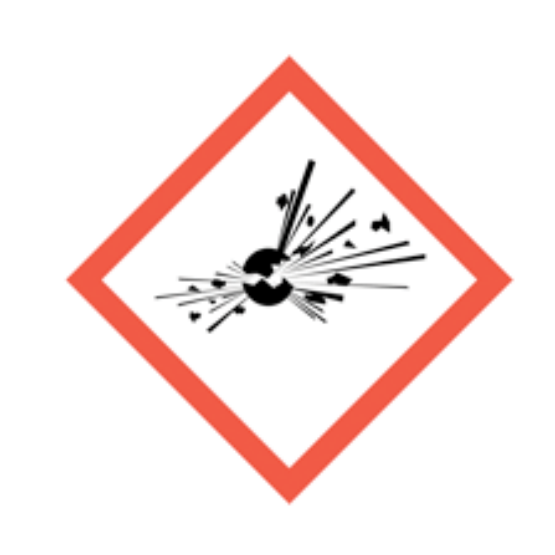
Exploding bomb
Explosive, self-reactive or organic peroxide hazards.
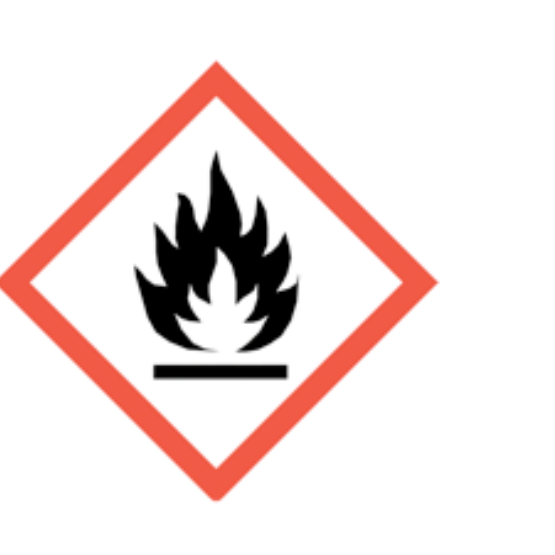
Flame
Flammable, self-heating or pyrophoric substances.
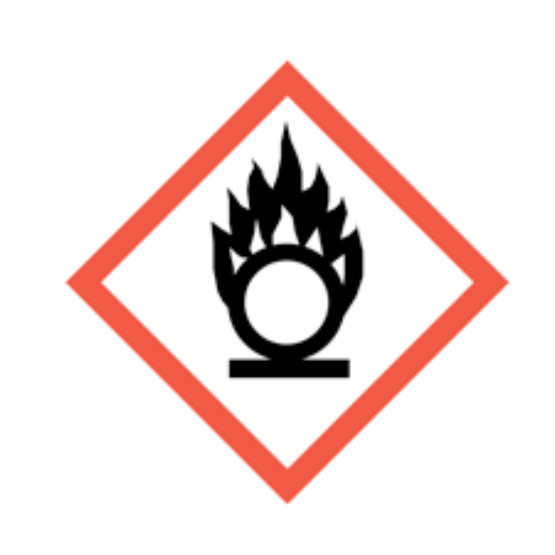
Flame over circle
Oxidising substances that can intensify fire.

Gas cylinder
Gas under pressure.
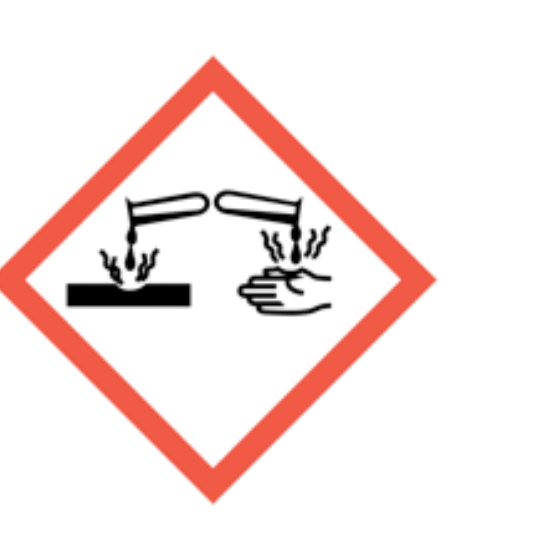
Corrosion
Skin burns, eye damage or corrosive to metals.
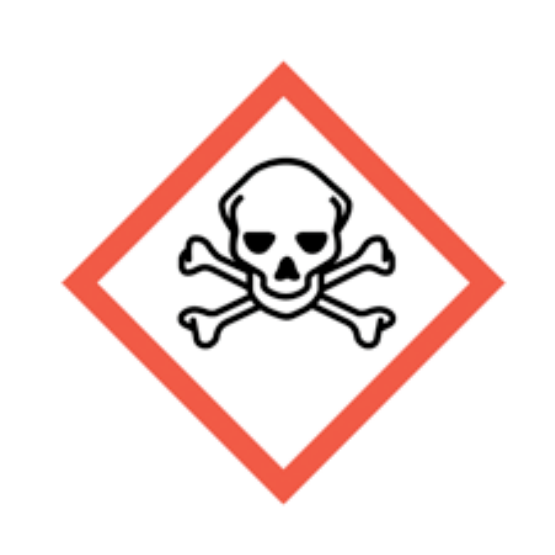
Skull and crossbones
Acute toxicity.

Exclamation mark
Irritation, harmful effects or skin sensitisation; some classifications cover drowsiness, dizziness or ozone-layer hazard. Read the actual hazard statements. Skin sensitisation differs from respiratory sensitisation.
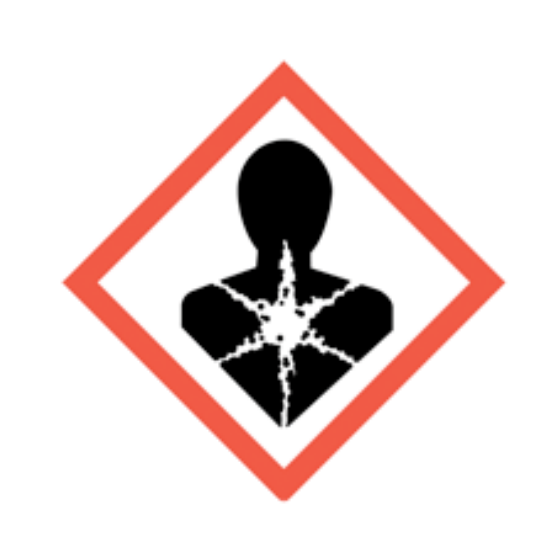
Health hazard
Serious health hazards, including organ damage, aspiration hazard, respiratory sensitisation, cancer and reproductive effects; some can follow a single exposure.
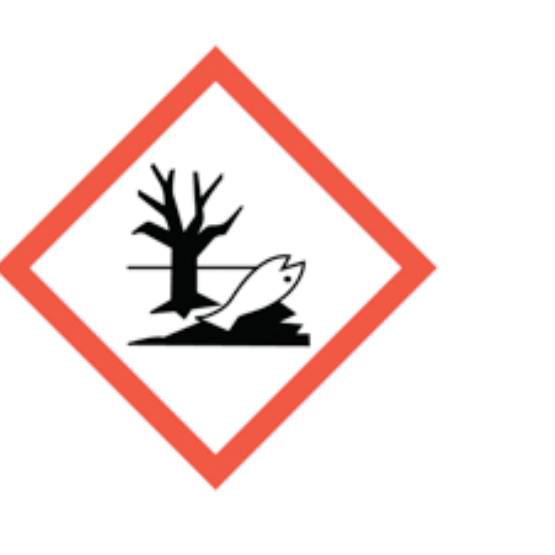
Environment
Hazardous to the aquatic environment.
What do the acronyms and key terms mean?
Acronyms should be understood before they are used in assessments, briefings, audits or learning answers.
Acronyms can exclude newer readers if they are not explained. This section keeps the main terms available at the end of the page so the article stays readable while still supporting learners and audit users.
| Acronym | Meaning | Plain-English use |
|---|---|---|
| COSHH | Control of Substances Hazardous to Health | Separate GB 2002 and Northern Ireland 2003 regulations for hazardous substances. |
| WEL | Workplace Exposure Limit | Airborne exposure limit listed in EH40 where set. |
| SDS | Safety Data Sheet | Supplier document describing chemical hazards and controls. |
| LEV | Local Exhaust Ventilation | Engineering control to capture contaminant near source. |
| RPE | Respiratory Protective Equipment | Equipment worn to protect against inhalation exposure. |
| OH | Occupational Health | Specialist work-health advice. |
| CAS | Chemical Abstracts Service | Registry identifier that helps distinguish chemical compounds. |
| RAMS | Risk assessment and method statement | Task plan; cannot replace compound-specific COSHH and line-breaking assessment. |
Unlock another resource
You have used this month’s two free downloads. Publish a post in your own words to unlock one more resource, or choose SHARE Individual for 10 downloads per month.
You decide whether to share. If you do, use the relevant platform disclosure tools and do not make claims you do not genuinely hold.