
SHARE Knowledge Hub
Occupational Exposure Limits and Workplace Exposure Limits
A workplace exposure limit is an airborne concentration averaged over a stated period, usually eight hours or 15 minutes. Great Britain lists legally binding WELs in EH40 under COSHH; Northern Ireland applies its separate COSHH route and uses EH40 as described by HSENI. A result below a limit is only one check: substance hazards, skin uptake, short peaks and whether controls work in real tasks still govern the decision.
Understanding Occupational Exposure Limits and Workplace Exposure Limits
A workplace exposure limit is an airborne concentration averaged over a stated period, usually eight hours or 15 minutes. Great Britain lists legally binding WELs in EH40 under COSHH; Northern Ireland applies its separate COSHH route and uses EH40 as described by HSENI. A result below a limit is only one check: substance hazards, skin uptake, short peaks and whether controls work in real tasks still govern the decision.
Why this matters at work
COSHH health surveillance is justified by risk and the availability of a valid way to detect an adverse effect. It can identify early harm or a control failure but is not a measurement of airborne concentration and cannot replace exposure control. A normal questionnaire or lung-function test does not demonstrate that a WEL was met during a task.
When an exposure result rises, inspect the source and LEV before blaming a worker. Define a stop or temporary-control rule for failure and verify a repair under comparable operation. Exposure monitoring is most valuable when tied to evidence of control state, so that future surveys can tell whether the process improved or merely ran at lower throughput.
How organisations manage this in practice
Carry existing controls forward until the replacement has been tested. Commission new engineering measures and define the monitoring needed to demonstrate performance. Consult operators and maintainers about whether the method will work at full speed and in breakdowns. A procurement sign-off should include the COSHH and exposure-control decision, not only the supplier SDS.
Sk flags that skin absorption can contribute materially to exposure. It does not quantify an allowable skin dose, rate a glove or turn a low airborne concentration into proof of overall control. Review splashes, wet clothing, contaminated gloves and surfaces, hand-to-mouth transfer and other relevant routes as part of COSHH assessment. Prefer closed handling, containment and splash prevention, with suitable hygiene and clean eating arrangements. Select residual gloves and clothing for the actual mixture, temperature, contact duration and task, using manufacturer evidence and a practical replacement and removal method. Observe actual work to find cuff entry or transfer to phones and door handles. Where competent advice supports biological monitoring, treat it as evidence of uptake with its own timing and interpretation limits. Keep air, skin-control and absorbed-exposure evidence distinct and review changes together. A satisfactory air result cannot close an unresolved liquid-contact problem.
Exposure changes across workers and days. Laboratory uncertainty is only one part of the total uncertainty; task selection, intermittent peaks, sampling duration and worker behaviour may matter more. A single value just below a WEL is not robust evidence that future exposures will remain below it. HSE good control practice calls for effective measures, maintenance and review, not a pass based on one borderline sample.
What are occupational exposure limits and workplace exposure limits?
An OEL is a broad term for an occupational limit. A GB WEL is the HSE-approved airborne limit in EH40 for a named substance and reference period. Use the current entry and its notes, not a remembered number or a safety data sheet (SDS) excerpt. HSE workplace exposure limits
Best-practice guide: Occupational Exposure Limits and Workplace Exposure Limits
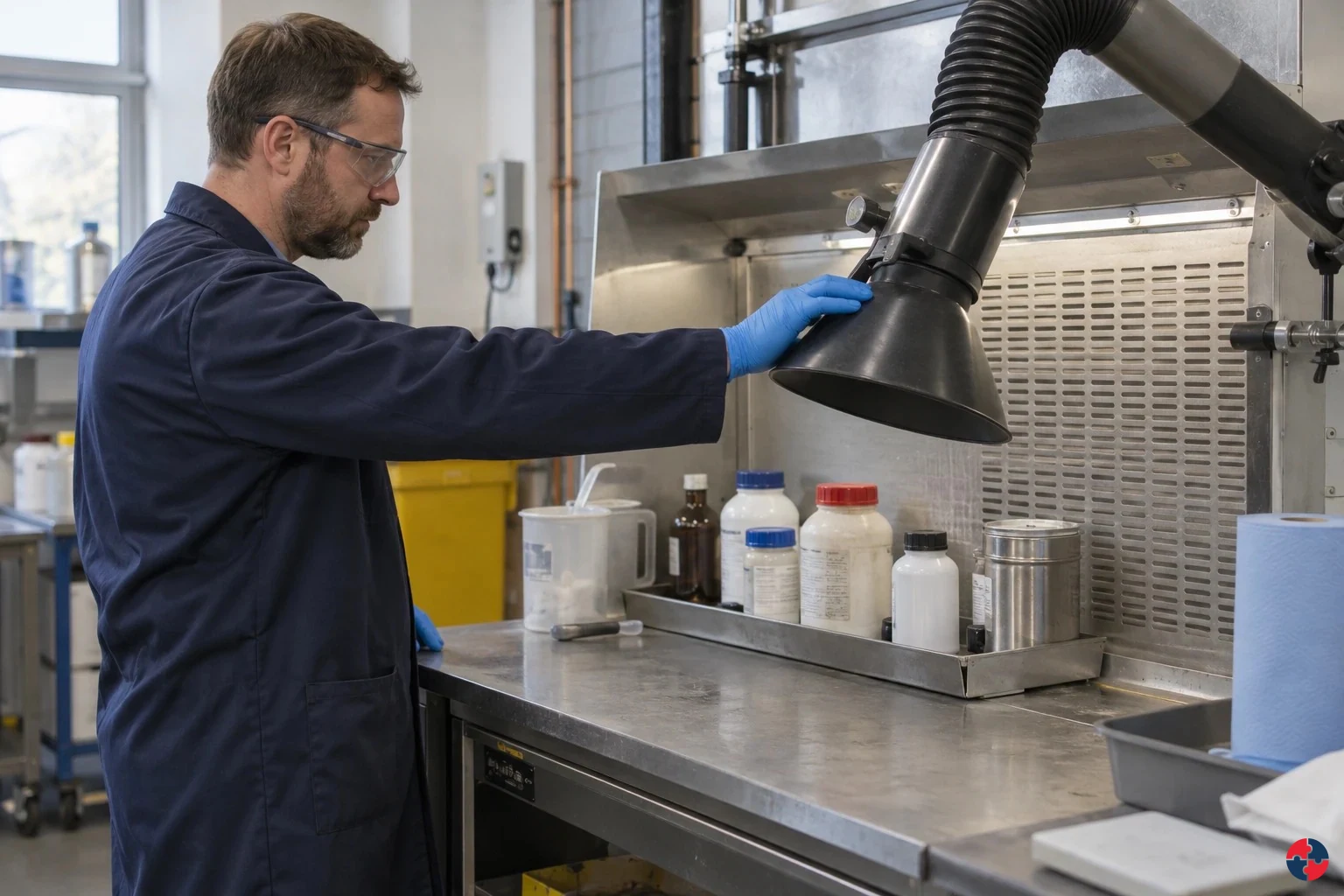
What are occupational exposure limits and workplace exposure limits?
An OEL is a broad term for an occupational limit. A GB WEL is the HSE-approved airborne limit in EH40 for a named substance and reference period. A workplace exposure limit is an airborne concentration averaged over a stated period, usually eight hours or 15 minutes.
Turn occupational exposure limits and workplace exposure limits knowledge into a decision
A workplace exposure limit is an airborne concentration averaged over a stated period, usually eight hours or 15 minutes. Great Britain lists legally binding WELs in EH40 under COSHH; Northern Ireland applies its separate COSHH route and uses EH40 as described by HSENI. COSHH register and EH40 checks.
the process operator worked example
Assessment: Identify welding fume, solvents, dust and by-products. Evidence / response: COSHH register and EH40 checks. Monitoring: Commission competent personal sampling for representative tasks. Evidence / response: Hygienist report and task notes.
exposure harm chain
Solvent cleaning in an open tank: Vapour reaches the breathing zone; some chemicals also enter through skin. Dusty cutting or mixing: Inhalable or respirable particles reach airways and may cause disease over time. Sensitising or carcinogenic agent: Even low or variable exposure may carry serious long-term risk.
Choose controls for occupational exposure limits and workplace exposure limits
Eliminate: Buy components ready for assembly or remove an unnecessary cleaning stage where cleanliness requirements permit. Reduce, including substitution: Trial a suitable aqueous or other lower-hazard cleaning process; validate component finish and any new corrosion or skin risk. Isolate: Use a designated cleaning station away from ignition sources and unrelated work; segregate contaminated items and waste. Control: Use compatible enclosed cleaning equipment and effective local extraction where required; minimise open liquid and splash paths. Control: Identify the product and contamination, control decanting and waste, and prohibit unassessed mixing or heating. Read the full control table for qualifications, ownership and verification. Use the actual task and applicable jurisdiction; existing technical approval remains unchanged.
Use the full occupational exposure limits and workplace exposure limits lesson
Use the full topic for the decision points, practical examples, detailed control tables and source scope. HSE guidance applies to Great Britain; use HSENI for the Northern Ireland route and the source’s stated jurisdiction. A simplified guide does not change the page’s technical-review or approval status.

Read all six steps as text
1. What are occupational exposure limits and workplace exposure limits?
An OEL is a broad term for an occupational limit.
- Avoid / redesign: Buy components ready for assembly or remove an unnecessary cleaning stage where cleanliness requirements permit.
- Control the task: Use a designated cleaning station away from ignition sources and unrelated work; segregate contaminated items and waste.
- Verify before release: If the hazardous step remains, keep it within the task assessment and select the stronger feasible remaining controls.
An OEL is a broad term for an occupational limit. A GB WEL is the HSE-approved airborne limit in EH40 for a named substance and reference period. A workplace exposure limit is an airborne concentration averaged over a stated period, usually eight hours or 15 minutes.
Apply it: Which part of this plan would you check at the workface before authorising the task?
2. Turn occupational exposure limits and workplace exposure limits knowledge into a decision
Use the evidence to improve the actual work arrangement.
- Change at source: Buy components ready for assembly or remove an unnecessary cleaning stage where cleanliness requirements permit.
- Make it observable: If the hazardous step remains, keep it within the task assessment and select the stronger feasible remaining controls.
- Keep useful evidence: COSHH register and EH40 checks.
A workplace exposure limit is an airborne concentration averaged over a stated period, usually eight hours or 15 minutes. Great Britain lists legally binding WELs in EH40 under COSHH; Northern Ireland applies its separate COSHH route and uses EH40 as described by HSENI. COSHH register and EH40 checks.
Apply it: What evidence would show that the change improves this task, rather than only completing a record?
3. the process operator worked example
Example: a practical application of the existing topic lesson.
- Assessment: Identify welding fume, solvents, dust and by-products.
- Monitoring: Commission competent personal sampling for representative tasks.
- Control: Upgrade extraction, enclosure, cleaning and RPE where needed.
Assessment: Identify welding fume, solvents, dust and by-products. Evidence / response: COSHH register and EH40 checks. Monitoring: Commission competent personal sampling for representative tasks. Evidence / response: Hygienist report and task notes.
Apply it: At which point would you hold this example, and what evidence would allow it to proceed?
4. exposure harm chain
Connect the task, the route to the person and the control that can fail.
- Solvent cleaning in an open tank: Vapour reaches the breathing zone; some chemicals also enter through skin.
- Dusty cutting or mixing: Inhalable or respirable particles reach airways and may cause disease over time.
- Sensitising or carcinogenic agent: Even low or variable exposure may carry serious long-term risk.
Solvent cleaning in an open tank: Vapour reaches the breathing zone; some chemicals also enter through skin. Dusty cutting or mixing: Inhalable or respirable particles reach airways and may cause disease over time. Sensitising or carcinogenic agent: Even low or variable exposure may carry serious long-term risk.
Apply it: Who could be exposed, including other trades, cleaners, maintainers and people nearby?
5. Choose controls for occupational exposure limits and workplace exposure limits
Start with the stronger practicable options and verify their effect.
- Eliminate: Buy components ready for assembly or remove an unnecessary cleaning stage where cleanliness requirements permit.
- Reduce, including substitution: Trial a suitable aqueous or other lower-hazard cleaning process; validate component finish and any new corrosion or skin risk.
- Isolate: Use a designated cleaning station away from ignition sources and unrelated work; segregate contaminated items and waste.
- Control: Use compatible enclosed cleaning equipment and effective local extraction where required; minimise open liquid and splash paths.
- Control: Identify the product and contamination, control decanting and waste, and prohibit unassessed mixing or heating.
Eliminate: Buy components ready for assembly or remove an unnecessary cleaning stage where cleanliness requirements permit. Reduce, including substitution: Trial a suitable aqueous or other lower-hazard cleaning process; validate component finish and any new corrosion or skin risk. Isolate: Use a designated cleaning station away from ignition sources and unrelated work; segregate contaminated items and waste. Control: Use compatible enclosed cleaning equipment and effective local extraction where required; minimise open liquid and splash paths. Control: Identify the product and contamination, control decanting and waste, and prohibit unassessed mixing or heating. Read the full control table for qualifications, ownership and verification. Use the actual task and applicable jurisdiction; existing technical approval remains unchanged.
Apply it: Which stronger option can be used here, and who will verify it before accepting the remaining risk?
6. Use the full occupational exposure limits and workplace exposure limits lesson
Follow the official sources below and retain the task-specific evidence.
- Official guidance: HSE's WEL explanation
- Official guidance: HSE EH40 table
- Task decision: COSHH register and EH40 checks.
Use the full topic for the decision points, practical examples, detailed control tables and source scope. HSE guidance applies to Great Britain; use HSENI for the Northern Ireland route and the source’s stated jurisdiction. A simplified guide does not change the page’s technical-review or approval status.
Apply it: Which official source and full-topic section will you use to resolve the next decision?
A WEL is not a diagnosis or a boundary between “safe” and “unsafe”. Air concentration depends on source strength, process, control performance and where the worker breathes. A measured 8-hour average can hide a short high peak; it also does not measure skin absorption or contaminated hands. Many substances have no WEL, and a missing limit is not evidence of safety.
The 8-hour time-weighted average (TWA) combines concentration and time across the reference period. A short-term exposure limit (STEL), where set, normally uses a 15-minute average. Check whether EH40 specifies ppm or mg/m³, inhalable or respirable fraction, skin notation, and the sampling method before interpreting a result. A competent occupational hygienist should design representative sampling and explain uncertainty and exposure groups.
| Source and task | Route and body effect | What a WEL can show | Limit and stop point |
|---|---|---|---|
| Solvent cleaning in an open tank | Vapour reaches the breathing zone; some chemicals also enter through skin. | Personal air sampling can estimate a TWA and, where set, a 15-minute average during a likely high-exposure task. | A low air result cannot dismiss skin uptake or a changed cleaning method. |
| Dusty cutting or mixing | Inhalable or respirable particles reach airways and may cause disease over time. | The relevant EH40 fraction and worker sampling can test one exposure route. | Failed extraction, visible release or unprotected bystanders need control review. |
| Sensitising or carcinogenic agent | Even low or variable exposure may carry serious long-term risk. | A WEL, if present, is a binding limit over its stated reference period within COSHH control. | Control exposure as low as reasonably practicable; do not run up to the limit. |
How should WELs be used in a COSHH assessment?
Start with the substance and task, then prevent or reduce release at source. Monitoring tests a defined question about exposure and control; it cannot make a weak process safe by producing one passing number.
An exposure limit does not replace the hierarchy. Eliminate or substitute a harmful substance where feasible, contain and capture release, organise the work and use suitable RPE for residual risk. Record the sampling question and who may hold or release work. HSE hierarchy of controls
A competent monitoring plan defines similar exposure groups, tasks, shift and peak variability, sampling location and duration, analytical method, detection limits and interpretation. Include cleaning, maintenance and abnormal but foreseeable operation. Compare with current EH40 in the correct units and consider other routes, combined exposures and health surveillance separately. Repeat or redesign measurement after a material change or control failure.
Use the HSE hierarchy for this task: eliminate the hazard where possible, substitute, use engineering controls, organise the work and use suitable PPE for residual risk. The exact choices require a task-specific assessment and competent verification. HSE hierarchy of controls
How do you read a real EH40 entry?
Read the substance, units, averaging period and any notation together. For example, the HSE EH40 table lists sulphur dioxide (CAS 7446-09-5) at 0.5 ppm (1.3 mg/m³) over eight hours and 1 ppm (2.7 mg/m³) over 15 minutes in Great Britain. These are different tests of control, not interchangeable numbers or targets.
For an illustrative arithmetic exercise only, suppose a valid eight-hour personal sample represents two hours at 0.8 ppm and six hours at 0.2 ppm. The time-weighted average is ((2 × 0.8) + (6 × 0.2)) ÷ 8 = 0.35 ppm. That result is below the listed eight-hour WEL. If a separate representative 15-minute sample during a task were 1.2 ppm, it would exceed the listed short-term limit even though the full-shift average is lower. Do not combine ppm and mg/m³ values or compare a short task reading directly with an eight-hour limit. HSE's WEL explanation sets out the role of exposure limits.
Investigate the short peak, assess all relevant exposure routes and the reliability of the process controls, then decide whether work should stop or the method change. A hygienist must test whether the samples, duration and uncertainty represent the actual workers and tasks; a calculation alone cannot release work. Check the current EH40 entry again before using a number in an assessment. Northern Ireland dutyholders must confirm the applicable NI COSHH route and current limit separately. HSE's COSHH overview explains why control is required beyond a WEL comparison.
How can a result below the WEL still require action?
A result below an 8-hour WEL can coexist with poor control. The manager must test whether the sample represented the higher-exposure task and whether other routes and workers were included. HSE WEL
In a refurbishment, a contractor cuts masonry while on-tool extraction intermittently blocks. A hygienist samples a quieter day and obtains an 8-hour result below the applicable dust WEL. On another shift, visible dust escapes, dry sweeping occurs and adjacent trades work nearby. That evidence defeats the conclusion that a single low number proves adequate control. Hold the dusty method, repair extraction, use controlled cleaning and protect others before competent re-sampling under representative conditions.
The same logic applies in a factory cleaning solvent tanks: a full-shift average can be low despite a short manual-cleaning peak. The purchaser, engineer, supervisor and hygienist must compare an enclosed/low-release method with open handling, check skin notation, and verify any remaining exposure. The decision and its limitations belong in the COSHH record, not solely in a laboratory report.
Why is a WEL not a target?
A WEL is a legal limit and control benchmark, not a level that employers should aim to reach.
Good COSHH control starts with preventing or reducing exposure as far as reasonably practicable. Working just below a WEL can still be poor practice where better controls are available, where exposure varies, or where the substance is a carcinogen, mutagen or asthmagen.
Managers should ask whether the exposure can be eliminated, substituted, enclosed or captured better, not only whether the last sample passed.
| Misuse | Why it is weak | Better practice |
|---|---|---|
| Treating WEL as safe line | Individual susceptibility and uncertainty remain. | Use WEL as one decision point. |
| Sampling only easy days | Results do not represent real exposure. | Sample representative and peak tasks. |
| Ignoring skin uptake | Air result may miss an important route. | Check skin notation and biological monitoring needs. |
| Ignoring ALARP substances | Carcinogens, mutagens and asthmagens need stronger reduction. | Control exposure as low as reasonably practicable. |
| Using old limits | EH40 can be updated. | Check current EH40 before decisions. |
What should an exposure-monitoring evidence pack contain?
A monitoring report should explain the task, method, result and control implications clearly enough for managers to act.
A useful report is not just a table of numbers. It should describe process conditions, materials, workers sampled, sampling time, tasks observed, controls in use, defects, uncertainty, comparison standard and practical recommendations.
If the report does not help managers decide what to change, the monitoring has not yet become useful risk management evidence.
| Evidence item | What it should show | Assurance question |
|---|---|---|
| Substance identity | The exact substance, mixture or generated contaminant. | Is EH40 checked against the right substance? |
| Sampling strategy | Who was sampled, when, why and for which exposure group. | Was the sample representative? |
| Task observations | Work method, controls, defects and non-routine tasks. | Do numbers match work as done? |
| Analytical method | Method and laboratory suitability. | Is the method appropriate for the WEL? |
| Result interpretation | Comparison with WEL, uncertainty and variability. | Does the report explain confidence and limits? |
| Recommendations | Practical control actions and priority. | Are actions owned, dated and verified? |
How do 8-hour TWA and 15-minute STEL results change the decision?
Eight-hour and 15-minute limits answer different questions. A below-limit shift average does not excuse a short peak above an applicable STEL.
This learner calculation uses illustrative limits, not an EH40 entry for a real substance. Suppose the 8-hour WEL is 100 ppm and the 15-minute STEL is 150 ppm. The worker has 2 hours at 40 ppm, 1 hour at an approximately steady 180 ppm during manual cleaning, then 5 hours at 10 ppm. The 8-hour TWA is ((2 × 40) + (1 × 180) + (5 × 10)) ÷ 8 = 38.75 ppm. A representative 15-minute period within that steady cleaning hour is about 180 ppm and exceeds the illustrative STEL.
Stop or redesign the cleaning step, check enclosure and extraction, brief exposed staff, and obtain competent monitoring after control changes. If the 180 ppm figure were merely a one-hour average with unknown variation, it would not locate or quantify an individual 15-minute result, but at least one of the four quarters must exceed 150 ppm. That is already evidence requiring action; do not resume while waiting for short-duration sampling. The hygienist must obtain representative samples after control correction. Always retrieve the actual current EH40 entry, units and notation before a real decision.
Extended-shift boundary. The standard eight-hour TWA uses exposure accumulated in the relevant 24-hour period divided by eight hours, rather than automatically by the shift length. A hypothetical 12 hours at 10 ppm contributes (12 × 10) ÷ 8 = 15 ppm to the eight-hour TWA. Do not assume unsampled hours are zero or use a universal shift-adjustment formula; a competent hygienist must apply the actual substance’s requirements. An instantaneous peak and a 15-minute average are different measurements; a low average does not excuse an uncontrolled brief release.
When should exposure monitoring or review be escalated?
Escalation is needed when exposure is uncertain, controls are weak, the substance is high-hazard, work changes or health surveillance suggests exposure is not adequately controlled. HSE EH40 HSE G409
Monitoring is not always needed, but it becomes important where exposure cannot be judged confidently from existing information or where a legal, technical or health-surveillance trigger exists.
Escalation should also occur where workers report symptoms, where LEV or RPE fails, where a substance is newly introduced, where maintenance changes exposure, or where results are close to a WEL and variability is high.
| Trigger | Immediate action | Follow-up |
|---|---|---|
| New hazardous substance | Check SDS, EH40 and COSHH assessment. | Substitution and monitoring decision. |
| Visible dust, fume or vapour | Review controls and stop if uncontrolled. | Occupational hygiene advice where needed. |
| Result near or above WEL | Reduce exposure and review task. | Repeat monitoring after control changes. |
| Carcinogen, mutagen or asthmagen | Apply ALARP thinking. | Higher-control standard and surveillance review. |
| Skin notation or ingestion route | Do not rely on air result alone. | Hygiene, PPE and biological monitoring review. |
| Health surveillance concern | Act on OH advice. | Review exposure group and controls. |
Where do exposure-limit decisions fail?
They fail when a number is treated as a substitute for understanding the task, route, control quality and health effect.
A common failure is certificate-based confidence: the file contains a monitoring report, but the work method has changed, LEV has degraded and the result is no longer representative.
Another failure is forgetting that WELs are mainly airborne limits. Skin contact, ingestion, biological effect and sensitisation may need additional controls and surveillance.
What evidence shows occupational exposure limits and workplace exposure limits is being managed?
A credible exposure file names the substance and current EH40 entry, unit, 8-hour or 15-minute reference period, process, controls, sampling strategy, representative tasks, worker group and uncertainty.
Keep the original results, calculation, competent interpretation and action record together; a single low sample is not a certificate of safe control.
How should occupational exposure limits and workplace exposure limits be assured?
Watch the highest-exposure task while the local exhaust ventilation is running, then compare the observed practice with the sampling plan and maintenance records.
Challenge any result collected on an unusually easy day, any unexplained peak, and any exposure route that air monitoring misses. Re-sample or redesign controls when changes make the old evidence unrepresentative.
Which GB and Northern Ireland duties apply?
Great Britain uses COSHH 2002 and HSE-approved WELs in EH40. Northern Ireland uses COSHH (Northern Ireland) 2003; HSENI says EH40 WELs are legally binding there too, through that separate legal route.
Adequate control includes good control practice, compliance with any applicable WEL and reduction of exposure to carcinogens, mutagens and asthmagens as low as reasonably practicable. Monitoring may be needed to show compliance or that controls work, but the assessment also covers inhalation, skin and ingestion. Check the current EH40 edition and amendments before using a limit. HSE WEL HSENI EH40
| Location | Regulatory and operational route | Boundary |
|---|---|---|
| Great Britain | COSHH 2002 with HSE-approved WELs in current EH40; apply good control practice and competent monitoring where needed. | An EH40 number applies to a named substance, units and averaging period, not a whole task. HSE WEL HSE EH40 |
| Northern Ireland | COSHH (NI) 2003 and HSENI guidance; EH40 WELs are used under the NI route. | Do not present GB COSHH 2002 as the NI regulation. HSENI EH40 HSENI COSHH |
| Both jurisdictions | Consider all routes, maintain controls, train workers and act on peak or variable exposure. | An air result cannot rule out skin uptake or future control failure. HSE GOOD PRACTICE HSENI COSHH |
How should management arrangements verify controls?
Assign an owner, involve workers, check the control in use and act on failures before returning to routine work.
HSE’s Plan, Do, Check, Act guidance provides the government management route for this topic. Apply it to the actual task, equipment, people and jurisdiction, then keep the verification and corrective-action record. Standards-specific claims are held until their rights and competent review are resolved. HSE Plan, Do, Check, Act
What training and competence are needed?
Training should let people make a correct exposure decision, including when to stop work and when to call a hygienist. A calculator exercise alone does not qualify someone to design sampling or certify control.
Recheck competence after a new substance, process change, abnormal sample, failed extraction, changed EH40 entry or poor observed practice. Record the task test and assessor rather than a generic certificate expiry. Explain results to workers in plain language, including uncertainty and the action taken.
| Role | Learning and practical test | Assessor and evidence | Recheck trigger |
|---|---|---|---|
| Workers and nearby staff | Identify release, failed controls, symptoms and stop/report route. | Supervisor checks a scenario and observes work; briefing record. | New task, substance or missed signal. |
| Operators and maintenance | Use enclosure/LEV and safe cleaning; demonstrate abnormal-release hold. | Competent supervisor observes actual task; authorisation record. | Equipment, method or defect change. |
| Supervisors and managers | Read WEL, TWA/STEL, units and skin notation at a decision level; challenge unrepresentative samples. | Hygienist/safety lead tests a case; action record. | Unexpected result or process change. |
| Occupational hygienists | Design representative sampling and interpret uncertainty, mixed routes and trends. | Professionally competent lead reviews plan/report; technical record. | New standard, method or exposure pattern. |
| Purchasers and leaders | Question substitutions and fund engineering controls rather than accepting a borderline result. | Technical owner reviews procurement/control decision; funding record. | Supplier change or repeated high exposure. |
How could Crownway Fuels Ltd manage this in practice?

Crownway Fuels Ltd can manage WEL decisions by turning monitoring results into engineering, hygiene and health-surveillance action.
In this fuel and process-maintenance business, workers weld, grind, clean parts, use solvents and repair dusty plant across variable jobs. Exposure limits only help if Crownway knows what substances are present, samples representative work, interprets uncertainty and turns findings into better controls.
At a fuel or maintenance site, the business should approve the actual product and check its current EH40 entry before commissioning sampling. The hygienist defines which tasks and workers the 8-hour or 15-minute result represents, while operations checks whether enclosure and ventilation worked on that shift. A measured result is discussed with its units, skin notation and uncertainty; the manager then assigns a control action and a repeat check where the evidence is not sufficient. HSE workplace exposure limits
| Management element | How the business would manage it | Evidence to review |
|---|---|---|
| Assessment | Identify welding fume, solvents, dust and by-products. | COSHH register and EH40 checks. |
| Monitoring | Commission competent personal sampling for representative tasks. | Hygienist report and task notes. |
| Control | Upgrade extraction, enclosure, cleaning and RPE where needed. | Control verification records. |
| Review | Repeat monitoring after changes and review health trends. | Management review and action closure. |
How can the hierarchy of controls control solvent exposure before checking performance against exposure limits?
How can the ERICPD hierarchy of controls control solvent exposure before checking performance against exposure limits?

| Control level | Control for this activity | Owner and verification | Stop / restart decision |
|---|---|---|---|
| Eliminate | Buy components ready for assembly or remove an unnecessary cleaning stage where cleanliness requirements permit. | Task owner verifies that the proposed change removes the named hazardous step, including foreseeable cleaning, maintenance and work transferred elsewhere. | If the hazardous step remains, keep it within the task assessment and select the stronger feasible remaining controls. |
| Reduce, including substitution | Trial a suitable aqueous or other lower-hazard cleaning process; validate component finish and any new corrosion or skin risk. | Competent task/process owner validates suitability, compatibility and new hazards against the actual operating requirements before the alternative is adopted. | Reject an alternative if its performance is unproved or its new hazards are unresolved. |
| Isolate | Use a designated cleaning station away from ignition sources and unrelated work; segregate contaminated items and waste. | Supervisor checks the actual boundary, affected people and connected work; verify separation or isolation before allowing access. | Hold or stop for unknown solvent, failed extraction, uncontrolled vapour or incompatible waste. |
| Control: physical safeguards | Use compatible enclosed cleaning equipment and effective local extraction where required; minimise open liquid and splash paths. | Competent equipment/process owner checks product identity, enclosure, extraction, waste containment and cleaning quality. | Hold or stop for unknown solvent, failed extraction, uncontrolled vapour or incompatible waste. |
| Control: work method and response | Identify the product and contamination, control decanting and waste, and prohibit unassessed mixing or heating. | Supervisor confirms the work limits, competent cover, communication and stop/restart authority with the people doing this activity. | Hold work when the agreed limits, competent cover or effective communication cannot be maintained. |
| PPE | Select gloves, eye protection and any RPE for the actual formulation; a particulate mask does not protect against solvent vapour. | Assessor confirms whether personal protection is needed and checks suitability, condition, compatibility and any required fit evidence. | Do not use unsuitable protection or rely on PPE to continue after an essential source control fails. |
| Discipline | Maintain seals and extraction, check cleaning quality and investigate exposure or fire-control defects before restarting. | Release only after maintenance owner accepts the cleaning trial and verified controls. Retain verification and unresolved restrictions at handover. | Keep the task on hold until required reinstatement evidence and unresolved defects are accepted by the responsible owner. |
How can the ISO 45001 hierarchy of controls control solvent exposure before checking performance against exposure limits?

| Control level | Control for this activity | Owner and verification | Stop / restart decision |
|---|---|---|---|
| Elimination | Buy components ready for assembly or remove an unnecessary cleaning stage where cleanliness requirements permit. | Task owner verifies that the proposed change removes the named hazardous step, including foreseeable cleaning, maintenance and work transferred elsewhere. | If the hazardous step remains, keep it within the task assessment and select the stronger feasible remaining controls. |
| Substitution | Trial a suitable aqueous or other lower-hazard cleaning process; validate component finish and any new corrosion or skin risk. | Competent task/process owner validates suitability, compatibility and new hazards against the actual operating requirements before the alternative is adopted. | Reject an alternative if its performance is unproved or its new hazards are unresolved. |
| Engineering controls | Use a designated cleaning station away from ignition sources and unrelated work; segregate contaminated items and waste. | Supervisor checks the actual boundary, affected people and connected work; verify separation or isolation before allowing access. | Hold or stop for unknown solvent, failed extraction, uncontrolled vapour or incompatible waste. |
| Engineering controls | Use compatible enclosed cleaning equipment and effective local extraction where required; minimise open liquid and splash paths. | Competent equipment/process owner checks product identity, enclosure, extraction, waste containment and cleaning quality. | Hold or stop for unknown solvent, failed extraction, uncontrolled vapour or incompatible waste. |
| Administrative controls | Identify the product and contamination, control decanting and waste, and prohibit unassessed mixing or heating. | Supervisor confirms the work limits, competent cover, communication and stop/restart authority with the people doing this activity. | Hold work when the agreed limits, competent cover or effective communication cannot be maintained. |
| PPE | Select gloves, eye protection and any RPE for the actual formulation; a particulate mask does not protect against solvent vapour. | Assessor confirms whether personal protection is needed and checks suitability, condition, compatibility and any required fit evidence. | Do not use unsuitable protection or rely on PPE to continue after an essential source control fails. |
| Administrative controls | Maintain seals and extraction, check cleaning quality and investigate exposure or fire-control defects before restarting. | Release only after maintenance owner accepts the cleaning trial and verified controls. Retain verification and unresolved restrictions at handover. | Keep the task on hold until required reinstatement evidence and unresolved defects are accepted by the responsible owner. |
Chemical hazard symbols: what do they mean?
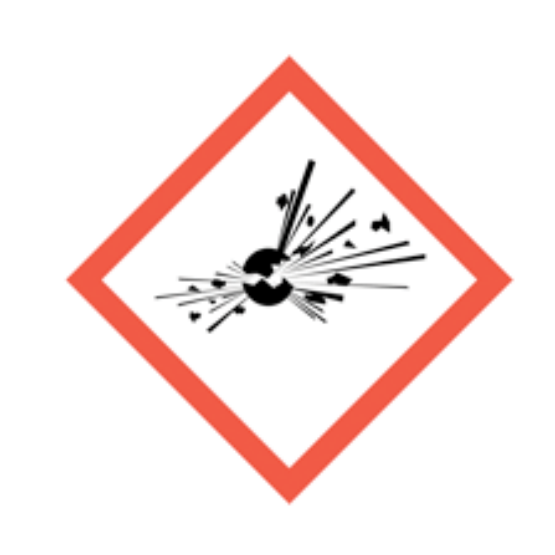
Exploding bomb
Explosive, self-reactive or organic peroxide hazards.
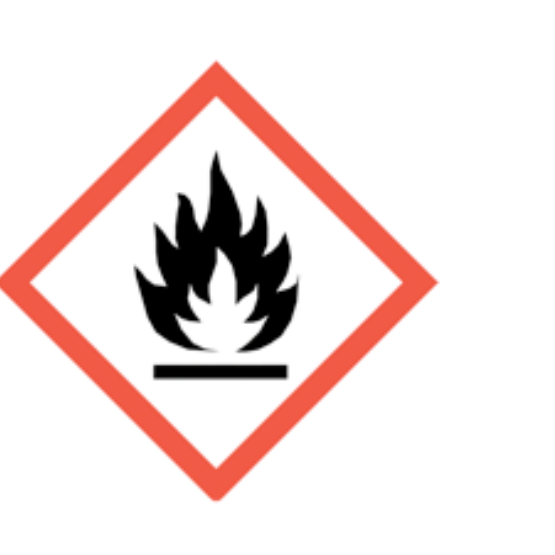
Flame
Flammable, self-heating or pyrophoric substances.
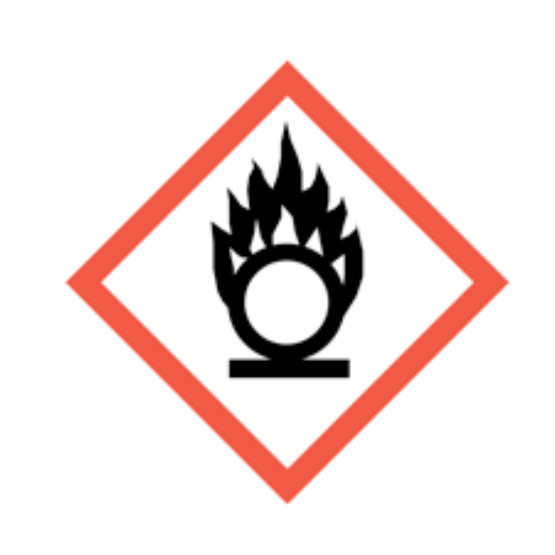
Flame over circle
Oxidising substances that can intensify fire.
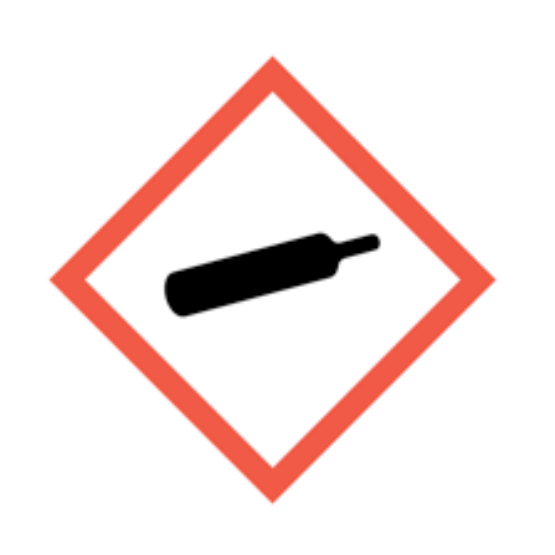
Gas cylinder
Gas under pressure.
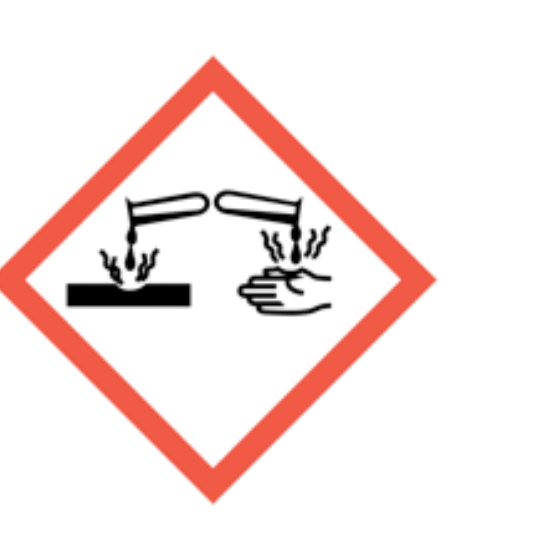
Corrosion
Skin burns, eye damage or corrosive to metals.
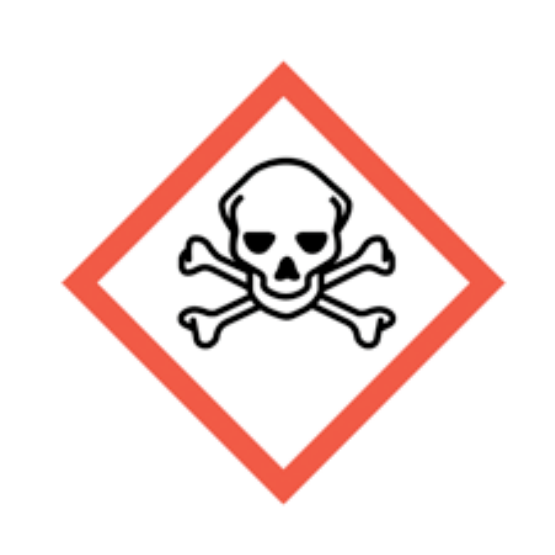
Skull and crossbones
Acute toxicity.
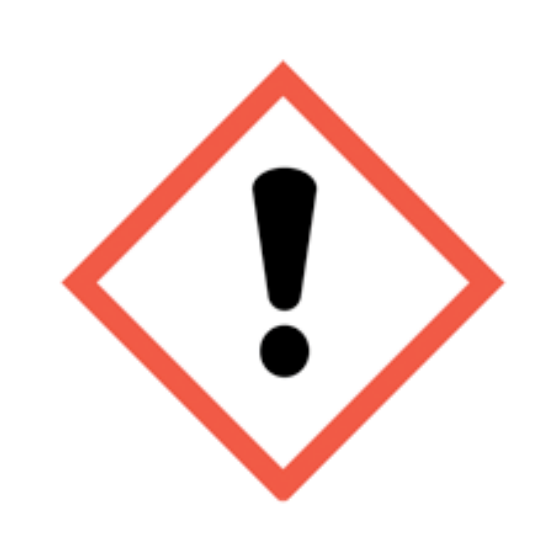
Exclamation mark
Irritation, harmful effects or skin sensitisation; some classifications cover drowsiness, dizziness or ozone-layer hazard. Read the actual hazard statements. Skin sensitisation differs from respiratory sensitisation.
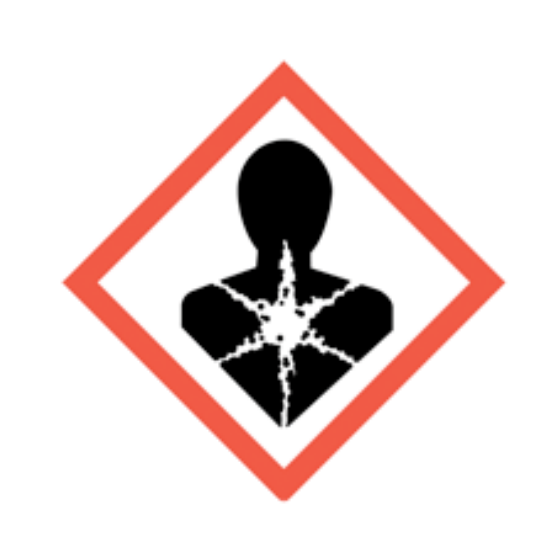
Health hazard
Serious health hazards, including organ damage, aspiration hazard, respiratory sensitisation, cancer and reproductive effects; some can follow a single exposure.
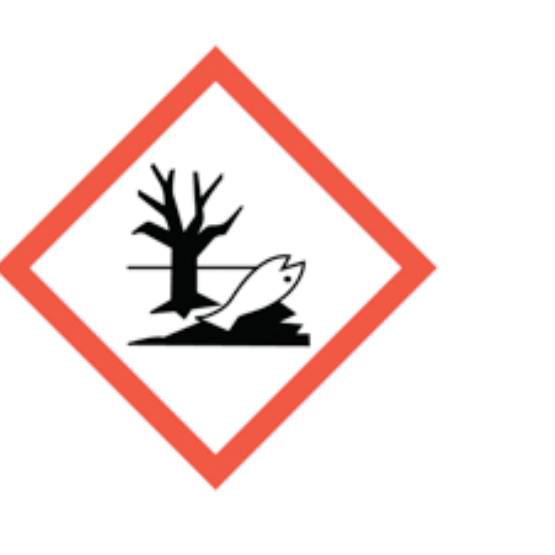
Environment
Hazardous to the aquatic environment.
What do the acronyms and key terms mean?
Acronyms should be understood before they are used in assessments, briefings, audits or learning answers.
Acronyms can exclude newer readers if they are not explained. This section keeps the main terms available at the end of the page so the article stays readable while still supporting learners and audit users.
| Acronym | Meaning | Plain-English use |
|---|---|---|
| ALARP | As Low As Reasonably Practicable | Risk-reduction principle used especially for higher-hazard health risks. |
| COSHH | Control of Substances Hazardous to Health | GB COSHH 2002 and separate NI COSHH 2003 hazardous-substance regulations. |
| EH40 | Workplace Exposure Limits guidance | HSE publication listing GB workplace exposure limits used with COSHH. |
| HSE | Health and Safety Executive | Great Britain workplace health and safety regulator. |
| HSWA | Health and Safety at Work etc. Act 1974 | General work-safety statute for Great Britain; Northern Ireland uses its 1978 Order. |
| LEV | Local Exhaust Ventilation | Engineered extraction that captures airborne contaminant close to source. |
| MHSWR | Management of Health and Safety at Work Regulations 1999 | GB 1999 management regulations; Northern Ireland has separate 2000 regulations. |
| OEL | Occupational Exposure Limit | Generic term for occupational exposure limits used internationally. |
| OH | Occupational Health | Competent health advice focused on work impact, prevention, fitness, adjustments and rehabilitation. |
| PPE | Personal Protective Equipment | Equipment worn as a last line of protection. |
| RPE | Respiratory Protective Equipment | Respiratory protection used where inhalation exposure remains after higher controls. |
| STEL | Short-Term Exposure Limit | Limit normally averaged over a short reference period, commonly 15 minutes. |
| TWA | Time-Weighted Average | Average exposure over a defined reference period. |
| WEL | Workplace Exposure Limit | GB legal occupational exposure limit for airborne concentration of a hazardous substance. |
| SDS | Safety data sheet | Supplier hazard information that must be checked against the real task. |
Unlock another resource
You have used this month’s two free downloads. Publish a post in your own words to unlock one more resource, or choose SHARE Individual for 10 downloads per month.
You decide whether to share. If you do, use the relevant platform disclosure tools and do not make claims you do not genuinely hold.