SHARE Knowledge Hub
Safe Movement of People and Vehicles in the Workplace
Workplace transport is the movement and use of vehicles and mobile plant in yards, warehouses, depots, forecourts and other work areas. People can be struck or crushed where their routes meet moving vehicles; unstable loads, falls from vehicles and overturns cause further serious injuries. Safe movement depends on separating people from vehicles, matching each vehicle and load to its route, and coordinating drivers and deliveries.
Content owner: SHARE Knowledge Hub editorial team.
Understanding Safe Movement of People and Vehicles in the Workplace
Safe movement of people and vehicles means designing, operating and maintaining traffic routes so a person is not exposed to a moving vehicle, its load or a crush point. The priority is to remove avoidable movements and physically separate people and vehicles. Crossings, reversing and loading need deliberate control because a routine route can become fatal when visibility, timing or access changes.
Why this matters at work
E avoid parking on gradients or live routes; R minimise unattended exposure; I designated bays and barriers; C brake, manufacturer parking state, isolation, compatible chocks and key control; P no primary reliance; D authorised parking, supervision and verified defect closure.
E select lower-risk system and location; R limit inventory and ignition exposure; I segregate charging, parking and repair; C detection, ventilation, compatible equipment and competent isolation; P arc, chemical or thermal protection where required; D fuel-specific rules.
How organisations manage this in practice
Configure seating, controls, visibility and task demands so drivers can maintain control without strain or awkward movement. State the movement, people, vehicle or plant, operating conditions, required standard and accountable controller. Warnings, high-visibility clothing and training support engineered separation but do not replace route design, barriers or exclusion.
Prevent rollover through stable vehicle selection, route design, speed, load control and operator restraint. State the movement, people, vehicle or plant, operating conditions, required standard and accountable controller. Workers, drivers, visiting hauliers, contractors, pedestrians and representatives hold different parts of the evidence and should be involved.
For operational use, trace a representative journey from gate to task and exit, including pedestrian, loading, defect and emergency interfaces. Define the route boundary, interfaces, peak and unusual periods, visibility, speed, load, ground and foreseeable pedestrian behaviour. Reassess after layout, vehicle, load, staffing, schedule, contractor, weather or process change and after any control failure or near miss.
The evidence set should include change request, movement comparison, swept-path check, consultation, temporary plan, readiness test and review. Test coverage, competence, current condition, contrary evidence and performance at the point of conflict. Do not use absence of injury, a low matrix score or driver familiarity as evidence that the layout and controls are adequate.
Use a change permit or equivalent review for significant temporary alterations. Mark the physical route, not only a revised drawing. Check plant access, contractor deliveries and emergency egress, and inspect at night or in adverse weather if the diversion remains open. A temporary layout can become semi-permanent; review it when work extends.
What is workplace transport and how does it cause harm?
Workplace transport is the movement and use of vehicles or mobile plant at work. Keep people out of vehicle paths, choose suitable vehicles and make sure drivers can operate them safely in the actual setting.
Best-practice guide: Safe Movement of People and Vehicles in the Workplace
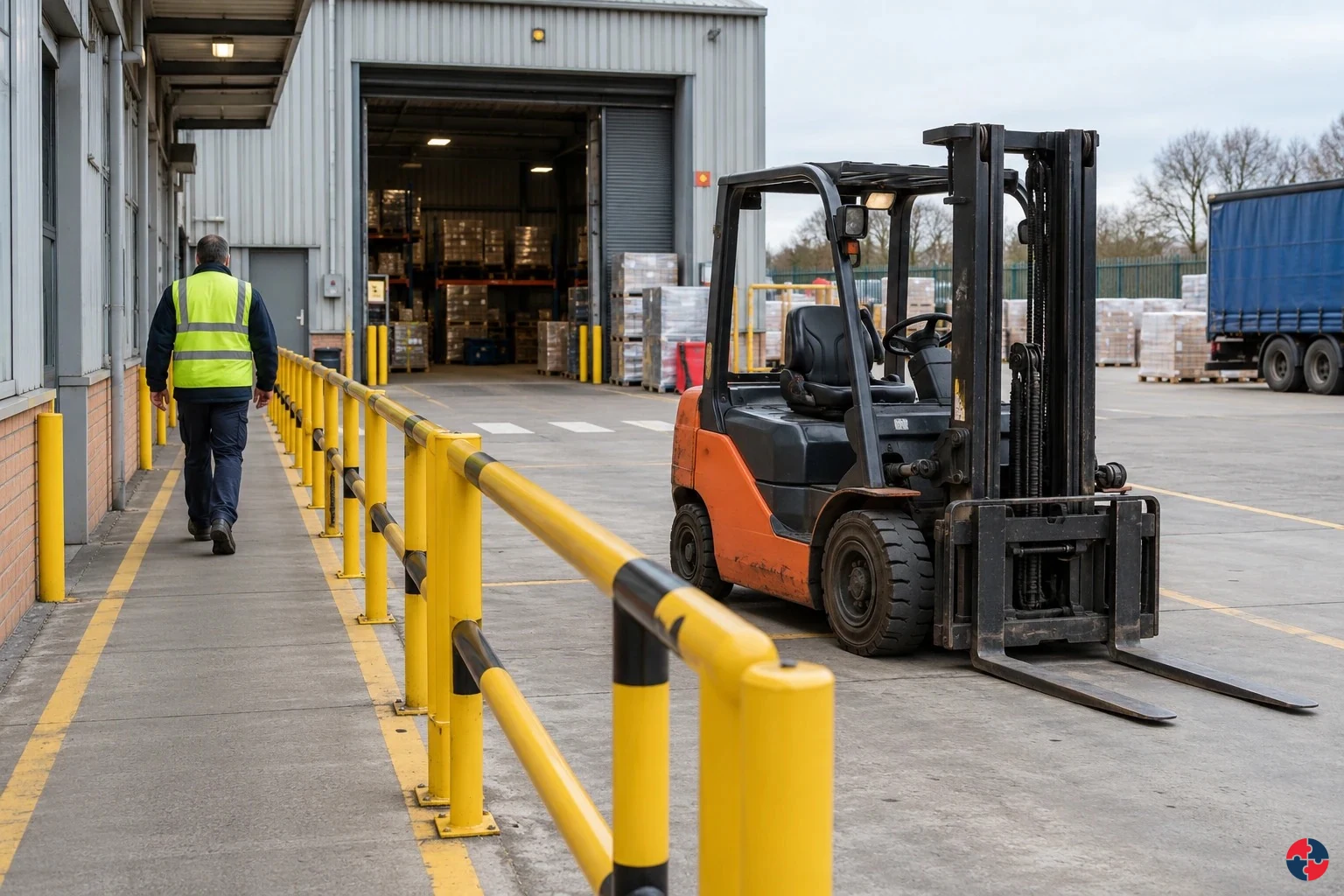
What is workplace transport and how does it cause harm?
Workplace transport is the movement and use of vehicles or mobile plant at work. Keep people out of vehicle paths, choose suitable vehicles and make sure drivers can operate them safely in the actual setting. Workplace transport is the movement and use of vehicles and mobile plant in yards, warehouses, depots, forecourts and other work areas.
Turn safe movement of people and vehicles in the workplace knowledge into a decision
Workplace transport is the movement and use of vehicles and mobile plant in yards, warehouses, depots, forecourts and other work areas. People can be struck or crushed where their routes meet moving vehicles; unstable loads, falls from vehicles and overturns cause further serious injuries. Retain the delivery instructions, load information, route/bay assessment, equipment checks, driver briefing, defects and any changed-method authorisation.
A pallet delivery in a busy warehouse yard
The operator follows the agreed sequence within the equipment limits. Keep people out of the load and vehicle operating zone. The loading team confirms people and equipment are clear, remaining load is secure, doors and vehicle equipment are safe and the exit route is available.
Mechanism, likely harm, warning and stop decision
Exposure route 1: Vehicle enters a pedestrian path; impact, crushing or run-over can cause major fractures, internal injury or death. Exposure route 2: Load shifts or falls during travel or unloading; impact can cause head injury, crush injury or death. Exposure route 3: A person climbs onto or leaves a vehicle; slipping or falling can cause fractures, head or spinal injury.
Choose controls for safe movement of people and vehicles in the workplace
Elimination: Move pedestrian access and picking away from the loading route so the crossing is no longer needed. Engineering controls: Replace reversing-dependent unloading with a suitable drive-through arrangement after checking vehicle swept paths. Engineering controls: Install suitable fixed separation and protected crossing points; design gates and routes to keep people out of the truck envelope. Engineering controls: Check barrier strength, visibility, impact exposure and safe bay access for the actual trucks and loads. Administrative controls: Agree delivery slots, driver waiting positions and crossing rules; stop vehicle movement before anyone enters the loading zone. Read the full control table for qualifications, ownership and verification. Use the actual task and applicable jurisdiction; existing technical approval remains unchanged.
Use the full safe movement of people and vehicles in the workplace lesson
Use the full topic for the decision points, practical examples, detailed control tables and source scope. HSE guidance applies to Great Britain; use HSENI for the Northern Ireland route and the source’s stated jurisdiction. A simplified guide does not change the page’s technical-review or approval status.

Read all six steps as text
1. What is workplace transport and how does it cause harm?
Workplace transport is the movement and use of vehicles or mobile plant at work.
- Avoid / redesign: Move pedestrian access and picking away from the loading route so the crossing is no longer needed.
- Control the task: Install suitable fixed separation and protected crossing points; design gates and routes to keep people out of the truck envelope.
- Verify before release: If the hazardous step remains, keep it within the task assessment and select the stronger feasible remaining controls.
Workplace transport is the movement and use of vehicles or mobile plant at work. Keep people out of vehicle paths, choose suitable vehicles and make sure drivers can operate them safely in the actual setting. Workplace transport is the movement and use of vehicles and mobile plant in yards, warehouses, depots, forecourts and other work areas.
Apply it: Which part of this plan would you check at the workface before authorising the task?
2. Turn safe movement of people and vehicles in the workplace knowledge into a decision
Use the evidence to improve the actual work arrangement.
- Change at source: Move pedestrian access and picking away from the loading route so the crossing is no longer needed.
- Make it observable: If the hazardous step remains, keep it within the task assessment and select the stronger feasible remaining controls.
- Keep useful evidence: Retain the delivery instructions, load information, route/bay assessment, equipment checks, driver briefing, defects and any changed-method authorisation.
Workplace transport is the movement and use of vehicles and mobile plant in yards, warehouses, depots, forecourts and other work areas. People can be struck or crushed where their routes meet moving vehicles; unstable loads, falls from vehicles and overturns cause further serious injuries. Retain the delivery instructions, load information, route/bay assessment, equipment checks, driver briefing, defects and any changed-method authorisation.
Apply it: What evidence would show that the change improves this task, rather than only completing a record?
3. A pallet delivery in a busy warehouse yard
Example: a practical application of the existing topic lesson.
- Setting: Receive and unload identified palletised packaged goods from a rigid lorry using a suitable counterbalance forklift.
- Act: The supervisor checks the bay surface, lighting, pedestrian barriers, clear route and local unloading plan.
- Hold / review: Hold an unbooked vehicle, changed vehicle type, unknown load mass, damaged pallet or shifted load for the supervisor and, when needed, supplier or competent specialist.
The operator follows the agreed sequence within the equipment limits. Keep people out of the load and vehicle operating zone. The loading team confirms people and equipment are clear, remaining load is secure, doors and vehicle equipment are safe and the exit route is available.
Apply it: At which point would you hold this example, and what evidence would allow it to proceed?
4. Mechanism, likely harm, warning and stop decision
Connect the task, the route to the person and the control that can fail.
- Exposure route 1: Vehicle enters a pedestrian path; impact, crushing or run-over can cause major fractures, internal injury or death.
- Exposure route 2: Load shifts or falls during travel or unloading; impact can cause head injury, crush injury or death.
- Exposure route 3: A person climbs onto or leaves a vehicle; slipping or falling can cause fractures, head or spinal injury.
Exposure route 1: Vehicle enters a pedestrian path; impact, crushing or run-over can cause major fractures, internal injury or death. Exposure route 2: Load shifts or falls during travel or unloading; impact can cause head injury, crush injury or death. Exposure route 3: A person climbs onto or leaves a vehicle; slipping or falling can cause fractures, head or spinal injury.
Apply it: Who could be exposed, including other trades, cleaners, maintainers and people nearby?
5. Choose controls for safe movement of people and vehicles in the workplace
Start with the stronger practicable options and verify their effect.
- Elimination: Move pedestrian access and picking away from the loading route so the crossing is no longer needed.
- Engineering controls: Replace reversing-dependent unloading with a suitable drive-through arrangement after checking vehicle swept paths.
- Engineering controls: Install suitable fixed separation and protected crossing points; design gates and routes to keep people out of the truck envelope.
- Engineering controls: Check barrier strength, visibility, impact exposure and safe bay access for the actual trucks and loads.
- Administrative controls: Agree delivery slots, driver waiting positions and crossing rules; stop vehicle movement before anyone enters the loading zone.
Elimination: Move pedestrian access and picking away from the loading route so the crossing is no longer needed. Engineering controls: Replace reversing-dependent unloading with a suitable drive-through arrangement after checking vehicle swept paths. Engineering controls: Install suitable fixed separation and protected crossing points; design gates and routes to keep people out of the truck envelope. Engineering controls: Check barrier strength, visibility, impact exposure and safe bay access for the actual trucks and loads. Administrative controls: Agree delivery slots, driver waiting positions and crossing rules; stop vehicle movement before anyone enters the loading zone. Read the full control table for qualifications, ownership and verification. Use the actual task and applicable jurisdiction; existing technical approval remains unchanged.
Apply it: Which stronger option can be used here, and who will verify it before accepting the remaining risk?
6. Use the full safe movement of people and vehicles in the workplace lesson
Follow the official sources below and retain the task-specific evidence.
- Official guidance: HSE workplace transport introduction
- Official guidance: HSE HSG136 third edition
- Task decision: Retain the delivery instructions, load information, route/bay assessment, equipment checks, driver briefing, defects and any changed-method authorisation.
Use the full topic for the decision points, practical examples, detailed control tables and source scope. HSE guidance applies to Great Britain; use HSENI for the Northern Ireland route and the source’s stated jurisdiction. A simplified guide does not change the page’s technical-review or approval status.
Apply it: Which official source and full-topic section will you use to resolve the next decision?
A yard can feel familiar while containing lethal crush points. A driver may not see someone behind a load or trailer; a turning vehicle can sweep into space outside its wheel tracks; and a pedestrian beside a wall has nowhere to escape. A slowly moving vehicle can still trap or run over a person. Loads can fall, vehicles can overturn, and people can fall while getting on, off or working on them. See HSE workplace transport introduction for the relevant source and scope.
The useful organising model is safe site, safe vehicle and safe driver. The site includes activities such as reversing, loading, parking and coupling, as well as the layout. A good driver cannot make an unsuitable route or an unstable load safe through care alone. HSE workplace transport introduction and HSE HSG136 third edition explain this model.
This page covers yards, warehouses, depots, forecourts and similar workplaces, including visiting drivers, contractors and the public. Driving on public roads needs additional road-traffic controls; loading beside a workplace can involve both regimes. Construction, quarries, ports, automated vehicles and dangerous-goods transfer also need their specific guidance. Exhaust, noise and vibration can cause longer-term harm and need their own assessments alongside collision prevention.
Can everyone reach the door outside the truck path?
Walk the route from arrival to destination. A delivery arrangement must account for the vehicle movement envelope, pedestrian desire lines, the driver’s waiting position and changes that block the view.

Protected pedestrian route
Consider removing the crossing through layout changes, then suitable fixed separation and separate pedestrian access. A painted line or high-visibility clothing cannot physically prevent a vehicle entering a walking route.
Vehicle work area
Check the actual truck, load, turning and reversing movements with competent transport input. This drawing supplies no swept-path dimensions or universal separation distance.
Crossing held
Use the assessed crossing arrangements, including stopping vehicle movement before entry where required. Workers and visitors need a usable route rather than an incentive to take a shortcut.
Driver waiting point
Agree a protected waiting position and communication between driver and unloading team. Account for unfamiliar visitors and accessible routes.
Obstructed view: hold
A changed pallet position, load, vehicle or barrier condition requires the affected movement to be held and reviewed. A supervisor cannot authorise an unassessed route merely to keep a delivery moving.
Verify busy use
Observe actual peak operation with the people using the yard. Record the action owner, accepted arrangement and review triggers; the forecourt model remains an illustration with its own fuel-transfer requirements.
Read the complete controls: ERICPD planning prompts
Discipline verifies and sustains all the controls; it is not a separate substitute for them.
| Prompt or level | Complete task-specific example |
|---|---|
| Eliminate | Move pedestrian access and picking away from the loading route so the crossing is no longer needed. |
| Reduce | Replace reversing-dependent unloading with a suitable drive-through arrangement after checking vehicle swept paths. |
| Isolate | Install suitable fixed separation and protected crossing points; design gates and routes to keep people out of the truck envelope. |
| Control | Check barrier strength, visibility, impact exposure and safe bay access for the actual trucks and loads. Agree delivery slots, driver waiting positions and crossing rules; stop vehicle movement before anyone enters the loading zone. |
| PPE | Use suitable visibility and foot protection for residual exposure; high-visibility clothing does not prevent a collision. |
| Discipline | Inspect barriers after impacts, prevent informal shortcuts and verify the route at busy periods. Read the accompanying source table for the framework distinctions. |
Read the complete controls: ESEAP effectiveness order
Compare stronger feasible controls while preserving the actual task, checks and release requirements.
| Prompt or level | Complete task-specific example |
|---|---|
| Elimination | Move pedestrian access and picking away from the loading route so the crossing is no longer needed. |
| Substitution | No separate measure is specified in this example. |
| Engineering controls | Replace reversing-dependent unloading with a suitable drive-through arrangement after checking vehicle swept paths. Install suitable fixed separation and protected crossing points; design gates and routes to keep people out of the truck envelope. Check barrier strength, visibility, impact exposure and safe bay access for the actual trucks and loads. |
| Administrative controls | Agree delivery slots, driver waiting positions and crossing rules; stop vehicle movement before anyone enters the loading zone. Inspect barriers after impacts, prevent informal shortcuts and verify the route at busy periods. |
| PPE | Use suitable visibility and foot protection for residual exposure; high-visibility clothing does not prevent a collision. Read the accompanying source table for the framework distinctions. |
Keep an obstructed or uncertain interface on hold until the actual route, vehicle and people are assessed and the required controls verified.
Further source background retained from this topic
How does movement become an injury?
A moving vehicle or unstable load becomes harmful when its path reaches a person. The key decisions are to prevent that overlap, detect a failing control early and stop before the movement continues.
HSE identifies four main workplace-transport accident types: vehicle strike or run-over, falling objects from vehicles, falls from vehicles and overturns. A person is exposed to the hazard; the person or a health condition is not the hazard. The impact can cause fractures, crush injury, head or spinal injury, internal injury or death. A fall can also cause serious injury even without a moving vehicle. The exact outcome depends on the vehicle, load, position and rescue conditions. HSE workplace transport risk assessment; HSENI workplace transport risk assessment. See HSE workplace transport risk assessment for the relevant source and scope.
| Mechanism and likely harm | Early warning | Stop or hold when |
|---|---|---|
| Vehicle enters a pedestrian path; impact, crushing or run-over can cause major fractures, internal injury or death. | A barrier is displaced, a shortcut appears, a blind turn is used or the driver cannot see the whole route. | A person enters the operating zone, separation fails or the driver cannot confirm a clear path. (HSE) |
| Load shifts or falls during travel or unloading; impact can cause head injury, crush injury or death. | Packaging is torn, a pallet leans, restraints loosen or mass and stability are unknown. | The load condition or handling method is uncertain; keep people out and obtain a competent plan before opening or moving it. (HSE) |
| A person climbs onto or leaves a vehicle; slipping or falling can cause fractures, head or spinal injury. | Wet or damaged steps, missing handholds, poor lighting or a task that unexpectedly requires climbing. | Safe access or collective protection is missing; redesign for ground-level work where practicable. (HSE) |
| Vehicle loses stability on a slope, edge, soft ground or sharp turn; driver or bystander may be crushed or killed. | Unknown ground capacity, visible edge damage, lean, excessive speed or an unverified high or offset load. | Route, ground or load stability is unverified; isolate the area and obtain a competent assessment. (HSE) |
Treat these as prompts for the actual site assessment, including visiting vehicles, quiet-time tasks and changing weather. The stop decision applies to the affected movement; restart only after the responsible people verify an effective control.
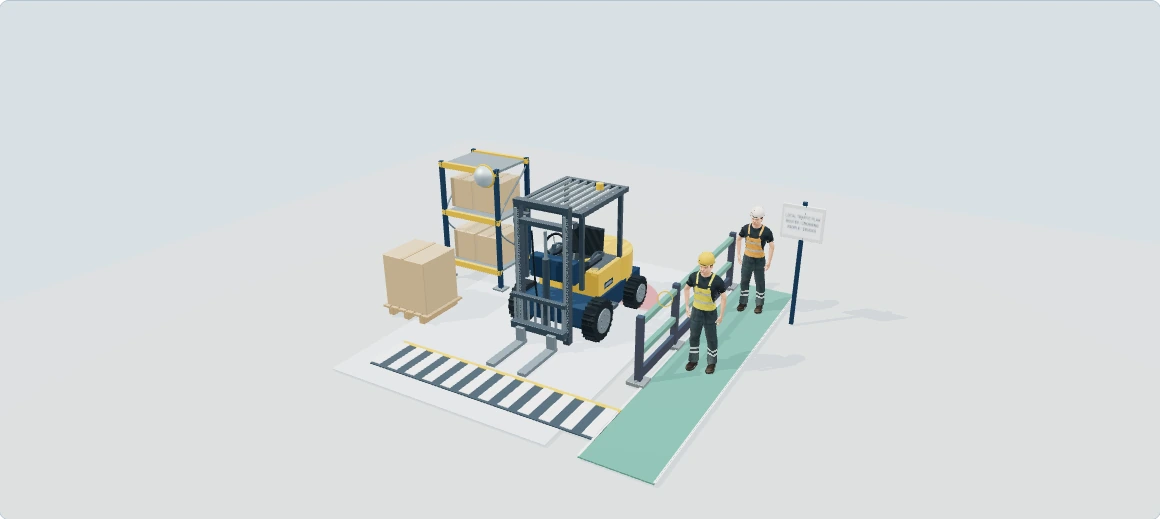

Workplace transport: see the person in the vehicle’s path
Inspect the forklift, stock, visibility, crossing and pedestrian route. Follow the different risks faced by drivers, people on foot, delivery workers and those maintaining the vehicle.
Checksheets and risk assessments
Equipment checksheets
- Larger trucks and HGVs: daily walkaround check — 3D checks · Word · PDF
- Dumpers — 3D checks · Word · PDF
- Vans: daily vehicle check — 3D checks · Word · PDF
- Pickup trucks: daily vehicle check — 3D checks · Word · PDF
Risk assessment forms
Risk assessment examples
Forms and tools
Full written walkthrough — all 8 steps
1. Separate people and vehicles
What is happening: The walkway, physical barrier and vehicle area let you compare separation with a line painted on the ground.
How harm can occur: A moving vehicle can strike, crush or run over a pedestrian; paint alone cannot physically prevent contact.
Best practice to apply: Plan safe routes and suitable separation wherever possible. Include visitors, cleaners and delivery workers in the arrangements.
2. Examine the crossing
What is happening: Inspect where a person would leave the protected route and meet the vehicle route. The stripes do not demonstrate a safe crossing.
How harm can occur: A pedestrian may enter a conflict area before the driver or pedestrian can see and respond to the other.
Best practice to apply: Assess actual sightlines, approaches, controls and behaviour. Keep the crossing clear and communicate the site arrangements.
3. Look for hidden people
What is happening: Stock and racking can obstruct a view. Look from both the driver’s and pedestrian’s positions to understand where someone could remain unseen.
How harm can occur: A person obscured by stock or a vehicle can be struck when either moves into the shared space.
Best practice to apply: Review real sightlines from the driver and pedestrian positions. The coloured overlay is a teaching cue, not a verified blind-spot measurement.
4. Consider steering and the rear area
What is happening: The stationary truck lets you inspect the counterweight, wheels and space behind it. The rear area matters during manoeuvring.
How harm can occur: Turning or reversing can sweep part of the vehicle into a person or trap them against a fixed object.
Best practice to apply: Reduce conflicting movements through suitable layout and operating controls. Do not infer a turning radius, swept path or stopping distance from this model.
5. Inspect load stability and visibility
What is happening: Forks, the load position and the surrounding stock connect handling decisions to the people around the truck.
How harm can occur: Falling goods, impaired visibility or overturning can strike or crush the operator and nearby people.
Best practice to apply: Use the real truck and attachment information, rated capacities and task assessment. Keep people out of the danger area.
6. Check the truck and driving position
What is happening: Inspect the seat, controls, overhead structure and restraints as relevant to the actual equipment.
How harm can occur: Unsuitable equipment, defects or an unprepared operator can allow loss of control or worsen the consequences of an incident.
Best practice to apply: Use suitable equipment, authorised trained operators and actual pre-use checks. A visual model cannot prove a truck fit for use.
7. Plan maintenance and defect action
What is happening: Maintenance needs access around the vehicle and control of energy and supported components. A parked truck is not automatically safe to work on.
How harm can occur: Unexpected movement, descent or stored-energy release can trap or crush a fitter or operator.
Best practice to apply: Follow the actual safe maintenance procedure, isolation and support requirements. Report defects and prevent unsafe use.
8. Keep the whole site organised
What is happening: The route and planning station connect the driver’s actions with the site manager’s layout, information and supervision.
How harm can occur: Conflicting deliveries, blocked routes and people unfamiliar with the site can create new collision risks.
Best practice to apply: Coordinate deliveries, visitors and work changes. Review the actual site arrangements and effectiveness with the people using them.
Illustrative awareness learning. The model does not design equipment, authorise work, verify safe conditions or complete a real inspection.
The wider workplace has its own account and subscription access. Exploring this lesson does not grant access, record course completion or authorise work.
UK guidance for further reading
HSE: separating pedestrians and vehiclesHSE: workplace transport safetyHow can I practise this topic in 3D?
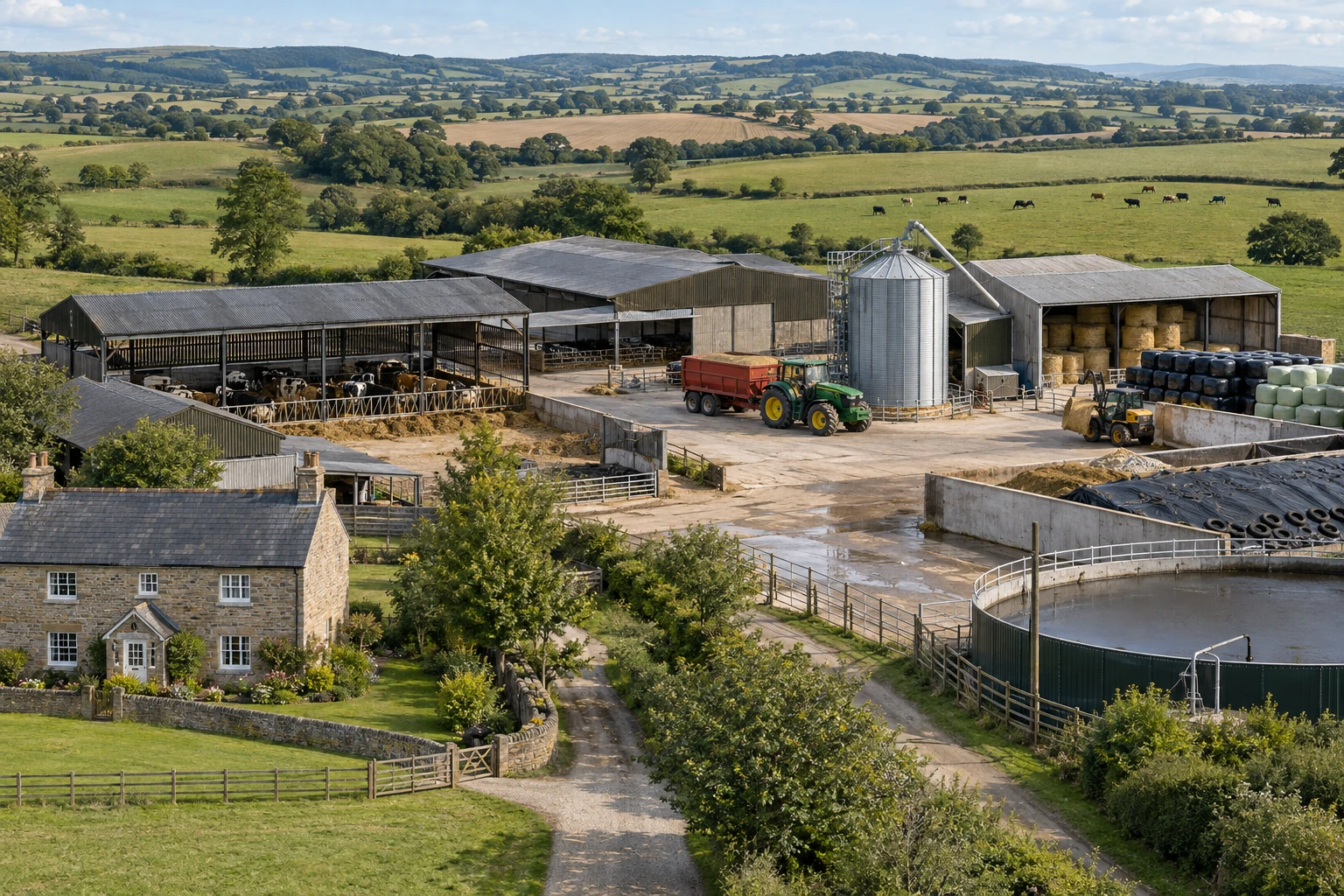
Pedestrians crossing the delivery route

Delivery vehicle crosses resident route
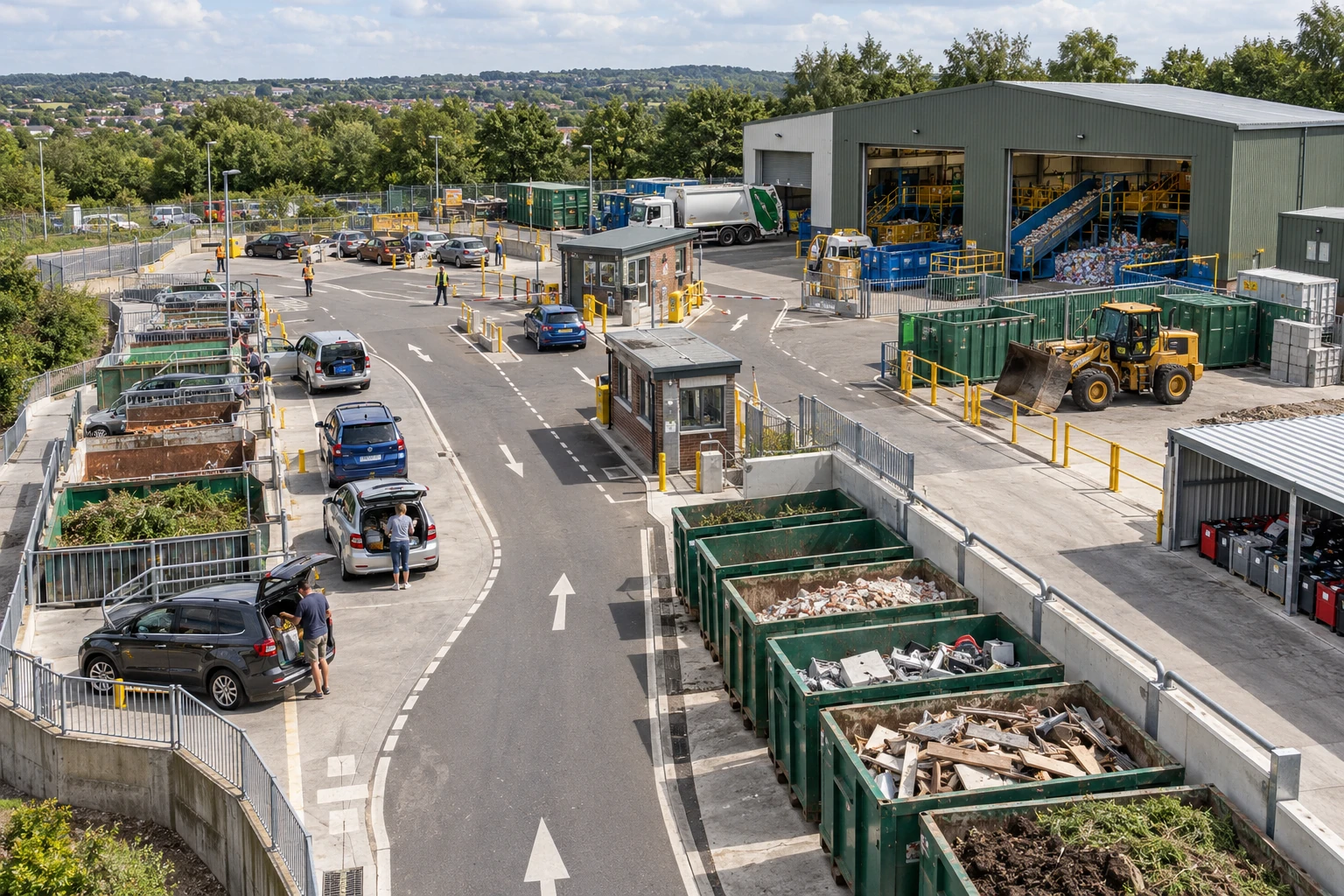
Pedestrian crossing through weighbridge traffic
All related inspection points 12 across 3 locations
Harvest & winter housing 5 inspection points
A safer place to call home 1 inspection point
Recover materials. Protect people. 6 inspection points
Practice in the SHAREhub environment. Browser practice is separate from workplace competence and formal learning records.
How do you design safer routes and choose controls?
Map actual movements, remove unnecessary vehicle–pedestrian contact, then protect unavoidable interfaces. Physical separation and suitable layout come before signs, high-visibility clothing and expectations that people will always react correctly.
Observe the site at busy and quiet times. Draw staff routes to toilets, welfare and exits alongside forklifts, lorries, customer cars, waste collections and emergency access. Include a pedestrian’s natural walking route, not just the route drawn on the plan. A long detour that encourages shortcuts needs redesign, not repeated reminders. See HSE workplace transport risk assessment for the relevant source and scope.
- Remove or reduce the movement: relocate a collection point, use drive-through arrangements or keep deliveries outside public access periods where practicable.
- Separate by design: provide suitable pedestrian routes, barriers, separate doors and protected waiting areas. Select barriers for the foreseeable impact; a painted line is not a crash barrier.
- Control remaining crossings: use visible, accessible crossing points away from reversing areas, suitable lighting, clear priority and enough visibility and stopping distance.
- Support the design: brief routes, control access and delivery timing, supervise and enforce locally assessed speed limits. Select task-appropriate protective equipment for residual risks.
Routes must suit the largest vehicle and load that will actually use them, including turns, slopes, headroom and ground-bearing capacity. Keep surfaces drained and clear; protect vulnerable racking, fuel equipment and edges. Temporary routes need the same risk-based scrutiny. HSE HSG136 third edition (pages 9–13) provides the design principles.
There is no single safe speed, lane width or pedestrian clearance for every yard. The vehicle, load, bends, visibility, surface and users determine the decision. A posted limit is a maximum within the local system, not permission to drive at that speed when conditions are worse. HSE site speed limits describes choosing and enforcing site limits.
How can the hierarchy of controls prevent pedestrian contact with vehicles during loading-bay work?
Remove or reduce the hazard before relying on procedures or personal protection.
For safe movement of people and vehicles in the workplace, assess the actual task and first look for a way to remove the hazard. Where that is not possible, consider a safer substitute, engineered separation and then clear work procedures. PPE protects against remaining exposure; it does not make an uncontrolled task safe. HSE hierarchy of controls
The selected measures need a named owner, a usable stop point and a check that they still work when the task or conditions change. In Northern Ireland, verify the separate legal route and site instructions.
How can the ERICPD hierarchy of controls prevent pedestrian contact with vehicles during loading-bay work?

| Control level | Control for this activity | Owner and verification | Stop / restart decision |
|---|---|---|---|
| Eliminate | Move pedestrian access and picking away from the loading route so the crossing is no longer needed. | Transport owner observes the revised pedestrian journey and a representative delivery; confirm people no longer need to cross the truck route, including visiting drivers. | If the hazardous step remains, keep it within the task assessment and select the stronger feasible remaining controls. |
| Reduce, including substitution | Replace reversing-dependent unloading with a suitable drive-through arrangement after checking vehicle swept paths. | Transport designer trials the drive-through swept path with the actual vehicle and checks that a new blind crossing or reversing manoeuvre has not been introduced. | Reject an alternative if its performance is unproved or its new hazards are unresolved. |
| Isolate | Install suitable fixed separation and protected crossing points; design gates and routes to keep people out of the truck envelope. | Supervisor checks the actual boundary, affected people and connected work; verify separation or isolation before allowing access. | Hold or stop for damaged barrier, pedestrian intrusion or an unplanned reversing manoeuvre. |
| Control: physical safeguards | Check barrier strength, visibility, impact exposure and safe bay access for the actual trucks and loads. | Competent equipment/process owner checks route separation, crossing sightlines and representative truck movements. | Hold or stop for damaged barrier, pedestrian intrusion or an unplanned reversing manoeuvre. |
| Control: work method and response | Agree delivery slots, driver waiting positions and crossing rules; stop vehicle movement before anyone enters the loading zone. | Supervisor confirms the work limits, competent cover, communication and stop/restart authority with the people doing this activity. | Hold work when the agreed limits, competent cover or effective communication cannot be maintained. |
| PPE | Use suitable visibility and foot protection for residual exposure; high-visibility clothing does not prevent a collision. | Assessor confirms whether personal protection is needed and checks suitability, condition, compatibility and any required fit evidence. | Do not use unsuitable protection or rely on PPE to continue after an essential source control fails. |
| Discipline | Inspect barriers after impacts, prevent informal shortcuts and verify the route at busy periods. | Release only after transport manager verifies routes with drivers and pedestrians. Retain verification and unresolved restrictions at handover. | Keep the task on hold until required reinstatement evidence and unresolved defects are accepted by the responsible owner. |
How can the ISO 45001 hierarchy of controls prevent pedestrian contact with vehicles during loading-bay work?

| Five-level control stage(s) | Control for this activity | Owner and verification | Stop / restart decision |
|---|---|---|---|
| Elimination | Move pedestrian access and picking away from the loading route so the crossing is no longer needed. | Transport owner observes the revised pedestrian journey and a representative delivery; confirm people no longer need to cross the truck route, including visiting drivers. | If the hazardous step remains, keep it within the task assessment and select the stronger feasible remaining controls. |
| Engineering controls | Replace reversing-dependent unloading with a suitable drive-through arrangement after checking vehicle swept paths. | Transport designer trials the drive-through swept path with the actual vehicle and checks that a new blind crossing or reversing manoeuvre has not been introduced. | Reject an alternative if its performance is unproved or its new hazards are unresolved. |
| Engineering controls | Install suitable fixed separation and protected crossing points; design gates and routes to keep people out of the truck envelope. | Supervisor checks the actual boundary, affected people and connected work; verify separation or isolation before allowing access. | Hold or stop for damaged barrier, pedestrian intrusion or an unplanned reversing manoeuvre. |
| Engineering controls | Check barrier strength, visibility, impact exposure and safe bay access for the actual trucks and loads. | Competent equipment/process owner checks route separation, crossing sightlines and representative truck movements. | Hold or stop for damaged barrier, pedestrian intrusion or an unplanned reversing manoeuvre. |
| Administrative controls | Agree delivery slots, driver waiting positions and crossing rules; stop vehicle movement before anyone enters the loading zone. | Supervisor confirms the work limits, competent cover, communication and stop/restart authority with the people doing this activity. | Hold work when the agreed limits, competent cover or effective communication cannot be maintained. |
| PPE | Use suitable visibility and foot protection for residual exposure; high-visibility clothing does not prevent a collision. | Assessor confirms whether personal protection is needed and checks suitability, condition, compatibility and any required fit evidence. | Do not use unsuitable protection or rely on PPE to continue after an essential source control fails. |
| Administrative controls | Inspect barriers after impacts, prevent informal shortcuts and verify the route at busy periods. | Release only after transport manager verifies routes with drivers and pedestrians. Retain verification and unresolved restrictions at handover. | Keep the task on hold until required reinstatement evidence and unresolved defects are accepted by the responsible owner. |
How do you check vehicle and route compatibility?
Check the whole vehicle–load–route combination. A vehicle fitting through a gate, holding a conformity mark or having an adequate nominal capacity does not prove that it can manoeuvre or handle this load safely.
A new delivery vehicle may pass the entrance but need a larger turning area, sweep its trailer over the footway or exceed the unloading equipment’s reach. Ask the supplier or carrier for actual dimensions, load information and operating instructions before accepting the task. HSE vehicle handling explains why size, manoeuvrability and visibility must be considered together. See HSE HSG136 third edition for the relevant source and scope.
| Check | Decision to make |
|---|---|
| Dimensions and swept path | Confirm vehicle and load height, width, length and turning envelope against the entire route, overhead hazards and protected pedestrian space. (HSE) |
| Surface and stability | Verify bearing capacity, drainage, slopes and edges for the loaded vehicle and any stabilisers. An unknown cover, void or ground capacity requires a competent assessment. (HSE) |
| Load and handling equipment | Confirm load identity, mass, centre of gravity, packaging, capacity at the required reach or height, attachments and unloading sequence against the actual instructions. (HSE) |
| Visibility and protective systems | Check mirrors, cameras and other controls assumed by the plan. Their coverage and condition must suit the movement; alarms alone do not establish a clear route. (HSE) |
| Driver and maintenance | Check relevant competence, site familiarisation, vehicle checks and defect clearance. A road licence or supplier certificate alone does not settle these questions. (HSE) |
Worked decision: a carrier substitutes an articulated lorry for the rigid lorry normally used. Its stated width is similar, so reception initially expects it to fit. The supervisor holds it at an agreed safe waiting point. The carrier’s turning information shows the trailer would cross the protected footway on the existing turn. The delivery is reassigned to a suitable vehicle or another assessed unloading arrangement; the pedestrian barrier is not removed to squeeze it through. Record the vehicle identity, route decision, agreed alternative and driver briefing.
For vehicles in use, HSG136 recommends daily driver checks before use and planned maintenance following manufacturer guidance. Check brakes, steering, tyres, lights, visibility aids, restraints, access steps and task-specific safety systems. A safety defect means taking the affected operation out of use until a competent person establishes and verifies a safe solution. A universal weekly route inspection rule is not justified; set route-check frequency from risk, deterioration, use and changes.
How should a warehouse receive and unload a delivery?
Agree the delivery method before arrival, keep people clear while vehicles and loads move, and release the vehicle only after the loading team confirms that the operation is complete and the route is safe.
The following example applies the HSE delivering safely and HSE loading and unloading principles. The host, carrier and supplier must coordinate their own responsibilities; the visiting driver should not have to invent a safe method at the gate. See HSE loading and unloading for the relevant source and scope.
A pallet delivery in a busy warehouse yard
Task material and setting: Receive and unload identified palletised packaged goods from a rigid lorry using a suitable counterbalance forklift. The yard has delivery traffic and a staff route to welfare; wet autumn conditions reduce grip and visibility. The desired outcome is goods stored safely and the lorry released without exposing pedestrians.
People and prerequisites: The delivery driver, trained and authorised forklift operator, loading supervisor, cleaners and nearby pedestrians are affected. Before booking, the supplier and carrier provide load mass, packaging and handling information. The host confirms the bay, equipment suitability, competent staff, safe waiting area, driver communication and access to welfare.
Before: The supervisor checks the bay surface, lighting, pedestrian barriers, clear route and local unloading plan. The driver receives the route and stop rules. Position and secure the vehicle against movement using the agreed system and manufacturer instructions; apply relevant brakes. Confirm the driver is in the designated safe position, load condition is known and the forklift checks are satisfactory before unloading starts.
During: The operator follows the agreed sequence within the equipment limits. Keep people out of the load and vehicle operating zone. The supervisor prevents other arrivals from entering and checks that the driver can communicate from the safe waiting or observation position. Anyone needing to approach first requests and confirms a stop.
Hold or stop: Hold an unbooked vehicle, changed vehicle type, unknown load mass, damaged pallet or shifted load for the supervisor and, when needed, supplier or competent specialist. Stop if a person enters the exclusion area, communication is lost, equipment develops a safety defect or visibility or ground conditions deteriorate. Do not let production pressure substitute for a revised safe method.
Completion and hand back: The loading team confirms people and equipment are clear, remaining load is secure, doors and vehicle equipment are safe and the exit route is available. Only then apply the agreed release procedure for restraints, signals or key control. The driver and supervisor confirm the hand-back before departure; reinstate the pedestrian arrangements.
Evidence: Retain the delivery instructions, load information, route/bay assessment, equipment checks, driver briefing, defects and any changed-method authorisation. Record the release confirmation in the local delivery record and feed any near miss into the transport plan.
Variations: a contractor skip exchange may need a different turning path, lifting zone and access closure; agree it before arrival. If a temporary excavation blocks the pedestrian route, hold conflicting vehicle movements until an accessible alternative is assessed and protected. If a load has shifted, obtain a safe unloading method from the supplier and competent loading team before opening or removing restraints that could release it.
How does the same harm chain change by sector?
The vehicle–person, load, fall and overturn mechanisms recur across sectors, but the route, people exposed and stop decision must reflect the actual job.
| Setting and harm chain | Controls applied | Owner, warning and stop decision |
|---|---|---|
| Manufacturing: a forklift carries pallets across the shift-change route; a worker could be struck or crushed. | Move the pedestrian route away from the transfer, protect remaining crossings and schedule forklift movement outside the handover surge where practicable. | Production supervisor observes the crossing at changeover; stop the transfer if a gate is bypassed or the route fills with people. (HSE) |
| Construction: a dumper uses a temporary haul route near an excavation; soft ground or an edge could cause overturn and crushing. | Set and maintain a suitable route and edge protection, separate pedestrians and verify ground and vehicle suitability after site changes. | Site supervisor checks route and ground before use and after weather or excavation change; stop at unverified edges or soft ground. (HSE) |
| Hospitality: a delivery van reverses near a kitchen entrance used by staff and guests; contact could cause serious injury. | Where practicable use a forward-exit delivery point or a time and access arrangement that removes public crossing; protect any remaining pedestrian route. | Duty manager checks the entrance and driver briefing; hold delivery if guests can enter the manoeuvring zone. (HSE) |
| Logistics: a visiting lorry arrives at an occupied loading bay; premature driveaway or a falling pallet could crush a driver or loader. | Agree bay allocation and driver waiting, restrain the vehicle by the assessed method, exclude people from the load zone and confirm hand-back before release. | Loading supervisor and driver check the agreed signal; stop if restraint, load condition or communication is uncertain. (HSE) |
These are illustrative control decisions, not universal site designs or fixed distances. Construction and specialist logistics tasks may need additional sector guidance and a competent task assessment. See HSE workplace transport risk assessment for the relevant source and scope.
When must the movement stop and how can it restart?
Stop the affected operation whenever its safe conditions are lost or cannot be confirmed. Keep people clear, inform the responsible supervisor and restart only after the defect or changed conditions have been assessed, controlled and communicated.
Avoid reversing wherever practicable. Where it remains necessary, provide a designated area, exclusion and suitable visibility controls. A banksman or signaller is a person guiding the driver, not a protective barrier. HSG136 treats this as a last-resort measure after other ways to control reversing risk; some vehicle and industry settings make it unsuitable. If used, the trained signaller needs an agreed signal system, a safe position and continuous visibility to the driver. If the driver loses sight of the signaller, stop immediately. HSE safe reversing. See HSE workplace transport risk assessment for the relevant source and scope.
| Trigger | Immediate action | Restart evidence |
|---|---|---|
| Person in an operating or reversing zone | Stop vehicle and load movement safely. Keep other traffic out. | Supervisor confirms the person is clear and effective segregation and access control are restored. (HSE) |
| Lost signaller, obscured route or failed visibility aid | Stop the affected manoeuvre; do not continue by guesswork. | Visibility, agreed communication and all controls required by the assessed method are re-established. (HSE) |
| Brake, steering, restraint or other safety defect | Take the affected operation out of use and report the defect. | Competent repair and verification, or a separately assessed recovery method; no informal bypass. (HSE) |
| Unknown load, incompatible vehicle or changed route | Hold in a safe place and contact the host, carrier or supplier. | Identity and suitability confirmed; revised plan approved by the responsible competent people and briefed. (HSE) |
| Ice, spill, failed light, damaged barrier or unsafe surface | Close the affected route or bay and protect people. | Defect corrected and inspected, or an assessed and protected alternative route put into use. (HSE) |
Collision, trapped person, fire or leak: stop surrounding traffic without entering its path, raise the alarm and call the local emergency response and 999 where needed. Keep clear of unstable vehicles, loads, fuel and electrical hazards. Do not attempt improvised lifting or vehicle movement to free a person; emergency responders and the site rescue arrangements must control that decision. Provide first aid only when it is safe and within competence. Preserve relevant evidence after immediate protection and emergency needs are met.
Report damage and near misses internally so the underlying route or system failure can be corrected. The responsible person must separately check whether statutory reporting applies: use HSE incident reporting for GB and HSENI report an incident for Northern Ireland. Their criteria differ; not every near miss is a reportable dangerous occurrence.
What training, checks and supervision are needed?
People must be able to perform their actual tasks safely with the vehicles, attachments and site conditions they will use. Assess competence and provide appropriate instruction, training and supervision; attendance or a familiar-looking machine is not enough.
Operators need the controls, limits, visibility, stability, pre-use checks, parking method and emergency response for the actual vehicle. Safe parking normally means firm level ground, brakes applied, equipment lowered or secured, engine off and keys controlled when unattended. Coupling and uncoupling require a vehicle-specific safe system and trained people; disconnecting the air line is not a substitute for applying a trailer parking brake. HSG136 explains these boundaries. See HSE lift-truck training for the relevant source and scope.
For rider-operated lift trucks, HSE describes basic training, specific job training and supervised familiarisation. Conversion training is needed for a different truck type or attachment where existing skills are insufficient. Supervisors need enough knowledge to recognise and correct unsafe practice. HSE lift-truck training.
Monitor performance and reassess when equipment, tasks or conditions change, after unsafe practice or a relevant incident, or following a long gap in use. There is no statutory universal three-year expiry for lift-truck training. A local refresher interval is an organisational arrangement and does not replace reassessment when needed. HSE lift-truck questions.
Brief visiting and agency drivers before access, including where to wait, how to contact the host and how to stop an unsafe delivery. Confirm understanding where language or unfamiliarity is a barrier. If fatigue, illness or medication raises a safety concern, stop the safety-critical task and seek appropriate management or occupational-health advice; do not make a diagnosis or automatic fitness decision from this page.
| Role and learning | Demonstration, assessor and reassessment trigger |
|---|---|
| Pedestrians, visitors and new starters: routes, crossings, vehicle blind areas and stop reporting. | Supervisor checks a route walk-through and records the briefing; reassess when the layout, access or work pattern changes. (HSE) |
| Drivers and lift-truck operators: actual vehicle, load, route, pre-use checks, limits and stop conditions. | Authorised trainer or competent supervisor observes the task and keeps an authorisation record; reassess after a new vehicle, attachment, unsafe practice or long gap. (HSE) |
| Signallers and loading specialists: protected position, agreed signals, load and vehicle restraint, release. | Competent assessor observes a controlled manoeuvre or loading exercise and records scope; reassess after a changed method, incident or communication failure. (HSE) |
| Supervisors and booking teams: route compatibility, visitor briefing, defect hold and hand-back. | Manager samples a live delivery decision and its record; reassess after a changed carrier, layout, recurrent defect or near miss. (HSE) |
| Managers, designers and purchasers: vehicle and route specification, segregation, resources and assurance. | Competent transport adviser reviews an actual specification and field evidence; revisit on fleet, layout or process change. (HSE) |
| Maintainers, advisers and auditors: safety defects, technical source scope and verification of repairs or controls. | Competent lead checks a fault or audit sample and its closure evidence; update competence as equipment, standards or duties change. (HSE) |
A general briefing is not operator authorisation. Keep assessment and authorisation proportionate to the role; no fixed refresher interval or course certificate by itself proves competence.
The operator demonstration should include safe access and parking and the actual fitted restraint. Use the fitted operator restraint in accordance with the equipment manufacturer’s instructions; it works with the protective structure and does not replace route, speed or load controls.
Which duties apply in Great Britain and Northern Ireland?
GB and Northern Ireland have separate occupational safety legislation. Both require workplace transport risks to be controlled, but the instrument names, dates and reporting rules must be checked for the location and activity.
The following is a legal orientation, not a complete register for every sector. Current regulator routes support the summary. Check scope, amendments and activity-specific requirements before making a formal compliance determination. See HSE transport law overview for the relevant source and scope.
| Duty area | Great Britain | Northern Ireland |
|---|---|---|
| General protection | Health and Safety at Work etc. Act 1974: duties towards employees and others affected by work, so far as reasonably practicable. (1974 Act) | Health and Safety at Work (Northern Ireland) Order 1978 provides the corresponding general framework. (1978 Order) |
| Assessment and coordination | Management of Health and Safety at Work Regulations 1999: assess risk and organise prevention, competence and cooperation. Check the official legislation route for amendments. (Legislation) | Management of Health and Safety at Work Regulations (Northern Ireland) 2000: separate NI framework. Check the official legislation route for amendments. (Legislation) |
| Traffic routes and workplace | Workplace (Health, Safety and Welfare) Regulations 1992: safe circulation, route condition and workplace arrangements within scope. (Workplace 1992) | Workplace (Health, Safety and Welfare) Regulations (Northern Ireland) 1993: NI route and workplace duties within scope. (Workplace NI 1993) |
| Equipment and lifting | PUWER 1998 applies to work-equipment use; LOLER 1998 adds lifting requirements where applicable. (PUWER 1998, LOLER 1998) | PUWER (Northern Ireland) 1999 and LOLER (Northern Ireland) 1999 are the NI equivalents. (PUWER NI 1999, LOLER NI 1999) |
| Incident reporting | RIDDOR 2013: use the current HSE criteria and reporting route. (RIDDOR 2013) | RIDDOR (Northern Ireland) 1997: use HSENI criteria and reporting route; do not import GB thresholds. (RIDDOR NI 1997) |
Use GB Management Regulations 1999 legislation route and NI Management Regulations 2000 legislation route as the official routes for checking the management instruments and subsequent changes. The NI Management Regulations 2000 PDF is the original NI instrument, not an assured current consolidation. HSE transport law overview remains useful GB orientation but its RIDDOR 1995 and L117 references are superseded; use the dedicated HSE incident reporting and HSE lift-truck training routes for those topics. HSENI workplace transport gives NI regulator guidance.
Workplace use and supply are separate: the employer still has to select suitable equipment, maintain it and control how it is used. Product-supply and conformity requirements depend on the vehicle or machinery type, market, date and economic-operator role. Purchasers should obtain current manufacturer instructions and applicable declarations and confirm the GB or NI supply route with the supplier and competent adviser. A conformity marking does not approve a site route or lifting task.
HSE and HSENI guidance explains ways to meet duties; it is not all statutory wording. A local traffic plan, delivery booking rule or check schedule is an organisation-specific control. This page’s examples are SHARE guidance for adaptation, not a legal requirement to use that exact method.
How could Crownway Fuels Ltd protect a forecourt delivery?

Crownway Fuels Ltd would plan vehicle and pedestrian movements together, using physical layout and delivery coordination to reduce conflict rather than depending on high-visibility clothing.
Crownway Fuels Ltd · practical example
Separate a delivery path from the route customers naturally take
The key lesson Pedestrian segregation must consider the routes people actually use, including doors and natural shortcuts.
The situation: A shop delivery is proposed while tanker and customer movements continue on a forecourt. The easiest walking route from the unloading point crosses a vehicle path. Crownway would redesign the interface before accepting the delivery arrangement.
Why this matters: People carrying goods or attending to a customer may not see a manoeuvring vehicle, and a driver cannot compensate for every layout conflict.
How Crownway Fuels Ltd would manage it
- Observe the movements — Site Manager. Walk the area with staff and delivery representatives. Identify doors, customer routes, blind spots, parking, unloading and the paths people take when the site is busy.
- Remove unnecessary conflict — Area Operations Manager. Consider changing timing, delivery location or layout to keep the activities separate. Prefer suitable physical separation and controlled routes over a general instruction to watch for vehicles.
- Agree delivery conditions — Shift Supervisor. Give the visiting driver the current approach, parking and unloading instructions. Confirm who controls pedestrian access and how the driver contacts the site if the agreed area is unavailable.
- Check the live boundary — Shift Supervisor. Confirm that barriers, routes, visibility and any required competent assistance remain effective. Hold the movement if customers or workers enter the controlled area or the vehicle cannot follow the plan.
- Learn from actual behaviour — Site Manager. Review shortcuts, near misses and driver feedback. If people repeatedly bypass a route, investigate its practicality and revise the design or schedule rather than relying solely on reprimands.
When the conditions change
- Recognise the trigger
- The delivery area or pedestrian separation cannot be maintained.
- Make the immediate decision
- Hold the delivery movement when customers or workers cannot be kept clear of its controlled route.
- Verify the next step
- The Shift Supervisor and driver confirm the usable delivery route, unloading position and effective pedestrian separation, including the shop-door crossing, before the movement starts.
What good looks like
People and vehicles can reach their destinations without routine conflict. Delivery restrictions are understood by visiting drivers and remain workable during real customer activity.
Evidence to look for: Movement review, route and delivery plan, segregation checks, driver information, near-miss findings and layout actions.
Common mistake to avoid: Using high-visibility clothing or warning signs as a substitute for effective separation.
Apply this to your work: Does your protected walkway follow a route people can reasonably use?
Guidance behind the management approach: HSE: separating pedestrians and vehicles. Use the topic's legal and technical guidance for the applicable work and location.
Crownway is the established illustrative company. This example addresses only traffic movement and the pedestrian interface. Fuel transfer, leak and fire controls require a separate specialist procedure and assessment.
A planned delivery with a public interface
Task material and setting: Bring an agreed delivery vehicle into a forecourt and leave after the authorised delivery operation. Customers, shop access, car parking and charging queues create changing vehicle and pedestrian movements; rain and darkness can further restrict visibility.
People and prerequisites: The duty manager, competent delivery driver, staff, customers and any contractor may be affected. Agree vehicle and route suitability, delivery timing, exclusion boundaries, public access and the specialist delivery method before arrival. Provide trained staff and a shared stop signal or communication route.
Before: The duty manager checks the planned path, protected customer route, lighting, barriers and emergency access. Keep conflicting traffic out before the vehicle moves into the agreed position. If customers cannot be kept safe, hold the delivery and arrange a suitable closure or alternative time.
During: Keep the exclusion effective and monitor the public interface. Staff direct customers from safe positions without standing in vehicle paths. The driver follows the agreed movement and specialist delivery procedure; the manager controls new arrivals and any contractor interface.
Hold or stop: Stop vehicle movement on a pedestrian incursion, unplanned contractor movement, damaged barrier or impaired visibility. Hold the delivery if the specialist operation reports a problem; follow its separate procedure rather than improvising a traffic movement.
Completion and hand back: The driver confirms the specialist delivery operation is safely complete. The manager checks that people, equipment and obstacles are clear before the agreed departure. Reopen public routes only after the affected area is safe and normal controls are reinstated.
Evidence: Keep the traffic arrangement and specialist procedure references, delivery and driver briefing records, temporary closure decision, relevant defect reports and hand-back confirmation. Review any intrusion, delay or change before the next delivery.
This traffic example does not validate the specialist delivery method or provide fuel-emergency instructions. The duty manager and carrier must use their separate approved arrangements for those hazards.
Which people-and-vehicle interfaces matter during a fuel delivery?
Compare tanker positioning and access with routine forecourt use. The selected teaching mode does not authorise simultaneous public dispensing or establish traffic separation distances.
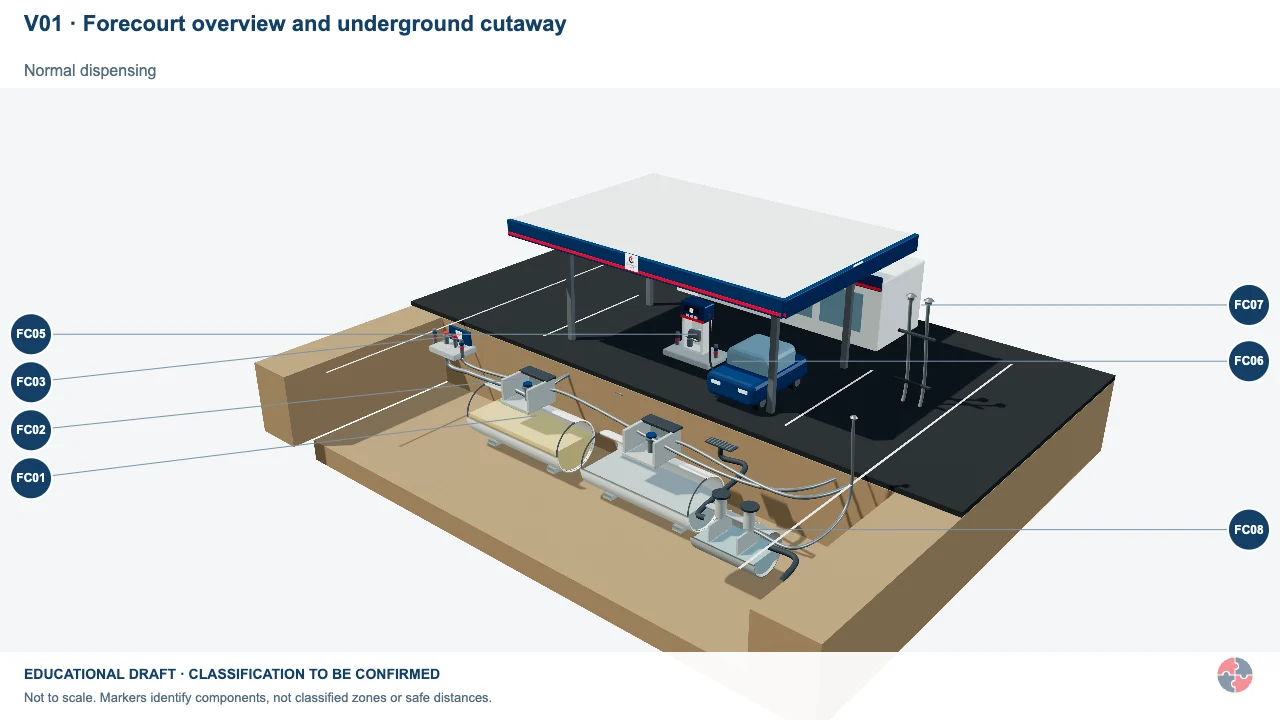
Forecourt overview and underground cutaway
A familiar forecourt contains connected systems above and below ground. Locate each source before considering where an explosive atmosphere could form.
Activity focus: Switch to delivery to inspect the added connection and changed activity.
Contextual workplace scene. Use the task, control and evidence checks in this section; appearance alone does not establish safe conditions, individual health or approval.
Educational illustration, not to scale. Coloured zones are teaching examples, not a site-specific hazardous-area classification.
How can managers tell whether the controls work?
Check the route and activity in use, ask people to explain their decisions, and follow defects through to verified closure. A tidy transport file and an absence of injuries do not show that separation is effective today.
Keep a risk-register entry for credible events such as a pedestrian being struck during a delivery or a vehicle overturning at an edge. Identify people exposed, the preventive controls, who owns each one, how its effectiveness is checked, residual concerns and actions. Give serious defects immediate protective action; assign risk-based completion dates and verify repairs in the field. See HSE transport inspection checklist for the relevant source and scope.
| Sample | What to verify |
|---|---|
| Route walk-through at a busy time | Barriers and crossings are usable; welfare routes, disabled access, waiting areas and emergency access work under actual traffic conditions. (HSE) |
| One delivery from booking to departure | Vehicle/load information, safe waiting, briefing, exclusion and release agree across host, driver and loading team. (HSE) |
| A vehicle and a recent defect | Operator checks and maintenance match the equipment; the defect was made safe and repair verified before release. (HSE) |
| One temporary change or near miss | Contractor work, weather, layout change or recurring workaround led to a revised assessment and effective control. (HSE) |
| Driver and supervisor conversations | People can explain the route, operating limits and stop rules; competence records match the work observed. (HSE) |
Repeated barrier damage, worn pedestrian shortcuts, queued vehicles, unbriefed visitors and recurring light or alarm faults are warning signals. Investigate the design, workload and coordination behind them. Retain current plans, delivery arrangements, training and assessment records, inspection/maintenance results and action closure evidence. Restrict personal and health information to authorised users.
Management guidance and voluntary standard: HSE management guidance provides a framework for planning, worker participation, operational controls, monitoring and improvement. Separately, the ISO catalogue identifies the voluntary ISO 45001:2018 standard with Amendment 1:2024 and a revision in development; these are not editions of HSE guidance. It does not specify a safe reversing distance, vehicle compatibility or a universal inspection interval, and certification does not establish legal compliance. HSE managing health and safety.
Keep the authorities distinct: HSE’s Plan–Do–Check–Act material is regulator management guidance. The edition/amendment description concerns the separately named voluntary ISO 45001 management standard, not an edition of HSE guidance. Neither a certificate nor an edition statement demonstrates that the transport controls work.
Use the separate ISO catalogue for the standard’s identity and edition.ISO 45001:2018 catalogue and Amendment 1:2024
Acronyms and terms: what does the transport language mean?
A swept path includes the space a vehicle and its load occupy while turning; an exclusion zone keeps people out of an operation; a signaller guides a driver from a protected, visible position.
| Letters or term | Full expansion | Meaning here |
|---|---|---|
| HGV | Heavy goods vehicle | A large goods vehicle whose actual dimensions and load must match the site route. |
| FLT | Forklift truck | Mobile lifting equipment needing suitable operator competence and task checks. |
| HSE / HSENI | Health and Safety Executive / Health and Safety Executive for Northern Ireland | The separate GB and NI workplace safety regulators. |
| PUWER / LOLER | Provision and Use of Work Equipment Regulations / Lifting Operations and Lifting Equipment Regulations | Separate GB and NI instruments govern work-equipment and applicable lifting duties. |
| RIDDOR | Reporting of Injuries, Diseases and Dangerous Occurrences Regulations | GB and NI incident reporting rules differ; use the correct regulator route. |
| PPE | Personal protective equipment | Residual protection such as assessed high-visibility clothing; it is not a physical vehicle barrier. |
| Swept path | Not an acronym | Space occupied by vehicle body, load and trailer while turning. |
| Desire line / hand-back | Not acronyms | The route people naturally choose / confirmation that work is finished and the vehicle may be released. |
Segregation means keeping people and vehicles apart through designed routes or protected separation in time. A signaller guides a driver only from a protected position under the assessed method.
Unlock another resource
You have used this month’s two free downloads. Publish a post in your own words to unlock one more resource, or choose SHARE Individual for 10 downloads per month.
You decide whether to share. If you do, use the relevant platform disclosure tools and do not make claims you do not genuinely hold.