Road Vehicle Fleet Safety
Road fleet safety combines a safe journey, safe driver or rider, safe vehicle and controlled loading and site interfaces. Stop unsafe trips or vehicles, include grey fleet and contractors, and apply the correct GB or Northern Ireland work-health and road-law route.
Understanding Road Vehicle Fleet Safety
Road fleet safety combines a safe journey, safe driver or rider, safe vehicle and controlled loading and site interfaces. Stop unsafe trips or vehicles, include grey fleet and contractors, and apply the correct GB or Northern Ireland work-health and road-law route.
Why this matters at work
Apply the safe journey, safe driver or rider and safe vehicle assessment to actual work and public exposure. Add load and destination interfaces rather than ending the assessment at the depot gate. Ask whether evidence covers the real vehicle type, changed work, people, timetable and equipment. A grey-fleet car, delivery van, HGV, minibus, motorcycle, bicycle and site-plant crossing have different failure routes. Record omissions, accountable owners and restrictions. When an observation contradicts the assessment, reopen it, correct the underlying condition and safely verify the revised controls rather than simply renewing the document date.
Workshop and public-road tasks have different interfaces: maintained road brakes do not prove safe access beneath a vehicle, and a workshop release is not a complete customer-site assessment. Use the actual technical configuration, stored energy, movement and people in assessing maintenance work. HSE’s air-suspension alert and fall-prevention guidance identify serious failure routes without providing a generic servicing method here. GB PUWER and separate NI work-equipment law have their own scope and amendments. Record defects, suitable restrictions and competent handback evidence; keep equipment acceptance and work authorisation separately accountable.
How organisations manage this in practice
Use HSE’s fall-prevention order: avoid climbing through ground-based controls where possible, then prevent falls with suitable collective features before individual protection. Include occasional tasks, loading, access and changed vehicles; a routine cab-entry check does not cover work on a load. Review current access, edges, lighting, weather, equipment condition and suitable rescue arrangements where relevant. PPE does not make defective access safe. Keep technical acceptance of equipment separate from authorisation of the task. No anchor rating, access design, ladder choice or fall-arrest method is prescribed by this teaching guide.
HSE journey guidance connects scheduling, customer tasks, welfare, weather and communication. Allow time for collection, delivery, securing loads and administration; an app must not create pressure to take unsafe risks. Navigation data alone cannot verify a suitable route or actual destination. Hands-free communication still distracts, and monitoring feedback can itself distract. Plan management support for changed conditions and cancelled work. Drivers’ hours depend on vehicle and country; the overview identifies separate NI rules and working-time requirements. A legal hours record is not proof of alertness or permission to continue a particular journey.
A licence and training attendance do not establish competence for every vehicle, site, load or work interface. HSE expects adequate training, including technology, checks, reporting and contractor cooperation. Review what was actually learned and observed safely; identify unfamiliar work and who can resolve concerns. Keep entitlement, task competence and the accountable work-allocation decision separate. A trained signaller is one assessed option where appropriate, with visibility, communication and safe position requirements; it is not a universal solution for all industries. Cameras, alarms and PPE cannot replace an arrangement that separates people from moving vehicles.
Who should use this road vehicle fleet safety page?
This page is for anyone who controls, authorises, drives, rides, maintains, schedules, procures, contracts or audits vehicles used for work.
Fleet and transport managers
People who control vehicles, drivers, operator licensing, maintenance, scheduling, telematics and compliance evidence.
Drivers and riders
People using cars, vans, HGVs, buses, motorcycles, bicycles, trailers or grey fleet vehicles for work journeys.
Line managers and planners
People who allocate work, set deadlines, approve travel, authorise overtime and influence fatigue or speeding pressure.
HSSE and risk teams
People who design policy, risk assessment, audits, investigation, learning and management system evidence.
HR and occupational health
People supporting fitness to drive, health disclosure, confidentiality, drugs and alcohol policies, wellbeing and fair capability decisions.
Procurement and contractors
People specifying vehicles, hire arrangements, telematics, maintenance contracts, delivery contractors or outsourced transport providers.
Updated 2026-10-02.
Make fleet governance support a safe dispatch decision
Fleet governance connects procurement, vehicle capability, maintenance, realistic schedules, competent cover and contractor assurance. Use the actual journey, driver/rider, vehicle, load and site interface together. Grey fleet and hired or contractor vehicles still need the relevant evidence; a licence or telematics score cannot compensate for a defect or an unsafe schedule.
A dispatch decision needs the complete transport system
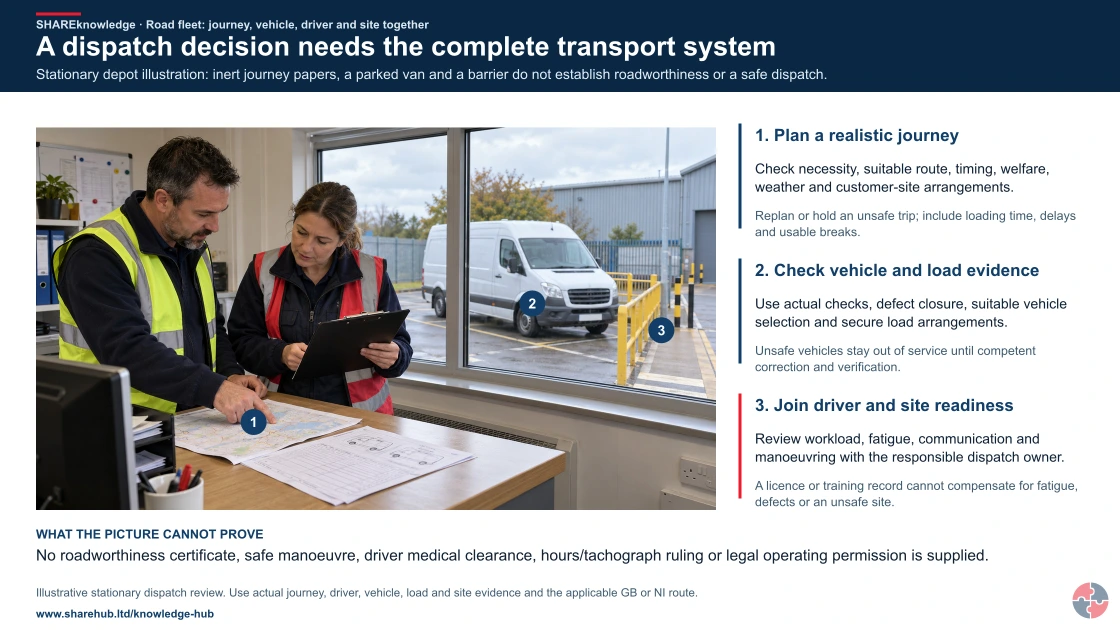
Full written explanation
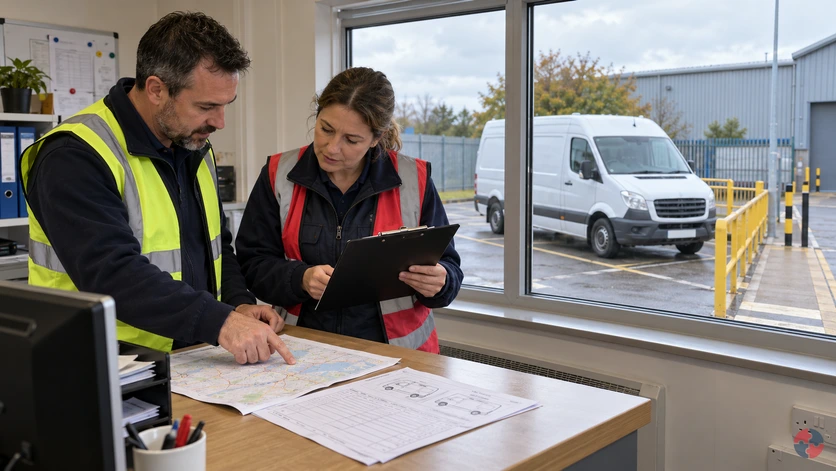
A new realistic UK depot-office scene shows two fleet colleagues inside an enclosed office reviewing inert route and vehicle-check papers. A stationary van, fixed pedestrian barrier and separate route are visible through the window. Three prompts connect realistic journey timing and welfare, actual vehicle/load/defect evidence and driver demands plus destination manoeuvring. No vehicle moves, no one uses a phone while driving and no roadside repair is depicted. A visual barrier or parked van proves neither segregation effectiveness nor whole-vehicle readiness. A second native service-vehicle map separates unresolved defects from communication demands before joining competent repair, work planning and a separate dispatch decision.
Stationary depot illustration: inert journey papers, a parked van and a barrier do not establish roadworthiness or a safe dispatch.
- Plan a realistic journey. Check necessity, suitable route, timing, welfare, weather and customer-site arrangements.
- Check vehicle and load evidence. Use actual checks, defect closure, suitable vehicle selection and secure load arrangements.
- Join driver and site readiness. Review workload, fatigue, communication and manoeuvring with the responsible dispatch owner.
Change the pathway
- A deadline cannot repair the plan. Replan or hold an unsafe trip; include loading time, delays and usable breaks.
- A check is not every condition. Unsafe vehicles stay out of service until competent correction and verification.
- Training does not remove other failures. A licence or training record cannot compensate for fatigue, defects or an unsafe site.
Evidence check: No roadworthiness certificate, safe manoeuvre, driver medical clearance, hours/tachograph ruling or legal operating permission is supplied.
Connect fleet governance to the actual driver, vehicle, journey and site decision
Primary references: HSE planning actual work journeys · HSE vehicle checks, defects and repair · HSE worker health and fatigue · HSENI separate work-driving route
Open the complete HD image (new tab)Download image

Connect fleet governance to the actual driver, vehicle, journey and site decision
Primary references: HSE planning actual work journeys · HSE vehicle checks, defects and repair · HSE worker health and fatigue · HSENI separate work-driving route
Best-practice guide: Road Vehicle Fleet Safety
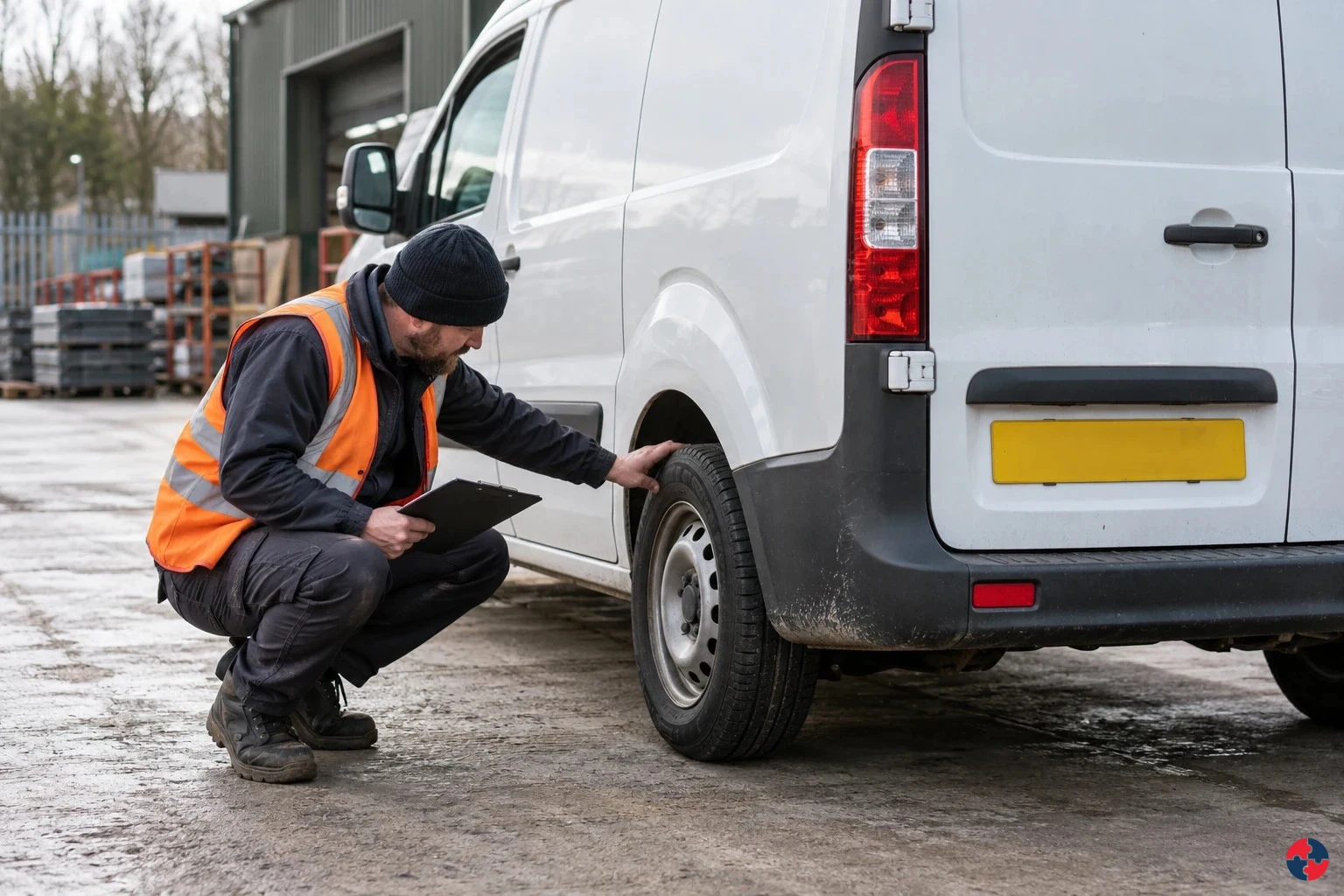
Make fleet governance support a safe dispatch decision
Fleet governance connects procurement, vehicle capability, maintenance, realistic schedules, competent cover and contractor assurance. Use the actual journey, driver/rider, vehicle, load and site interface together. Road fleet safety combines a safe journey, safe driver or rider, safe vehicle and controlled loading and site interfaces.
Turn road vehicle fleet safety knowledge into a decision
Road fleet safety combines a safe journey, safe driver or rider, safe vehicle and controlled loading and site interfaces. Stop unsafe trips or vehicles, include grey fleet and contractors, and apply the correct GB or Northern Ireland work-health and road-law route. Live register and owner allocation.
the site team fleet management controls
Fleet register: Records all company, hire, trailer and grey fleet vehicles. Evidence / response: Live register and owner allocation. Driver authorisation: Checks licence, competence, insurance and role-specific training. Evidence / response: Driver matrix and signed handbook.
Warning signs and likely consequences
Drivers skip checks: Defects reach the road unnoticed. Same defects repeat: Maintenance quality or vehicle choice may be failing. Schedules require rushing: Speeding, fatigue and risky decisions increase.
Choose controls for the actual task
Elimination: Avoid the hazardous yard entry by delivering to a suitable safer agreed point where practicable. Substitution: Use a suitable smaller vehicle or forward-only delivery arrangement after checking capacity and new handling demands. Engineering controls: Keep pedestrians and customer staff out of vehicle movement and unloading zones. Engineering controls: Provide suitable access, visibility, lighting and physical separation; verify vehicle aids without relying on them to remove blind spots. Administrative controls: Agree the route, unloading point and any trained signaller before arrival; stop when the route or communication is unclear. Read the full control table for qualifications, ownership and verification. Use the actual task and applicable jurisdiction; existing technical approval remains unchanged.
Use the full road vehicle fleet safety lesson
Use the full topic for the decision points, practical examples, detailed control tables and source scope. HSE guidance applies to Great Britain; use HSENI for the Northern Ireland route and the source’s stated jurisdiction. A simplified guide does not change the page’s technical-review or approval status.

Read all six steps as text
1. Make fleet governance support a safe dispatch decision
Fleet governance connects procurement, vehicle capability, maintenance, realistic schedules, competent cover and contractor assurance.
- Avoid / redesign: Avoid the hazardous yard entry by delivering to a suitable safer agreed point where practicable.
- Control the task: Keep pedestrians and customer staff out of vehicle movement and unloading zones.
- Verify before release: If the hazardous step remains, retain a task assessment and select the stronger feasible remaining controls.
Fleet governance connects procurement, vehicle capability, maintenance, realistic schedules, competent cover and contractor assurance. Use the actual journey, driver/rider, vehicle, load and site interface together. Road fleet safety combines a safe journey, safe driver or rider, safe vehicle and controlled loading and site interfaces.
Apply it: Which part of this plan would you check at the workface before authorising the task?
2. Turn road vehicle fleet safety knowledge into a decision
Use the evidence to improve the actual work arrangement.
- Change at source: Avoid the hazardous yard entry by delivering to a suitable safer agreed point where practicable.
- Make it observable: If the hazardous step remains, retain a task assessment and select the stronger feasible remaining controls.
- Keep useful evidence: Live register and owner allocation.
Road fleet safety combines a safe journey, safe driver or rider, safe vehicle and controlled loading and site interfaces. Stop unsafe trips or vehicles, include grey fleet and contractors, and apply the correct GB or Northern Ireland work-health and road-law route. Live register and owner allocation.
Apply it: What evidence would show that the change improves this task, rather than only completing a record?
3. the site team fleet management controls
Example: a practical application of the existing topic lesson.
- Fleet register: Records all company, hire, trailer and grey fleet vehicles.
- Driver authorisation: Checks licence, competence, insurance and role-specific training.
- Journey planning: Flags long, out-of-hours, towing, remote or weather-sensitive journeys.
Fleet register: Records all company, hire, trailer and grey fleet vehicles. Evidence / response: Live register and owner allocation. Driver authorisation: Checks licence, competence, insurance and role-specific training. Evidence / response: Driver matrix and signed handbook.
Apply it: At which point would you hold this example, and what evidence would allow it to proceed?
4. Warning signs and likely consequences
Connect the task, the route to the person and the control that can fail.
- Drivers skip checks: Defects reach the road unnoticed.
- Same defects repeat: Maintenance quality or vehicle choice may be failing.
- Schedules require rushing: Speeding, fatigue and risky decisions increase.
Drivers skip checks: Defects reach the road unnoticed. Same defects repeat: Maintenance quality or vehicle choice may be failing. Schedules require rushing: Speeding, fatigue and risky decisions increase.
Apply it: Who could be exposed, including other trades, cleaners, maintainers and people nearby?
5. Choose controls for the actual task
Control summary. Read the complete task-specific controls and checks in the linked topic.
- Elimination: Remove or defer the non-essential journey while the worker is unfit to drive.
- Substitution: No separate approved substitution is specified; assess a genuinely safer material or process before relying on lower controls.
- Engineering controls: Provide a safe collection/waiting location and suitable vehicle arrangements; driver-assistance systems do not make drowsy driving safe.
- Administrative controls: Use a rested replacement driver, suitable transport or local accommodation instead of the fatigued worker driving.
- PPE: Seat belts remain necessary but do not control driver fatigue; there is no PPE that makes an unfit driver safe.
Elimination: Avoid the hazardous yard entry by delivering to a suitable safer agreed point where practicable. Substitution: Use a suitable smaller vehicle or forward-only delivery arrangement after checking capacity and new handling demands. Engineering controls: Keep pedestrians and customer staff out of vehicle movement and unloading zones. Engineering controls: Provide suitable access, visibility, lighting and physical separation; verify vehicle aids without relying on them to remove blind spots. Administrative controls: Agree the route, unloading point and any trained signaller before arrival; stop when the route or communication is unclear. Read the full control table for qualifications, ownership and verification. Use the actual task and applicable jurisdiction; existing technical approval remains unchanged.
Apply it: Which stronger option can be used here, and who will verify it before accepting the remaining risk?
6. Use the full road vehicle fleet safety lesson
Follow the official sources below and retain the task-specific evidence.
- Official guidance: HSE driving and riding for work
- Official guidance: HSENI driving at work
- Task decision: A named dispatcher or duty owner resolves each open issue before release and records operational restrictions without unnecessary medical detail.
Use the full topic for the decision points, practical examples, detailed control tables and source scope. HSE guidance applies to Great Britain; use HSENI for the Northern Ireland route and the source’s stated jurisdiction. A simplified guide does not change the page’s technical-review or approval status.
Apply it: Which official source and full-topic section will you use to resolve the next decision?
For BuildOut’s trailer or van, test a late change in load, towing requirement, driver availability or destination access before dispatch. If the vehicle, person or journey no longer meets the assessed conditions, cancel or hold that dispatch and obtain a verified alternative. Keep defect repair and acceptance with named competent owners. Use Driving at Work for the journey-level assessment rather than duplicating it in every fleet record.
BuildOut: a late trailer change cancels dispatch
Illustrative example. A van is due to tow a changed load when a vehicle defect and reduced driver cover emerge.
Decision. The fleet lead cancels that dispatch, verifies repair and load/towing suitability, and arranges competent cover or a different transport method.
Evidence to check. Vehicle and trailer condition/capability, actual load, authorised competent driver, realistic route/schedule and receiving-site access.
Hold or escalation point. Do not send the trip because the driver is licensed or their dashboard score is good while another required condition fails.
Follow-up. Verify the alternative before release and update procurement, booking, contractor and defect-closeout arrangements.
Driver, vehicle and journey must fit together
Dispatch is a joined decision about whether the journey is needed and whether the driver, vehicle, load and plan are suitable.

Need and driver
Avoid unnecessary travel and resolve competence, fatigue and task-specific concerns through the appropriate route.
Vehicle and load
Check suitability, condition, defects and load arrangements, including hired vehicles and grey-fleet use.
Journey and arrival
Plan realistic timing, welfare and the destination interface; a yard arrangement does not settle the public-road journey.
Hold and recheck
A named dispatcher or duty owner resolves each open issue before release and records operational restrictions without unnecessary medical detail.
Read the complete task-specific control examples
ERICPD is a planning cross-map: Discipline verifies and sustains every control. ESEAP compares effectiveness. A label does not authorise the task; retain the owner, evidence and stop or change decision.
Planning the drive after a long shift · ERICPD
- Eliminate
- Remove or defer the non-essential journey while the worker is unfit to drive.
- Reduce
- Use a rested replacement driver, suitable transport or local accommodation instead of the fatigued worker driving.
- Isolate
- Do not release the vehicle to a driver who is unfit; keep the worker away from driving and other safety-critical duties.
- Control
- Provide a safe collection/waiting location and suitable vehicle arrangements; driver-assistance systems do not make drowsy driving safe.
- PPE
- Seat belts remain necessary but do not control driver fatigue; there is no PPE that makes an unfit driver safe.
- Discipline
- Track fatigue-related journey changes and revise scheduling when repeated late finishes create the same problem.
Planning the drive after a long shift · ESEAP
- Elimination
- Remove or defer the non-essential journey while the worker is unfit to drive.
- Substitution
- No separate approved substitution is specified; assess a genuinely safer material or process before relying on lower controls.
- Engineering controls
- Provide a safe collection/waiting location and suitable vehicle arrangements; driver-assistance systems do not make drowsy driving safe.
- Administrative controls
- Use a rested replacement driver, suitable transport or local accommodation instead of the fatigued worker driving.
- PPE
- Seat belts remain necessary but do not control driver fatigue; there is no PPE that makes an unfit driver safe.
Delivering to a restricted customer yard · ERICPD
- Eliminate
- Avoid the hazardous yard entry by delivering to a suitable safer agreed point where practicable.
- Reduce
- Use a suitable smaller vehicle or forward-only delivery arrangement after checking capacity and new handling demands.
- Isolate
- Keep pedestrians and customer staff out of vehicle movement and unloading zones.
- Control
- Provide suitable access, visibility, lighting and physical separation; verify vehicle aids without relying on them to remove blind spots.
- PPE
- Use assessed visibility and foot protection outside the cab; PPE does not create safe clearance around a reversing vehicle.
- Discipline
- Report site changes and near misses to dispatch and update delivery instructions before the next visit.
Delivering to a restricted customer yard · ESEAP
- Elimination
- Avoid the hazardous yard entry by delivering to a suitable safer agreed point where practicable.
- Substitution
- Use a suitable smaller vehicle or forward-only delivery arrangement after checking capacity and new handling demands.
- Engineering controls
- Keep pedestrians and customer staff out of vehicle movement and unloading zones.
- Administrative controls
- Agree the route, unloading point and any trained signaller before arrival; stop when the route or communication is unclear.
- PPE
- Use assessed visibility and foot protection outside the cab; PPE does not create safe clearance around a reversing vehicle.
What are the key points for road vehicle fleet safety?
Manage each work journey as safe journey, safe driver or rider and safe vehicle, then control loading and workplace interfaces. Great Britain and Northern Ireland have separate work-health and road-law routes; a checklist never overrides a stop decision for an unsafe vehicle or trip.
Driving for work is a major work risk
It exposes workers, passengers, pedestrians, cyclists, motorcyclists and other road users to harm outside the usual workplace boundary.
Safe journeys start before the engine starts
The journey should be necessary, planned, realistic, weather-aware and scheduled without pressure to speed or skip breaks.
Drivers need authorisation and support
Licence, competence, health, fatigue, behaviour, route familiarity and training should be actively managed.
Vehicles must remain roadworthy
Daily checks, defects, servicing, MOT, safety inspections, load security and repair standards all matter.
Grey fleet is not a loophole
Personal vehicles used for work still need business-use insurance, licence checks, MOT evidence and suitability controls.
Data should improve the system
Telematics, dashcams, defect trends and incidents should be used for coaching, planning, procurement and leadership review.
Use HSE driving and riding for work for GB and HSENI driving at work for NI.
What does road vehicle fleet safety mean?
Road vehicle fleet safety means making work-related driving and riding as controlled, planned and evidence-based as any other significant workplace risk.
Fleet safety includes public road journeys, site movements, customer deliveries, visits, passenger transport, emergency call-outs, towing, carrying tools, transporting goods, grey fleet use and vehicle-related work on private sites. The vehicle may be owned, leased, hired, contractor-operated or privately owned, but the work activity still needs proper management.
A useful road fleet system answers six practical questions: is the journey necessary, is the driver authorised and fit, is the vehicle suitable and roadworthy, is the load secure, is the schedule safe, and is learning from defects, incidents and behaviour data improving the system?
| Concept | Meaning | Practical question |
|---|---|---|
| Work-related driving | Driving or riding as part of a work activity, not ordinary commuting. | Is this journey being made because of work? |
| Grey fleet | A worker's own vehicle used for business purposes. | Do we have licence, MOT, insurance and suitability evidence? |
| Roadworthiness | The vehicle complies with road safety, construction, environmental and operating standards. | Would this vehicle pass a meaningful check today? |
| Safe journey | The route, timing, conditions and rest arrangements are suitable. | Has the job been planned without unsafe pressure? |
| Safe driver or rider | The person is competent, authorised, fit, rested and briefed. | Do they have the right licence, training and support? |
| Safe vehicle | The vehicle is suitable, maintained, checked and not overloaded. | Are defects controlled and loads secured? |
Relevant official context: HSE driving and riding for work; verify the actual task and jurisdiction.HSENI driving at work; verify the actual task and jurisdiction.
How should road fleet risk be understood?
Road fleet risk is created by the interaction between the journey, the person, the vehicle, the load, the environment and the organisation's decisions.
Many collisions are described as driver error, but the deeper causes often sit upstream: unrealistic schedules, poor route planning, weak maintenance, unmanaged fatigue, unclear mobile phone rules, poor load security, inadequate induction, pressure from customers, ignored defects or ineffective supervision.
Good fleet safety therefore looks beyond the moment of the crash. It asks how the work was planned, who authorised the driver, what vehicle was provided, whether the load was safe, what data was available and whether earlier warning signs were missed.
| Risk factor | Typical examples | Control focus |
|---|---|---|
| Journey | Long distance, night driving, weather, rural roads, delivery pressure, unfamiliar sites. | Plan, avoid, combine, reschedule, allow breaks and set safe routes. |
| Driver or rider | Inexperience, fatigue, health, distraction, licence status, behaviour, stress. | Authorisation, training, health support, coaching and fair supervision. |
| Vehicle | Tyres, brakes, lights, ADAS, mirrors, load area, suitability, maintenance. | Procurement, daily checks, maintenance and defect escalation. |
| Load | Overloading, unstable tools, poor restraints, high centre of gravity, unsecured goods. | Load plans, equipment, training and stop-work authority. |
| Environment | Roadworks, congestion, weather, lighting, pedestrians, cyclists, site traffic. | Route planning, customer/site interface and weather controls. |
| Organisation | Tight schedules, weak policy, poor data use, ignored defects, contractor gaps. | Leadership, standards, evidence, audit and improvement. |
Relevant official context: HSE driving and riding for work; verify the actual task and jurisdiction.HSENI driving at work; verify the actual task and jurisdiction.
What quick decision model helps managers control fleet risk?
A simple driver, vehicle, journey, load and environment model helps managers challenge road risk before authorising work.
This quick model is useful because road risk is rarely created by one factor. A fit driver in a well-maintained vehicle can still be unsafe if the journey is badly planned, the load is unstable, the destination is dangerous or the schedule leaves no time for breaks. Likewise, a good route cannot compensate for an unauthorised driver or a vehicle with safety-critical defects.
Managers can use the model during job planning, travel approval, dispatch, shift briefings, contractor booking and incident review. If any one part is weak, the answer should be delay, redesign, support, change vehicle, change route or stop.
| Question | What to challenge | Stop or redesign trigger |
|---|---|---|
| Driver or rider | Licence, competence, health, fatigue, distraction, behaviour and briefing. | No valid authorisation, fatigue concern, impairment, wrong licence or unsafe behaviour trend. |
| Vehicle | Roadworthiness, MOT, service, tyres, lights, mirrors, ADAS, defects and suitability. | Safety-critical defect, overdue inspection, unsuitable vehicle or unresolved warning light. |
| Journey | Need, route, distance, timing, breaks, weather, welfare and overnight stay. | Unnecessary trip, excessive hours, severe weather, no rest plan or unrealistic schedule. |
| Load | Weight, axle limits, stability, restraint, tools, racking, trailers and unloading. | Unknown weight, unsecured load, damaged restraints, overload risk or unsafe unloading point. |
| Environment | Road type, traffic, pedestrians, customer site, construction site, lighting and weather. | Unsafe delivery area, live traffic exposure, high winds, flooding, ice or no safe parking. |
| Organisation | Targets, customer pressure, contractor standards, data use and leadership response. | KPI or customer demand encourages speeding, skipped checks, poor breaks or ignored defects. |
Relevant official context: HSE driving and riding for work; verify the actual task and jurisdiction.HSENI driving at work; verify the actual task and jurisdiction.
How does fleet safety change by vehicle type?
Different vehicles create different risks, so a car-user policy is not enough for vans, HGVs, buses, trailers, motorcycles, bicycles or specialist vehicles.
Vehicle type changes braking distance, blind spots, stability, load security, driver competence, maintenance evidence and legal requirements. Vans may be overloaded or poorly racked. HGVs and PSVs may need operator licensing, tachographs and formal safety inspections. Motorcycles and bicycles need different PPE, weather and load controls. Electric vehicles introduce charging, battery damage and recovery considerations.
The fleet register should identify each vehicle class and the controls that apply to it.
| Vehicle type | Main risks | Management focus |
|---|---|---|
| Company cars and pool cars | Mileage, fatigue, mobile phone use, tyre condition, unfamiliar users. | Authorisation, licence checks, booking controls and inspections. |
| Vans and light goods vehicles | Overloading, load movement, blind spots, racking, reversing and tyres. | Payload control, load restraint, daily checks and route planning. |
| HGVs | Operator licensing, drivers' hours, tachographs, load security, vulnerable road users, maintenance. | GB DVSA / NI DVA commercial roadworthiness system, CPC, telematics and safety inspections. DVSA 28 April2025 applies to England, Scotland and Wales commercial goods/passenger vehicles, not a universal car schedule. DVA 22 August2025 Northern Ireland commercial-vehicle maintenance guide; vehicle-specific arrangements and applicable NI law govern. Current CPC, operator and hours specifics need their own applicable route and specialist review. DVSA GB roadworthiness2025; DVA NI roadworthiness2025 |
| Buses, coaches and minibuses | Passenger safety, fatigue, accessibility, vehicle defects and emergency arrangements. | Driver competence, passenger controls, maintenance and route risk. |
| Trailers | Coupling, brakes, tyres, lighting, loading, stability and reversing. | Pre-use checks, maintenance, load limits and towing competence. |
| Motorcycles, mopeds and bicycles | Exposure, weather, visibility, load carrying, rider fatigue and road surface. | Mode choice, rider training, PPE, load limits and bad-weather rules. |
| Electric and hybrid vehicles | Charging, high-voltage systems, battery damage after collision and recovery. | EV induction, charging controls, incident guidance and procurement review. |
Relevant official context: HSE driving and riding for work; verify the actual task and jurisdiction.HSENI driving at work; verify the actual task and jurisdiction.
What examples show how fleet controls differ by vehicle type?
Vehicle examples help managers choose controls that match the real work rather than applying one generic driver rule.
Vehicle defects and contact demands need separate controls
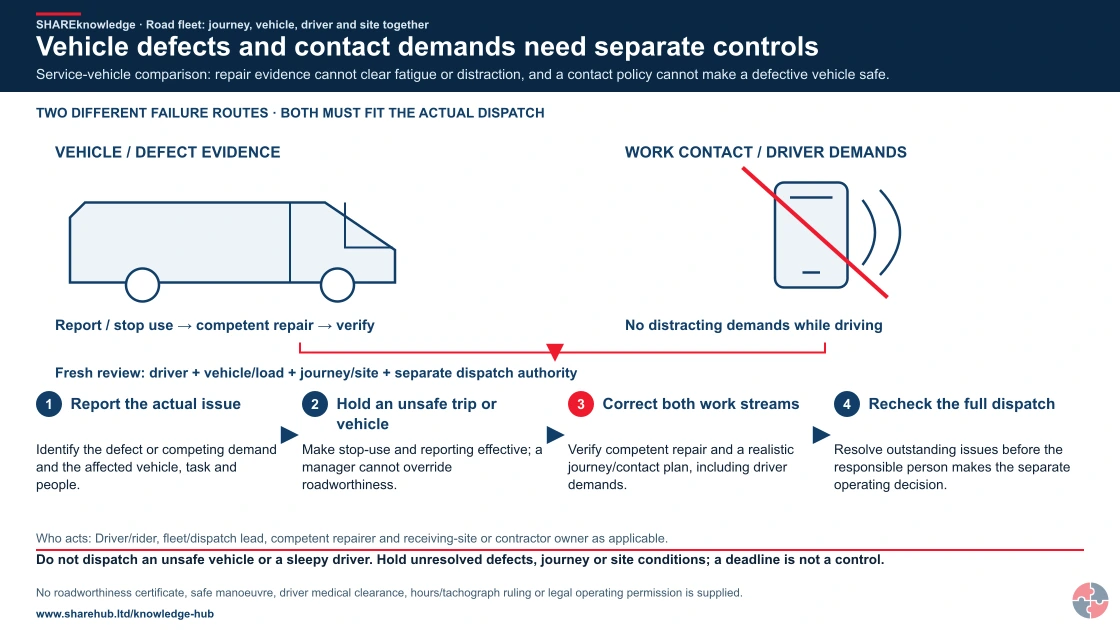
Full written explanation
A complete native service-vehicle map shows a stationary van connected to two independent questions: an unresolved vehicle defect and incoming work-contact demands. The defect route goes to stop-use/reporting, competent repair and verification; the contact route goes to employer planning that avoids distracting the driver and allows safe arrangements for communication. The paths join only at a fresh review of the actual vehicle, driver, load, journey and site, with a named separate dispatch authority. No actual defect, repair specification, safe stopping location, driver-hours limit, phone-law exception or operator approval is inferred. Grey fleet, contractors and GB/NI legal routes retain their actual applicable requirements.
Service-vehicle comparison: repair evidence cannot clear fatigue or distraction, and a contact policy cannot make a defective vehicle safe.
- Report the actual issue. Identify the defect or competing demand and the affected vehicle, task and people.
- Hold an unsafe trip or vehicle. Make stop-use and reporting effective; a manager cannot override roadworthiness.
- Correct both work streams. Verify competent repair and a realistic journey/contact plan, including driver demands.
- Recheck the full dispatch. Resolve outstanding issues before the responsible person makes the separate operating decision.
When the evidence does not fit: Do not dispatch an unsafe vehicle or a sleepy driver. Hold unresolved defects, journey or site conditions; a deadline is not a control.
Who acts: Driver/rider, fleet/dispatch lead, competent repairer and receiving-site or contractor owner as applicable.
Changed workplace
Delivery fleet: Connect realistic schedules, vehicle/load evidence, driver demands and safe site interfaces.
Service-vehicle employer: Resolve vehicle defects and communication pressure separately before a fresh dispatch review.
Evidence check: No roadworthiness certificate, safe manoeuvre, driver medical clearance, hours/tachograph ruling or legal operating permission is supplied.
Connect fleet governance to the actual driver, vehicle, journey and site decision
Primary references: HSE planning actual work journeys · HSE vehicle checks, defects and repair · HSE worker health and fatigue · HSENI separate work-driving route
Open the complete HD image (new tab)Download image

Connect fleet governance to the actual driver, vehicle, journey and site decision
Primary references: HSE planning actual work journeys · HSE vehicle checks, defects and repair · HSE worker health and fatigue · HSENI separate work-driving route
A grey fleet car journey, van delivery, HGV movement, minibus trip, motorcycle courier route, e-bike delivery and site plant crossing all need different controls. The learning point is the same: identify the credible failure route and select evidence that proves the control is working.
Use these examples in driver induction, supervisor briefings and fleet audits to test whether the policy is detailed enough for the vehicles people actually use.
| Vehicle example | Typical scenario | Control focus |
|---|---|---|
| Car or grey fleet | A project manager drives a personal car to a client site after a long meeting day. | Business-use insurance, licence check, MOT, journey necessity, fatigue break and alternative travel. |
| Van | A maintenance van carries tools, chemicals and ladders between jobs. | Payload calculation, racking, bulkhead, COSHH storage, ladder security, daily checks and defect reporting. |
| HGV | A contractor delivers heavy materials to a site with pedestrians and reversing constraints. | Operator licence checks, route booking, load security, banksman rules, segregation and delivery time control. |
| Minibus | A leisure or education provider transports a group to an event. | Driver entitlement, passenger supervision, seatbelts, emergency plan, rest breaks and vehicle checks. |
| Motorcycle | A rider makes time-sensitive urban deliveries in poor weather. | Mode choice, PPE, weather stop criteria, rider fatigue, load limits and no-speeding schedule design. |
| Bicycle or e-bike | A worker carries equipment or deliveries on mixed road and cycle routes. | Route selection, lighting, maintenance, rider visibility, battery charging and load stability. |
| Plant crossing public roads | A telehandler, MEWP or tractor briefly enters or crosses a public highway. | Vehicle legality, driver competence, banksman/signage, route control, lighting and segregation. |
Relevant official context: HSE driving and riding for work; verify the actual task and jurisdiction.HSENI driving at work; verify the actual task and jurisdiction.
Which road-fleet duties apply in GB and NI?
Work-road health and safety, public-road traffic law, commercial-vehicle rules and site transport controls have distinct GB and NI routes. Check the vehicle, journey and location before applying a rule.
DVSA’s April 2025 roadworthiness guide expressly applies to England, Scotland and Wales and is aimed at commercial goods and passenger vehicles. DVA’s August 2025 guide is the NI roadworthiness source. Neither is a universal schedule for every car.
HSE’s GB work-driving guidance covers work activities on roads and grey fleet but generally excludes ordinary commuting. HSENI sets out the separate NI employer duties and NI road-traffic enforcement boundary.
| Jurisdiction | Duty or regulation | Where it is relevant | Practical implication |
|---|---|---|---|
| GB | Health and Safety at Work etc. Act 1974 | GB general work-road risk duties. | Driver, journey and vehicle assessment. |
| GB | Management Regulations 1999 | GB risk assessment and arrangements. | Named controls, worker consultation and review. |
| NI | Health and Safety at Work (NI) Order 1978 | NI general work-road risk duties. | NI driver, vehicle and journey assessment. |
| NI | NI Management Regulations 2000 | NI risk assessment and arrangements. | NI consultation, competence and review. |
| GB | Road Traffic Act 1988 | GB public-road vehicle and driver law. | Check actual entitlement, roadworthiness and insurance. |
| NI | Road Traffic (NI) Order 1995 | NI public-road vehicle and driver law. | Check NI route, entitlement, condition and insurance. |
| NI | NI Construction and Use Regulations 1999 | NI vehicle construction and condition rules. | Apply the relevant NI vehicle requirements. |
Compare HSE driving and riding for work with HSENI driving at work for the actual journey.
What should a road fleet safety policy include?
A policy should turn legal duties and good practice into clear rules for authorising journeys, drivers, vehicles, loads and behaviour.
A fleet policy is most useful when it is practical enough for drivers and managers to use. It should not sit separately from operational planning. Sales targets, delivery slots, lone working, customer access, overtime, overnight travel, hire vehicles, grey fleet and contractor rules all need to be aligned with the policy.
A good policy also states what must stop work: unsafe vehicle, unsecured load, no valid licence, no business insurance, fatigue, severe weather, mobile phone pressure, aggression or unsafe customer site conditions.
| Policy element | What it should say | Evidence |
|---|---|---|
| Scope | Which vehicles, drivers, riders, contractors, grey fleet and journeys are covered. | Policy scope and fleet register. |
| Authorisation | Who may drive, what checks are needed and how often they are reviewed. | Driver authorisation register. |
| Vehicle standards | MOT, servicing, daily checks, defect rules, load security and modifications. | Vehicle standards and inspection records. |
| Journey planning | When journeys are avoided, combined, rescheduled, shared or stopped. | Journey risk procedure. |
| Behaviour rules | Speed, mobile phones, seatbelts, drugs/alcohol, fatigue and customer pressure. | Driver handbook and signed acknowledgement. |
| Incident reporting | What to report, when, to whom and what evidence to preserve. | Incident process and reporting form. |
| Data use | How telematics, dashcams and licence data are used fairly and lawfully. | Privacy notice and data policy. |
| Review | How performance, incidents, defects and audits improve the system. | Management review minutes and action tracker. |
Relevant official context: HSE driving and riding for work; verify the actual task and jurisdiction.HSENI driving at work; verify the actual task and jurisdiction.
How should drivers and riders be selected, authorised and supported?
Drivers and riders should be competent, licensed, authorised, briefed, monitored and supported for the vehicle and journey they are asked to undertake.
The source document places driver selection and competence at the centre of fleet safety, and rightly so. Licence entitlement alone does not prove that a person can safely tow, reverse a van, secure a load, drive long distances, use an electric vehicle, operate in a city centre, deliver to a construction site or manage customer aggression.
Checks must also be fair and lawful. Licence information and health information are personal data. Employers should collect only what is needed, explain why it is needed, restrict access and review retention.
| Control | What good looks like | Why it matters |
|---|---|---|
| Licence check | Use the GB DVLA check-code route or the NI DVA/nidirect licence-information route, with permission, at onboarding and risk-based intervals. | Confirms entitlement, endorsements and disqualification status. |
| Driving history review | Collisions, claims, near misses and penalty points trigger support or review. | Identifies patterns before serious incidents. |
| Vehicle-specific competence | Drivers are trained for vans, trailers, EVs, HGVs, minibuses or two-wheelers as relevant. | Different vehicles create different control demands. |
| Business rule briefing | Mobile phone, speed, fatigue, breaks, loads, defects and incident rules are understood. | Reduces uncertainty when pressure appears. |
| Vulnerable worker support | Young, new, inexperienced or higher-mileage drivers receive closer supervision. | HSE expects capability and vulnerability to be considered. |
| Coaching and refreshers | Telematics, incidents and observations lead to targeted coaching. | Turns data into safer behaviour and system improvement. |
| Driver CPC | Vocational drivers maintain required Driver CPC where applicable. | Supports legal compliance and professional competence. |
Check driver entitlement and road rules against the actual licensing jurisdiction; HSE driving and riding for work and the NI Highway Code are distinct. Do not assume a GB licence or MOT lookup is the NI check route.
For NI drivers use NI driving licence sharing and NI driver medical guidance where relevant; confirm the actual licensing authority and entitlement.
Use the driver’s permission-based DVLA GB or nidirect NI record route. Medical licensing, CPC, operator licensing and statutory driver-hours exceptions need their own current vehicle/licence/jurisdiction evidence; no universal check frequency or eligibility rule is approved here.
How should fitness to drive, fatigue and wellbeing be managed?
Plan work so fatigue, long shifts, poor sleep, illness or impairing medication do not create an unsafe trip. Check the actual driver, journey, rest and any applicable drivers-hours regime before dispatch.
HSE guidance highlights fatigue as a serious driving risk. Tired drivers have slower reactions, poorer vigilance, weaker concentration and poorer decision-making. The highest-risk times often include long monotonous journeys, night work, early starts, the early afternoon dip, long shifts and driving home after demanding work.
Fitness to drive should be managed respectfully. Workers should know when to disclose conditions that may affect driving, where to seek medical advice, and how the organisation will protect confidentiality while managing risk. Managers should not diagnose. They should support disclosure, use competent advice where needed and avoid creating schedules that make fatigue predictable.
| Issue | How harm can develop | Control |
|---|---|---|
| Long journeys | Alertness falls and reaction time slows. | Breaks, journey limits, shared driving, overnight stays and alternative travel. |
| Shift work | Driving after night work or long shifts increases sleep-related incident risk. | Rosters, rest, no unsafe drive-home expectation and fatigue reporting. |
| Medical conditions | Vision, diabetes, sleep apnoea, neurological or heart conditions may affect driving. | DVLA guidance, confidential reporting and occupational health advice. |
| Medication | Some medicines affect alertness, judgement or reaction. | Worker guidance, GP/pharmacist advice and temporary restrictions if needed. |
| Stress and mental health | Stress can distract, impair decision-making and affect sleep. | Workload review, support, signposting and management standards. |
| Posture and ergonomics | Poor seating causes discomfort, distraction and musculoskeletal strain. | Vehicle selection, seating guidance and breaks. |
| Drugs and alcohol | Impairment creates acute road risk and legal exposure. | Clear policy, support route and fair testing arrangements where justified. |
Relevant official context: HSE planning safe journeys; verify the actual task and jurisdiction.
How should journeys be planned and managed?
Journey planning should remove unnecessary travel, choose safer routes, allow realistic time, control fatigue and respect weather, welfare and site conditions.
Journey planning is where many fleet risks are created. A safe driver in a safe vehicle can still be placed at risk by a poor plan: too many visits, unrealistic delivery windows, no welfare access, long driving after a full shift, poor weather expectations, unsuitable roads, unfamiliar customer premises or pressure to make a deadline.
Planning should start with whether the journey is needed at all. Video meetings, public transport, route consolidation, local hire vehicles or overnight accommodation may reduce risk. Where driving is needed, the plan should allow legal speeds, breaks, parking, loading time, delays and safe cancellation.
| Planning question | Why it matters | Good evidence |
|---|---|---|
| Is the journey necessary? | Eliminating travel removes road risk. | Travel approval or alternative travel decision. |
| Is the route suitable? | Minor roads, low bridges, tight streets and poor surfaces may be unsuitable. | Route plan and driver feedback. |
| Is the timing realistic? | Pressure encourages speeding, skipped breaks and poor decisions. | Schedule assumptions and buffer time. |
| Are breaks built in? | Breaks help manage fatigue and concentration. | Journey plan or driver instruction. |
| What if weather worsens? | High winds, ice, fog and flooding change risk quickly. | Weather criteria and stop/delay rule. |
| Is welfare available? | Drivers need toilets, washing, rest areas and food/water access. | Customer/site arrangements and route notes. |
| Is the destination safe? | Customer or site conditions may involve reversing, pedestrians, violence or poor unloading areas. | Site delivery information and escalation route. |
Relevant official context: HSE planning safe journeys; verify the actual task and jurisdiction.
How should vehicles be selected and specified?
Vehicle choice should remove foreseeable risk by matching the vehicle to the task, driver, load, route, environment and technology needs.
Fleet procurement is a prevention control. If a van has poor visibility, weak load separation, inadequate payload, unsuitable racking or no reversing aids, the risk is built into the job before the driver starts. Vehicle selection should involve fleet users, HSSE, maintenance, procurement and operations.
Vehicle suitability should be reviewed when work changes: new loads, new routes, more mileage, heavier tools, new customers, seasonal weather, EV charging, trailers, two-wheelers or site access restrictions.
| Selection issue | What to consider | Evidence |
|---|---|---|
| Payload and load area | Weight, distribution, racking, bulkhead, restraint points and load access. | Specification, payload calculation and load plan. |
| Visibility and manoeuvring | Mirrors, cameras, sensors, blind spots, reversing aids and vulnerable road users. | Procurement standard and driver assessment. |
| Safety technology | AEB, lane assistance, speed assistance, telematics, dashcams and ADAS maintenance. | Vehicle specification and training records. |
| Driver ergonomics | Seat, controls, reach, posture, storage and cab layout. | User trials and ergonomic review. |
| Fuel or power type | Diesel, petrol, hybrid, EV charging, range, battery damage and recovery arrangements. | EV risk assessment and charging procedure. |
| Operating environment | Urban deliveries, rural roads, construction sites, adverse weather or night work. | Route and task specification. |
| Whole-life maintenance | Servicing access, parts, recalls, downtime and repair competence. | Maintenance contract and recall tracker. |
Relevant official context: HSE maintaining safe vehicles; verify the actual task and jurisdiction.
How should vehicle maintenance and roadworthiness be controlled?
Keep vehicles roadworthy through meaningful before-use checks, defect reporting, planned inspections and competent repair. The DVSA guide is for GB commercial goods and passenger vehicles; use the relevant NI vehicle and operator route for NI fleets.
DVSA's roadworthiness guide makes an important point: a maintenance system alone does not make vehicles roadworthy. It needs competent people, supervision, effective management, meaningful checks, prompt defect rectification and records that can be examined. Roadworthiness applies to the vehicle and, where relevant, trailers.
The maintenance regime should match vehicle type, operating conditions and legal status. HGVs, PSVs and licensed operators have specific expectations around safety inspections, inspection intervals, records, facilities, contractor arrangements and Traffic Commissioner scrutiny. Light vehicles and grey fleet still need a proportionate system.
| Control | What good looks like | Evidence |
|---|---|---|
| Maintenance planner | Inspection, service, MOT, safety inspection and recall dates visible in advance. | Fleet maintenance planner or system. |
| First-use inspection | New, hired, leased, borrowed or returned vehicles are checked before use. | First-use checklist and hire handover evidence. |
| Safety inspections | Frequency is risk-based and, where licensed, matches operator licence commitments. | Completed inspection records and brake test evidence. |
| Daily walkaround checks | Meaningful checks carried out before use and recorded. | Driver check records, including nil defects where used. |
| Defect rectification | Safety-critical defects remove vehicles from service until repaired. | Defect log, repair record and roadworthy release. |
| Contracted maintenance | Garages or inspection providers are competent, contracted and monitored. | Written contract, audit and quality review. |
| Management review | Defect trends, prohibitions, MOT results and inspection quality are reviewed. | Fleet dashboard and action tracker. |
The DVSA commercial roadworthiness guide 2025 states GB scope; DVA NI roadworthiness guide 2025 provides the NI commercial-vehicle route; and HSENI driving at work addresses NI employer work-driving duties.
What should daily vehicle checks cover?
A meaningful walkaround check before use must find and escalate safety defects; a ticked box cannot justify operating an unroadworthy vehicle. The exact items and frequency depend on the vehicle, use and applicable rules.
For GB commercial goods and passenger vehicles, follow the DVSA operator and driver daily-check guidance; for NI commercial fleets, follow the DVA guide. For cars and grey fleet, set proportionate pre-use checks for the vehicle and work journey, with defects reported and unsafe vehicles withheld. NI private vehicles also use the applicable DVA vehicle-test route.
Checks should be practical for the vehicle. A car check is not identical to an HGV, bus, trailer, tanker or van. Drivers must know what defects mean 'do not drive', and managers must back them when a vehicle is stopped.
| Check area | What to look for | Stop-use examples |
|---|---|---|
| Tyres and wheels | Tread, pressure, damage, bulges, wheel nuts and twin-wheel trapped objects. | Illegal tread, exposed cord, loose wheel nuts or serious damage. |
| Lights and indicators | All lights, brake lights, indicators, reflectors and beacons work. | Failed brake lights, indicators or required lamps. |
| Vision | Windscreen, mirrors, cameras, wipers, washer fluid and demisters. | Obstructed view, cracked screen in swept area or failed wipers. |
| Brakes and steering | Warning lights, air pressure, brake feel, leaks and steering response. | Brake warning, air leak, steering defect or abnormal pull. |
| Body and doors | Panels, doors, steps, tail lifts, guards, number plates and sharp edges. | Unsafe door, insecure panel or damaged tail lift. |
| Load and equipment | Load secured, racking intact, no loose tools, tailgate/bulkhead sound. | Unsecured load, overload suspicion or damaged restraints. |
| Cab and safety kit | Seatbelts, horn, warning triangle where used, PPE, first aid and cab housekeeping. | Seatbelt defect or loose objects affecting pedals. |
Compare DVSA commercial roadworthiness guide 2025 with DVA NI roadworthiness guide 2025 and NI vehicle testing; do not extend the commercial guide to every car.
How should defects be reported, assessed and closed?
Report a defect promptly, decide whether it makes the vehicle unsafe, remove unsafe vehicles from service and return them only after competent repair and verification. The driver must be able to decline an unsafe trip.
Defect reporting fails when drivers do not trust that anyone will act. A good system makes reporting simple, gives drivers authority to stop unsafe vehicles, prevents safety-critical defects being overridden, and records who assessed the defect and what competent repair and verification restored roadworthiness. A temporary control or manager approval cannot authorise an unroadworthy vehicle on the road.
For operator-licensed vehicles, DVSA expects defect reports and rectification records to be retained. The same principle is useful for any business fleet: if a defect was known before an incident, the organisation needs to show what it did.
| Step | What should happen | Evidence |
|---|---|---|
| Report | Driver records defect immediately with photos where useful. | Digital or paper defect report. |
| Triage | Responsible person assesses whether vehicle can be used. | Defect risk rating and stop-use decision. |
| Remove from service | Unsafe vehicles are quarantined, keys controlled or system blocked. | Vehicle status marker and manager notification. |
| Repair | Competent repairer fixes defect to acceptable standard. | Repair invoice, job card or maintenance record. |
| Verify | Vehicle is checked before return to service. | Roadworthy release or inspection sign-off. |
| Trend | Repeated defects are analysed by vehicle, driver, route, load or garage. | Monthly defect review. |
| Learn | Findings update procurement, training, schedules or checks. | Action tracker and closed-out improvement. |
Relevant official context: DVSA commercial roadworthiness guide 2025; verify the actual task and jurisdiction.DVA NI roadworthiness guide 2025; verify the actual task and jurisdiction.
How should grey fleet be managed?
When a worker uses their own vehicle for business travel, the employer still needs a proportionate system to check driver authority, suitable vehicle, correct insurance and journey risk. Ordinary home-to-normal-workplace commuting is generally outside HSE work-driving guidance.
Grey fleet is often the weak point in road risk management because the business does not own the vehicle. That does not remove the work-related risk. If an employee uses their own vehicle for a meeting, site visit or customer call, the organisation should be satisfied that the vehicle is legal, insured for business use, roadworthy and suitable for the journey.
The system should be proportionate. Annual licence, MOT and insurance confirmation is an illustrative local interval for some low-mileage use; reassess before use and when circumstances change. A valid MOT does not prove today’s roadworthiness. A high-mileage regional worker may need more frequent checks, journey planning, driver training, vehicle age/emissions criteria and alternatives such as hire cars or public transport.
| Control | Minimum expectation | Why it matters |
|---|---|---|
| Driver licence | Correct entitlement and periodic check with permission. | Confirms legal ability to drive. |
| Business-use insurance | Insurance covers the journey purpose. | Ordinary commuting/social cover may not be enough. |
| MOT and tax | MOT status checked where required, with tax/road legality confirmed. | Supports roadworthiness and legal use. |
| Vehicle suitability | Vehicle size, condition, age, emissions and safety features suit the work. | Prevents unsuitable vehicles being used for demanding journeys. |
| Maintenance declaration | Driver confirms servicing, tyres and defects are managed. | Private ownership should not hide poor condition. |
| Journey alternatives | Public transport, hire cars, pool cars or remote meetings considered. | Reduces unmanaged exposure. |
| Review frequency | Checks increase with mileage, points, incidents or higher-risk work. | Keeps controls risk-based. |
HSE HSE driving and riding for work explicitly includes grey fleet and distinguishes ordinary commuting in GB; HSENI driving at work sets the NI work-road approach.
How should load security and vehicle loading be controlled?
Every load must be safe for transport, secured against movement and compatible with the vehicle, route and unloading arrangements.
Load security applies beyond HGVs. Tools in a van, cylinders in a service vehicle, equipment in a car boot, goods on a trailer and materials on a flatbed can all move, injure occupants, affect braking, cause rollover or fall into the road. DVSA guidance is clear that operators, drivers and consignors all have responsibilities.
Good loading practice starts before loading: suitable vehicle, known weight, correct equipment, competent people, safe loading area and an unloading plan. Drivers should have authority not to leave with an unsafe load.
| Control | What good looks like | Failure mode |
|---|---|---|
| Load plan | Shows weight, position, restraint method and unloading precautions. | People guess how the load should be secured. |
| Payload control | Vehicle is not overloaded and axle limits are respected. | Braking and steering deteriorate or enforcement action follows. |
| Restraint equipment | Straps, chains, nets, bars or racking suit the load and are inspected. | Load shifts, falls or penetrates cab area. |
| Driver information | Driver knows how the load was secured and what to check en route. | Driver continues with a load they do not understand. |
| Multi-drop control | Load remains stable after part unloading. | Remaining load becomes unstable or unsecured. |
| Cab protection | Bulkheads/headboards protect occupants from load movement. | Tools or goods strike driver during braking. |
| Stop-work authority | Drivers can refuse unsafe loads without penalty. | Commercial pressure overrides safety. |
Relevant official context: DVSA GB load securing manual 2026; verify the actual task and jurisdiction.
A net or cover may contain loose material without providing adequate restraint. Assess the actual securing system, anchorage, axle/gross weights and stability after each partial unloading; a bulkhead label does not prove load capacity. NI applicability and engineering/licensed-standard approval remain held.
How should telematics, dashcams and driver data be used?
Use telematics to improve route design, vehicle condition and coaching with a lawful, transparent and proportionate data purpose. Do not infer an individual’s health, fault or intent from one metric.
Telematics can show speeding, harsh braking, acceleration, swerving, route deviation, idling, seatbelt use, collision forces and vehicle location. Dashcams can support incident reconstruction and protect against false claims. Driver-facing systems may detect fatigue or distraction. These tools can add value, but only when used with trust, clear rules and data protection discipline.
The mistake is to use technology as a punishment feed while ignoring the system that created the behaviour. Frequent speeding may point to unrealistic scheduling. Harsh braking may point to route selection, load movement, traffic conditions or poor defensive driving. Idling may point to customer delays, temperature control or welfare gaps.
| Technology | Useful for | Control needed |
|---|---|---|
| Telematics | Speed, harsh events, routes, idling, mileage and driver coaching. | Transparent policy, fair thresholds and management review. |
| Dashcams | Incident evidence, near miss review and coaching. | Privacy rules, access control and retention limits. |
| Driver-facing cameras | Fatigue or distraction alerts in higher-risk fleets. | Clear justification, consultation and safeguards. |
| ADAS | Emergency braking, lane support, blind spot and speed assistance. | Driver training and maintenance/calibration after repairs. |
| Digital check apps | Walkaround checks, photos, defects and audit trail. | Competent triage and no tolerance of tick-box behaviour. |
| Route systems | Safer routing, avoiding low bridges, restrictions and high-risk areas. | Do not rely blindly on sat-nav; validate for vehicle type. |
| Analytics | Trends by route, depot, manager, schedule or vehicle. | Use to improve systems as well as driver behaviour. |
HSE Great Britain journey planning, fatigue, scheduling and telemetry coaching; Highway Code break recommendations do not replace the applicable statutory driver-hours regime. UK government workplace monitoring basics support justified monitoring, worker information and a policy. Detailed lawful-basis, special-category, DPIA, retention and automated-decision implementation need current specialist evidence and approval.
Detailed camera/ADAS performance, calibration, medical inference and automated disciplinary design require actual current evidence and specialist review. Telemetry supports coaching and scheduling; drowsiness cameras do not replace fatigue control.
How should contractors and outsourced transport be managed?
Clients and contractors both need clear standards, cooperation, coordination and monitoring where vehicles are used for work.
Contracted transport can import risk into the business. Delivery partners, couriers, plant delivery firms, waste carriers, fuel tankers, maintenance providers and agency drivers may be working under different pressures and procedures. The client should not assume that outsourcing removes the duty to coordinate work safely.
A strong arrangement defines pre-qualification, vehicle standards, driver competence, site rules, booking requirements, load security, welfare, incident reporting, telematics expectations, stop-work authority and how performance is reviewed.
| Stage | What to check | Evidence |
|---|---|---|
| Pre-qualification | Operator licence status where relevant, insurance, competence, maintenance and incident history. | Approved contractor record. |
| Contract standard | Vehicle, driver, load, fatigue, incident and site traffic requirements. | Contract schedule or transport standard. |
| Pre-assignment review | Route, delivery point, load, vehicle type, time window and welfare arrangements. | Booking risk check. |
| Induction | Site rules, pedestrian routes, reversing, waiting areas, PPE and emergency arrangements. | Induction record. |
| Monitoring | Spot checks, defect observations, driver behaviour and site compliance. | Inspection record and non-conformance log. |
| Incident learning | Contractors report incidents and near misses and share corrective actions. | Investigation and close-out record. |
| Review | Performance is reviewed before renewal or high-risk work. | Supplier review minutes. |
Relevant official context: HSE driving and riding for work; verify the actual task and jurisdiction.HSENI driving at work; verify the actual task and jurisdiction.
How does road fleet safety connect to workplace transport?
A public-road trip can become a workplace-transport hazard at depots, loading bays and customer sites. Separate people and moving vehicles and agree loading, reversing, handover and contractor controls for the actual site.
A serious number of vehicle incidents happen at the boundary between road and workplace: reversing into loading bays, unloading in customer yards, pedestrians crossing car parks, forklift interface, banksman communication, tail-lift work, trailer coupling, tanker unloading and construction site deliveries.
HSG136 and INDG199 are important because they bring the site dimension into fleet management. The same vehicle may need both road risk controls and workplace transport controls.
| Interface | Risk | Control |
|---|---|---|
| Depot and yard | Pedestrian strike, reversing, blind spots and mixed traffic. | Traffic plan, segregation, one-way routes and speed limits. |
| Loading bay | Falls, vehicle movement, premature departure and load shift. | Bay controls, restraint, communication and safe loading system. |
| Customer site | Unknown hazards, poor access, aggression or unsafe unloading area. | Pre-delivery checks and driver escalation route. |
| Construction site | Plant interface, rough ground, reversing, buried services and exclusion zones. | Site induction, delivery plan and banksman rules. |
| Roadside work | Live traffic, breakdown, tyre change or emergency stop. | Breakdown procedure, high visibility and recovery rules. |
| Fuel or tanker work | Fire, explosion, overfill, spill and vapour release. | Specialist procedures, DSEAR and L133 where relevant. |
| EV charging area | Vehicle movement, cable trip, electrical faults and fire response. | Charging layout, inspection and emergency plan. |
See HSE workplace transport for GB site traffic and HSENI driving at work for NI.
How should fleet incidents and near misses be investigated?
Fleet investigations should examine road conditions, driver factors, vehicle condition, journey planning, work pressure, load security and management controls.
The source document rightly gives incident reporting a full section. Fleet learning should include collisions, near misses, damage-only events, bridge strikes, load movement, speeding trends, harsh braking, breakdowns, vehicle defects, reversing events, customer aggression, fatigue reports and unsafe site access.
A good investigation does not stop at 'driver should have paid more attention'. It checks whether the journey was realistic, whether the driver was tired, whether the route was suitable, whether the vehicle was maintained, whether telematics showed earlier warnings, whether the load moved, and whether the organisation's expectations encouraged risk.
| Evidence type | What it can show | Use carefully because |
|---|---|---|
| Driver account | Perception, decisions, fatigue, route and pressures. | Memory and stress can affect accuracy. |
| Telematics | Speed, braking, acceleration, location and timing. | Needs context and fair interpretation. |
| Dashcam/CCTV | Road position, other users, signals, weather and impact sequence. | May not show organisational causes. |
| Vehicle inspection | Tyres, brakes, lights, load, warnings and defects. | Post-incident damage can mask pre-existing issues. |
| Journey plan | Schedule, route, breaks, weather and customer expectations. | May differ from actual work pressure. |
| Maintenance records | Service, MOT, inspections, defects and repairs. | Records need quality review, not just existence. |
| Witness statements | Independent observations and site context. | Need prompt collection and careful interviewing. |
| Management evidence | Policy, training, previous incidents, audits and supervision. | Often reveals recurring system weaknesses. |
Relevant official context: HSE driving and riding for work; verify the actual task and jurisdiction.HSENI driving at work; verify the actual task and jurisdiction.
How can the hierarchy of controls reduce risks from fleet journeys and vehicle operations?
ERICPD helps choose stronger controls before relying on drivers to cope with poor planning, poor vehicles or poor work design.
Fleet risk is sometimes over-reliant on driver behaviour. Training matters, but the hierarchy of control asks whether the organisation can remove journeys, reduce exposure, choose safer vehicles, improve routes, redesign schedules or engineer out reversing and loading hazards before expecting individuals to compensate.
PPE is rarely the main public-road control, but it may matter for riders, roadside breakdowns, loading, construction site deliveries and workplace transport interfaces.
Choose the activity
How can the ERICPD hierarchy of controls reduce risks while planning the drive after a long shift?

| Control level | Control for this activity | Owner and verification | Stop / restart decision |
|---|---|---|---|
| Eliminate | Remove or defer the non-essential journey while the worker is unfit to drive. | Process owner verifies that the revised workflow achieves the required output and the hazardous step is genuinely removed. | If the hazardous step remains, retain a task assessment and select the stronger feasible remaining controls. |
| Reduce, including substitution | Use a rested replacement driver, suitable transport or local accommodation instead of the fatigued worker driving. | Process/technical owner validates the alternative, its compatibility and any new risks before adoption. | Reject the alternative if suitability is unproved or its new hazards are unresolved. |
| Isolate | Do not release the vehicle to a driver who is unfit; keep the worker away from driving and other safety-critical duties. | Supervisor verifies the task boundaries and that the separation or isolation protects affected people and connected work. | Hold or stop for sleepiness, impaired concentration or pressure to drive despite being unfit. |
| Control: physical safeguards | Provide a safe collection/waiting location and suitable vehicle arrangements; driver-assistance systems do not make drowsy driving safe. | Competent equipment/process owner checks driver fitness, alternative transport, duty history and realistic journey timing. | Hold or stop for sleepiness, impaired concentration or pressure to drive despite being unfit. |
| Control: work method and response | The driver and transport owner check alertness, recent duty and sleep opportunity before departure. Agree a safe stop/contact plan and provide alternative transport or accommodation whenever the driver is unfit; caffeine is not a release criterion. | Supervisor confirms the limits, response, communication and restart authority with the people doing this activity. | Stop if the agreed method, communication, competent cover or task limits cannot be maintained. |
| PPE | Seat belts remain necessary but do not control driver fatigue; there is no PPE that makes an unfit driver safe. | Assessor confirms whether PPE is needed and checks selection, condition, compatibility and any required face-fit evidence. | Do not rely on unsuitable or defective protection, or use PPE to continue after an essential source control fails. |
| Discipline | Track fatigue-related journey changes and revise scheduling when repeated late finishes create the same problem. | Release only after transport owner confirms a fit driver or a safe non-driving alternative. Retain the checks and unresolved restrictions at handover. | Keep the activity on hold while defects or required reinstatement evidence remain unresolved. |
How can the ISO 45001 hierarchy of controls reduce risks while planning the drive after a long shift?

| Control level | Control for this activity | Owner and verification | Stop / restart decision |
|---|---|---|---|
| Elimination | Remove or defer the non-essential journey while the worker is unfit to drive. | Process owner verifies that the revised workflow achieves the required output and the hazardous step is genuinely removed. | If the hazardous step remains, retain a task assessment and select the stronger feasible remaining controls. |
| Administrative controls | Use a rested replacement driver, suitable transport or local accommodation instead of the fatigued worker driving. | Process/technical owner validates the alternative, its compatibility and any new risks before adoption. | Reject the alternative if suitability is unproved or its new hazards are unresolved. |
| Administrative controls | Do not release the vehicle to a driver who is unfit; keep the worker away from driving and other safety-critical duties. | Supervisor verifies the task boundaries and that the separation or isolation protects affected people and connected work. | Hold or stop for sleepiness, impaired concentration or pressure to drive despite being unfit. |
| Engineering controls | Provide a safe collection/waiting location and suitable vehicle arrangements; driver-assistance systems do not make drowsy driving safe. | Competent equipment/process owner checks driver fitness, alternative transport, duty history and realistic journey timing. | Hold or stop for sleepiness, impaired concentration or pressure to drive despite being unfit. |
| Administrative controls | The driver and transport owner check alertness, recent duty and sleep opportunity before departure. Agree a safe stop/contact plan and provide alternative transport or accommodation whenever the driver is unfit; caffeine is not a release criterion. | Supervisor confirms the limits, response, communication and restart authority with the people doing this activity. | Stop if the agreed method, communication, competent cover or task limits cannot be maintained. |
| PPE | Seat belts remain necessary but do not control driver fatigue; there is no PPE that makes an unfit driver safe. | Assessor confirms whether PPE is needed and checks selection, condition, compatibility and any required face-fit evidence. | Do not rely on unsuitable or defective protection, or use PPE to continue after an essential source control fails. |
| Administrative controls | Track fatigue-related journey changes and revise scheduling when repeated late finishes create the same problem. | Release only after transport owner confirms a fit driver or a safe non-driving alternative. Retain the checks and unresolved restrictions at handover. | Keep the activity on hold while defects or required reinstatement evidence remain unresolved. |
How can the ERICPD hierarchy of controls reduce risks while delivering to a restricted customer yard?

| Control level | Control for this activity | Owner and verification | Stop / restart decision |
|---|---|---|---|
| Eliminate | Avoid the hazardous yard entry by delivering to a suitable safer agreed point where practicable. | Process owner verifies that the revised workflow achieves the required output and the hazardous step is genuinely removed. | If the hazardous step remains, retain a task assessment and select the stronger feasible remaining controls. |
| Reduce, including substitution | Use a suitable smaller vehicle or forward-only delivery arrangement after checking capacity and new handling demands. | Process/technical owner validates the alternative, its compatibility and any new risks before adoption. | Reject the alternative if suitability is unproved or its new hazards are unresolved. |
| Isolate | Keep pedestrians and customer staff out of vehicle movement and unloading zones. | Supervisor verifies the task boundaries and that the separation or isolation protects affected people and connected work. | Hold or stop for uncontrolled pedestrian access, inadequate clearance or lost signaller communication. |
| Control: physical safeguards | Provide suitable access, visibility, lighting and physical separation; verify vehicle aids without relying on them to remove blind spots. | Competent equipment/process owner checks vehicle fit, swept path, pedestrian separation and agreed unloading arrangements. | Hold or stop for uncontrolled pedestrian access, inadequate clearance or lost signaller communication. |
| Control: work method and response | Agree the route, unloading point and any trained signaller before arrival; stop when the route or communication is unclear. | Supervisor confirms the limits, response, communication and restart authority with the people doing this activity. | Stop if the agreed method, communication, competent cover or task limits cannot be maintained. |
| PPE | Use assessed visibility and foot protection outside the cab; PPE does not create safe clearance around a reversing vehicle. | Assessor confirms whether PPE is needed and checks selection, condition, compatibility and any required face-fit evidence. | Do not rely on unsuitable or defective protection, or use PPE to continue after an essential source control fails. |
| Discipline | Report site changes and near misses to dispatch and update delivery instructions before the next visit. | Release only after driver and site contact confirm a safe delivery arrangement. Retain the checks and unresolved restrictions at handover. | Keep the activity on hold while defects or required reinstatement evidence remain unresolved. |
How can the ISO 45001 hierarchy of controls reduce risks while delivering to a restricted customer yard?

| Control level | Control for this activity | Owner and verification | Stop / restart decision |
|---|---|---|---|
| Elimination | Avoid the hazardous yard entry by delivering to a suitable safer agreed point where practicable. | Process owner verifies that the revised workflow achieves the required output and the hazardous step is genuinely removed. | If the hazardous step remains, retain a task assessment and select the stronger feasible remaining controls. |
| Substitution | Use a suitable smaller vehicle or forward-only delivery arrangement after checking capacity and new handling demands. | Process/technical owner validates the alternative, its compatibility and any new risks before adoption. | Reject the alternative if suitability is unproved or its new hazards are unresolved. |
| Engineering controls | Keep pedestrians and customer staff out of vehicle movement and unloading zones. | Supervisor verifies the task boundaries and that the separation or isolation protects affected people and connected work. | Hold or stop for uncontrolled pedestrian access, inadequate clearance or lost signaller communication. |
| Engineering controls | Provide suitable access, visibility, lighting and physical separation; verify vehicle aids without relying on them to remove blind spots. | Competent equipment/process owner checks vehicle fit, swept path, pedestrian separation and agreed unloading arrangements. | Hold or stop for uncontrolled pedestrian access, inadequate clearance or lost signaller communication. |
| Administrative controls | Agree the route, unloading point and any trained signaller before arrival; stop when the route or communication is unclear. | Supervisor confirms the limits, response, communication and restart authority with the people doing this activity. | Stop if the agreed method, communication, competent cover or task limits cannot be maintained. |
| PPE | Use assessed visibility and foot protection outside the cab; PPE does not create safe clearance around a reversing vehicle. | Assessor confirms whether PPE is needed and checks selection, condition, compatibility and any required face-fit evidence. | Do not rely on unsuitable or defective protection, or use PPE to continue after an essential source control fails. |
| Administrative controls | Report site changes and near misses to dispatch and update delivery instructions before the next visit. | Release only after driver and site contact confirm a safe delivery arrangement. Retain the checks and unresolved restrictions at handover. | Keep the activity on hold while defects or required reinstatement evidence remain unresolved. |
Relevant official context: HSE driving and riding for work; verify the actual task and jurisdiction.HSENI driving at work; verify the actual task and jurisdiction.
How should the selected controls be checked in practice?
Remove the trip or hazard where possible; otherwise improve the route, vehicle and work system before relying on reminders or PPE. The hierarchy is a decision aid, not a substitute for road-law or operator requirements.
Road fleet examples support assessed driver/vehicle/journey controls; current commercial, CPC, hours/tachograph, medical and operator-law detail needs the actual GB/NI route and named specialist approval.
A shift ends late and a driver is asked to complete a long delivery in worsening weather.
A van reverses toward pedestrians while a hurried team loads unsecured tools.
What evidence shows road fleet safety is managed well?
Good evidence proves that drivers, vehicles, journeys, loads, contractors, incidents and improvement actions are controlled in practice.
Evidence should be easy to find before an incident, not assembled afterwards. A good fleet system gives managers a live view of driver authorisation, licence check status, MOT and servicing, inspection dates, defects, insurance, grey fleet approval, training, telematics trends, collisions and overdue actions.
The quality of evidence matters. Ten generic checklist ticks are less useful than one clear stop-use defect with prompt repair, manager review and learning.
| Evidence | What it proves | Review trigger |
|---|---|---|
| Driver authorisation register | Only approved people drive for work. | New starter, role change, points, incident or periodic review. |
| Licence and insurance checks | Driver entitlement and business-use cover. | Expiry, incident, high mileage or annual cycle. |
| Vehicle register | Vehicles, trailers, owners, MOT, service and equipment status. | New vehicle, disposal, hire or modification. |
| Daily check records | Vehicles are checked before use. | Defect trend or missing checks. |
| Defect and repair log | Defects are reported, assessed and closed. | Repeat defects or safety-critical items. |
| Journey planning records | High-risk journeys are reviewed and authorised. | Long trip, night work, bad weather or remote site. |
| Telematics coaching records | Data leads to fair coaching and system review. | Risk score trend or repeated events. |
| Incident action tracker | Collisions and near misses drive improvement. | Overdue action or repeat event. |
Relevant official context: HSE driving and riding for work; verify the actual task and jurisdiction.HSENI driving at work; verify the actual task and jurisdiction.
What should a road fleet risk register include?
The register should connect fleet hazards to controls, evidence, owners and review triggers.
A fleet risk register should not be a generic statement saying 'road traffic accident'. It should describe credible scenarios: tired engineer driving home after a night call-out, overloaded van on rural roads, grey fleet user with no business insurance, unsecured tools in a collision, delivery driver pressured by time windows, HGV entering a site with pedestrians, or contractor tanker unloading fuel.
The register should be reviewed alongside incidents, defects, licence checks, telematics trends, maintenance performance, claims and worker feedback.
| Field | Purpose | Example |
|---|---|---|
| Scenario | Describes the event clearly. | Van driver loses control after long day and tight schedule. |
| People at risk | Identifies who could be harmed. | Driver, passenger, pedestrians and other road users. |
| Contributing factors | Shows upstream causes. | Fatigue, weather, high mileage, poor route and schedule pressure. |
| Controls | Lists prevention and mitigation. | Journey approval, breaks, overnight stay and telematics coaching. |
| Evidence | Proves controls are working. | Journey plan, rest record, driver briefing and review. |
| Owner | Allocates accountability. | Regional operations manager. |
| Performance indicator | Shows whether risk is improving. | Fatigue reports, harsh events, mileage and incidents. |
| Review trigger | Defines when to revisit. | Collision, near miss, new route, new customer, seasonal weather or vehicle change. |
Relevant official context: HSE driving and riding for work; verify the actual task and jurisdiction.HSENI driving at work; verify the actual task and jurisdiction.
How could BuildOut Ltd manage road vehicle fleet safety?

BuildOut Ltd would manage vans, pickups, HGV deliveries, trailers, site vehicles and grey fleet as one connected transport risk system.
BuildOut Ltd
BuildOut Ltd is a construction and property maintenance business used by SHARE to show how health and safety topics apply in a real business context.
BuildOut uses vans for maintenance teams, pickups towing plant trailers, pool cars for surveyors, grey fleet for project managers, occasional hired vehicles and contractor HGVs delivering materials. The company keeps a fleet register that records vehicle type, driver authorisation, payload, racking, MOT, service date, inspection frequency, insurance, telematics status, EV charging arrangements and whether the vehicle can enter construction sites.
Before drivers are authorised, BuildOut checks licence entitlement with permission, verifies training needs, reviews penalty points or incident history, briefs the driver handbook and records business-use insurance for grey fleet. Higher-risk drivers, towing users, van drivers and people doing long journeys receive face-to-face training on load security, fatigue, mobile phone rules, reversing, customer site access and defect escalation.
Operationally, BuildOut plans journeys through its job management system. Jobs with long travel, remote sites, poor weather, out-of-hours work, heavy tools, towing or customer access issues are flagged for manager review. Planners are not allowed to set schedules that require speeding, skipped breaks or driving home exhausted after night work. Drivers can stop a journey because of fatigue, weather, unsafe load, aggression or unsafe customer site conditions.
Vehicle condition is controlled through daily digital checks, a defect triage process, maintenance planner, MOT/service tracker and stop-use status. Vans have payload limits, fixed racking, bulkheads and load restraint. Hired vehicles receive first-use checks. Contractors delivering materials must meet BuildOut's site delivery rules, book arrival times, segregate from pedestrians and report incidents or near misses.
BuildOut's assurance model has three layers. Drivers complete binary pre-use checks. Supervisors complete weekly spot checks on vehicles, loads and records. The HSSE manager and fleet manager review telematics, defects, incidents, claims, customer complaints, licence checks and maintenance performance monthly. Actions are assigned in the management system, tracked to close and used to update procurement, training and planning rules.
| Management element | How BuildOut controls it | Evidence |
|---|---|---|
| Fleet register | Records all company, hire, trailer and grey fleet vehicles. | Live register and owner allocation. |
| Driver authorisation | Checks licence, competence, insurance and role-specific training. | Driver matrix and signed handbook. |
| Journey planning | Flags long, out-of-hours, towing, remote or weather-sensitive journeys. | Job planning risk flags and manager approval. |
| Vehicle condition | Daily checks, maintenance planner, defects and stop-use rules. | Digital inspections and defect close-out. |
| Load security | Payload checks, racking, bulkheads, restraints and driver training. | Load inspection and training records. |
| Contractor transport | Delivery booking, site induction, segregation and incident reporting. | Contractor standards and site check records. |
| Learning | Telematics, incidents, defects and claims are reviewed together. | Monthly dashboard and action tracker. |
Relevant official context: HSE driving and riding for work; verify the actual task and jurisdiction.HSENI driving at work; verify the actual task and jurisdiction.
Who needs fleet competence, and what demonstrates it?
Test actual driver, vehicle, journey and loading decisions, including stopping an unsafe trip; attendance alone is insufficient.
| Role | Learning to test | Competence demonstration | Assessor and record | Reassessment trigger |
|---|---|---|---|---|
| Drivers and riders | Know authorised vehicle, journey and defect limits. | Demonstrate walkaround, load and no-drive decision. | Fleet supervisor records observation. | New vehicle, route or incident. |
| Dispatchers | Plan realistic journeys and rest. | Reject a fatigued or weather-exposed schedule. | Fleet lead reviews dispatch record. | Route or shift change. |
| Fleet maintenance | Assess and repair safety defects. | Show first-use, inspection and hand-back evidence. | Competent maintenance manager signs. | Defect trend or supplier change. |
| Site/loading supervisors | Separate pedestrians and secure load. | Observe live loading and stop a conflict. | Site manager records field test. | Layout or vehicle mix changes. |
| Fleet leaders | Verify GB/NI legal route, contractors and trends. | Review sample grey fleet and incident cases. | Independent safety lead challenges actions. | New jurisdiction or policy change. |
Relevant official context: HSE driving and riding for work; verify the actual task and jurisdiction.HSENI driving at work; verify the actual task and jurisdiction.
How can BS EN ISO 45001 support road vehicle fleet safety management?
A voluntary occupational health and safety system can help own work journeys, driver competence, vehicle condition, contractor coordination, incident learning and verification without replacing road traffic law.
HSE public guidance supports practical management themes in Great Britain. ISO clause mapping, conformity and certification claims remain held for current licensed-text and specialist review; this page does not establish compliance or certification.
What are the warning signs that fleet safety is weak?
Weakness usually appears as repeated defects, informal grey fleet use, unrealistic schedules, poor data use and drivers feeling unable to stop unsafe work.
Warning signs should be treated as early evidence of system drift. A fleet may look controlled because vehicles are insured and MOT'd, but still be weak if drivers are exhausted, loads are unsecured, defects are normalised, grey fleet documents are missing and telematics only appears after a crash.
The important question is not whether records exist, but whether they are changing decisions.
| Warning sign | How harm can develop | Action |
|---|---|---|
| Drivers skip checks | Defects reach the road unnoticed. | Retrain, simplify checks and audit by supervisor. |
| Same defects repeat | Maintenance quality or vehicle choice may be failing. | Trend defects and review suppliers/procurement. |
| Schedules require rushing | Speeding, fatigue and risky decisions increase. | Re-plan work and challenge performance targets. |
| Grey fleet is informal | No proof of licence, MOT, insurance or suitability. | Introduce authorisation and alternatives. |
| Telematics is punitive | Drivers hide issues and managers miss system causes. | Use coaching and planning review. |
| Unsafe loads are accepted | Load shift, rollover or objects striking occupants/public. | Load training, equipment and stop-work authority. |
| Contractors are unmanaged | Delivery risk appears on site without agreed controls. | Pre-qualify and monitor transport contractors. |
| Incidents blame the driver only | Underlying work pressure and vehicle issues persist. | Use root cause analysis and action tracking. |
Relevant official context: HSE driving and riding for work; verify the actual task and jurisdiction.HSENI driving at work; verify the actual task and jurisdiction.
Road vehicle fleet safety FAQs - what do people ask?
People usually ask what counts as driving for work, how to manage grey fleet, how often to check vehicles and how telematics should be used.
Does ordinary commuting count as driving for work?
Generally no under HSE GB guidance; a trip from home to a work location other than the normal workplace can be work driving. Check the actual arrangement.
Does a privately owned car fall outside fleet management?
No. Grey-fleet work journeys need proportionate driver, vehicle, insurance and journey controls.
Can a van leave with an unrectified safety defect?
No. Remove an unsafe vehicle from service until competent repair and verification.
Does the DVSA roadworthiness guide apply unchanged in NI?
No. The cited April 2025 guide states England, Scotland and Wales scope; use the DVA August 2025 guide for NI commercial vehicles.
How often must every fleet car have a walkaround?
There is no single schedule from the commercial-vehicle guide for every car; assess vehicle, use and applicable law.
Can high-vis replace pedestrian segregation in a yard?
No. Separate people and vehicles before relying on visibility clothing for residual risk.
Should telematics automatically trigger discipline?
Use telemetry as one input to coaching and safer scheduling, with justified monitoring, worker information and a clear policy. A metric alone does not establish fault, intent or health; detailed automated decision and disciplinary processes need specialist review.
What do the acronyms and key terms mean?
Acronyms should be explained so drivers, managers, HSSE, HR and procurement teams use the same language.
| Acronym | Meaning | Plain-English use |
|---|---|---|
| ADAS | Advanced Driver Assistance Systems | Vehicle safety technology such as emergency braking or lane support. |
| AEB | Autonomous Emergency Braking | System that may brake automatically to reduce collision risk. |
| CPC | Certificate of Professional Competence | Driver or transport manager professional competence qualification route. |
| DVLA | Driver and Vehicle Licensing Agency | Agency responsible for driver licensing in Great Britain. |
| DVSA | Driver and Vehicle Standards Agency | Agency responsible for vehicle standards, roadworthiness and enforcement. |
| EV | Electric Vehicle | Battery-powered vehicle needing charging and battery incident controls. |
| GB | Great Britain | England, Scotland and Wales; Northern Ireland may have separate arrangements. |
| HGV | Heavy Goods Vehicle | Large goods vehicle with specific licensing and maintenance expectations. |
| MOT | Ministry of Transport test | Annual vehicle roadworthiness test for applicable vehicles. |
| PPE | Personal Protective Equipment | Equipment worn by people, such as rider protection or hi-vis for roadside/site work. |
| NI | Northern Ireland | Separate NI work-road and traffic routes. |
| ERICPD | Eliminate, Reduce, Isolate, Control, PPE, Discipline | Control-selection and assurance teaching aid. |
How can I practise the checks in 3D?
Follow the highlighted check, compare a sound part with a fault, and see how a missed fault can cause harm. Then use the matching blank checksheet to record what you actually find.
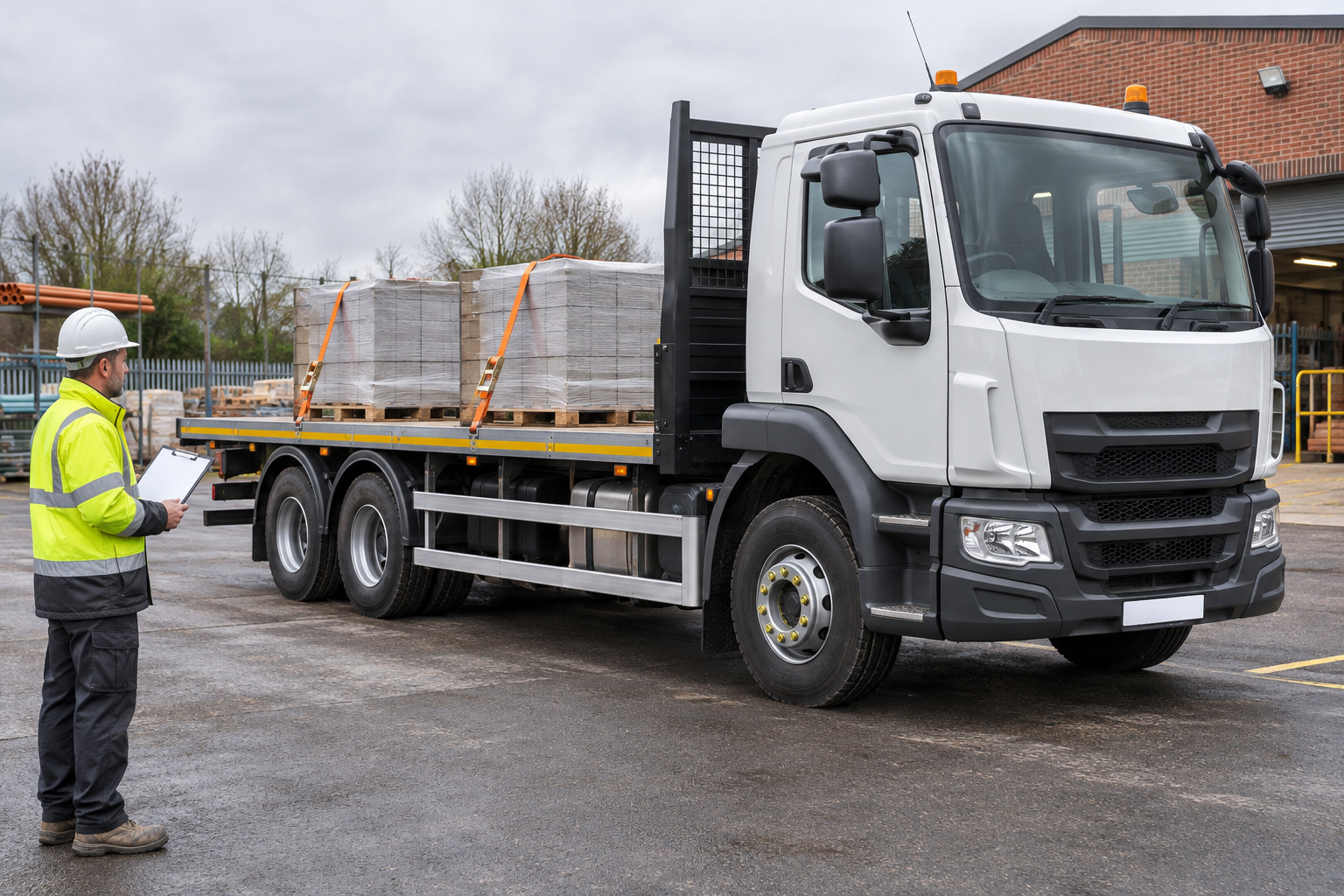

Larger trucks and HGVs: daily walkaround check
32 checks · sound and fault examples
Follow the HGV walkaround checks for cab, tyres, lights, body, load and reporting. Check the actual vehicle, trailer, load and specialist body; a learning example does not prove roadworthiness.
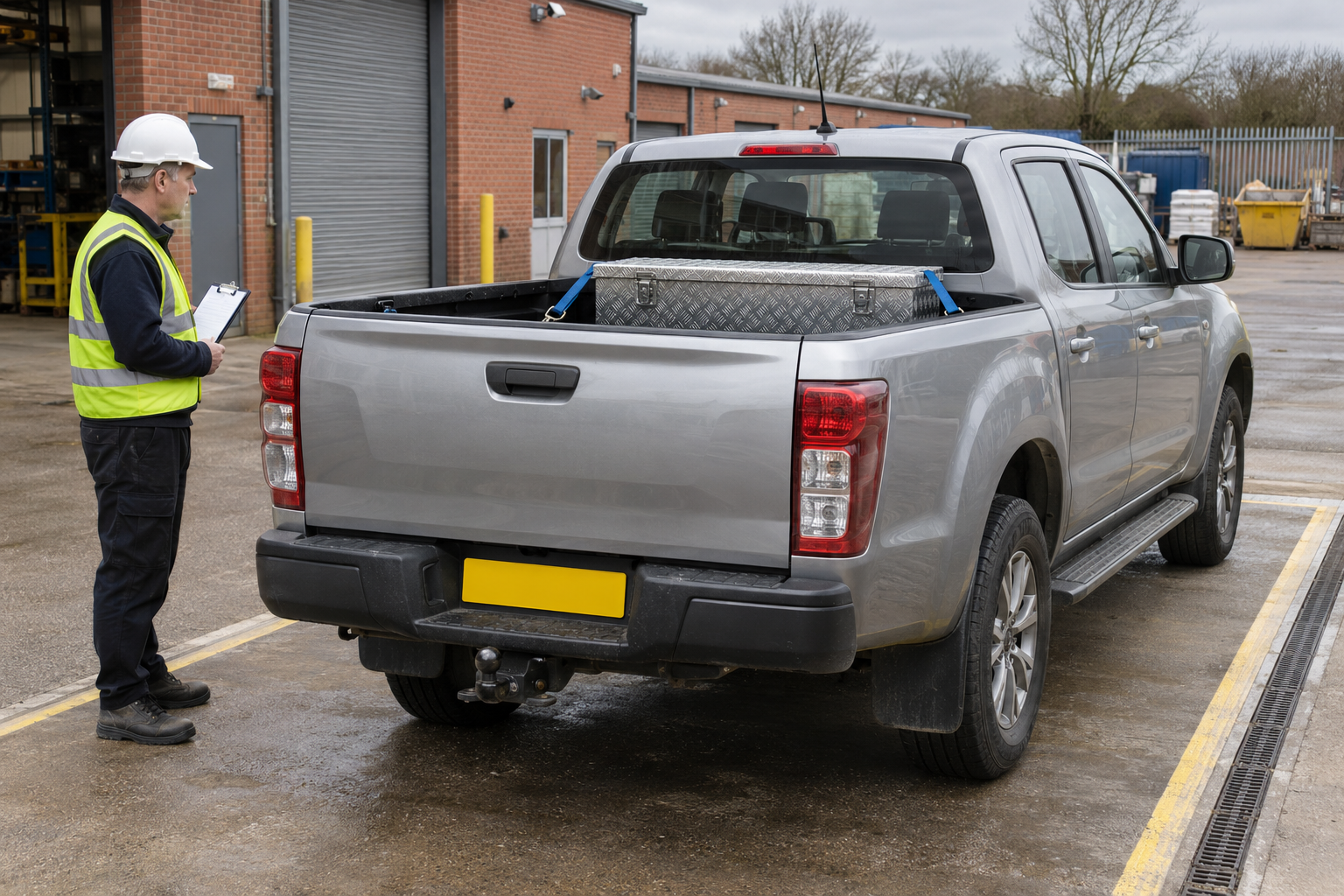
Pickup trucks: daily vehicle check
24 checks · sound and fault examples
Walk round the pickup and follow cab, tyres, lights, load-bed and defect checks. Check the actual vehicle, load and configuration; this model does not prove roadworthiness.
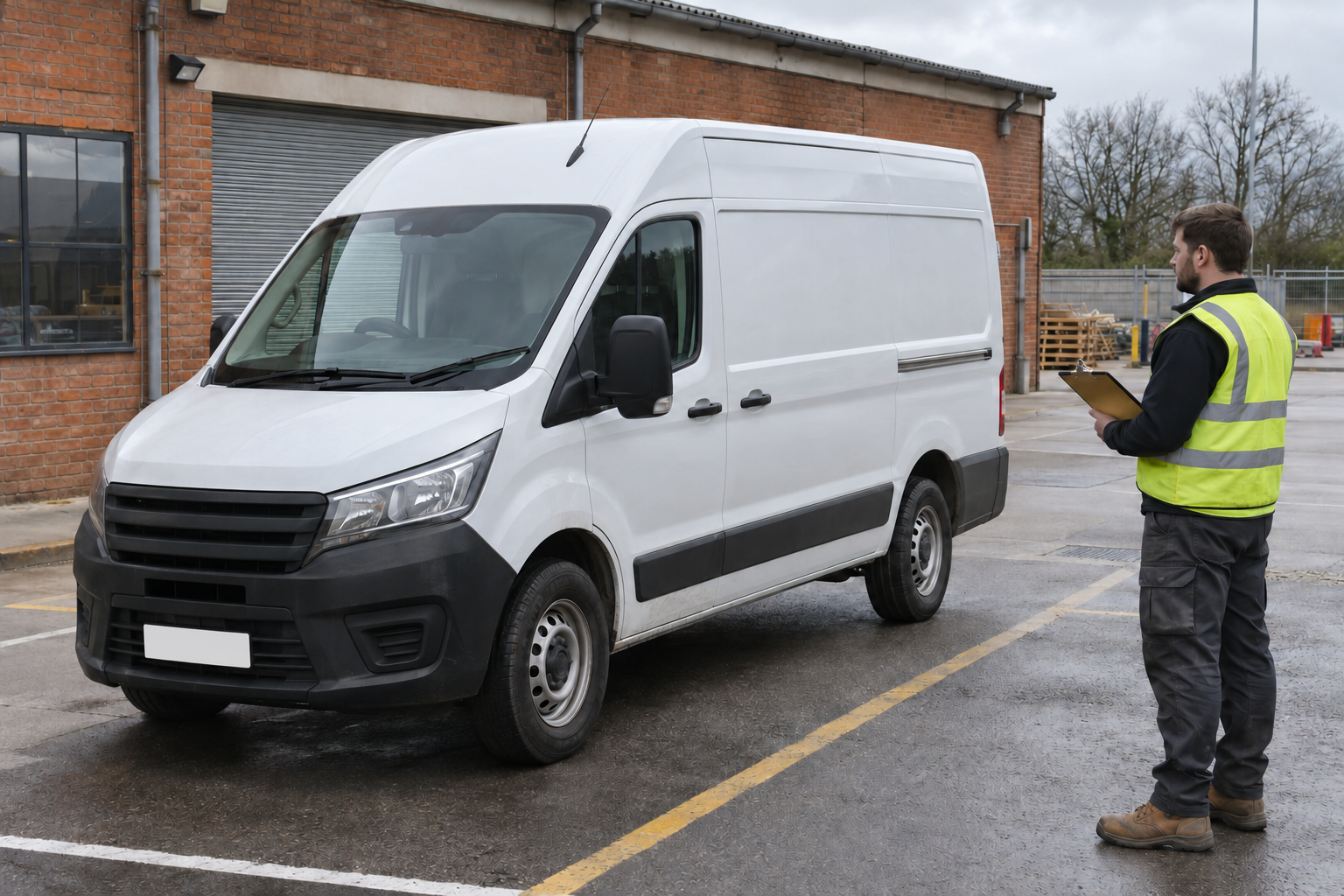
Vans: daily vehicle check
24 checks · sound and fault examples
Walk round the van and follow cab, tyres, lights, load-restraint and defect-reporting checks. Check the actual vehicle and load; the demonstrator does not prove roadworthiness or complete a driver record.
Which BuildOut documents support this topic?
Download individual editable BuildOut documents for this topic. Procedures and plans contain completed arrangements; forms, checklists, assessments, RAMS and permits are blank masters. Registers include separate worked examples.
| Document | Purpose and content | Editable download |
|---|---|---|
| Driver authorisation, journey planning and vehicle-check procedure BOUK-PRO-DRV · Completed worked example · v1.0 | Check licence/fitness and vehicle suitability, plan realistic journeys and manage defects/incidents. | Download DOCX Read preview |
| Driver authorisation and vehicle suitability check BOUK-CHK-DRV-01 · Blank editable master · v1.0 | Confirm appropriate entitlement, fitness, business use and vehicle arrangements. | Download DOCX Read preview |
| Journey, fatigue and load-security assessment BOUK-RA-DRV-01 · Blank editable master · v1.0 | Assess travel timing, rest, weather, route and transported equipment. | Download DOCX Read preview |
| Vehicle pre-use and defect check BOUK-CHK-DRV-02 · Blank editable master · v1.0 | Check roadworthiness indicators and report/resolve defects. | Download DOCX Read preview |
| Driving incident and journey-plan review BOUK-FRM-DRV-01 · Blank editable master · v1.0 | Capture incidents and near misses and improve planning. | Download DOCX Read preview |
Review and adapt the documents for your organisation, activities and jurisdiction before approval and issue. Open the SHAREms management-system hierarchy to find each document under its parent policy.