SHARE Knowledge Hub
Safety Representatives and Worker Consultation
Safety representatives give workers a route to influence health and safety decisions, raise hazards and test whether controls work in practice. In Great Britain and Northern Ireland, the legal route differs for recognised-union appointees and employees consulted directly or through elected representatives. The employer retains the duty to consult in good time and to control risks; a meeting or signature is weak evidence if concerns do not lead to an assessed decision and verified action.
Understanding Safety Representatives and Worker Consultation
Safety representatives give workers a route to influence health and safety decisions, raise hazards and test whether controls work in practice. In Great Britain and Northern Ireland, the legal route differs for recognised-union appointees and employees consulted directly or through elected representatives. The employer retains the duty to consult in good time and to control risks; a meeting or signature is weak evidence if concerns do not lead to an assessed decision and verified action.
Why this matters at work
E remove exposure/task; R substitute, automate and reduce dose, force or duration; I enclose and segregate; C LEV, damping, wet methods, mechanical aids and adjustable work; P fit-tested RPE, hearing and skin PPE; D exposure management and surveillance.
Representatives should challenge whether higher-order controls were considered, whether the physical condition matches the written basis and whether recovery can act before harm. They do not become responsible for the employer's control decision by participating. PPE, training and behaviour are residual measures and cannot justify omission of practicable elimination, reduction, isolation or engineering control.
How organisations manage this in practice
Consult on substance selection, COSHH assessment, containment, ventilation, hygiene, PPE/RPE, monitoring and emergency response. Define the employees represented or consulted, applicable legal route, issue and decision owner, hazards and people affected, options still open, required information, timetable, facilities and escalation path. Use worker evidence early in risk assessment, design and change, at the point of work and during review. Consultation after procurement or implementation cannot influence the decision already taken.
Weak practice is consultation after commitment, selective disclosure, treating silence as agreement, or transferring employer accountability to the representative. Escalate, pause or reopen when management scheduling prevents a lawful inspection or omits high-risk, changing or out-of-hours work. Protect people against immediate risk and record the authorised interim decision without prejudicing the representative route. Another competent reviewer should be able to reconstruct who was covered, which legal route applied, what information was available, when views were sought, how the decision changed and why the final control was accepted.
Weak practice is consultation after commitment, selective disclosure, treating silence as agreement, or transferring employer accountability to the representative. Escalate, pause or reopen when unsafe conditions remain without control or the employer does not explain inaction, delay or disagreement. Protect people against immediate risk and record the authorised interim decision without prejudicing the representative route. Test arrangements on nights, remote work, contractor interfaces, shutdowns and fast change, not only at a scheduled daytime committee meeting.
Follow the concern through consultation and action
Identify how the affected group is represented and consult before the decision. Worker input should lead to an employer response, an action owner and feedback on whether the change worked.

Representation route
Distinguish recognised-trade-union appointed representatives from elected representatives or direct consultation under the applicable arrangements. Their statutory functions are not identical.
Consult before deciding
Give the affected people useful information and a meaningful opportunity to contribute while options remain open. Include night shifts, remote staff and others easily missed.
Observe the real task
Use a concrete issue, such as moving a loading cage, to inspect demand, layout and control options together. Consultation does not remove the need for competent technical assessment.
Employer response
Record the response, chosen precautions, reasons and unresolved concerns. Identify an owner and resources; collecting opinions alone is not a completed consultation.
Check the result
Verify the changed task with those who use it. For a vibrating-tool example, rotation only reduces an individual’s exposure if their actual trigger time is reduced.
Report back
Tell the affected groups what changed and what remains open. Preserve the role of representatives, appropriate health surveillance and confidential symptom reporting.
Read the complete controls: ERICPD planning prompts
Discipline verifies and sustains all the controls; it is not a separate substitute for them.
| Prompt or level | Complete task-specific example |
|---|---|
| Eliminate | Improve fabrication or buy a finished component so the manual grinding stage is unnecessary. |
| Reduce | Choose a suitable lower-vibration finishing method or tool after checking finish, accessory compatibility and other hazards. |
| Isolate | Clamp and support the component and segregate other people from sparks and fragments. |
| Control | Use a maintained compatible tool/accessory and effective dust control; avoid unnecessary force and worn consumables. Plan actual trigger time from representative vibration data and the required work, alongside wheel, dust and noise controls. Task rotation only reduces individual exposure if total trigger time falls; arrange symptom reporting and required health surveillance. |
| PPE | Use assessed eye, hearing and other protection. Anti-vibration gloves are not a substitute for exposure reduction. |
| Discipline | Check tool condition and exposure plans when throughput changes; remove equipment with abnormal vibration from service. Read the accompanying source table for the framework distinctions. |
Read the complete controls: ESEAP effectiveness order
Compare stronger feasible controls while preserving the actual task, checks and release requirements.
| Prompt or level | Complete task-specific example |
|---|---|
| Elimination | Improve fabrication or buy a finished component so the manual grinding stage is unnecessary. |
| Substitution | Choose a suitable lower-vibration finishing method or tool after checking finish, accessory compatibility and other hazards. |
| Engineering controls | Clamp and support the component and segregate other people from sparks and fragments. Use a maintained compatible tool/accessory and effective dust control; avoid unnecessary force and worn consumables. |
| Administrative controls | Plan actual trigger time from representative vibration data and the required work, alongside wheel, dust and noise controls. Task rotation only reduces individual exposure if total trigger time falls; arrange symptom reporting and required health surveillance. Check tool condition and exposure plans when throughput changes; remove equipment with abnormal vibration from service. |
| PPE | Use assessed eye, hearing and other protection. Anti-vibration gloves are not a substitute for exposure reduction. Read the accompanying source table for the framework distinctions. |
Use the relevant GB or Northern Ireland consultation requirements. Representation, technical approval and clinical interpretation remain separate responsibilities.
Further source background retained from this topic
What do safety representatives do?
Safety representatives give workers a route to influence health and safety decisions, raise hazards and test whether controls work in practice. In Great Britain and Northern Ireland, the legal route differs for recognised-union appointees and employees consulted directly or through elected representatives. The employer retains the duty to consult in good time and to control risks; a meeting or signature is weak evidence if concerns do not lead to an assessed decision and verified action.
Best-practice guide: Safety Representatives and Worker Consultation
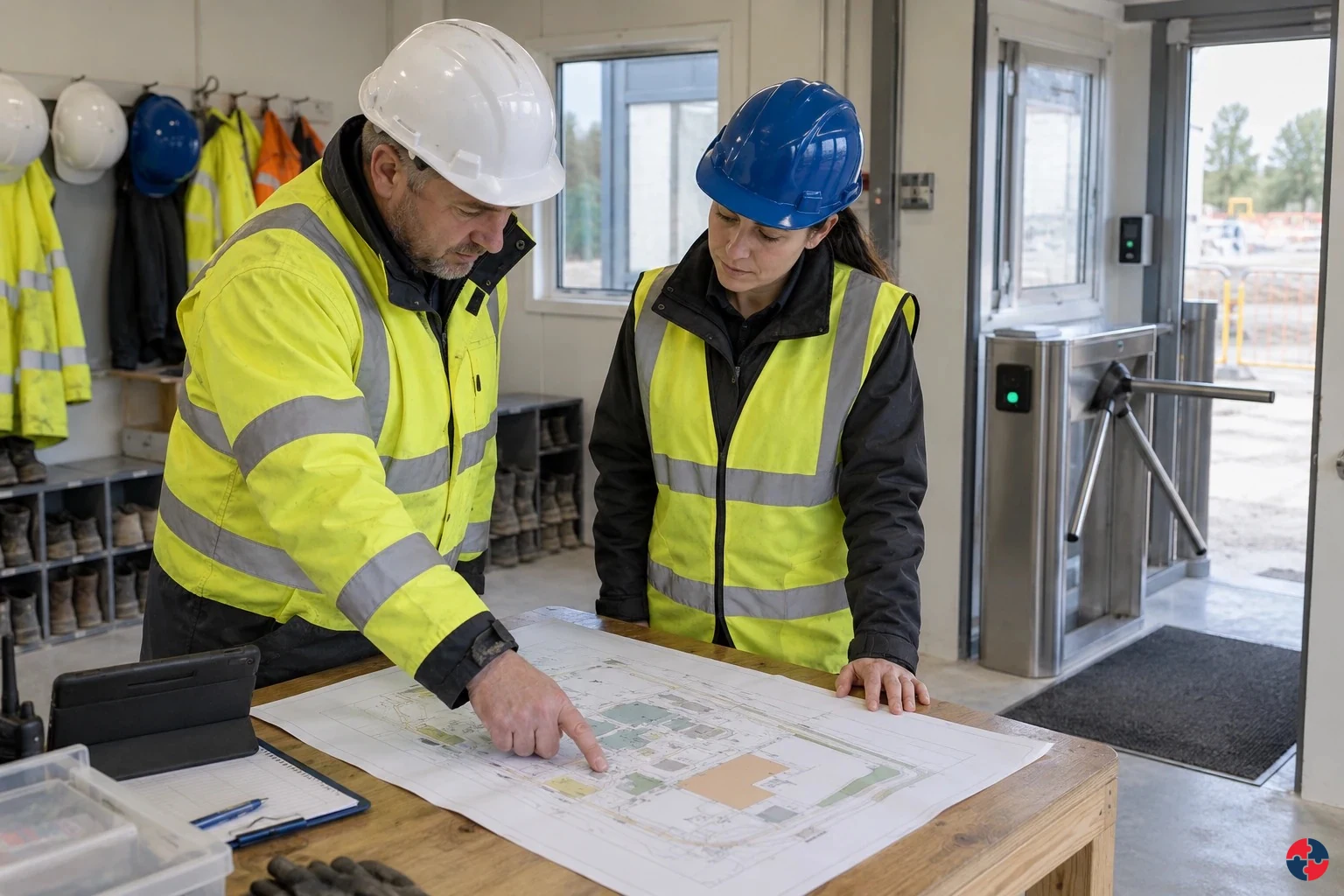
What do safety representatives do?
Safety representatives give workers a route to influence health and safety decisions, raise hazards and test whether controls work in practice. In Great Britain and Northern Ireland, the legal route differs for recognised-union appointees and employees consulted directly or through elected representatives. Safety representatives give workers a route to influence health and safety decisions, raise hazards and test whether controls work in practice.
Turn safety representatives and worker consultation knowledge into a decision
Safety representatives give workers a route to influence health and safety decisions, raise hazards and test whether controls work in practice. In Great Britain and Northern Ireland, the legal route differs for recognised-union appointees and employees consulted directly or through elected representatives. Representative logs concern with task examples and worker feedback.
Representative involvement worked example
Concern raised: Representative logs concern with task examples and worker feedback. Assessment: Task observed with workers and rep, including load height, frequency, route and equipment.
Follow the exposure and harm route
Repeated damaged-cage handling concern ignored: Workers keep lifting unstable loads and may sustain acute strain or cumulative musculoskeletal injury. New chemical or equipment method imposed late: People cannot challenge exposure, maintenance or emergency assumptions before work begins; illness or injury may follow. Night-shift concerns absent from committee: A recurring guard defect remains hidden from daytime managers and contact with moving parts becomes more likely.
Choose controls for safety representatives and worker consultation
Eliminate: Improve fabrication or buy a finished component so the manual grinding stage is unnecessary. Reduce, including substitution: Choose a suitable lower-vibration finishing method or tool after checking finish, accessory compatibility and other hazards. Isolate: Clamp and support the component and segregate other people from sparks and fragments. Control: Use a maintained compatible tool/accessory and effective dust control; avoid unnecessary force and worn consumables. Control: Plan actual trigger time from representative vibration data and the required work, alongside wheel, dust and noise controls. Read the full control table for qualifications, ownership and verification. Use the actual task and applicable jurisdiction; existing technical approval remains unchanged.
Use the full safety representatives and worker consultation lesson
Use the full topic for the decision points, practical examples, detailed control tables and source scope. HSE guidance applies to Great Britain; use HSENI for the Northern Ireland route and the source’s stated jurisdiction. A simplified guide does not change the page’s technical-review or approval status.

Read all six steps as text
1. What do safety representatives do?
Safety representatives give workers a route to influence health and safety decisions, raise hazards and test whether controls work in practice.
- Avoid / redesign: Improve fabrication or buy a finished component so the manual grinding stage is unnecessary.
- Control the task: Clamp and support the component and segregate other people from sparks and fragments.
- Verify before release: If the hazardous step remains, keep it within the task assessment and select the stronger feasible remaining controls.
Safety representatives give workers a route to influence health and safety decisions, raise hazards and test whether controls work in practice. In Great Britain and Northern Ireland, the legal route differs for recognised-union appointees and employees consulted directly or through elected representatives. Safety representatives give workers a route to influence health and safety decisions, raise hazards and test whether controls work in practice.
Apply it: Which part of this plan would you check at the workface before authorising the task?
2. Turn safety representatives and worker consultation knowledge into a decision
Use the evidence to improve the actual work arrangement.
- Change at source: Improve fabrication or buy a finished component so the manual grinding stage is unnecessary.
- Make it observable: If the hazardous step remains, keep it within the task assessment and select the stronger feasible remaining controls.
- Keep useful evidence: Representative logs concern with task examples and worker feedback.
Safety representatives give workers a route to influence health and safety decisions, raise hazards and test whether controls work in practice. In Great Britain and Northern Ireland, the legal route differs for recognised-union appointees and employees consulted directly or through elected representatives. Representative logs concern with task examples and worker feedback.
Apply it: What evidence would show that the change improves this task, rather than only completing a record?
3. Representative involvement worked example
Example: a practical application of the existing topic lesson.
- Concern raised: Representative logs concern with task examples and worker feedback.
- Assessment: Task observed with workers and rep, including load height, frequency, route and equipment.
- Action: Supplier packing, cage condition, route, staffing and mechanical aid controls improved.
Concern raised: Representative logs concern with task examples and worker feedback. Assessment: Task observed with workers and rep, including load height, frequency, route and equipment.
Apply it: At which point would you hold this example, and what evidence would allow it to proceed?
4. Follow the exposure and harm route
Connect the task, the route to the person and the control that can fail.
- Repeated damaged-cage handling concern ignored: Workers keep lifting unstable loads and may sustain acute strain or cumulative musculoskeletal injury.
- New chemical or equipment method imposed late: People cannot challenge exposure, maintenance or emergency assumptions before work begins; illness or injury may follow.
- Night-shift concerns absent from committee: A recurring guard defect remains hidden from daytime managers and contact with moving parts becomes more likely.
Repeated damaged-cage handling concern ignored: Workers keep lifting unstable loads and may sustain acute strain or cumulative musculoskeletal injury. New chemical or equipment method imposed late: People cannot challenge exposure, maintenance or emergency assumptions before work begins; illness or injury may follow. Night-shift concerns absent from committee: A recurring guard defect remains hidden from daytime managers and contact with moving parts becomes more likely.
Apply it: Who could be exposed, including other trades, cleaners, maintainers and people nearby?
5. Choose controls for safety representatives and worker consultation
Start with the stronger practicable options and verify their effect.
- Eliminate: Improve fabrication or buy a finished component so the manual grinding stage is unnecessary.
- Reduce, including substitution: Choose a suitable lower-vibration finishing method or tool after checking finish, accessory compatibility and other hazards.
- Isolate: Clamp and support the component and segregate other people from sparks and fragments.
- Control: Use a maintained compatible tool/accessory and effective dust control; avoid unnecessary force and worn consumables.
- Control: Plan actual trigger time from representative vibration data and the required work, alongside wheel, dust and noise controls.
Eliminate: Improve fabrication or buy a finished component so the manual grinding stage is unnecessary. Reduce, including substitution: Choose a suitable lower-vibration finishing method or tool after checking finish, accessory compatibility and other hazards. Isolate: Clamp and support the component and segregate other people from sparks and fragments. Control: Use a maintained compatible tool/accessory and effective dust control; avoid unnecessary force and worn consumables. Control: Plan actual trigger time from representative vibration data and the required work, alongside wheel, dust and noise controls. Read the full control table for qualifications, ownership and verification. Use the actual task and applicable jurisdiction; existing technical approval remains unchanged.
Apply it: Which stronger option can be used here, and who will verify it before accepting the remaining risk?
6. Use the full safety representatives and worker consultation lesson
Follow the official sources below and retain the task-specific evidence.
- Official guidance: Primary source
- Official guidance: NI amendment source
- Task decision: Representative logs concern with task examples and worker feedback.
Use the full topic for the decision points, practical examples, detailed control tables and source scope. HSE guidance applies to Great Britain; use HSENI for the Northern Ireland route and the source’s stated jurisdiction. A simplified guide does not change the page’s technical-review or approval status.
Apply it: Which official source and full-topic section will you use to resolve the next decision?
Union-appointed safety representatives and elected representatives of employee safety do not have identical statutory functions. Employers must determine which consultation regulations apply to each group, including mixed workforces; offshore installations have a separate representative regime that also covers NI offshore where applicable, subject to NI amendments. NI amendment source. Consultation must happen early enough for views to influence a decision, and representatives do not inherit the employer’s risk-control duty. HSE consultation law overview
Worker consultation is not a favour or a communication extra. It is a legal and practical requirement because people doing the work often know how controls fail, where shortcuts are creeping in, which procedures are unrealistic and which changes have not been understood.
Safety representatives should be involved early enough to influence decisions. Consultation after a new process, shift pattern, PPE change, risk assessment or contractor arrangement has already been imposed is weak consultation.
| Topic area | What it means | Professional test |
|---|---|---|
| Consultation route | Union-appointed reps, elected representatives or direct consultation depending on workforce arrangements. | Is every worker group covered, including shifts and remote workers? |
| Information | Representatives need relevant information about risks, controls, changes, incidents and arrangements. | Is information shared early enough to influence decisions? |
| Inspection | Union-appointed representatives have the applicable statutory inspection functions under the GB/NI route. Elected representatives have distinct statutory functions and any additional agreed inspection role; do not assume identical rights. | Are inspection findings logged, prioritised and closed out? |
| Investigation | Distinguish union-appointed statutory investigation functions from elected-representative functions and additional agreed roles. Preserve independent representative activity, evidence and confidentiality under the applicable GB/NI conditions. | Are representatives included without compromising evidence or confidentiality? |
| Committee route | A committee provides structured review of themes, actions and decisions. | Does the committee make decisions and track actions? |
| Protection | Workers and representatives should not suffer detriment for reasonable health and safety activity. | Are concerns handled fairly and without retaliation? |
| Employer duty remains | Representatives support consultation but do not own the employer's legal duties. | Are managers still owning actions, resources and decisions? |
The inspection and investigation functions described here are the statutory functions of recognised-union appointed representatives under the applicable GB/NI route. Elected representatives have their own statutory functions and any additional agreed roles; they do not automatically acquire identical inspection powers. Direct communication does not replace consultation with recognised-union appointees for the employees represented.
How can harm occur, and what stops the task?
Poor consultation is an organisational route to harm: people doing the task know about a defect or exposure, but that information never reaches a decision-maker before work continues.
If workers repeatedly report damaged handling cages and high loads, ignoring the concern leaves them lifting unstable equipment and risks acute strain or cumulative injury. The supervisor withdraws defective cages now; the employer assesses load design, repair and safer handling with affected workers or representatives, then reports back on the decision. Consultation does not transfer the employer’s duty to the representative, and a meeting record is insufficient without a control that works on the next shift.
Check exposed workers, contractors and others nearby. A weak signal is a reason to inspect the actual control before relying on paperwork or reassurance.
| Source and state | Route and possible harm | Warning and hold decision |
|---|---|---|
| Repeated damaged-cage handling concern ignored | Workers keep lifting unstable loads and may sustain acute strain or cumulative musculoskeletal injury. | Stop using defective cages, assess loading and repair/design options with worker input; the employer owns the action. HSE matters for consultation |
| New chemical or equipment method imposed late | People cannot challenge exposure, maintenance or emergency assumptions before work begins; illness or injury may follow. | Pause implementation until affected employees or representatives receive information and meaningful time to respond. HSE when to consult |
| Night-shift concerns absent from committee | A recurring guard defect remains hidden from daytime managers and contact with moving parts becomes more likely. | Provide a route for night workers, verify the guard immediately, and record feedback and closure across shifts. HSE L146 consulting workers |
How can the hierarchy of controls reduce grinding exposure through worker consultation and verified controls?
Remove or reduce the hazard before relying on procedures or personal protection.
For safety representatives, assess the actual task and first look for a way to remove the hazard. Where that is not possible, consider a safer substitute, engineered separation and then clear work procedures. PPE protects against remaining exposure; it does not make an uncontrolled task safe. HSE hierarchy of controls
The selected measures need a named owner, a usable stop point and a check that they still work when the task or conditions change. In Northern Ireland, verify the separate legal route and site instructions.
How can the ERICPD hierarchy of controls reduce grinding exposure through worker consultation and verified controls?

| Control level | Control for this activity | Owner and verification | Stop / restart decision |
|---|---|---|---|
| Eliminate | Improve fabrication or buy a finished component so the manual grinding stage is unnecessary. | Task owner verifies that the proposed change removes the named hazardous step, including foreseeable cleaning, maintenance and work transferred elsewhere. | If the hazardous step remains, keep it within the task assessment and select the stronger feasible remaining controls. |
| Reduce, including substitution | Choose a suitable lower-vibration finishing method or tool after checking finish, accessory compatibility and other hazards. | Competent task/process owner validates suitability, compatibility and new hazards against the actual operating requirements before the alternative is adopted. | Reject an alternative if its performance is unproved or its new hazards are unresolved. |
| Isolate | Clamp and support the component and segregate other people from sparks and fragments. | Supervisor checks the actual boundary, affected people and connected work; verify separation or isolation before allowing access. | Hold or stop for abnormal vibration, defective consumable, uncontrolled exposure or reported symptoms requiring review. |
| Control: physical safeguards | Use a maintained compatible tool/accessory and effective dust control; avoid unnecessary force and worn consumables. | Competent equipment/process owner checks tool/accessory condition, representative vibration, trigger time and workholding. | Hold or stop for abnormal vibration, defective consumable, uncontrolled exposure or reported symptoms requiring review. |
| Control: work method and response | Plan actual trigger time from representative vibration data and the required work, alongside wheel, dust and noise controls. Task rotation only reduces individual exposure if total trigger time falls; arrange symptom reporting and required health surveillance. | Supervisor confirms the work limits, competent cover, communication and stop/restart authority with the people doing this activity. | Hold work when the agreed limits, competent cover or effective communication cannot be maintained. |
| PPE | Use assessed eye, hearing and other protection. Anti-vibration gloves are not a substitute for exposure reduction. | Assessor confirms whether personal protection is needed and checks suitability, condition, compatibility and any required fit evidence. | Do not use unsuitable protection or rely on PPE to continue after an essential source control fails. |
| Discipline | Check tool condition and exposure plans when throughput changes; remove equipment with abnormal vibration from service. | Release only after supervisor accepts a maintained tool and achievable exposure controls. Retain verification and unresolved restrictions at handover. | Keep the task on hold until required reinstatement evidence and unresolved defects are accepted by the responsible owner. |
How can the ISO 45001 hierarchy of controls reduce grinding exposure through worker consultation and verified controls?

| Five-level control stage(s) | Control for this activity | Owner and verification | Stop / restart decision |
|---|---|---|---|
| Elimination | Improve fabrication or buy a finished component so the manual grinding stage is unnecessary. | Task owner verifies that the proposed change removes the named hazardous step, including foreseeable cleaning, maintenance and work transferred elsewhere. | If the hazardous step remains, keep it within the task assessment and select the stronger feasible remaining controls. |
| Substitution | Choose a suitable lower-vibration finishing method or tool after checking finish, accessory compatibility and other hazards. | Competent task/process owner validates suitability, compatibility and new hazards against the actual operating requirements before the alternative is adopted. | Reject an alternative if its performance is unproved or its new hazards are unresolved. |
| Engineering controls | Clamp and support the component and segregate other people from sparks and fragments. | Supervisor checks the actual boundary, affected people and connected work; verify separation or isolation before allowing access. | Hold or stop for abnormal vibration, defective consumable, uncontrolled exposure or reported symptoms requiring review. |
| Engineering controls | Use a maintained compatible tool/accessory and effective dust control; avoid unnecessary force and worn consumables. | Competent equipment/process owner checks tool/accessory condition, representative vibration, trigger time and workholding. | Hold or stop for abnormal vibration, defective consumable, uncontrolled exposure or reported symptoms requiring review. |
| Administrative controls | Plan actual trigger time from representative vibration data and the required work, alongside wheel, dust and noise controls. Task rotation only reduces individual exposure if total trigger time falls; arrange symptom reporting and required health surveillance. | Supervisor confirms the work limits, competent cover, communication and stop/restart authority with the people doing this activity. | Hold work when the agreed limits, competent cover or effective communication cannot be maintained. |
| PPE | Use assessed eye, hearing and other protection. Anti-vibration gloves are not a substitute for exposure reduction. | Assessor confirms whether personal protection is needed and checks suitability, condition, compatibility and any required fit evidence. | Do not use unsuitable protection or rely on PPE to continue after an essential source control fails. |
| Administrative controls | Check tool condition and exposure plans when throughput changes; remove equipment with abnormal vibration from service. | Release only after supervisor accepts a maintained tool and achievable exposure controls. Retain verification and unresolved restrictions at handover. | Keep the task on hold until required reinstatement evidence and unresolved defects are accepted by the responsible owner. |
How does this decision transfer between sectors?
Consultation must reach the people exposed to the decision, including short-term, remote and night-shift workers, and it must happen early enough to change the plan.
In a warehouse, a representative’s cage-handling concern should lead to a safer trial and verified withdrawal of defects. On a construction project, layout and lifting changes need input from the affected trades before the next phase. An in-scope offshore installation has a separate representative and committee regime, so the dutyholder checks that instrument while discussing safety-case changes and the real condition of controls.
| Setting | Concrete control and stop decision |
|---|---|
| Warehouse | A representative challenges damaged cages and high loads; management withdraws defective stock, changes supplier rules and verifies a safer trial. |
| Construction | Include short-term and night-shift workers when layout or lifting plans change; verify physical route and equipment controls before the next phase. |
| Offshore | Use the separate offshore representative and committee regime for an in-scope installation; consult on safety-case changes and check the applicable instrument. |
How should representative arrangements be structured?
The structure should make worker voice routine, timely, evidence-based and connected to action close-out.
A mature consultation system has more than a quarterly meeting. It has early consultation on change, practical inspection routes, clear issue escalation, feedback to workers, representative training and management accountability for close-out.
The system should also include workers who are easy to miss: night shifts, remote workers, mobile workers, agency staff, contractors, new starters and those in small teams.
| Model step | What to define | Evidence or decision point |
|---|---|---|
| Map workforce groups | Union-covered employees, non-union groups, shifts, locations, contractors and remote workers. | Consultation coverage map. |
| Select route | Union safety representatives, elected representatives, direct consultation or combined arrangements. | Route documented and communicated. |
| Share information | Risk assessments, changes, incidents, monitoring, audit findings and planned controls. | Representatives receive information in time to comment. |
| Inspect and investigate | Use the applicable representative route: union-appointed statutory inspection/investigation functions, elected functions and additional agreed roles. Direct communication cannot replace consultation with recognised-union appointees for represented employees. | Findings are recorded and responded to. |
| Track actions | Owners, dates, priorities, decisions and verification. | Committee or management action tracker. |
| Feedback | Workers are told what was raised, decided and changed. | Visible close-the-loop communication. |
| Review effectiveness | Participation, coverage, themes, action quality and trust. | Annual or periodic consultation review. |
How would representative involvement improve a repeated manual handling issue?
A worked example shows consultation as a route to better work design, not just complaint handling.
Warehouse workers repeatedly report shoulder and back discomfort when unloading mixed cages. A weak response tells workers to refresh manual handling training and reminds them to lift properly. The safety representative raises that cages are packed too high, wheels are damaged, delivery times create rushing and the unloading area has poor space for team handling. HSE matters for consultation.
The stronger response involves the representative, supervisors and workers in reviewing the task. The employer changes supplier loading rules, repairs cages, provides better mechanical aids, changes delivery scheduling, updates the risk assessment and checks whether discomfort reports reduce.
| Stage | Weak handling | Stronger standard |
|---|---|---|
| Concern raised | Supervisor says workers should be careful. | Representative logs concern with task examples and worker feedback. |
| Assessment | Generic manual handling assessment reused. | Task observed with workers and rep, including load height, frequency, route and equipment. |
| Action | Training refresher issued. | Supplier packing, cage condition, route, staffing and mechanical aid controls improved. |
| Committee | Issue discussed but no owner assigned. | Owner, date, evidence and verification agreed. |
| Feedback | Workers do not hear outcome. | Workers are briefed on changes and invited to report whether they work. |
| Learning | No wider review. | Similar unloading tasks and other sites are checked. |
What are the main consultation routes?
Great Britain law uses different routes depending on whether recognised trade union safety representatives cover the workers.
Where a recognised trade union appoints safety representatives, the 1977 Regulations apply to those represented employees. Where workers are not covered by that route, employers consult either elected representatives of employee safety or employees directly under the 1996 Regulations. HSE consultation law overview.
Many organisations have mixed arrangements. The important practical test is whether every affected worker group has a real route to be consulted on risk, change and control.
| Route | Where it applies | Practical implication |
|---|---|---|
| Union-appointed safety representatives | Recognised trade union appoints representatives for represented employees. | Employer consults reps, provides relevant information and supports inspection/investigation functions. |
| Representatives of employee safety | Employees not covered by union reps elect representatives under the 1996 Regulations. | Employer consults elected reps on relevant health and safety matters. |
| Direct consultation | Employer consults employees directly where representative route is not used. | Must still be genuine, timely and cover affected workers. |
| Health and safety committee | May be requested by two or more union safety representatives and is often useful more broadly. | Provides structured discussion, action tracking and management review. |
| Hybrid arrangements | Large, multi-site or mixed workforces. | Coverage map prevents gaps for shifts, remote workers and small teams. |
How should representative involvement move from issue to action?
A clear pathway helps representatives and managers turn concerns into evidence, decisions, actions and feedback.
The strength of representative involvement is not only that an issue is raised. It is that the issue can move through inspection, evidence, management response, committee review, action tracking and feedback without being lost or personalised. HSE when to consult.
This pathway also protects relationships. It gives representatives a constructive route for challenge and gives managers a disciplined route for response, prioritisation and close-out.
| Pathway step | What should happen | Evidence or manager next step |
|---|---|---|
| Issue raised | Worker or representative describes the concern, affected task, people exposed and urgency. | Log the issue, protect confidentiality where needed and decide whether immediate control is required. |
| Inspection or fact-finding | Representative and manager observe the area, task or work as done where appropriate. | Record photos, observations, worker comments and relevant documents. |
| Evidence review | Compare the concern with risk assessment, procedure, inspection history, incidents and legal duties. | Decide whether the issue is local, repeated, systemic or high potential. |
| Manager response | Manager accepts, challenges or clarifies the concern with reasons and proposed action. | Assign owner, priority, timescale, interim control and verification method. |
| Committee decision | Significant or repeated issues are reviewed through the committee or senior forum. | Agree resources, escalation, wider review and communication. |
| Action tracking | Actions are followed to completion with evidence, not just minutes. | Close only when the control is in place and verified. |
| Feedback to workforce | Workers are told what changed, what could not be done and why. | Brief the affected team and invite further feedback after use. |
| Learning and review | Similar tasks, shifts or sites are checked for the same weakness. | Record extent check and update assessment, training or procedure. |
How should inspections and investigations involving representatives work?
Inspection and investigation routes should be constructive, evidence-based and connected to action.
Representatives can add real value because they understand how work is actually done and what workers are reluctant to raise through line management. The employer should make reasonable arrangements for inspections, relevant information and response to findings. HSE health and safety representatives.
Representative involvement should respect confidentiality, investigation integrity and legal reporting boundaries. The purpose is to strengthen learning and control, not create parallel unmanaged investigations.
| Activity | Good practice | Evidence |
|---|---|---|
| Planned inspection | Agree scope, area, timing and manager contact. | Inspection record and action tracker. |
| Post-change inspection | Check new layout, equipment, PPE, shift pattern or process change. | Change consultation and close-out record. |
| Complaint investigation | Gather concern, protect confidentiality and observe work where needed. | Concern log and response. |
| Incident learning | Representative input considered during investigation and learning review. | Investigation notes and learning actions. |
| Follow-up | Check whether actions have worked in practice. | Verification record and worker feedback. |
Coordination is not a managerial veto over statutory representative activity. For GB union-appointed representatives, the normal three-month inspection entitlement requires reasonable written notice; more frequent inspections may be agreed, with separate change/new-information and notifiable-event routes. The employer provides reasonable facilities for independent investigation and private discussion. Apply the separate NI instrument and its conditions in NI.
What makes a health and safety committee effective?
A committee should be a decision and learning forum, not a ceremonial meeting.
Weak committees spend most of their time reading accident numbers, discussing minor housekeeping and carrying actions forward. Strong committees review serious risk controls, high-potential near misses, health risks, worker concerns, overdue actions, change, assurance and resources. HSE L146 consulting workers.
The best committees close the loop. Workers should know what was raised, what was decided, what could not be done and why.
| Agenda item | Why it matters | Good evidence |
|---|---|---|
| High-risk action status | Shows whether important controls are being fixed. | Action quality and verification evidence. |
| Worker concerns | Brings real work into management review. | Themes, decisions and feedback. |
| Incidents and near misses | Identifies weak controls and high-potential events. | Learning actions and extent checks. |
| Health risks | Keeps noise, dust, HAVS, stress, welfare and OH issues visible. | Monitoring and surveillance trends where relevant. |
| Change consultation | Prevents late consultation on new risks. | Upcoming changes and consultation record. |
| Assurance themes | Links inspections and audits to system improvement. | Repeat findings and leadership decisions. |
When should consultation issues be escalated?
Escalation is needed when consultation is missing, late, tokenistic or linked to serious unresolved risk.
Consultation concerns should be handled seriously because they may indicate that the organisation is not seeing the work as done. A representative raising the same issue repeatedly is often a weak signal of action failure.
Escalation is also needed if a worker or representative suffers detriment for raising a genuine health and safety issue.
| Trigger or question | Decision route | Escalate if |
|---|---|---|
| Workers not consulted on change | Pause implementation long enough to consult affected people. | Change affects risk assessment, PPE, work equipment, layout, shift pattern or procedures. |
| Representative information withheld | Clarify what information can be shared and why. | Information is relevant to risk and no lawful reason prevents sharing. |
| Two or more union reps request a committee | Review legal duty and committee arrangements. | No committee is formed within the required route/timescale. |
| Inspection findings repeat | Escalate action quality and ownership. | Same issue appears across shifts or sites. |
| Representative or worker alleges detriment | Escalate to senior management/HR and protect fair process. | The concern relates to reasonable H&S activity. |
| Consultation route does not cover all workers | Map workforce and create additional representative/direct routes. | Remote, night, agency or contractor workers are excluded. |
At the GB committee decision, record when the written request from two union-appointed safety representatives was received, the three-month due date, employer contact and escalation if arrangements stall. Keep the separate NI legal route and voluntary committee practice explicit. Urgent danger is controlled and escalated immediately, without waiting for a committee meeting.
Where do safety representative arrangements commonly fail?
Common failures come from token consultation, poor action close-out and treating representatives as opponents rather than risk intelligence.
A representative system can look compliant but fail if concerns are not acted on, meetings are dominated by managers, representatives lack time or training, or feedback never reaches the workforce.
The best organisations treat representative challenge as a quality-control function. It tests whether risk assessment, communication and supervision are working.
| Failure or weak practice | How it develops | What good looks like |
|---|---|---|
| Token consultation | Workers are informed after decisions are made. | Consult early enough to influence design and control. |
| No action close-out | Findings are recorded but not owned or verified. | Use action tracker with evidence. |
| Poor coverage | Some shifts, sites or remote workers have no voice. | Map consultation coverage. |
| Adversarial response | Representative challenge is treated as disruption. | Frame concerns as risk intelligence. |
| No training or time | Representatives cannot inspect or contribute effectively. | Provide reasonable time, information and support. |
| Committee drift | Meetings review minor issues but miss serious risk. | Set agenda around risk profile and control confidence. |
| Confidentiality mishandled | Worker concerns are exposed or gossip spreads. | Protect privacy and agree communication boundaries. |
What evidence should safety representative arrangements hold?
Evidence should show that consultation is real, timely, representative and connected to decisions and actions.
Consultation evidence should not be limited to minutes. A good evidence pack shows who was consulted, what information was shared, what concerns were raised, what changed as a result and how workers were informed.
Evidence should also show representative inspections, investigation involvement, training, time/facilities and action close-out.
| Evidence item | What it should show | Assurance question |
|---|---|---|
| Risk assessment or technical assessment | Scope, hazards, affected people, control standard, residual risk, owner and review trigger. | Does it match current work, layout, people and equipment? |
| Action tracker | Actions, owners, priority, dates, interim controls and close-out evidence. | Are high-risk actions verified in the workplace, not just marked complete? |
| Training and briefing records | Who was trained or briefed, by whom, on what standard and how understanding was checked. | Can people explain the control and stop conditions? |
| Inspection and monitoring records | Planned checks, defects, trends, overdue items and corrective actions. | Do inspections sample the controls that prevent serious harm? |
| Incident and near-miss learning | Events, weak signals, investigations, themes and lessons applied. | Are repeated signals driving design or system improvement? |
| Management review | Trend, resources, assurance confidence, escalations and decisions. | Are leaders seeing real control confidence rather than activity counts alone? |
| Consultation coverage map | Worker groups, consultation routes, representatives and gaps. | Are all shifts, locations and remote groups included? |
| Representative appointment/election records | Who represents whom and through which legal route. | Are records current after workforce change? |
| Committee minutes and action tracker | Issues, decisions, owners, deadlines and close-out evidence. | Do minutes show decisions rather than discussion only? |
| Inspection records | Findings from representative or joint inspections. | Are findings risk ranked and followed up? |
| Change consultation records | Evidence that workers were consulted before changes affecting risk. | Was consultation early enough to influence design? |
| Representative training/time records | Support given to representatives. | Can representatives carry out their functions effectively? |
How should consultation arrangements be assured?
Assurance should test whether worker voice affects decisions and control improvement.
A consultation audit should not simply check whether meetings exist. It should follow a sample concern from worker report through representative discussion, management response, action close-out and workforce feedback.
It should also test whether representatives feel able to challenge, whether managers respond constructively and whether serious risk themes are reaching senior leadership.
| Assurance sample | What good looks like | Escalate if |
|---|---|---|
| Concern trace | A worker concern has clear response, owner and feedback. | Concern disappears without decision or action. |
| Representative interview | Representatives have time, information and constructive access. | Representatives feel blocked or ignored. |
| Committee sample | Agenda covers risk profile, incidents, health risks, change and action quality. | Committee focuses only on minor housekeeping. |
| Change review | Consultation occurred before implementation. | Workers only informed after rollout. |
| Inspection follow-up | Findings are fixed and verified. | Repeated findings remain open. |
| Leadership review | Senior leaders see themes and unresolved concerns. | Worker voice remains local and invisible. |
Which duties and guidance apply in Great Britain and Northern Ireland?
Use the instrument for the site, workforce and activity. Great Britain and Northern Ireland have separate duties, while HSE, HSENI and voluntary-standard guidance have different legal status.
Check current scope and amendments before applying a duty. Determine whether each worker group is covered by a recognised-union appointee, an elected representative or direct consultation; the offshore regime applies only where its installation scope is met.
| Route | Direct instrument or guidance | Supporting source | Decision supported |
|---|---|---|---|
| GB recognised-union appointees | Safety Representatives and Safety Committees Regulations 1977 | HSE L146 consulting workers | 1977 regulations govern union-appointed representatives and their functions; check the applicable text. |
| GB other employees | Health and Safety (Consultation with Employees) Regulations 1996 | HSE consultation law overview | 1996 regulations provide direct or elected consultation for workers outside union representation. |
| NI recognised-union appointees | Safety Representatives and Safety Committees Regulations (Northern Ireland) 1979 | HSENI trade union representatives and health and safety law | Separate NI 1979 regulations govern union-appointed representatives. |
| NI other employees | Health and Safety (Consultation with Employees) Regulations (Northern Ireland) 1996 | HSENI trade union representatives and health and safety law | Separate NI 1996 regulations govern direct/elected consultation. |
| GB and NI offshore installation | 1989 offshore representative regulations | HSE L110 guidance; NI 2016 amendment | The 1989 representative regime operates within its offshore scope in GB and NI; apply NI amendments for an NI installation. |
How should management check this work?
Use a defined plan, carry out the controls, check performance and correct what does not work.
For safety representatives, assign a competent owner to set the work controls, check their use and review them after change, failure or new evidence. HSE managing health and safety
A management-system label or certificate is not approval of a site limit, procedure or individual work decision. Apply GB and NI duties to the correct location.
What competence does each level need?
Train and assess each person for the decision they make; attendance alone is not proof of competent action.
Record the assessment, authorisation scope and reassessment trigger. A manager still needs to verify that the underlying control works in the field.
| Role | Learning to test | Demonstration, assessor, record and reassessment |
|---|---|---|
| Worker / new starter | Know the representative or direct consultation route and how to raise a concern | Can identify contact and emergency reporting path; induction checked after team change. |
| Union-appointed representative | Understand statutory functions, inspection, investigation and information rights | Practical inspection and feedback record; employer enables relevant training and paid time as law provides. |
| Elected representative | Understand the applicable consultation route and scope of functions | Can gather views and present them; employer enables training/time under the relevant regulations. |
| Supervisor | Engage before change, respond and protect the urgent control | Scenario exercise and traceable hold/correction/restart; manager samples decisions. |
| Manager / consultation lead | Map workforce coverage, time, facilities and action ownership | Coverage map and committee/action review; named senior owner resolves gaps. |
| Safety adviser / auditor | Check jurisdiction, representation route, confidentiality and action quality | Sample a concern from first report to field verification; legal check after regime change. |
How could Riverside Leisure Ltd manage this in practice?

Riverside would use representatives and consultation to improve controls across leisure centres, pools, maintenance, cleaning, events, catering and contractor work.
Riverside's consultation arrangements would include direct employees, shift workers, cleaners, instructors, reception staff, maintenance teams and contractors. Worker concerns about pool plant, lone working, customer aggression, manual handling or fire doors would be logged, discussed and tracked to close-out.
| Management element | How the business would manage it | Evidence to review |
|---|---|---|
| Map | Identify workforce groups and consultation routes. | Consultation coverage map. |
| Consult | Share risk, change and incident information early. | Consultation records. |
| Inspect | Use representative inspections and worker feedback. | Inspection records. |
| Act | Assign and verify actions. | Action tracker. |
| Feedback | Tell workers what changed and why. | Briefing or committee communication. |
What do the acronyms and key terms mean?
These terms identify different legal or operational decisions.
| Term | Full expression | Meaning here |
|---|---|---|
| SRSC | Safety Representatives and Safety Committees regulations | Union-appointed representative route; GB and NI instruments differ. |
| RoES | Representative of employee safety | Elected employee route under relevant consultation regulations. |
| Consult in good time | Consult before the decision is final | Allow information, response and employer consideration. |
| L146 | HSE consulting-workers ACOP and guidance | GB source explaining the two onshore routes. |
| HSENI | Health and Safety Executive for Northern Ireland | NI regulator and guidance source. |
| Committee | Joint health and safety forum | Useful for decisions and action review, not a substitute for timely consultation. |
Unlock another resource
You have used this month’s two free downloads. Publish a post in your own words to unlock one more resource, or choose SHARE Individual for 10 downloads per month.
You decide whether to share. If you do, use the relevant platform disclosure tools and do not make claims you do not genuinely hold.