
Ground contamination and environmental control
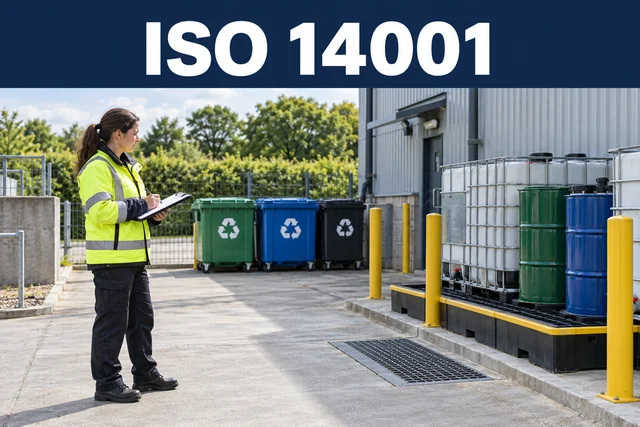

Control contaminated ground, infection pathways, spills, waste and site runoff.
Full public teaching and readers are free to read without an account. A free learner account is required for confirmed saved assessment, completion and certificate records in the LMS.
What you will work through
Fictional Brook Works redevelopment: historic made ground, buried waste and a drainage outfall sit beside a live haul route and refuelling point. Plan how investigation, hygiene, pollution prevention and waste control protect the workforce, neighbours and environment. Specialist assessment and live-site authorisation remain with competent people.
The course has 5 modules and 18 lessons, with teaching, applied activities, feedback and a check of understanding throughout. There are 3 practice pauses in the actual construction model, with an equivalent accessible text route. Public interactive practice is separate from confirmed LMS assessment and completion records.
Explore the interactive practice copy. Return to the LMS route for recorded learning.
Learning outcomes
- Trace contamination and pollution from the source through a pathway to people or the environment.
- Choose suitable hygiene, drainage, transfer and waste controls for the actual site task.
- Coordinate an unexpected-find or spill response and verify the recovery before restart.
Course outline
Understand the ground and exposure
- Follow source, pathway and receptorIdentify and control the source, pathway and receptor; an unknown drain is not evidence of safe containment.
- Use site history and investigation before disturbanceA new ground condition can invalidate the information base; control exposure and obtain competent assessment before disturbing it further.
- Recognise infection and contamination pathwaysMatch controls to the actual source and exposure route, including hand-to-mouth transfer, wounds and secondary contamination.
- Model practice: contaminated ground and sharpsDo not use unassessed hand handling to resolve uncertain contamination or sharps; protect the area and establish a competent method.
Protect people and drainage
- Control discarded sharps and exposure incidentsA sharps exposure needs prompt response and competent assessment; appearance and delayed symptoms cannot determine the risk.
- Provide usable hygiene and welfareHygiene must be suitable, accessible and available when the exposure occurs, with a controlled clean-to-dirty transition.
- Understand the drainage before liquids moveKnow the destination and applicable permissions before moving potentially contaminated water; a nearby drain is not a disposal route by default.
- Model practice: fuel outside containmentStop and contain the source through the assessed safe response; washing a pollutant away spreads the pathway rather than removing the risk.
Control materials and movement
- Plan delivery, transfer and refuellingVerify the complete transfer system, capacity, people separation and containment before material moves.
- Control silt, washout and dewateringPollution includes silt and cement residues; suitable controls and authorisation depend on the actual material and destination.
- Prevent waste, then describe and control what remainsDescribe and assess the actual material before transfer; reuse labels and dilution do not establish a suitable lawful route.
- Model practice: unplanned waste and muddy routesCoordinate material acceptance, storage, traffic and pollution controls before movement; unplanned cleanup must not expose workers or spread contamination.
Respond and recover
- Keep mud and materials off unsafe routesControl the source and plan protected cleaning; visibility clothing cannot replace traffic separation and coordination.
- Prepare stockpiles and boundaries for changeAnticipate change and verify the connected source, runoff, dust and people controls rather than reacting after the pathway opens.
- Respond, report and verify recoveryVerify the full recovery and reporting route, including hidden pathways and equipment defects; visual cleanup alone cannot close the incident.
Prove the site decision
- Use the correct jurisdiction and keep traceable evidenceControl principles need the correct site-nation authorisations and traceable activity-specific evidence.
- Capstone: the Brook Works changeResolve the connected source, pathway, material and people controls; removing one visible symptom does not clear the complete operation.
- Create one verifiable site improvementA useful improvement controls a defined pathway with clear ownership and observable verification.
Assessment and completion
Complete the required lessons and activities, then take the 20-question final assessment. The pass threshold is 80% plus every designated critical safety answer. Points and badges cannot compensate for a critical error.
Use the LMS to save and resume confirmed progress. Certificate availability follows its passed-completion and grade conditions. Browser practice and printed learning pages do not issue the official LMS record.
Independent construction learning. Completion records learning within the course scope; competent site assessment, practical training and task authorisation remain necessary. It does not confer a NEBOSH qualification.
Sources and learning provenance
The teaching draws on public SHAREhub topic pages and structured source records, with original fictional workface cases. Use the linked primary guidance and the applicable jurisdiction when planning a live task.
- GOV.UK: Pollution prevention for businesses (England)
- GOV.UK: Business waste responsibilities
- GOV.UK: Classifying construction and demolition waste
- HSE: Construction harmful micro-organisms
- HSE: Avoiding sharps injuries
- England/Wales code
- Scottish 2026 code
- NI code
- NIEA pollution prevention
- Environmental Permitting (England and Wales) Regulations 2016
- Control of Pollution (Oil Storage) (England) Regulations 2001
- Waste (England and Wales) Regulations 2011
- Health and Safety at Work etc. Act 1974
- Health and Safety at Work (Northern Ireland) Order 1978
- Pollution Prevention and Control (Industrial Emissions) Regulations (Northern Ireland) 2013
- Environmental Authorisations (Scotland) Regulations 2018
- Environmental Protection Act 1990 section 34
- HSE Managing for health and safety (HSG65)
- GOV.UK check if you need an environmental permit
- HSE five-level risk-control hierarchy
- GOV.UK business oil storage
- Natural Resources Wales
- Scottish Environment Protection Agency
- Report an environmental incident
- NRW waste duty of care
- Environment Agency management-system guidance for permits
- Official task guidance: www.hse.gov.uk
- IOSH: hierarchy of control guidance
- ISO 45001:2018, Clause 8.1.2 within Clause 8 Operation
- Control of Substances Hazardous to Health Regulations 2002
- Control of Substances Hazardous to Health Regulations (Northern Ireland) 2003
- Health and Safety (Sharp Instruments in Healthcare) Regulations 2013
- HSE preventing incidental infection exposure
- HSE Legionella prevention and control
- HSE Legionella monitoring and records
- HSE HSG282 spa-pool control
- Health and Safety (Sharp Instruments in Healthcare) Regulations (Northern Ireland) 2013
- HSE sharps injuries in healthcare
- HSE law on infections at work
- HSE Legionella and legionnaires’ disease
- HSE Approved List of biological agents, sixth edition 2026
- HSENI Approved List of biological agents, sixth edition
- HSE blood-borne viruses
- Management of Health and Safety at Work Regulations 1999
- Management of Health and Safety at Work Regulations (Northern Ireland) 2000
- HSE HSIS7 healthcare sharps regulations guidance
- HSENI health and social care sector sharps guidance
- HSE RIDDOR biological agents
- HSENI COSHH
- Storage of flammable liquids in tanks (HSG176, 2nd edition, 2015)
- Safe loading and unloading
- Visiting drivers
- Bulk-tank high-level safety alert
- Buncefield investigation and reports
- Loading areas
- DSEAR in detail
- COMAH 2015 overview
- DSEAR 2002
- DSEAR (NI) 2003
- Provision and Use of Work Equipment Regulations 1998
- Provision and Use of Work Equipment Regulations (Northern Ireland) 1999
- COMAH 2015
- COMAH (NI) 2015
- HSE management guidance for Great Britain
- HSENI guidance for Northern Ireland
- HSE: ISO 45001 management standard
- Unloading petrol from road tankers: L133
- Petrol dispensing premises: DSEAR risk assessments, GN75
- Defra: storage, unloading and loading petrol at terminals — PG1/13(13)
- Functional safety: SIS, alarms and basic process control
- Overfill of vapour recovery units: safety notice
- Workplace transport loading information
- HSE HSG253 safe isolation
- HSE workplace traffic management
- HSE safe driving reversing
- GB Workplace Health Safety and Welfare Regulations 1992
- NI Workplace Health Safety and Welfare Regulations 1993
- GB Construction Design and Management Regulations 2015
- NI Construction Design and Management Regulations 2016
- DfT Safety at Street Works and Road Works Code
- DfT Traffic Signs Manual Chapter 8
- DfI NI Safety at Street Works and Road Works Code
- ATEX equipment and explosive atmospheres
- Dangerous substances and explosive atmospheres: L138
- HSE HSG136 workplace transport safety
- HSE INDG199 workplace transport brief guide
- HSE HSG144 construction vehicle guidance
- HSE traffic management on construction sites
- HSENI site safety
- HSENI reversing vehicles in the workplace
- DfT street-works safety code consultation
- HSE workplace emergency procedures
- Home Office commencement factsheet
- HSE planning for incidents and emergencies at events
- Health and Safety (First-Aid) Regulations 1981
- Health and Safety (First-Aid) Regulations (Northern Ireland) 1982
- Regulatory Reform (Fire Safety) Order 2005
- Fire (Scotland) Act 2005
- Fire and Rescue Services (Northern Ireland) Order 2006
- HSE - First aid in work
- HSE - INDG214 First aid at work
- HSE - First aid publications
- GOV.UK - Fire safety in the workplace
- GOV.UK - Terrorism (Protection of Premises) Act 2025 statutory guidance
- GOV.UK - Understanding Martyn's Law and the SIA's role
- ProtectUK
- Civil Contingencies Act 2004
- Dangerous Substances (Notification and Marking of Sites) Regulations 1990
- Official task guidance: www.hse.gov.uk
Topic records, source IDs and versions
| Public topic section | Chunk and version | Jurisdiction and source IDs |
|---|---|---|
| environmental-hazards · source-pathway-receptor | environmental-hazards--source-pathway-receptor Version 2.2 | Great Britain, Northern Ireland gov-pollution, gov-permit, niea-prevention |
| environmental-hazards · meaning | environmental-hazards--meaning Version 2.2 | Great Britain, Northern Ireland gov-pollution, gov-permit, niea-prevention |
| environmental-hazards · land | environmental-hazards--land Version 2.2 | Great Britain, Northern Ireland gov-pollution, gov-permit, niea-prevention |
| environmental-hazards · hazard-types | environmental-hazards--hazard-types Version 2.2 | Great Britain, Northern Ireland gov-pollution, gov-permit, niea-prevention |
| biological-agents-and-infection-risk-controls · sources-of-exposure | biological-agents-and-infection-risk-controls--sources-of-exposure Version 20261016-letter-review-1 | Great Britain, Northern Ireland hse-biosafety-law, hse-incidental, hse-approved |
| biological-agents-and-infection-risk-controls · routes | biological-agents-and-infection-risk-controls--routes Version 20261016-letter-review-1 | Great Britain, Northern Ireland hse-biosafety-law, hse-incidental, hse-approved |
| biological-agents-and-infection-risk-controls · high-risk-work | biological-agents-and-infection-risk-controls--high-risk-work Version 20261016-letter-review-1 | Great Britain, Northern Ireland hse-biosafety-law, hse-incidental, hse-approved |
| biological-agents-and-infection-risk-controls · warning-signs | biological-agents-and-infection-risk-controls--warning-signs Version 20261016-letter-review-1 | Great Britain, Northern Ireland hse-biosafety-law, hse-incidental, hse-approved |
| biological-agents-and-infection-risk-controls · sharps | biological-agents-and-infection-risk-controls--sharps Version 20261016-letter-review-1 | Great Britain, Northern Ireland hse-biosafety-law, hse-incidental, hse-approved |
| biological-agents-and-infection-risk-controls · response | biological-agents-and-infection-risk-controls--response Version 20261016-letter-review-1 | Great Britain, Northern Ireland hse-biosafety-law, hse-incidental, hse-approved |
| biological-agents-and-infection-risk-controls · controls | biological-agents-and-infection-risk-controls--controls Version 20261016-letter-review-1 | Great Britain, Northern Ireland hse-biosafety-law, hse-incidental, hse-approved, gb-coshh |
| biological-agents-and-infection-risk-controls · zoonoses | biological-agents-and-infection-risk-controls--zoonoses Version 20261016-letter-review-1 | Great Britain, Northern Ireland hse-biosafety-law, hse-incidental, hse-approved |
| environmental-hazards · water | environmental-hazards--water Version 2.2 | Great Britain, Northern Ireland gov-pollution, gov-permit, niea-prevention |
| environmental-hazards · environmental-control-route | environmental-hazards--environmental-control-route Version 2.2 | Great Britain, Northern Ireland gov-pollution, gov-permit, niea-prevention |
| environmental-hazards · emergencies | environmental-hazards--emergencies Version 2.2 | Great Britain, Northern Ireland gov-pollution, gov-permit, niea-prevention |
| environmental-hazards · warning-signs | environmental-hazards--warning-signs Version 2.2 | Great Britain, Northern Ireland gov-pollution, gov-permit, niea-prevention |
| loading-unloading-and-transfer-operations · core | loading-unloading-and-transfer-operations--core Version 2026-10-02-additive-1 | Great Britain, Northern Ireland loading-unloading-and-transfer-operations-src-01 |
| loading-unloading-and-transfer-operations · barriers | loading-unloading-and-transfer-operations--barriers Version 2026-10-02-additive-1 | Great Britain, Northern Ireland loading-unloading-and-transfer-operations-src-01, loading-unloading-and-transfer-operations-src-02 |
| environmental-hazards · controls | environmental-hazards--controls Version 2.2 | Great Britain, Northern Ireland share-activity-environmental-hazards-1 |
| environmental-hazards · waste | environmental-hazards--waste Version 2.2 | England and Wales, Scotland, Northern Ireland gov-waste, scot-waste, ni-waste, epa34 |
| environmental-hazards · risk-register | environmental-hazards--risk-register Version 2.2 | Great Britain, Northern Ireland gov-pollution, gov-permit, niea-prevention |
| traffic-maangement · layout-model | traffic-maangement--layout-model Version 2.3 | Great Britain, Northern Ireland source-hsg136, source-hse_construction, source-hseni_site |
| environmental-hazards · business-example | environmental-hazards--business-example Version 2.2 | Great Britain, Northern Ireland gov-pollution, gov-permit, niea-prevention |
| traffic-maangement · stop-triggers | traffic-maangement--stop-triggers Version 2.3 | Great Britain, Northern Ireland source-hsg136, source-hse_reversing, source-hseni_reversing |
| traffic-maangement · banksman-limits | traffic-maangement--banksman-limits Version 2.3 | Great Britain, Northern Ireland source-hse_reversing, source-hseni_reversing |
| environmental-hazards · air | environmental-hazards--air Version 2.2 | Great Britain, Northern Ireland gov-pollution, gov-permit, niea-prevention |
| environmental-hazards · noise-nuisance | environmental-hazards--noise-nuisance Version 2.2 | Great Britain, Northern Ireland gov-pollution, gov-permit, niea-prevention |
| emergency-response · plan | emergency-response--plan Version 2.2 | Great Britain, Northern Ireland hse-emergency, gb-mhswr, ni-mhswr, hse-event-emergency |
| emergency-response · recovery | emergency-response--recovery Version 2.2 | Great Britain, Northern Ireland hse-emergency, gb-mhswr, ni-mhswr, hse-event-emergency |
| environmental-hazards · management-system | environmental-hazards--management-system Version 2.2 | Great Britain, Northern Ireland gov-pollution, hse-rights-16 |
| environmental-hazards · devolution | environmental-hazards--devolution Version 2.2 | Great Britain, Northern Ireland gov-pollution, gov-permit, nrw-regulator, sepa-regulator, scot-easr, niea-prevention, ni-ppc |
| biological-agents-and-infection-risk-controls · legal | biological-agents-and-infection-risk-controls--legal Version 20261016-letter-review-1 | Great Britain, Northern Ireland gb-hswa, gb-mhswr, gb-coshh, gb-sharps, hse-hsis7, hse-biosafety-law, hse-approved, hse-riddor, ni-hswo, ni-mhswr, ni-coshh, ni-sharps, hseni-sharps, hseni-coshh, hseni-approved |
| biological-agents-and-infection-risk-controls · risk-register | biological-agents-and-infection-risk-controls--risk-register Version 20261016-letter-review-1 | Great Britain, Northern Ireland hse-biosafety-law, hse-incidental, hse-approved |
| environmental-hazards · review-start | environmental-hazards--review-start Version 20261019-letter-review-E-1 | Great Britain, Northern Ireland gov-pollution, gov-permit, niea-prevention, nrw-regulator, sepa-regulator, scot-easr |
| environmental-hazards · training | environmental-hazards--training Version 2.2 | Great Britain, Northern Ireland gov-pollution, gov-permit |
| biological-agents-and-infection-risk-controls · training | biological-agents-and-infection-risk-controls--training Version 20261016-letter-review-1 | Great Britain, Northern Ireland hse-biosafety-law, hse-incidental, hse-approved |
Course version 2026.10.20.4 · SH-ENV-01. Factual source identity and jurisdiction are retained in the .
Questions about this course
Is this course free?
Yes. The training is £0. Full public teaching and readers can be used without an account. A free learner account is required for confirmed saved assessment, completion and certificate records in the LMS.
How long should I allow?
Approx. 2h 20m–3h 20m: approximately 140–200 minutes of self-paced learning, including required activities and one final-assessment attempt. Your pace, review and retries may increase the time. Save and resume in the LMS.
Can I study without a 3D-capable browser?
Yes. The complete learning reader is available in ordinary HTML. Where this course includes model practice, an accessible text route provides the same decision sequence. Use the interactive LMS course to complete its assessed requirements.
What do I need to pass?
Complete the required learning and achieve at least 80% in the final assessment, with every critical safety answer correct. Follow the feedback and review the relevant lesson before retrying.
Where is my completion record?
The LMS holds confirmed grades, completion and certificate records for your learner account. Public browser practice has its own separate progress and is not an official completion record.
Does completion authorise construction work?
Independent construction learning. Completion records learning within the course scope; competent site assessment, practical training and task authorisation remain necessary. It does not confer a NEBOSH qualification.
Presentation and model workshop
Use the same course imagery, worked decisions and source case in a 28-slide teaching companion. Practise classification, compare explained choices and inspect the linked model case.
Open the interactive presentation workshop · Download PowerPoint
This optional companion does not replace the required course activities or final assessment.