SHARE Knowledge Hub
Acrylonitrile Poisoning
Acrylonitrile is a volatile, flammable chemical that can be absorbed by breathing vapour or through skin. If exposure or a release is suspected, stop work, raise the alarm, move clear without entering a contaminated area to rescue others, begin safe decontamination and obtain urgent medical help. Prevent exposure through closed systems and task-specific Control of Substances Hazardous to Health (COSHH) controls; use monitoring, skin-contact checks and competent review to verify them. Apply the correct Great Britain (GB) or Northern Ireland (NI) duties.
Understanding Acrylonitrile Poisoning
Acrylonitrile is a volatile, flammable chemical that can be absorbed by breathing vapour or through skin. If exposure or a release is suspected, stop work, raise the alarm, move clear without entering a contaminated area to rescue others, begin safe decontamination and obtain urgent medical help. Prevent exposure through closed systems and task-specific Control of Substances Hazardous to Health (COSHH) controls; use monitoring, skin-contact checks and competent review to verify them. Apply the correct Great Britain (GB) or Northern Ireland (NI) duties.
Why this matters at work
Acrylonitrile is a volatile, highly flammable industrial chemical that can cause serious acute poisoning and long-term health harm. It is readily absorbed by inhalation and through the skin, can severely irritate or damage eyes and skin, and can produce systemic toxicity after uptake. UKHSA explains that metabolism can generate cyanide, although cyanide formation is not the sole explanation for acrylonitrile toxicity. A release therefore has to be managed as a combined toxic, dermal, fire, explosion and environmental emergency rather than as a vapour-only exposure.
Assurance should focus on whether critical controls prevent exposure and escalation. Leading indicators may include closed-sampler availability, overdue containment inspections, LEV performance, detector impairments, alarm response, completion of hose checks, permit quality, contamination findings, PPE failures and emergency-drill actions. Lagging indicators include releases, symptoms, first-aid cases, exposure exceedances, dermatitis and fires, but absence of reported harm is weak evidence where reporting is poor or disease latency is long.
How organisations manage this in practice
Elimination may mean buying a polymer or premix instead of handling monomer, outsourcing a specialist operation, removing manual sampling or designing out line opening. Reduction includes lowering inventory, pressure, temperature, connection frequency and the number of people exposed. Isolation includes closed plant, separated control positions, ventilated enclosures, remote valves and restricted zones. Control includes reliable operating limits, local exhaust ventilation, interlocks, maintenance, permits, hygiene and monitoring.
A credible organisation should know whether acrylonitrile is present, where it can be released, who may be exposed and by which routes. It should challenge whether the substance or open task can be eliminated, use closed and contained systems wherever reasonably practicable, control residual releases at source, prevent skin contact, manage ignition sources under DSEAR, and provide tested emergency arrangements. Monitoring, maintenance, competence, health surveillance where legally indicated, worker consultation and investigation must show that the controls continue to work.
Corrective actions should map to identified causes and favour stronger hierarchy controls. Completion is not effectiveness: the organisation should revisit the task, observe the new method, review monitoring and check whether the same vulnerability exists on similar equipment. Senior management should review repeated leaks, deferred critical maintenance, bypasses and exposure trends.
What is the scope and status of this page?
This is an educational and operational guide for work with acrylonitrile monomer or residues; a real exposure or release needs the site emergency plan and competent medical advice.
It applies to work in Great Britain and Northern Ireland but the legal instruments differ. Confirm the chemical identity, concentration, task, site, people, exposure routes and current supplier safety data sheet before using any control here. Finished polymer articles do not automatically create the same exposure as handling liquid monomer; heating, residues or machining still need task assessment.
This page does not prescribe clinical treatment, a respirator or glove material, breakthrough time or an emergency exclusion distance. Those decisions need the actual substance data, site plan and competent specialist advice.
Keep exposure response separate from transfer release
An exposure concern and permission to restart are different decisions. Use the first-aid and emergency sections when exposure may have occurred; do not wait for a comparison with an airborne limit. The task owner must separately establish containment, safe isolation and emergency readiness.
One connection, different exposure routes
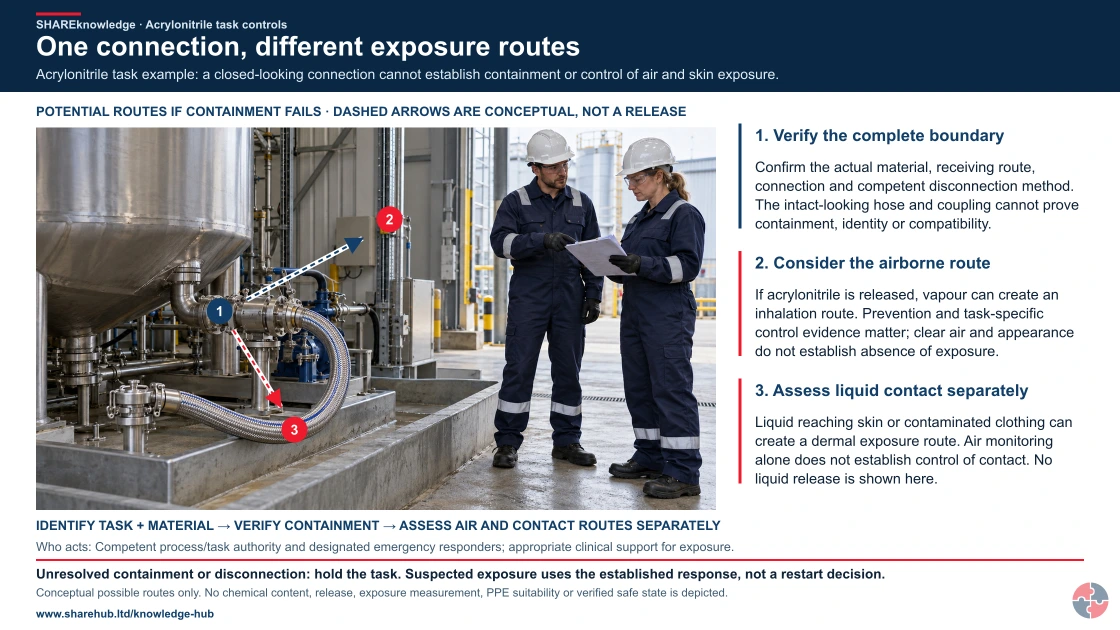
Full written explanation
A detailed realistic chemical-plant scene shows a continuous intact transfer connection, its receiving pipework and a contained area while two colleagues review an unreadable task document away from the connection. Three native annotations and two explicitly conceptual dashed branches distinguish the complete containment boundary from potential airborne and liquid-contact routes if containment fails. The air branch ends in open workplace space, and the contact branch points towards the contained work surface; neither is a measured plume or a depicted release, and no chemical content can be identified from the scene. Current UKHSA information supports inhalation and dermal uptake as relevant acrylonitrile routes. No organ, tissue damage, symptoms, treatment, dose, threshold, specified PPE, connection procedure or restart permission is added. The original chemical/task, containment failure, exposure, prevention, response, four task checks, hold, accountable roles and two contexts remain in the full written alternative and current source. Identified chemical and task: Acrylonitrile transfer, sampling and line work need substance-specific competent arrangements. Containment or control fails: A connection, opening or unsuitable extraction arrangement can expose people. Exposure may occur: Inhalation and skin contact need relevant prevention and prompt appropriate emergency/medical response.
Acrylonitrile task example: a closed-looking connection cannot establish containment or control of air and skin exposure.
- Verify the complete boundary. Confirm the actual material, receiving route, connection and competent disconnection method. The intact-looking hose and coupling cannot prove containment, identity or compatibility.
- Consider the airborne route. If acrylonitrile is released, vapour can create an inhalation route. Prevention and task-specific control evidence matter; clear air and appearance do not establish absence of exposure.
- Assess liquid contact separately. Liquid reaching skin or contaminated clothing can create a dermal exposure route. Air monitoring alone does not establish control of contact. No liquid release is shown here.
Change the pathway
- Avoid unnecessary opening. Consider a suitable closed or alternative method for the task.
- Verify the whole boundary. Match material, receiving route, connection, containment and safe isolation/disconnection arrangements.
- Prepare the response. Keep safe withdrawal, specialist emergency readiness and appropriate medical information available.
Evidence check: A calm-looking loading point cannot establish absence of exposure or verify the contents and integrity of a connection.
Primary references: UKHSA: acrylonitrile exposure and uptake routes · HSE: control measures for hazardous substances · HSE: verify LEV suitability and commissioning evidence · HSE: monitor control of exposure
Open the complete HD image (new tab)Download image

Primary references: UKHSA: acrylonitrile exposure and uptake routes · HSE: control measures for hazardous substances · HSE: verify LEV suitability and commissioning evidence · HSE: monitor control of exposure
A transfer record should identify the actual material, connected system and disconnection arrangements. For monitoring references, keep the document identifier EH40/2005 distinct from the fourth-edition January 2020 publication date; the identifier is not proof of a 2005 edition.
Closed transfer with an unverified disconnection
Illustrative example. An approved acrylonitrile delivery is planned, but the receiving team cannot show how the connection will be made safe before disconnection.
Decision. Hold transfer until the approved method, isolation boundary and competent release owner cover the complete task.
Evidence to check. Check material identity, system compatibility, connection integrity, safe draining/isolation evidence and emergency readiness.
Hold or escalation point. No opening or disconnection on an assumed empty line; uncertain residue or containment remains a specialist hold.
Follow-up. Review the first complete transfer-to-disconnection cycle and carry any defect into the next shift handover.
What does each role need to do before acrylonitrile work?
Workers follow and challenge task controls; supervisors release and stop work; managers resource containment; specialist advisers verify exposure and health risks.
| Role | Before and during work | Stop or escalation and record |
|---|---|---|
| Operator or laboratory worker | Check identity, closed system or fume cupboard, alarm status, selected PPE and emergency route; keep skin and vapour out of contact. | Stop for leaks, wet PPE, failed extraction or symptoms; record task and report promptly. |
| Contractor or maintainer | Review residue history, permit, isolation, drain-down and test evidence with host; use the approved break-in and decontamination method. | Do not open unknown or unproved equipment; keep permit, isolation and hand-back records. |
| Supervisor | Confirm task competence, controls, people affected, hold points and emergency equipment; observe the actual work. | Stop and secure the task on changed conditions or symptoms; approve restart only after competent review. |
| Purchaser or storekeeper | Verify chemical and concentration, supplier SDS, labelled container, storage and transfer compatibility before acceptance. | Quarantine unknown or leaking supply; retain supplier and acceptance records. |
| First aider or emergency responder | Know alarm, safe approach, decontamination and ambulance handover arrangements; responders need task-specific protection and drills. | Never enter a contaminated area without suitable trained response arrangements; pass chemical identity, route and timing to clinicians. |
| Manager, hygienist, occupational health or auditor | Assess GB or NI duties, engineering barriers, personal exposure, skin route, surveillance criteria and change control. | Escalate unresolved WEL, release, surveillance or compatibility decisions; keep control and review evidence. |
What is acrylonitrile poisoning?
Acrylonitrile poisoning is the harmful effect of acrylonitrile entering the body and causing local irritation, systemic toxicity or longer-term health concern.
Acrylonitrile is a volatile industrial chemical, also known as vinyl cyanide or cyanoethylene. It is mainly relevant in specialist chemical and polymer sectors rather than ordinary workplaces. It may be used as a monomer or intermediate in acrylic fibres, plastics, resins, synthetic rubber, nitrile products, coatings and chemical manufacture.
The word poisoning can sound dramatic, but it is useful because acrylonitrile can act quickly after sufficient exposure. A worker may first notice irritation, headache, dizziness, nausea or fatigue. With greater exposure, the concern shifts to systemic toxicity: impaired coordination, vomiting, weakness, tremor, collapse, convulsions or potentially fatal effects. Skin contact matters because liquid acrylonitrile can both damage the skin and pass through it into the body.
The long-term issue is equally important. HSE EH40 marks acrylonitrile with a carcinogen notation, and the UKHSA incident-management sheet lists GB CLP carcinogenicity category 1B. These are workplace hazard classifications, not an estimate of an individual's cancer risk. An older UKHSA public toxicology overview uses earlier cancer-evidence wording. Check the current classification and safety data sheet for the relevant GB or NI task, and prevent or reduce exposure as low as reasonably practicable; meeting a numerical exposure limit alone is not enough.
| Aspect | What it means | Why it matters for control |
|---|---|---|
| Substance identity | Acrylonitrile is a volatile industrial chemical also known as vinyl cyanide or cyanoethylene. | Names on labels, safety data sheets and registers may differ, so the chemical register must identify synonyms clearly. |
| Physical behaviour | It readily forms vapour and can create inhalation exposure during transfer, sampling, heating, leaks or spills. | Ventilation, containment and monitoring are central controls, not optional extras. |
| Health effect type | It can cause irritation, systemic poisoning, skin effects and long-term carcinogenic concern. | The COSHH assessment must cover acute and chronic health effects, including the carcinogen notation in EH40 and the current jurisdiction-specific classification. |
| Skin notation | EH40 identifies skin absorption as important. | Air monitoring alone may understate risk if liquid contact or contaminated clothing is possible. |
| Carcinogen notation | EH40 marks acrylonitrile with a carcinogen notation; UKHSA lists GB CLP carcinogenicity category 1B. | Control should aim for exposure as low as reasonably practicable as well as compliance with any workplace exposure limit. |
Where might acrylonitrile exposure occur at work?
Exposure is most likely in specialist chemical, polymer, fibre, plastics, rubber, resin or maintenance work where acrylonitrile is manufactured, transferred, sampled or released.
Most workers will never knowingly handle acrylonitrile. The higher-risk settings are specialist sites where acrylonitrile is produced or used as a feedstock, monomer or intermediate. Finished polymer articles may present a different risk profile from liquid monomer handling, so the assessment must distinguish between the substance itself, residues, process emissions and finished materials.
The most serious exposure potential often occurs outside normal steady-state operation. Maintenance break-in, draining, cleaning, sampling, filter changes, hose disconnection, loading, unloading and spill response can defeat the containment that normally protects operators. That is why permit-to-work, isolation, line-breaking standards and emergency planning matter as much as routine process controls.
Acrylonitrile is also flammable, so health control and fire/explosion control should be joined up. A release may be both a toxic exposure event and a dangerous substance event, requiring compatible ventilation, ignition control, area classification, spill containment, emergency response and waste arrangements.
| Work area or task | How exposure can arise | Controls that should be considered |
|---|---|---|
| Acrylonitrile manufacture | Process leaks, venting, sampling, charging, transfer and maintenance on primary production plant. | Closed systems, leak detection, ventilation, monitoring, preventive maintenance and emergency response. |
| Polymer, fibre or resin production | Monomer handling, reactor charging, quality sampling, cleaning and residual vapour release. | Closed charging, automated sampling, controlled cleaning, occupational hygiene review and worker training. |
| Bulk transfer and storage | Hose connections, tanker unloading, pump seals, overfills, displaced vapour or line drainage. | Closed transfer, vapour return where relevant, bunding, emergency shut-off, spill kit, eyewash and exclusion zones. |
| Maintenance and line-breaking | Opening contaminated lines, pumps, filters, valves, vessels or drains. | Permit-to-work, verified isolation, flushing, gas testing, decontamination and standby emergency arrangements. |
| Laboratory and quality work | Small-volume sampling, bottle handling, fume cupboard failure or waste handling. | Fume cupboards, sealed sample containers, compatible gloves, waste segregation and spill response. |
| Emergency response and clean-up | Uncontrolled release, contaminated surfaces, contaminated PPE or re-suspension of vapour during clean-up. | Emergency plan, trained responders, respiratory protective equipment, decontamination and medical escalation. |
How do acrylonitrile controls change real task decisions?
Decide from the actual chemical, route and task; release work only when containment, competence, emergency response and hand-back are evidenced.
Review the sample position and the whole capture system
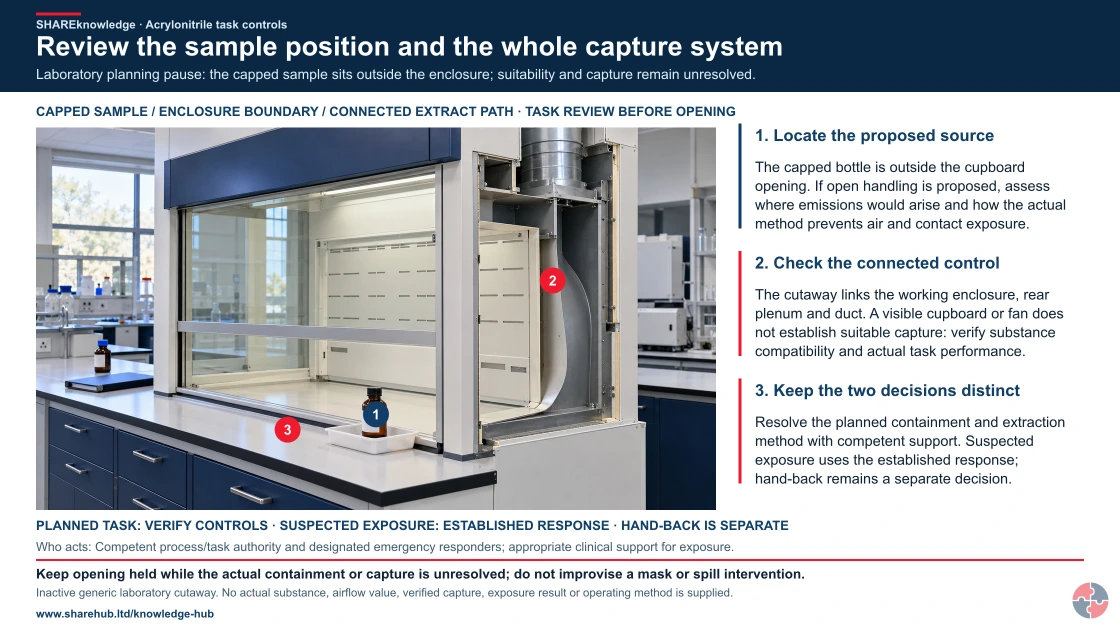
Full written explanation
A realistic inactive laboratory cutaway shows a dry capped sample bottle in a tray outside the fume-cupboard front opening, with the glass sash, deep enclosure, rear baffle and plenum connected to the upper extract duct. A narrow removed side casing reveals the physical extract passage for explanation and is not an operating arrangement. Native annotations connect source position, the complete enclosure/extract control and the distinction between planned-task verification and an established response to suspected exposure. No bottle is opened, no material is released, no person is exposed and no airflow or performance is shown. The scene does not establish the identity or suitability of the bottle, cupboard, containment, ventilation, materials, PPE or process. Current HSE commissioning/control guidance supports asking whether the actual system is suitable for the substance and process and whether performance has been verified. Full original task identity, prevention, abnormal response and separate hand-back checks remain; no opening method, fume-cupboard setting, emergency treatment, exposure threshold or permission is created.
Laboratory planning pause: the capped sample sits outside the enclosure; suitability and capture remain unresolved.
- Identify the complete task. Confirm the actual material, connected system, people and planned sampling or transfer boundaries.
- Verify the prevention controls. Check compatibility, containment, connection integrity and the competent safe-work method.
- Confirm abnormal arrangements. Verify safe access/withdrawal and the designated specialist response; do not improvise a spill intervention.
- Control hand-back separately. Resolve residue, isolation and disconnection evidence before a competent return-to-service decision.
When the evidence does not fit: Suspected exposure or a release: use the established withdrawal and emergency/medical response promptly. Do not wait for an exposure-limit comparison or treat the response as restart permission.
Who acts: Competent process/task authority and designated emergency responders; appropriate clinical support for exposure.
Changed workplace
Closed transfer: Hold the task if the safe disconnection method or isolation boundary is unresolved.
Laboratory sampling: An unsuitable extraction or open-container arrangement needs competent reassessment, not an assumed mask solution.
Evidence check: A calm-looking loading point cannot establish absence of exposure or verify the contents and integrity of a connection.
Primary references: UKHSA: acrylonitrile exposure and uptake routes · HSE: control measures for hazardous substances · HSE: verify LEV suitability and commissioning evidence · HSE: monitor control of exposure
Open the complete HD image (new tab)Download image

Primary references: UKHSA: acrylonitrile exposure and uptake routes · HSE: control measures for hazardous substances · HSE: verify LEV suitability and commissioning evidence · HSE: monitor control of exposure
Check the closed transfer barriers


Read this visual as text
- A closed connection is one part of the control system. Confirm the material, receiving route, coupling, containment, detection and safe access before transfer; a calm-looking loading point does not prove absence of exposure.
- IDENTIFY THE MATERIAL
- VERIFY THE CONNECTION
- KEEP THE ESCAPE ROUTE
Illustrative closed-transfer setting. Product identity, connection compatibility and containment cannot be confirmed from the photograph. Acrylonitrile is a specialist chemical example here, not an assumed content of routine fuel deliveries.
1. Routine closed transfer
Task, material and setting: Transfer identified acrylonitrile monomer from a tanker to a compatible receiving system at an outdoor loading point; aim for a contained delivery.
People and prerequisites: Operator, driver and nearby workers; trained pair, current SDS, approved COSHH and fire/explosion assessment, verified equipment and emergency route.
Before: Confirm destination, line and hose compatibility from the actual supplier and equipment specifications; test critical valves, alarms, containment and exclusion control.
During: Keep the system closed, supervise connection and watch for leaks or abnormal readings; no improvised open drain.
Hold or stop: Hold if identity, receiving capacity, coupling or alarm is uncertain. Stop transfer and raise alarm for a leak, splash, odour report or unexpected reading.
Completion and hand-back: Isolate and drain under the approved method, check the area and PPE for contamination, reconcile inventory and formally hand back.
Evidence: Delivery record, pre-use checks, alarm test, operator briefing, monitoring and close-out.
2. Sampling from a process line
Task, material and setting: Take a quality sample of acrylonitrile from a dedicated closed sample point in a chemical plant; avoid open vapour and splash exposure.
People and prerequisites: Sampler and nearby operators; authorised procedure, ventilation or enclosure, suitable container and task-specific PPE selected from the SDS and competent assessment.
Before: Check sample-point integrity, capture, container, clear route to eyewash and local alarm response.
During: Use the closed sampling arrangement without leaning into vapour; cap and contain the sample immediately.
Hold or stop: Hold if the point leaks, capture fails or sample identity is uncertain. Stop for wet gloves, eye irritation or symptoms.
Completion and hand-back: Secure the point, decontaminate approved surfaces, inspect gloves and hand the labelled sample to the laboratory.
Evidence: Sample log, equipment check, any exposure reading, issue and corrective-action record.
3. Contractor line-breaking
Task, material and setting: Open a pump or filter previously in acrylonitrile service for repair inside a process building.
People and prerequisites: Maintainers, contractor and adjacent operators; host-led permit, process history, competent isolation and testing, controlled waste route and rescue plan.
Before: Prove isolation, depressurisation, drain-down and decontamination using the site method; verify residual vapour and liquid risks at the break point.
During: Open only under the approved permit and supervision with containment and extraction in place; keep others clear.
Hold or stop: Hold until permit and test results are accepted. Stop for unexplained liquid, changing readings, ineffective ventilation or incompatible protection.
Completion and hand-back: Reclose, test integrity, remove contamination, account for waste and obtain host authorisation before restart.
Evidence: Permit, isolation and test record, contractor briefing, exposure assessment, waste and hand-back sign-off.
4. Unknown laboratory residue
Task, material and setting: Find an unlabelled bottle or residue near a fume cupboard used for acrylonitrile samples; identity and concentration are unknown.
People and prerequisites: Technicians, cleaners and waste staff; no assumption that the residue is acrylonitrile or safe polymer.
Before: Secure the area and seek the laboratory chemical inventory and competent identification route before handling.
During: Only an authorised specialist determines sampling, containment and disposal; do not sniff, mix, decant or wash to drain.
Hold or stop: Stop all handling while identity, compatibility and exposure controls are unresolved; use the emergency plan if there is a release or symptoms.
Completion and hand-back: Release the space only after identification, removal and verified clean status.
Evidence: Incident or near-miss record, identification, assessment, specialist decision and release approval.
5. Failed extraction during planned work
Task, material and setting: A sample station extraction alarm trips while a routine task is underway in an enclosed area.
People and prerequisites: Sampler, supervisor and maintenance team; known process condition, alarm response, safe shutdown and alternative containment plan.
Before: Confirm alarm meaning and safe-stop method before task release; verify extraction performance.
During: On alarm, close the source if this can be done without added exposure, leave the area and prevent further work.
Hold or stop: Hold restart until extraction is repaired, tested and exposure reviewed; do not substitute an unassessed mask or an air reading alone.
Completion and hand-back: Check the engineering control and affected people, then rebrief and authorise the task.
Evidence: Alarm and maintenance logs, exposure decision, repair test, briefing and restart authorisation.
6. Spill with a symptomatic worker
Task, material and setting: A transfer hose fails, liquid escapes and a nearby person becomes dizzy; this is a toxic and flammable release.
People and prerequisites: Worker, driver, first aiders, responders and neighbours; rehearsed alarm and evacuation, protected responders and medical handover.
Before: Site emergency plan identifies shutdown, exclusion, evacuation, contamination control and ambulance access.
During: Raise alarm, withdraw to a safe place, call emergency services and keep unprotected rescuers out. Begin decontamination only where it can be done safely under the plan.
Hold or stop: No cleanup or re-entry by ordinary workers. Stop until the release, fire risk, casualty and contamination are controlled by trained responders.
Completion and hand-back: Competent incident command approves cleanup and testing; affected workers receive appropriate medical assessment; formal restart follows investigation and control verification.
Evidence: Incident timeline, SDS and exposure handover, responder log, tests, investigation, repair and authorised hand-back.
Contain the transfer and check each exposure route
Illustrative process arrangement, not a transfer procedure: an identified material moves from a supply vessel through a compatible closed connection into a receiving system. The supplier’s information, engineered design and authorised site method determine the actual equipment and controls.
Confirm material and receiving system
Match the product identity and safety data sheet to the intended receiving line and compatible equipment. A generic fuel-transfer scene cannot establish that acrylonitrile is present.
Maintain the contained path
Check the credited connection, pipework and contained sampling arrangements using the site’s inspection and operating criteria. A damaged seal or unsuitable connection can create a release point.
Trace both possible exposure routes
A coupling leak may reach the breathing zone as vapour and may contact skin or clothing as liquid. Enclosure or capture and contact-prevention arrangements need separate evidence; one reassuring air result does not resolve both routes.
Keep an uncertain barrier on hold
Use the authorised isolation and verification arrangement before opening equipment. If identity, compatibility, containment or safe state is unresolved, keep the affected task stopped and refer it to the competent process owner.
| Point in the system | Possible failure | Evidence needed |
|---|---|---|
| Closed coupling | A seal or connection does not contain the substance. | Correct component specification, condition and task-specific acceptance checks; protect people from a suspected leak. |
| Sampling point | Opening the system releases vapour or splashes liquid. | A contained method suited to the actual substance and operating conditions, including foreseeable cleaning and maintenance. |
| Isolation boundary | The part to be opened remains connected to a source of substance or energy. | The authorised safe-isolation record and verification for the defined work scope, not a valve-position assumption. |
| Person and exposure | Air evidence is treated as proof that all exposure is controlled. | Assess the relevant sampling period and breathing-zone exposure separately from splash, skin-contact and contaminated-clothing evidence. |
Suspected exposure or an uncontrolled leak follows the exposure response and site emergency arrangements. Do not enter a contaminated area to attempt an unplanned rescue.
How can acrylonitrile enter the body?
The main occupational routes are inhalation of vapour and absorption through the skin, with eye contact and accidental swallowing also requiring control.
Air and skin routes need different evidence


Read this visual as text
- INHALATION: Vapour can reach the breathing zone during release or poorly controlled handling. Prevent release and verify source controls.
- SKIN CONTACT: Liquid contamination can create local exposure and absorption. Control splash, contaminated surfaces and clothing.
- INTERPRET TOGETHER: Consider the task, duration, air evidence, skin controls and symptoms. An eight-hour result is not a universal safe-task verdict.
Keep inhalation and skin/contact evidence separate. A time-weighted air result does not by itself demonstrate control of a short transfer, a splash or contaminated clothing.
A good COSHH assessment must describe the route of entry, not just the name of the substance. Acrylonitrile vapour can be inhaled into the lungs, where uptake into the bloodstream can occur quickly. Liquid acrylonitrile can contact the skin during splashes, contaminated gloves, wet clothing, damaged PPE or poor decontamination. Eye exposure can occur from liquid splashes or vapour irritation.
Skin absorption deserves special attention because it can make exposure appear lower than it really is if the organisation relies only on airborne measurements. A worker may have an acceptable personal air sample but still receive a meaningful dose through wet gloves, soaked sleeves, contaminated boots or delayed removal of clothing. This is why glove selection, breakthrough time, change frequency, wash facilities and emergency showers are not minor details.
Accidental ingestion is less likely in a controlled workplace, but poor hygiene can still create hand-to-mouth transfer. Eating, drinking or smoking in contaminated areas, touching the face with contaminated gloves, or carrying contamination into welfare areas are all signs that the substance is not being controlled at the boundary between process work and personal hygiene.
| Route of entry | How exposure can happen | Why it matters | Control focus |
|---|---|---|---|
| Inhalation | Vapour is released during transfer, sampling, leaks, heating, line-breaking, cleaning or spill response. | Can cause acute systemic poisoning and respiratory irritation. | Closed systems, local exhaust ventilation, gas detection, exposure monitoring and respiratory protection for residual or emergency risk. |
| Skin absorption | Liquid contacts skin through splashes, glove failure, contaminated clothing or delayed washing. | Can add significantly to total absorbed dose and cause local skin damage. | Chemical-resistant gloves, protective clothing, decontamination, glove-change rules and skin checks. |
| Eye contact | Splashes or irritating vapour reach the eyes during open handling, line-breaking or emergencies. | Can cause irritation or injury and indicates poor containment. | Closed transfer, face protection, eyewash, splash screens and controlled sampling. |
| Ingestion | Hand-to-mouth transfer from contaminated gloves, poor welfare controls or contaminated surfaces. | Less common but possible where hygiene is poor. | No eating or drinking in work areas, hand washing, clean welfare routes and contamination control. |
| Contaminated PPE route | Gloves, boots, sleeves or respirators become contaminated and are reused or removed poorly. | Can spread exposure after the task appears complete. | PPE storage, doffing procedure, waste disposal, cleaning and supervisor checks. |
What must be checked before, during and after acrylonitrile work?
Treat identity, containment, exposure route and emergency readiness as release gates; a change in any of them requires a fresh decision.
Release a Planned Task
Two linked parts · 6 questions. Open Part 2 to complete the route.

Continue to questions 4–6 · Part 2 of 2


Read this visual as text
- Start: Acrylonitrile monomer or a process residue may be handled, sampled or transferred.
- Question 1: Are substance identity, concentration and current supplier information known? Decision owner: Chemical task supervisor / competent specialist.
- YES: The required evidence or condition is confirmed. CONTINUE → QUESTION 2.
- NO / UNKNOWN — HOLD: Hold the task and obtain reliable product or residue evidence. HOLD → REPEAT QUESTION 1 AFTER CORRECTION.
- Question 2: Are the site jurisdiction and applicable assessment duties identified? Decision owner: Chemical task supervisor / competent specialist.
- YES: The required evidence or condition is confirmed. CONTINUE → QUESTION 3.
- NO / UNKNOWN — HOLD: Resolve the GB or NI route before relying on a generic assessment. HOLD → REPEAT QUESTION 2 AFTER CORRECTION.
- Question 3: Does the assessment cover this task, exposure routes and flammable hazards? Decision owner: Chemical task supervisor / competent specialist.
- YES: The required evidence or condition is confirmed. CONTINUE → QUESTION 4.
- NO / UNKNOWN — HOLD: Assess the actual transfer, sampling or handling conditions. HOLD → REPEAT QUESTION 3 AFTER CORRECTION.
- Question 4: Are receiving capacity, connections, compatibility and containment verified? Decision owner: Chemical task supervisor / competent specialist.
- YES: The required evidence or condition is confirmed. CONTINUE → QUESTION 5.
- NO / UNKNOWN — HOLD: Keep transfer isolated while the engineering or chemical gap is resolved. HOLD → REPEAT QUESTION 4 AFTER CORRECTION.
- Question 5: Are detection, safe access, decontamination and response arrangements ready? Decision owner: Chemical task supervisor / competent specialist.
- YES: The required evidence or condition is confirmed. CONTINUE → QUESTION 6.
- NO / UNKNOWN — HOLD: Do not release without the actual protective and emergency capability. HOLD → REPEAT QUESTION 5 AFTER CORRECTION.
- Question 6: Are competent people briefed and release limits recorded? Decision owner: Chemical task supervisor / competent specialist.
- YES: The required evidence or condition is confirmed. OUTCOME → RECORD AND HAND OVER.
- NO / UNKNOWN — HOLD: Name the owner and stop conditions; reassess changed material or conditions. HOLD → REPEAT QUESTION 6 AFTER CORRECTION.
- Outcome: Task released with named owner and conditions, or retained on hold; pre-use check and approval recorded.
- Stop and escalation boundary: Stop for unknown residue, incompatible system, failed extraction, missing isolation, unavailable decontamination or untrained response.
| Stage | Check | Stop or hold | Evidence |
|---|---|---|---|
| Before acceptance | Confirm identity, concentration, current SDS, GB or NI location, applicable duties and process compatibility. | Unknown material, uncertain supply status or incompatible system. | Supplier record, assessment and competent approval. |
| Before task release | Check enclosure, extraction, isolation, detection, selected protection, people, training and emergency facilities. | Missing test, failed control, unavailable shower or no trained responder route. | Pre-use checks, permit and briefing. |
| During task | Watch for leaks, alarm state, wet PPE, symptoms, changed material and unexpected process conditions. | Any leak, splash, dizziness, eye irritation, failed ventilation or uncertain reading. | Observation, monitoring and stop decision. |
| Completion and hand-back | Close, isolate or restore the system as planned; check people and area for contamination, waste route and control performance. | Unresolved contamination, leak or missing competent sign-off. | Hand-back, exposure and waste records. |
| Review | Examine monitoring, symptoms, incidents, maintenance and surveillance feedback; update similar tasks. | Repeat adverse evidence or source change without reassessment. | Revised COSHH, actions, worker communication and effectiveness check. |
How does acrylonitrile cause harm in the body?
Acrylonitrile causes harm through irritation, rapid absorption and metabolism to reactive products that can contribute to systemic toxicity.
Acrylonitrile is readily absorbed after inhalation, ingestion or dermal exposure. Once absorbed, it can be metabolised through pathways that include glutathione conjugation and cytochrome P450 oxidation. One metabolic route can produce 2-cyanoethylene oxide and further metabolism can produce cyanide, although cyanide formation does not explain all of acrylonitrile’s toxicity.
This toxicology helps explain the mixed symptom picture. There may be local irritation at the eyes, skin and respiratory tract, but also wider effects such as headache, nausea, dizziness, fatigue, impaired coordination, tremor, collapse and convulsions after substantial exposure. Because symptoms can resemble solvent exposure, heat stress, tiredness or general illness, repeated symptoms in the same task area should be treated as exposure intelligence.
The chronic picture is different. Repeated exposure may be associated with persistent symptoms such as headache, insomnia, chest discomfort, fatigue, malaise and irritability. Repeated skin contact can cause dermatitis or allergic sensitisation. Cancer concern means exposure history, monitoring records and long-term control performance matter even when there has been no acute poisoning event.
| Mechanism | What happens | Workplace implication |
|---|---|---|
| Irritation | The substance irritates eyes, skin, nose, throat and airways. | Irritation reports should trigger exposure review, not be dismissed as discomfort. |
| Systemic absorption | Acrylonitrile can enter the bloodstream through lungs or skin. | Controls must cover air and skin exposure together. |
| Metabolism | Reactive metabolites and cyanide-related pathways can contribute to toxicity. | Emergency plans should recognise that serious systemic symptoms can develop after significant exposure. |
| Dermatitis and sensitisation | Repeated or direct skin exposure can damage skin or produce allergic skin responses. | Skin surveillance, glove suitability and early reporting are important. |
| Carcinogenicity | UKHSA lists a GB carcinogenicity classification; assess long-term cancer concern alongside acute toxicity and verify the current classification for the relevant jurisdiction. | Exposure should be minimised as far as reasonably practicable and records should support long-term assurance. |
What symptoms can acrylonitrile poisoning cause?
Symptoms can include irritation, headache, dizziness, nausea, vomiting, weakness, skin injury, tremor, collapse and convulsions depending on the exposure.
The first symptoms may be easy to miss. A worker may report stinging eyes, throat irritation, headache, nausea, dizziness, light-headedness or fatigue. In a busy plant or laboratory, those symptoms may be blamed on tiredness, odour, heat or general unwellness. If several people report similar symptoms in the same area, or symptoms appear during a particular task, the event should be treated as a possible exposure problem.
Skin exposure can be delayed and deceptive. Acrylonitrile can cause pain, redness, blistering, itching, peeling and delayed healing. A glove or sleeve contaminated during a short task can continue exposing the worker until it is removed, and contaminated clothing can spread exposure to vehicles, welfare areas or changing rooms.
Severe poisoning is an emergency. Tremor, collapse, convulsions, breathing difficulty, loss of consciousness or significant confusion require immediate medical response. The site should also protect responders from secondary contamination and investigate the release source once the situation is safe.
| Severity | Possible symptoms | What it may indicate | Immediate response |
|---|---|---|---|
| Early or mild | Eye, nose or throat irritation, headache, nausea, dizziness, fatigue or light-headedness. | Possible low-level inhalation exposure or weak local control. | Stop the task, report symptoms, check ventilation, review exposure route and assess others nearby. |
| Moderate | Vomiting, weakness, impaired coordination, skin pain, blistering, dermatitis or chest discomfort. | More significant exposure or skin absorption. | Remove from exposure, decontaminate, seek medical advice and investigate the task. |
| Severe | Tremor, collapse, convulsions, breathing difficulty, unconsciousness or serious confusion. | Major poisoning or high acute exposure. | Emergency response, medical treatment, area isolation and controlled incident investigation. |
| Repeated low-level pattern | Recurring headache, irritation, fatigue, dermatitis or malaise linked to the same work area. | Chronic control weakness or repeated exposure. | Review COSHH assessment, monitoring data, health surveillance and work methods. |
What should happen if acrylonitrile exposure is suspected?
Stop the task, raise the alarm, move clear without creating another casualty, and get prompt medical advice; significant exposure or serious symptoms warrant emergency services.
Respond to Exposure
Two linked parts · 6 questions. Open Part 2 to complete the route.

Continue to questions 4–6 · Part 2 of 2


Read this visual as text
- Start: A person reports symptoms, a splash or potential acrylonitrile inhalation.
- Question 1: Can people withdraw without adding exposure? Decision owner: Chemical task supervisor / competent specialist.
- YES: The required evidence or condition is confirmed. CONTINUE → QUESTION 2.
- NO / UNKNOWN — HOLD: Keep unprotected people out; activate the trained response plan. HOLD → REPEAT QUESTION 1 AFTER CORRECTION.
- Question 2: Raise the alarm and protect others Decision owner: Chemical task supervisor / competent specialist.
- ACTION: Warn nearby work and keep the affected area controlled. CONTINUE → QUESTION 3.
- Question 3: Is there collapse, breathing difficulty, confusion, convulsions or serious illness? Decision owner: First aider / emergency services.
- YES — STOP / REFER: Call 999 and brief emergency responders from safety. STOP / REFER → APPROPRIATE RESPONSE.
- NO: No such warning is identified; continue the remaining checks. CONTINUE → QUESTION 4.
- UNKNOWN — PROTECT FIRST: Protect people and hold the affected work. Obtain the responsible specialist’s assessment; do not assume the warning is absent. HOLD → OWNER RESOLVES BEFORE RESUMING.
- Question 4: Has prompt clinical advice been arranged for suspected harmful exposure? Decision owner: Clinical service / first aider.
- YES: The required evidence or condition is confirmed. CONTINUE → QUESTION 5.
- NO / UNKNOWN — HOLD: Do not wait for delayed symptoms or workplace test results. HOLD → REPEAT QUESTION 4 AFTER CORRECTION.
- Question 5: Can any required surface decontamination be carried out safely? Decision owner: Chemical task supervisor / competent specialist.
- YES: The required evidence or condition is confirmed. CONTINUE → QUESTION 6.
- NO / UNKNOWN — HOLD: Follow the site plan, product information and trained response advice; no improvised entry or antidote. HOLD → REPEAT QUESTION 5 AFTER CORRECTION.
- Question 6: Hand over and keep the scene controlled Decision owner: Chemical task supervisor / competent specialist.
- ACTION: Provide substance, route, timing and actions; keep clinical care separate from later plant release. OUTCOME → RECORD AND HAND OVER.
- Outcome: Casualty receives appropriate medical care, others protected, exposure information and incident timeline preserved.
- Stop and escalation boundary: No ordinary-worker rescue entry or workplace antidote instructions; clinical treatment is for professionals using TOXBASE.
Follow the site chemical emergency plan. A person must not enter a contaminated atmosphere to rescue another without trained response arrangements and suitable protection. If it is safe, move the exposed person away from the source and prevent further contact. Remove contaminated clothing and rinse affected skin promptly using the site decontamination facilities; flush exposed eyes promptly with water. Protect helpers from contamination. Do not delay emergency care to finish paperwork.
Call 999 for collapse, convulsions, breathing difficulty, confusion, severe symptoms or a significant splash or suspected high exposure. Inform ambulance and hospital teams that acrylonitrile can be metabolised to cyanide, and provide the SDS, route, time, symptoms and decontamination information. Antidotes and other clinical treatment are decisions for trained clinicians using TOXBASE, not a workplace first-aid protocol. A worker with apparently mild symptoms still needs an exposure assessment and medical advice appropriate to the event.
Alarm, withdrawal, safe irrigation and the emergency call take priority over document retrieval. Send the current SDS or UKHSA information with the handover if it is immediately available; do not delay care while searching for it. During planned emergency preparation, verify the incident-management sheet against its live GOV.UK publication record so a saved copy is not assumed current.
| Situation | Immediate safe action | Escalation and handover |
|---|---|---|
| Vapour exposure or symptoms | Stop task, alarm, move clear if safe and keep others out. | Seek prompt medical assessment; 999 for severe symptoms or high exposure. Record timing, route and readings. |
| Liquid on skin or clothing | Avoid contaminating helpers; remove contaminated items and wash affected skin promptly under the site plan. | Medical assessment for significant contamination, persistent symptoms or injury; tell clinicians about dermal absorption. |
| Eye splash | Begin prompt water irrigation using eyewash and follow the emergency plan. | Seek urgent medical assessment and hand over substance identity and first-aid details. |
| Collapsed person in release area | Raise alarm, call 999, and keep unprotected rescuers out. | Trained responders manage rescue and clinicians direct treatment; supply SDS and exposure history. |
How should a leak, spill or exposed casualty be managed and work restarted?
Acrylonitrile releases are toxic and flammable: activate the local plan, withdraw and protect people first, then leave isolation and rescue to competent protected responders.
Emergency actions must reflect the actual quantity, building, ventilation, weather, nearby people and ignition sources. Do not use a generic distance or smell as a clearance test. The response leader controls access, obtains specialist chemical and medical advice, manages contaminated clothing and runoff, and coordinates with emergency services. UKHSA incident guidance is a professional reference, not a substitute for the site plan or TOXBASE clinical advice.
Restart hold: no re-entry, cleanup or production restart until the source is secured, fire/explosion risk reviewed, the atmosphere and surfaces assessed as appropriate, exposed people followed up, equipment repaired and tested, and a named competent person signs the revised method and hand-back. Preserve SDS, readings, alarms, permit, worker accounts and responder records for investigation.
How can the hierarchy of controls reduce acrylonitrile exposure and poisoning risk?
ERICPD shows that the strongest controls avoid, reduce and contain exposure before relying on personal protective equipment.
For acrylonitrile, the hierarchy of control is not a theoretical exercise. The substance is volatile, toxic, flammable, absorbed through skin and associated with cancer concern, so weak control cannot be fixed by issuing gloves and masks alone. The strongest options are process choice, substitution, closed transfer, automation, containment, ventilation, isolation and robust maintenance.
Respiratory protective equipment (RPE) and chemical protective clothing still matter for residual, abnormal or emergency risk, but they are vulnerable controls. They depend on correct selection, fit, compatibility, storage, inspection, change frequency and behaviour under pressure. PPE must therefore sit inside a wider system of engineering control, monitoring, supervision and emergency planning.
For a proposed acrylonitrile sample transfer, procurement and process engineering first test whether the analysis can be performed without opening the process or with a less hazardous reagent. Those are elimination and substitution, corresponding to ERICPD Eliminate and Reduce. If the substance remains necessary, a specified closed sampling connection, compatible seals and containment, suitable local extraction, and safe isolation are engineering controls. The designer and occupational hygienist set the actual capture and sampling basis for this process; the operator checks the connection, leak condition, ventilation status and emergency isolation before release. A generic mask or open bench is not a substitute for a validated closed method.
A permit, restricted access, sampling instruction and observed competence are administrative layers. Chemical-resistant gloves, eye and body protection are selected against the actual formulation and breakthrough information for residual contact, not assumed from the chemical name alone. ERICPD Isolate and Control cover containment and separation; Discipline is seal maintenance, measurement review, supervision and learning after leaks. Stop the sample if a seal fails, ventilation or monitoring is unavailable, the liquid identity is uncertain, or there is an uncontrolled release. Only the competent emergency team assesses re-entry and hand-back; an eight-hour air result cannot establish that skin contact, a short peak or a rescue atmosphere is safe.
How can the ERICPD hierarchy of controls reduce acrylonitrile exposure and poisoning risk?

| ERICPD level | Practical risk reduction options | Evidence to check |
|---|---|---|
| Eliminate | Avoid using acrylonitrile where a safer material, pre-polymerised product or different process route is practicable. | Substitution review, design review and purchasing approval. |
| Reduce | Reduce quantity, open handling time, number of exposed workers, transfer frequency and release potential. | Batch-size controls, restricted access, scheduling and task-risk review. |
| Isolate | Use closed systems, closed transfer, segregated process areas, remote operation and physical barriers. | Piping diagrams, isolation standards, access control and permit-to-work records. |
| Control | Use local exhaust ventilation, sealed sampling, vapour monitoring, leak detection, spill containment and preventive maintenance. | LEV tests, monitoring results, maintenance records, inspection findings and alarm testing. |
| PPE | Use compatible gloves, protective clothing, eye/face protection and suitable RPE for residual or emergency risk. | PPE selection records, face-fit tests, glove compatibility, change schedule and doffing procedure. |
| Discipline | Train people not to rely on smell, report symptoms, decontaminate quickly, follow permits and stop work when controls fail. | Training records, drills, supervisor checks, incident learning and action close-out. |
How can the ISO 45001 hierarchy of controls reduce acrylonitrile exposure and poisoning risk?

| ESEAP control level | Practical risk reduction options | Evidence to check |
|---|---|---|
| Elimination / Substitution | Avoid using acrylonitrile where a safer material, pre-polymerised product or different process route is practicable. | Substitution review, design review and purchasing approval. |
| Administrative controls | Reduce quantity, open handling time, number of exposed workers, transfer frequency and release potential. | Batch-size controls, restricted access, scheduling and task-risk review. |
| Engineering controls | Use closed systems, closed transfer, segregated process areas, remote operation and physical barriers. | Piping diagrams, isolation standards, access control and permit-to-work records. |
| Engineering controls / Administrative controls | Use local exhaust ventilation, sealed sampling, vapour monitoring, leak detection, spill containment and preventive maintenance. | LEV tests, monitoring results, maintenance records, inspection findings and alarm testing. |
| PPE | Use compatible gloves, protective clothing, eye/face protection and suitable RPE for residual or emergency risk. | PPE selection records, face-fit tests, glove compatibility, change schedule and doffing procedure. |
| Administrative controls | Train people not to rely on smell, report symptoms, decontaminate quickly, follow permits and stop work when controls fail. | Training records, drills, supervisor checks, incident learning and action close-out. |
What should a COSHH assessment cover for acrylonitrile?
A COSHH assessment should describe the substance, task, exposure route, health effect, control standard, monitoring need, emergency plan and review triggers.
Contractor Break In and Hand Back
Two linked parts · 7 questions. Open Part 2 to complete the route.

Continue to questions 5–7 · Part 2 of 2


Read this visual as text
- Start: A contractor needs to open a line or vessel that may contain acrylonitrile residues.
- Question 1: Is process history and the likely residue at the break point known? Decision owner: Chemical task supervisor / competent specialist.
- YES: The required evidence or condition is confirmed. CONTINUE → QUESTION 2.
- NO / UNKNOWN — HOLD: Keep the line closed pending reliable history and chemical assessment. HOLD → REPEAT QUESTION 1 AFTER CORRECTION.
- Question 2: Is isolation applied and proved under the site scheme? Decision owner: Chemical task supervisor / competent specialist.
- YES: The required evidence or condition is confirmed. CONTINUE → QUESTION 3.
- NO / UNKNOWN — HOLD: Do not open; resolve every source and stored-energy path. HOLD → REPEAT QUESTION 2 AFTER CORRECTION.
- Question 3: Have draining, decontamination and testing addressed the actual break point? Decision owner: Chemical task supervisor / competent specialist.
- YES: The required evidence or condition is confirmed. CONTINUE → QUESTION 4.
- NO / UNKNOWN — HOLD: Resolve residue uncertainty; odour or a generic air reading is insufficient. HOLD → REPEAT QUESTION 3 AFTER CORRECTION.
- Question 4: Have host and contractor agreed the permit and work limits? Decision owner: Chemical task supervisor / competent specialist.
- YES: The required evidence or condition is confirmed. CONTINUE → QUESTION 5.
- NO / UNKNOWN — HOLD: Reconcile roles, task method, interfaces and stop arrangements. HOLD → REPEAT QUESTION 4 AFTER CORRECTION.
- Question 5: Are response, decontamination and waste arrangements ready? Decision owner: Chemical task supervisor / competent specialist.
- YES: The required evidence or condition is confirmed. CONTINUE → QUESTION 6.
- NO / UNKNOWN — HOLD: Withhold break-in while critical arrangements are missing. HOLD → REPEAT QUESTION 5 AFTER CORRECTION.
- Question 6: Has there been release, symptoms or loss of ventilation during work? Decision owner: Chemical task supervisor / competent specialist.
- YES — STOP / REFER: Alarm, withdraw and use the emergency plan; no continuation on the original permit. STOP / REFER → APPROPRIATE RESPONSE.
- NO: No such warning is identified; continue the remaining checks. CONTINUE → QUESTION 7.
- UNKNOWN — PROTECT FIRST: Protect people and hold the affected work. Obtain the responsible specialist’s assessment; do not assume the warning is absent. HOLD → OWNER RESOLVES BEFORE RESUMING.
- Question 7: Is the closed system tested and contamination controlled for hand-back? Decision owner: Chemical task supervisor / competent specialist.
- YES: The required evidence or condition is confirmed. OUTCOME → RECORD AND HAND OVER.
- NO / UNKNOWN — HOLD: Retain the hold until the host accepts repair, cleanup, tests and waste evidence. HOLD → REPEAT QUESTION 7 AFTER CORRECTION.
- Outcome: System closed and tested; contamination and waste controlled; host signs hand-back and learns from any deviation.
- Stop and escalation boundary: No opening on assumption, odour or a generic air reading. Hold restart until repairs, cleanup and tests are accepted.
A safety data sheet is only the starting point. It describes the substance, but it does not know the actual workplace: whether the task is open or closed, whether people lean into the vapour zone, how maintenance is done, whether gloves are changed, how contaminated clothing is removed, whether contractors are present or whether ventilation is maintained.
For acrylonitrile, the COSHH assessment should be task-specific and should separate routine and non-routine work. Routine operation may be well contained, while a filter change, blocked line, failed seal, sample point fault or emergency clean-up may create the real exposure. The assessment should also consider foreseeable abnormal events, not just planned production.
Because acrylonitrile is marked with skin and carcinogen concern, the assessment should not focus only on the 8-hour workplace exposure limit. It should also examine skin contact, short high-exposure tasks, vulnerable groups, emergency arrangements and how exposure is reduced as low as reasonably practicable.
| Assessment area | What to examine | Good evidence |
|---|---|---|
| Substance information | SDS, synonyms, concentration, physical form, volatility, flammability, WEL, skin and carcinogen notation. | Current SDS, chemical register and EH40 check. |
| Task and exposure route | Who handles it, how often, duration, open or closed handling, inhalation, skin, eye and hygiene routes. | Task observation, worker interview and process map. |
| Routine controls | Containment, ventilation, sampling method, transfer system, alarms, PPE and cleaning. | Inspection records, LEV records, monitoring data and supervision notes. |
| Non-routine controls | Maintenance, line-breaking, cleaning, spill response, contractor work and emergency isolation. | Permit-to-work, isolation certificate, decontamination plan and emergency drill. |
| Monitoring and surveillance | Air monitoring, skin exposure indicators, symptom reports, health surveillance and occupational health input. | Monitoring strategy, health records, trend review and action logs. |
| Review triggers | Change in process, new supplier, symptoms, exposure result, spill, near miss, guidance update or audit finding. | COSHH review record and management action close-out. |
What does the acrylonitrile WEL mean, and when are monitoring and health surveillance needed?
EH40 gives acrylonitrile an eight-hour WEL of 2 ppm (4.4 mg/m3), with Carc and Sk notations and no assigned 15-minute STEL; that air limit does not prove skin or peak-exposure safety.
Interpret Exposure Evidence
Two linked parts · 5 questions. Open Part 2 to complete the route.

Continue to questions 4–5 · Part 2 of 2


Read this visual as text
- Start: A personal air sample, area alarm, splash report or symptoms need a control decision.
- Question 1: Are there symptoms, skin contact, an alarm or failed controls? Decision owner: Chemical task supervisor / competent specialist.
- YES — STOP / REFER: Stop exposure and use the appropriate clinical or emergency route regardless of an average result. STOP / REFER → APPROPRIATE RESPONSE.
- NO: No such warning is identified; continue the remaining checks. CONTINUE → QUESTION 2.
- UNKNOWN — PROTECT FIRST: Protect people and hold the affected work. Obtain the responsible specialist’s assessment; do not assume the warning is absent. HOLD → OWNER RESOLVES BEFORE RESUMING.
- Question 2: What does the evidence measure? Decision owner: Occupational hygienist / occupational health.
- Personal air sample: Check method, task coverage, duration and the applicable reference period. CONTINUE → QUESTION 3.
- Area reading / alarm: Use for its stated detection purpose; do not call it a personal exposure assessment. CONTINUE → QUESTION 3.
- Splash / uptake concern: Assess skin and contamination routes with hygiene and occupational-health input. CONTINUE → QUESTION 3.
- UNKNOWN / NONE FITS: Keep affected work or the decision held. The named owner resolves the facts; immediate protection takes priority. HOLD → OWNER RESOLVES BEFORE RESUMING.
- Question 3: Is the evidence valid and representative for the decision? Decision owner: Chemical task supervisor / competent specialist.
- YES: The required evidence or condition is confirmed. CONTINUE → QUESTION 4.
- NO / UNKNOWN — HOLD: Retain a control hold where needed; obtain competent sampling or interpretation. HOLD → REPEAT QUESTION 3 AFTER CORRECTION.
- Question 4: Have peaks, skin exposure and changed conditions been considered separately? Decision owner: Chemical task supervisor / competent specialist.
- YES: The required evidence or condition is confirmed. CONTINUE → QUESTION 5.
- NO / UNKNOWN — HOLD: Do not convert an eight-hour average into a safe brief-exposure threshold. HOLD → REPEAT QUESTION 4 AFTER CORRECTION.
- Question 5: Does competent review demonstrate adequate ongoing exposure reduction? Decision owner: Chemical task supervisor / competent specialist.
- YES: The required evidence or condition is confirmed. OUTCOME → RECORD AND HAND OVER.
- NO / UNKNOWN — HOLD: Improve controls and verify them; a low number alone does not close the assessment. HOLD → REPEAT QUESTION 5 AFTER CORRECTION.
- Outcome: Exposure route, control action, medical decision and restart approval recorded.
- Stop and escalation boundary: Never convert the WEL into a safe brief-exposure threshold. No STEL is listed. Escalate measurement interpretation to an occupational hygienist.
For the eight-hour workplace exposure-limit entry, use HSE EH40, HSENI approval for NI; air monitoring does not clear skin contact or short peaks.
HSE EH40/2005, fourth edition 2020, is the GB WEL list and HSENI says it is approved for use with NI COSHH 2003. The 2 ppm figure is an eight-hour time-weighted average, not a permit to expose or a short-task clearance level. Keep carcinogenic exposure as low as reasonably practicable, assess liquid contact and short high-release tasks, and use competent personal sampling where the decision requires a worker breathing-zone result. Static alarms and screening meters can show abnormal conditions but do not replace personal exposure assessment.
Worked decision: an operator has an eight-hour personal result of 1.5 ppm but reports a wet glove during sampling. The airborne result is below the listed WEL; it does not clear the skin route. Stop the task, decontaminate, investigate glove compatibility and breakthrough with the actual product information, and reassess controls before restart. The absence of a listed STEL is not evidence that brief peaks are safe.
Health surveillance is a separate decision. Where residual risk remains and an identifiable effect is reasonably likely under the work conditions with a valid, low-risk detection method, arrange a competent occupational-health scheme under the applicable GB or NI COSHH rules. Investigate symptoms and exposure incidents whether or not a routine surveillance scheme is in place.
| Decision | Authoritative position | What to do |
|---|---|---|
| Eight-hour airborne WEL | 2 ppm or 4.4 mg/m3 over eight hours in EH40; GB list approved for NI COSHH use. | Competently sample representative and high-risk tasks, compare like-for-like and improve controls regardless of a compliant result. |
| Short-term exposure | EH40 lists no 15-minute STEL for acrylonitrile; this is not a safe short-term threshold. | Assess release-prone tasks, set engineered controls and use specialist advice for peaks or alarms. |
| Skin and carcinogen notation | EH40 marks Sk and Carc; air data cannot account for absorbed liquid contact. | Prevent skin contact and reduce carcinogenic exposure ALARP; inspect PPE and contamination events. |
| Health surveillance | Required when applicable legal criteria are met; no universal acrylonitrile test or interval is asserted here. | Use occupational-health advice to decide scheme, records, confidentiality and action on results. |
Which Great Britain and Northern Ireland duties apply to acrylonitrile work?
GB and NI have separate COSHH and dangerous-substance regulations; both require task-based control of acrylonitrile health and fire/explosion risks, while chemical supply classification is a different legal route.
In Great Britain, use COSHH Regulations 2002 (as amended) for workplace health control and DSEAR 2002 for fire and explosion. In Northern Ireland, use COSHH Regulations (NI) 2003 and Dangerous Substances and Explosive Atmospheres Regulations (NI) 2003. The employer must determine the current amended text and application to the activity. HSE and HSENI both require preventing or adequately controlling hazardous-substance exposure; the SDS informs but does not replace the task assessment.
Chemical suppliers have classification, labelling, packaging and safety-data duties separate from the employer use assessment. GB CLP governs GB supply; EU CLP applies to substances and mixtures placed on the NI market, with special rules for direct NI-to-GB supply. Do not infer product compliance from a label or this page. Where an incident may be reportable, check the current GB HSE or NI HSENI reporting route and criteria; do not treat every exposure as automatically reportable.
| Jurisdiction and rule | Workplace or supply purpose | Practical decision |
|---|---|---|
| GB: COSHH 2002 (as amended) | Assess, prevent or adequately control, maintain controls, monitor and arrange surveillance and emergency measures where the legal criteria apply. | Use current GB COSHH for the task and competent exposure decisions. Official source |
| NI: COSHH (NI) 2003 | NI health-risk assessment, control, monitoring, surveillance, training and emergency requirements. | Use NI COSHH and HSENI guidance; EH40 is approved for NI use. Official source |
| GB: DSEAR 2002 | Assess and control fire, explosion and related safety risks from flammable acrylonitrile. | Coordinate toxic-release and ignition controls at the site. Official source |
| NI: DSEAR (NI) 2003 | NI dangerous-substance fire and explosion duties. | Use the NI instrument for NI workplace risk and emergency planning. Official source |
| Chemical supply: GB CLP or EU CLP in NI | Classification, label and package the substance or mixture under the applicable market rules; SDS duties also apply. | Check supplier role and market route; retain current SDS, then perform separate COSHH assessment. Official source |
| SHARE and company rules | This page is guidance; a site can set more specific permit, monitoring and release rules. | Record local rules separately from law and obtain competent approval. Official source |
What should the acrylonitrile risk register include?
The register should connect credible exposure events to controls, monitoring, emergency response and evidence.
Acrylonitrile risks should be recorded in a way that helps managers and supervisors make decisions. The register should not simply say “chemical exposure”. It should describe the credible event: a leaking transfer hose, contaminated gloves, maintenance break-in, sample point release, failed ventilation or spill response.
For high-concern chemicals, the register should also identify critical controls. A critical control is a measure that prevents serious harm or escalation. Examples may include closed transfer, verified isolation before line-breaking, emergency shower access, respiratory protection for emergency response, gas detection, exposure monitoring and occupational health review.
| Event or issue | Possible consequence | Preventing controls | Response or mitigation | Evidence to check |
|---|---|---|---|---|
| Open transfer or hose disconnection | Vapour inhalation, skin splash, contaminated clothing or fire risk. | Closed transfer, dry-break couplings, trained operators, bunding and exclusion zones. | Stop transfer, isolate source, decontaminate and assess affected workers. | Transfer procedure, training, inspection and spill drill records. |
| Maintenance line-breaking | Unexpected liquid or vapour release to maintenance workers or contractors. | Permit-to-work, isolation, flushing, testing, drain-down and competent supervision. | Emergency response, area isolation and investigation. | Permit pack, isolation certificate, toolbox talk and supervisor sign-off. |
| Poor ventilation or leak control | Repeated low-level inhalation exposure or acute exposure during abnormal conditions. | LEV, sealed systems, leak detection, preventive maintenance and monitoring. | Repair, retest, review exposure data and update COSHH assessment. | LEV test, maintenance records and monitoring trend. |
| Skin contamination | Dermatitis, blistering, skin absorption and systemic toxicity. | Compatible gloves, splash protection, glove-change rules, emergency shower and clean changing. | Remove contaminated clothing, wash skin and seek medical advice if symptoms occur. | PPE selection, glove compatibility and decontamination records. |
| Weak emergency response | Delayed evacuation, second casualties or uncontrolled contamination spread. | Emergency plan, trained responders, RPE, spill equipment and medical escalation route. | Activate emergency plan, secure scene and investigate root causes. | Drill records, equipment checks and incident debriefs. |
How could Crownway Fuels Ltd manage an acrylonitrile-type exposure risk?

Crownway Fuels Ltd would manage acrylonitrile as a specialist hazardous chemical scenario requiring senior approval, competent assessment and tight operational control.
Crownway Fuels Ltd workplace example
Crownway Fuels Ltd is a fuel storage and distribution business. It would not normally handle acrylonitrile as part of routine fuel operations. The useful example is therefore a controlled exception: the business is asked to store or transfer a specialist volatile hazardous chemical for a client, or to manage a contractor activity involving an acrylonitrile-containing material or residue.
In that situation, Crownway would not simply add the product to the chemical store. It would carry out a management-of-change review before accepting the work. That review would check competence, legal duties, compatibility with existing tanks, bunds and transfer lines, fire/explosion risk, toxic exposure, emergency arrangements, waste routes, occupational health support, monitoring capability and contractor interfaces.
The business would treat the decision to handle the substance as a leadership decision, not only an operational one. If the company cannot provide closed transfer, competent supervision, monitoring, emergency decontamination and suitable PPE/RPE, the correct decision may be to refuse the work or require a specialist contractor with suitable facilities.
| Management area | How Crownway Fuels manages it | Evidence and improvement loop |
|---|---|---|
| Management of change | Requires senior and competent technical review before introducing acrylonitrile or similar volatile toxic substances to site. | MOC record, compatibility review, COSHH assessment, DSEAR review and approval minutes. |
| Risk register and legal register | Adds a specific entry for toxic vapour, skin absorption, fire risk, spill response and occupational health triggers. | Risk register, legal register, emergency plan and review dates. |
| Procurement and acceptance controls | Checks supplier SDS, packaging, labelling, UN transport information, storage compatibility and disposal route before accepting delivery. | Supplier review, SDS file, acceptance checklist and quarantine rules for non-compliant loads. |
| Closed transfer and equipment control | Uses only approved transfer points, compatible hoses, dry-break systems, bunding, ventilation and emergency isolation. | Transfer procedure, equipment inspection, preventive maintenance and calibration records. |
| Training and competence | Trains operators and supervisors on routes of exposure, symptoms, skin absorption, emergency decontamination, RPE, spill response and stop-work authority. | Training matrix, scenario exercises, supervisor observations and refresher records. |
| Contractor management | Requires contractors to submit RAMS showing chemical competence, PPE/RPE selection, isolation, decontamination and waste controls. | RAMS review, induction, permit-to-work, isolation certificate and post-task debrief. |
| Monitoring and occupational health | Uses occupational hygiene advice to decide personal monitoring, area monitoring and health-surveillance arrangements. | Monitoring strategy, results, occupational health advice, trend review and action close-out. |
| Learning and continuous improvement | Reviews spills, odour reports, symptoms, PPE failures, audit findings and emergency drills to improve controls. | Incident investigations, audit reports, action tracker and management review. |
What training is needed for acrylonitrile exposure control?
Training should match the person’s role, from basic awareness through to specialist assessment and emergency response.
Training for a substance such as acrylonitrile must do more than name the chemical and show the hazard pictograms. People need to understand why vapour and skin contact matter, why odour is not a control, what symptoms mean, when to stop work, how to decontaminate, what PPE and respiratory protective equipment are for, and who has authority to restart the task.
Different audiences need different levels of depth. A visitor may only need site rules and emergency actions. Operators need task-specific controls and practice. Supervisors need to recognise weak signals and enforce stop-work decisions. Managers need enough knowledge to resource closed systems, monitoring and occupational health support. Emergency responders need practical drills under realistic conditions.
| Role and learning | Practice on the actual task | Competence evidence and record | Assessor and reassessment trigger |
|---|---|---|---|
| Nearby staff and visitors: recognise and escape | Recognise alarm, symptoms, access limits and the clean route; do not attempt an unprotected rescue. | Short scenario response and induction record. | Area supervisor checks at induction and after alarm or access changes. |
| Operators and maintainers: prevent contact | Demonstrate closed transfer, isolation, leak checks, skin protection, decontamination and stop decision. | Observed task and drill, permit/authorisation scope and corrective feedback. | Competent process supervisor checks before independent work and after process or equipment change. |
| Supervisors and managers: authorise controls | Challenge the COSHH assessment, ventilation and exposure results; resource maintenance and hold work after failure. | Documented release decision and field check of the actual controls. | Competent technical manager checks after release, exposure trend or new health finding. |
| Emergency responders: protect self and others | Practise alarm, isolation, decontamination, safe casualty handover and emergency-services liaison. | Observed drill with timing, protective equipment and handover record. | Incident commander and specialist responder lead check after a drill, spill or plan change. |
| Hygiene and occupational-health specialists: assess exposure | Interpret 8-hour WEL in context, dermal route, monitoring strategy, surveillance findings and uncertainties. | Reviewed measurement plan, health-surveillance decision and traceable professional advice. | Appropriately qualified peer checks after changed evidence, process or repeated exposure. |
| Designers and purchasers: specify containment | Check closed systems, ventilation, leak detection, compatible materials and maintainability before procurement. | Approved design or supplier specification and commissioning evidence. | Competent process/engineering lead checks on design change, new supplier or control failure. |
Record the task, demonstrated decision, assessor, limits of authority and any follow-up. Reassess after changed law, process or equipment, a weak field observation or an incident; do not infer a universal certificate or fixed renewal period.
How can ISO 45001 support acrylonitrile control?
ISO 45001 management-system themes can organise the decisions and evidence needed for acrylonitrile control.
Acrylonitrile is the sort of topic where management-system discipline adds value. The risk is not controlled by one assessment alone. It needs change control, procurement checks, competence, engineering maintenance, exposure monitoring, emergency preparedness, contractor control, health surveillance and leadership review.
The table uses management-system themes to organise practical evidence. It does not assert exact ISO clause wording; use the current licensed edition and competent interpretation for a formal audit.
| Management-system theme | How it can support this topic | Practical evidence |
|---|---|---|
| Hazard identification and assessment of risks and opportunities | Can help identification of routine, non-routine and emergency exposure scenarios. | COSHH assessment, task inventory, MOC records and emergency scenario review. |
| Determination of legal requirements and other requirements | Can help access to applicable legal and other requirements. | Legal register with COSHH, EH40, DSEAR, RIDDOR and official guidance links. |
| Competence | Can help people to be competent for work that can affect health and safety performance. | Training matrix, competency sign-off, supervisor authorisations and specialist appointments. |
| Communication | Can help relevant internal and external communication. | Worker briefings, contractor information, emergency services information and monitoring-result communication. |
| Operational planning and control | Can help planned control of processes. | Closed transfer procedures, permits, isolation, LEV maintenance, PPE/RPE controls and supervision. |
| Emergency preparedness and response | Can help planning and testing of emergency response. | Spill drills, decontamination arrangements, eyewash/shower checks and emergency equipment inspection. |
| Monitoring, measurement, analysis and performance evaluation | Can help monitoring and evaluation of performance. | Exposure monitoring, health-surveillance trends, audits and inspection findings. |
| Incident, nonconformity and corrective action | Can help action after incidents and nonconformities. | Investigation reports, action close-out and effectiveness checks after symptoms, spills or monitoring exceedances. |
What are the warning signs that acrylonitrile exposure is not controlled?
Warning signs include symptoms, contamination, weak non-routine controls, poor monitoring and reliance on PPE or odour.
Control failure may show up before anyone is seriously harmed. A repeated smell, an irritated throat, wet gloves, a near miss during hose disconnection or a missing monitoring record are weak signals. For a substance with acute toxicity and carcinogenic concern, weak signals should be treated seriously.
The warning signs below explain how the weakness can cause harm and how it may appear in the workplace. This is important because managers often see the paperwork first, while workers see the reality first. Both forms of evidence need to be connected.
| Warning sign | How it can cause harm | How it may show up at work |
|---|---|---|
| Workers report repeated irritation or headaches | May indicate inhalation exposure during a specific task or in a poorly ventilated area. | Same work area, same time in process, symptoms improving away from work. |
| Liquid contamination on gloves or clothing | Can lead to skin absorption, dermatitis and continuing exposure after the task. | Wet cuffs, stained gloves, chemical odour on PPE, delayed changing. |
| Odour is used as the warning system | Workers may be exposed before odour is noticed and may underestimate risk. | Comments such as “you can smell it when it leaks” instead of monitoring and alarms. |
| No monitoring for high-risk tasks | Exposure may be unknown during the tasks most likely to release vapour. | Monitoring only covers routine operation, not maintenance, sampling or spills. |
| Generic COSHH assessment | Controls may miss skin absorption, carcinogenicity, non-routine work or emergency response. | One-page assessment copied from an SDS with no task detail. |
| Poor emergency facilities | Delay in washing or eye flushing can worsen injury and contamination spread. | Blocked safety shower, eyewash out of date, no drill or unclear first-aid route. |
| Contractor work is not integrated | Contractors may open contaminated plant without understanding toxic exposure or decontamination needs. | RAMS do not mention acrylonitrile, skin absorption, monitoring or isolation. |
Chemical hazard symbols: what do they mean?
Exploding bomb
Explosive, self-reactive or organic peroxide hazards.
Flame
Flammable, self-heating or pyrophoric substances.
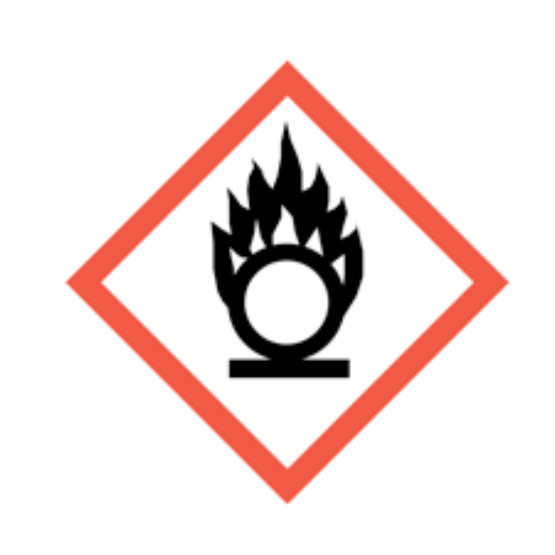
Flame over circle
Oxidising substances that can intensify fire.

Gas cylinder
Gas under pressure.
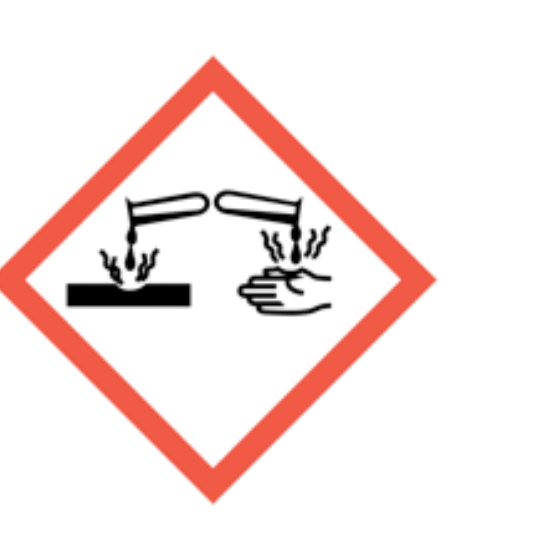
Corrosion
Skin burns, eye damage or corrosive to metals.
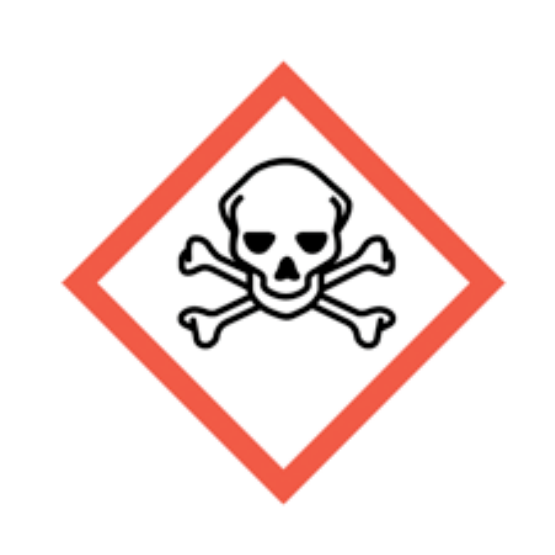
Skull and crossbones
Acute toxicity.
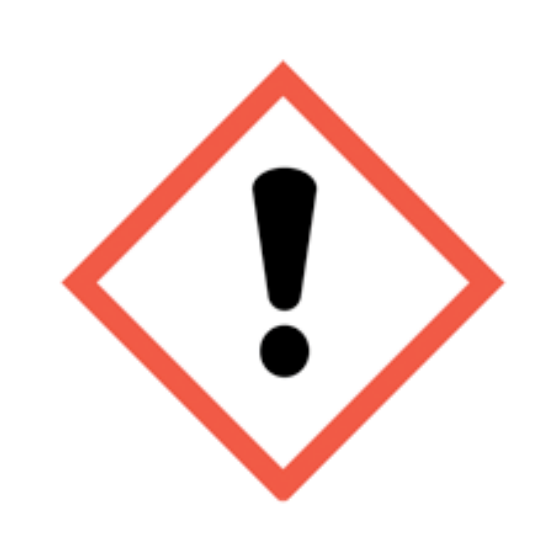
Exclamation mark
Irritation, harmful effects or skin sensitisation; some classifications cover drowsiness, dizziness or ozone-layer hazard. Read the actual hazard statements. Skin sensitisation differs from respiratory sensitisation.
Health hazard
Serious health hazards, including organ damage, aspiration hazard, respiratory sensitisation, cancer and reproductive effects; some can follow a single exposure.
Environment
Hazardous to the aquatic environment.
Standards named on this page are background context. Confirm the current edition, scope and exact requirements from an authorised copy before applying them. The open official sources below support the specific public-law and regulator guidance claims they are cited for.
What do the acronyms and key terms mean?
Key acronyms should be explained because chemical health pages often use specialist language.
| Acronym or term | What it means | Why it matters |
|---|---|---|
| ACN / AN | Acrylonitrile. | May appear in technical documents, labels, process records or research. |
| COSHH | Control of Substances Hazardous to Health. | Main UK regulatory system for assessing and controlling hazardous substance exposure. |
| SDS | Safety data sheet. | Supplier document containing hazard, handling, emergency and control information; it does not replace a COSHH assessment. |
| WEL | Workplace exposure limit. | An airborne concentration limit listed in EH40 and averaged over a specified reference period. |
| EH40 | HSE publication listing GB workplace exposure limits. | Used to identify current WELs and notations such as Carc and Sk. |
| Carc | Carcinogen notation in EH40. | Indicates carcinogenic concern and strengthens the need to minimise exposure. |
| Sk | Skin notation in EH40. | Indicates that skin absorption can make a significant contribution to exposure. |
| LEV | Local exhaust ventilation. | Engineering control used to capture vapour, mist, fume or dust near the source. |
| RPE | Respiratory protective equipment. | Respirators or breathing apparatus used for residual or emergency inhalation risk. |
| DSEAR | Dangerous Substances and Explosive Atmospheres Regulations. | Relevant because acrylonitrile is also a flammable dangerous substance. |