
SHARE Knowledge Hub
What are chemical burns and workplace skin inflammation?
Corrosive chemicals can injure skin and eyes quickly, while irritants and sensitisers can cause workplace dermatitis over time. Prevent splashes and trapped contact through safer products, closed handling, compatible PPE and accessible washing. For a suspected acid or chemical burn, call 999, protect helpers and start immediate water flushing while clinical help is arranged.
Understanding What are chemical burns and workplace skin inflammation?
Corrosive chemicals can injure skin and eyes quickly, while irritants and sensitisers can cause workplace dermatitis over time. Prevent splashes and trapped contact through safer products, closed handling, compatible PPE and accessible washing. For a suspected acid or chemical burn, call 999, protect helpers and start immediate water flushing while clinical help is arranged.
Why this matters at work
Do not apply cream or another chemical to neutralise the burn. Appearance and initial pain may underestimate damage, so a supervisor should not grade the injury or send the worker back because it looks small. Provide the exact product, concentration if known, route, time and first aid to responders. Secure the affected task and arrange clinical assessment. Afterwards investigate splash prevention, clothing overlap, dosing, access to water and training. Medical care and a safe return are separate from the decision that equipment and work methods can resume.
The plan should make immediate exposure cessation, protected assistance, irrigation, emergency contact and product information practical at the actual work location. Specify trained roles, equipment, availability across shifts, medical handover and how urgent advice is obtained. Check the current supplier information and the relevant clinical protocol before the work is authorised locally. Practise safe response without real exposure and correct access or communication failures. This Q&A does not prescribe an HF regimen or approve a facility. Record the competent basis, responsibilities and review triggers, particularly after product concentration, method, location or staffing changes. Prevention remains the first requirement; emergency preparations are a recovery layer.
How organisations manage this in practice
Arrange surveillance where risk and the applicable criteria justify it, with competent occupational health involvement. Explain what checks are for, how workers report symptoms and what referral follows. A skin programme can help identify work-related inflammation early; respiratory or biological monitoring requires its own agent-specific justification. Do not label all checks an annual chemical medical or assume one programme detects every relevant harm. When concerns arise, support the worker and review the actual contact route, method, substance, glove evidence, contamination during removal, washing and protective-clothing interfaces. Consider similarly exposed work while protecting identities. Managers need necessary restrictions and practical actions rather than detailed clinical notes. Record who will provide safe interim duties, examine controls and verify improvements. A normal check cannot justify avoidable contact, and acute burn readiness still requires immediate water and emergency arrangements. Review frequency and programme design according to risk, findings and competent advice under the correct GB or NI framework, with records held in authorised systems.
Prevent both through a task-specific review of contact, contamination, tools, enclosure, washing and suitable protection. Skin surveillance may be needed where the applicable COSHH criteria are met, using competent oversight, baseline or periodic checks and prompt referral. It does not prevent a splash or authorise continued contact. Record the assessment and actions, keep necessary health records separate from confidential medical details and give managers functional advice. Review similarly exposed tasks after findings. GB and NI provisions must be identified separately; the presence of a skin programme alone does not demonstrate that acute emergency arrangements or routine exposure control are adequate.
No. Select for the exact substance or mixture, concentration, temperature, contact type and duration, pressure, task and wearer. A material name or general chemical-resistant description is insufficient. Obtain relevant manufacturer permeation, breakthrough and degradation information for the actual product and conditions. A result for one pure chemical at a test temperature may not establish suitability for a warm mixture or repeated use. The task can also involve cut, grip, heat or dexterity risks. First reduce contact through work and engineering design. Then specify glove fit, cuff and clothing coverage, inspection, changing, removal, disposal or cleaning and storage for residual risk. Check how liquid could enter and remain trapped at overlaps; arrangements depend on splash direction and work posture. Do not invent a universal replacement interval or assume a glove remains protective because it looks intact. Train workers to remove it without contaminating skin, and verify that the selected protection can be used with tools and other PPE. Seek competent supplier advice where the evidence does not cover the proposed conditions.
Chemical splashes, suspected chemical burns, eye contact, large-area contamination, inhalation with skin exposure or worsening pain, blistering, swelling, redness or loss of function should be managed through site first-aid arrangements and appropriate medical assessment. Follow the safety data sheet and local emergency procedure.
Who needs to understand chemical burns and skin inflammation?
Chemical burns and skin inflammation should be understood by anyone who uses, stores, supervises, purchases or responds to corrosive, irritant or sensitising substances.
Workers
Need to recognise chemicals that can burn or inflame skin and know the first-response arrangements.
Supervisors
Need to check splash controls, PPE, washing facilities, emergency equipment and worker behaviour.
Managers
Need to resource safer substances, training, PPE, surveillance and emergency arrangements.
Procurement and stores
Need to prevent unsuitable products entering the workplace without SDS and compatibility review.
First aiders
Need to understand the workplace procedure and location of washing or eyewash facilities.
H&S and occupational health teams
Need to connect COSHH, skin surveillance, incident learning and worker support.
How can I practise this topic in 3D?


Skin exposure to leaking household chemicals
All related inspection points 1 across 1 location
Recover materials. Protect people. 1 inspection point
Practice in the SHAREhub environment. Browser practice is separate from workplace competence and formal learning records.
Rehearse the splash response before reviewing long-term skin health
Walk the response route before work: from the likely splash point to plentiful water, communication and trained help. Check doors, obstructions and whether a person with impaired vision can be assisted without contaminating the helper. A wall-mounted unit on an inventory is not evidence that it can be reached or will supply the required response.
Best-practice guide: Chemical Burns And Inflammations
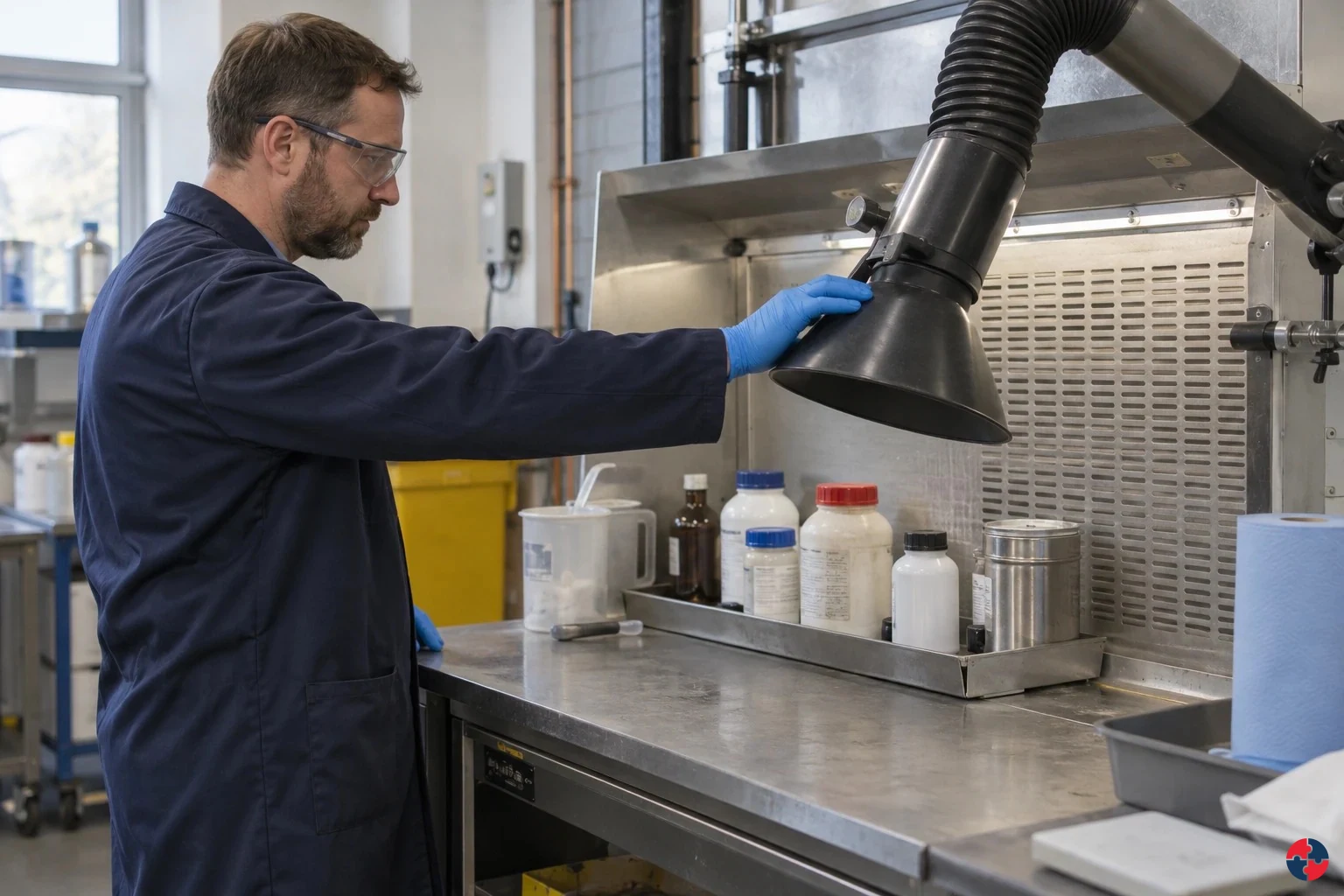
Rehearse the splash response before reviewing long-term skin health
Walk the response route before work: from the likely splash point to plentiful water, communication and trained help. Check doors, obstructions and whether a person with impaired vision can be assisted without contaminating the helper. Corrosive chemicals can injure skin and eyes quickly, while irritants and sensitisers can cause workplace dermatitis over time.
Turn chemical burns and inflammations knowledge into a decision
Corrosive chemicals can injure skin and eyes quickly, while irritants and sensitisers can cause workplace dermatitis over time. Prevent splashes and trapped contact through safer products, closed handling, compatible PPE and accessible washing. Chemical owner checks: Check register, SDS and approved purchase; Hold use of an unidentified or unapproved chemical.
Riverside chemical burn control system
Chemical register: Approved products, SDSs, location, owner and COSHH status. Evidence / response: Chemical owner checks: Check register, SDS and approved purchase; Hold use of an unidentified or unapproved chemical. Pool plant: Segregated chemicals, dosing controls, PPE and emergency procedure. Evidence / response: Pool-plant lead checks: Inspect segregation and dosing safeguards; Stop dosing if chemicals, controls or emergency arrangements are uncertain.
Damage mechanisms
Corrosion: Tissue is chemically destroyed. Corrosive alkali contact: Stronger sodium hydroxide solutions can cause skin burns and ulcers; dilute solutions may irritate. Irritation: Skin barrier is damaged by repeated or strong contact.
Choose controls for chemical burns and inflammations
Eliminate: Remove unnecessary corrosive products or avoid manual cleaning methods. Reduce: Use lower concentration, pre-diluted product, smaller quantities or safer formulation. Isolate: Use closed dosing, barriers, restricted access and splash screens. Control: Use pumps, funnels, anti-splash methods, labelled containers and spill trays. PPE: Use compatible gloves, goggles, face shields, aprons and boots. Read the full control table for qualifications, ownership and verification. Use the actual task and applicable jurisdiction; existing technical approval remains unchanged.
Use the full chemical burns and inflammations lesson
Use the full topic for the decision points, practical examples, detailed control tables and source scope. HSE guidance applies to Great Britain; use HSENI for the Northern Ireland route and the source’s stated jurisdiction. A simplified guide does not change the page’s technical-review or approval status.

Read all six steps as text
1. Rehearse the splash response before reviewing long-term skin health
Walk the response route before work: from the likely splash point to plentiful water, communication and trained help.
- Avoid / redesign: Remove unnecessary corrosive products or avoid manual cleaning methods.
- Control the task: Use closed dosing, barriers, restricted access and splash screens.
- Verify before release: Substitution record and method review.
Walk the response route before work: from the likely splash point to plentiful water, communication and trained help. Check doors, obstructions and whether a person with impaired vision can be assisted without contaminating the helper. Corrosive chemicals can injure skin and eyes quickly, while irritants and sensitisers can cause workplace dermatitis over time.
Apply it: Which part of this plan would you check at the workface before authorising the task?
2. Turn chemical burns and inflammations knowledge into a decision
Use the evidence to improve the actual work arrangement.
- Change at source: Remove unnecessary corrosive products or avoid manual cleaning methods.
- Make it observable: Substitution record and method review.
- Keep useful evidence: Chemical owner checks: Check register, SDS and approved purchase; Hold use of an unidentified or unapproved chemical.
Corrosive chemicals can injure skin and eyes quickly, while irritants and sensitisers can cause workplace dermatitis over time. Prevent splashes and trapped contact through safer products, closed handling, compatible PPE and accessible washing. Chemical owner checks: Check register, SDS and approved purchase; Hold use of an unidentified or unapproved chemical.
Apply it: What evidence would show that the change improves this task, rather than only completing a record?
3. Riverside chemical burn control system
Example: a practical application of the existing topic lesson.
- Chemical register: Approved products, SDSs, location, owner and COSHH status.
- Pool plant: Segregated chemicals, dosing controls, PPE and emergency procedure.
- Cleaning tasks: Dilution systems, no mixing rule, labelled containers and glove selection.
Chemical register: Approved products, SDSs, location, owner and COSHH status. Evidence / response: Chemical owner checks: Check register, SDS and approved purchase; Hold use of an unidentified or unapproved chemical. Pool plant: Segregated chemicals, dosing controls, PPE and emergency procedure. Evidence / response: Pool-plant lead checks: Inspect segregation and dosing safeguards; Stop dosing if chemicals, controls or emergency arrangements are uncertain.
Apply it: At which point would you hold this example, and what evidence would allow it to proceed?
4. Damage mechanisms
Connect the task, the route to the person and the control that can fail.
- Corrosion: Tissue is chemically destroyed.
- Corrosive alkali contact: Stronger sodium hydroxide solutions can cause skin burns and ulcers; dilute solutions may irritate.
- Irritation: Skin barrier is damaged by repeated or strong contact.
Corrosion: Tissue is chemically destroyed. Corrosive alkali contact: Stronger sodium hydroxide solutions can cause skin burns and ulcers; dilute solutions may irritate. Irritation: Skin barrier is damaged by repeated or strong contact.
Apply it: Who could be exposed, including other trades, cleaners, maintainers and people nearby?
5. Choose controls for chemical burns and inflammations
Start with the stronger practicable options and verify their effect.
- Eliminate: Remove unnecessary corrosive products or avoid manual cleaning methods.
- Reduce: Use lower concentration, pre-diluted product, smaller quantities or safer formulation.
- Isolate: Use closed dosing, barriers, restricted access and splash screens.
- Control: Use pumps, funnels, anti-splash methods, labelled containers and spill trays.
- PPE: Use compatible gloves, goggles, face shields, aprons and boots.
Eliminate: Remove unnecessary corrosive products or avoid manual cleaning methods. Reduce: Use lower concentration, pre-diluted product, smaller quantities or safer formulation. Isolate: Use closed dosing, barriers, restricted access and splash screens. Control: Use pumps, funnels, anti-splash methods, labelled containers and spill trays. PPE: Use compatible gloves, goggles, face shields, aprons and boots. Read the full control table for qualifications, ownership and verification. Use the actual task and applicable jurisdiction; existing technical approval remains unchanged.
Apply it: Which stronger option can be used here, and who will verify it before accepting the remaining risk?
6. Use the full chemical burns and inflammations lesson
Follow the official sources below and retain the task-specific evidence.
- Official guidance: NHS acid and chemical burns
- Official guidance: HSE COSHH control
- Task decision: Chemical owner checks: Check register, SDS and approved purchase; Hold use of an unidentified or unapproved chemical.
Use the full topic for the decision points, practical examples, detailed control tables and source scope. HSE guidance applies to Great Britain; use HSENI for the Northern Ireland route and the source’s stated jurisdiction. A simplified guide does not change the page’s technical-review or approval status.
Apply it: Which official source and full-topic section will you use to resolve the next decision?
A blocked wash point and chemical trapped inside a boot are learning cases for a real task rehearsal, using a safe simulation without chemical exposure. Follow the existing first-response section for an actual injury. After the emergency, separately review contact prevention, welfare and restart. Recurring skin irritation needs its own prompt reporting and surveillance review; it should not be managed as if every case were an acute splash.
Riverside: cleaning equipment blocks the wash route
Illustrative example. A cleaner’s planned splash route passes through a store now obstructed by deliveries.
Decision. The supervisor pauses the corrosive task, clears and checks the route, and rehearses communication and trained assistance.
Evidence to check. Water availability, access from the task, contamination-removal arrangements and workers able to explain the response.
Hold or escalation point. Keep the task held if the required emergency facility or safe helper route cannot be used.
Follow-up. Review store layout and check that dermatitis and splash reports reach the right separate follow-up owner.
Keep prevention and the emergency route connected
The splash location, usable washing point, alarm route and trained assistance need to work together. Repeated irritation and an acute corrosive contact are not interchangeable mechanisms.
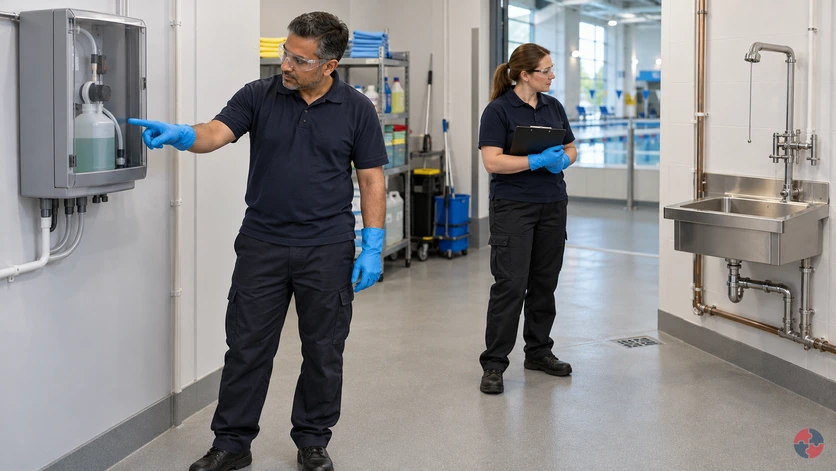
Prevent contact and make the response reachable
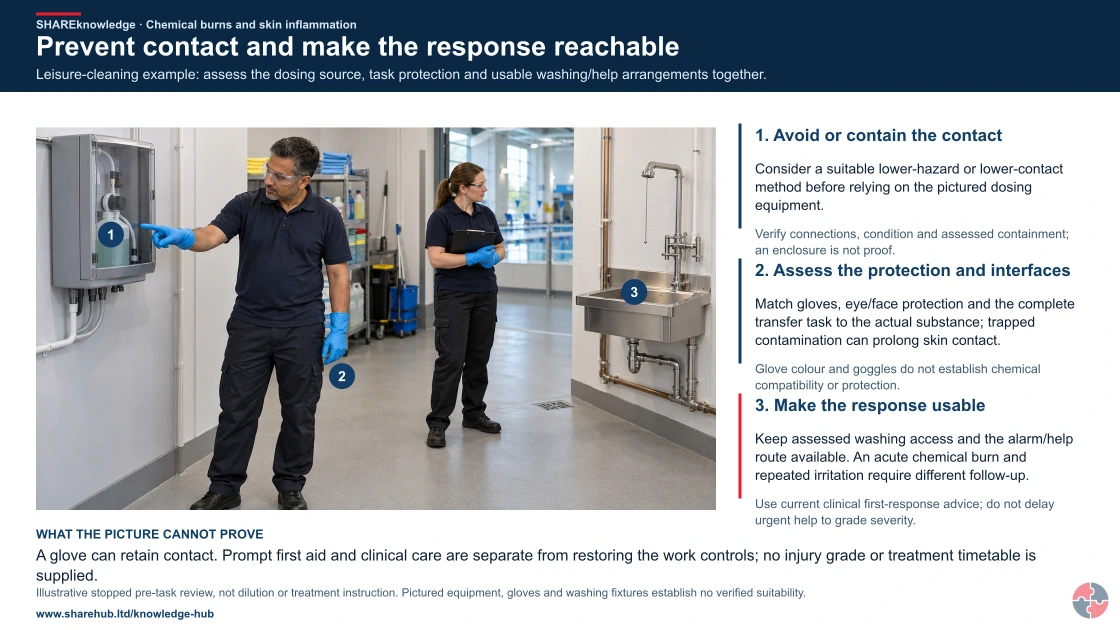
Full written explanation
Leisure-cleaning example: assess the dosing source, task protection and usable washing/help arrangements together.
- Avoid or contain the contact. Consider a suitable lower-hazard or lower-contact method before relying on the pictured dosing equipment.
- Assess the protection and interfaces. Match gloves, eye/face protection and the complete transfer task to the actual substance; trapped contamination can prolong skin contact.
- Make the response usable. Keep assessed washing access and the alarm/help route available. An acute chemical burn and repeated irritation require different follow-up.
Change the pathway
- An enclosure is not proof. Verify connections, condition and assessed containment; an enclosure is not proof.
- Appearance cannot select PPE. Glove colour and goggles do not establish chemical compatibility or protection.
- Do not wait to grade an injury. Use current clinical first-response advice; do not delay urgent help to grade severity.
Evidence check: A glove can retain contact. Prompt first aid and clinical care are separate from restoring the work controls; no injury grade or treatment timetable is supplied.
Full immediate chemical-burn response, product exceptions and clinical guidance
Primary references: NHS: acid and chemical burns · HSE: COSHH risk assessment (GB)
Open the complete HD image (new tab)Download image

Full immediate chemical-burn response, product exceptions and clinical guidance
Primary references: NHS: acid and chemical burns · HSE: COSHH risk assessment (GB)

Prevent contact
Assess containment, splash control and suitable task-specific protection before work starts.
Make the response usable
Check unobstructed access to the assessed emergency washing facilities and the site alarm/help route. Do not wait for an injury to find a blocked point.
Provide information safely
Give responders the product information without re-exposing anyone. Use the page’s clinically sourced substance-specific advice.
Do not infer severity from an elapsed-time diagram or delay appropriate urgent help to identify an injury grade.
What are the key facts about chemical burns and skin inflammation?
The key facts are that contact time, concentration, chemical type and speed of decontamination strongly influence the severity of harm.
Corrosives can destroy tissue
Strong acids and alkalis can damage skin, eyes and deeper tissue, sometimes rapidly.
Irritants can inflame the skin
Detergents, solvents, wet work, cement and dusts can damage the skin barrier and cause dermatitis.
Sensitisers can create long-term reactions
Once sensitised, a worker may react to small future exposures.
Wet cement is a common workplace cause
Alkaline wet cement can burn when trapped against skin or inside boots, gloves and clothing.
First response must be practised
Workers need to know how to remove contamination, wash, raise help and avoid contaminating others.
Prevention is stronger than treatment
Substitution, closed handling, splash control, gloves, eyewash and supervision prevent injuries before they happen.
What are chemical burns and workplace skin inflammation?
Chemical burns are injuries caused by harmful chemical contact, while workplace skin inflammation includes irritation and dermatitis caused or worsened by work exposure.
A chemical burn can involve the skin, eyes, mouth, airways or deeper tissue depending on the substance, route and exposure duration. Some chemicals cause immediate pain; others continue damaging tissue while the worker feels little at first.
Skin inflammation is broader. It includes redness, itching, swelling, cracking, dryness, blistering and dermatitis caused by irritants, wet work, repeated handwashing, detergents, solvents, dusts, oils, resins, rubber chemicals or sensitisers.
The workplace goal is to prevent contact. Where contact could still happen, the system must limit splash, reduce exposure time, provide compatible PPE, make washing available and train people to act quickly.
| Type | What it means | Workplace example |
|---|---|---|
| Acid burn | Chemical injury caused by acidic substances. | Battery acid, acid cleaners or laboratory acids. |
| Alkali burn | Chemical injury caused by alkaline substances, often capable of deep tissue damage. | Wet cement, caustic soda, drain cleaner or oven cleaner. |
| Irritant contact dermatitis | Skin barrier damage from repeated or strong irritant exposure. | Detergents, wet work, solvents, oils, dusts and cement. |
| Allergic contact dermatitis | Immune reaction after sensitisation to a substance. | Epoxy resins, some rubber chemicals, preservatives or chromates. |
| Eye chemical injury | Chemical damage to the eye surface or deeper structures. | Splash from cleaning chemicals, alkalis, acids or disinfectants. |
How do chemical burns damage skin and eyes?
Corrosive chemicals can injure skin and eyes at the contact site; the chemical, concentration, exposure route and time in contact affect the harm.
Acids and alkalis can both cause serious injury at the contact site. UKHSA describes sulphuric acid harm as a result of local pH change. Its sodium hydroxide guidance distinguishes irritating dilute solutions from stronger solutions that can cause skin burns and ulcers; eye contact can also cause burns. Concentration, exposure route and contact time therefore matter. Do not judge safety from the product category or from pain alone; prevent contact and use the planned chemical-burn response.
For substance-specific examples, see UKHSA sulphuric acid toxicology and UKHSA sodium hydroxide information. Follow the emergency section for immediate actions and the product SDS for specialist arrangements.
Skin inflammation can happen through repeated smaller exposures. Soaps, solvents and wet work remove natural oils and weaken the skin barrier. Once the barrier is damaged, further exposure becomes easier, symptoms worsen and infection or allergic reactions may follow.
Eye tissue is particularly vulnerable because chemical contact can damage the surface quickly and affect vision. Eye protection, splash control and immediate washing arrangements must be planned before work starts.
| Mechanism | What happens | Control implication |
|---|---|---|
| Corrosion | Tissue is chemically destroyed. | Prevent splash and provide immediate washing. |
| Corrosive alkali contact | Stronger sodium hydroxide solutions can cause skin burns and ulcers; dilute solutions may irritate. | Remove contamination quickly and wash thoroughly. |
| Irritation | Skin barrier is damaged by repeated or strong contact. | Reduce contact, improve skin care and check skin. |
| Sensitisation | Immune system becomes reactive to future exposure. | Prevent exposure and escalate early symptoms. |
| Occlusion | Chemical is trapped under gloves, boots or clothing. | Remove contaminated clothing/PPE and improve PPE selection. |
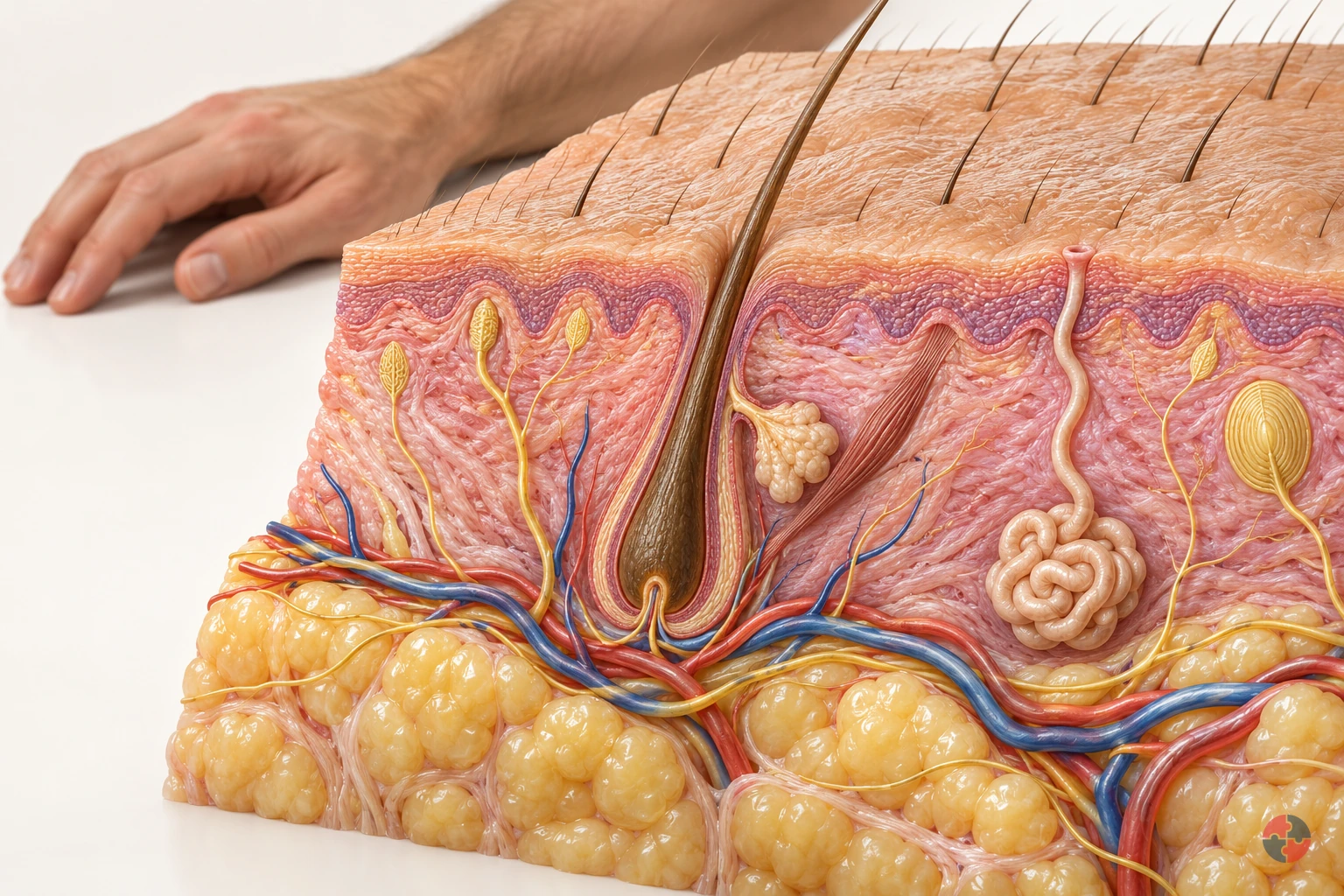
How does the skin barrier work, and how can workplace contact damage it?
Interactive anatomy · Skin barrier and injury · Updated 2026-10-23
Read all anatomy and process explanations without the viewer
General education about normal skin and example mechanisms; not diagnosis, treatment selection or a patient assessment. Hair-bearing forearm example. Vessels remain below the epidermis; the normal barrier has no large open holes. Image-based diagnosis or patch-testing simulation Treatment doses or guaranteed glove/barrier-cream protection Calculated injury depth, contact-dose thresholds or a number of safe washes Hydrofluoric-acid protocols and unreviewed named-substance injury overlays Immediate chemical-burn advice must remain readable outside the model and before any scenario answer.
Outer barrier
The outermost layer helps limit water loss and harmful contact. The outermost epidermal layer combines flattened cells with materials between them to help retain moisture and limit harmful contact. It is a selective protective barrier, rather than a waterproof coating. Use the magnified inset to locate its components. The model shows their relationship but cannot tell whether a particular substance will cross a person’s skin. Health and Safety Executive: Structure and functions of the skin
Barrier lipids
Lipids between surface cells help maintain the barrier. Repeated detergent contact can remove some of these fatty materials and overwhelm repair. Health and Safety Executive: Understanding the causes of skin disease
Epidermis
The outer skin layer continually renews. New cells form in the deeper epidermis and move towards the surface, becoming flattened as the outer layer is renewed and shed. The epidermis therefore contributes active renewal as well as surface protection. Follow its position above the dermis in the cutaway; the model enlarges a static structure rather than timing an individual’s cell renewal. Health and Safety Executive: Structure and functions of the skin
Dermis
Supporting tissue beneath the epidermis contains vessels, nerves and glands. The dermis is supporting tissue beneath the epidermis. It contains structures involved in supply, sensation and temperature regulation, including vessels, nerves and sweat glands. The cutaway enlarges selected components so their different functions can be followed. Their shared location does not mean that they form one open passage through the skin barrier. Oxford Health NHS Foundation Trust: The Skin — Community Tissue Viability Team
Subcutaneous tissue
Tissue and fat below the dermis help insulate and cushion. The lower layer supports the skin block; it is not part of the surface barrier. Health and Safety Executive: Structure and functions of the skin · Oxford Health NHS Foundation Trust: The Skin — Community Tissue Viability Team
Blood vessels
Vessels supply the deeper skin. These vessels supply the deeper skin tissues. They sit below the epidermal surface in the cutaway, alongside other supporting structures. Compare them with the nerve and sweat duct rather than interpreting every tube as the same pathway. The drawing explains location and function; its vessel size and colour are not measurements of circulation or skin temperature. Oxford Health NHS Foundation Trust: The Skin — Community Tissue Viability Team
Sensory nerves
Nerve endings help detect touch and temperature. The signalling symbol represents sensory information, not a visible electrical spark. Health and Safety Executive: Structure and functions of the skin · Oxford Health NHS Foundation Trust: The Skin — Community Tissue Viability Team
Sweat gland and duct
Sweat reaches the surface through a duct. A sweat gland produces sweat that reaches an opening at the surface through a duct. This contributes to the skin’s role in temperature regulation. Trace the coiled gland and its duct separately from the vessels and nerves. The enlarged path makes the connection visible; it does not measure sweating or represent every route by which a substance can enter skin. Health and Safety Executive: Structure and functions of the skin
Hair follicle
Hair grows from a follicle in hair-bearing skin. This forearm example includes a follicle. The palm has a different structure and must not use this site label. Health and Safety Executive: Structure and functions of the skin
Immune response inset
Skin participates in immune responses. In contact allergy, prior sensitisation can lead to an inflammatory response after later contact. Health and Safety Executive: Understanding the causes of skin disease · NHS: Contact dermatitis — causes
Open the complete process transcript
The process, step by step
Find the surface
Start with the forearm locator to establish where this sample of skin belongs. The enlarged block represents hair-bearing skin, with the epidermis on the outside, the dermis beneath it and deeper subcutaneous tissue below. The surface is only one part of this living organ. New epidermal cells are formed deeper down and move towards the outside, where flattened cells contribute to the protective layer. Use the block to connect the familiar body surface with these layers; it is an enlarged teaching section, not a standard thickness shared by every body site. Health and Safety Executive: Structure and functions of the skin
What to watch: Use the forearm locator first, then follow the enlarged block from the outer epidermis down through the dermis to the deeper tissue.
Why it matters: Locating the body site prevents the sample from being mistaken for every kind of skin. The outer layer, supporting tissues and deeper structures contribute different functions within the same organ.
Explore this step: Identify the outermost layer and the hair follicle before changing to the magnified barrier view.
Magnify the barrier
The outer barrier depends on both flattened surface cells and the fatty materials, or lipids, between them. The cells provide one part of the structure; the surrounding lipids help control the passage of water and substances through it. Look at their arrangement together rather than treating the skin as a single waterproof sheet. This is a selective barrier, not a complete seal against every material. The enlargement helps explain why a change in the material between cells can affect protection even when there is no large cut through the skin. Health and Safety Executive: Understanding the causes of skin disease
What to watch: Compare the flattened surface cells with the lipids between them, using the enlarged barrier inset rather than the whole skin block.
Why it matters: The arrangement helps limit unwanted passage through the surface while retaining moisture. Understanding both components explains why skin protection depends on more than whether the surface looks visibly broken.
Explore this step: Point out one surface cell and the surrounding lipid region, then describe how they work together.
Limit water loss
Water retention is part of healthy barrier function. The outer cells and the materials between them help limit water leaving the skin, while some water can still pass through. The labelled arrows represent that background loss; they are not streams from a wound or measurements of an individual’s hydration. Moisture matters because the outer layer needs appropriate hydration to remain flexible and function well. Read the arrows alongside the cell-and-lipid arrangement, so the explanation connects a movement across the surface with the structure that helps regulate it. Health and Safety Executive: Understanding the causes of skin disease
What to watch: Look at the labelled water-loss arrows beside the outer cells and lipids, noting their direction across the barrier surface.
Why it matters: Limiting water loss helps the outer layer retain the moisture needed for normal function. A barrier can perform this role without being impermeable, and the model cannot assess somebody’s skin hydration.
Explore this step: Compare this step with the barrier enlargement and explain why “limits water loss” is more accurate than “waterproof”.
Explore deeper structures
The deeper skin contains structures with different jobs. Blood vessels supply the deeper tissues, sensory nerves help carry information such as touch and temperature, and sweat glands connect to the surface through ducts. Follow each labelled structure separately instead of reading the cutaway as one channel running down through the skin. The enlarged vessels, nerves and gland are learning features within the supporting tissue; their positions explain relationships, not the route or speed of an absorbed substance. Notice that surface barrier function and these deeper functions are connected parts of skin health. Health and Safety Executive: Structure and functions of the skin · Oxford Health NHS Foundation Trust: The Skin — Community Tissue Viability Team
What to watch: Locate the vessels, sensory nerves and coiled sweat gland below the surface, then trace the gland’s duct towards its opening.
Why it matters: Supply, sensation and temperature regulation require different structures. Recognising those roles avoids mistaking every visible line for a chemical entry route or assuming the outer barrier carries out all skin functions.
Explore this step: Select the gland, nerve and vessel labels in turn and name a different function for each.
Connect structure and function
Return to the whole section and connect the functions you have explored. The renewing outer layer helps form a protective barrier and limit moisture loss. Deeper supporting tissues contain sensory structures, vessels and glands, while subcutaneous tissue contributes cushioning and insulation. These functions operate together rather than as a single switch that makes skin either completely protected or unprotected. Use the separate mechanism examples to explore particular changes only after locating the healthy structures. The cutaway explains relationships; its colours and enlarged components do not diagnose a skin condition or identify a safe contact time. Health and Safety Executive: Structure and functions of the skin · Oxford Health NHS Foundation Trust: The Skin — Community Tissue Viability Team
What to watch: Review the complete skin section, connecting the outer barrier with the supporting dermis, sensory structures, sweat gland and deeper tissue.
Why it matters: Skin both separates the body from its surroundings and helps it respond to them. Connecting protection, sensation and temperature functions gives a more useful picture than viewing the surface as a passive covering.
Explore this step: Choose one structure from the surface and one from deeper tissue, and explain how their jobs differ.
Mechanisms and their limits
Cumulative irritant dermatitis Repeated wet work or contact with detergents and other irritants can damage the barrier and cause inflammation. Strong irritants may act much more rapidly. Repeated task cards illustrate accumulated contact, not a threshold number of washes. One mild contact does not inevitably cause disease. Susceptibility varies. Dryness, cracking and discomfort need attention; colour alone does not show the cause. Health and Safety Executive: Understanding the causes of skin disease · NHS: Contact dermatitis — causes · NHS: Contact dermatitis — symptoms
HSE: prevent work-related skin problems
Allergic contact dermatitis A substance can sensitise the immune system. Later contact may trigger a delayed reaction, sometimes from a small amount. Sensitisation and later reaction are separate events with variable timescales. Irritation and allergy may coexist. This image cannot diagnose a rash. Protection must suit the substance and task; no glove or cream guarantees protection. Health and Safety Executive: Understanding the causes of skin disease · NHS: Contact dermatitis — causes · NHS: Contact dermatitis — symptoms
HSE: causes of work-related skin disease
HSE: contact controls and suitable gloves
Corrosive chemical injury A corrosive substance can directly damage skin. The affected depth and seriousness depend on the substance and exposure. Wet cement trapped against skin can cause a serious alkaline burn. The patterned region illustrates possible injury, not a calculated burn depth. Cement can also abrade and irritate skin, and chromate can cause allergy. These are parallel hazards, not successive disease stages. Do not wait for pain or finish an activity before seeking first aid. This general lesson does not cover hydrofluoric-acid protocols. Health and Safety Executive: Construction hazardous substances: Cement · NHS: Acid and chemical burns
NHS: immediate chemical-burn action
Cumulative irritant dermatitis — follow the anatomy
Look at: The rough, dry patch: raised flakes and branching cracks in the outer barrier.
What changes: Repeated wet work or irritants can disrupt the protective barrier. Flaking and fissures make the damaged surface visible in this example.
Why it matters: Skin may become dry, sore and cracked, making further exposure more damaging.
What to do: Reduce wet work and contact; use suitable gloves, gentle cleaning and skin care.
Repeated wet work at a commercial wash-up station
Catering: frequent washing and detergent contact repeatedly wet and dry the hands. Explicit time jump across repeated tasks and shifts: cumulative barrier damage does not develop at a fixed number of washes or within this 32-second clip. People differ in susceptibility; similar skin changes may have different causes. A short exposure does not inevitably produce dermatitis.
Look at the whole wet-work pattern The job combines water, detergent handling, hand cleaning and time in gloves. Review unnecessary skin contact and how tasks are organised. Health and Safety Executive: Understanding the causes of skin disease · Health and Safety Executive: How do I prevent skin problems in my business?
Repeated contact challenges the barrier The timeline jumps across separate contacts. Mild irritants can disrupt surface lipids and outpace the skin’s repair; prolonged wetness can also affect barrier function. Health and Safety Executive: Understanding the causes of skin disease
Irritant dermatitis: dry scales and cracked skin The lifted flakes and branching cracks show a dry, disrupted barrier. Irritation may also cause soreness, inflammation or blisters. Irritant and allergic dermatitis can look alike; these features alone do not identify the cause. Health and Safety Executive: Understanding the causes of skin disease · NHS: Contact dermatitis — causes · NHS: Contact dermatitis — symptoms
Reduce contact and report early changes Review the method, suitable protection, washing/drying and skin care. Encourage early reporting and appropriate medical advice instead of stronger scrubbing or assuming a cream makes contact safe. Health and Safety Executive: How do I prevent skin problems in my business?
Allergic contact dermatitis — follow the anatomy
Look at: The swollen patch with small raised, fluid-filled blisters, and the separate immune-response inset.
What changes: After sensitisation, later contact with an allergen can trigger a delayed immune reaction. This example shows swelling and small blisters at the surface.
Why it matters: An itchy, inflamed rash can recur after small exposures; it is not simply abrasion.
What to do: Identify and avoid the allergen with competent advice and suitable work controls.
Chromate sensitisation and a later skin reaction
Construction: a worker has repeated skin contact with cement products; a later contact is shown after sensitisation has occurred. Explicit time jumps separate initial sensitisation from later contact and a delayed reaction. None has a fixed duration in the 32-second explanation. Only some people become sensitised. Cement also causes irritation and burns; the allergy card does not replace those separate hazards.
Identify avoidable contact Cement work can expose skin to irritants and chromate sensitiser. Review methods, product condition, contact protection and welfare arrangements rather than identifying allergy by appearance. Health and Safety Executive: Construction hazardous substances: Cement · Health and Safety Executive: How do I prevent skin problems in my business?
Sensitisation occurs earlier in this example The timeline jumps past an earlier immune-sensitisation event. There may have been no visible change then; the illustration does not predict who becomes sensitised. Health and Safety Executive: Understanding the causes of skin disease
Allergic dermatitis: a delayed blistered rash example The raised fluid-filled blisters and swelling illustrate one possible contact-dermatitis appearance. The immune inset explains sensitisation followed by a later reaction. Irritant dermatitis can also blister, so appearance alone cannot diagnose an allergy. Health and Safety Executive: Understanding the causes of skin disease · Health and Safety Executive: Construction hazardous substances: Cement · NHS: Contact dermatitis — symptoms
Reduce exposure and obtain assessment Report the reaction and seek clinical advice; do not self-diagnose allergy from the animation. Review cement contact and suitable protection. No glove or barrier cream guarantees that exposure is harmless. Health and Safety Executive: How do I prevent skin problems in my business? · Health and Safety Executive: Construction hazardous substances: Cement
Corrosive chemical injury — follow the anatomy
Look at: The irregular chemical-contact patch, broken surface and damaged tissue extending into the cutaway.
What changes: A corrosive substance directly damages tissue. The broken barrier and disruption beneath it show possible injury beyond the surface.
Why it matters: Depth and severity depend on the substance and contact; wet cement burns may develop without early pain.
What to do: Prevent contact and follow the substance-specific emergency washing and medical guidance.
Wet cement becomes trapped inside a boot
Concrete work: wet cement enters a boot and stays against the skin. Contact injury may develop while exposure continues. Playback is not a waiting period, a safe contact time or a calculation of burn depth. Pain may not provide an early warning. The chemical-skin action is separate from eye irrigation and thermal-burn cooling; hydrofluoric acid remains outside this generic example.
Prevent cement entering clothing The pour arrangement allows wet cement to reach a boot opening. Review tools, working position and suitable clothing/footwear so the material cannot become trapped. Health and Safety Executive: Construction hazardous substances: Cement
Alkaline material remains on skin Trapped wet cement maintains chemical contact. This direct corrosive route is different from the later allergy example, although several cement hazards can coexist. Health and Safety Executive: Construction hazardous substances: Cement
Chemical injury: a broken surface and underlying tissue damage Follow the irregular wound edge into the disrupted tissue below the surface. The cutaway illustrates possible deeper chemical injury; appearance does not establish burn depth or severity. Wet cement can cause serious injury without an early pain warning. Health and Safety Executive: Construction hazardous substances: Cement
Stop contact and act immediately Get immediate chemical-burn first aid and medical help; follow the separate action panel for safe decontamination and water irrigation. Do not wait for pain, finish the clip or add a neutralising chemical. NHS: Acid and chemical burns · Health and Safety Executive: Construction hazardous substances: Cement
Read the practice situations and all answer explanations
SK-Q1: Which response addresses the work as well as the early skin changes?
Frequent wet work leaves a worker’s hands dry and sore.
Automatically diagnose an allergy. — Several causes are possible. A picture or short work history cannot establish an allergy; clinical assessment may be needed.
Report early changes and review harmful contact, suitable controls, cleaning and skin care. — Yes. Reduce harmful contact and review the work before problems worsen. Include suitable cleaning, drying, skin care and exposure controls.
Scrub the hands harder with solvent. — Solvents and harsh scrubbing can further damage the barrier. Use the suitable cleaning arrangements provided for the task.
NHS: Contact dermatitis — causes · Health and Safety Executive: How do I prevent skin problems in my business?SK-Q2: What takes priority now?
Wet cement is trapped inside a worker’s boot.
Stop exposure and obtain immediate first aid and medical help. — Correct. Wet cement can cause a serious chemical burn. The chemical-burn action panel is available immediately; do not wait for this lesson.
Wait to see whether it starts to hurt. — Do not wait for pain. Trapped wet cement can rapidly cause a serious burn. Stop exposure and obtain immediate help.
Neutralise the cement with an acidic household product. — Do not add another chemical or attempt neutralisation. Follow immediate chemical-burn first aid and obtain medical help.
Health and Safety Executive: Construction hazardous substances: Cement · NHS: Acid and chemical burnsSK-Q3: Which mechanism fits the example?
In this teaching example a sensitised worker reacts after later contact with the known allergen.
The skin must have worn through at that instant. — Allergic contact dermatitis does not require the surface to wear away at that moment. Mechanical injury and allergy are different mechanisms.
Any glove would have guaranteed protection. — Gloves must be selected for the substance and task, and used correctly. Any glove is not a guarantee.
A sensitised immune system can react after later contact. — Yes. Prior sensitisation and later contact are separate stages. Irritant and allergic mechanisms can occur together; this example does not diagnose a real person.
Health and Safety Executive: Understanding the causes of skin disease · Health and Safety Executive: How do I prevent skin problems in my business?Sources and how the model is made
The opening images are AI-generated anatomical illustrations. The interactive 3D models and labelled SVG diagrams use original procedural artwork. These teaching images are not medical scans or diagnostic tools. Source references support the learner explanations and do not grant artwork rights.
- Health and Safety Executive: Structure and functions of the skin — Three skin layers; renewal; sweat, hair, sensory, barrier and temperature functions. Factual reference only; no diagram copied.
- Oxford Health NHS Foundation Trust: The Skin — Community Tissue Viability Team — Layer and deeper vessel/nerve context, mechanical injury and skin-tone assessment considerations. No treatment regimen or illustration reused.
- Health and Safety Executive: Understanding the causes of skin disease — Barrier lipids and water retention; cumulative irritation; sensitisation, delayed contact allergy, small subsequent amounts and coexistence. Replaces the former separate dermatitis URL, which failed direct retrieval.
- NHS: Contact dermatitis — causes — Irritant versus allergic mechanisms and workplace wet work. Printed next-review date May 2026 is overdue; recheck at qualified clinical sign-off and corroborate with HSE.
- Health and Safety Executive: Construction hazardous substances: Cement — Alkaline burns from trapped cement; abrasive irritation; chromate sensitisation; task methods and suitable contact protection.
- Health and Safety Executive: How do I prevent skin problems in my business? — Avoid contact, suitable gloves, washing and drying, skin care, early checks/reporting and medical advice. No universal glove or cream claim.
- NHS: Acid and chemical burns — Immediate chemical skin-burn first aid: 999, avoid contamination, clothing and dry-chemical removal, copious water about one hour, no creams or other chemicals. Skin advice is not substituted for eye or thermal guidance.
- NHS: Cuts and grazes — General shallow-wound context and the need for professional help with serious wounds; not a visual diagnosis or full first-aid simulation.
- NHS: Contact dermatitis — symptoms — Dryness, cracking, inflammation and fluid-filled blisters can occur in contact dermatitis. Irritant and allergic appearances overlap. Original illustrative textures are not diagnostic photographs and no source artwork is copied.
Which workplace substances and tasks commonly cause chemical burns?
Chemical burns and inflammation commonly arise from corrosive cleaning products, wet cement, acids, alkalis, disinfectants, solvents, resins, batteries and poorly controlled decanting or mixing.
The highest-risk tasks are often routine: diluting cleaners, clearing blocked drains, adding pool chemicals, charging or maintaining batteries, cleaning equipment, mixing mortar, handling wet concrete, using two-part resins or transferring chemicals between containers.
Burns also occur when the system around the chemical is weak. Unlabelled containers, poor decanting, incompatible gloves, missing eyewash, rushed cleaning, no spill plan or lack of supervision can turn a manageable product into a serious injury.
The assessment should consider normal use and foreseeable mistakes: wrong dilution, splash during pouring, pressure release, blocked lines, damaged containers, incompatible mixing and contaminated PPE.
| Source or task | Typical harm | Prevention focus |
|---|---|---|
| Wet cement and mortar | Alkali burns and dermatitis. | Skin protection, washing, kneeling controls and training. |
| Drain, oven and toilet cleaners | Corrosive burns and eye injury. | Safer products, dilution control, goggles and face protection. |
| Pool chemicals | Corrosive exposure, chlorine release if mixed incorrectly and splash injury. | Segregation, dosing controls, training and emergency plan. |
| Battery acid | Acid burns and eye injury. | Charging controls, face/eye protection and spill response. |
| Disinfectants and bleach | Irritation, burns and harmful gas if mixed. | Never mix, ventilate, label and follow SDS. |
| Solvents and resins | Defatting, irritation, absorption and sensitisation. | Substitution, gloves, ventilation and skin checks. |
| Decanting chemicals | Splash, wrong container and missing label. | Closed transfer, approved containers and labelling. |
What signs may suggest a chemical burn or skin inflammation?
Signs may include pain, redness, burning, swelling, blistering, whitening, cracking, itching, weeping, eye watering, blurred vision or worsening irritation after exposure.
Chemical burns should be treated seriously because visible damage may not show the full extent of injury. Pain can be delayed or masked, especially when chemicals remain trapped under clothing, gloves or boots.
Dermatitis and inflammation often develop over time. Early dry, itchy or red skin can progress to cracking, bleeding, swelling, blistering and work restriction if exposure continues.
Workers should be encouraged to report symptoms early. Hiding skin problems until they become severe makes recovery harder and prevents the organisation learning that controls are failing.
| Sign | Possible meaning | Workplace response |
|---|---|---|
| Burning pain or stinging | Chemical irritation or burn. | Follow first-aid procedure and review exposure. |
| Redness or swelling | Inflammation, irritation or early burn. | Report, assess and review controls. |
| Blistering or skin breakdown | More significant injury or dermatitis. | Escalate for medical assessment and investigate. |
| Dry, itchy or cracked skin | Early dermatitis or repeated irritation. | Skin check, exposure review and skin-care controls. |
| Eye pain or watering | Chemical eye exposure. | Use eyewash/washing procedure and medical assessment route. |
| Symptoms improve away from work | Work-related exposure may be contributing. | Occupational health review and task investigation. |
What should happen after a chemical splash or suspected burn?
Stop exposure, call 999 for a suspected acid or chemical burn, protect helpers and begin immediate flushing while urgent help is arranged.
Keep responders out of an unsafe vapour or spill area. If safe, remove contaminated gloves, boots, jewellery or clothing without spreading the chemical; brush dry chemical carefully off skin before water if the first-aid plan says it is safe. Start plentiful cool or lukewarm running water over affected skin or eyes immediately and keep flushing while emergency help is organised. The current NHS chemical-burn page advises about one hour of water flushing. Do not delay irrigation to find a particular branded eyewash, and do not apply cream or a neutralising chemical. Follow product-specific SDS and emergency-service advice, including for exceptional chemicals that need specialist treatment.
Pass the product name, concentration, SDS, time, body area and response already given to clinicians. An eye splash, breathing difficulty, large or persistent burn or a person who is unwell needs urgent clinical assessment even if pain seems limited. Keep the area out of use until the spill and failed controls have been dealt with by trained people; a line manager does not decide that a burn is minor from appearance alone.
On a small screen, scroll this table sideways to read all columns.
| Step | Action | Do not |
|---|---|---|
| Protect and summon help | Stop work, warn others, call 999 and use trained responders. | Do not enter an uncontrolled vapour/spill area without protection. |
| Remove source | Take off contaminated items if safe; carefully brush dry powder first where appropriate. | Do not pull stuck clothing from injured skin. |
| Flush | Use abundant cool/lukewarm water promptly and continue while help arrives. | Do not wait for a special product or apply neutralising chemicals. |
| Handover and restart | Give SDS and exposure details to clinicians; trained person verifies control before restart. | Do not send affected worker back to exposure without assessment. |
How should chemical burn risks be assessed?
Chemical burn risks should be assessed by reviewing the substance, concentration, pH, task, splash potential, contact time, exposed body parts, PPE compatibility and emergency arrangements.
The assessment should go beyond the product name. It should describe whether the substance is diluted, concentrated, sprayed, poured, heated, pressurised, manually mixed, used overhead, used in a confined space or likely to contaminate clothing.
The SDS should inform the assessment, but the local task determines the risk. A corrosive product in a sealed dosing system is different from a worker manually tipping concentrate into a bucket. A small bottle on a lab bench is different from a pressurised line or bulk transfer.
Assessments should include vulnerable workers, lone work, shift work, remote areas, availability of running water, language/literacy, contractor activities and foreseeable abnormal situations such as blocked drains or spill clean-up.
| Question | What to check | Why it matters |
|---|---|---|
| What chemical is present? | Classification, pH, concentration and SDS first-aid information. | Determines severity and controls. |
| How is it used? | Pouring, spraying, mixing, cleaning, dosing, pumping or kneeling in wet material. | Determines splash and contact potential. |
| Who could be exposed? | Users, helpers, cleaners, contractors, first aiders and nearby workers. | Prevents secondary exposure. |
| Where could it contact? | Hands, forearms, face, eyes, legs, feet or whole body. | Determines PPE and washing needs. |
| Can it be trapped? | Inside gloves, boots, sleeves, clothing or under jewellery. | Increases contact time and severity. |
| What emergency facilities exist? | Eyewash, shower, clean running water, first aid and SDS access. | Determines response effectiveness. |
How can the hierarchy of controls prevent chemical burns and workplace skin inflammation?
Chemical burns and inflammation can be prevented by eliminating or substituting hazardous products, reducing contact, enclosing or automating tasks, preventing splash and using suitable PPE with strong hygiene and supervision.
ERICPD keeps the control strategy in the right order. Eliminate the chemical or task where possible. Reduce hazard by using a less corrosive product, lower concentration, pre-diluted solution or automated dosing. Isolate workers using barriers, closed systems and restricted areas. Control exposure through splash guards, transfer pumps, ventilation, safe containers, clear labelling and spill arrangements. PPE then protects against residual risk. Discipline makes sure the controls are used correctly.
For skin inflammation, prevention also means skin-care discipline: avoid unnecessary wet work, use tools instead of hands, choose suitable gloves, wash contamination promptly, dry hands thoroughly and moisturise where appropriate.
The best control is one workers can use under real conditions. Gloves that dissolve, goggles that mist, eyewash hidden behind stored materials or procedures that require people to improvise are not effective controls.
How can the ERICPD hierarchy of controls prevent chemical burns and workplace skin inflammation?

| ERICPD level | Practical examples | Evidence |
|---|---|---|
| Eliminate | Remove unnecessary corrosive products or avoid manual cleaning methods. | Substitution record and method review. |
| Reduce | Use lower concentration, pre-diluted product, smaller quantities or safer formulation. | Approved product list and SDS review. |
| Isolate | Use closed dosing, barriers, restricted access and splash screens. | Design, inspection and access records. |
| Control | Use pumps, funnels, anti-splash methods, labelled containers and spill trays. | COSHH assessment and supervisor checks. |
| PPE | Use compatible gloves, goggles, face shields, aprons and boots. | PPE selection and issue records. |
| Discipline | Train, supervise, inspect, report symptoms and learn from splashes. | Training, inspection and incident-action records. |
How can the ISO 45001 hierarchy of controls prevent chemical burns and workplace skin inflammation?

| ERICPD level | Practical examples | Evidence |
|---|---|---|
| Eliminate | Remove unnecessary corrosive products or avoid manual cleaning methods. | Substitution record and method review. |
| Reduce | Use lower concentration, pre-diluted product, smaller quantities or safer formulation. | Approved product list and SDS review. |
| Isolate | Use closed dosing, barriers, restricted access and splash screens. | Design, inspection and access records. |
| Control | Use pumps, funnels, anti-splash methods, labelled containers and spill trays. | COSHH assessment and supervisor checks. |
| PPE | Use compatible gloves, goggles, face shields, aprons and boots. | PPE selection and issue records. |
| Discipline | Train, supervise, inspect, report symptoms and learn from splashes. | Training, inspection and incident-action records. |
How should gloves, eye protection and protective clothing be selected?
PPE should be selected for the specific chemical, concentration, task duration, splash risk, breakthrough time and compatibility with other equipment.
Gloves are not universal. A glove that works for one solvent, acid or alkali may fail with another. Selection should consider chemical compatibility, thickness, breakthrough time, cuff length, dexterity, reuse, contamination removal and whether the glove traps chemicals against the skin.
Eye protection should match splash energy. Safety spectacles may be inadequate for corrosive splash where goggles or a face shield over goggles is needed. Face shields protect the face but do not always seal the eyes, so they should not automatically replace goggles.
PPE should be stored, inspected, cleaned, replaced and removed correctly. Poor doffing can contaminate skin even when the glove performed well during the task.
| PPE item | Selection point | Common failure |
|---|---|---|
| Chemical gloves | Match material to chemical and breakthrough time. | Using general gloves that are not compatible. |
| Goggles | Use where liquid splash or dust-to-eye exposure is foreseeable. | Relying on spectacles for corrosive splash. |
| Face shield | Use with goggles where face splash is possible. | Using shield alone when eye seal is needed. |
| Apron or coverall | Protect torso and clothing from splash. | Chemical soaks through or remains against skin. |
| Boots | Protect feet and lower legs from corrosive liquids or wet cement. | Chemical enters boot and remains trapped. |
| Doffing method | Remove contaminated PPE without touching clean skin. | Contaminating hands during removal. |
What emergency washing and eyewash facilities may be needed?
Emergency washing and eyewash facilities should be suitable for the chemical, task, location, exposure risk and speed of access needed.
Where chemical splash or burn is foreseeable, workers should not have to search for water. Eyewash, emergency showers or clean running water should be located where they can be reached quickly and kept clear, clean and functional.
Facilities should match the workplace. A fixed laboratory eyewash may suit a lab. A construction site may need temporary but reliable clean water arrangements. A remote maintenance team may need a specific emergency plan and portable equipment while still recognising the limitations of portable eyewash for serious exposure.
Checks should include access, flow, cleanliness, temperature where relevant, signage, expiry dates for bottles, obstruction and worker knowledge. Equipment that exists but is blocked, empty or unknown is not a control.
| Facility | What to check | Evidence |
|---|---|---|
| Eyewash | Location, access, cleanliness, expiry and worker knowledge. | Weekly or routine inspection record. |
| Emergency shower | Access, operation, drainage, privacy and temperature considerations. | Test and maintenance record. |
| Clean running water | Availability near task where needed. | Pre-task check. |
| First-aid information | SDS and procedure accessible. | SDS register and briefing. |
| Signage and communication | Workers can find help quickly. | Inspection and induction record. |
| Spill kit | Suitable contents for chemical type and quantity. | Inspection and replenishment record. |
When are skin checks and health surveillance needed?
Skin checks and health surveillance may be needed where work can cause dermatitis, repeated skin exposure, sensitisation or early signs of work-related skin disease.
Health surveillance for skin exposure is about early detection and control improvement. It can identify dry, red, itchy, cracked or inflamed skin before the condition becomes severe or permanent.
A simple trained responsible-person skin check may be suitable in some lower-risk settings, while occupational health input may be needed for higher-risk substances, repeated symptoms, sensitisation concern or complex cases.
Confidentiality matters. Managers should receive practical fitness and control information, not unnecessary clinical detail. Trends should be used to improve product choice, gloves, washing, supervision and work methods.
| Trigger | What it may show | Management action |
|---|---|---|
| Frequent wet work | Skin barrier damage. | Review task, gloves, drying and skin care. |
| Use of irritants | Irritant contact dermatitis risk. | Check exposure reduction and PPE. |
| Use of sensitisers | Allergic dermatitis risk. | Prevent contact and involve competent advice. |
| Repeated symptoms | Controls may be failing. | Investigate task and refer through OH route. |
| Chemical splash incident | Need to learn from failure. | Review assessment, PPE and emergency response. |
Which duties apply to chemical burns and dermatitis?
Assess corrosive and sensitising contact under the location-specific COSHH route, plan immediate first aid and apply reporting criteria to the actual event.
GB COSHH 2002 and NI COSHH (Northern Ireland) 2003 address hazardous skin, eye and inhalation exposures; both require prevention or adequate control, information, maintenance and risk-based surveillance. First-aid arrangements are also required under the relevant GB or NI provisions. A chemical burn is not automatically RIDDOR-reportable merely because a splash occurred; check injury, hospital and occupational-disease criteria under the applicable jurisdiction. Report and investigate internally even when statutory criteria are not met.
Use HSE reportable incidents for Great Britain and HSENI report an incident for Northern Ireland to check the applicable reporting category and route.
On a small screen, scroll this table sideways to read all columns.
| Decision | Great Britain | Northern Ireland |
|---|---|---|
| Exposure assessment/control | COSHH 2002 with HSE skin and substance guidance. | COSHH (NI) 2003 with HSENI substance guidance. |
| Emergency arrangements | Assess first-aid needs and provide site-specific water, trained response and SDS access. | Assess NI first-aid and COSHH response needs; provide equivalent task-ready arrangements. |
| Dermatitis surveillance | HSE risk-based skin-surveillance route when trigger met. | HSENI COSHH (NI) risk-based health-surveillance route. |
| External incident/disease report | Check GB RIDDOR criteria for the specific injury or diagnosed disease. | Check NI RIDDOR criteria and HSENI reporting route. |
How could Riverside Leisure Ltd manage chemical burns and skin inflammation?

Riverside Leisure Ltd could manage chemical burn risk by controlling pool chemicals, cleaning products, maintenance tasks, first-response facilities, training and skin-health learning as one system.
Chemical retained inside a glove prolongs contact
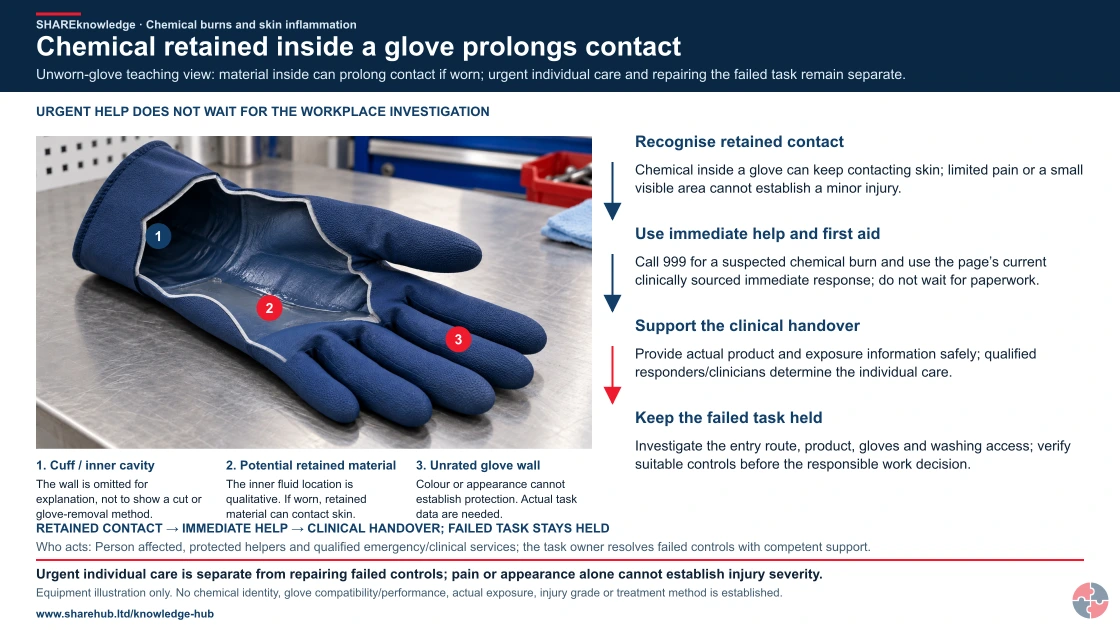
Full written explanation
An empty unworn glove is shown on a maintenance workbench with a conventional explanatory cutaway revealing its cuff, inner cavity and a shallow qualitative fluid film on the inner palm surface. The outside fingers are dry. The omitted wall is a teaching view, not a real damaged glove, cutting instruction or removal method. No hand, mannequin, skin, tissue, injury, splash or person is shown. Picture key1 identifies the cuff and inner cavity,2the potential retained-material location and3the unrated outer glove wall. Material inside a glove can keep contacting skin if the glove is worn; wearing gloves does not itself establish that contact has ended. The film is not a chemical identity, measured quantity, exposure or performance test. The independent unnumbered process connects recognition of retained contact, immediate help without waiting for paperwork, actual product/exposure information for qualified responders, and a separately held failed task while its controls are investigated. Use the complete current substance-specific urgent clinical guidance; neither limited pain nor a small visible area establishes a minor injury. The picture supplies no glove material, thickness, compatibility, breakthrough time, pH, concentration, safe quantity or PPE-selection result. It supplies no washing, irrigation, doffing, neutralisation, first-aid or treatment demonstration and no work-release or clinical approval. Actual task evidence and competent support are needed to resolve product, contact route, protection and usable response arrangements; individual care and restoring the work controls remain different decisions.
Unworn-glove teaching view: material inside can prolong contact if worn; urgent individual care and repairing the failed task remain separate.
- Recognise retained contact. Chemical inside a glove can keep contacting skin; limited pain or a small visible area cannot establish a minor injury.
- Use immediate help and first aid. Call 999 for a suspected chemical burn and use the page’s current clinically sourced immediate response; do not wait for paperwork.
- Support the clinical handover. Provide actual product and exposure information safely; qualified responders/clinicians determine the individual care.
- Keep the failed task held. Investigate the entry route, product, gloves and washing access; verify suitable controls before the responsible work decision.
When the evidence does not fit: Do not neutralise a burn or judge severity from pain alone. Keep the full substance-specific first-response and urgent-care guidance; individual care is separate from repairing and releasing the task.
Who acts: Person affected, protected helpers and qualified emergency/clinical services; the task owner resolves failed controls with competent support.
Changed workplace
Leisure cleaning: Review dosing/transfer control and usable washing and help before the work starts.
Maintenance glove contact: Act on retained contamination through immediate appropriate care while separately investigating the failed protection/interface.
Evidence check: A glove can retain contact. Prompt first aid and clinical care are separate from restoring the work controls; no injury grade or treatment timetable is supplied.
Full immediate chemical-burn response, product exceptions and clinical guidance
Primary references: NHS: acid and chemical burns · HSE: COSHH risk assessment (GB)
Open the complete HD image (new tab)Download image

Full immediate chemical-burn response, product exceptions and clinical guidance
Primary references: NHS: acid and chemical burns · HSE: COSHH risk assessment (GB)
Riverside Leisure Ltd
For this example, Riverside Leisure Ltd operates a leisure centre with swimming-pool plant, changing-room cleaning, catering cleaning chemicals, maintenance work and occasional contractor chemical use.
Riverside starts with an approved chemical register. Pool chemicals, acids, alkalis, disinfectants, descalers, detergents, degreasers and maintenance products are only purchased after SDS review, COSHH assessment and storage compatibility checks. Concentrates are avoided where pre-diluted or automated dosing options are reasonably practicable.
The risk register separates corrosive splash, skin inflammation, incompatible mixing, pool-plant release, contractor chemicals and emergency response. Pool chemicals are segregated, labelled and kept in controlled stores. Cleaning teams use dilution systems, colour-coded containers, chemical-compatible gloves and goggles where splash is foreseeable. Contractors must submit SDSs and method controls before bringing chemicals on site.
Implementation is checked at different levels. Frontline supervisors complete short binary checks: labels present, eyewash clear, gloves available, no decanted unlabelled bottles, spill kit complete, cleaners know not to mix products. The facilities manager reviews COSHH assessments, training records, incident reports and stock controls. The H&S adviser samples tasks, checks PPE compatibility and trends dermatitis or splash reports.
Learning is visible. If a cleaner reports stinging skin, Riverside reviews the product, dilution, gloves, washing facilities, workload and briefing. If eyewash is blocked by stored items, the action is not just to move the box; the store layout and inspection checklist are changed so the same failure does not return.
| System element | Example control | Assurance method | Owner, check and failure stop |
|---|---|---|---|
| Chemical register | Approved products, SDSs, location, owner and COSHH status. | Monthly review and purchase approval. | Chemical owner checks: Check register, SDS and approved purchase; Hold use of an unidentified or unapproved chemical. |
| Pool plant | Segregated chemicals, dosing controls, PPE and emergency procedure. | Plant-room inspection and operator training. | Pool-plant lead checks: Inspect segregation and dosing safeguards; Stop dosing if chemicals, controls or emergency arrangements are uncertain. |
| Cleaning tasks | Dilution systems, no mixing rule, labelled containers and glove selection. | Supervisor checks and observations. | Cleaning supervisor checks: Observe dilution and label checks; Stop cleaning if the product, mixture or protective controls are uncertain. |
| Emergency facilities | Eyewash, shower access, first-aid route and SDS availability. | Routine inspection and drill. | Facilities lead checks: Test access to eyewash and shower; Stop splash-risk work if emergency washing is unavailable. |
| Training | Awareness, task training, pool-chemical instruction and supervisor verification. | Training matrix and refresher schedule. | Training lead checks: Observe the task and refresh after change; Stop task if required competence is unproven. |
| Skin surveillance | Early reporting and responsible-person skin checks where indicated. | Confidential record and trend review. | Occupational-health lead checks: Review confidential trends and control feedback; Escalate symptoms and hold exposure until controls are checked. |
| Learning | Splash, skin and near-miss investigations drive product or process changes. | Verified corrective actions. | Site manager checks: Verify corrective action and recurrence check; Hold the task after a repeat splash until controls are restored. |
What should each role learn and demonstrate?
Learning must match the decisions people make, from recognising danger to checking that controls work.
Briefings should tell people how to act, but attendance alone does not show competence. Assess the real decision or task, record who assessed it and revisit after a material change, failed control or incident. A local authorisation is task-specific; no universal external certificate is implied.
On a small screen, scroll this table sideways to read all columns.
| Role and learning | Demonstration and assessor | Record and reassessment trigger |
|---|---|---|
| Worker: chemical identity, splash controls and first response. | First-aid lead tests a realistic skin/eye splash scenario: stop, call 999, protect helper and flush. | Scenario result and refresher after chemical or layout change. |
| Handler: transfer, glove compatibility and contamination removal. | Competent trainer observes decanting, PPE checks, cuff/boot protection and safe doffing. | Task authorisation and observation; repeat after splash or new product. |
| Stores/buyer: safer product and segregation. | COSHH specialist reviews substitute, concentration, container, label and SDS before approval. | Substance register and approval; revisit on supplier change. |
| Supervisor/first aider: emergency readiness. | First-aid assessor checks water access, shower/eyewash condition, communications, SDS and responder limits. | Exercise and facility check; revisit after failed drill. |
| Safety/OH: dermatitis surveillance and law. | Competent peer reviews symptoms, surveillance trigger, GB/NI route and private functional advice. | Professional decision and trend review after case or process change. |
How does chemical burn prevention support NEBOSH study and professional development?
Chemical burn prevention supports study by linking COSHH, routes of exposure, hierarchy of control, PPE selection, emergency arrangements and health surveillance.
Learners should be able to explain why an SDS is not a risk assessment, why PPE is not the first control, why glove compatibility matters and why emergency washing must be planned before work starts.
Scenario questions may describe cleaners mixing products, workers handling wet cement, a blocked eyewash station, unlabelled decanted chemicals, poor glove use, dermatitis reports or a corrosive splash. Strong answers identify the failure, explain the harm pathway and recommend practical controls.
Professional development should focus on practical judgement: reading SDS sections, selecting controls through ERICPD, checking storage, designing first-response arrangements and learning from skin-health trends.
| Study area | What to know | Scenario application |
|---|---|---|
| COSHH assessment | Substance, task, route, exposure and controls. | Rewrite a generic assessment around the real task. |
| Routes of entry | Skin, eyes, inhalation, ingestion and injection. | Match controls to exposure route. |
| Control hierarchy | Eliminate, reduce, isolate, control, PPE and discipline. | Choose safer controls before PPE. |
| PPE | Compatibility, fit, doffing and maintenance. | Explain why generic gloves failed. |
| Emergency arrangements | Washing, eyewash, SDS, first aid and communication. | Identify why response was delayed. |
| Health surveillance | Skin checks and symptom reporting. | Use early dermatitis reports as control feedback. |
How can a management system sustain effective decisions?
Give each hazard or support route an owner, a control, a check and a response to failure.
Procurement, COSHH, storage, transfer, glove selection, emergency water, first-aid drills and skin surveillance should share a substance identity and change record. A supervisor should test access to running water from the actual task, not just inspect a checklist. An owner should sample actual work and corrective actions, not accept a policy or certificate as evidence that the controls work.
The free GB regulator guide HSE Managing for health and safety (HSG65) explains a plan–do–check–act approach: assign controls and owners, involve workers, check work as done, and correct failures. For Northern Ireland, use HSENI risk assessment guidance for the local duty. A certificate alone does not demonstrate that a control works.
What are the warning signs that chemical burn controls are weak?
Warning signs include unlabelled containers, generic assessments, unsuitable gloves, blocked eyewash, poor washing facilities, repeated skin symptoms and workers mixing chemicals without understanding the risk.
Each warning sign has a harm pathway. Unlabelled bottles can cause wrong use. Stronger-than-needed products increase burn severity. Blocked eyewash delays decontamination. Wrong gloves allow permeation or trap chemicals. Poor welfare increases dermatitis. No skin checks allows symptoms to become chronic.
Supervisors should act before an injury happens. The response may be to stop the task, relabel or remove a container, replace PPE, improve storage, brief workers, review the COSHH assessment or escalate to occupational health.
Repeated findings mean the system needs improvement, not just another reminder. Procurement, stores, cleaning methods, work planning or supervision may need changing.
| Warning sign | How harm can develop | Action |
|---|---|---|
| Unlabelled spray bottles | Wrong substance, wrong dilution or wrong first-aid response. | Stop use and relabel or dispose safely. |
| Generic glove selection | Chemical breakthrough or trapped contamination. | Review compatibility and task duration. |
| Blocked eyewash | Delayed washing after eye splash. | Clear, inspect and change storage layout. |
| Workers mix cleaning products | Gas release, burns or respiratory exposure. | Stop, retrain and improve product controls. |
| Skin is dry, red or cracked | Early dermatitis may progress. | Report, review exposure and start surveillance route. |
| Wet cement in boots or gloves | Alkali burn from trapped contact. | Stop, wash, replace PPE and brief work team. |
| No SDS at point of use | First-aid and control information unavailable. | Restore SDS access and review register. |
Chemical burns and skin inflammation FAQs - what do people ask?
Common questions focus on the difference between burns and dermatitis, which chemicals cause harm, how to prevent exposure and how workplaces should respond.
What is a chemical burn?
A chemical burn is tissue damage caused when a corrosive or harmful chemical contacts the skin, eyes or mucous membranes.
What is workplace skin inflammation?
Workplace skin inflammation usually means irritation, dermatitis, redness, swelling, itching, cracking or soreness caused or worsened by work exposure.
Which workplace chemicals can cause burns?
Strong acids, alkalis, wet cement, drain cleaners, bleach, ammonia, battery acid and some industrial cleaners can cause chemical burns.
Can wet cement cause chemical burns?
Yes. Wet cement is alkaline and can burn skin, especially if trapped inside gloves, boots or clothing.
Are chemical burns always painful immediately?
No. Some chemical burns develop or worsen after exposure, particularly if the chemical remains trapped against the skin.
What should a COSHH assessment consider?
It should consider the substance, concentration, contact route, task, splash potential, PPE, emergency washing, first-aid arrangements and health surveillance.
Is a safety data sheet enough?
No. The SDS gives important information, but the employer must translate it into task-specific controls and emergency arrangements.
What PPE helps prevent chemical burns?
Chemically compatible gloves, goggles, face shields, aprons, coveralls and footwear may be required depending on the substance and task.
When is eyewash needed?
Eyewash is needed where eye contamination is foreseeable and should be located, maintained and briefed as part of the emergency arrangements.
When is health surveillance needed?
Risk-based skin surveillance may be needed where work can cause dermatitis and the COSHH surveillance conditions are met. An acute chemical burn needs immediate first aid, clinical treatment and investigation; it is not managed by a routine skin check.
What should supervisors check?
They should check labels, SDS access, glove compatibility, eyewash, washing facilities, splash controls, worker understanding and symptom reporting.
What should be learned from a chemical splash?
The business should review substance choice, task design, PPE, emergency response, training, supervision and whether the COSHH assessment was realistic.
Chemical hazard symbols: what do they mean?
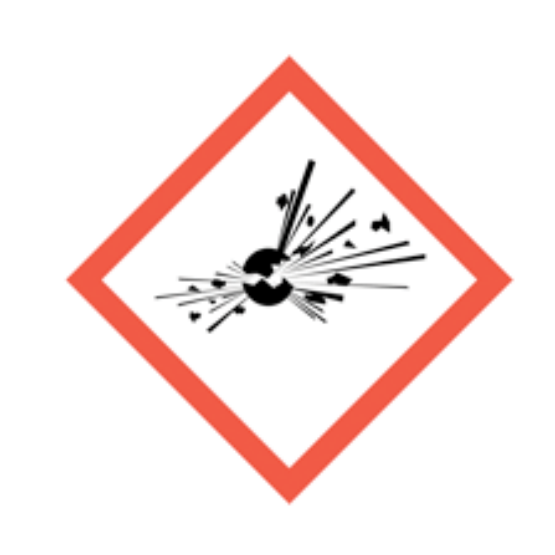
Exploding bomb
Explosive, self-reactive or organic peroxide hazards.
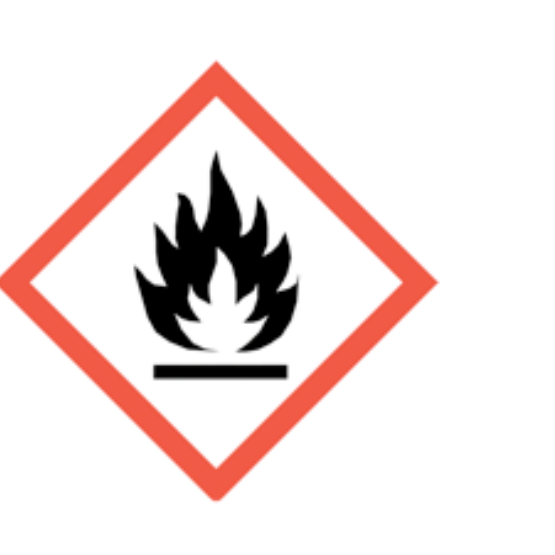
Flame
Flammable, self-heating or pyrophoric substances.
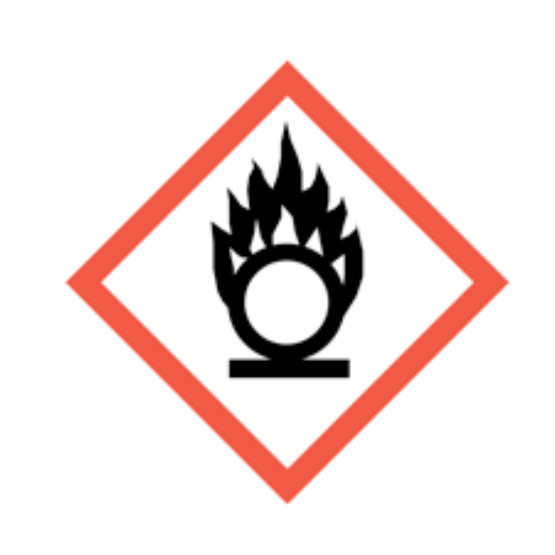
Flame over circle
Oxidising substances that can intensify fire.

Gas cylinder
Gas under pressure.
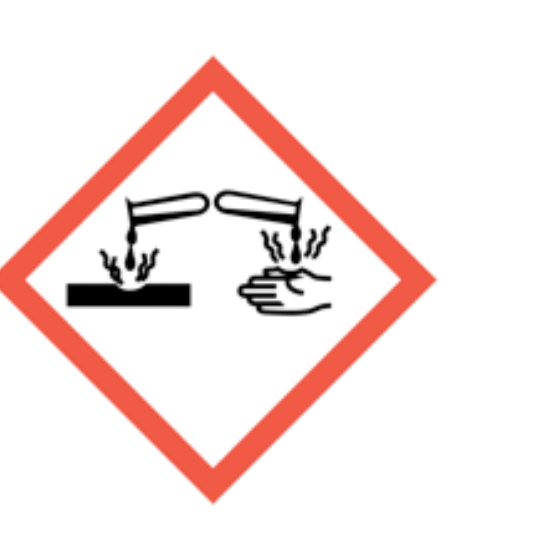
Corrosion
Skin burns, eye damage or corrosive to metals.
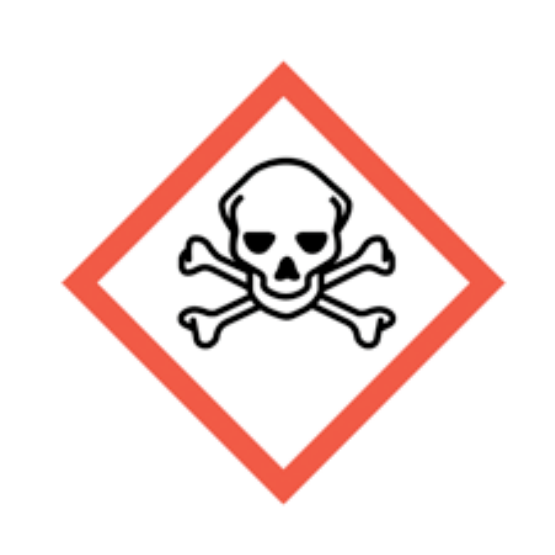
Skull and crossbones
Acute toxicity.
Exclamation mark
Irritation, harmful effects or skin sensitisation; some classifications cover drowsiness, dizziness or ozone-layer hazard. Read the actual hazard statements. Skin sensitisation differs from respiratory sensitisation.
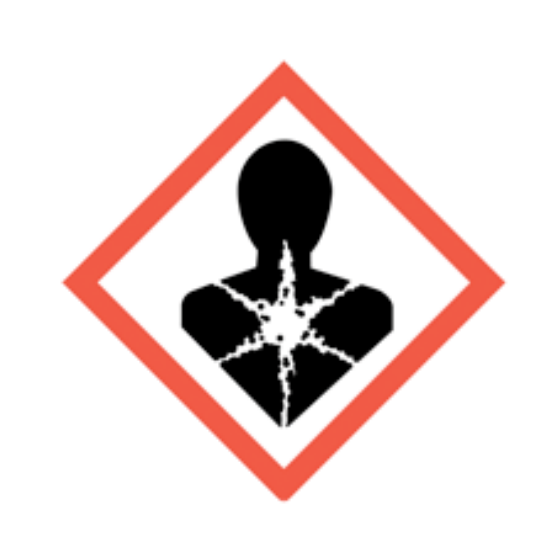
Health hazard
Serious health hazards, including organ damage, aspiration hazard, respiratory sensitisation, cancer and reproductive effects; some can follow a single exposure.
Environment
Hazardous to the aquatic environment.
What acronyms and terms should readers understand for chemical burns and skin inflammation?
These terms help readers understand SDSs, labels, COSHH assessments, first-aid arrangements and health surveillance.
| Term | Meaning | Plain-English use |
|---|---|---|
| COSHH | Control of Substances Hazardous to Health | Main workplace framework for hazardous substances. |
| SDS | Safety Data Sheet | Supplier document giving hazard, handling, storage and first-aid information. |
| PPE | Personal Protective Equipment | Gloves, goggles, face shields, aprons and other worn protection. |
| RPE | Respiratory Protective Equipment | Respirators and masks where inhalation risk remains. |
| CLP | Classification, Labelling and Packaging | System behind hazard pictograms and label information. |
| APC | Avoid, Protect, Check | HSE skin-protection approach for preventing dermatitis. |
| OH | Occupational Health | Specialist support for work-related health concerns and surveillance. |
| ERICPD | Eliminate, Reduce, Isolate, Control, Personal protective equipment, Discipline | Hierarchy used to select stronger controls before PPE. |