SHARE Knowledge Hub
Food Safety at Work
Food safety controls depend on the food, process, consumers and UK nation. Food businesses need proportionate HACCP-based procedures, hygiene, accurate allergen information and corrective action; a staff welfare kitchen is not automatically a catering business. Check distinct England, Wales, Scotland and Northern Ireland law and temperature guidance before setting a safe method.
Understanding Food Safety at Work
Food safety controls depend on the food, process, consumers and UK nation. Food businesses need proportionate HACCP-based procedures, hygiene, accurate allergen information and corrective action; a staff welfare kitchen is not automatically a catering business. Check distinct England, Wales, Scotland and Northern Ireland law and temperature guidance before setting a safe method.
Why this matters at work
Isolate questionable food from sale or use, preserve traceability and document the decision, action and verification. Check equipment, monitoring accuracy, staff understanding and workload or maintenance causes. Cleaning failure may affect cross-contamination or allergens as well as visible cleanliness. Use suitable products, methods and contact conditions following instructions and assessment; protect workers from chemical exposure and incompatible mixing. Resume only when the relevant controls and release criteria are verified. Review similar products or periods and update the management system where needed. A normal reading after a breakdown cannot prove the food stayed within safe conditions during the earlier gap.
Assign responsibility, monitoring, corrective action, verification and review, and train staff for their tasks. Keep useful records that show what happens when a control fails, not only ticks for normal operation. UK food law and enforcement routes vary; Food Standards Scotland is the relevant Scottish route, while FSA guidance serves its stated territories. Check registration or approval requirements for the actual business and activity. Food safety controls must also protect workers handling hot equipment, chemicals or loads. This answer cannot authorise a novel process, prescribe one universal critical limit or replace competent assessment of a high-risk product.
How organisations manage this in practice
Map the food activity from suppliers and receipt through storage, preparation, service, delivery and waste. Identify biological, allergen, chemical and physical hazards, then establish controls based on HACCP principles and suitable prerequisite hygiene arrangements. A small café can use an appropriate national practical pack, while a more complex process may need specialist analysis and validation. Copying a generic policy does not demonstrate control of the actual menu or process.
Provide accurate applicable allergen information and manage cross-contact. For distance selling, relevant information is needed before purchase is completed and on delivery. Non-prepacked verbal information needs clear signposting; written information plus discussion is best practice in reviewed FSA guidance, not a universal written-only rule. PPDS and ordinary prepacked labels have different requirements. No meal is declared safe for an individual.
Classify how the food is packed and offered before choosing a label. FSA’s current butchers guidance distinguishes food already enclosed before selection, food packed at the customer’s request and food packed by another business. It also describes a same-business mobile/temporary-outlet PPDS route. PPDS requires the food name, full ingredients and emphasis of regulated allergens; ordinary prepacked food has additional requirements. These examples are not a complete technical labelling decision for every product. Check the actual nation, business/site relationships, packaging, ordering and supply route with competent guidance. A printed label, menu, platform and delivered product must all reflect the approved current recipe.
How can I practise this topic in 3D?


Raw food contaminates ready-to-eat preparation
Unverified chilled ingredient delivery

Meal substitution misses allergy information
All related inspection points 22 across 3 locations
Riverside Leisure 3 inspection points
From flour to chilled despatch 18 inspection points
A safer place to call home 1 inspection point
Practice in the SHAREhub environment. Browser practice is separate from workplace competence and formal learning records.
Hold the sale when a substituted ingredient breaks the information chain
For a food business, follow the actual ingredient from delivery and recipe through preparation, cross-contact prevention, menu/allergen information and the staff member answering the consumer. If a replacement product’s identity or allergen information is uncertain, hold the affected sale until it is resolved and the records and people are aligned. Appearance and verbal reassurance do not identify a substituted ingredient.
Best-practice guide: Food Safety at Work

Keep the allergen information chain and preparation controls aligned
For a food business, follow the actual ingredient from delivery and recipe through preparation, cross-contact prevention, menu/allergen information and the staff member answering the consumer. If a replacement product’s identity or allergen information is uncertain, hold the affected sale until it is resolved and the records and people are aligned. Food safety controls depend on the food, process, consumers and UK nation.
Turn food safety at work knowledge into a decision
Food safety controls depend on the food, process, consumers and UK nation. Food businesses need proportionate HACCP-based procedures, hygiene, accurate allergen information and corrective action; a staff welfare kitchen is not automatically a catering business. Food activity register and risk assessment.
the leisure operator worked example
Assessing: Map all food activities including cafe, vending, events, party food, contractors and staff kitchen use. Evidence / response: Food activity register and risk assessment. Analysing: Separate high-risk foods, allergens, vulnerable groups and temporary events. Evidence / response: HACCP plan, allergen matrix and event approval form.
Food safety hazard types
Contamination routes: Biological, chemical and physical hazards need controls appropriate to the food and process. Allergen cross-contact: Ingredients, storage, equipment and preparation can transfer an allergen to another food. Information failure: A changed product or recipe may not reach menu records or the customer answer; inaccurate information needs correction before the affected food is offered as suitable.
Choose controls for the actual task
Elimination: Remove raw preparation from the shared zone or use a suitably controlled alternative that removes raw handling from the shared zone; ready-to-cook poultry remains a raw-food hazard. Substitution: Change workflow or product to reduce raw handling. Engineering: Separate storage, surfaces, equipment and handwash facilities. Administrative: Use clean-as-you-go and validated cooking/chilling checks. PPE: Task clothing or gloves do not replace handwashing and segregation. Read the full control table for qualifications, ownership and verification. Use the actual task and applicable jurisdiction; existing technical approval remains unchanged.
Use the full food safety at work lesson
Use the full topic for the decision points, practical examples, detailed control tables and source scope. HSE guidance applies to Great Britain; use HSENI for the Northern Ireland route and the source’s stated jurisdiction. A simplified guide does not change the page’s technical-review or approval status.

Read all six steps as text
1. Keep the allergen information chain and preparation controls aligned
For a food business, follow the actual ingredient from delivery and recipe through preparation, cross-contact prevention, menu/allergen information and the staff member answering the consumer.
- Product change: Check the actual label and relevant supplier information when stock or formulation changes.
- Preparation controls: Update recipe, segregation and cross-contact arrangements for the actual food.
- Customer information: Keep the allergen record, menu information and staff answer consistent; hold an unresolved suitability claim.
For a food business, follow the actual ingredient from delivery and recipe through preparation, cross-contact prevention, menu/allergen information and the staff member answering the consumer. If a replacement product’s identity or allergen information is uncertain, hold the affected sale until it is resolved and the records and people are aligned. Food safety controls depend on the food, process, consumers and UK nation.
Apply it: Which part of this plan would you check at the workface before authorising the task?
2. Turn food safety at work knowledge into a decision
Use the evidence to improve the actual work arrangement.
- Change at source: Remove raw preparation from the shared zone or use a suitably controlled alternative that removes raw handling from the shared zone; ready-to-cook poultry remains a raw-food hazard.
- Make it observable: Contact route remains: redesign.
- Keep useful evidence: Food activity register and risk assessment.
Food safety controls depend on the food, process, consumers and UK nation. Food businesses need proportionate HACCP-based procedures, hygiene, accurate allergen information and corrective action; a staff welfare kitchen is not automatically a catering business. Food activity register and risk assessment.
Apply it: What evidence would show that the change improves this task, rather than only completing a record?
3. the leisure operator worked example
Example: a practical application of the existing topic lesson.
- Assessing: Map all food activities including cafe, vending, events, party food, contractors and staff kitchen use.
- Analysing: Separate high-risk foods, allergens, vulnerable groups and temporary events.
- Implementing: Use trained handlers, temperature checks, cleaning, pest control and supplier approval.
Assessing: Map all food activities including cafe, vending, events, party food, contractors and staff kitchen use. Evidence / response: Food activity register and risk assessment. Analysing: Separate high-risk foods, allergens, vulnerable groups and temporary events. Evidence / response: HACCP plan, allergen matrix and event approval form.
Apply it: At which point would you hold this example, and what evidence would allow it to proceed?
4. Food safety hazard types
Connect the task, the route to the person and the control that can fail.
- Contamination routes: Biological, chemical and physical hazards need controls appropriate to the food and process.
- Allergen cross-contact: Ingredients, storage, equipment and preparation can transfer an allergen to another food.
- Information failure: A changed product or recipe may not reach menu records or the customer answer; inaccurate information needs correction before the affected food is offered as suitable.
Contamination routes: Biological, chemical and physical hazards need controls appropriate to the food and process. Allergen cross-contact: Ingredients, storage, equipment and preparation can transfer an allergen to another food. Information failure: A changed product or recipe may not reach menu records or the customer answer; inaccurate information needs correction before the affected food is offered as suitable.
Apply it: Who could be exposed, including other trades, cleaners, maintainers and people nearby?
5. Choose controls for the actual task
Control summary. Read the complete task-specific controls and checks in the linked topic.
- Elimination: Remove raw preparation from the shared zone or use a suitably controlled alternative that removes raw handling from the shared zone; ready-to-cook poultry remains a raw-food hazard.
- Substitution: Change workflow or product to reduce raw handling.
- Engineering controls: Separate storage, surfaces, equipment and handwash facilities.
- Administrative controls: Use clean-as-you-go and validated cooking/chilling checks.
- PPE: Task clothing or gloves do not replace handwashing and segregation.
Elimination: Remove raw preparation from the shared zone or use a suitably controlled alternative that removes raw handling from the shared zone; ready-to-cook poultry remains a raw-food hazard. Substitution: Change workflow or product to reduce raw handling. Engineering: Separate storage, surfaces, equipment and handwash facilities. Administrative: Use clean-as-you-go and validated cooking/chilling checks. PPE: Task clothing or gloves do not replace handwashing and segregation. Read the full control table for qualifications, ownership and verification. Use the actual task and applicable jurisdiction; existing technical approval remains unchanged.
Apply it: Which stronger option can be used here, and who will verify it before accepting the remaining risk?
6. Use the full food safety at work lesson
Follow the official sources below and retain the task-specific evidence.
- Official guidance: FSA allergen guidance for food businesses
- Official guidance: FSA PPDS guidance
- Task decision: The food-business owner resolves contradictory or missing information before offering the affected food as suitable; training alone does not repair an incorrect record.
Use the full topic for the decision points, practical examples, detailed control tables and source scope. HSE guidance applies to Great Britain; use HSENI for the Northern Ireland route and the source’s stated jurisdiction. A simplified guide does not change the page’s technical-review or approval status.
Apply it: Which official source and full-topic section will you use to resolve the next decision?
Use the same corrective-action logic when a process temperature check is outside its validated requirement: identify and hold affected food, check the measurement and process, obtain a competent disposition decision under the food-safety system and record what prevents recurrence. Do not invent one UK-wide temperature or assume reheating makes every deviation safe. Keep legal limits, recommended practice and food/process validation distinct, and distinguish commercial catering from a staff welfare kitchen.
Riverside: a substitute reaches the cafe
Illustrative example. A supplier changes an ingredient while the recipe sheet and counter allergen information still describe the old product.
Decision. The food lead holds the affected sale, verifies the product and updates recipe, cross-contact controls, information and staff briefing.
Evidence to check. Actual ingredient/label, supplier confirmation, revised recipe and allergen information, and checked preparation practice.
Hold or escalation point. Do not serve on appearance, a remembered recipe or an unverified verbal assurance.
Follow-up. Check the next delivery and service; use a recorded corrective action if temperature or identity controls fail again.
Follow an allergen change through every information handover
A product or recipe change can affect stock, preparation, menu records and the answer given to a customer. Cross-contact controls and information accuracy are separate safeguards.

Check the actual product
Identify the current label, ingredients and relevant supplier information when stock or formulation changes.
Update the preparation route
Review recipe, storage, utensils and preparation arrangements, including cross-contact risks.
Keep customer information aligned
Update the appropriate allergen record, menu information and staff knowledge through the business’s competent process.
Hold an unresolved answer
The food-business owner resolves contradictory or missing information before offering the affected food as suitable; training alone does not repair an incorrect record.
Read the complete task-specific control examples
ERICPD is a planning cross-map: Discipline verifies and sustains every control. ESEAP compares effectiveness. A label does not authorise the task; retain the owner, evidence and stop or change decision.
Food Safety at Work · ERICPD
- Eliminate
- Remove raw preparation from the shared zone or use a suitably controlled alternative that removes raw handling from the shared zone; ready-to-cook poultry remains a raw-food hazard.
- Reduce
- Change workflow or product to reduce raw handling.
- Isolate
- Separate storage, surfaces, equipment and handwash facilities.
- Control
- Use clean-as-you-go and validated cooking/chilling checks.
- PPE
- Task clothing or gloves do not replace handwashing and segregation.
- Discipline
- Review swabs, incidents and failed checks to improve flow.
Food Safety at Work · ESEAP
- Elimination
- Remove raw preparation from the shared zone or use a suitably controlled alternative that removes raw handling from the shared zone; ready-to-cook poultry remains a raw-food hazard.
- Substitution
- Change workflow or product to reduce raw handling.
- Engineering controls
- Separate storage, surfaces, equipment and handwash facilities.
- Administrative controls
- Use clean-as-you-go and validated cooking/chilling checks.
- PPE
- Task clothing or gloves do not replace handwashing and segregation.
What are the key facts about food safety at work?
Food businesses need controls suited to their food, process and consumers: hygienic handling, a proportionate HACCP-based system, allergen information, traceability and corrective action. A shared staff kitchen without a food business operation needs sensible hygiene and welfare controls, but is not automatically a catering business.
Food safety is a system
It links purchasing, delivery, storage, preparation, cooking, service, cleaning, waste and incident response.
Vulnerable people need extra care
Children, older people, pregnant people, patients and immunocompromised people can be harmed by smaller failures.
Allergens are not ordinary hygiene issues
Allergen harm comes from incorrect information or cross-contact, not only dirty conditions.
Records must show control
Temperature checks and cleaning records are useful only when failed checks trigger corrective action.
Devolution matters
England, Wales, Scotland and Northern Ireland have aligned principles but separate regulators and some different guidance routes.
Use GOV.UK food hygiene for businesses for England, Wales and NI and Food Standards Scotland guidance for Scotland.
What does food safety mean in a workplace?
Food safety means preventing food from becoming harmful through contamination, poor temperature control, allergen error, unsafe handling or poor hygiene.
A workplace can create food safety risk even when food is not its main business. A site barbecue, staff kitchen, vending arrangement, meeting lunch, school trip, care home meal, mobile caterer or contractor canteen can all expose people to food hazards.
Good food safety is practical. It asks what food is present, who will eat it, how it could be contaminated, whether bacteria could grow, whether allergens are controlled, what temperatures matter, who is trained and how failures are corrected.
Food safety is easy to underestimate in organisations where food is not the main business. A staff fridge, buffet lunch, charity barbecue, mobile caterer, school holiday club, leisure event or contractor canteen can still create foreseeable harm. The legal and practical question is whether the food is being controlled by people who understand hygiene, temperature, allergens and the needs of the people eating it.
A good food safety system follows the food journey. It asks where the food came from, how it was delivered, whether it stayed cold or hot enough, how raw and ready-to-eat items were separated, who handled it, how allergens were communicated and what happened when a check failed.
What hazards does food safety control?
Food safety controls biological, chemical, physical and allergenic hazards that can make food unsafe.
The four hazard groups should be explained in human terms. Biological hazards can make people acutely ill. Chemical hazards can contaminate food through cleaning products, pest control chemicals or maintenance substances. Physical hazards can injure someone immediately. Allergens can cause severe reactions even when the premises look clean and well-run.
The strongest food safety cultures avoid blame-heavy shortcuts. If a fridge temperature is wrong, food has been left out, a supplier changes ingredients or staff are unsure about allergens, the system should make it normal to stop, segregate, check and record the decision.
| Hazard type | Examples | How harm occurs | Control focus |
|---|---|---|---|
| Biological | Bacteria, viruses, parasites and moulds. | Foodborne illness, outbreaks, vomiting, diarrhoea and severe illness in vulnerable people. | Temperature control, hygiene, cooking, separation and exclusion of ill food handlers. |
| Chemical | Cleaning chemicals, pest control products, lubricants or natural toxins. | Poisoning, irritation or contamination of food. | Segregated storage, controlled use, labelling and rinsing where required. |
| Physical | Glass, metal, plastic, stones, packaging or jewellery. | Cuts, choking, dental damage or injury. | Inspection, maintenance, protective covers and foreign body control. |
| Allergenic | Milk, egg, peanuts, nuts, gluten, fish, shellfish, soya, sesame and others. | Allergic reaction or anaphylaxis where information or cross-contact fails. | Accurate information, separation, cleaning and staff communication. |
| Process failure | Undercooking, poor cooling, broken refrigeration or reheating failure. | Pathogens survive or multiply. | Critical limits, monitoring, corrective action and verification. |
How does HACCP make food safety manageable?
A food business should identify significant biological, chemical, physical and allergen hazards and operate proportionate HACCP-based procedures. A staff welfare kitchen is not automatically a food business; establish the actual activity and legal status before imposing a commercial HACCP pack.
HACCP should be proportionate. A small workplace kitchen may use a simple documented safe-method system, while a catering operation or care setting may need detailed process controls, checks and verification. The point is not paperwork; it is knowing where loss of control would make food unsafe.
Critical control points often include cooking, chilling, hot holding, cooling and reheating. Not every check is critical, but every important check should have an action if it fails.
HACCP is not a complicated binder for specialists only. At its best, it is a simple way of thinking: what could make this food unsafe, where can that happen, what control prevents it, how do we know the control worked, and what do we do if it did not?
For a staff kitchen, the answer may be simple cleaning, labelling and fridge checks. For a commercial kitchen, care home or event caterer, the answer should include approved suppliers, delivery checks, cooking standards, hot holding, cooling, reheating, allergen controls and manager verification.
| Question | Why it matters | Evidence |
|---|---|---|
| What food is handled? | Risk differs between wrapped biscuits and cooked rice, meat, dairy or ready-to-eat foods. | Menu, food list and supplier details. |
| Who may eat it? | Vulnerable groups need tighter controls. | Service profile and vulnerability assessment. |
| Where can hazards enter? | Contamination can occur at delivery, storage, preparation, service or waste. | Process flow and task observation. |
| Which controls are critical? | Some controls are essential to make the food safe. | HACCP plan or safe method sheet. |
| What happens if a check fails? | A failed temperature or allergen check must trigger action. | Corrective action record and food disposal decision. |
| How is the system verified? | Records can be completed without real control. | Manager checks, audits and inspection findings. |
The Government HACCP food safety management and Scottish CookSafe support food-business systems at different scales.
What does a simple HACCP food flow look like?
A simple HACCP food flow follows the food from purchase to service and identifies where contamination, growth, survival or allergen error can occur.
Food safety becomes easier to teach when the process is shown as a journey. At each stage the business should know the hazard, the control, the check and what action is taken if the check fails.
For low-risk staff refreshments, the flow may be simple. For cooked food, chilled high-risk food, buffets or vulnerable consumers, the flow needs more explicit control and evidence.
| Stage | What can go wrong | Control and evidence |
|---|---|---|
| Purchase | Unapproved supplier, damaged packaging, incorrect allergen information or high-risk product selected. | Approved supplier list, specification, allergen data and purchasing rule. |
| Delivery | Food arrives warm, late, damaged, contaminated or past use-by date. | Delivery check, temperature check, rejection rule and record. |
| Storage | Raw and ready-to-eat foods mix, fridge overloaded, allergens not segregated or stock rotation fails. | Segregated storage, date labelling, fridge records and stock rotation. |
| Preparation | Cross-contamination, poor hand hygiene, dirty equipment or allergen cross-contact. | Zoning, handwashing, cleaning, separate utensils and supervision. |
| Cooking | Food is not cooked through or probe is inaccurate. | Cooking standard, probe check, calibration and corrective action. |
| Holding or cooling | Food spends too long at unsafe temperature. | Hot-hold checks, cooling method, time limits and discard rule. |
| Service | Wrong meal served, allergen information miscommunicated or buffet contaminated. | Service briefing, allergen check, clean utensils and customer communication. |
Why does temperature control matter for food safety?
Set validated cooking, chilling, cooling, hot-holding and reheating controls for the food and jurisdiction. Avoid treating one temperature as a universal UK legal rule: Scottish commercial reheating law has a distinct 82°C route with exceptions, while other nations use different requirements and guidance.
Temperature control is one of the most familiar food safety topics, but it is often misunderstood. The question is not only whether a fridge number was written down. The question is whether the food was received, stored, cooked, cooled, reheated and served in a way that prevents harmful microbial growth.
Equipment reliability matters. Fridges, freezers, hot cupboards, probes and dishwashers should be checked, cleaned, calibrated where required and repaired promptly.
| Control point | What can go wrong | Good practice evidence |
|---|---|---|
| Delivery | High-risk food arrives warm or damaged. | Supplier approval, delivery check and rejection record. |
| Chilled storage | Fridge overloaded, door left open or failed unit ignored. | Temperature log, action note and maintenance response. |
| Cooking | Centre of food does not reach safe temperature. | Probe checks, cooking record and trained staff. |
| Cooling | Large containers cool too slowly. | Portioning, blast chilling or timed cooling record. |
| Reheating | Food reheated unevenly or repeatedly. | Reheat standard, probe evidence and discard rule. |
| Hot holding | Food drops below safe holding temperature. | Hot-hold checks and time limits. |
Compare GOV.UK business chilling and freezing guidance with Food Standards Scotland temperature guidance; the Scottish commercial reheating rule is not a universal UK cooking or reheating rule.
How should allergen risk be managed?
Keep ingredient, recipe, substitution and cross-contact information current so customers receive accurate allergen information. Apply the correct nation and food-format labelling route; stop service when the ingredient or allergen status cannot be confirmed.
Allergens deserve their own control route because ordinary cleanliness is not enough. A small amount of allergen can be serious for a sensitised person. Controls need to cover recipes, substitutions, supplier changes, menu wording, staff handover, cleaning and serving practices.
The safest culture is one where staff do not guess. If allergen information is uncertain, the answer should be checked before food is served.
| Control point | What good looks like | Failure scenario |
|---|---|---|
| Supplier and ingredient control | Approved suppliers and checked ingredient changes. | A substitute product contains an undeclared allergen. |
| Recipe and menu control | Current recipes and allergen matrix match what is actually cooked. | Kitchen changes a sauce but the menu is not updated. |
| Cross-contact control | Separate utensils, storage, cleaning and preparation for allergen-sensitive meals. | Shared tongs transfer allergen to a supposedly safe meal. |
| Communication | Staff know how to answer and when to check. | Front-of-house staff reassure a customer without verifying. |
| Incident response | Allergic reaction triggers first aid, investigation and review. | Near miss is treated as customer preference rather than safety failure. |
Use FSA allergen guidance for food businesses for England, Wales and NI, Food Standards Scotland guidance in Scotland and FSA PPDS guidance where the food format fits.
How does food safety differ across workplace settings?
Food safety controls should match the setting, people served, food complexity and consequences of failure.
Different settings need different control depth. An office kitchen may mainly need cleanliness, fridge discipline, date checks and allergen respect for shared food. A commercial kitchen needs trained food handlers, HACCP records, cleaning schedules, temperature checks, stock rotation and formal supervision. Event catering adds transport, temporary facilities, power, water, waste and weather exposure.
Vulnerable groups change the risk judgement. Food served to young children, older people, patients, pregnant people or immunocompromised people needs tighter controls because the consequences of foodborne illness or allergen error can be more serious.
| Setting | Typical risk | Control emphasis |
|---|---|---|
| Office staff kitchen | Shared fridges, reheated food, poor cleaning and unclear ownership. | Cleaning rota, fridge checks, waste control and personal responsibility. |
| Construction canteen | Temporary facilities, dust, pests, welfare standards and contractor catering. | Contractor approval, welfare checks, temperature control and cleaning evidence. |
| Care home | Vulnerable residents, texture-modified diets, allergens and infection risk. | Higher competence, HACCP, nutrition links, allergen control and outbreak response. |
| Leisure venue | Peak demand, young customers, allergens, events and temporary food offers. | Supervision, allergen communication, cleaning and incident readiness. |
| Mobile food unit | Water supply, temperature control, waste, power and transport. | Pre-start checks, equipment maintenance and route-based controls. |
| Events | Temporary stalls, high volumes, mixed contractors and weather. | Pre-event approval, inspection, allergen rules and emergency arrangements. |
Texture-modified foods, clinical diets and patient-specific swallowing/nutrition instructions need competent care/clinical input; food hygiene sources do not approve a therapeutic plan. Do not infer commercial-business status from ordinary shared welfare facilities.
How do food safety controls change by setting?
Separate a shared staff welfare kitchen from a registered food business such as a café, care caterer or event service. For a food business, test registration or approval, HACCP method, consumer vulnerability and allergen duties; for welfare facilities, assign cleaning, storage and sensible hygiene ownership.
A low-risk staff kitchen, a commercial kitchen and an event catering operation do not need the same paperwork, but they all need clear control. The staff kitchen may focus on cleanliness, fridge discipline and personal responsibility. The commercial kitchen needs HACCP, trained handlers, cleaning schedules, temperature records and allergen controls. Event catering needs extra attention to transport, temporary facilities, hot holding, weather, waste and customer communication.
Where food is provided to children, older people, people with medical vulnerability or large groups, the organisation should tighten supervision and evidence. The same small mistake can have much more serious consequences where people are vulnerable or where many meals are served quickly.
| Setting | Main risk pattern | Controls that usually matter most |
|---|---|---|
| Staff kitchen | Shared fridges, poor cleaning, out-of-date food and unclear ownership. | Fridge rules, cleaning rota, welfare checks, waste control and simple staff messages. |
| Commercial kitchen | High-risk foods, cooking, cooling, allergens and busy service pressure. | HACCP, trained handlers, temperature checks, cleaning schedule, supplier approval and supervision. |
| Event catering | Transport, temporary storage, weather, power, water and high-volume service. | Event plan, time/temperature control, allergen briefing, handwashing, waste and contingency plans. |
| School or leisure setting | Children, parties, allergies, packed food and public confidence. | Allergen confirmation, parental information, staff briefings and vulnerable-group controls. |
| Contractor catering | The dutyholder may not cook the food but still manages the premises interface. | Contract approval, food hygiene rating check, site rules, waste, utilities and incident escalation. |
Check FSA food-business registration where operations meet the definition; FSS guidance gives the Scottish business route.
Texture-modified foods, clinical diets and patient-specific swallowing/nutrition instructions need competent care/clinical input; food hygiene sources do not approve a therapeutic plan. Do not infer commercial-business status from ordinary shared welfare facilities.
Which operational examples make food safety risks easier to recognise?
Operational examples help workers and managers see how ordinary decisions can create foodborne illness, allergen harm or enforcement risk.
Operational examples help the page move beyond theory. A fridge temperature record only matters if someone knows what to do when the fridge fails. An allergen matrix only protects people if recipes, substitutions and service communication match what is actually happening that day.
The most useful examples are ordinary failures: a delivery accepted because the site is busy, a buffet spoon moved between dishes, a staff kitchen fridge overloaded before a meeting, or a contractor caterer not inducted into site allergen and waste rules.
| Example | What happens | What good management does |
|---|---|---|
| Staff kitchen fridge | Leftover food, no ownership and poor cleaning create odour, mould and possible contamination. | Set ownership, cleaning frequency, disposal rules and fridge checks. |
| Commercial kitchen | Busy service pressures lead to missed probe checks, poor cooling or raw-to-ready cross-contamination. | Use HACCP checks, trained supervisors, zoning and corrective action. |
| Event catering | Temporary layout, outdoor temperature and mixed contractors make control fragile. | Approve caterers, check facilities, brief allergen rules and inspect before service. |
| Buffet allergens | Shared tongs or unclear labels transfer allergens between dishes. | Use labelled dishes, separate utensils, trained staff and no-guess communication. |
| School or leisure party food | Children may have allergies and food may sit out while activities continue. | Collect allergen information, control time out of refrigeration and supervise service. |
| Delivery temperature abuse | Chilled food arrives warm but is accepted because the kitchen is busy. | Reject unsafe deliveries, record decision and review supplier performance. |
| Cleaning schedule failure | A signed sheet hides dirty contact surfaces or poor chemical dilution. | Verify cleaning quality, train staff and investigate repeated failure. |
| Contractor catering | A mobile caterer works on site without proof of registration, hygiene rating or allergen process. | Prequalify the provider, check documents and set site rules before trading. |
The case examples should be tested against GOV.UK food hygiene guidance and the actual food operation.
Texture-modified foods, clinical diets and patient-specific swallowing/nutrition instructions need competent care/clinical input; food hygiene sources do not approve a therapeutic plan. Do not infer commercial-business status from ordinary shared welfare facilities.
What controls make food safety reliable?
Reliable food safety controls combine hygiene, training, equipment, supplier control, monitoring and management review.
A manufacturing deviation needs a product-specific decision

Full written explanation
A complete native manufacturing-control route follows the actual food/process and monitoring result to a deviation, identifies and holds affected food, then connects competent review to the validated corrective-action method and verified recorded product decision. A return loop updates the control system and the actual process after review. It does not prescribe a temperature, time, rework, disposal or release instruction. The food business, nation, product and consumers determine the safe method. An office welfare kitchen is not automatically the same activity as a food business; the current topic keeps those settings and specialist food/clinical scope separate.
Follow the established food-safety control route; no universal cooking, storage, rework or acceptance limit is supplied.
- Identify affected food and state. Use product, batch, process and monitoring evidence.
- Apply the established hold. Keep affected food and uncertain information from uncontrolled service or release.
- Use the validated correction. A competent owner follows the actual food-specific method.
- Verify and record the decision. Check the evidence and communicate the product/control outcome.
When the evidence does not fit: An unresolved ingredient or process deviation is not cleared by appearance, reheating advice or a completed form. Follow the established safe method.
Who acts: Food-business operator and competent food-safety lead with preparation, quality and service owners.
Changed workplace
Catering ingredient change: Align product, preparation and accurate consumer information.
Manufacturing deviation: Identify affected food and follow the validated corrective-action route.
Evidence check: No allergen-free assurance, clinical advice, temperature/time limit, rework method, disposal instruction or product-release approval is supplied.
Connect source-level contamination/allergen controls to monitored safe methods
Primary references: FSA allergen guidance: England, Wales and Northern Ireland · Food Standards Scotland: allergen management · GOV.UK food-safety management and HACCP principles
Open the complete HD image (new tab)Download image

Connect source-level contamination/allergen controls to monitored safe methods
Primary references: FSA allergen guidance: England, Wales and Northern Ireland · Food Standards Scotland: allergen management · GOV.UK food-safety management and HACCP principles
| Control area | Practical control | Evidence |
|---|---|---|
| Supplier approval | Use suppliers that can meet hygiene, traceability and allergen expectations. | Supplier list and delivery checks. |
| Personal hygiene | Handwashing, illness reporting, clean clothing and jewellery rules. | Induction, signs and supervisor observation. |
| Cleaning and disinfection | Defined chemicals, contact times, frequency and responsibility. | Cleaning schedule and verification checks. |
| Pest control | Prevent access, harbourage and contamination. | Inspection records and pest contractor reports. |
| Waste management | Remove waste before it attracts pests or contaminates food areas. | Waste route, bins and cleaning checks. |
| Maintenance | Keep food contact surfaces, fridges, probes and equipment in safe condition. | Maintenance log and defect close-out. |
| Incident response | Respond to illness complaints, allergen near misses and contamination. | Incident log, investigation and corrective actions. |
For food-business control design, Government HACCP food safety management connects hazards, monitoring and corrective action.
How can the hierarchy of controls prevent food contamination and unsafe food handling?
Remove or redesign contamination and allergen routes before relying on checking or personal clothing. For each food-business hazard, connect the control to a monitored safe method and a clear stop-service decision.

A replacement ingredient changes the information chain

Full written explanation
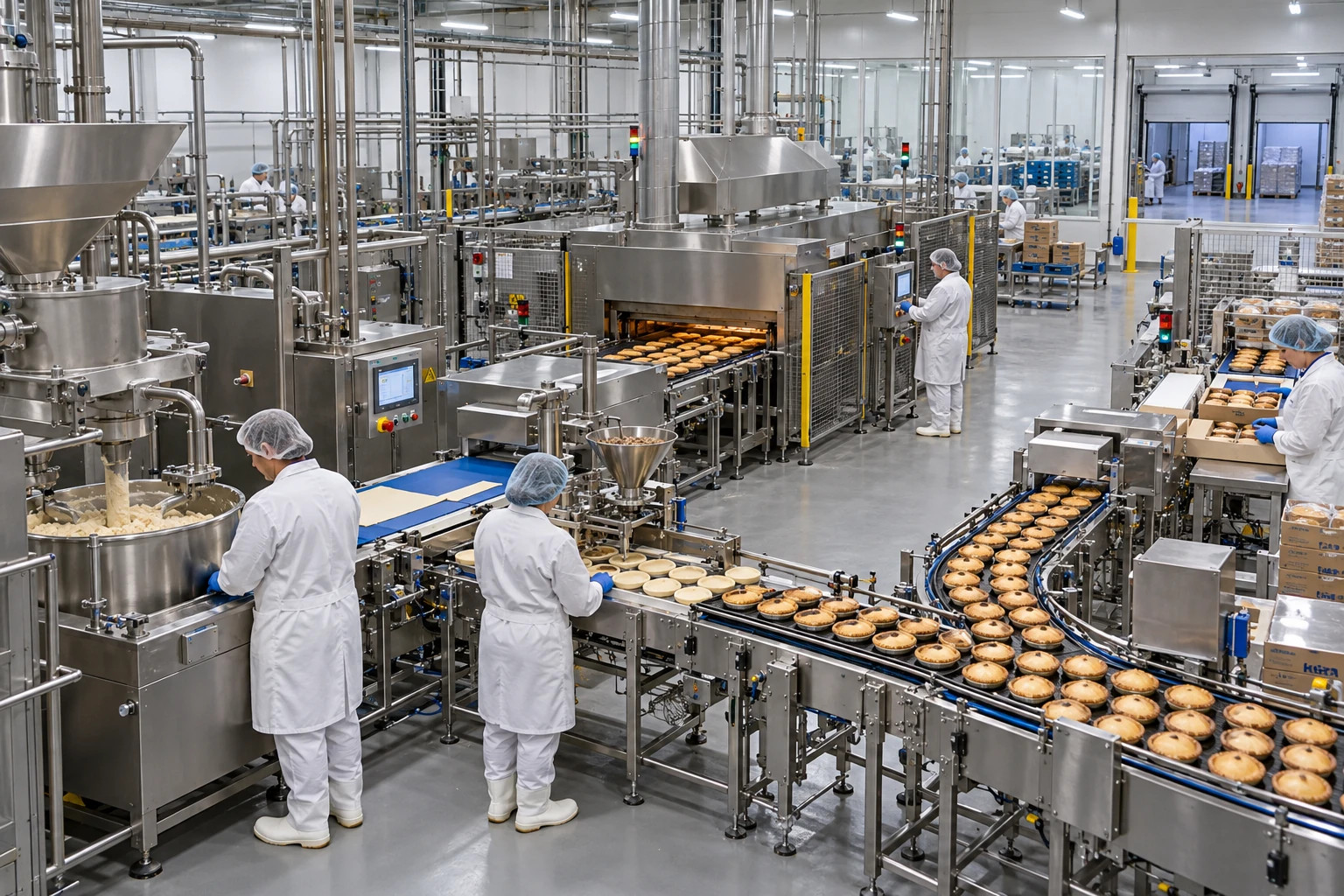
A new realistic UK catering illustration shows a chef and front-of-house colleague checking a closed replacement ingredient tub against inert written food information, with another closed tub, a covered preparation container and the service pass nearby. Three numbered checks connect product identity, recipe/preparation and cross-contact arrangements, and accurate information for staff and consumers. The printed labels are not authoritative ingredient evidence. No food is prepared or served, no allergen exposure occurs and no allergen-free claim is made. A separate existing food-manufacturing line scene supplies the second workplace context without establishing a real process deviation.
Inactive catering review: use actual supplier/product information and the relevant UK-nation and food-format requirements.
- Confirm the changed product. Use the actual ingredient label and relevant supplier information; resolve uncertainty.
- Update preparation controls. Check recipe, segregation and cross-contact arrangements for the actual food.
- Align the service information. Keep records, menu information and staff answers consistent; hold an unresolved sale.
Change the pathway
- Appearance cannot identify it. A similar tub or verbal reassurance does not establish the ingredients.
- A record alone cannot control contact. Verify the preparation arrangement as well as the written information.
- Do not guess for the customer. Hold the affected suitability claim/sale until the information chain is resolved.
Evidence check: No allergen-free assurance, clinical advice, temperature/time limit, rework method, disposal instruction or product-release approval is supplied.
Connect source-level contamination/allergen controls to monitored safe methods
Primary references: FSA allergen guidance: England, Wales and Northern Ireland · Food Standards Scotland: allergen management · GOV.UK food-safety management and HACCP principles
Open the complete HD image (new tab)Download image

Connect source-level contamination/allergen controls to monitored safe methods
Primary references: FSA allergen guidance: England, Wales and Northern Ireland · Food Standards Scotland: allergen management · GOV.UK food-safety management and HACCP principles
Raw poultry preparation shares a route with ready-to-eat salad during a busy service.
A substitute sauce changes ingredients while the menu and staff allergen matrix remain old.
How can the ERICPD hierarchy of controls prevent food contamination and unsafe food handling?

| Hazard and harm route | ERICPD → five-level control | Task intervention and feasibility | Owner, test and evidence | Failure and stop decision |
|---|---|---|---|---|
| Raw-to-ready contamination | Eliminate → Elimination | Remove raw preparation from the shared zone or use a suitably controlled alternative that removes raw handling from the shared zone; ready-to-cook poultry remains a raw-food hazard. Source: GOV.UK food hygiene for businesses. | Kitchen lead checks process and supplier. | Contact route remains: redesign. |
| Same scenario | Reduce → Substitution | Change workflow or product to reduce raw handling. Source: Government HACCP food safety management. | Chef trials safe method. | New risk unassessed: reject. |
| Same scenario | Isolate → Engineering | Separate storage, surfaces, equipment and handwash facilities. Source: GOV.UK food hygiene for businesses. | Supervisor observes actual peak service. | Separation fails: stop affected food. |
| Same scenario | Control → Administrative | Use clean-as-you-go and validated cooking/chilling checks. Source: Government HACCP food safety management. | Lead checks records and food outcome. | Missed critical check: hold product. |
| Same scenario | PPE → PPE | Task clothing or gloves do not replace handwashing and segregation. Source: GOV.UK food hygiene for businesses. | Supervisor checks hygiene behaviour. | Glove use masks contamination: correct. |
| Same scenario | Discipline → Administrative assurance | Review swabs, incidents and failed checks to improve flow. Source: Government HACCP food safety management. | Food safety lead closes actions. | Repeat failure: suspend method. |
| Undeclared allergen | Eliminate → Elimination | Remove the unsafe item until verified ingredient information is available. Source: FSA allergen guidance for food businesses. | Manager quarantines affected batch. | Unknown allergen: do not serve. |
| Same scenario | Reduce → Substitution | Use an approved substitute with verified specification. Source: FSA allergen guidance for food businesses. | Buyer compares labels and recipe. | Supplier change undocumented: reject. |
| Same scenario | Isolate → Engineering | Separate preparation and utensils where cross-contact risk requires it. Source: Food Standards Scotland guidance. | Chef checks real workflow. | Cross-contact cannot be prevented: stop claim. |
| Same scenario | Control → Administrative | Update recipe, matrix, labels and service briefing before sale. Source: FSA PPDS guidance. | Supervisor checks a live customer query. | Answer uncertain: stop service. |
| Same scenario | PPE → PPE | Gloves or aprons alone cannot make an allergen-free claim. Source: FSA allergen guidance for food businesses. | Lead observes cleaning and changeover. | PPE is sole control: reject. |
| Same scenario | Discipline → Administrative assurance | Audit substitutions and near misses with corrective action. Source: FSA allergen guidance for food businesses. | Owner samples records and queries. | Repeat mismatch: restrict item. |
How can the ISO 45001 hierarchy of controls prevent food contamination and unsafe food handling?

| Hazard and harm route | ERICPD → five-level control | Task intervention and feasibility | Owner, test and evidence | Failure and stop decision |
|---|---|---|---|---|
| Raw-to-ready contamination | Eliminate → Elimination | Remove raw preparation from the shared zone or use a suitably controlled alternative that removes raw handling from the shared zone; ready-to-cook poultry remains a raw-food hazard. Source: GOV.UK food hygiene for businesses. | Kitchen lead checks process and supplier. | Contact route remains: redesign. |
| Same scenario | Reduce → Substitution | Change workflow or product to reduce raw handling. Source: Government HACCP food safety management. | Chef trials safe method. | New risk unassessed: reject. |
| Same scenario | Isolate → Engineering | Separate storage, surfaces, equipment and handwash facilities. Source: GOV.UK food hygiene for businesses. | Supervisor observes actual peak service. | Separation fails: stop affected food. |
| Same scenario | Control → Administrative | Use clean-as-you-go and validated cooking/chilling checks. Source: Government HACCP food safety management. | Lead checks records and food outcome. | Missed critical check: hold product. |
| Same scenario | PPE → PPE | Task clothing or gloves do not replace handwashing and segregation. Source: GOV.UK food hygiene for businesses. | Supervisor checks hygiene behaviour. | Glove use masks contamination: correct. |
| Same scenario | Discipline → Administrative assurance | Review swabs, incidents and failed checks to improve flow. Source: Government HACCP food safety management. | Food safety lead closes actions. | Repeat failure: suspend method. |
| Undeclared allergen | Eliminate → Elimination | Remove the unsafe item until verified ingredient information is available. Source: FSA allergen guidance for food businesses. | Manager quarantines affected batch. | Unknown allergen: do not serve. |
| Same scenario | Reduce → Substitution | Use an approved substitute with verified specification. Source: FSA allergen guidance for food businesses. | Buyer compares labels and recipe. | Supplier change undocumented: reject. |
| Same scenario | Isolate → Engineering | Separate preparation and utensils where cross-contact risk requires it. Source: Food Standards Scotland guidance. | Chef checks real workflow. | Cross-contact cannot be prevented: stop claim. |
| Same scenario | Control → Administrative | Update recipe, matrix, labels and service briefing before sale. Source: FSA PPDS guidance. | Supervisor checks a live customer query. | Answer uncertain: stop service. |
| Same scenario | PPE → PPE | Gloves or aprons alone cannot make an allergen-free claim. Source: FSA allergen guidance for food businesses. | Lead observes cleaning and changeover. | PPE is sole control: reject. |
| Same scenario | Discipline → Administrative assurance | Audit substitutions and near misses with corrective action. Source: FSA allergen guidance for food businesses. | Owner samples records and queries. | Repeat mismatch: restrict item. |
Use competent controlled simulations and safely planned field observations or equipment tests. Do not create hazardous releases, defeat a live protection layer, expose customers to allergens, or create live traffic/height/energy danger for training.
What food safety records should a business keep?
Records should prove that significant food safety controls are being completed, checked and corrected when they fail.
Food records should be quick to complete but meaningful. They should show the control, the result, the person checking it and the action taken when the result is outside the expected standard. Records that show perfect ticks every day but no defects, no corrective action and no manager review may be weaker than they look.
For higher-risk catering, records should also help managers identify patterns: repeated fridge failures, poor probe calibration, missed cleaning, supplier problems, complaints, allergen queries or staff training gaps.
| Record | What it proves | Review trigger |
|---|---|---|
| Food safety management system | Hazards, controls, monitoring and corrective actions are defined. | Menu, process, supplier or premises change. |
| Temperature records | Critical storage, cooking, cooling and hot-holding controls are checked. | Out-of-range reading or equipment fault. |
| Cleaning schedule | Cleaning tasks are allocated and verified. | Failed inspection, pest activity or complaint. |
| Training matrix | Food handlers and supervisors are competent for their role. | New starter, role change or incident. |
| Allergen matrix | Allergen information is current and communicated. | Supplier, recipe or menu change. |
| Maintenance records | Equipment affecting food safety is kept reliable. | Repeated defect or breakdown. |
| Incident and complaint log | Learning is captured and actioned. | Illness complaint, allergen near miss or enforcement feedback. |
Which food-safety routes apply in England, Wales, Scotland and NI?
Food-business duties and enforcement instruments differ by nation. First decide whether the activity is a food business, what food is supplied, who eats it and whether registration or approval is needed; then apply the relevant national hygiene and allergen route.
A shared staff kitchen can require appropriate workplace welfare and hygiene arrangements without necessarily being a food business. A café, caterer or care-food service needs proportionate HACCP-based food safety management and correct consumer information.
The Food Safety Act 1990 is the GB general food-safety statute; Northern Ireland has the Food Safety (NI) Order 1991. Hygiene enforcement instruments differ across England, Wales, Scotland and NI. EU-derived or EU food-information rules have different current application in GB and NI, so check the regulator route for the exact product and date.
| Jurisdiction | Duty or framework | Where it applies | Practical implication |
|---|---|---|---|
| GB | Food Safety Act 1990 | GB general food-safety and consumer protection. | Safe food and accurate description. |
| NI | Food Safety (NI) Order 1991 | NI general food-safety route. | NI safe food and consumer protection. |
| England | Food Safety and Hygiene (England) Regulations 2013 | England hygiene enforcement. | Food business controls and regulator interaction. |
| Wales | Food Hygiene (Wales) Regulations 2006 | Wales hygiene enforcement. | Welsh food-business controls. |
| Scotland | Food Hygiene (Scotland) Regulations 2006 | Scottish hygiene enforcement. | Scottish food-business controls. |
| NI | Food Hygiene (NI) Regulations 2006 | NI hygiene enforcement. | NI food-business controls. |
Use GOV.UK food hygiene for businesses for England, Wales and NI and FSS guidance for Scotland; verify local-authority registration and category.
How can ISO 22000 support food safety management?
ISO 22000 is a voluntary food safety management-system standard for organisations in the food chain; it can support a structured system but does not replace the applicable hygiene, HACCP or allergen duties.
How could Riverside Leisure Ltd manage this in practice?

Riverside Leisure Ltd would link purchasing, kitchen preparation and guest communication so an ingredient substitution cannot leave staff giving outdated allergen information.
Riverside Leisure Ltd · practical example
Keep allergen information current when an ingredient changes
The key lesson Accurate allergen communication relies on a controlled information chain from the actual ingredient to the food served, including substitutions and cross-contact controls.
The situation: A supplier replaces a sauce used in a hotel restaurant. The kitchen receives the new product shortly before service, while the menu information and reception event sheet still refer to the old recipe.
Why this matters: A confident answer based on last week's recipe can be wrong even when the dish has the same name and appearance.
How Riverside Leisure Ltd would manage it
- Identify the substitution — Department Supervisor. Check the actual ingredient information and recipe before use. Keep the affected dish from normal service while the change or allergen status is uncertain; do not infer safety from a familiar product name.
- Update the food controls — Hotel Manager. Have the competent kitchen lead review the recipe, preparation, storage and cross-contact arrangements. Resolve what can reliably be offered and how any uncertainty must be communicated.
- Join up the information — Department Supervisor. Update the controlled recipe and guest-facing allergen information, then brief kitchen and service staff. Include event bookings and other colleagues who may answer questions about the meal.
- Check service practice — Duty Manager. Ask staff to demonstrate how they confirm an allergen request and communicate it to the kitchen. Ensure they know when to obtain a reliable answer rather than guess or promise an unverified absence.
- Maintain change control — Hotel Manager. Review supplier substitutions and errors with purchasing and the kitchen. Apply the guidance for the hotel's nation and the actual way food is supplied, including any separate prepacked-food requirements.
When the conditions change
- Recognise the trigger
- The ingredient, recipe or allergen information is uncertain or changes.
- Make the immediate decision
- Do not offer the affected dish on the basis of unverified information.
- Verify the next step
- The responsible food-business manager checks current ingredient information against the recipe, preparation controls, guest-facing information and briefing of the staff serving the dish.
What good looks like
The recipe, ingredient packaging and information given to guests agree. Staff can escalate uncertainty and the kitchen can explain the controls for the actual order.
Evidence to look for: Current ingredient and recipe records, change approval, controlled allergen information and staff communication checks.
Common mistake to avoid: Relying on memory or the previous supplier's label when assuring a guest.
Apply this to your work: Who checks that a supplier substitution has reached the person answering a guest's question?
Guidance behind the management approach: Government allergen guidance for food businesses in England, Northern Ireland and Wales. Use the topic's legal and technical guidance for the applicable work and location.
In this worked example, Riverside Leisure Ltd serves families, children, older visitors and staff. It would treat food safety as a public health, brand trust and legal compliance issue, not simply as a kitchen task.
Riverside Leisure would need to manage food safety across several layers: public cafe service, vending, staff welfare areas, children’s parties, external caterers and event catering. The same food safety policy should translate into practical local checks for each setting.
The business example should show a loop of assessing, implementing, checking and learning. Riverside would approve suppliers, check contractor competence, define allergen communication rules, inspect kitchens, track fridge and cleaning records, investigate complaints and use trends to update training and supervision.
| Management element | How the business would manage it | Evidence to review |
|---|---|---|
| Assessing | Map all food activities including cafe, vending, events, party food, contractors and staff kitchen use. | Food activity register and risk assessment. |
| Analysing | Separate high-risk foods, allergens, vulnerable groups and temporary events. | HACCP plan, allergen matrix and event approval form. |
| Implementing | Use trained handlers, temperature checks, cleaning, pest control and supplier approval. | Daily records, cleaning sign-off and supplier list. |
| Checking | Managers sample records, observe handwashing, inspect fridges and test allergen communication. | Supervisor checks and internal audit findings. |
| Learning | Review complaints, near misses, illness reports, rejected deliveries and inspection feedback. | Action tracker and management review. |
| Improving | Update training, recipes, equipment, layouts and contractor rules after learning. | Updated procedures, procurement changes and closure evidence. |
The food-business system follows FSS CookSafe for a proportionate catering method in Scotland; use the local regulator elsewhere.
Use competent controlled simulations and safely planned field observations or equipment tests. Do not create hazardous releases, defeat a live protection layer, expose customers to allergens, or create live traffic/height/energy danger for training.
Who needs food-safety competence?
Show safe handling, accurate allergen communication and stop-service decisions in the actual operation.
| Role | Learning to test | Competence demonstration | Assessor and record | Reassessment trigger |
|---|---|---|---|---|
| Food handlers | Know hygiene, illness, cross-contact and safe methods. | Demonstrate one raw-to-ready and probe decision. | Supervisor observes service. | Menu or process change. |
| Allergen-facing staff | Read verified ingredient and recipe information. | Answer a customer query or stop uncertain service. | Manager checks live exercise. | Supplier or menu change. |
| Kitchen supervisors | Operate HACCP and corrective action. | Handle failed temperature, contamination and recall. | Food safety lead signs exercise. | Incident or new food. |
| Buyers and contractors | Control supplier, ingredient and catering changes. | Trace one substitute to revised allergen matrix. | Manager audits transaction. | New supplier or event. |
| Food-business leaders | Choose national route and resource controls. | Review registration, trends and vulnerable consumers. | Independent competent adviser samples. | New location or law change. |
For service competence, FSA allergen guidance for food businesses requires reliable ingredient communication and change control.
Use competent controlled simulations and safely planned field observations or equipment tests. Do not create hazardous releases, defeat a live protection layer, expose customers to allergens, or create live traffic/height/energy danger for training.
What warning signs show food safety is weak?
Weak food safety usually appears in everyday records, behaviours and complaints before it becomes an outbreak or enforcement issue.
| Warning sign | How harm can develop | Action |
|---|---|---|
| Blank temperature records | Unsafe storage or cooking may go unnoticed. | Check equipment, retrain staff and verify recent food safety. |
| Staff guessing allergen information | A customer may receive unsafe food. | Stop service for uncertain items and verify recipe information. |
| Cleaning records completed in advance | Contamination controls become example. | Investigate supervision and reset cleaning verification. |
| Repeated fridge faults | High-risk food may enter the danger zone. | Repair, quarantine food and review maintenance. |
| Ill food handlers working | Pathogens may spread through food or surfaces. | Apply illness reporting and exclusion rules. |
| No contractor controls | Mobile or event food providers may operate below site standards. | Approve contractors and inspect before service. |
Use GOV.UK food hygiene guidance to treat missed checks and contamination signals as reasons to hold food and investigate.
What do the acronyms and key terms mean?
Acronyms should be explained so food handlers, supervisors and managers use the same language.
| Acronym | Meaning | Plain-English use |
|---|---|---|
| FSA | Food Standards Agency | Food regulator for England, Wales and Northern Ireland. |
| FSS | Food Standards Scotland | Scottish public-sector food body. |
| HACCP | Hazard Analysis and Critical Control Point | Structured food safety management method. |
| PPE | Personal Protective Equipment | Protective clothing or equipment used during food handling or cleaning. |
| NI | Northern Ireland | Separate Food Safety Order and hygiene instrument. |
| PPDS | Prepacked for direct sale | Check food format and nation-specific labelling. |
Which Crownway Fuels documents support this topic?
Open an editable document, read the preview, or find its place in the Crownway hierarchy. 7 resources relate to this page.
Fictional Crownway Fuels examples for English forecourts, with a separate illustrative bulk terminal. Check site applicability, permissions and actual controls before adapting any document for use.
Shop customer and food operations policy (7)
- Shop customer and food operations policy (CWF-POL-RETAIL · Completed fictional example)
Set company expectations, responsibilities and resources for shop customer and food operations.
Read preview · Download DOCX · Show in hierarchy - Shop customer and food operations procedure (CWF-PRO-RETAIL · Completed fictional example)
Explain who does what, in what sequence, the control rationale, evidence, escalation and safe restart conditions.
Read preview · Download DOCX · Show in hierarchy - Retail and public area risk assessment (CWF-RA-RETAIL-01 · Blank editable master)
Provide the site/task-specific retail and public area risk assessment and retain its controlled output.
Read preview · Download DOCX · Show in hierarchy - Shop opening closing and housekeeping check (CWF-CHK-RETAIL-01 · Blank editable master)
Provide the site/task-specific shop opening closing and housekeeping check and retain its controlled output.
Read preview · Download DOCX · Download PDF · Show in hierarchy - Food hygiene and allergen applicability plan (CWF-PLN-RETAIL-01 · Completed fictional example)
Provide the site/task-specific food hygiene and allergen applicability plan and retain its controlled output.
Read preview · Download DOCX · Show in hierarchy - Food temperature allergen and stock rotation check (CWF-CHK-RETAIL-02 · Blank editable master)
Provide the site/task-specific food temperature allergen and stock rotation check and retain its controlled output.
Read preview · Download DOCX · Download PDF · Show in hierarchy - Customer injury complaint and product recall record (CWF-FRM-RETAIL-01 · Blank editable master)
Provide the site/task-specific customer injury complaint and product recall record and retain its controlled output.
Read preview · Download DOCX · Show in hierarchy
Unlock another resource
You have used this month’s two free downloads. Publish a post in your own words to unlock one more resource, or choose SHARE Individual for 10 downloads per month.
You decide whether to share. If you do, use the relevant platform disclosure tools and do not make claims you do not genuinely hold.