
Aerospace manufacturing safety / Coating, curing and high-risk maintenance interfaces
Aerospace manufacturing safety · SH-AERO-07Coating, curing and high-risk maintenance interfaces
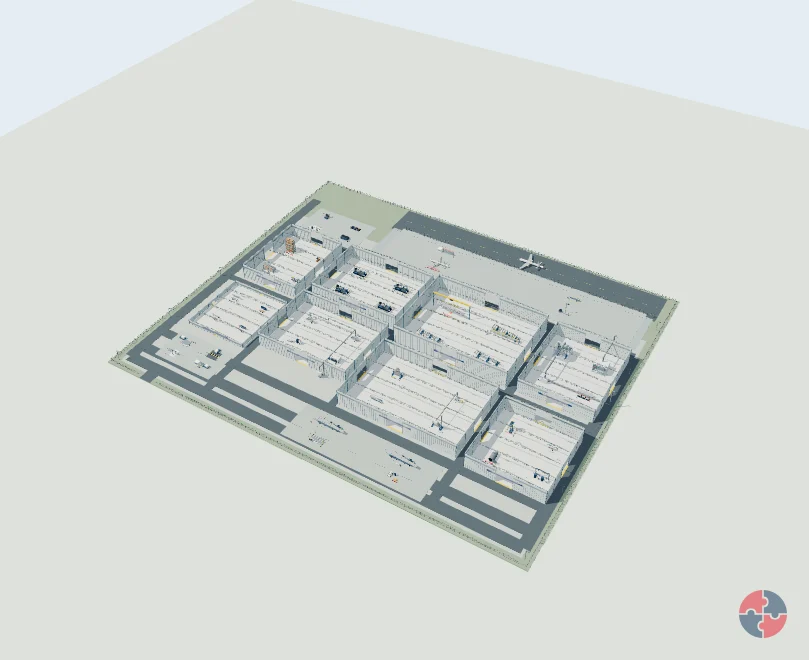
Free online training · Approximate learning time: 120–190 minutes · Self-paced
Keep exposure, heat, fire and access decisions connected and distinct.
Full public teaching and readers are free without an account. A free learner account is required for saved LMS progress and recorded assessment. Completion and any course-completion certificate depend on the configured LMS conditions.
Who this course is for
Coating, curing, engineering, contractor-control and supervisory teams.
Connect the spray room, curing ovens, solvent arrangements, maintenance access and charging area. Use the actual control basis rather than appearance, generic wait times or a single repair report.
Awareness in an original fictional aerospace manufacturing and airport-interface site. GB occupational guidance has separate NI routes; environmental duties depend on the UK nation and permit. This course does not confer engineering, aircraft maintenance, product-release, lifting, rescue, driving or airside authorisation.
Learning outcomes
- Recognise incomplete spray-control and clearance evidence.
- Separate hot handling from maintenance/entry release.
- Preserve fire and escape boundaries during temporary work.
- Respond to battery and entry concerns within competence.
Course outline
Understand spray exposure
- Keep respiratory protection within the whole spray-control systemDo not remove protection or infer clearance from appearance while the assessed exposure conditions remain unresolved.
- Check where extracted contaminants goVerify capture, interlocks and safe discharge rather than moving exposure from the sprayer to another person.
Verify the whole extraction system
- Plan hot-component handling after curingKeep residual heat, handling supports and access protection in the release decision after the oven cycle ends.
- Control solvent and fire boundaries togetherKeep substance containment, ignition control and premises protection aligned with the actual task and fire arrangements.
Plan hot handling
- Classify the entry task before anyone crosses the boundaryAvoid entry where practicable and require the actual competent assessment and emergency arrangements when entry is necessary.
- Respond to damaged charging equipment within competenceKeep people and escape routes protected while the actual battery/system response is established.
- Two-pack coating and isocyanate mistStop spraying for extraction or breathing-air failure, and follow the approved safe exit response.
- Large curing ovens and hot componentsHold access or handling until the approved temperature and atmosphere conditions are established.
- Extraction fans, interlocks and safe exhaustStop the emitting process when required extraction is unavailable or discharge creates danger.
Protect fire and entry boundaries
- Solvent vapours, ignition and fire separationStop work for an uncontrolled flammable release or failed critical fire protection.
- Oven or duct entry and confined-space assessmentNo entry or improvised rescue without the assessed safe system and emergency capability.
- Vehicle charging and battery damageDo not charge a damaged battery; withdraw and raise the alarm if it becomes hot, vents or smokes.
Coordinate safe recovery
- Maintain coating and curing boundaries during a maintenance interruptionCoordinate exposure, heat, fire, entry and charging restrictions without assuming a single repair releases them all.
- Take a verified action into the workplaceConnect one actual task to an owner, evidence and a clear release or escalation decision.
Activities, model practice and assessment
Work through 5 required applied activities and 3 model-practice pauses, with explanatory feedback and independent lesson decisions. Complete 6 distinct model mission sequences across those pauses. Use the actual fictional aerospace manufacturing model or its equivalent accessible route to complete the required decision sequences; launching the model alone does not complete practice.
The 20-question assessment requires at least 80% plus every designated critical safety answer. Complete the required activities, practice and lesson checks. Points and badges cannot offset a critical safety error.
Use the LMS for confirmed save/resume and recorded results. Any certificate follows its configured passed-completion and grade conditions.
Open the public interactive practice copy; public practice is separate from the LMS record.
Sources and learning provenance
Original fictional cases are paired with public SHAREhub teaching and structured topic records. Use the applicable jurisdiction and primary guidance for live work.
- HSE: isocyanate paint spraying, HSG276
- HSE: LEV common processes and sources
- HSE: maintenance of work equipment
- HSE: working in confined spaces
- HSE: dangerous substances and explosive atmospheres
- HSE: using electric storage batteries safely
- GOV.UK: workplace fire-safety responsibilities
Topic sections, source identities and versions
| Public topic | Chunk and version | Jurisdiction and sources |
|---|---|---|
| isocyanate-asthma · spraying | isocyanate-asthma--spraying | Great Britain, Northern Ireland isoas-legacy-01, isoas-legacy-04, isoas-legacy-05 |
| lev-local-exhaust-ventilation · clearance-times | lev-local-exhaust-ventilation--clearance-times 2026-10-02-additive-1 | Great Britain, Northern Ireland lev-local-exhaust-ventilation-src-05 |
| lev-local-exhaust-ventilation · system-journey | lev-local-exhaust-ventilation--system-journey 2026-10-02-additive-1 | Great Britain, Northern Ireland lev-local-exhaust-ventilation-src-01 |
| ventilation-local-exhaust-ventilation-and-workplace-air-control · change | ventilation-local-exhaust-ventilation-and-workplace-air-control--change 20261019-V-review-1 | Great Britain, Northern Ireland source-hsg258, source-hse_commission, source-hse_coshh |
| thermal-environments-heat-stress-and-cold-stress · controls-hierarchy | thermal-environments-heat-stress-and-cold-stress--controls-hierarchy 2.4 | GB, NI source-hse_heat, an-th11, an-th7, source-hseni_temperature |
| maintenance-inspection-and-testing-of-work-equipment-and-machinery · safe-maintenance | maintenance-inspection-and-testing-of-work-equipment-and-machinery--safe-maintenance 2.0 | Great Britain, Northern Ireland hse-maint, hse-l22 |
| dangerous-substances-process-safety-and-chemical-transport · barriers | dangerous-substances-process-safety-and-chemical-transport--barriers 20261016-letter-review-1 | Great Britain, Northern Ireland dsear, hsg176, hsg254, ni-dsear |
| fire-resistance-compartmentation-and-fire-spread · fire-door-evidence | fire-resistance-compartmentation-and-fire-spread--fire-door-evidence 20261016-letter-review-1 | England, Scotland gov-fire-safety-risk-assessment-offices-and-shops-fire-safety-risk-assessment-offices-and-, gov-publications-practical-fire-safety-guidance-existing-non-residential-premises-2, gov-publications-fire-safety-approved-document-b |
| confined-spaces · avoid-entry | confined-spaces--avoid-entry 20261016-letter-review-1 | Great Britain, Northern Ireland source-conf-hse-l101, source-conf-ni-law |
| confined-spaces · rescue | confined-spaces--rescue 20261016-letter-review-1 | Great Britain, Northern Ireland source-conf-hse-l101, source-conf-hse-intro, source-conf-ni-acop |
| electrical-hazards-and-risks · charging | electrical-hazards-and-risks--charging 2.2 | Great Britain, Northern Ireland hse-intro, hse-hsg85 |
| emergency-response · hazard-control | emergency-response--hazard-control 2.2 | Great Britain, Northern Ireland share-activity-emergency-response-1, share-activity-emergency-response-2 |
| thermal-environments-heat-stress-and-cold-stress · technical-model | thermal-environments-heat-stress-and-cold-stress--technical-model 2.4 | GB, NI source-hse_thermal, source-hse_heat, source-hseni_temperature, source-hse_law, source-hse_law_summary, source-hseni_temperature_guidance |
| lev-local-exhaust-ventilation · system-components | lev-local-exhaust-ventilation--system-components 2026-10-02-additive-1 | Great Britain, Northern Ireland lev-local-exhaust-ventilation-src-01 |
| dangerous-substances-process-safety-and-chemical-transport · process-conditions | dangerous-substances-process-safety-and-chemical-transport--process-conditions 20261016-letter-review-1 | Great Britain, Northern Ireland dsear, hsg176, hsg254, ni-dsear |
| electrical-hazards-and-risks · electrical-control-logic | electrical-hazards-and-risks--electrical-control-logic 2.2 | Great Britain, Northern Ireland hse-intro, hse-hsg85 |
| isocyanate-asthma · records | isocyanate-asthma--records | Great Britain, Northern Ireland isoas-legacy-01, isoas-legacy-04 |
| confined-spaces · evidence | confined-spaces--evidence 20261016-letter-review-1 | Great Britain, Northern Ireland source-conf-hse-l101, source-conf-hse-law, source-conf-ni-law, source-conf-ni-acop |
| fire-safety-fire-risk-assessment-and-emergency-controls · emergency-controls-after-change | fire-safety-fire-risk-assessment-and-emergency-controls--emergency-controls-after-change 20261016-letter-review-1 | England, England and Wales, Great Britain gov-fire-safety-risk-assessment-offices-and-shops-fire-safety-risk-assessment-offices-and-, gov-publications-fire-safety-risk-assessment-factories-and-warehouses, gov-workplace-fire-safety-your-responsibilities-fire-safety-equipment-drills-and-training, hse-fireandexplosion-dsear-htm, hse-welding-other-welding-risks-htm, gov-fire-safety-risk-assessment-means-of-escape-for-disabled-people-fire-safety-risk-asses, hse-books-hsg168-htm |
Course SH-AERO-07 · version 2026.10.20.2. .
Questions about this course
Is this training free?
Full public teaching and readers are free without an account. A free learner account is required for saved LMS progress and recorded assessment. Completion and any course-completion certificate depend on the configured LMS conditions.
How long should I allow?
Approximately 120–190 minutes, including teaching, lesson checks, required activities, model or accessible practice and one assessment attempt. Individual pace, review and retries vary. Save and resume in the LMS.
Can I learn without a 3D-capable browser?
Yes. The complete HTML reader provides the teaching. Required model practice has an equivalent accessible decision route in the interactive course. Use the LMS route for recorded learning.
What is required to pass?
Complete the required learning, activities, practice and lesson decisions. The 20-question final assessment requires at least 80% plus every designated critical safety answer. Points cannot compensate for a critical safety error. Follow the feedback before retrying.
Does this authorise aerospace operations?
Awareness in an original fictional aerospace manufacturing and airport-interface site. GB occupational guidance has separate NI routes; environmental duties depend on the UK nation and permit. This course does not confer engineering, aircraft maintenance, product-release, lifting, rescue, driving or airside authorisation. This independent course does not award an external qualification or replace competent task assessment, practical training or site authorisation.