
Construction fire safety and hot work
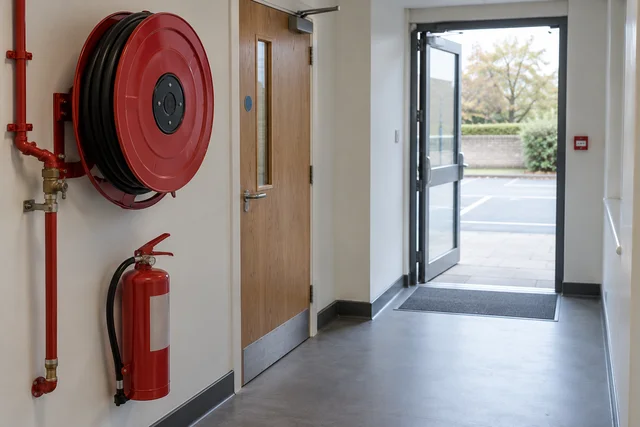

Plan construction fire prevention, hot work, storage, alarms and escape.
Full public teaching and readers are free to read without an account. A free learner account is required for confirmed saved assessment, completion and certificate records in the LMS.
What you will work through
Fictional North Quay refurbishment: a changing construction workface links contractors, temporary arrangements and nearby occupied areas. You are checking the evidence for construction fire safety and hot work. The responsible site people retain specialist design, operating and release authority.
The course has 5 modules and 18 lessons, with teaching, applied activities, feedback and a check of understanding throughout. There are 4 practice pauses in the actual construction model, with an equivalent accessible text route. Public interactive practice is separate from confirmed LMS assessment and completion records.
Explore the interactive practice copy. Return to the LMS route for recorded learning.
Learning outcomes
- Identify construction fire risks from hot work, fuels, gases and battery charging.
- Connect prevention and permit controls with alarms, escape and site-phase changes.
- Recognise a control gap and explain the safe hold, response and restart requirements.
Course outline
Understand the changing fire risk
- Map the construction fire scenarioAssess the actual construction stage, temporary escape, fire loading and people exposed.
- Fuel, ignition and oxygenSeparate the hazards through a suitable storage and work plan that also protects escape.
- Prevent fire through layout and housekeepingRemove the fire load through a planned waste and work-area arrangement before the tasks start.
- Assess the changing workfaceReassess who may be affected, warning, routes and response for the changed conditions.
Control hot work
- Avoid hot work where practicableCompare methods and avoid on-site hot work where a suitable safer option can achieve the job.
- A permit must match the real jobStop the changed job and reassess the location, exposures and permit conditions before further work.
- Control heat and concealed spreadKeep hot work on hold until the spread pathway and affected spaces are controlled under the task-specific plan.
- Treat fume and optical radiation as separate hazardsStop and establish suitable fume capture, protection of nearby people and the other task controls.
Manage fuel and charging
- Store cylinders and flammable materials safelyStop the move and establish suitable segregation, security, handling and protected escape.
- Respond to a suspected gas leakKeep people away, raise the alarm and follow trained safe isolation and emergency arrangements without introducing ignition.
- Battery charging and damaged packsKeep people safe, stop use through the trained defect process and manage the battery under manufacturer and site emergency arrangements.
- Preserve compartmentation during workRestore the planned protection or establish authorised temporary measures that maintain safe occupation and escape.
Warn, escape and respond
- Make warnings effective for everyoneVerify effective warning and response for all affected people and work conditions before the area is occupied.
- Keep escape routes usable as the site changesHold occupation or work as necessary until the real route, signs, access and briefing are reconciled.
- Know the limits of first responseRaise the alarm, withdraw and follow the site's emergency arrangements; only trained safe first response is appropriate.
Close out and improve
- Check the fire evidence at handoverKeep the job under the required close-out controls until the relevant checks and handover are confirmed.
- Capstone: simultaneous work and a moved exitHold affected work and coordinate ignition, fuel, warning, escape and emergency arrangements before authorising the new phase.
- Build a measurable fire improvementAssign an owner to change storage and delivery arrangements, verify the usable route and define a check when phases change.
Assessment and completion
Complete the required lessons and activities, then take the 20-question final assessment. The pass threshold is 80% plus every designated critical safety answer. Points and badges cannot compensate for a critical error.
Use the LMS to save and resume confirmed progress. Certificate availability follows its passed-completion and grade conditions. Browser practice and printed learning pages do not issue the official LMS record.
Independent construction learning. Completion records learning within the course scope; competent site assessment, practical training and task authorisation remain necessary. It does not confer a NEBOSH qualification.
Sources and learning provenance
The teaching draws on public SHAREhub topic pages and structured source records, with original fictional workface cases. Use the linked primary guidance and the applicable jurisdiction when planning a live task.
- HSE: Construction fire safety questions
- HSE: Fire safety in construction, HSG168
- HSE: Welding fume controls
Topic records, source IDs and versions
| Public topic section | Chunk and version | Jurisdiction and source IDs |
|---|---|---|
| preventing-fire-and-fire-spread · construction-examples | preventing-fire-and-fire-spread--construction-examples Version 2.0 | source-hse_fire_safety_in_construction_hsg168 |
| combustion-and-the-fire-triangle · triangle | combustion-and-the-fire-triangle--triangle Version 20261016-letter-review-1 | Great Britain source-fire-hse-hsg103, source-fire-hse-dsear, source-fire-hse-fire |
| preventing-fire-and-fire-spread · ignition-fuel | preventing-fire-and-fire-spread--ignition-fuel Version 2.0 | source-hse_fire_safety_in_construction_hsg168 |
| fire-risk-assessment-objectives-and-competence · fra-quality-test | fire-risk-assessment-objectives-and-competence--fra-quality-test Version 20261016-letter-review-1 | England, Scotland gov-fire-safety-risk-assessment-offices-and-shops-fire-safety-risk-assessment-offices-and-, gov-publications-practical-fire-safety-guidance-existing-non-residential-premises-2, gov-fire-safety-risk-assessment-5-step-checklist-fire-safety-risk-assessment-5-step-checkl |
| control-of-ignition-sources-and-hot-work · hot-work | control-of-ignition-sources-and-hot-work--hot-work Version 20261016-letter-review-1 | Great Britain, Northern Ireland source-hot-hse-dsear, source-hot-hse-hsg250, source-hot-ni-dsear |
| control-of-ignition-sources-and-hot-work · permit | control-of-ignition-sources-and-hot-work--permit Version 20261016-letter-review-1 | Great Britain, Northern Ireland source-hot-hse-dsear, source-hot-hse-ptw, source-hot-ni-dsear |
| control-of-ignition-sources-and-hot-work · fire-watch | control-of-ignition-sources-and-hot-work--fire-watch Version 20261016-letter-review-1 | Great Britain, Northern Ireland source-hot-hse-dsear, source-hot-hse-ptw, source-hot-ni-dsear, source-hot-hse-welding-fire, source-hot-hse-hsg168 |
| control-of-ignition-sources-and-hot-work · contractors | control-of-ignition-sources-and-hot-work--contractors Version 20261016-letter-review-1 | Great Britain, Northern Ireland source-hot-hse-dsear, source-hot-hse-ptw, source-hot-ni-dsear |
| arson-and-flammable-material-risks · storage | arson-and-flammable-material-risks--storage Version 20261016-letter-review-1 | England and Wales, Scotland, Northern Ireland, Great Britain home-office, hse-workplace, hse-dsear, ni-dsear, hse-storage, hsg51 |
| control-of-ignition-sources-and-hot-work · isolation-gas-testing | control-of-ignition-sources-and-hot-work--isolation-gas-testing Version 20261016-letter-review-1 | Great Britain, Northern Ireland source-hot-hse-dsear, source-hot-hse-ptw, source-hot-ni-dsear, source-hot-hse-hsg253 |
| portable-electrical-equipment · battery-charger-risks | portable-electrical-equipment--battery-charger-risks Version 2.0 | source-hse_hsg168_battery_fire |
| preventing-fire-and-fire-spread · spread-pathways | preventing-fire-and-fire-spread--spread-pathways Version 2.0 | source-hse_fire_safety_in_construction_hsg168 |
| fire-detection-alarm-systems-and-emergency-communication · communication-needs | fire-detection-alarm-systems-and-emergency-communication--communication-needs Version 20261016-letter-review-1 | England and Wales, Scotland, England gov-workplace-fire-safety-your-responsibilities-fire-risk-assessments, gov-publications-practical-fire-safety-guidance-existing-non-residential-premises-2, gov-fire-safety-risk-assessment-offices-and-shops-fire-safety-risk-assessment-offices-and- |
| fire-evacuation · full-evacuation-pathway | fire-evacuation--full-evacuation-pathway Version 20261016-letter-review-1 | England, Scotland, Great Britain gov-fire-safety-risk-assessment-offices-and-shops-fire-safety-risk-assessment-offices-and-, gov-publications-practical-fire-safety-guidance-existing-non-residential-premises-2, hse-workplace-health-emergency-procedures-htm, gov-fire-safety-risk-assessment-means-of-escape-for-disabled-people-fire-safety-risk-asses |
| fire-alarms-and-firefighting · first-response-limits | fire-alarms-and-firefighting--first-response-limits Version 20261016-letter-review-1 | England and Wales, Scotland gov-workplace-fire-safety-your-responsibilities-fire-risk-assessments, gov-publications-practical-fire-safety-guidance-existing-non-residential-premises-2 |
| fire-alarms-and-firefighting · return-to-service | fire-alarms-and-firefighting--return-to-service Version 20261016-letter-review-1 | England and Wales, Scotland gov-workplace-fire-safety-your-responsibilities-fire-risk-assessments, gov-publications-practical-fire-safety-guidance-existing-non-residential-premises-2 |
| fire-emergency-plans-business-continuity-and-environmental-impacts · plan-content | fire-emergency-plans-business-continuity-and-environmental-impacts--plan-content Version 20261016-letter-review-1 | England, Scotland, Great Britain gov-fire-safety-risk-assessment-offices-and-shops-fire-safety-risk-assessment-offices-and-, gov-publications-practical-fire-safety-guidance-existing-non-residential-premises-2, hse-workplace-health-emergency-procedures-htm |
| fire-risk-assessment-objectives-and-competence · evidence-pack | fire-risk-assessment-objectives-and-competence--evidence-pack Version 20261016-letter-review-1 | England, Scotland gov-fire-safety-risk-assessment-offices-and-shops-fire-safety-risk-assessment-offices-and-, gov-publications-practical-fire-safety-guidance-existing-non-residential-premises-2, gov-fire-safety-risk-assessment-5-step-checklist-fire-safety-risk-assessment-5-step-checkl |
Course version 2026.10.20.4 · SH-FIR-01. Factual source identity and jurisdiction are retained in the .
Questions about this course
Is this course free?
Yes. The training is £0. Full public teaching and readers can be used without an account. A free learner account is required for confirmed saved assessment, completion and certificate records in the LMS.
How long should I allow?
Approx. 1h 50m–2h 40m: approximately 110–160 minutes of self-paced learning, including required activities and one final-assessment attempt. Your pace, review and retries may increase the time. Save and resume in the LMS.
Can I study without a 3D-capable browser?
Yes. The complete learning reader is available in ordinary HTML. Where this course includes model practice, an accessible text route provides the same decision sequence. Use the interactive LMS course to complete its assessed requirements.
What do I need to pass?
Complete the required learning and achieve at least 80% in the final assessment, with every critical safety answer correct. Follow the feedback and review the relevant lesson before retrying.
Where is my completion record?
The LMS holds confirmed grades, completion and certificate records for your learner account. Public browser practice has its own separate progress and is not an official completion record.
Does completion authorise construction work?
Independent construction learning. Completion records learning within the course scope; competent site assessment, practical training and task authorisation remain necessary. It does not confer a NEBOSH qualification.
Presentation and model workshop
Use the same course imagery, worked decisions and source case in a 28-slide teaching companion. Practise classification, compare explained choices and inspect the linked model case.
Open the interactive presentation workshop · Download PowerPoint
This optional companion does not replace the required course activities or final assessment.