
SHARE Knowledge Hub
How should ignition sources and hot work be controlled?
Avoid hot work near dangerous substances if a cold method will do. If ignition cannot be avoided, isolate and clean the plant, test the atmosphere, control adjacent combustibles, issue a task-specific permit and keep the fire watch through hand-back.
Understanding How should ignition sources and hot work be controlled?
Avoid hot work near dangerous substances if a cold method will do. If ignition cannot be avoided, isolate and clean the plant, test the atmosphere, control adjacent combustibles, issue a task-specific permit and keep the fire watch through hand-back.
Why this matters at work
Avoid hot work where a safer practicable option exists, such as replacement or an appropriate cold method. A drum described as empty may retain material in seams and crevices that produces dangerous vapour when heated. Original labelling may not describe its latest contents. Do not use a used drum as a support for welding or assume that an open lid removes the explosion risk. HSE’s small-tank and drum guidance addresses this recurrent fatal mechanism.
Check normal work, cleaning, maintenance and abnormal conditions, including temporary equipment and contractor activity. Control simultaneous work and changes that introduce fuels or ignition. Record restrictions, inspection and verification needs and the response to failure. GB and NI DSEAR routes are separate and general fire precautions use national frameworks. This answer does not assign a zone or approve a device, and PPE cannot make an explosive atmosphere acceptable.
How organisations manage this in practice
Keep process fire and explosion controls connected with general fire precautions. England and Wales use the Fire Safety Order; Scotland and NI have separate frameworks and responsible-role terminology. Record the task decision, controls, monitoring, handover and restoration evidence under the actual applicable arrangements. Check significant changes rather than carrying an earlier permit forward automatically. This answer does not determine a building’s fire compliance or approve a temporary alarm impairment; those need the real premises, occupants and competent assessment.
Where hot work is necessary, specialist assessment and suitable preparation, isolation, verification and controls are required. Methods such as cleaning, gas-freeing or inerting have their own limitations and hazards and must not be improvised from this answer. Plan supervision, fire precautions, emergency response and handback. Record the avoidance decision and technical evidence. A permit is a communication and authorisation mechanism, not proof that residues have been removed or the container is safe to heat.
Consider flames and sparks, hot surfaces, electrical equipment, static discharge, friction, impact and foreseeable equipment faults. The significance depends on the actual gas, vapour, dust, oxygen conditions and release location. Identify and prevent dangerous atmospheres first where possible, then select suitable ignition controls through the assessment. Equipment suitability includes its installation, use, maintenance and the actual hazardous area; a familiar tool or portable device is not automatically acceptable.
Avoid the heat first, then verify the exact job
Before issuing a permit, ask whether the component can move to a suitable workshop or whether a competent safer cold method can achieve the outcome. If heat remains necessary, the assessment must cover the actual material history, residues, connections, adjacent spaces, other work and emergency arrangements.
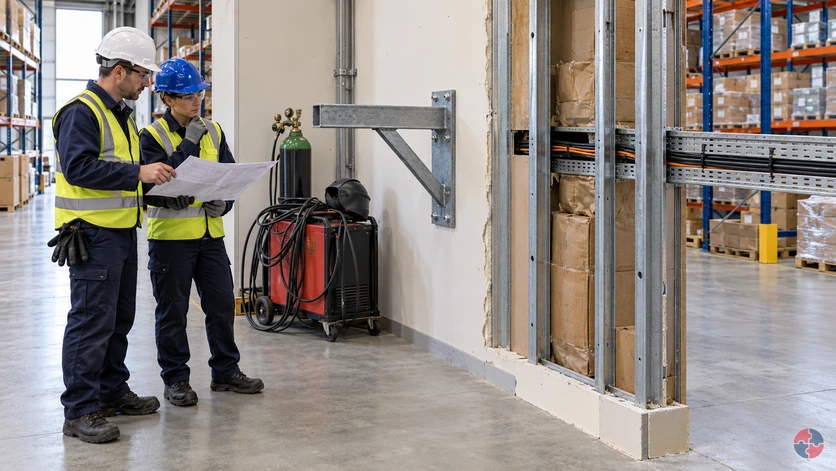
Trace the ignition path beyond the visible workface
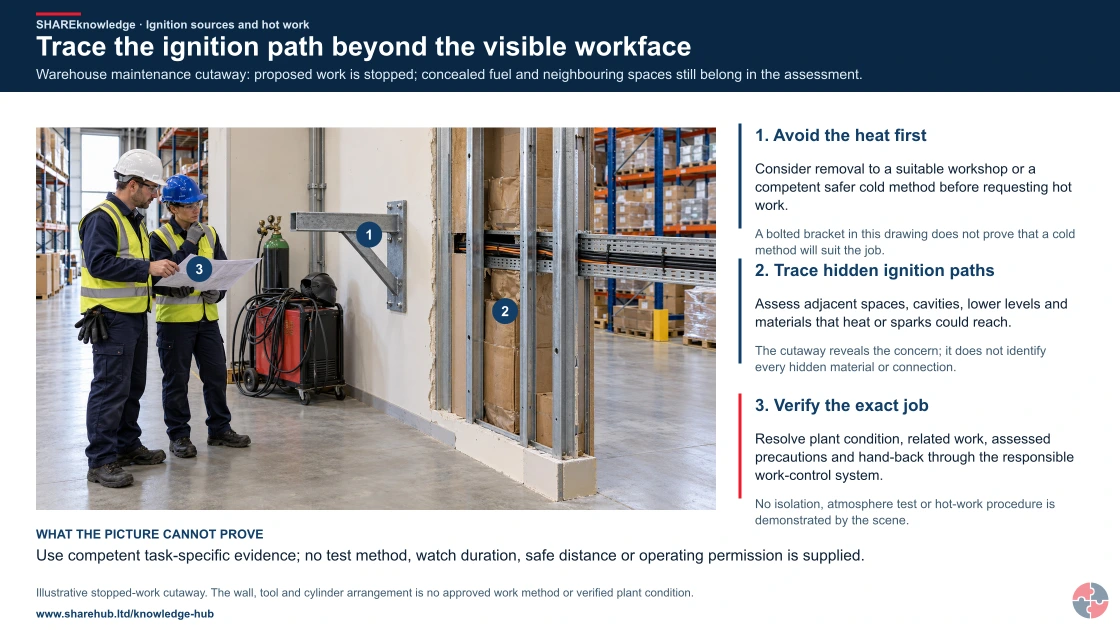
Full written explanation
Warehouse maintenance cutaway: proposed work is stopped; concealed fuel and neighbouring spaces still belong in the assessment.
- Avoid the heat first. Consider removal to a suitable workshop or a competent safer cold method before requesting hot work.
- Trace hidden ignition paths. Assess adjacent spaces, cavities, lower levels and materials that heat or sparks could reach.
- Verify the exact job. Resolve plant condition, related work, assessed precautions and hand-back through the responsible work-control system.
Change the pathway
- A different method needs assessment. A bolted bracket in this drawing does not prove that a cold method will suit the job.
- The clear workface is not the boundary. The cutaway reveals the concern; it does not identify every hidden material or connection.
- Paperwork cannot prove the controls. No isolation, atmosphere test or hot-work procedure is demonstrated by the scene.
Evidence check: Use competent task-specific evidence; no test method, watch duration, safe distance or operating permission is supplied.
Full hot-work avoidance, work-control and hand-back example
Primary references: HSE: welding fire and explosion risks (GB) · HSE: permit-to-work systems (GB) · HSE INDG314: hot work on small tanks and drums (GB)
Open the complete HD image (new tab)Download image

Full hot-work avoidance, work-control and hand-back example
Primary references: HSE: welding fire and explosion risks (GB) · HSE: permit-to-work systems (GB) · HSE INDG314: hot work on small tanks and drums (GB)
Best-practice guide: Control Of Ignition Sources And Hot Work
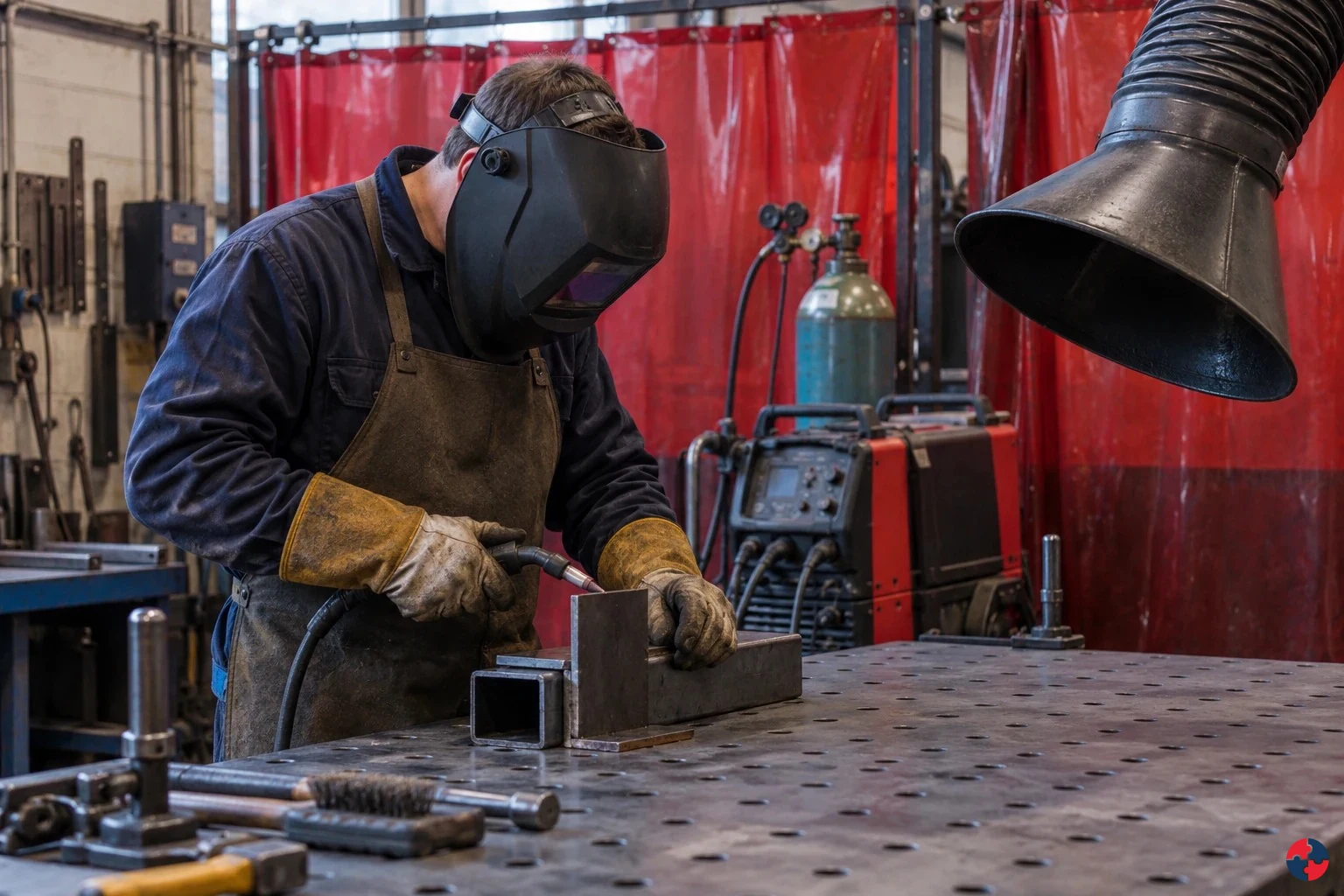
Avoid the heat first, then verify the exact job
Before issuing a permit, ask whether the component can move to a suitable workshop or whether a competent safer cold method can achieve the outcome. If heat remains necessary, the assessment must cover the actual material history, residues, connections, adjacent spaces, other work and emergency arrangements. Avoid hot work near dangerous substances if a cold method will do.
Turn control of ignition sources and hot work knowledge into a decision
Avoid hot work near dangerous substances if a cold method will do. If ignition cannot be avoided, isolate and clean the plant, test the atmosphere, control adjacent combustibles, issue a task-specific permit and keep the fire watch through hand-back. Method review and permit justification.
the process operator hot-work controls
Hot-work avoidance: Requires cold methods or workshop removal to be considered first. Evidence / response: Method review and permit justification. DSEAR link: Checks zone drawings, substance inventory and ignition controls. Evidence / response: DSEAR assessment and zone map.
Warning signs and consequences
Hot work treated as routine: People stop challenging whether heat is necessary. Poor housekeeping: Sparks or heat can find fuel. No adjacent-space check: Heat or sparks can ignite hidden materials.
Choose controls for control of ignition sources and hot work
Eliminate: Use bolted or cold repair if engineering permits. Substitute: Use lower-heat method after compatibility test. Engineering: Drain, isolate, clean, test and contain sparks. Administrative: Issue permit, define fire watch and hand-back. PPE: Residual welding and emergency protection. Read the full control table for qualifications, ownership and verification. Use the actual task and applicable jurisdiction; existing technical approval remains unchanged.
Use the full control of ignition sources and hot work lesson
Use the full topic for the decision points, practical examples, detailed control tables and source scope. HSE guidance applies to Great Britain; use HSENI for the Northern Ireland route and the source’s stated jurisdiction. A simplified guide does not change the page’s technical-review or approval status.

Read all six steps as text
1. Avoid the heat first, then verify the exact job
Before issuing a permit, ask whether the component can move to a suitable workshop or whether a competent safer cold method can achieve the outcome.
- Avoid / redesign: Use bolted or cold repair if engineering permits.
- Control the task: Drain, isolate, clean, test and contain sparks.
- Verify before release: Engineer records option; hold hot work while safe cold route works.
Before issuing a permit, ask whether the component can move to a suitable workshop or whether a competent safer cold method can achieve the outcome. If heat remains necessary, the assessment must cover the actual material history, residues, connections, adjacent spaces, other work and emergency arrangements. Avoid hot work near dangerous substances if a cold method will do.
Apply it: Which part of this plan would you check at the workface before authorising the task?
2. Turn control of ignition sources and hot work knowledge into a decision
Use the evidence to improve the actual work arrangement.
- Change at source: Use bolted or cold repair if engineering permits.
- Make it observable: Engineer records option; hold hot work while safe cold route works.
- Keep useful evidence: Method review and permit justification.
Avoid hot work near dangerous substances if a cold method will do. If ignition cannot be avoided, isolate and clean the plant, test the atmosphere, control adjacent combustibles, issue a task-specific permit and keep the fire watch through hand-back. Method review and permit justification.
Apply it: What evidence would show that the change improves this task, rather than only completing a record?
3. the process operator hot-work controls
Example: a practical application of the existing topic lesson.
- Hot-work avoidance: Requires cold methods or workshop removal to be considered first.
- DSEAR link: Checks zone drawings, substance inventory and ignition controls.
- Permit pack: Combines PTW, isolation, gas test, fire watch and emergency information.
Hot-work avoidance: Requires cold methods or workshop removal to be considered first. Evidence / response: Method review and permit justification. DSEAR link: Checks zone drawings, substance inventory and ignition controls. Evidence / response: DSEAR assessment and zone map.
Apply it: At which point would you hold this example, and what evidence would allow it to proceed?
4. Warning signs and consequences
Connect the task, the route to the person and the control that can fail.
- Hot work treated as routine: People stop challenging whether heat is necessary.
- Poor housekeeping: Sparks or heat can find fuel.
- No adjacent-space check: Heat or sparks can ignite hidden materials.
Hot work treated as routine: People stop challenging whether heat is necessary. Poor housekeeping: Sparks or heat can find fuel. No adjacent-space check: Heat or sparks can ignite hidden materials.
Apply it: Who could be exposed, including other trades, cleaners, maintainers and people nearby?
5. Choose controls for control of ignition sources and hot work
Start with the stronger practicable options and verify their effect.
- Eliminate: Use bolted or cold repair if engineering permits.
- Substitute: Use lower-heat method after compatibility test.
- Engineering: Drain, isolate, clean, test and contain sparks.
- Administrative: Issue permit, define fire watch and hand-back.
- PPE: Residual welding and emergency protection.
Eliminate: Use bolted or cold repair if engineering permits. Substitute: Use lower-heat method after compatibility test. Engineering: Drain, isolate, clean, test and contain sparks. Administrative: Issue permit, define fire watch and hand-back. PPE: Residual welding and emergency protection. Read the full control table for qualifications, ownership and verification. Use the actual task and applicable jurisdiction; existing technical approval remains unchanged.
Apply it: Which stronger option can be used here, and who will verify it before accepting the remaining risk?
6. Use the full control of ignition sources and hot work lesson
Follow the official sources below and retain the task-specific evidence.
- Official guidance: HSE DSEAR in detail
- Official guidance: HSE HSG250 permit-to-work guide
- Task decision: Method review and permit justification.
Use the full topic for the decision points, practical examples, detailed control tables and source scope. HSE guidance applies to Great Britain; use HSENI for the Northern Ireland route and the source’s stated jurisdiction. A simplified guide does not change the page’s technical-review or approval status.
Apply it: Which official source and full-topic section will you use to resolve the next decision?
A nominally empty vessel needs competent residue identification and preparation, isolation, relevant atmosphere testing and planned fire-watch and hand-back arrangements. A single reading is not assurance that conditions remain safe throughout the task. Fire-watch duration and checks must follow the assessed site and task conditions; do not insert a universal number. A completed permit records the system but does not substitute for functioning controls or authorised release.
Crownway: the empty vessel is not cleared for welding
Illustrative example. A contractor proposes welding a drained vessel during a busy maintenance period.
Decision. The planner first considers removal or a cold method; if hot work remains necessary, the area authority coordinates competent preparation and verification.
Evidence to check. Contents history, residues, isolation, nearby spaces, testing plan, fire watch and agreed hand-back and restart conditions.
Hold or escalation point. No hot work on an empty label, a permit signature or one atmosphere reading alone.
Follow-up. Verify post-work conditions and reinstatement through the authorised process, and review any changed scope or conflicting work.
Check where heat can travel beyond the workface
A hot fragment or conducted heat can reach concealed fuel on the other side of a wall or floor. First consider a cold or off-site alternative.

Avoid heat where feasible
Review whether the work can be done cold or away from the exposed location.
Check every affected side
Assess concealed materials, openings, services and heat-transfer paths; verify isolation and removal/protection of fuel as required.
Monitor and return
Assign pre-work, during-work and post-work checks through the assessed arrangement, then verify hand-back.
This section gives no universal fire-watch duration or permission to hot-work from a generic permit.
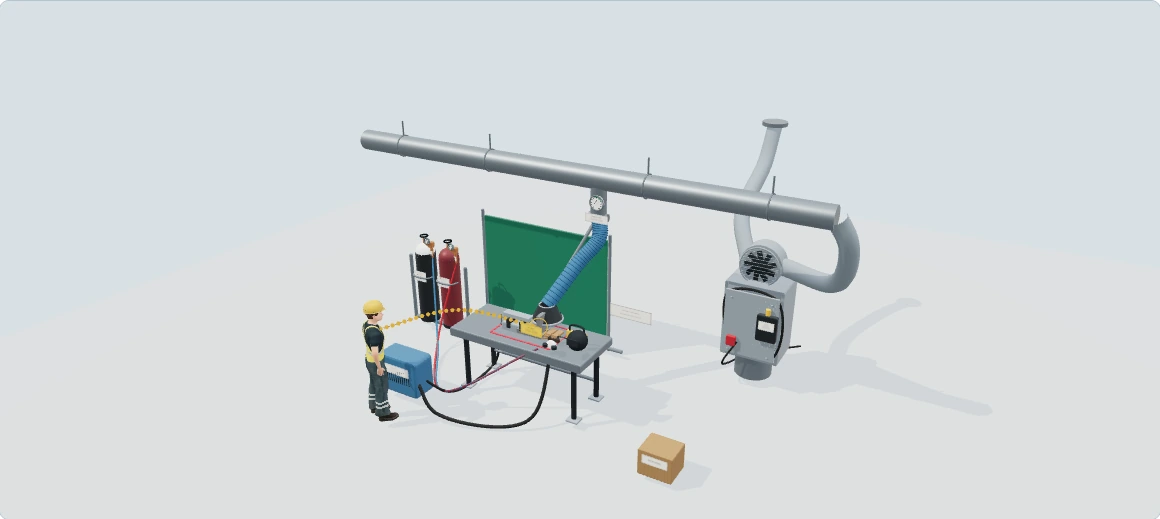

Welding and hot work: heat, fume and hidden ignition routes
Explore how this equipment can harm its users and other people, then follow the practical measures that interrupt each pathway. This is a hazards and good-practice lesson; the separate checklist remains the pre-use/safety-check activity.
Hazards and good practice: learn what can hurt people during use, change and maintenance. Pre-use and safety checks stay in the separate checklist.
Checksheets and risk assessments
Equipment checksheets
- Welding and gas cutting — 3D checks · Word · PDF
- Local exhaust ventilation: user and condition check — 3D checks · Word · PDF
- Fire extinguishers and fire points — 3D checks · Word · PDF
Risk assessment forms
- Task-specific COSHH assessment · Word
- Flammable substances and explosive-atmosphere assessment · Word
Risk assessment examples
Forms and tools
Full written walkthrough — all 8 steps
1. Consider a cold or off-site method
What is happening: The stationary bench represents a work decision, not an operating arc or a permit release.
How harm can occur: Heat, sparks and ignition can harm people and plant beyond the immediate welding point.
Best practice to apply: Consider avoiding hot work or moving it to a suitable designated area before developing the remaining controls.
Why this works: Removing ignition from the hazardous location is stronger than relying on a permit to justify it.
Hot Work Control in Process Areas · What major accident scenario should hot work control prevent?2. Identify the actual plant and boundaries
What is happening: The workpiece can be connected to equipment or spaces beyond what the operator sees.
How harm can occur: Residual product, pressure or a wrong boundary can lead to fire, explosion or loss of containment.
Best practice to apply: Verify the job, plant identity, connected equipment, residues and required isolations through the actual safe system.
Why this works: A clean-looking surface does not identify what is inside or connected to it.
Hot Work Control in Process Areas · How should isolation, draining and cleaning be proved?3. Follow heat and sparks beyond the bench
What is happening: Heat can conduct through material and particles can pass through openings or reach the far side.
How harm can occur: Hidden combustibles can ignite out of sight of the person doing the work.
Best practice to apply: Remove or suitably protect combustibles and inspect credible ignition routes, including adjacent spaces and other sides.
Why this works: Controlling the full route prevents a local task creating a remote fire.
Hot Work Control in Process Areas · What does hot work control mean in plain English?4. Keep the atmosphere decision current
What is happening: Testing and monitoring arrangements depend on the actual substances, location and change during work.
How harm can occur: A changed or untested atmosphere can create fire, explosion, poisoning or asphyxiation.
Best practice to apply: Use competent assessment and the required testing/monitoring and ventilation; suspend work when its conditions are no longer valid.
Why this works: A previous reading or permit does not freeze the atmosphere or remove process change.
Hot Work Control in Process Areas · How should gas testing be planned and interpreted?5. Control welding fume at the source
What is happening: The articulated hood sits over a clamped joint inside a red illustrative bench footprint. Use the comparison to move the vice and joint outside it: a nearby hood is useful only while the real source stays in its verified three-dimensional capture range.
How harm can occur: Inhaled fume and associated gases can cause serious harm; outdoor work is not automatically controlled.
Best practice to apply: Commission and test the actual tool, source position/height, hood setting and full working movement under representative conditions. Mark the verified footprint on the bench, record the arrangement and normal indicators, and keep every part of the source task within it. Reposition/reassess if the hood, process or draught changes; provide assessed RPE where needed.
Why this works: Marking the tested working position makes correct use repeatable. A running fan, a bench mark or a smoke test at an idle hood alone does not prove capture during the real task.
Hot Work Control in Process Areas · What would a good worked hot work permit example include? LEV Local Exhaust Ventilation · What are capture zones, working zones and breathing zones?6. Protect people from radiation and hot material
What is happening: Screens, the working position and suitable protection have separate functions.
How harm can occur: Arc radiation, hot metal and fragments can injure the welder, helpers or passers-by.
Best practice to apply: Control line of sight, access and hot-material handling and use protection selected for the actual process.
Why this works: Protecting the boundary stops other people being exposed to a task they are not performing.
Hot Work Control in Process Areas · BuildOut documents to download7. Provide a capable watch and emergency response
What is happening: A fire watch must cover credible ignition points and be able to stop work and raise the alarm.
How harm can occur: A developing or concealed fire can grow while attention remains on the workpiece.
Best practice to apply: Provide the required competent fire watch, suitable communication and emergency arrangements during and after the task.
Why this works: Independent observation can find ignition beyond the operator's view; a model supplies no universal watch duration.
Hot Work Control in Process Areas · What should a fire watch do during and after hot work?8. Complete hand-back after the controls are finished
What is happening: Residual heat, hidden spaces and temporary arrangements remain important after the tool stops.
How harm can occur: Premature permit closure or incorrect reinstatement can allow delayed fire or release when plant returns.
Best practice to apply: Complete specified post-work checks and watch, account for outstanding work and verify reinstatement before formal hand-back.
Why this works: Closure must reflect the actual condition and remaining risks, rather than only the end of welding.
Hot Work Control in Process Areas · What should happen before hot work is handed back?
Illustrative awareness learning. Geometry, colours and movement do not establish safe distances, capacity, exposure, isolation or work permission. Use the actual assessment, equipment information and competent arrangements.
The wider workplace has its own account and subscription access. Exploring this lesson does not grant access, record course completion or authorise work.
UK guidance for further reading
HSE: Welding and hot workHSE HSG258: verified and marked capture zonesWhat are the key points for controlling ignition sources and hot work?
The key points are to avoid hot work where possible, separate ignition from fuel, verify the atmosphere, control the work, watch for delayed ignition and close the job safely.
Hot work incidents usually happen because something was assumed to be safe: a drum was thought to be empty, a wall cavity was thought to be clear, a floor below was not checked, a vapour source was missed, a fire watch ended too soon, or a permit was copied from an earlier job. The control system has to challenge those assumptions before work starts.
Ignition control is also broader than hot work. Static, friction, electrical faults, damaged cables, non-rated equipment, overheated bearings, battery charging, smoking materials, portable heaters and chemical reactions can all ignite fuel. DSEAR requires ignition sources to be considered wherever dangerous substances may create fire or explosion risk.
| Point | Why it matters | Evidence |
|---|---|---|
| Avoid hot work first | Cold methods remove the ignition source. | Method review and permit decision record. |
| Know the fuel | Hidden vapours, residues, dusts and combustibles can ignite. | SDS, inspection, cleaning and gas test evidence. |
| Verify the work area | Fire can start above, below, behind or inside the work location. | Pre-work inspection and photographs where useful. |
| Use a permit for high-risk work | Permits define scope, controls, time limits and handback. | Hot-work permit and sign-on/off records. |
| Maintain fire watch | Smouldering and heat transfer can cause delayed ignition. | Fire watch log and post-work checks. |
| Control contractors | Contractors may not know site hazards or hidden services. | Induction, supervision and permit receiver competence. |
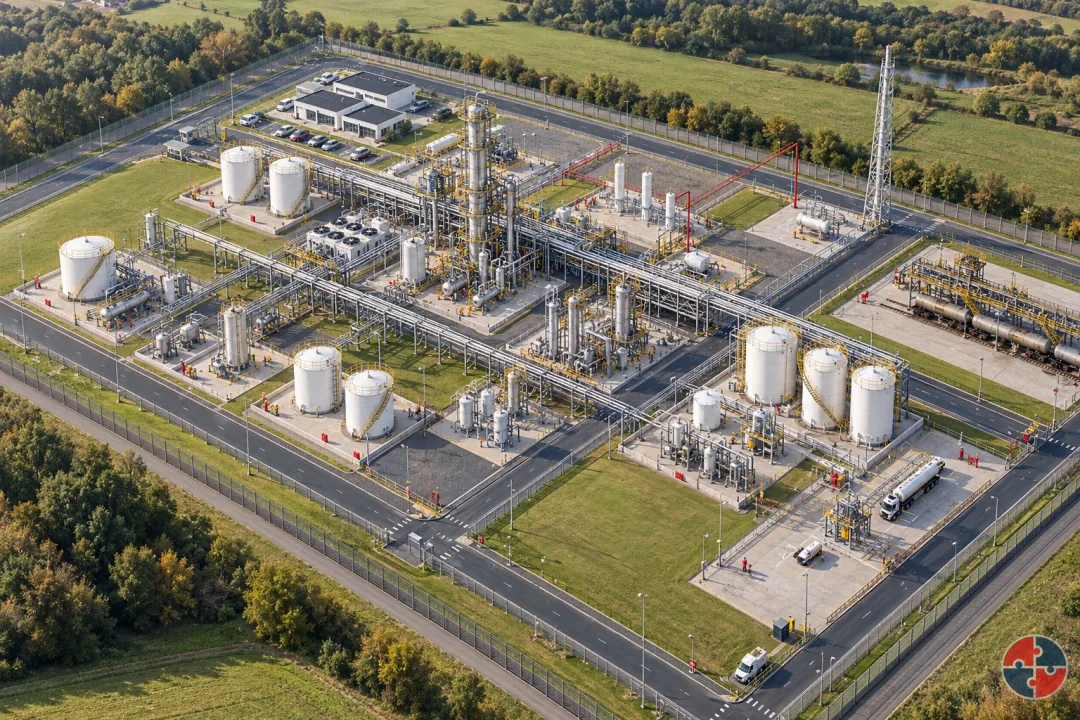
How should ignition sources and hot work be controlled? in a working scene
Try 1 scenario with images, explanations and decisions that develop into follow-on situations. Trace how a hazard can cause harm, compare work arrangements and choose controls.
What is control of ignition sources and hot work?
It is the prevention and management of work or conditions that could ignite combustible or explosive materials.
The control starts by identifying fuels: ordinary combustibles, flammable liquids, vapours, gases, mists, combustible dusts, residues, packaging, insulation, timber, roof materials, cable trays, oils, greases and waste. Then identify ignition sources that could meet those fuels during normal work, maintenance, cleaning, shutdown, construction or emergency repairs.
Hot work is a special case because it deliberately introduces heat, flame or sparks. A robust system asks whether hot work can be eliminated, whether the item can be moved to a safe area, whether fuels and residues can be removed, whether isolation and gas testing are adequate, whether the permit area includes hidden spaces and whether someone will keep watch long enough after the work.
| Area | Examples | Typical controls |
|---|---|---|
| Open flames and hot work | Welding, cutting, brazing, soldering, torches and heat guns. | Avoidance, permit, shielding, fire watch and gas testing. |
| Mechanical sparks and friction | Grinding, abrasive cutting, seized bearings and metal impact. | Tool selection, maintenance, exclusion zones and housekeeping. |
| Electrical ignition | Damaged cables, overloaded circuits, temporary electrics and non-ATEX equipment. | Inspection, maintenance and suitable equipment. |
| Static electricity | Liquid transfer, powder handling and synthetic materials. | Bonding, earthing, humidity and transfer controls. |
| Hot surfaces | Exhausts, heaters, ovens, lamps, motors and process equipment. | Temperature control, separation and guarding. |
| Smoking and arson opportunity | Smoking materials, poor security and waste near buildings. | No-smoking controls, security and waste management. |
Which ignition sources should be considered?
Ignition sources should be considered wherever combustible materials, flammable atmospheres or dangerous substances may be present.
A good assessment does not only look for obvious flames. It considers energy sources capable of starting a fire or explosion in the actual environment. The same spark that is harmless in a clean metal workshop could be catastrophic in a solvent vapour area, dusty enclosure, tank farm or confined space.
Ignition sources should be mapped against fuel locations. That includes maintenance activities, temporary heaters, battery charging, contractors' tools, electrical equipment, portable lighting, vehicles, static-prone transfers, hot bearings, faulty brakes, chargers, smoking areas and abnormal operations.
| Ignition source | Where it appears | Control |
|---|---|---|
| Naked flame | Torches, burners, pilot lights and smoking. | Prohibit or permit-control near combustibles or flammables. |
| Sparks | Grinding, cutting, welding and impact tools. | Screening, exclusion, removal of fuels and fire watch. |
| Electrical equipment | Switchgear, motors, lights, chargers and temporary power. | Inspection, maintenance and Ex equipment in zoned areas. |
| Static discharge | Liquid transfer, powder movement and plastic containers. | Bonding, earthing and suitable transfer methods. |
| Hot surfaces | Exhausts, bearings, ovens, lamps and process pipework. | Temperature control and separation. |
| Chemical heat | Incompatible storage, self-heating waste and reactive mixtures. | Segregation, waste controls and compatibility review. |

How can a hot fragment from mechanical contact start a delayed fire?
A grinding streak can be a moving fragment of hot material. The fragment loses heat as it travels and may also gain heat through oxidation. What happens on arrival depends on both the fragment and the material it contacts.
Read the complete lesson without the viewer
One hot metal fragment leaves an abrasive contact, travels with heat loss and conditional oxidation, and contacts a porous deposit with alternative cooling and smouldering outcomes.
FS12 · Mechanically generated hot particles
A grinding streak can be a moving fragment of hot material. The fragment loses heat as it travels and may also gain heat through oxidation. What happens on arrival depends on both the fragment and the material it contacts.
Mechanical contact can heat a surface and detach a fragment. That fragment carries thermal energy to another location. Oxidation can add heat in suitable metal systems, but is not a universal explanation for every alloy. Temperature alone does not determine ignition capability: retained heat, contact and the receiving material matter. The outcome can be cooling or a local smouldering reaction before visible flame.
Eight named structures and concepts
FS12-H01 · Mechanical contact
Local contact can heat material and release a fragment. The reconstruction shows a mechanism, not a usable machine setup.
FS12-H02 · Detached fragment
This is a physical piece of material. It has shape, mass and a thermal history; it is not an electron packet.
FS12-H03 · Conditional surface reaction
Oxidation may add heat for a suitable metal and environment. The optional overlay is based on studied metal-abrasion behaviour and is not generalized to all metals.
FS12-H04 · Travel path
The fragment moves through its surroundings. A thin track indicates motion; it is not lightning or an electrical arc.
FS12-H05 · Heat loss
Heat transfers out during flight and contact. The warming and cooling graphics are qualitative, with no particle temperature readout.
FS12-H06 · Receiving deposit
The receiving material influences the result. Contact and heat retention affect whether a local reaction can develop.
FS12-H07 · Possible smouldering
A local solid-phase reaction can develop before a flame. The alternative comparison also shows cooling with no sustained reaction; ignition is not inevitable.
FS12-H08 · Hot contact surface
The stationary rubbing region is another potential source. Do not focus only on the bright airborne fragment and miss the heated contact itself.
Four illustrative states
Fragment formation
Follow local heating and material removal at the guarded contact.
Competing heat processes
Track one fragment with heat loss and optional chemical heating shown separately.
A fragment carries heat Follow the solid fragment away from the contact. The arrows show heat loss.
Competing processes Heat loss continues. The separate oxidation cue shows a possible additional heat process.
Arrival and contact
The fragment transfers heat into a limited region of the receiving deposit.
Local heat transfer at contact The fragment arrives at the deposit. Heating is confined to the small contact region.
Compare possible outcomes
Compare cooling without a sustained reaction with localized smouldering. Neither outcome is guaranteed.
Two possible outcomes The separate samples compare cooling with local smouldering. Appearance alone cannot predict which outcome occurs.
What is the best interpretation of the bright tracked object?
A charged electron packet Follow the object’s material shape, motion and heat transfer. This is a thermal-material pathway.
A hot fragment whose thermal history and surroundings affect ignition Correct. A material fragment can transfer heat without requiring an electrostatic discharge.
HSE — Safe collection of wood waste: Prevention of fire and explosion · HSE — Safety risks from welding
Sources, original geometry and review status
Original editable procedural geometry and illustrations. No third-party fire artwork, atlas, site model or incident footage is copied. Sources establish scientific context; the depiction requires competent scientific and editorial review. Three.js is supplied under its MIT licence.
FS12 HSE — Safe collection of wood waste: Prevention of fire and explosion · HSE — Safety risks from welding
No material-specific values have been added. Missing product, method and conditions remain unverified. This library gives no site approval, prediction or practical certification.
How should hot work be assessed before it starts?
First test whether the job can be done cold or off-site; a permit follows the risk assessment and verified controls, not the other way round.
A flange on a solvent line needs repair. Prefer a bolted replacement or cold cutting after engineering review. If welding remains, isolate and drain the line, clean residue, test for flammable atmosphere, remove nearby combustibles, control sparks through openings and arrange fire watch and emergency response. The HSE DSEAR guidance explicitly includes hot work on containers that held flammables; HSG250 sets out the permit interface. Stop if gas readings, isolation, boundary or fire-watch cover changes; a new competent check is needed before restart.
How does ignition control differ between ordinary and high-risk workplaces?
Ordinary workplaces need disciplined fire prevention, while high-risk sites need formal DSEAR, ATEX, permit and process safety controls.
In an office, shop or small workshop, ignition control may focus on electrical safety, portable heaters, smoking, waste, contractors and avoiding hot work near combustibles. The same principles apply in construction, manufacturing and process sites, but the consequences can be much greater where flammable vapours, gases, dusts or dangerous substances are present.
Higher-risk work needs formal control. That may include hazardous area classification, Ex equipment, isolation, gas testing, continuous monitoring, contractor approval, permit-to-work, emergency isolation, post-work fire watch and management review of repeated permit findings.
| Setting | Typical ignition concern | Control emphasis |
|---|---|---|
| Office or retail | Portable heaters, chargers, smoking, waste and contractors. | Housekeeping, electrical inspection and contractor rules. |
| Workshop | Welding, grinding, gases, solvents and oily waste. | Hot-work area, permit triggers and fuel segregation. |
| Construction site | Temporary electrics, hot works, timber, waste, roofing and refurbishment voids. | HSG168 planning, fire points, permits and fire watch. |
| Laboratory | Solvents, burners, oxidisers and small-scale reactions. | Compatibility, ventilation and local rules. |
| Process or fuel site | Vapour clouds, gas release, hazardous zones and safety-critical plant. | DSEAR, ATEX, PTW, isolation and emergency shutdown. |
How do DSEAR and ATEX affect ignition control?
DSEAR requires dangerous substances and explosive atmospheres to be assessed, while ATEX-style controls help prevent equipment becoming an ignition source.
DSEAR requires employers to identify dangerous substances, assess fire and explosion risks, eliminate or reduce those risks and provide emergency arrangements. Ignition control is central: if an explosive atmosphere can form, equipment, tools, vehicles, maintenance activities and temporary electrics must not be capable of igniting it.
Hazardous area classification identifies where explosive atmospheres may occur. The zone does not control the risk by itself; it informs equipment selection, inspection, maintenance, permit controls and work restrictions. Hot work in or near a zoned area should be exceptional and tightly justified.
| Control | Purpose | Evidence |
|---|---|---|
| DSEAR assessment | Identifies dangerous substances, release points, ignition sources and consequences. | Assessment, actions and review record. |
| Hazardous area classification | Identifies where explosive atmospheres may occur. | Zone drawing and basis. |
| Suitable equipment | Prevents electrical or mechanical ignition in zoned areas. | Ex equipment register and inspection. |
| Ignition source inventory | Identifies fixed, mobile and temporary ignition sources. | Inspection and maintenance records. |
| Permit restrictions | Controls non-routine ignition sources such as hot work. | PTW and gas testing evidence. |
| Change control | Reviews new substances, equipment, layouts and ventilation changes. | MOC and DSEAR update. |
How should a hot-work permit control the job?
A hot-work permit should define the exact scope, place, time, hazards, precautions, authorisations, monitoring and close-out requirements.
The permit is not permission to improvise. It authorises a defined job under defined conditions. If the work changes, the location changes, the team changes, weather changes, ventilation fails, gas readings change or another job creates a new risk, the permit should be stopped and reassessed.
A strong permit system includes the permit issuer, permit receiver, area authority, contractor supervisor where relevant, fire watch and operations handover. It should require field verification, not just desk review.
| Permit element | What it should confirm | Common failure |
|---|---|---|
| Scope | Exact work, tools, location and boundaries. | Work expands informally. |
| Fuel removal | Combustibles, vapours, dusts and residues removed or controlled. | Hidden fuel remains. |
| Isolation | Hazardous energy and substances are isolated and verified. | Valve isolation assumed. |
| Gas testing | Atmosphere is tested at the right points and time. | Test not representative. |
| Fire watch | Competent watch provided during and after work. | Watch ends too early. |
| Close-out | Area and adjacent spaces checked before handback. | Delayed ignition missed. |
How should isolation and gas testing support hot work?
Isolation and gas testing should prove that hazardous substances and flammable atmospheres are controlled before heat is introduced.
Isolation should be designed around the hazard. For flammable liquids, gases, vapours or residues, simply closing a valve may not be enough. Draining, venting, flushing, purging, blinding, disconnection, lock-off and verification may be required. HSE HSG253 is relevant because poor isolation can expose workers to unexpected release during maintenance and hot work.
Gas testing is valuable but limited. It tests the atmosphere at a location and time; it may not detect residues in seams, sludge, dead legs, porous materials or hidden spaces. Where conditions can change, continuous monitoring or repeat testing may be required.
| Control | What good looks like | Risk if weak |
|---|---|---|
| Positive isolation | Physical isolation suitable for the substance and energy. | Unexpected release into hot-work area. |
| Cleaning and gas-freeing | Residues are removed, not merely assumed absent. | Heating creates vapour from remaining residues. |
| Representative gas test | Tests likely accumulation points, not only open air. | Flammable pockets missed. |
| Continuous monitoring | Used where atmosphere may change. | Release occurs after initial test. |
| Competent tester | Tester understands instrument limits and calibration. | False confidence from poor testing. |
| Recorded results | Readings, time, location and tester are recorded. | No evidence for permit decision. |
What should fire watch and post-work monitoring include?
Fire watch should monitor for ignition during and after hot work, including hidden spaces where sparks or heat may have travelled.
Many fires start after the hot-work team leaves. Sparks can lodge in gaps, insulation, dust, cable trays, roof voids or lower levels. Heat can transfer through metal to the other side of a wall, tank or deck. A fire watch should therefore understand the work, the fuel, the building, the escape route, alarm method and escalation route.
Set fire watch and post-work checks from the task risk and applicable industry guidance, including any specified minimum watch and later inspection. Hidden voids, combustible construction, tanks, ducts and process plant can require longer or repeated checks; a brief routine look is not a substitute for the agreed watch.
| Control | What to check | Evidence |
|---|---|---|
| During work watch | Sparks, slag, smoke, heat transfer and exposed combustibles. | Fire watch name and time. |
| Adjacent area check | Other side of walls, lower floors, roof spaces and voids. | Permit checklist and photographs where useful. |
| Firefighting readiness | Suitable extinguishers, hose, alarm and escape route. | Pre-work check. |
| Post-work inspection | Smouldering, odour, heat and hidden ignition. | Post-work sign-off times. |
| Handover | Shift or contractor handover covers hot-work status. | Handover log. |
| Escalation | Fire watch knows when to raise alarm and stop work. | Briefing and competence record. |
HSE welding fire-watch guidance calls for a watch during and after work where a safe area or removal of combustibles is not achievable, with at least 30 minutes after completion and possible extension to 60 where ignition is hard to detect or slow. Construction guidance HSG168 third edition 2022, paragraphs 122–125 normally specifies continuous watch for at least an hour afterwards and a further check two hours after completion, including hidden and adjacent areas; a different procedure needs a suitable assessment demonstrating minimal fire risk. These are guidance for different settings, not interchangeable universal durations. Agree the applicable plan, named watcher, breaks/handover, alarms and final checks before work.
How does portable-extinguisher recognition support this topic?
Identify the fuel and additional electrical hazard, read the actual extinguisher label and follow the site fire plan. Raise the alarm and protect escape first; only trained, authorised people should consider a small initial fire within their safe response limits.
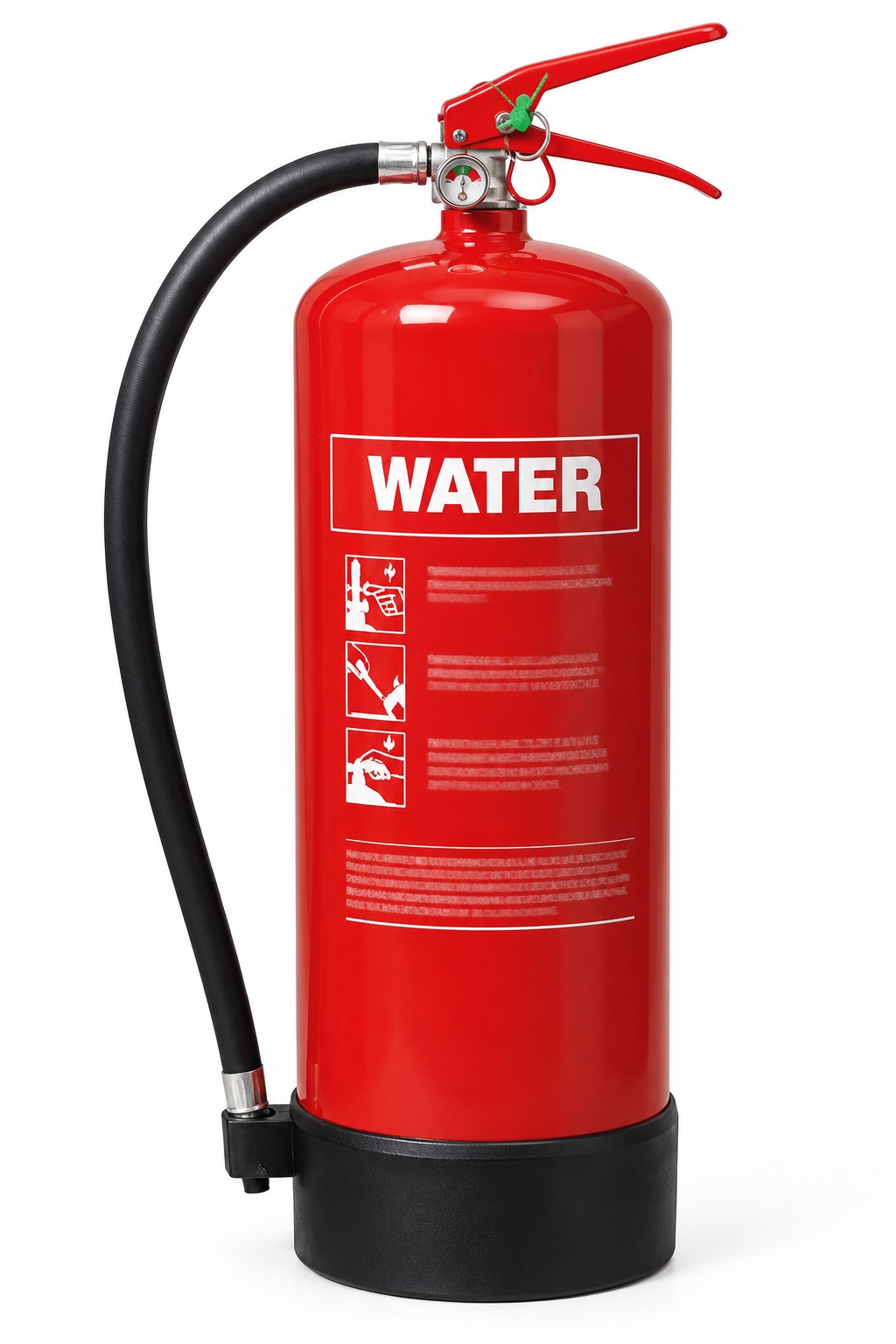

Recognise the pin, seal, pressure gauge and agent marking.
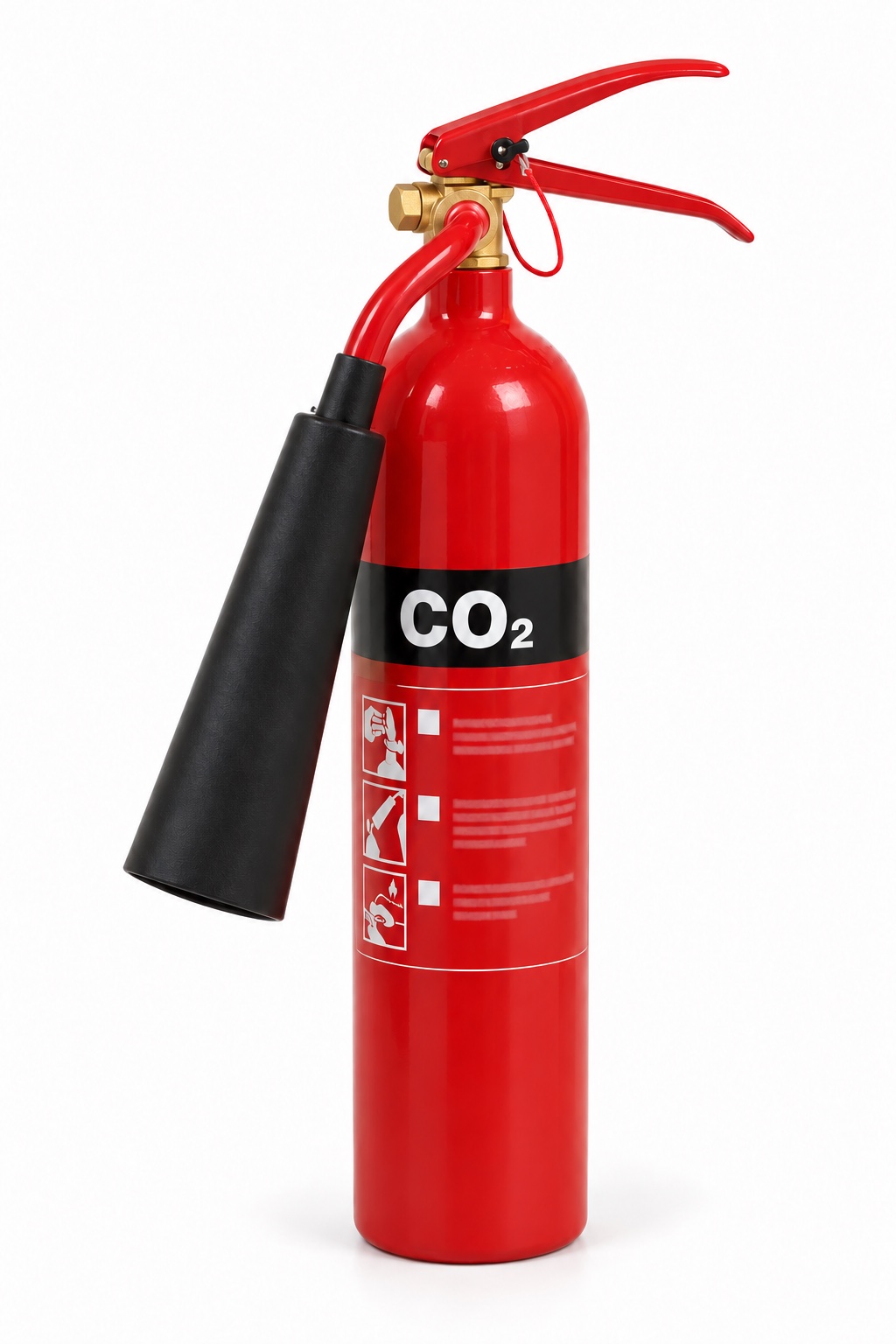
A different cylinder and discharge arrangement; cold and atmosphere hazards still matter.
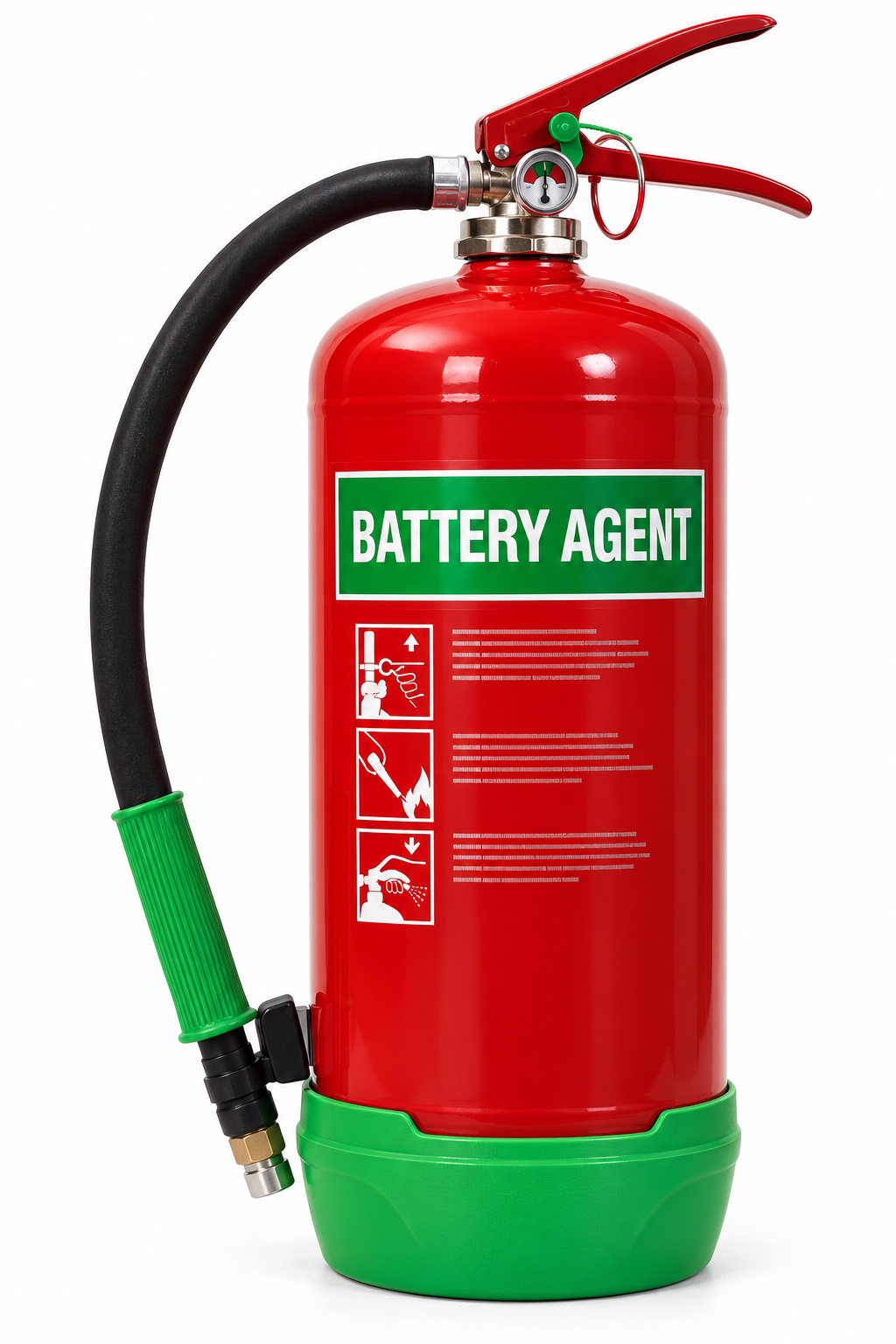
The named product and battery scope matter; green is not a universal Class L colour code.
Raise the alarm, follow the site’s evacuation plan and arrange the emergency call to 999. Only consider a small fire in its earliest stage if you are trained, authorised, have the correct equipment and a clear escape behind you. Smoke, spreading fire, uncertainty or an unsafe approach mean withdraw. Never delay escape to fetch an extinguisher.
Why are tanks, drums and containers high-risk for hot work?
Tanks, drums and containers are high-risk because residues and vapours can remain even when they appear empty.
Hot work on tanks, drums and containers has caused many serious explosions. The danger is that residues in seams, sludge, absorbent material, scale, crevices or connected pipework can produce flammable vapours when heated. Gas-freeing alone may not remove non-volatile residues that later vaporise under heat.
The safer approach is to avoid hot work where practicable. If work cannot be avoided, the container should be identified, emptied, cleaned, isolated, inspected, gas tested and, where appropriate, filled with water or inerted under competent control. Unknown containers should be treated as unsafe for hot work until proven otherwise.
| Step | What it means | Why it matters |
|---|---|---|
| Identify contents | Find what the container held and what residues may remain. | Unknown residues can ignite. |
| Avoid heat | Use cold cutting or remove the item to a safe specialist area. | Eliminates ignition. |
| Isolate and empty | Disconnect, drain and prevent reconnection or inflow. | Stops fresh fuel entering. |
| Clean and inspect | Remove sludge, residues and trapped material. | Residues can vaporise when heated. |
| Gas test | Check atmosphere with suitable equipment. | Confirms current vapour condition only. |
| Permit and supervise | Use experienced authorisation and fire watch. | Prevents shortcuts and delayed ignition. |
INDG314 revised May 2013 warns that gas-freeing alone can miss solid or non-volatile residues which release vapour when heated. Prefer cold methods or replacement. Unavoidable work needs trained competent specialists and a task-specific safe system; inerting requires specialist oxygen monitoring and introduces an asphyxiation hazard. Neither a gas reading nor the word inert proves safe entry or hot work.
How should contractors be controlled during hot work?
Contractors should be controlled through pre-qualification, induction, permit receiver competence, supervision and workface assurance.
Contractors often bring specialist hot-work skills but may not know the host site's hidden hazards, flammable storage, roof construction, pipe contents, drains, voids, emergency actions or DSEAR zones. The host must provide this information and verify that the contractor's method fits the site.
A contractor should not self-authorise hot work in a high-risk environment. The permit issuer, area authority and contractor supervisor should agree the task, controls and stop-work triggers. If subcontractors are used, the same standard must flow down.
| Control | What good looks like | Evidence |
|---|---|---|
| Pre-qualification | Contractor approved for hot work and hazardous-site work. | Approved contractor scope. |
| Induction | Contractor understands alarms, permits, DSEAR zones and emergency actions. | Induction and briefing record. |
| Permit receiver competence | Person receiving permit understands controls and limits. | Authorisation record. |
| Supervision | Supervisor checks workface conditions and stops drift. | Workface check record. |
| Tools and equipment | Equipment is suitable, inspected and controlled. | Inspection and test evidence. |
| Close-out | Contractor remains for fire watch and handback. | Permit close-out and post-work log. |
How can the hierarchy of controls prevent ignition during hot work?
Eliminate ignition demand where feasible, then reduce fuel and exposure, engineer isolation, use permit discipline, and reserve PPE for residual hazards.
For the solvent-line repair, the cold method removes the ignition source. If welding is unavoidable, drain and isolate material, verify atmosphere and spark containment, and assign the issuer, welder and fire watcher distinct checks. The HSE permit guidance supports controlled ignition; the NI DSEAR rule is the local statutory route. Hold work if any boundary or test fails.
On a small screen, scroll this table sideways to read all columns.
How can the ERICPD hierarchy of controls prevent ignition during hot work?

| Five-level / ERICPD | Control choice | Owner, check, failure and stop |
|---|---|---|
| Eliminate / eliminate | Use bolted or cold repair if engineering permits. | Engineer records option; hold hot work while safe cold route works. |
| Substitute / reduce | Use lower-heat method after compatibility test. | Engineer approves trial; stop if new hazards are unassessed. |
| Engineering / isolate and control | Drain, isolate, clean, test and contain sparks. | Isolation authority verifies; stop on leak or failed gas test. |
| Administrative / discipline | Issue permit, define fire watch and hand-back. | Issuer checks area; stop on lost watch or changed work. |
| PPE / PPE | Residual welding and emergency protection. | Supervisor checks; no work if required protection fails. |
How can the ISO 45001 hierarchy of controls prevent ignition during hot work?

| Five-level / ERICPD | Control choice | Owner, check, failure and stop |
|---|---|---|
| Eliminate / eliminate | Use bolted or cold repair if engineering permits. | Engineer records option; hold hot work while safe cold route works. |
| Substitute / reduce | Use lower-heat method after compatibility test. | Engineer approves trial; stop if new hazards are unassessed. |
| Engineering / isolate and control | Drain, isolate, clean, test and contain sparks. | Isolation authority verifies; stop on leak or failed gas test. |
| Administrative / discipline | Issue permit, define fire watch and hand-back. | Issuer checks area; stop on lost watch or changed work. |
| PPE / PPE | Residual welding and emergency protection. | Supervisor checks; no work if required protection fails. |
The HSE five-level hierarchy orders elimination, substitution, engineering, administration and PPE; ERICPD helps apply it. A permit coordinates the solvent-line work after physical safeguards have been demonstrated.
For this line, the engineer establishes identity, connected feeds, actual contents and residues, pressure, volume and foreseeable changes before selecting the isolation and cleaning method. Record the isolation acceptance criteria and prove the relevant boundaries before intrusive work; do not infer an empty line from a pressure gauge alone. Select gas testing for the actual vapour, sample locations and any depleted oxygen after purging. Maintain isolation hardware, detectors and protective equipment with suitable service/calibration records. Immediately before work, verify isolation, cleanliness, atmosphere and spark protection of adjacent spaces; monitor integrity during the work and re-prove after unattended periods or shift changes as assessed. A leak, unsafe reading, changed work boundary or failed protection stops the job. Correct the cause, repeat the relevant checks and renew authorisation before restart; handback also verifies reinstatement. HSG253, isolation testing and monitoring supports this GB process-isolation basis; use the separate NI duties for NI work.
How should ignition and hot-work hazards appear in the risk register?
The risk register should record credible ignition scenarios, barriers and evidence rather than simply listing hot work as a generic hazard.
A useful risk register describes what can ignite, what can burn, who is exposed and which controls prevent or limit harm. This helps supervisors select controls and helps managers audit whether those controls exist in the real workplace.
| Scenario | Key barriers | Evidence |
|---|---|---|
| Grinding near solvent storage | Remove solvents, screen area, permit and fire watch. | Permit and storage inspection. |
| Welding on pipework with flammable residues | Positive isolation, cleaning, gas testing and technical approval. | Isolation certificate and gas test. |
| Hot work on roof with combustible insulation | Avoid heat, expose hidden layers, fire watch below and above. | Method statement and post-work checks. |
| Temporary electrical equipment in zoned area | Use suitable Ex equipment and control temporary power. | ATEX register and inspection. |
| Static during flammable liquid transfer | Bonding, earthing, flow control and suitable containers. | Transfer checklist. |
| Contractor cutting unknown drum | Prohibit until identified, cleaned and authorised. | Container history and permit decision. |
Which ignition-control duties apply by location?
GB DSEAR 2002 and NI DSEAR 2003 are distinct; both require dangerous-substance assessment and controls before hot work.
The HSE GB DSEAR guide gives prevention priorities. The NI statutory rule governs Northern Ireland; verify current effects. A permit is a work-control tool, not a legal exemption or proof the line is free of fuel. Check confined-space and fire duties separately if the job creates those risks.
HSG250 was published in 2005 for petroleum, chemical and allied industries; HSG253 is the 2006 process-isolation guide and HSG103 the 2003 second edition for combustible dust. Use their practical principles with current local legal, equipment and standards checks. The separate GB and NI DSEAR routes remain the legal frame.
How could Crownway Fuels Ltd manage ignition sources and hot work?

Crownway Fuels Ltd could manage ignition sources through a DSEAR-linked control-of-work system that treats hot work as a high-risk exception.
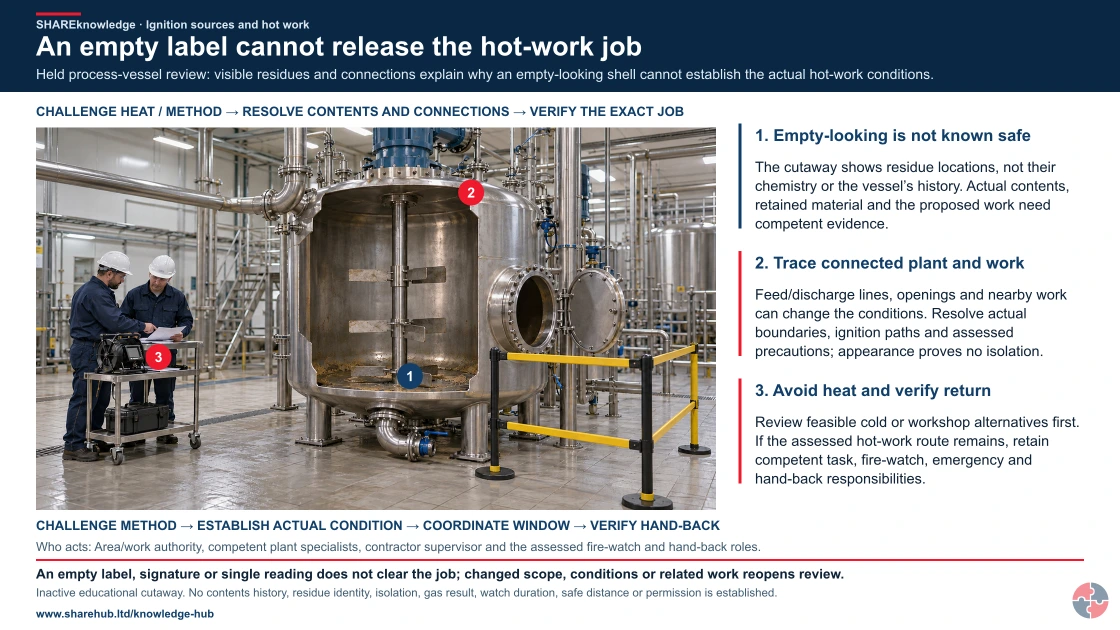
An empty label cannot release the hot-work job
Full written explanation
A process-vessel cutaway shows a residue patch, stationary agitator and drive, feed/discharge connections, side manway, surrounding plant and two people remaining outside with a work paper. The near shell is removed only for explanation; this is not a cutting or dismantling method. Picture key1, Empty-looking is not known safe, connects residue locations with the need to establish actual contents, retained material, vessel history and the proposed work through competent evidence. The patch does not identify a chemical or prove a history of flammable service. Picture key2, Trace connected plant and work, connects feed/discharge lines, openings and nearby work with actual boundaries, ignition paths and assessed precautions. Appearance proves no isolation. Picture key3, Avoid heat and verify return, connects method choice and the work review: consider feasible cold or workshop alternatives first, then retain the assessed task, fire-watch, emergency and hand-back responsibilities where a hot-work route remains. The four-stage process is unnumbered: challenge the method, establish actual condition, coordinate the work window and verify hand-back. Changed scope, conditions or related work reopens review. No hot work, ignition, gas test, opening operation, repair, cleaning or entry is shown. An empty/drained appearance, open manway, valve position, document or single reading proves neither a safe plant state nor permission. Actual plant evidence, competent roles, assessed precautions, reinstatement and hand-back remain necessary. No contents identity, test/cleaning/isolation method, temperature/flammability limit, watch duration, safe distance, operating or hot-work permission is supplied.
Held process-vessel review: visible residues and connections explain why an empty-looking shell cannot establish the actual hot-work conditions.
- Challenge the method. Record the work need and feasible cold or workshop alternatives with competent input.
- Establish actual condition. Resolve contents history, residues, connections and the required competent plant evidence.
- Coordinate the work window. Resolve related work, ignition paths, assessed fire-watch and emergency arrangements.
- Verify the hand-back. Check the required post-work conditions and reinstatement before authorised release.
When the evidence does not fit: An empty label, a permit signature or one atmosphere reading cannot clear the task. Changed scope, conditions or related work reopens the affected control decision.
Who acts: Area/work authority, competent plant specialists, contractor supervisor and the assessed fire-watch and hand-back roles.
Changed workplace
Warehouse maintenance: Trace heat or sparks through cavities and adjacent spaces; a clear workface is insufficient.
Previously flammable plant: Resolve actual contents history, condition and coordinated hand-back; drained is not a safe status.
Evidence check: Use competent task-specific evidence; no test method, watch duration, safe distance or operating permission is supplied.
Full hot-work avoidance, work-control and hand-back example
Primary references: HSE: welding fire and explosion risks (GB) · HSE: permit-to-work systems (GB) · HSE INDG314: hot work on small tanks and drums (GB)
Open the complete HD image (new tab)Download image

Full hot-work avoidance, work-control and hand-back example
Primary references: HSE: welding fire and explosion risks (GB) · HSE: permit-to-work systems (GB) · HSE INDG314: hot work on small tanks and drums (GB)
Crownway Fuels Ltd
Crownway Fuels Ltd is a bulk fuel storage and distribution business used by SHARE to show how fire and explosion controls work in a higher-hazard operating environment.
Crownway's first rule is to avoid hot work inside operating areas where practicable. Maintenance planners check whether parts can be removed to a workshop, whether cold cutting can be used, whether bolted connections can replace welding, or whether work can be scheduled during shutdown with tanks isolated and cleaned. The method selection is recorded before a permit is considered.
Where hot work remains necessary, Crownway uses a permit pack that includes DSEAR zone information, tank or pipe contents, isolation certificate, drain and vent status, gas test record, fire watch plan, weather conditions where relevant, nearby drains, combustible materials, fire system status and emergency isolation points. Contractors must be approved for hot work and receive a task briefing before signing onto the permit.
During the job, the area authority verifies the workface before ignition begins. A fire watch monitors during the work and carries out post-work checks of adjacent areas, lower levels, cable trays, insulation and drains. If gas readings change, wind direction affects vapour movement, another permit conflicts with the job or the scope changes, the permit is suspended.
Crownway reviews hot-work data monthly: number of permits, rejected permits, fire-watch findings, gas-test failures, contractor deviations, housekeeping issues, repeat locations and overdue DSEAR actions. This turns hot-work management into a learning system rather than a folder of signed permits.
| System element | How Crownway applies it | Evidence |
|---|---|---|
| Hot-work avoidance | Requires cold methods or workshop removal to be considered first. | Method review and permit justification. |
| DSEAR link | Checks zone drawings, substance inventory and ignition controls. | DSEAR assessment and zone map. |
| Permit pack | Combines PTW, isolation, gas test, fire watch and emergency information. | Permit pack and attachments. |
| Contractor control | Approves contractor hot-work competence and supervision. | Approved contractor record and briefing. |
| Fire watch | Checks workface and adjacent areas during and after work. | Fire-watch log and close-out. |
| Learning | Tracks permit findings and repeated weak signals. | Monthly review and action tracker. |
Where should a fuel-site ignition-source review focus?
Examine equipment suitability and temporary work at a defined release source. Being outside an illustrative marker does not authorise hot work or ordinary electrical equipment.
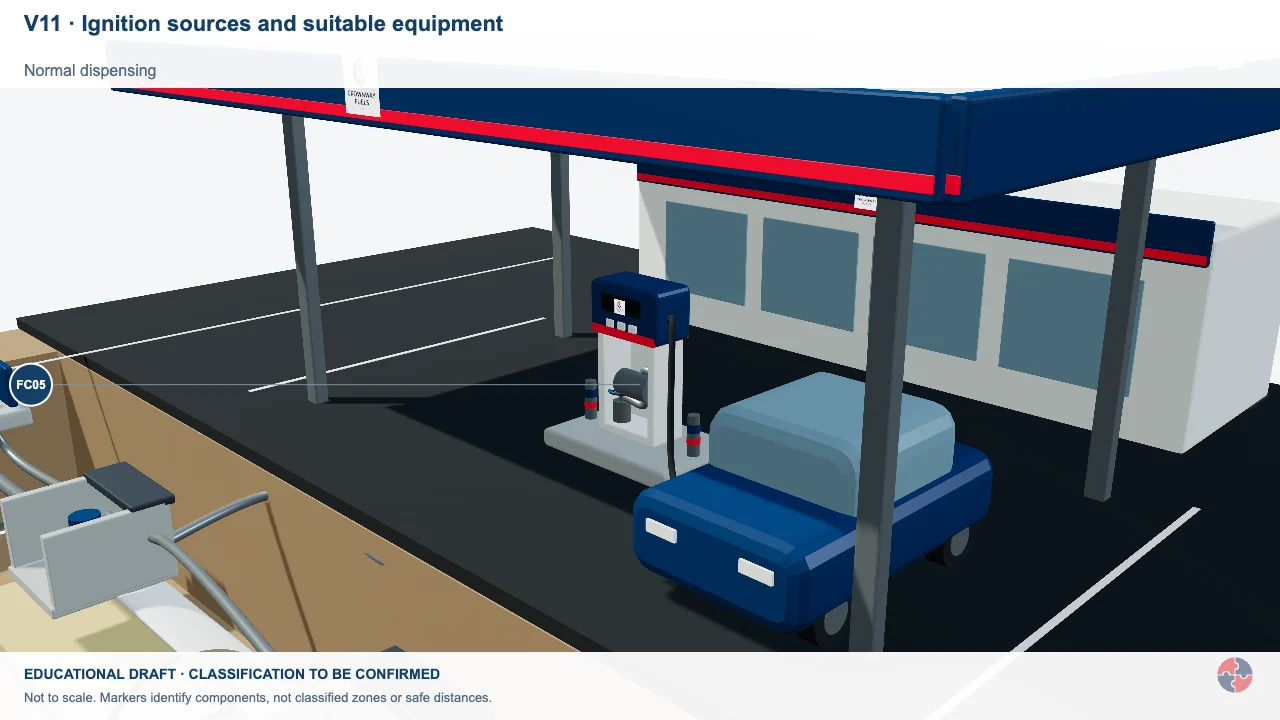
Ignition sources and suitable equipment
Electrical faults, hot work and other ignition sources matter where an explosive atmosphere could form.
Activity focus: Link equipment selection to the assessed atmosphere and actual dossier.
Contextual workplace scene. Use the task, control and evidence checks in this section; appearance alone does not establish safe conditions, individual health or approval.
Educational illustration, not to scale. Coloured zones are teaching examples, not a site-specific hazardous-area classification.
What should each role learn and demonstrate?
Learning must match the decisions people make, from recognising danger to checking that controls work.
Briefings should tell people how to act, but attendance alone does not show competence. Assess the real decision or task, record who assessed it and revisit after a material change, failed control or incident. A local authorisation is task-specific; no universal external certificate is implied.
On a small screen, scroll this table sideways to read all columns.
| Role and learning | Demonstration and assessor | Record and reassessment trigger |
|---|---|---|
| Permit issuer | Walk boundary, isolation and tests; area manager assesses. | Signed permit; reassess after condition change. |
| Welder | Demonstrate spark control and stop response; supervisor observes. | Workface observation; repeat on location change. |
| Fire watcher | Check adjacent spaces and post-work watch; issuer assesses. | Watch log; repeat after near miss. |
How does this topic support NEBOSH Fire Safety Certificate study?
For NEBOSH Fire Safety Certificate study, this topic is about identifying ignition sources, controlling hot work and applying prevention before mitigation.
FSC learners should be able to explain common ignition sources, why hot work needs tight control, when permits are appropriate and how DSEAR applies when dangerous substances are present. Good answers use practical examples: grinding near flammable storage, welding near roof voids, hot work on drums, temporary electrics on construction sites and non-rated equipment in hazardous areas.
Scenario answers should work through fuel, ignition, people at risk, existing controls and missing evidence. The best responses usually mention alternatives to hot work, removal of combustibles, isolation, gas testing, fire watch, contractor supervision, emergency arrangements and post-work inspection.
| Study point | What to know | How to apply it |
|---|---|---|
| Ignition sources | Flames, sparks, static, friction, electrical faults and hot surfaces. | List realistic sources in the scenario. |
| Hot work alternatives | Cold methods and removal to safe area should come first. | Explain why elimination is stronger than permit control. |
| Permit controls | Scope, time, place, precautions and close-out. | Describe what the permit must verify. |
| DSEAR | Dangerous substances need release and ignition control. | Identify when DSEAR assessment is needed. |
| Fire watch | Delayed ignition can occur after work ends. | Include post-work monitoring. |
| Contractor control | Contractors need induction and supervision. | Explain host and contractor responsibilities. |
How can a management system sustain effective decisions?
Give each hazard or support route an owner, a control, a check and a response to failure.
Connect dangerous-substance inventory, ignition control, gas testing, permit, fire watch and restoration. An owner should sample actual work and corrective actions, not accept a policy or certificate as evidence that the controls work.
The free GB regulator guide HSE Managing for health and safety (HSG65) explains a plan–do–check–act approach: assign controls and owners, involve workers, check work as done, and correct failures. For Northern Ireland, use HSENI risk assessment guidance for the local duty. A certificate alone does not demonstrate that a control works.
Which incidents show why hot-work and ignition control matter?
Incidents show that ignition control fails when hidden fuel, residues, vapours, poor permits or weak supervision are underestimated.
Hot work on small tanks and drums remains a classic learning area because containers that appear empty can still contain flammable residues. Heating, cutting or grinding can vaporise residues and create an explosive atmosphere. The practical lesson is to avoid hot work where possible and never assume a container is safe because it looks empty.
Buncefield is relevant because it shows the scale of harm when a large vapour cloud finds an ignition source. While the initiating issue was overfill and vapour release, the ignition and explosion consequences demonstrate why hazardous area equipment, ignition control, layout and emergency planning matter.
| Learning source | What failed in relation to this topic | Learning point |
|---|---|---|
| HSE - Hot work on small tanks and drums INDG314 | Hot work can ignite hidden vapours or residues in containers that appear empty. | Avoid heat, clean/gas-free, inspect, test and permit-control before work. |
| HSE - Buncefield incident | A large vapour cloud ignited, leading to severe explosion and fire escalation. | Release prevention, ignition control, hazardous area management and emergency planning must connect. |
| HSE - Phillips 66 Pasadena case study | A flammable release during maintenance formed a vapour cloud that ignited catastrophically. | Maintenance, isolation, ignition control and emergency response are linked barriers. |
INDG314 tank/drum incident lessons and HSE Buncefield material directly support the examples. HSE Phillips66 Pasadena case study is a US accident used for maintenance/isolation learning, rather than a statement of GB or NI law.
What warning signs show ignition and hot-work controls are failing?
Warning signs include routine hot-work permits, poor housekeeping, weak gas testing, missing fire watch, uncontrolled contractors and hot work near unknown residues.
Warning signs matter because they show how a fire could start. Combustible waste near a grinder, open solvent containers, dust on beams, uninspected temporary electrics, a missing fire watch or a contractor cutting an unknown drum are not paperwork issues; they are event pathways.
| Warning sign | How harm can arise | Response |
|---|---|---|
| Hot work treated as routine | People stop challenging whether heat is necessary. | Require avoidance review and permit justification. |
| Poor housekeeping | Sparks or heat can find fuel. | Clean area before authorisation. |
| No adjacent-space check | Heat or sparks can ignite hidden materials. | Inspect above, below, behind and inside. |
| Weak gas testing | Flammable atmosphere may be missed. | Use competent tester and representative monitoring. |
| No fire watch | Delayed ignition may develop after work ends. | Assign trained watch and post-work checks. |
| Contractor self-authorises | Site hazards may not be understood. | Use host permit and supervision. |
| Temporary electrics uncontrolled | Faults or non-rated equipment can ignite vapour or dust. | Inspect and control equipment. |
What acronyms are used on this page?
Acronyms should be explained so hot-work and ignition controls remain accessible.
| Acronym | Meaning | Why it matters |
|---|---|---|
| ATEX | Atmospheres Explosibles | Common shorthand for equipment and protective systems in explosive atmospheres. |
| DSEAR | Dangerous Substances and Explosive Atmospheres Regulations | Core GB regulations for dangerous substance fire and explosion risk. |
| Ex | Explosion protected | Marking commonly used for equipment suitable for hazardous areas. |
| FSC | Fire Safety Certificate | NEBOSH Fire Safety Certificate study context. |
| HSG | Health and Safety Guidance | HSE guidance publication series. |
| LFL | Lower flammable limit | Lowest concentration of vapour or gas in air that can propagate flame. |
| PTW | Permit to work | Formal authorisation for high-risk work. |
| SDS | Safety data sheet | Substance hazard and handling information. |
How can I practise the checks in 3D?
Follow the highlighted check, compare a sound part with a fault, and see how a missed fault can cause harm. Then use the matching blank checksheet to record what you actually find.
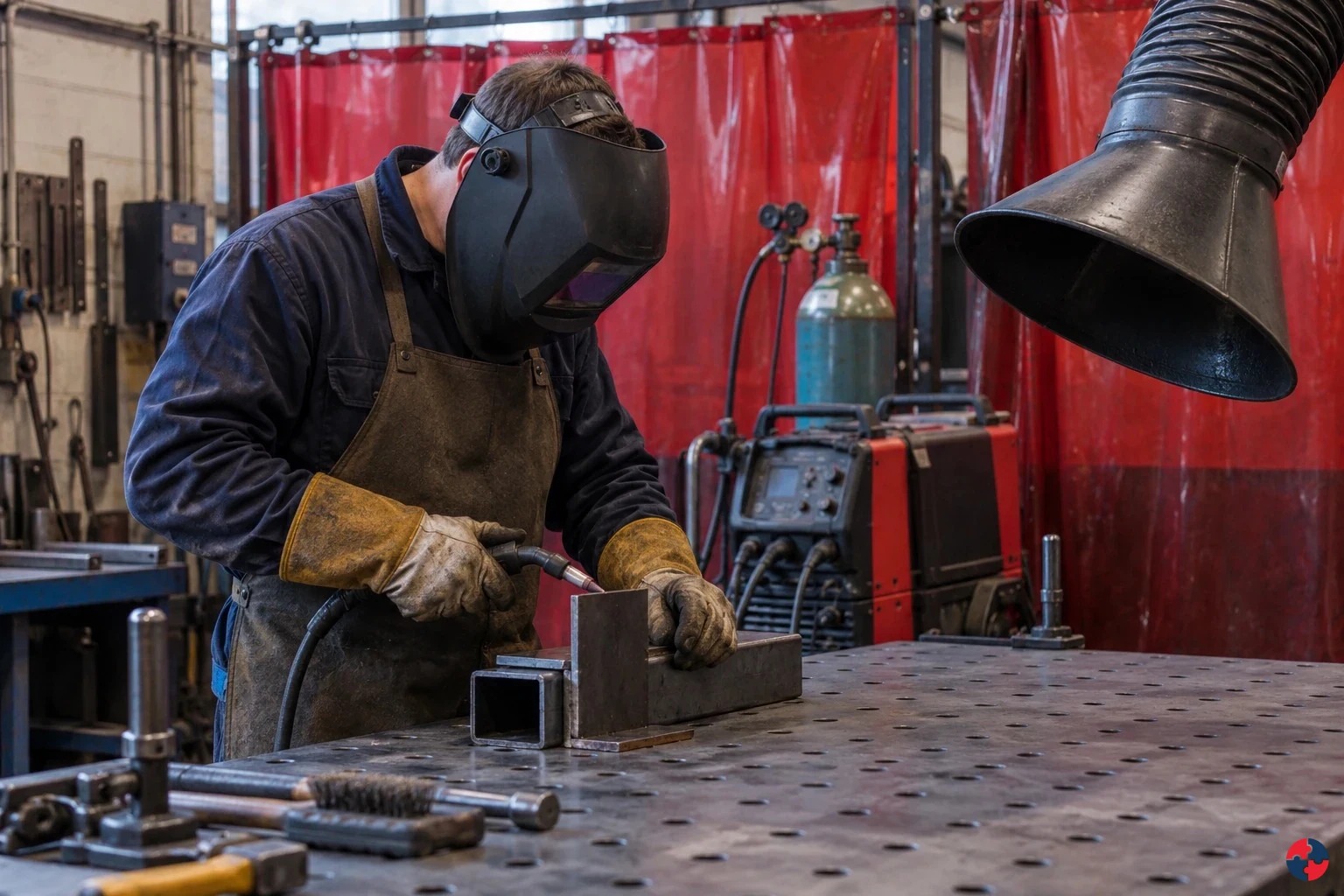
Welding and gas cutting
24 checks · sound and fault examples
Explore welding and gas equipment, extraction, fire precautions and controlled shutdown checks. Use the actual process controls and any permit; the model does not authorise hot work.
Which Crownway Fuels documents support this topic?
Open an editable document, read the preview, or find its place in the Crownway hierarchy. 6 resources relate to this page.
Fictional Crownway Fuels examples for English forecourts, with a separate illustrative bulk terminal. Check site applicability, permissions and actual controls before adapting any document for use.
Hot work and ignition producing maintenance policy (6)
- Hot work and ignition producing maintenance policy (CWF-POL-HOT · Completed fictional example)
Set company expectations, responsibilities and resources for hot work and ignition producing maintenance.
Read preview · Download DOCX · Show in hierarchy - Hot work and ignition producing maintenance procedure (CWF-PRO-HOT · Completed fictional example)
Explain who does what, in what sequence, the control rationale, evidence, escalation and safe restart conditions.
Read preview · Download DOCX · Show in hierarchy - Hot work alternatives and task assessment (CWF-RA-HOT-01 · Blank editable master)
Provide the site/task-specific hot work alternatives and task assessment and retain its controlled output.
Read preview · Download DOCX · Show in hierarchy - Hot work permit and gas test conditions (CWF-PTW-HOT-01 · Blank editable master)
Provide the site/task-specific hot work permit and gas test conditions and retain its controlled output.
Read preview · Download DOCX · Show in hierarchy - Fire watch and post work reinspection log (CWF-CHK-HOT-01 · Blank editable master)
Provide the site/task-specific fire watch and post work reinspection log and retain its controlled output.
Read preview · Download DOCX · Download PDF · Show in hierarchy - Gas freeing cleaning and hot work clearance (CWF-FRM-HOT-01 · Blank editable master)
Provide the site/task-specific gas freeing cleaning and hot work clearance and retain its controlled output.
Read preview · Download DOCX · Show in hierarchy