SHARE Knowledge Hub
Dust Explosion Hazards
Dust explosion hazards arise when a combustible solid is reduced to fine particles, dispersed in air and ignited in conditions that allow flame to propagate. The hazard is often underestimated because the materials can be familiar, such as flour, grain, sugar, wood, coal, plastic powder or metal fines, yet the physics can create violent pressure rise, flash fire, equipment rupture and secondary explosions. A competent UK approach starts by identifying combustible dust properties, dust clouds, settled layers, ignition sources, confinement, process conditions and test data, then links those hazards to DSEAR assessment, process safety barriers, housekeeping, equipment design, emergency planning and evidence that controls remain effective.
Understanding Dust Explosion Hazards
Dust explosion hazards arise when a combustible solid is present as sufficiently fine particles, becomes dispersed in air, encounters an effective ignition source and is in conditions that allow rapid combustion to spread. The outcome can be a flash fire, a pressure event inside plant, a fireball, release of burning material, structural failure, a secondary explosion or a combination of these. The event can develop far faster than normal emergency intervention, so risk control must be built into material selection, process design, equipment, operating discipline and protection systems.
Why this matters at work
Burn injury can be deep and life-changing, and smoke or toxic decomposition products can produce acute respiratory harm. Overpressure can injure hearing and lungs, throw people into equipment or cause structural collapse. A dust layer may also create ordinary occupational-health risks through inhalation, skin and eye contact. Keep the process-safety and health risk assessments connected so that controls for explosion do not worsen exposure, and RPE for health protection is not misrepresented as protection against an explosion.
People may be harmed by thermal radiation, direct flame, fireball engulfment, hot gases, overpressure, flying fragments, blast displacement, collapse, smoke, oxygen depletion, burns, eye injury, hearing damage, impact, crush injury, psychological trauma and loss of escape. The harm is not limited to plant operators. Maintenance staff, cleaners, contractors, drivers, visitors, neighbours, emergency responders and members of the public can be exposed through proximity, vent routes, external walls, doors, shared spaces, vehicle routes and evacuation paths.
How organisations manage this in practice
DSEAR requires risk to be eliminated or reduced so far as is reasonably practicable. HSE describes the priority of measures as reducing quantity, avoiding or minimising releases, controlling releases at source, preventing explosive atmospheres, collecting/containing/removing releases to a safe place, avoiding ignition sources, avoiding adverse conditions and keeping incompatible substances apart. Mitigation is additional and cannot compensate for weak prevention where further reasonably practicable source control is available.
Use Plan, Do, Check, Act. Plan the material, event scenario, people exposed and barrier requirements; do the design, operation, training and maintenance; check through inspection, test, monitoring, audit, worker consultation and incident learning; act on defects, changes and trends. Assign named owners for DSEAR assessment, material information, capture, ignition controls, zones, equipment, deposits, permits, emergency arrangements and review. Ownership must survive shift, contractor, site and management changes.
Management of change is vital. Screen changes to dust grade, supplier, particle size, moisture, output rate, plant, extraction, filter, protective system, operating parameter, building layout, occupancy, cleaning, temporary equipment, maintenance interval, software, contractor or work method. Decide whether the change affects dust cloud formation, ignition, confinement, propagation, people exposed or emergency arrangements. Approve, communicate, train, update documents and verify before routine operation.
How can I practise this topic in 3D?

Dust demonstrator: an inert display explains a hidden explosion chain
All related inspection points 2 across 1 location
Crown Fuels terminal 2 inspection points
Practice in the SHAREhub environment. Browser practice is separate from workplace competence and formal learning records.
Recognise the hazard before designing protection
Similar-looking powders may need different explosion evidence. Assess actual particle size, moisture, dispersion and test basis, then use the controls and housekeeping guide for the operating arrangements.
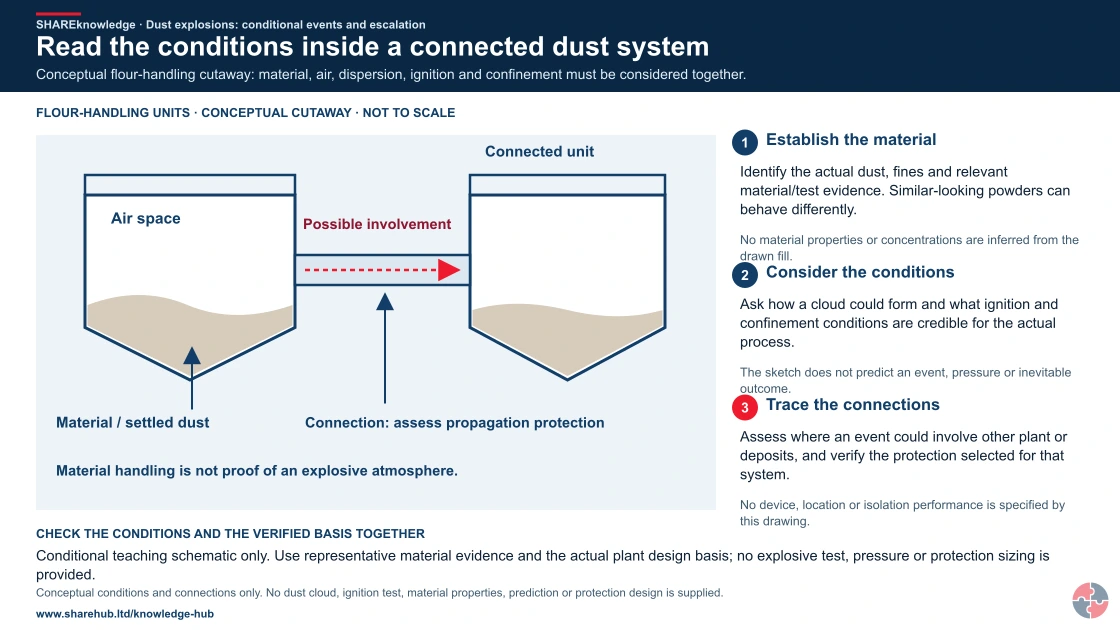
Read the conditions inside a connected dust system
Full written explanation
Two conceptual enclosed flour-handling units are connected by a duct. Settled material and the air space are distinguished without showing an explosive cloud or an ignition test. A dashed concern path identifies a connection that needs propagation assessment; it is not a process-flow prediction or an engineered protection layout. A deposit could be dispersed by a disturbance, while ignition and confinement can change the outcome. Actual material and process evidence determine the assessment.
Conceptual flour-handling cutaway: material, air, dispersion, ignition and confinement must be considered together.
- Establish the material. Identify the actual dust, fines and relevant material/test evidence. Similar-looking powders can behave differently.
- Consider the conditions. Ask how a cloud could form and what ignition and confinement conditions are credible for the actual process.
- Trace the connections. Assess where an event could involve other plant or deposits, and verify the protection selected for that system.
Change the pathway
- Appearance is not test data. No material properties or concentrations are inferred from the drawn fill.
- This is a conditional concern. The sketch does not predict an event, pressure or inevitable outcome.
- Connections need assessment. No device, location or isolation performance is specified by this drawing.
Evidence check: Conditional teaching schematic only. Use representative material evidence and the actual plant design basis; no explosive test, pressure or protection sizing is provided.
Existing connected-plant protection explanation, evidence and scope limits
Primary references: HSE: combustible-dust prevention and mitigation, HSG103 · HSE: explosive atmospheres and equipment scope
Open the complete HD image (new tab)Download image

Existing connected-plant protection explanation, evidence and scope limits
Primary references: HSE: combustible-dust prevention and mitigation, HSG103 · HSE: explosive atmospheres and equipment scope
Best-practice guide: Dust Explosion Hazards
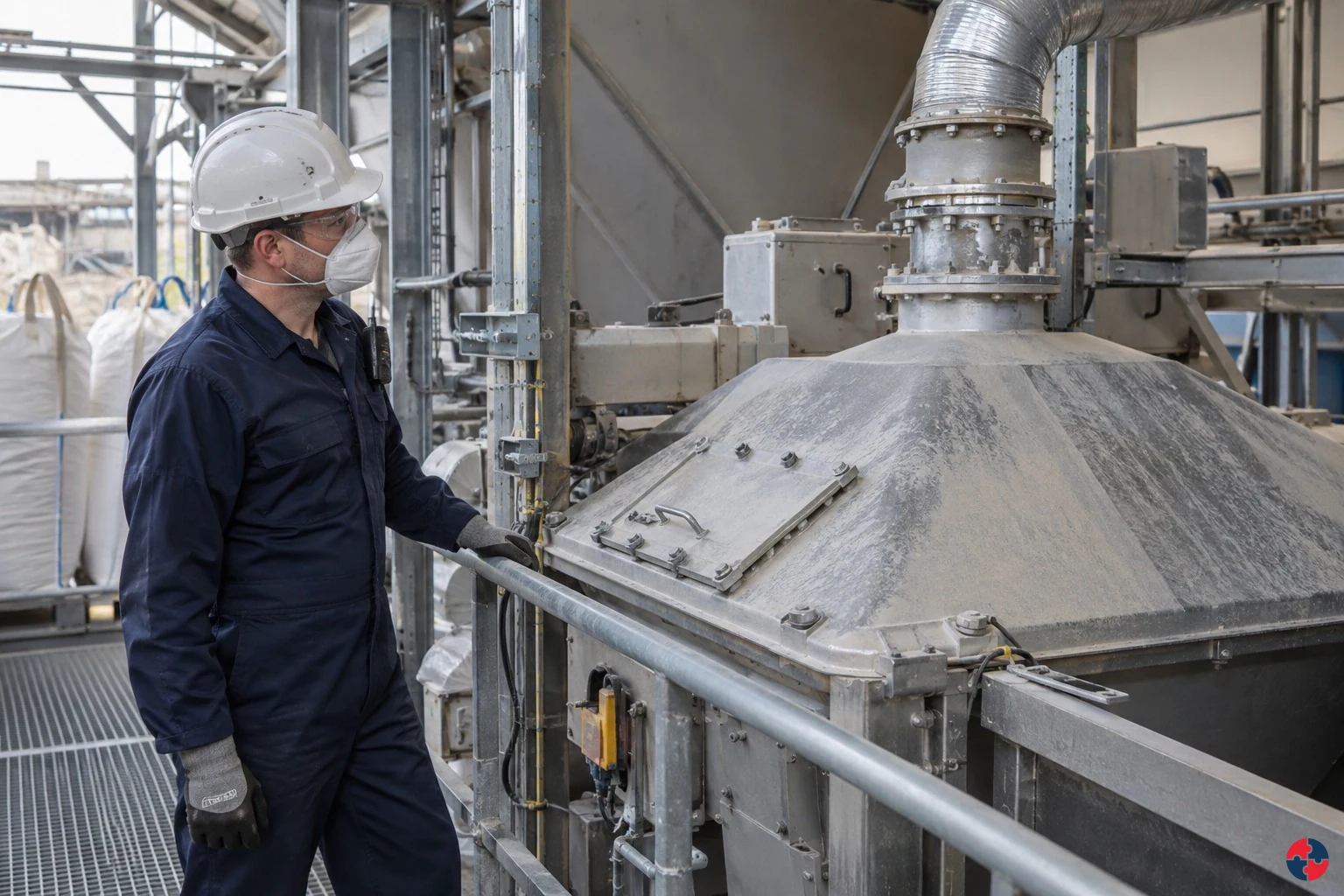
Recognise the hazard before designing protection
Similar-looking powders may need different explosion evidence. Assess actual particle size, moisture, dispersion and test basis, then use the controls and housekeeping guide for the operating arrangements. Dust explosion hazards arise when a combustible solid is reduced to fine particles, dispersed in air and ignited in conditions that allow flame to propagate.
Turn dust explosion hazards knowledge into a decision
Dust explosion hazards arise when a combustible solid is reduced to fine particles, dispersed in air and ignited in conditions that allow flame to propagate. The hazard is often underestimated because the materials can be familiar, such as flour, grain, sugar, wood, coal, plastic powder or metal fines, yet the physics can create violent pressure rise, flash fire, equipment rupture and secondary explosions. DSEAR screening and risk register.
the site team hazard management example
Hazard identification: Names wood dust, fine powders and collected dust as potential combustible dust hazards. Evidence / response: DSEAR screening and risk register. Design and procurement: Specifies suitable extraction, collection and vacuum systems before purchase. Evidence / response: Supplier data, commissioning record and procurement standard.
Warning signs and likely outcomes
No combustible dust inventory: The site does not know which materials can explode. Visible high-level dust: Housekeeping and source control are failing. Unsealed ceiling voids: Dust may accumulate out of sight.
Choose controls for dust explosion hazards
Elimination: Remove an unnecessary dust-generating stage or select a process that avoids combustible powder handling where feasible. Substitution: Assess a suitable less dusty or non-combustible material/form through process and product validation. Engineering controls: Securely isolate the collector and connected equipment; control stored energy and prevent access to hazardous dust-release zones. Engineering controls: Maintain the specified extraction and explosion-protection arrangements, including safe vent/discharge routes and prevention of propagation where required. Administrative controls: Plan filter removal, ignition control and dust-safe cleaning; prohibit improvised vacuum cleaners, dry sweeping and hot work on an unassessed collector. Read the full control table for qualifications, ownership and verification. Use the actual task and applicable jurisdiction; existing technical approval remains unchanged.
Use the full dust explosion hazards lesson
Use the full topic for the decision points, practical examples, detailed control tables and source scope. HSE guidance applies to Great Britain; use HSENI for the Northern Ireland route and the source’s stated jurisdiction. A simplified guide does not change the page’s technical-review or approval status.

Read all six steps as text
1. Recognise the hazard before designing protection
Similar-looking powders may need different explosion evidence.
- Avoid / redesign: Remove an unnecessary dust-generating stage or select a process that avoids combustible powder handling where feasible.
- Control the task: Securely isolate the collector and connected equipment; control stored energy and prevent access to hazardous dust-release zones.
- Verify before release: If the hazardous step remains, keep it within the task assessment and select the stronger feasible remaining controls.
Similar-looking powders may need different explosion evidence. Assess actual particle size, moisture, dispersion and test basis, then use the controls and housekeeping guide for the operating arrangements. Dust explosion hazards arise when a combustible solid is reduced to fine particles, dispersed in air and ignited in conditions that allow flame to propagate.
Apply it: Which part of this plan would you check at the workface before authorising the task?
2. Turn dust explosion hazards knowledge into a decision
Use the evidence to improve the actual work arrangement.
- Change at source: Remove an unnecessary dust-generating stage or select a process that avoids combustible powder handling where feasible.
- Make it observable: If the hazardous step remains, keep it within the task assessment and select the stronger feasible remaining controls.
- Keep useful evidence: DSEAR screening and risk register.
Dust explosion hazards arise when a combustible solid is reduced to fine particles, dispersed in air and ignited in conditions that allow flame to propagate. The hazard is often underestimated because the materials can be familiar, such as flour, grain, sugar, wood, coal, plastic powder or metal fines, yet the physics can create violent pressure rise, flash fire, equipment rupture and secondary explosions. DSEAR screening and risk register.
Apply it: What evidence would show that the change improves this task, rather than only completing a record?
3. the site team hazard management example
Example: a practical application of the existing topic lesson.
- Hazard identification: Names wood dust, fine powders and collected dust as potential combustible dust hazards.
- Design and procurement: Specifies suitable extraction, collection and vacuum systems before purchase.
- Operational control: Controls sanding, cutting, waste collection, cleaning and hot work.
Hazard identification: Names wood dust, fine powders and collected dust as potential combustible dust hazards. Evidence / response: DSEAR screening and risk register. Design and procurement: Specifies suitable extraction, collection and vacuum systems before purchase. Evidence / response: Supplier data, commissioning record and procurement standard.
Apply it: At which point would you hold this example, and what evidence would allow it to proceed?
4. Warning signs and likely outcomes
Connect the task, the route to the person and the control that can fail.
- No combustible dust inventory: The site does not know which materials can explode.
- Visible high-level dust: Housekeeping and source control are failing.
- Unsealed ceiling voids: Dust may accumulate out of sight.
No combustible dust inventory: The site does not know which materials can explode. Visible high-level dust: Housekeeping and source control are failing. Unsealed ceiling voids: Dust may accumulate out of sight.
Apply it: Who could be exposed, including other trades, cleaners, maintainers and people nearby?
5. Choose controls for dust explosion hazards
Start with the stronger practicable options and verify their effect.
- Elimination: Remove an unnecessary dust-generating stage or select a process that avoids combustible powder handling where feasible.
- Substitution: Assess a suitable less dusty or non-combustible material/form through process and product validation.
- Engineering controls: Securely isolate the collector and connected equipment; control stored energy and prevent access to hazardous dust-release zones.
- Engineering controls: Maintain the specified extraction and explosion-protection arrangements, including safe vent/discharge routes and prevention of propagation where required.
- Administrative controls: Plan filter removal, ignition control and dust-safe cleaning; prohibit improvised vacuum cleaners, dry sweeping and hot work on an unassessed collector.
Elimination: Remove an unnecessary dust-generating stage or select a process that avoids combustible powder handling where feasible. Substitution: Assess a suitable less dusty or non-combustible material/form through process and product validation. Engineering controls: Securely isolate the collector and connected equipment; control stored energy and prevent access to hazardous dust-release zones. Engineering controls: Maintain the specified extraction and explosion-protection arrangements, including safe vent/discharge routes and prevention of propagation where required. Administrative controls: Plan filter removal, ignition control and dust-safe cleaning; prohibit improvised vacuum cleaners, dry sweeping and hot work on an unassessed collector. Read the full control table for qualifications, ownership and verification. Use the actual task and applicable jurisdiction; existing technical approval remains unchanged.
Apply it: Which stronger option can be used here, and who will verify it before accepting the remaining risk?
6. Use the full dust explosion hazards lesson
Follow the official sources below and retain the task-specific evidence.
- Official guidance: HSE - Safe handling of combustible dusts HSG103
- Official guidance: HSE - DSEAR in detail
- Task decision: DSEAR screening and risk register.
Use the full topic for the decision points, practical examples, detailed control tables and source scope. HSE guidance applies to Great Britain; use HSENI for the Northern Ireland route and the source’s stated jurisdiction. A simplified guide does not change the page’s technical-review or approval status.
Apply it: Which official source and full-topic section will you use to resolve the next decision?
A replacement powder appears equivalent
Illustrative example. Purchasing proposes a powder with the same broad family description.
Decision. Recheck the relevant substance and process evidence before introducing it.
Evidence to check. Actual material and process conditions, current assessment and competent interpretation of test data.
Hold or escalation point. A benign description or low occupational-exposure number does not exclude explosion risk.
Follow-up. Apply the relevant GB or NI route and revise the change-control record.
A deposit can become a dispersed secondary cloud
A deposit, disturbance, ignition and connected equipment form a conditional sequence. Material and process evidence are needed before drawing conclusions about the explosion hazard.

Material and deposit
Establish what dust is present, where it accumulates and what material/testing information is known.
Possible event
Trace how disturbance could disperse a cloud and how ignition and confinement could affect the outcome.
Secondary involvement
Assess whether an initial event could lift deposits or propagate through connections, and verify the designed controls.
The drawing shows possible routes, not a predicted pressure, concentration or inevitable event.
What are the key points about dust explosion hazards?
The key points are that combustible dusts can explode violently, settled layers can escalate events and testing may be needed to understand severity.
Familiar materials can be dangerous
Flour, sugar, grain, wood, plastics and some metals can become explosion hazards when fine and airborne.
Particle size changes behaviour
Finer particles ignite more readily, remain airborne longer and can create more severe dust clouds.
Dust layers are stored fuel
A thin layer over a large area can feed a secondary explosion if disturbed by a primary event.
Confinement increases pressure
Vessels, ducts, collectors, silos, rooms and false ceilings can allow rapid pressure rise.
Ignition sources are varied
Static, hot work, bearings, friction, hot surfaces, electrical faults and smouldering material can all ignite dust.
Controls need evidence
A DSEAR assessment should be supported by material data, design basis, inspection, maintenance and housekeeping evidence.
The scope of these introductory points is set out in HSE - Safe handling of combustible dusts HSG103.
What is a dust explosion hazard?
A dust explosion hazard is the potential for combustible dust to ignite and propagate flame through a dust-air mixture.
Dust explosion hazards are not limited to obvious explosives or unusual chemicals. They arise when ordinary combustible solids are broken into fine particles. A block of wood or a pile of sugar may burn slowly, but fine wood flour or sugar dust dispersed in air has a much larger surface area and can burn extremely quickly.
A dust explosion may occur inside process equipment, ducting, a collector, a silo, a room, a suspended ceiling void or a building. The event can rupture equipment, damage structures, injure workers through blast, burns and debris, start fires, disable sprinklers or emergency systems and trigger further releases.
The hazard should be assessed before relying on experience. A site may have worked with a dust for years without incident because one element of the pentagon has not yet aligned. That does not prove the dust is safe; it may only mean the ignition source or dispersion event has not occurred.
| Hazard | How it appears | Why it matters |
|---|---|---|
| Combustible powder | Fine material used, produced or collected during processing. | Provides fuel for an explosion. Sources: HSE - Safe handling of combustible dusts HSG103. |
| Dust cloud | Visible or invisible airborne dust after transfer, leak, cleaning or disturbance. | Can burn rapidly when ignited. Sources: HSE - Safe handling of combustible dusts HSG103. |
| Settled dust layer | Dust on floors, beams, ledges, ducts, lights or hidden spaces. | Can feed secondary explosions. Sources: HSE - Safe handling of combustible dusts HSG103. |
| Confined volume | Collector, duct, silo, elevator, room or ceiling void. | Allows pressure to build and propagate. Sources: HSE - Safe handling of combustible dusts HSG103. |
| Ignition source | Hot work, static, bearing, friction, spark, hot surface or flame. | Starts the event. Sources: HSE - Safe handling of combustible dusts HSG103. |
How does the dust explosion pentagon work?
The dust explosion pentagon explains the five conditions that usually need to align for a damaging dust explosion.
The pentagon helps managers see why different controls work. Remove the fuel, and there is nothing to explode. Prevent dispersion, and settled dust is less likely to form a cloud. Remove confinement, and pressure rise may be reduced. Remove ignition, and the cloud should not ignite. Remove oxygen or inert the atmosphere in specialist systems, and combustion cannot propagate.
Most workplaces cannot remove oxygen, so practical control normally focuses on fuel, dispersion, confinement and ignition. This is why source capture, housekeeping, equipment design and ignition control are core controls.
| Pentagon element | What it means | Example controls |
|---|---|---|
| Fuel | Combustible dust or powder. | Substitution, reduced quantities, wet form, containment and cleaning. Sources: HSE - Safe handling of combustible dusts HSG103. |
| Oxygen | Usually normal air. | Specialist inerting where justified and engineered. Sources: HSE - Safe handling of combustible dusts HSG103. |
| Dispersion | Dust suspended in air. | Closed transfer, controlled filling, extraction and no compressed-air cleaning. Sources: HSE - Safe handling of combustible dusts HSG103. |
| Confinement | Volume that allows pressure to develop. | Relief, safe venting, isolation, layout and suitable building design. Sources: HSE - Safe handling of combustible dusts HSG103. |
| Ignition | Energy source capable of igniting the dust cloud. | Static control, ATEX equipment, hot-work permits and maintenance. Sources: HSE - Safe handling of combustible dusts HSG103. |
Which dust properties influence explosion severity?
Explosion severity depends on dust composition, particle size, moisture, concentration, ignition sensitivity and combustion characteristics.
Dust properties cannot be guessed reliably from the name of the material. Particle size distribution, moisture content, contamination, additives, oxidation, drying, milling and handling history can all change behaviour. A material supplied wet or in pellets may generate dry fines later in the process.
Important test concepts include whether the dust is explosible, the minimum explosible concentration, minimum ignition energy, minimum ignition temperature, Kst, Pmax and limiting oxygen concentration. These values help specialists design controls such as venting, suppression, inerting or equipment selection. The reader does not need to become a testing expert, but should know when to ask for competent advice.
| Property | What it tells you | Why it matters |
|---|---|---|
| Particle size | How fine the dust is and how long it may remain airborne. | Finer dusts often ignite more easily and disperse more readily. Sources: HSE - Safe handling of combustible dusts HSG103. |
| Moisture content | How much water is present. | Drying can turn a lower-risk material into a more readily dispersible dust. Sources: HSE - Safe handling of combustible dusts HSG103. |
| Minimum explosible concentration | The approximate dust concentration needed to support explosion. | Helps judge whether clouds can become hazardous. Sources: HSE - Safe handling of combustible dusts HSG103. |
| Minimum ignition energy | How little spark energy may ignite a dust cloud. | Informs static and ignition-source control. Sources: HSE - Safe handling of combustible dusts HSG103. |
| Minimum ignition temperature | Temperature at which a dust cloud or layer may ignite under test conditions. | Informs hot surface and equipment temperature control. Sources: HSE - Safe handling of combustible dusts HSG103. |
| Kst and Pmax | Explosion severity and maximum pressure under standard test conditions. | Informs venting, suppression, containment and isolation design. Sources: HSE - Safe handling of combustible dusts HSG103. |
Why are dust clouds and dust layers both important?
Dust clouds are immediate explosive atmospheres, while dust layers are fuel waiting to be dispersed.
A dust cloud may form during tipping, pouring, pneumatic conveying, bag emptying, milling, sanding, drying, filling, cleaning, leaks or abnormal equipment failure. It may be visible as a dense cloud, but it can also be localised inside equipment where workers cannot see it.
A dust layer is not safe just because it is settled. Layers can be disturbed by air movement, vibration, a small fire, a pressure pulse or a primary explosion. The larger the area covered by settled dust, the more fuel may be available for a secondary explosion. Hidden spaces such as suspended ceilings, cable trays, roof steelwork and collector rooms deserve particular attention.
A useful field test is to ask whether the site has a reliable way of seeing and cleaning dust above head height. If not, the risk assessment may be missing the fuel that matters most during escalation.
| Dust condition | Typical source | Control priority |
|---|---|---|
| Process dust cloud | Filling, tipping, conveying, milling, sanding or drying. | Capture, enclosure, controlled transfer and ignition control. Sources: HSE - Safe handling of combustible dusts HSG103. |
| Leak dust cloud | Failed seals, damaged ducting, open doors or poor collector performance. | Repair source and review extraction. Sources: HSE - Safe handling of combustible dusts HSG103. |
| Cleaning dust cloud | Sweeping, compressed air or poorly controlled vacuuming. | Use suitable cleaning equipment and planned method. Sources: HSE - Safe handling of combustible dusts HSG103. |
| Visible layer | Floors, equipment, shelves and accessible surfaces. | Clean safely and investigate accumulation rate. Sources: HSE - Safe handling of combustible dusts HSG103. |
| Hidden layer | Ceiling voids, beams, lights, ducts, cable trays and collectors. | Include in inspection and high-level cleaning routes. Sources: HSE - Safe handling of combustible dusts HSG103. |
What ignition sources can trigger dust explosions?
Dust explosions can be triggered by many ignition sources, including sources that look harmless in ordinary areas.
Hot work is obvious, but it is not the only concern. Static discharge, hot bearings, belt slip, mechanical rubbing, impact sparks, overheated motors, electrical equipment, portable tools, smouldering deposits, flames, hot surfaces and friction can all ignite dust clouds. Some dusts need very low ignition energy.
Ignition control should follow the hazardous-area classification and equipment selection where explosive atmospheres may occur. It should also cover abnormal and maintenance conditions, because many dust events occur when equipment is opened, cleaned, bypassed, modified or repaired.
| Ignition source | Example | Control focus |
|---|---|---|
| Static electricity | Powder transfer through non-conductive hoses or containers. | Earthing, bonding, suitable materials and continuity checks. Sources: HSE - Safe handling of combustible dusts HSG103. |
| Hot work | Welding, cutting or grinding near dusty equipment. | Avoid, relocate or control through permit and cleaning. Sources: HSE - Safe handling of combustible dusts HSG103. |
| Mechanical heat | Bearing overheating, belt slip, misalignment or friction. | Maintenance, temperature monitoring and trips. Sources: HSE - Safe handling of combustible dusts HSG103. |
| Electrical equipment | Unsuitable lights, motors, switches or portable equipment in dusty zones. | Correct equipment selection and inspection. Sources: HSE - Safe handling of combustible dusts HSG103. |
| Impact sparks | Foreign objects entering mills, grinders or conveyors. | Magnets, screens, separation and tool control. Sources: HSE - Safe handling of combustible dusts HSG103. |
| Smouldering material | Hot particles entering ducting or collectors. | Spark detection, isolation, shutdown and cleaning. Sources: HSE - Safe handling of combustible dusts HSG103. |
How do confinement and propagation change the outcome?
Confinement allows pressure to rise, while connected equipment can allow flame and pressure to propagate.
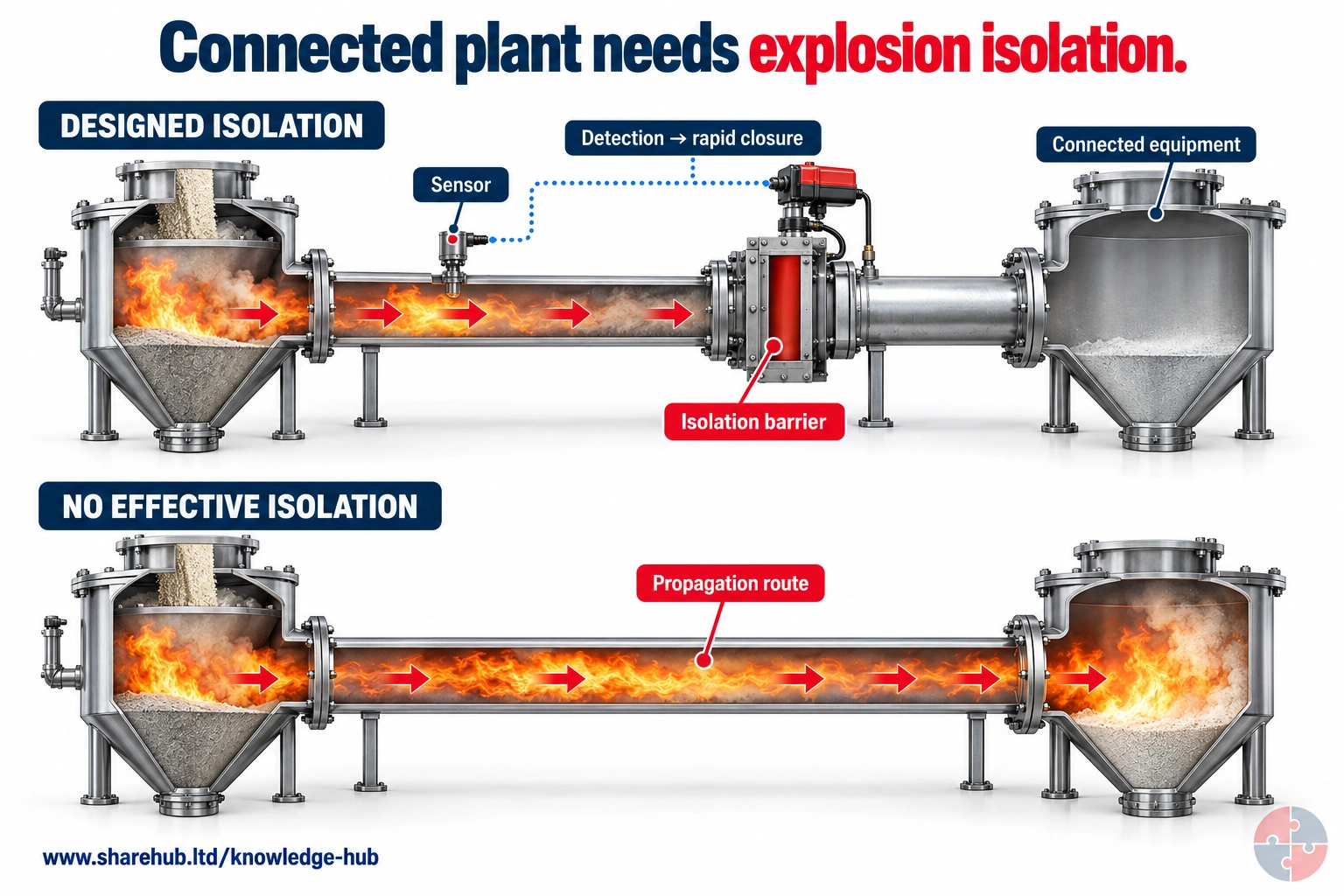

A vulnerable connected dust system needs effective measures against explosion propagation. This example uses detection and a specially designed rapid-closing valve: the upper flame path stops at the barrier, while the lower open duct transmits the event to another vessel. Other validated isolation methods may suit other systems.
Which connection needs an effective propagation barrier?
Assess every connection that could transmit flame, burning material or pressure between vulnerable plant items. Select and verify effective propagation controls for those paths; this example highlights the interconnecting duct.
Concept only, not evidence that a normal process valve can stop an explosion. Barrier type, detection, location, timing, direction of protection and pressure/flame performance depend on the dust and plant. Competent verification of the complete protection is required.
Source guidance: HSE HSG103
A dust cloud in open air may produce a flash fire, but the same dust cloud inside a vessel, duct, silo, collector, room or ceiling void can generate damaging pressure. Confinement does not have to be a pressure vessel. Buildings, rooms, ducts and congested process areas can provide enough restriction for serious harm.
Propagation is a major concern. Flame and pressure can travel through ductwork, conveyors, collectors and building spaces, disturbing more dust and igniting further clouds. This is why explosion isolation, relief, suppression, rotary valves and duct design may be safety-critical.
Design decisions should therefore consider where an explosion would vent, whether people could be in the vent path, whether relief panels are restrained, whether downstream equipment is protected and whether a primary event could reach occupied areas.
| Location | Hazard mechanism | Design question |
|---|---|---|
| Dust collector | Dust and air concentrated in an enclosed unit. | Is relief, suppression or isolation required and maintained? Sources: HSE - Safe handling of combustible dusts HSG103. |
| Silo or bin | Dust cloud during filling or discharge inside a confined volume. | Is filling controlled and relief vented to a safe place? Sources: HSE - Safe handling of combustible dusts HSG103. |
| Ducting | Flame and pressure can travel between equipment. | Is explosion isolation needed? Sources: HSE - Safe handling of combustible dusts HSG103. |
| Bucket elevator | Dust cloud, moving belt, bearings and vertical propagation path. | Are alignment, underspeed and relief controls provided? Sources: HSE - Safe handling of combustible dusts HSG103. |
| Suspended ceiling or void | Hidden dust accumulation and confined overhead space. | Is dust excluded, inspected and removed? Sources: HSE - Safe handling of combustible dusts HSG103. |
| Process room | Settled dust on surfaces can fuel secondary explosion. | Is housekeeping and venting strategy adequate? Sources: HSE - Safe handling of combustible dusts HSG103. |
When is dust explosibility testing needed?
Representative evidence is needed when dust properties are uncertain and the answer affects DSEAR assessment, design or control selection; a competent specialist should decide whether further testing is required.
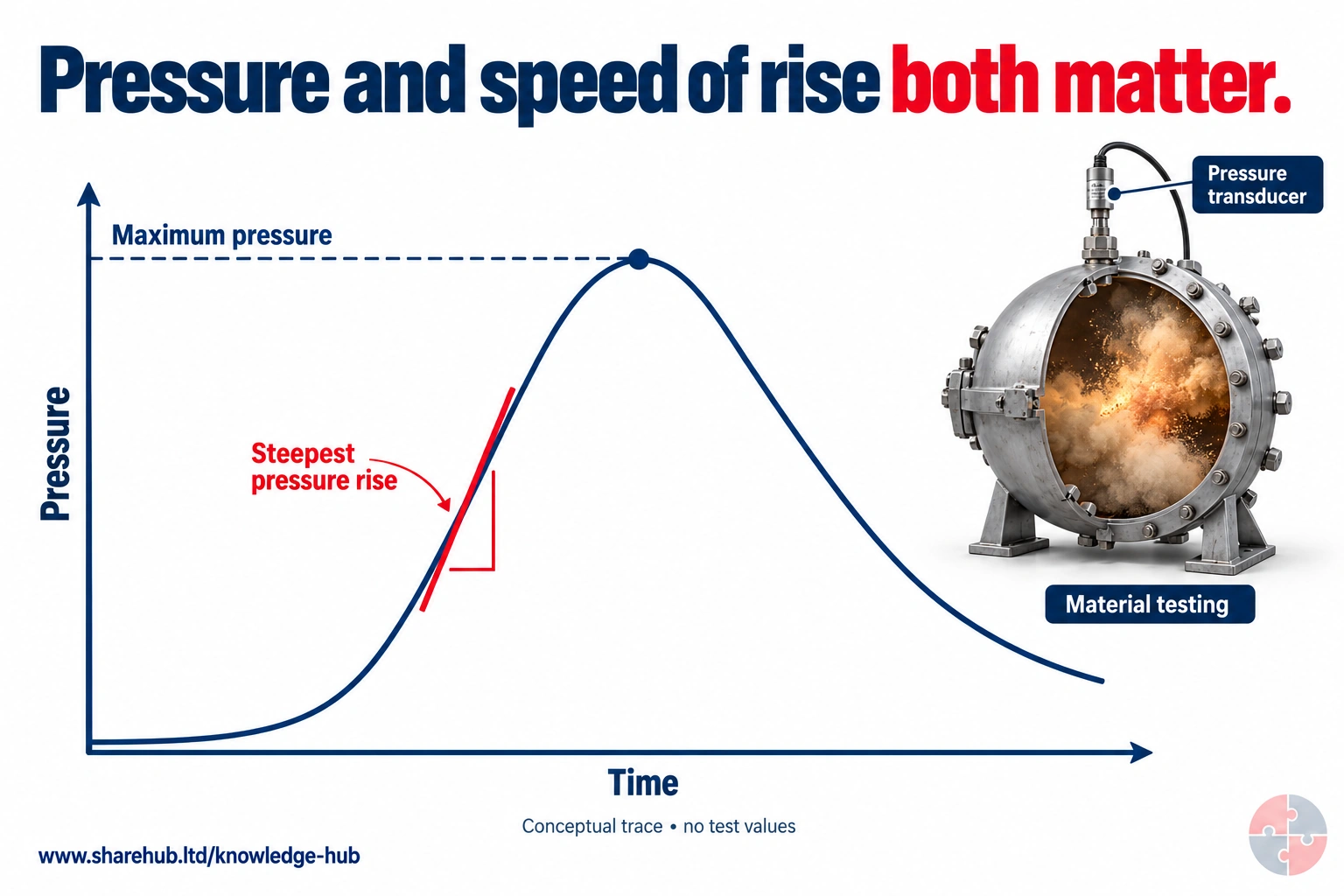

The conceptual trace distinguishes the highest pressure from the steepest rate of pressure rise. The test-vessel inset links these properties to material testing without supplying invented values.
Does the steepest pressure rise occur at the maximum pressure?
No. The steepest rising slope occurs before the peak in this conceptual trace.
No axes values or material data are provided. Actual explosion protection requires representative material test data and a competent design; this curve cannot size a vent or isolation system.
Source guidance: HSE HSG103
Testing should be considered when a material is new, changed, finely divided, dried, milled, recycled, contaminated, blended or handled in a way that could generate fines. It is also important where equipment design depends on explosion severity data. Generic assumptions may be misleading because nominally similar powders can behave differently.
Dust test data should be controlled information. It should be linked to the actual material, moisture, particle size and process conditions. If the process changes, the data may no longer be valid. Managers do not need to interpret specialist results unaided, but they should know enough to ask whether the right material was tested and whether the result has been built into design and operating controls.
Appendix A8 of HSE HSG103 (2003 edition) distinguishes cases where cautious use of accumulated natural-product test data may be reliable from cases requiring representative samples of the finest and driest material likely in the process. Its example property table is expressly unsuitable for direct plant design. For example, when a milling change produces finer recovered dust, ask the specialist whether the existing evidence represents that fraction and whether further testing is needed before changing protection arrangements. This is a GB assessment example, not a command to perform every listed test on every powder. HSG103 provides basic guidance, not a design manual; its historical legislation and standards references need current verification.
| Question | Why it matters | Who should advise |
|---|---|---|
| Is the dust explosible? | Determines whether DSEAR combustible dust controls may be needed. | Competent DSEAR or process safety specialist. Sources: HSE - Safe handling of combustible dusts HSG103. |
| What is the particle size tested? | A coarser sample may understate the hazard from fines. | Testing laboratory and process engineer. Sources: HSE - Safe handling of combustible dusts HSG103. |
| What is the moisture condition? | Drying can increase explosibility and ignition sensitivity. | Process engineer and specialist assessor. Sources: HSE - Safe handling of combustible dusts HSG103. |
| What are Kst and Pmax? | Supports venting, suppression and containment design. | Explosion protection specialist. Sources: HSE - Safe handling of combustible dusts HSG103. |
| What is minimum ignition energy? | Supports static and ignition-source control. | DSEAR specialist. Sources: HSE - Safe handling of combustible dusts HSG103. |
| Is the data still valid? | Process change may alter dust behaviour. | Management of change reviewer. Sources: HSE - Safe handling of combustible dusts HSG103. |
How should dust explosion hazards be assessed under DSEAR?
Assessment should identify where combustible dust can be present, dispersed, confined and ignited, then define controls and evidence.
A suitable assessment starts with the material and process. It should identify combustible dust sources, normal and abnormal dust clouds, settled layers, equipment confinement, ignition sources, ventilation, cleaning, maintenance, waste handling, emergency arrangements and people at risk. It should consider start-up, shutdown, cleaning, blockage, leaks, filter changes, hot work and modifications.
The assessment should not stop at classification. It should lead to practical decisions: whether to eliminate or reduce dust, improve capture, classify zones, select suitable equipment, control static, install protection, change cleaning method, improve inspection access, train workers or commission specialist testing.
DSEAR assessment should also connect with COSHH where dust presents health risks. One material can create both a long-latency disease hazard and an explosion hazard, and some controls support both.
| Assessment step | What to ask | Output |
|---|---|---|
| Identify dusts | Which materials can create combustible dust or fines? | Combustible dust inventory. Sources: HSE - DSEAR in detail; Dangerous Substances and Explosive Atmospheres Regulations (Northern Ireland) 2003. |
| Identify clouds | Where can dust be dispersed during normal or abnormal work? | Scenario list and zoning review. Sources: HSE - DSEAR in detail; Dangerous Substances and Explosive Atmospheres Regulations (Northern Ireland) 2003. |
| Identify layers | Where can dust settle, especially above head height? | Housekeeping and inspection plan. Sources: HSE - DSEAR in detail; Dangerous Substances and Explosive Atmospheres Regulations (Northern Ireland) 2003. |
| Identify ignition | Which ignition sources can be present or introduced? | Ignition-source register. Sources: HSE - DSEAR in detail; Dangerous Substances and Explosive Atmospheres Regulations (Northern Ireland) 2003. |
| Evaluate consequences | Could a primary event propagate or create secondary explosions? | Barrier and mitigation requirements. Sources: HSE - DSEAR in detail; Dangerous Substances and Explosive Atmospheres Regulations (Northern Ireland) 2003. |
| Define evidence | What records prove controls remain effective? | Inspection, maintenance, testing and audit evidence. Sources: HSE - DSEAR in detail; Dangerous Substances and Explosive Atmospheres Regulations (Northern Ireland) 2003. |
How can the hierarchy of controls prevent dust ignition and exposure during collector maintenance?
In a bakery, flour tipping may need enclosed delivery and capture; in grain logistics, transfer points and silo connections need assessed containment and explosion protection. Wood, flour and grain test data or relief designs cannot be copied between plants.
A first event can involve deposits elsewhere
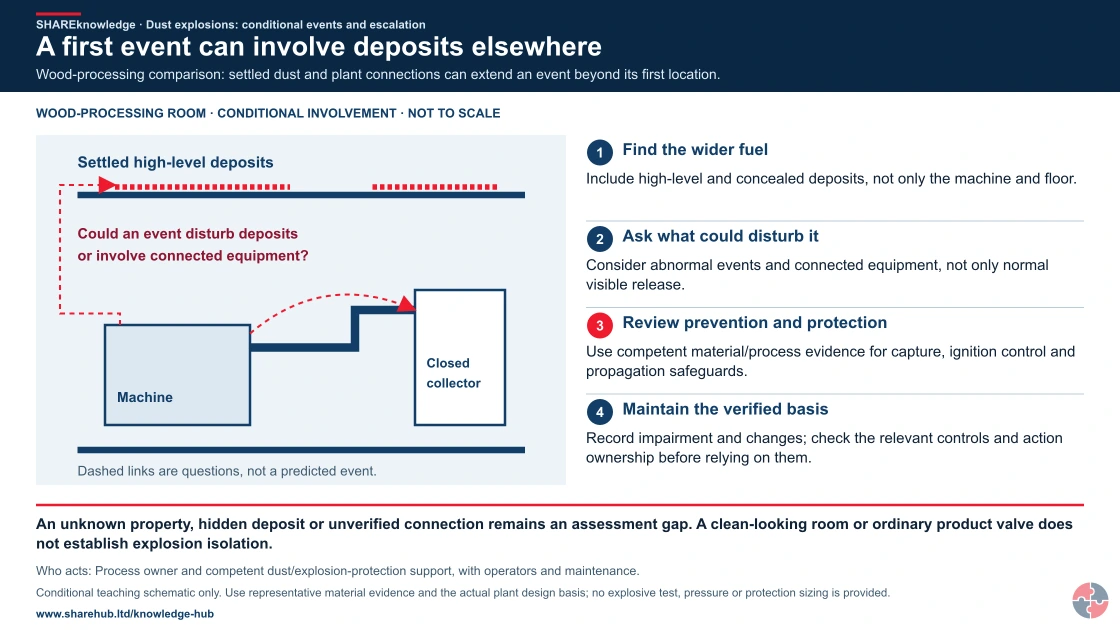
Full written explanation
A conceptual room section distinguishes a stopped wood-processing machine, connected closed collection plant and settled deposits on an overhead ledge. Dashed links show conditional concerns: an initial event may disturb deposits or involve connected equipment, creating further involvement if the necessary conditions exist. Four review checks identify deposits, disturbance and propagation paths, prevention/protection evidence and maintained controls. No cloud is staged, no event is inevitable and no pressure, dust amount or engineered design is inferred.
Wood-processing comparison: settled dust and plant connections can extend an event beyond its first location.
- Find the wider fuel. Include high-level and concealed deposits, not only the machine and floor.
- Ask what could disturb it. Consider abnormal events and connected equipment, not only normal visible release.
- Review prevention and protection. Use competent material/process evidence for capture, ignition control and propagation safeguards.
- Maintain the verified basis. Record impairment and changes; check the relevant controls and action ownership before relying on them.
When the evidence does not fit: An unknown property, hidden deposit or unverified connection remains an assessment gap. A clean-looking room or ordinary product valve does not establish explosion isolation.
Who acts: Process owner and competent dust/explosion-protection support, with operators and maintenance.
Changed workplace
Flour-handling plant: Separate normal material handling from the conditions needed for an event.
Wood-processing workshop: Include deposits and connected plant when assessing secondary involvement.
Evidence check: Conditional teaching schematic only. Use representative material evidence and the actual plant design basis; no explosive test, pressure or protection sizing is provided.
Existing connected-plant protection explanation, evidence and scope limits
Primary references: HSE: combustible-dust prevention and mitigation, HSG103 · HSE: explosive atmospheres and equipment scope
Open the complete HD image (new tab)Download image

Existing connected-plant protection explanation, evidence and scope limits
Primary references: HSE: combustible-dust prevention and mitigation, HSG103 · HSE: explosive atmospheres and equipment scope
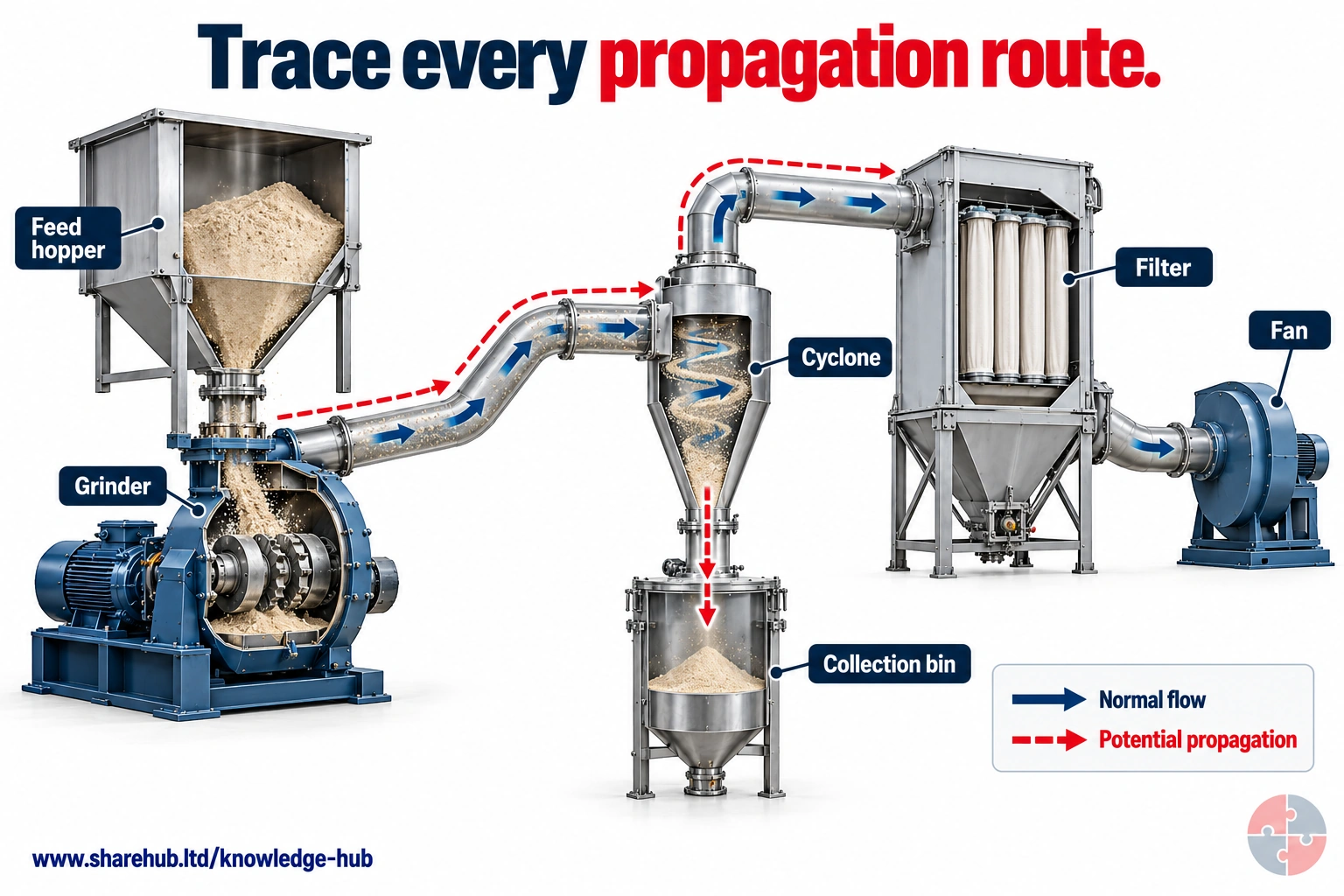

The hopper, grinder, cyclone, collection bin, filter and fan form one connected system. Navy arrows show normal conveying flow; red dashed arrows show selected possible propagation paths, including the solids drop into the bin. Explosion propagation can also oppose normal flow, and unmarked feed, discharge, fan or exhaust connections still need assessment.
Can the collection bin be affected even though it is below the main air route?
Yes. A solids-discharge connection can also transmit an explosion; assessment must cover more than the main conveying duct.
Hazard map, not protected plant design or an exhaustive propagation model. Red arrows do not predict direction, severity or required protection. Assess the complete connected system, including both flow directions and all branches; normal rotary or slide valves are not automatically explosion barriers.
Source guidance: HSE HSG103
How can the ERICPD hierarchy of controls prevent dust ignition and exposure during collector maintenance?

| Control level | Control for this activity | Owner and verification | Stop / restart decision |
|---|---|---|---|
| Eliminate | Remove an unnecessary dust-generating stage or select a process that avoids combustible powder handling where feasible. | Task owner verifies that the proposed change removes the named hazardous step, including foreseeable cleaning, maintenance and work transferred elsewhere. | If the hazardous step remains, keep it within the task assessment and select the stronger feasible remaining controls. |
| Reduce, including substitution | Assess a suitable less dusty or non-combustible material/form through process and product validation. | Competent task/process owner validates suitability, compatibility and new hazards against the actual operating requirements before the alternative is adopted. | Reject an alternative if its performance is unproved or its new hazards are unresolved. |
| Isolate | Securely isolate the collector and connected equipment; control stored energy and prevent access to hazardous dust-release zones. | Supervisor checks the actual boundary, affected people and connected work; verify separation or isolation before allowing access. | Hold or stop for unknown dust, smouldering material, damaged protective device or uncontrolled dust release. |
| Control: physical safeguards | Maintain the specified extraction and explosion-protection arrangements, including safe vent/discharge routes and prevention of propagation where required. | Competent equipment/process owner checks dust properties, isolation, filter condition and required explosion protection. | Hold or stop for unknown dust, smouldering material, damaged protective device or uncontrolled dust release. |
| Control: work method and response | Plan filter removal, ignition control and dust-safe cleaning; prohibit improvised vacuum cleaners, dry sweeping and hot work on an unassessed collector. | Supervisor confirms the work limits, competent cover, communication and stop/restart authority with the people doing this activity. | Hold work when the agreed limits, competent cover or effective communication cannot be maintained. |
| PPE | Select suitable RPE and compatible protective clothing for residual dust and any assessed static risk. | Assessor confirms whether personal protection is needed and checks suitability, condition, compatibility and any required fit evidence. | Do not use unsuitable protection or rely on PPE to continue after an essential source control fails. |
| Discipline | Check seals, filters, protective devices and dust removal before restart; restore every protection affected by the work. | Release only after competent equipment owner accepts the restored collector and its protection. Retain verification and unresolved restrictions at handover. | Keep the task on hold until required reinstatement evidence and unresolved defects are accepted by the responsible owner. |
How can the ISO 45001 hierarchy of controls prevent dust ignition and exposure during collector maintenance?

| Control level | Control for this activity | Owner and verification | Stop / restart decision |
|---|---|---|---|
| Elimination | Remove an unnecessary dust-generating stage or select a process that avoids combustible powder handling where feasible. | Task owner verifies that the proposed change removes the named hazardous step, including foreseeable cleaning, maintenance and work transferred elsewhere. | If the hazardous step remains, keep it within the task assessment and select the stronger feasible remaining controls. |
| Substitution | Assess a suitable less dusty or non-combustible material/form through process and product validation. | Competent task/process owner validates suitability, compatibility and new hazards against the actual operating requirements before the alternative is adopted. | Reject an alternative if its performance is unproved or its new hazards are unresolved. |
| Engineering controls | Securely isolate the collector and connected equipment; control stored energy and prevent access to hazardous dust-release zones. | Supervisor checks the actual boundary, affected people and connected work; verify separation or isolation before allowing access. | Hold or stop for unknown dust, smouldering material, damaged protective device or uncontrolled dust release. |
| Engineering controls | Maintain the specified extraction and explosion-protection arrangements, including safe vent/discharge routes and prevention of propagation where required. | Competent equipment/process owner checks dust properties, isolation, filter condition and required explosion protection. | Hold or stop for unknown dust, smouldering material, damaged protective device or uncontrolled dust release. |
| Administrative controls | Plan filter removal, ignition control and dust-safe cleaning; prohibit improvised vacuum cleaners, dry sweeping and hot work on an unassessed collector. | Supervisor confirms the work limits, competent cover, communication and stop/restart authority with the people doing this activity. | Hold work when the agreed limits, competent cover or effective communication cannot be maintained. |
| PPE | Select suitable RPE and compatible protective clothing for residual dust and any assessed static risk. | Assessor confirms whether personal protection is needed and checks suitability, condition, compatibility and any required fit evidence. | Do not use unsuitable protection or rely on PPE to continue after an essential source control fails. |
| Administrative controls | Check seals, filters, protective devices and dust removal before restart; restore every protection affected by the work. | Release only after competent equipment owner accepts the restored collector and its protection. Retain verification and unresolved restrictions at handover. | Keep the task on hold until required reinstatement evidence and unresolved defects are accepted by the responsible owner. |
Which barriers prevent and limit dust explosions?
Barriers should prevent dust clouds, prevent ignition, limit propagation and protect people if an event occurs.
Barrier thinking is useful because it avoids over-reliance on a single control. Prevention barriers include reducing dust generation, containment, extraction, housekeeping and ignition control. Detection barriers may include temperature, pressure, spark, airflow, differential pressure or level monitoring. Mitigation barriers may include explosion relief, suppression, isolation, safe venting, building design, emergency shutdown and evacuation.
Each barrier should have a performance requirement. A vent panel must relieve to a safe place. A rotary valve provides explosion isolation only when that specific model is designed, tested and installed for the actual dust and pressure conditions; an ordinary discharge valve is not automatically a flame or pressure barrier. A cleaning route must cover high-level surfaces. A hot-work permit must verify the area before work. If the performance requirement is unclear, assurance becomes weak.
HSG103 is an operator-level guide, not a plant design manual. Competent designers must use representative dust test data, equipment certification, connected-plant geometry and relevant current design standards before specifying relief, suppression or isolation. Hold a material or plant change when those assumptions are unknown.
| Barrier type | Examples | Evidence |
|---|---|---|
| Prevent dust formation | Material substitution, wet methods, enclosed transfer and reduced fines. | Process design and procurement records. Sources: HSE - Safe handling of combustible dusts HSG103; HSE - Prevention of dust explosions in the food industry. |
| Prevent dust escape | Seals, capture, ducting, collectors and maintenance. | Inspection and defect records. Sources: HSE - Safe handling of combustible dusts HSG103; HSE - Prevention of dust explosions in the food industry. |
| Prevent accumulation | Housekeeping, high-level cleaning and trigger cleaning. | Cleaning logs and inspection photographs. Sources: HSE - Safe handling of combustible dusts HSG103; HSE - Prevention of dust explosions in the food industry. |
| Prevent ignition | ATEX equipment, static control, hot-work permits and maintenance. | Zoning, equipment register and permit audits. Sources: HSE - Safe handling of combustible dusts HSG103; HSE - Prevention of dust explosions in the food industry. |
| Limit explosion effects | Relief, suppression, isolation, containment and safe vent paths. | Design basis, tests and inspections. Sources: HSE - Safe handling of combustible dusts HSG103; HSE - Prevention of dust explosions in the food industry. |
| Protect people | Layout, exclusion, evacuation, emergency plans and responder information. | Drills, plans and muster records. Sources: HSE - Safe handling of combustible dusts HSG103; HSE - Prevention of dust explosions in the food industry. |
Which incidents show why dust explosion hazards matter?
Dust explosion incidents show that hidden accumulation, poor hazard recognition and weak engineering controls can cause catastrophic loss.
The 2015 Bosley wood flour mill explosion caused fatalities, as recorded by Cheshire East Council: Bosley incident. The HSE: fire and explosion from wood dust explains how wood dust can cause fire and explosion; it is not a causal finding for the Bosley incident. The learning is to examine combustible dust, accumulation, maintenance and protection at the actual site rather than assume that a familiar material is safe.
The West Pharmaceutical incident in Kinston involved fine polyethylene powder accumulating above a suspended ceiling. The official CSB material explains how a familiar plastic powder, once dry and fine, became an explosion fuel in a hidden space. It is particularly useful for teaching hidden dust, ceiling voids, poor hazard communication and engineering assessment.
The Imperial Sugar explosion shows how sugar dust accumulation, equipment design, maintenance and housekeeping can interact. The Hayes Lemmerz case adds metal dust learning, where aluminium fines required specific hazard understanding. Together, the incidents show that dust explosion risk crosses sectors.
| Incident | Hazard lesson | Local question to ask |
|---|---|---|
| Bosley wood flour mill, UK | The fatal Bosley incident illustrates the consequence; HSE explains the wood-dust fire and explosion mechanism, without attributing its cause. | Where could combustible dust accumulate unnoticed on this site? Sources: Cheshire East Council: Bosley incident; HSE: fire and explosion from wood dust. |
| West Pharmaceutical, Kinston | Fine plastic powder accumulated above a suspended ceiling and created a hidden explosion hazard. | Are false ceilings, voids or hidden surfaces included in inspections? Sources: CSB - West Pharmaceutical dust explosion. |
| Imperial Sugar, Port Wentworth | Sugar dust accumulation and equipment design/housekeeping weaknesses contributed to severe secondary explosions. | Could a primary event lift enough settled dust to escalate? Sources: CSB - Imperial Sugar combustible dust investigation. |
| Hayes Lemmerz, Huntington | Aluminium dust created serious explosion and fire risk requiring material-specific controls. | Do metal fines or reactive dusts have specialist assessment and controls? Sources: CSB - Hayes Lemmerz dust explosions and fire. |
Which UK legal duties apply to dust explosion hazards?
GB DSEAR 2002 and NI DSEAR 2003 are separate dangerous-substance routes where combustible dust can create explosive atmospheres. Health exposure, work equipment and premises fire duties have their own location-specific routes.
DSEAR requires employers to assess and control risks from dangerous substances, and HSE makes clear that dusts capable of forming explosive atmospheres can be dangerous substances. Where explosive atmospheres may occur, employers may need to classify hazardous areas, select suitable equipment, prevent ignition sources and put mitigation and emergency arrangements in place.
COSHH remains relevant where the same dust can harm health. Wood dust, silica-containing dust, flour dust, metal dust and chemical powders may need both health and explosion controls. PUWER applies to equipment such as mills, conveyors, collectors, vacuums, extraction systems and mobile equipment. Fire safety legislation applies to premises arrangements and may vary across UK nations.
Apply the law for the workplace location. GB DSEAR 2002 and NI DSEAR 2003 are separate instruments; COSHH controls inhalation harm, while premises fire and reportable-event rules have their own territorial routes. No dust-test number or routine cleaning interval alone authorises operation.
| Duty or regulation | Jurisdiction | Application to this decision | Practical evidence |
|---|---|---|---|
| Dangerous Substances and Explosive Atmospheres Regulations 2002 | Great Britain | Assess and reduce fire and explosion risks from combustible dusts and explosive atmospheres. | DSEAR assessment, zoning, equipment selection, ignition control and emergency plan. |
| Control of Substances Hazardous to Health Regulations 2002 | Great Britain | Control exposure where dust is hazardous to health. | COSHH assessment, LEV, RPE, monitoring and health surveillance where required. |
| Provision and Use of Work Equipment Regulations 1998 | Great Britain | Ensure equipment is suitable, maintained, inspected and used safely. | Maintenance and inspection records for dust-handling plant. |
| Health and Safety at Work etc. Act 1974 | Great Britain | Protect workers and others from work-related risks. | Risk controls, information, instruction, training and supervision. |
| Management of Health and Safety at Work Regulations 1999 | Great Britain | Assess risks, organise arrangements and use competent advice. | Risk assessment, competent review and audit records. |
| Reporting of Injuries, Diseases and Dangerous Occurrences Regulations 2013 | Great Britain | Report specified dangerous occurrences and injuries. | Incident reporting criteria and escalation procedure. |
| Regulatory Reform (Fire Safety) Order 2005 | England and Wales | Requires fire risk assessment and precautions in England and Wales. | Premises fire risk assessment and emergency arrangements. |
| Fire (Scotland) Act 2005 | Scotland | Provides the Scottish fire safety framework for relevant premises. | Fire safety arrangements aligned to Scottish duties. |
| Dangerous Substances and Explosive Atmospheres Regulations (Northern Ireland) 2003 | Northern Ireland | NI DSEAR governs assessment and controls for dangerous substances. | NI DSEAR assessment, zoning, plant evidence and emergency plan. |
| Control of Substances Hazardous to Health Regulations (Northern Ireland) 2003 | Northern Ireland | NI COSHH governs hazardous-dust health exposure. | Health assessment and control evidence where inhalation harm arises. |
| Provision and Use of Work Equipment Regulations (Northern Ireland) 1999 | Northern Ireland | NI work-equipment rules govern plant suitability and maintenance. | Inspection, maintenance and defect records. |
| Health and Safety at Work (Northern Ireland) Order 1978 | Northern Ireland | NI general health and safety duties apply to workers and others. | Risk decisions, information and supervision. |
| Management of Health and Safety at Work Regulations (Northern Ireland) 2000 | Northern Ireland | NI management rules require risk assessment and arrangements. | Competent assessment and action records. |
| Reporting of Injuries, Diseases and Dangerous Occurrences Regulations (Northern Ireland) 1997 | Northern Ireland | NI reporting rules cover specified incidents and dangerous occurrences. | NI criteria and reporting decision; not every dust release is reportable. |
| Fire and Rescue Services (Northern Ireland) Order 2006 | Northern Ireland | NI premises fire safety Order applies to relevant premises. | Premises fire risk and emergency arrangements. |
| Fire Safety Regulations (Northern Ireland) 2010 | Northern Ireland | NI 2010 fire regulations add relevant detail. | Premises fire compliance evidence. |
What should a dust explosion hazard register include?
The register should record dust materials, credible scenarios, explosion properties, barriers, owners and review triggers.
A dust explosion hazard register should not hide all dusts under a generic 'fire risk'. It should identify each combustible dust, where it is generated, where it can accumulate, what data is known, whether testing is needed, where zones or ignition controls apply and which equipment is safety-critical.
The register should also distinguish between hazard information and live control status. Material data might stay stable, but housekeeping, extraction, maintenance and process conditions change every week.
| Field | Example | Why it matters |
|---|---|---|
| Dust identity | Wood flour, sugar, flour, aluminium fines or polymer powder. | Prevents generic control assumptions. Sources: HSE - DSEAR in detail. |
| Process source | Milling, sanding, conveying, bag filling, drying or waste collection. | Identifies where clouds and layers can form. Sources: HSE - DSEAR in detail. |
| Hazard data | Explosibility, Kst, Pmax, MIE, MIT or unknown. | Shows whether specialist testing or conservative design is needed. Sources: HSE - DSEAR in detail. |
| Scenario | Collector explosion propagates into process room and disturbs settled dust. | Connects hazard to credible consequence. Sources: HSE - DSEAR in detail. |
| Controls | Extraction, housekeeping, ignition control, relief, isolation and permits. | Shows barriers and owners. Sources: HSE - DSEAR in detail. |
| Review trigger | New material, finer particle size, rate increase, equipment change or repeated deposits. | Keeps the register current. Sources: HSE - DSEAR in detail. |
How could BuildOut Ltd manage dust explosion hazards?

BuildOut Ltd would manage combustible dust hazards by identifying where fine wood dust and other powders could create explosive atmospheres and then controlling them through design, cleaning, maintenance and change control.
BuildOut Ltd
BuildOut Ltd is used here as a construction and refurbishment contractor with a joinery workshop, refurbishment sites, cutting areas and subcontracted specialist activities.
BuildOut begins with hazard recognition. It does not assume wood dust is only a respiratory issue. The joinery workshop risk register identifies sanding dust, wood flour in extraction, dust collection bags, high-level ledges, waste storage, portable tools, temporary site workshops and hot work as potential dust explosion interfaces.
The company uses competent advice to screen whether DSEAR applies to its workshop extraction and dust collection system. It records where dust clouds may occur, whether hazardous areas need to be classified, which electrical and mechanical equipment is suitable, and where ignition control is required. The assessment is reviewed when new equipment, different materials or higher production rates are introduced.
Controls are practical. Extraction is maintained, dust bags and bins are emptied before overfilling, high-level cleaning is planned, compressed air is prohibited for dusty cleaning, hot work near dusty areas requires a permit, contractors are inducted into workshop rules, and supervisors inspect both floor-level and hidden dust traps.
Learning is structured. Near misses such as a smouldering vacuum, blocked duct, repeated fine dust build-up or hot bearing are recorded as weak signals. Findings are reviewed in monthly management meetings, procurement standards are updated, and training is refreshed when inspections show poor understanding.
| Management area | How BuildOut manages it | Evidence |
|---|---|---|
| Hazard identification | Names wood dust, fine powders and collected dust as potential combustible dust hazards. | DSEAR screening and risk register. Sources: HSE - Safe handling of combustible dusts HSG103. |
| Design and procurement | Specifies suitable extraction, collection and vacuum systems before purchase. | Supplier data, commissioning record and procurement standard. Sources: HSE - Safe handling of combustible dusts HSG103. |
| Operational control | Controls sanding, cutting, waste collection, cleaning and hot work. | Procedures, permits and worksite inspections. Sources: HSE - Safe handling of combustible dusts HSG103. |
| Training | Gives awareness to all workshop users and deeper training to supervisors and maintenance teams. | Training matrix and competence checks. Sources: HSE - Safe handling of combustible dusts HSG103. |
| Assurance | Checks visible and hidden dust, extraction condition, action close-out and repeated defects. | Inspection records, photos and action log. Sources: HSE - Safe handling of combustible dusts HSG103. |
| Improvement | Uses incidents and weak signals to update controls, training and procurement. | Learning reviews and revised standards. Sources: HSE - Safe handling of combustible dusts HSG103. |
Worked decision from warning to hand-back
A joinery shop adds a dry fines separator to its wood-dust extraction while staff still occupy the adjoining bay. This is an illustrative decision; the actual material, people, premises control and applicable law must be checked.
| Decision stage | Worked decision |
|---|---|
| Task and people | Sanding and machining generate wood flour; operators, cleaners, maintenance staff and people in the adjoining bay could be harmed by fire, pressure and secondary explosions. |
| Before work | Manager pauses the change, obtains representative dust data and design basis, maps ducts, collector, deposits, ignition sources and people, and has a competent DSEAR/plant review. |
| Decision owner | Site manager owns the production hold and resource decision; competent engineer owns the protection specification and commissioning evidence. |
| During work | Use enclosed capture and suitable electrical/mechanical equipment, clean high ledges safely, verify earthing, alarms, relief and isolation for the assessed dust and layout. |
| Hold or stop | Do not run the modified separator if dust properties, zone, protection integrity or safe relief route are unverified; stop on leaks, repeated layers, alarm or hot bearing. |
| Hand-back | Engineer tests the changed installation against its design basis; manager authorises restart after affected operators and cleaners are briefed. |
| Evidence and change | Keep material/test data, DSEAR review, equipment declarations, commissioning, inspection, cleaning, alarms, defects, permit and restart decisions; repeat after further change. |
What training is needed for dust explosion hazards?
Training should help people recognise combustible dust conditions, not just remember a legal acronym.
Awareness training should explain the pentagon, common combustible dusts, dust clouds, settled layers, secondary explosions and reporting triggers. It should use workplace photographs and local examples because people often fail to recognise their own dust as hazardous.
Task training should cover specific activities: filling, tipping, conveying, cleaning, emptying collectors, hot work, maintenance, isolation, use of vacuums, waste handling and emergency action. Supervisor training should include DSEAR findings, inspection standards, change triggers and how to challenge production pressure.
Specialist training may be needed for those commissioning DSEAR assessments, designing dust collection systems, specifying ATEX equipment, interpreting test data or approving changes.
| Level | Audience | What it should cover | Observed demonstration | Record and reassessment | Who assesses |
|---|---|---|---|---|---|
| General awareness | Workers and visitors in dusty operational areas. | Combustible dust basics, dust pentagon, layers and reporting. Sources: HSE - Safe handling of combustible dusts HSG103. | Identify own dusty material, a layer and an alarm; explain whom to tell and where to move. | Supervisor walk-through; induction and changed-material recheck. | Supervisor |
| Task-specific | Operators, cleaners, maintenance and contractors. | Cleaning, extraction, hot work, isolation, waste and emergency actions. Sources: HSE - Safe handling of combustible dusts HSG103. | Demonstrate approved collection, equipment pre-use checks and a stop for damaged capture or ignition concern. | Observed task and defect record; recheck after process change. | Task supervisor |
| Supervisor | Supervisors and line managers. | Inspection quality, DSEAR findings, permits, action ranking and change triggers. Sources: HSE - Safe handling of combustible dusts HSG103. | Identify an alarm, high-level deposit or failed collector; hold affected work, inspect the area and challenge a hot-work permit. | Supervisor scenario, hold decision and corrective-action record; recheck after a process change. | Competent manager or permit issuer |
| Technical/specialist | Engineers, HSE advisers and designers. | Testing data, zoning, equipment suitability, relief, suppression and isolation. Sources: HSE - Safe handling of combustible dusts HSG103. | Interpret representative dust tests, zoning, equipment declarations, relief/isolation design and commissioning evidence before competent restart advice. | Specialist design and commissioning review; repeat after material or plant change. | Competent process-safety engineer or DSEAR assessor |
| Leadership | Senior managers and budget holders. | Major accident potential, barrier health, investment decisions and weak signals. Sources: HSE - Safe handling of combustible dusts HSG103. | Challenge unresolved hazard data, protection defects and overdue work; resource the repair and require competent hand-back rather than choosing the relief design. | Leadership risk/resource decision and closed-action review; recheck after incidents or major change. | Board or senior operational owner |
How should the controls be managed and reviewed?
Assign owners to the significant risks, put the chosen controls into the work plan, check that they work in practice and change them when conditions or evidence change.
HSE describes this as a continuing plan, do, check and act process. For dust explosion hazards, record who checks the controls, what evidence shows they are working, and which failure stops the work or triggers review. A formal management system is a choice, not a substitute for the applicable legal duties. Read HSE management guidance.
What are the warning signs that dust explosion hazards are not understood?
Warning signs appear when people treat combustible dust as ordinary dirt, nuisance dust or only an occupational health issue.
A major warning sign is language. If workers say 'it has always been dusty' or managers say 'it is only sawdust/flour/sugar', hazard recognition is weak. If no one knows whether a dust is combustible, whether it has been tested, or whether DSEAR applies, the site is making decisions without key information.
Physical signs include visible dust layers, hidden dust deposits, dust escaping collectors, dry sweeping, compressed air cleaning, hot work near dusty areas, damaged equipment, unreviewed changes and lack of high-level inspection. These can manifest as fire, flash fire, explosion, equipment rupture, burns, blast injury, structural damage, business interruption and emergency responder risk.
| Warning sign | What it reveals | Potential outcome |
|---|---|---|
| No combustible dust inventory | The site does not know which materials can explode. | Wrong controls or no DSEAR assessment. Sources: HSE - Safe handling of combustible dusts HSG103. |
| Visible high-level dust | Housekeeping and source control are failing. | Secondary explosion fuel. Sources: HSE - Safe handling of combustible dusts HSG103. |
| Unsealed ceiling voids | Dust may accumulate out of sight. | Hidden explosion propagation path. Sources: HSE - Safe handling of combustible dusts HSG103. |
| Unreviewed powder change | Material properties may have changed. | Controls based on invalid assumptions. Sources: HSE - Safe handling of combustible dusts HSG103. |
| Hot work normalised | Ignition control is weak. | Fire or dust cloud ignition. Sources: HSE - Safe handling of combustible dusts HSG103. |
| Repeated collector faults | A safety-critical system may be degraded. | Dust escape, ignition or propagation. Sources: HSE - Safe handling of combustible dusts HSG103. |
Chemical hazard symbols: what do they mean?
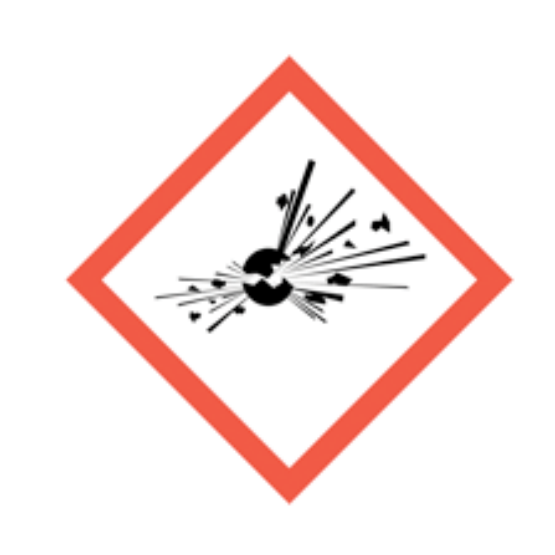
Exploding bomb
Explosive, self-reactive or organic peroxide hazards.
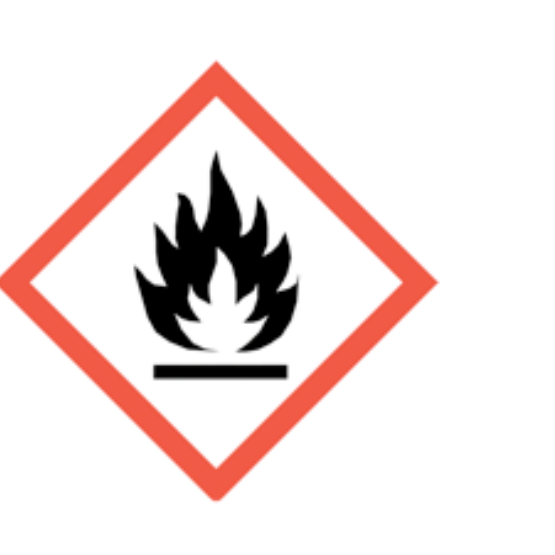
Flame
Flammable, self-heating or pyrophoric substances.

Flame over circle
Oxidising substances that can intensify fire.

Gas cylinder
Gas under pressure.
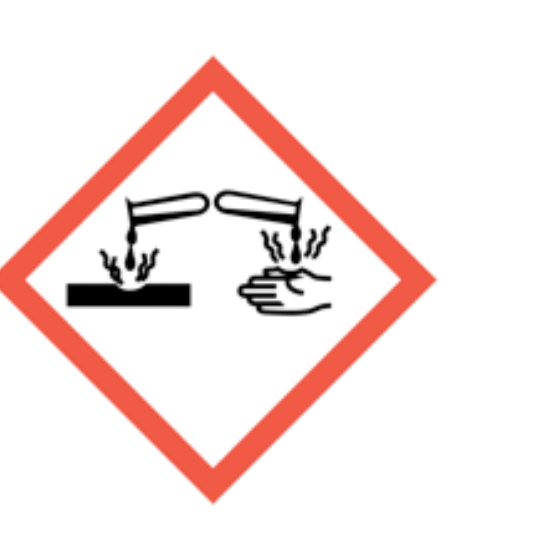
Corrosion
Skin burns, eye damage or corrosive to metals.
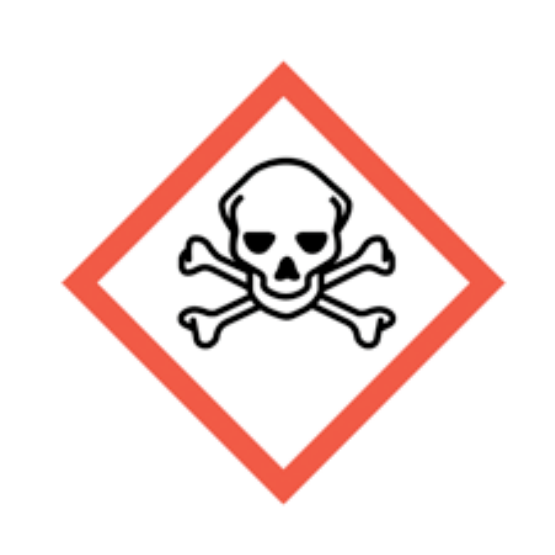
Skull and crossbones
Acute toxicity.

Exclamation mark
Irritation, harmful effects or skin sensitisation; some classifications cover drowsiness, dizziness or ozone-layer hazard. Read the actual hazard statements. Skin sensitisation differs from respiratory sensitisation.

Health hazard
Serious health hazards, including organ damage, aspiration hazard, respiratory sensitisation, cancer and reproductive effects; some can follow a single exposure.
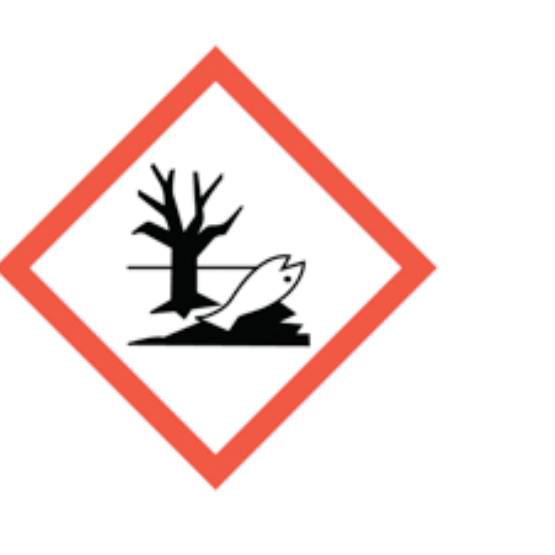
Environment
Hazardous to the aquatic environment.
What do the acronyms and key terms mean?
Acronyms and technical terms should be clear before they are used in assessments or training.
| Acronym or term | Meaning | Meaning in this context |
|---|---|---|
| DSEAR | Dangerous Substances and Explosive Atmospheres Regulations. | GB/NI dangerous-substance duties have separate instruments; assess actual dust and process. |
| COSHH | Control of Substances Hazardous to Health Regulations. | Health-exposure duties may apply to the same dust; they do not replace explosion controls. |
| ATEX | Equipment and protective systems intended for potentially explosive atmospheres. | Equipment suitability for a classified explosive atmosphere; check the actual zone and declaration. |
| Kst | Dust deflagration index used to indicate explosion severity. | Deflagration index from representative tests, used by a competent designer rather than as a worker threshold. |
| Pmax | Maximum explosion pressure under standard test conditions. | Maximum test explosion pressure for a specified dust and conditions. |
| MIE | Minimum Ignition Energy. | Tested ignition energy, affected by material and particle conditions. |
| MIT | Minimum Ignition Temperature. | Temperature at which cloud or layer ignition is possible under defined test conditions. |
| MEC | Minimum Explosible Concentration. | Minimum concentration under test conditions; never use as a routine safe-work target. |
| LOC | Limiting Oxygen Concentration. | Oxygen threshold under test conditions; inerting needs engineered assurance. |
| Primary explosion | The first explosion in a dust cloud or equipment item. | Initial ignition in plant or a cloud. |
| Secondary explosion | A larger explosion caused when a first event disperses settled dust. | Subsequent event after a pressure wave disperses settled fuel. |