SHARE Knowledge Hub
Fire Safety Training, Marshals and Wardens
Fire safety training turns a site-specific fire plan into actions workers and wardens can perform. Induction, role rehearsal and drills must reflect the actual routes, people and shifts; wardens support evacuation within safe limits. A blocked exit or unreliable warning needs immediate restriction and correction. England and Wales, Scotland and Northern Ireland use separate fire-law routes.
Understanding Fire Safety Training, Marshals and Wardens
Fire safety training turns a site-specific fire plan into actions workers and wardens can perform. Induction, role rehearsal and drills must reflect the actual routes, people and shifts; wardens support evacuation within safe limits. A blocked exit or unreliable warning needs immediate restriction and correction. England and Wales, Scotland and Northern Ireland use separate fire-law routes.
Why this matters at work
Train assistants on the actual equipment and route, with safe practice and suitable supervision. Check capacity, compatibility, user needs, staffing and the consequences of an assistant being absent. Avoid unsafe live practice involving a person who could be harmed; an appropriate simulation may test communication and coordination. Record agreed roles, review triggers and equipment checks while limiting medical detail to those who need it. A generic disability label cannot determine an individual evacuation method. Bring unresolved conflicts between accessibility, route protection and staffing back to the dutyholder and competent fire adviser before relying on the arrangement.
Define how a marshal checks their area without putting themselves at risk, where they report, how absence is covered and how missing-person information reaches responders. Firefighting and isolation are additional tasks only where the assessment, training, equipment and conditions support them. An extinguisher demonstration does not authorise tackling every fire. Practise withdrawal decisions and simultaneous duties so that a person is not expected to sweep, assist someone and telephone responders at the same time. A safe exit and prompt alarm take priority over completing a checklist.
How organisations manage this in practice
Refresh training when understanding has faded or tasks, hazards, equipment, routes or responsibilities change, and at the frequency supported by the risk assessment and applicable guidance. New supervisors should understand how to recognise inadequate cover, stop unsafe work and escalate a protection impairment. Review near misses, false alarms and contractor changes for learning. Protect personal information, retain records under the organisation's justified arrangements and make current instructions available at the point of work. Management should verify that actions changed real practice, rather than closing the programme because every box has an attendance date.
A marshal helps implement the preplanned emergency arrangements: encourage evacuation, direct people towards available safe routes, communicate known concerns and report to the designated coordinator. Any sweep must have defined safe limits. It is not a search-and-rescue task. Do not enter smoke, pass an unsafe area, delay personal escape or re-enter to prove that a room is empty. Report the last known location and uncertainty to the fire service.
Plan assistance with the affected person and suitable competent advice, respecting privacy. Establish how a warning is received, which routes are usable, what equipment is provided and who is available. Do not assume that a refuge alone completes evacuation, that an ordinary lift is usable, or that colleagues can manually carry a person. The premises strategy must explain what happens next and who performs it.
Rehearse the changed route with the people who will really use it
After a warehouse layout change, correct and verify the route before asking staff to learn it. Update the plan and walk agency workers, contractors and affected shifts through the actual doors, warning meanings, assistance and assembly arrangements. An absent warden should be part of the test, not a reason to assume the daytime arrangement will work at night.

Route learning must include the shifts that use the warehouse

Full written explanation
A new twilight warehouse scene marks the complete push-bar exit, inert route plan and briefing participants. It relates a physical layout/route check to practical explanation for workers and agency staff, then actual shift/absence cover, assistance and exercise learning. The illustration shows no obstruction being removed, alarm sounding, night-time staffing record or completed drill; these need real evidence. Painted lines and a green pictogram do not establish safe width, door operation, alarm audibility or route suitability. Picture key: 1 Closed push-bar door · 2 Review plan · 3 Briefing participants. The separate process headings are unnumbered.
Inactive evening route briefing: a visible door and group do not prove role cover, warning performance or a completed drill.
- Check the actual changed route. Correct layout defects and verify the relevant door, signs, lighting and warning.
- Explain it with the people present. Walk workers, agency staff and contractors through the current local arrangements.
- Test cover and learn from rehearsal. Include affected shifts, absences and assistance; resolve findings before closure.
Change the pathway
- A briefing does not repair the route. Restore physical protection first; do not teach staff around an unresolved obstruction.
- Attendance is not performance. Check understanding and the actual warning-to-safe-place journey.
- Day cover is not every shift. Check who can fulfil each limited role when usual wardens or assistants are absent.
Evidence check: Illustrative role boundary. No rescue, firefighting, re-entry permission, safe smoke exposure, staffing number or evacuation strategy is assigned.
Follow the actual warehouse change and safe training-role explanation
Primary references: GOV.UK: equipment, drills and training · HSE: emergency roles, shifts and arrangements · GOV.UK: evacuation planning and assistance
Open the complete HD image (new tab)Download image

Follow the actual warehouse change and safe training-role explanation
Primary references: GOV.UK: equipment, drills and training · HSE: emergency roles, shifts and arrangements · GOV.UK: evacuation planning and assistance
Best-practice guide: Fire Safety Training, Marshals and Wardens
Rehearse the changed route with the people who will really use it
After a warehouse layout change, correct and verify the route before asking staff to learn it. Update the plan and walk agency workers, contractors and affected shifts through the actual doors, warning meanings, assistance and assembly arrangements. Fire safety training turns a site-specific fire plan into actions workers and wardens can perform.
Turn fire safety training, marshals and wardens knowledge into a decision
Fire safety training turns a site-specific fire plan into actions workers and wardens can perform. Induction, role rehearsal and drills must reflect the actual routes, people and shifts; wardens support evacuation within safe limits. A good response updates the FRA, revises route signs and maps, briefs supervisors and workers, retrains wardens, updates agency induction, checks alarm audibility in the changed layout and repeats a targeted drill once actions are complete.
How should training change after a warehouse layout change?
The shift supervisor then walks agency staff through the corrected route; the fire lead rehearses both day and night warden cover, checks that the escape still works during peak dispatch and signs hand-back only after the field checks pass. The Home Office factories-and-warehouses guide supports the warehouse escape assessment in England; apply local Scottish or NI premises law when relevant. A warehouse moves racking and changes the loading bay route.
Where do fire training, marshals and wardens fail?
Changed conditions: Racking, stock, absence or changed occupants can undermine the agreed evacuation plan. Possible consequence: People may miss the warning, misunderstand their role or be unable to use the escape route. Control failure: A briefing alone leaves physical route defects, assistance gaps or unavailable role cover unresolved.
Choose controls for the actual task
Elimination: Remove the racking change that obstructs the designated exit; design the picking layout around the route before the next shift. Substitution: Use a different stock location or smaller replenishment lots if the changed picking task is necessary; confirm the alternative does not move the obstruction to another exit. Engineering: Restore route separation, signs, lighting and door operation consistent with the fire strategy, with physical stock restraints where suitable. Administrative: Replace old route maps and agency induction, brief the new route in person, reallocate warden zones and rehearse an obstructed-route decision. PPE: No ordinary worker PPE can make smoke exposure or a blocked escape route acceptable; separately assessed maintenance PPE protects only the repair task. Read the full control table for qualifications, ownership and verification. Use the actual task and applicable jurisdiction; existing technical approval remains unchanged.
Use the full fire safety training, marshals and wardens lesson
Use the full topic for the decision points, practical examples, detailed control tables and source scope. HSE guidance applies to Great Britain; use HSENI for the Northern Ireland route and the source’s stated jurisdiction. A simplified guide does not change the page’s technical-review or approval status.

Read all six steps as text
1. Rehearse the changed route with the people who will really use it
After a warehouse layout change, correct and verify the route before asking staff to learn it.
- Avoid / redesign: Remove the racking change that obstructs the designated exit; design the picking layout around the route before the next shift.
- Control the task: Restore route separation, signs, lighting and door operation consistent with the fire strategy, with physical stock restraints where suitable.
- Verify before release: Racking still hides or narrows the designated exit: stop use of the affected area and redesign.
After a warehouse layout change, correct and verify the route before asking staff to learn it. Update the plan and walk agency workers, contractors and affected shifts through the actual doors, warning meanings, assistance and assembly arrangements. Fire safety training turns a site-specific fire plan into actions workers and wardens can perform.
Apply it: Which part of this plan would you check at the workface before authorising the task?
2. Turn fire safety training, marshals and wardens knowledge into a decision
Use the evidence to improve the actual work arrangement.
- Change at source: Remove the racking change that obstructs the designated exit; design the picking layout around the route before the next shift.
- Make it observable: Racking still hides or narrows the designated exit: stop use of the affected area and redesign.
- Keep useful evidence: A good response updates the FRA, revises route signs and maps, briefs supervisors and workers, retrains wardens, updates agency induction, checks alarm audibility in the changed layout and repeats a targeted drill once actions are complete.
Fire safety training turns a site-specific fire plan into actions workers and wardens can perform. Induction, role rehearsal and drills must reflect the actual routes, people and shifts; wardens support evacuation within safe limits. A good response updates the FRA, revises route signs and maps, briefs supervisors and workers, retrains wardens, updates agency induction, checks alarm audibility in the changed layout and repeats a targeted drill once actions are complete.
Apply it: What evidence would show that the change improves this task, rather than only completing a record?
3. How should training change after a warehouse layout change?
Example: a practical application of the existing topic lesson.
- Situation: A layout-change example shows why fire training must follow changes in routes, stock and people.
- Decision: At Fenwick Warehouse, the operations manager halts use of the obstructed loading-bay exit as soon as a route walk finds new racking and stock across it.
- Follow through: The facilities lead removes the obstruction, checks door operation, signs and alarm coverage, and updates the fire risk assessment and plan.
The shift supervisor then walks agency staff through the corrected route; the fire lead rehearses both day and night warden cover, checks that the escape still works during peak dispatch and signs hand-back only after the field checks pass. The Home Office factories-and-warehouses guide supports the warehouse escape assessment in England; apply local Scottish or NI premises law when relevant. A warehouse moves racking and changes the loading bay route.
Apply it: At which point would you hold this example, and what evidence would allow it to proceed?
4. Where do fire training, marshals and wardens fail?
Connect the task, the route to the person and the control that can fail.
- Changed conditions: Racking, stock, absence or changed occupants can undermine the agreed evacuation plan.
- Possible consequence: People may miss the warning, misunderstand their role or be unable to use the escape route.
- Control failure: A briefing alone leaves physical route defects, assistance gaps or unavailable role cover unresolved.
Changed conditions: Racking, stock, absence or changed occupants can undermine the agreed evacuation plan. Possible consequence: People may miss the warning, misunderstand their role or be unable to use the escape route. Control failure: A briefing alone leaves physical route defects, assistance gaps or unavailable role cover unresolved.
Apply it: Who could be exposed, including other trades, cleaners, maintainers and people nearby?
5. Choose controls for the actual task
Control summary. Read the complete task-specific controls and checks in the linked topic.
- Elimination: Remove the racking change that obstructs the designated exit; design the picking layout around the route before the next shift.
- Substitution: No separate substitute is specified. Compare suitable safer materials, equipment or processes; check new risks before any change.
- Engineering controls: Keep stock in the assessed location and quantities, brief workers, visitors, wardens and assistants, rehearse representative shifts and resolve drill findings before closure.
- Administrative controls: Keep stock in the assessed location and quantities, brief workers, visitors, wardens and assistants, rehearse representative shifts and resolve drill findings before closure.
- PPE: No ordinary worker PPE can make smoke exposure or a blocked escape route acceptable; separately assessed maintenance PPE protects only the repair task.
Elimination: Remove the racking change that obstructs the designated exit; design the picking layout around the route before the next shift. Substitution: Use a different stock location or smaller replenishment lots if the changed picking task is necessary; confirm the alternative does not move the obstruction to another exit. Engineering: Restore route separation, signs, lighting and door operation consistent with the fire strategy, with physical stock restraints where suitable. Administrative: Replace old route maps and agency induction, brief the new route in person, reallocate warden zones and rehearse an obstructed-route decision. PPE: No ordinary worker PPE can make smoke exposure or a blocked escape route acceptable; separately assessed maintenance PPE protects only the repair task. Read the full control table for qualifications, ownership and verification. Use the actual task and applicable jurisdiction; existing technical approval remains unchanged.
Apply it: Which stronger option can be used here, and who will verify it before accepting the remaining risk?
6. Use the full fire safety training, marshals and wardens lesson
Follow the official sources below and retain the task-specific evidence.
- Official guidance: Home Office factories-and-warehouses guide
- Official guidance: GOV.UK training and drill guidance
- Task decision: Record defects, owners and corrective evidence; repeat relevant checks after change. Training alone does not compensate for a blocked exit.
Use the full topic for the decision points, practical examples, detailed control tables and source scope. HSE guidance applies to Great Britain; use HSENI for the Northern Ireland route and the source’s stated jurisdiction. A simplified guide does not change the page’s technical-review or approval status.
Apply it: Which official source and full-topic section will you use to resolve the next decision?
Observe protective decisions: do people act on warning, choose a usable route, direct unfamiliar visitors and report uncertainty? Wardens need explicit safe limits and withdrawal triggers; their role does not authorise a dangerous sweep, re-entry or improvised rescue. Use drill findings to fix the system and repeat the relevant exercise, rather than judging success by attendance or one evacuation time.
Fenwick Warehouse: a corrected loading-bay route
Illustrative example. New racking hides the old exit and agency workers have received an obsolete route map.
Decision. Facilities corrects and verifies the route; supervisors brief each shift and observe a repeat exercise with alternative warden cover.
Evidence to check. Usable doors and route, current plan, agency/contractor briefing and observed decisions under realistic staffing.
Hold or escalation point. Do not drill people through a known unsafe route or require a warden to search into danger.
Follow-up. Close findings only after the revised route, cover and communication work during peak dispatch.
A drill should expose barriers to a usable escape plan
Training needs to work with actual routes, staffing and occupants. Warden roles support the premises plan; they do not authorise entry into smoke.

Find the work barrier
Identify racking, stock, warning or staffing changes that could impede the agreed plan.
Restore and brief
The premises owner corrects the physical route and briefs workers, visitors, wardens and agreed assistants on their own roles.
Rehearse representative conditions
Use planned safe exercises across relevant shifts, without exposing participants to smoke or creating an unsafe route.
Learn and repeat
Record defects, owners and corrective evidence; repeat relevant checks after change. Training alone does not compensate for a blocked exit.
Read the complete task-specific control examples
ERICPD is a planning cross-map: Discipline verifies and sustains every control. ESEAP compares effectiveness. A label does not authorise the task; retain the owner, evidence and stop or change decision.
Fire Safety Training, Marshals and Wardens · ERICPD
- Eliminate
- Remove the racking change that obstructs the designated exit; design the picking layout around the route before the next shift.
- Reduce
- Keep stock in the assessed location and quantities, brief workers, visitors, wardens and assistants, rehearse representative shifts and resolve drill findings before closure.
- Isolate
- Restore route separation, signs, lighting and door operation consistent with the fire strategy, with physical stock restraints where suitable.
- Control
- Replace old route maps and agency induction, brief the new route in person, reallocate warden zones and rehearse an obstructed-route decision.
- PPE
- No ordinary worker PPE can make smoke exposure or a blocked escape route acceptable; separately assessed maintenance PPE protects only the repair task.
- Discipline
- Sample both day and night shifts after the change, close route and training defects, and repeat the exercise after high staff turnover.
Fire Safety Training, Marshals and Wardens · ESEAP
- Elimination
- Remove the racking change that obstructs the designated exit; design the picking layout around the route before the next shift.
- Substitution
- No separate substitute is specified. Compare suitable safer materials, equipment or processes; check new risks before any change.
- Engineering controls
- Keep stock in the assessed location and quantities, brief workers, visitors, wardens and assistants, rehearse representative shifts and resolve drill findings before closure.
- Administrative controls
- Keep stock in the assessed location and quantities, brief workers, visitors, wardens and assistants, rehearse representative shifts and resolve drill findings before closure.
- PPE
- No ordinary worker PPE can make smoke exposure or a blocked escape route acceptable; separately assessed maintenance PPE protects only the repair task.
What should fire safety training achieve?
Training should make sure people recognise fire risk, respond to alarms, use escape routes and report defects without delay.
An alarm is only useful if people recognise it, know a usable way out and act without waiting for a warden. New starters, agency workers, contractors and night staff may enter after the last drill; induction must explain the actual alarm, routes, assembly, assistance and defect reporting before unsupervised work. The employer or premises dutyholder must make the plan credible for the people actually present.
For England and Wales, Fire Safety Order Article 21 sets the employee-training duty; GOV.UK training and drill guidance advises new-starter training, communication of new risks and at least an annual drill. This is guidance, not a universal statutory frequency or a Scotland/NI rule.
Fire safety training is not just showing people the assembly point. It should explain the fire risks in the premises, the alarm, escape routes, emergency doors, fire doors, vulnerable-person arrangements, reporting of defects, housekeeping, hot work controls, contractor rules and what people should never do during a fire.
Training must be role-specific. A new starter, night cleaner, warehouse supervisor, school teacher, kitchen worker, fire warden, security officer, contractor and senior manager need different depth. Fire marshals and wardens need clear duties, but also clear limits: they support evacuation and observation; they should not place themselves at risk.
Drills are part of training because they reveal real behaviour. A drill that records only the time to evacuate misses the learning. Good drill records capture who heard the alarm, which routes were used, whether doors and routes worked, whether visitors were directed, whether PEEPs were effective and what actions were closed afterwards.
| Training layer | Who needs it | What it should cover |
|---|---|---|
| Induction | New workers, agency workers and long-term contractors. | Alarm, routes, assembly, reporting, local fire risks and emergency rules. |
| Refresher training | All workers at suitable intervals or after change. | Updated risks, drill learning, defects and role reminders. |
| Role-specific training | Supervisors, kitchen staff, maintenance, security, reception and plant operators. | Local controls, shutdowns, visitor control, contractors and escalation. |
| Warden or marshal training | Appointed fire wardens/marshals. | Sweeps, route checks, assistance, reporting, assembly control and limits. |
| Manager training | Responsible persons, duty managers and facilities managers. | FRA actions, evidence, impairments, training coverage and governance. |
| Contractor briefing | Contractors, visitors and delivery teams where relevant. | Alarm, routes, permits, hot work, isolation, access and reporting. |
| Drill learning | All relevant people. | Practised response, observations and corrective actions. |
What should fire wardens and marshals do?
Wardens and marshals support prevention, evacuation and reporting, but they must not be expected to take unsafe action.
A warden’s safe sweep is a check of a defined area on the way out, with a clear trigger to withdraw; it is not a search through smoke. A trained person may be assigned first-response equipment use only when the fire is small, the agent is suitable, escape remains clear and the local assessment authorises that role. No one should be expected to fight a growing fire or risk their own escape.
See Home Office workplace fire guide for evacuation role and equipment context, and London Fire Brigade training guidance for E&W workplace information and instruction.
The exact title matters less than the role definition. Fire wardens and marshals may check routes, report defects, support drills, help direct evacuation, check allocated areas if safe, report missing persons and prevent re-entry. Their duties should be realistic for staffing, building layout and shift patterns.
A common failure is appointing wardens but not giving them time, authority, training or cover. Another failure is giving them unsafe expectations, such as searching smoky areas, challenging fire conditions or delaying evacuation to complete a sweep.
| Role activity | Good practice | Limit |
|---|---|---|
| Routine checks | Check routes, doors, extinguishers, signage and obvious defects in allocated area. | They do not replace competent inspection or maintenance. |
| Alarm response | Encourage evacuation and report area status where safe. | They should not enter smoke or delay escape. |
| Assisted evacuation | Support agreed PEEP or generic plan where trained. | They should not improvise unsafe manual handling or lift use. |
| Assembly support | Help account for people and report concerns. | Roll call must not delay escape or emergency response. |
| Defect reporting | Escalate blocked routes, damaged doors, alarm concerns or missing equipment. | Managers must close actions; wardens cannot own every fix. |
| Drill feedback | Record practical observations and learning. | Drills are not pass/fail theatre. |
How should training change after a warehouse layout change?
A layout-change example shows why fire training must follow changes in routes, stock and people.
A missing-person report is not a warden re-entry instruction

Full written explanation
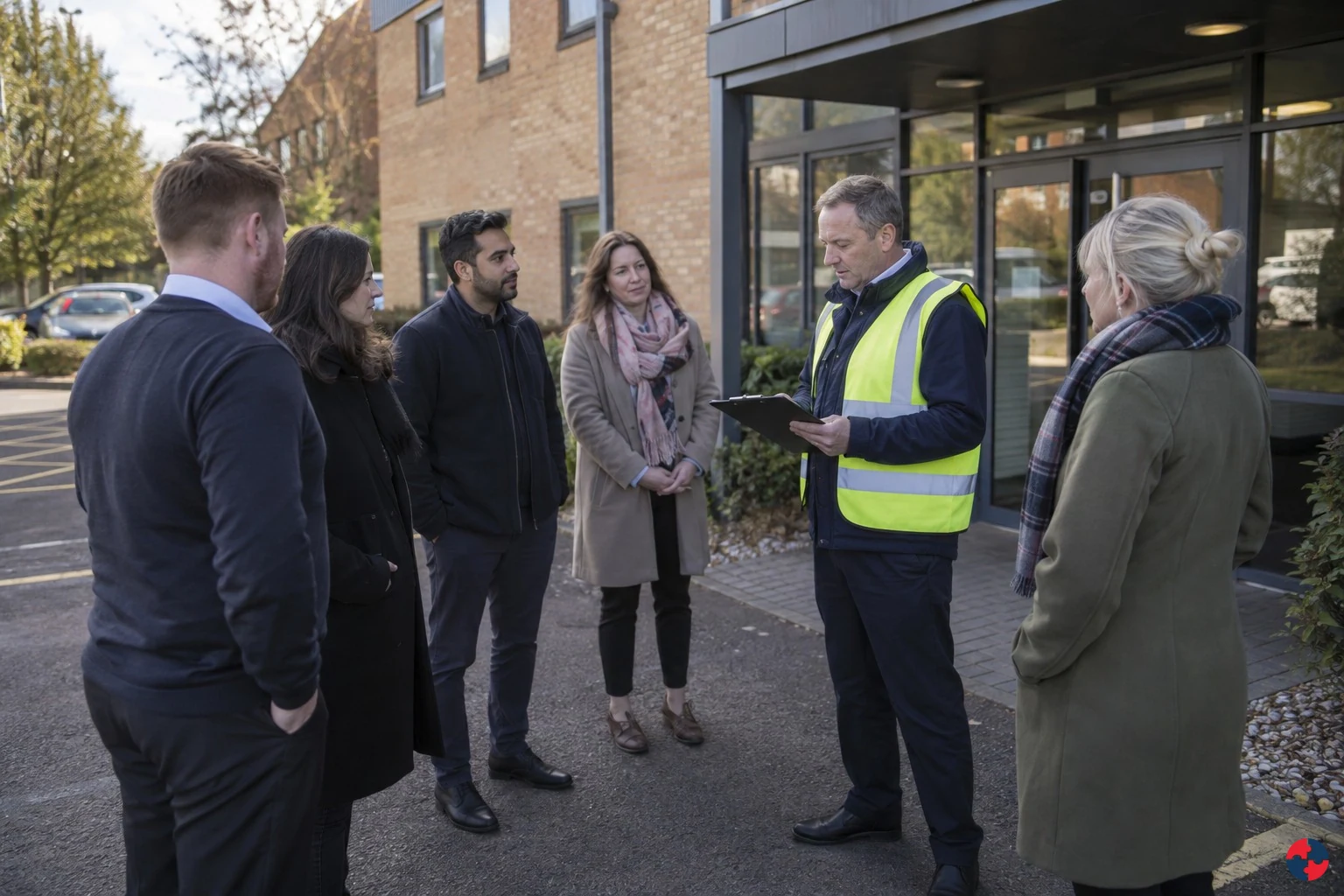
An illustrative office-exterior exercise-review scene provides clipboard, normal participants and office-frontage context beside a separate conceptual role-boundary explanation. Picture key: 1 Review clipboard · 2 Review participants · 3 Office frontage. The picture proves no safe location, role, missing person, complete headcount, helper competence, route, strategy or return permission. In the separate explanation, a conceptual danger / smoke area contrasts with an ASSUMED place of safety for reporting. A forward information arrow carries missing-person and last-known information through the emergency arrangements, retaining uncertainty. A separate crossed red return arrow and the warning NO ORDINARY WARDEN RE-ENTRY INTO DANGER show the role limit. Information handover never authorises return. Four checks define limits before the incident, rehearse the real evacuation journey, report from a place of safety, then use findings to improve the plan. Separate process headings are unnumbered. Actual emergency arrangements come first, independent of exercise review or records. No rescue, search, firefighting, assistance technique, safe smoke exposure, staffing number or evacuation strategy is assigned; all current national, person-led, private and source qualifications apply.
Small-office comparison: pass useful information from safety; an ordinary warden role does not include entering danger.
- Define limits before the incident. Agree the actual warden tasks, assistance interface, safe limits and absence cover.
- Rehearse the real evacuation journey. Include warning, affected people, actual routes and representative shifts.
- Report from a place of safety. Pass missing-person and last-known information through the emergency arrangements.
- Use findings to improve the plan. Correct role, route, cover or assistance gaps; verify the changes with affected people.
When the evidence does not fit: Do not send an ordinary warden back into danger to search. Report uncertainty and last-known information; follow the premises emergency arrangements.
Who acts: Premises fire lead, supervisors, workers, trained wardens and agreed assistants within their actual roles.
Changed workplace
Multi-shift warehouse: Check changed routes, actual cover and learning beyond a daytime attendance sheet.
Small office: Keep missing-person reporting separate from unauthorised search or entry into danger.
Evidence check: Illustrative role boundary. No rescue, firefighting, re-entry permission, safe smoke exposure, staffing number or evacuation strategy is assigned.
Follow the actual warehouse change and safe training-role explanation
Primary references: GOV.UK: equipment, drills and training · HSE: emergency roles, shifts and arrangements · GOV.UK: evacuation planning and assistance
Open the complete HD image (new tab)Download image

Follow the actual warehouse change and safe training-role explanation
Primary references: GOV.UK: equipment, drills and training · HSE: emergency roles, shifts and arrangements · GOV.UK: evacuation planning and assistance
At Fenwick Warehouse, the operations manager halts use of the obstructed loading-bay exit as soon as a route walk finds new racking and stock across it. The facilities lead removes the obstruction, checks door operation, signs and alarm coverage, and updates the fire risk assessment and plan. The shift supervisor then walks agency staff through the corrected route; the fire lead rehearses both day and night warden cover, checks that the escape still works during peak dispatch and signs hand-back only after the field checks pass.
The Home Office factories-and-warehouses guide supports the warehouse escape assessment in England; apply local Scottish or NI premises law when relevant.
A warehouse moves racking and changes the loading bay route. The written fire plan still shows the old route, temporary workers are inducted using an old map and one fire exit is partly hidden by new stock. A drill shows several people heading toward the old exit before being redirected.
A good response updates the FRA, revises route signs and maps, briefs supervisors and workers, retrains wardens, updates agency induction, checks alarm audibility in the changed layout and repeats a targeted drill once actions are complete.
| Change | Training issue | Action |
|---|---|---|
| Racking moved | People may use outdated routes. | Update plans, signs and induction. |
| Exit partly hidden | Final exit may not be recognised quickly. | Reposition stock and check visibility. |
| Temporary workers | New workers may not know emergency arrangements. | Add fire route walk-through to induction. |
| Wardens | Sweep areas changed. | Reallocate zones and train wardens. |
| Drill failure | Real behaviour exposed weak communication. | Record findings and repeat after improvements. |
What makes a fire drill useful rather than symbolic?
A useful drill tests behaviour, routes, communication, assistance and decision-making under realistic conditions.
GOV.UK advises at least one fire drill each year for E&W workplaces and a record of results; this is guidance rather than a fixed statutory interval. The responsible person should choose extra scenarios and shift coverage according to the premises and people. A night shift that never practises or an assisted-evacuation arrangement that is never tested may leave the plan unproven.
Drill frequency follows the relevant nation guidance and actual premises risk; no universal statutory interval is asserted.
The drill record should not only state the evacuation time. It should record what was learned, what failed, who was affected, what action was taken and how the responsible person knows the action worked.
| Drill element | What to observe | Learning question |
|---|---|---|
| Alarm recognition | Did everyone hear, see or understand the warning? | Are sounders, visual alarms or messages adequate? |
| Movement | Did people use correct routes without delay? | Are routes obvious, clear and short enough? |
| Wardens | Did wardens know zones and limits? | Do roles match real staffing? |
| Visitors/contractors | Were non-employees directed effectively? | Does induction or host control need improvement? |
| Assisted evacuation | Did PEEPs or generic plans work? | Are equipment, helpers and privacy arrangements suitable? |
| Re-entry | Was re-entry controlled? | Who authorises return to the building? |
Plan exercises safely: represent an unavailable route or helper through a briefing or simulation while keeping real emergency exits usable. Agree participation and assistance with the person. Use trained operators and suitable manual-handling assessment; simulate carry-down where practice would create avoidable injury risk. Stop the exercise if it threatens anyone’s safety.
How can the hierarchy of controls reduce fire risk before relying on training and wardens?
Use ERICPD and the five-level HSE hierarchy as related decision aids. Begin with removal and substitution, then verify engineered barriers before relying on procedures or PPE.
Task matrices are illustrations; premises-specific suitability, implementation and specialist design approval remain held for competent review.
New racking hides an exit and agency workers still know the old route; delay and smoke exposure are the credible harm.
A warden roster assumes one trained person who is absent; visitors may miss warning or assistance and delay escape.
How can the ERICPD hierarchy of controls reduce fire risk before relying on training and wardens?

| Hazard and harm route | ERICPD → five-level control | Task measure and feasibility | Owner, test and evidence | Failure and stop decision |
|---|---|---|---|---|
| Revised warehouse route and unfamiliar agency staff | Eliminate → Elimination | Remove the racking change that obstructs the designated exit; design the picking layout around the route before the next shift. Source: official guidance. | Warehouse manager signs a walk-through with peak stock in place; hold use while the required exit is obstructed. | Racking still hides or narrows the designated exit: stop use of the affected area and redesign. |
| Same scenario | Reduce → Substitution | Keep stock in the assessed location and quantities, brief workers, visitors, wardens and assistants, rehearse representative shifts and resolve drill findings before closure. Source: official guidance. | Operations lead checks floor plan and observed dispatch peak; reject a stock plan that relies on perfect housekeeping. | New stock location blocks another route at peak dispatch: reject layout and hold the move. |
| Same scenario | Isolate → Engineering | Restore route separation, signs, lighting and door operation consistent with the fire strategy, with physical stock restraints where suitable. Source: official guidance. | Facilities lead tests the final exit and checks visibility from work positions; restrict occupation if the route is not usable. | Exit, lighting or door fails the field test: restrict occupation until repaired. |
| Same scenario | Control → Administrative | Replace old route maps and agency induction, brief the new route in person, reallocate warden zones and rehearse an obstructed-route decision. Source: official guidance. | Shift supervisor samples workers’ route choice and drill observations; stop unsupervised work where induction is missing. | Agency worker cannot identify the new route: stop unsupervised work and re-induct. |
| Same scenario | PPE → PPE | No ordinary worker PPE can make smoke exposure or a blocked escape route acceptable; separately assessed maintenance PPE protects only the repair task. Source: official guidance. | Fire assessor records no PPE credit for evacuation; do not reopen on the basis of PPE. | Any plan depends on PPE to cross smoke: reject the plan and restore a safe route. |
| Same scenario | Discipline → Administrative assurance | Sample both day and night shifts after the change, close route and training defects, and repeat the exercise after high staff turnover. Source: official guidance. | Responsible person reviews roll-call, observed route and closed actions; escalate recurring failures. | Night-shift drill reveals repeat wrong-route choice: escalate and retest before accepting the change. |
| Missing warden cover during public event | Eliminate → Elimination | Avoid the event in that room until the evacuation method works without the missing role, or move it to a suitable space. Source: official guidance. | Event owner verifies room choice, occupancy and exit routes; cancel if needed cover cannot be provided. | Event cannot be evacuated without the absent role: cancel or move it. |
| Same scenario | Reduce → Substitution | Reduce attendance or use a lower-complexity activity and room that needs less staff direction, subject to the actual fire strategy. Source: official guidance. | Dutyholder records revised capacity and route test; do not assume a smaller crowd removes assistance needs. | Smaller attendance still lacks needed assistance: withhold room approval. |
| Same scenario | Isolate → Engineering | Maintain visible/audible warning, protected exits and any specified assisted-evacuation equipment; these reduce reliance on one person but do not replace planned help. Source: official guidance. | Facilities tests alarm and equipment before opening; hold event if a credited function is impaired. | Alarm or assisted-evacuation equipment fails pre-opening test: hold the event. |
| Same scenario | Control → Administrative | Name trained primary and deputy wardens for each zone and shift, rehearse visitor direction and refuge communication, and define the safe limit of a sweep. Source: official guidance. | Event supervisor checks attendance, briefing and demonstration; stop if no trained cover is present. | Named trained deputy is absent: do not admit the public until cover is restored. |
| Same scenario | PPE → PPE | Wardens should evacuate when conditions become unsafe; PPE is not authority to enter smoke, fight a growing fire or delay their own escape. Source: official guidance. | Trainer assesses role limits; cancel any plan relying on untrained intervention. | Any warden task requires smoke entry or untrained firefighting: withdraw and change the plan. |
| Same scenario | Discipline → Administrative assurance | Compare roster to actual staffing and drill outcomes at each event; revise staffing and training after near misses. Source: official guidance. | Responsible person signs a coverage review and checks action closure. | Actual roster diverges from plan: pause the next event until responsibility and practice are restored. |
How can the ISO 45001 hierarchy of controls reduce fire risk before relying on training and wardens?

| Hazard and harm route | ERICPD → five-level control | Task measure and feasibility | Owner, test and evidence | Failure and stop decision |
|---|---|---|---|---|
| Revised warehouse route and unfamiliar agency staff | Eliminate → Elimination | Remove the racking change that obstructs the designated exit; design the picking layout around the route before the next shift. Source: official guidance. | Warehouse manager signs a walk-through with peak stock in place; hold use while the required exit is obstructed. | Racking still hides or narrows the designated exit: stop use of the affected area and redesign. |
| Same scenario | Reduce → Substitution | Keep stock in the assessed location and quantities, brief workers, visitors, wardens and assistants, rehearse representative shifts and resolve drill findings before closure. Source: official guidance. | Operations lead checks floor plan and observed dispatch peak; reject a stock plan that relies on perfect housekeeping. | New stock location blocks another route at peak dispatch: reject layout and hold the move. |
| Same scenario | Isolate → Engineering | Restore route separation, signs, lighting and door operation consistent with the fire strategy, with physical stock restraints where suitable. Source: official guidance. | Facilities lead tests the final exit and checks visibility from work positions; restrict occupation if the route is not usable. | Exit, lighting or door fails the field test: restrict occupation until repaired. |
| Same scenario | Control → Administrative | Replace old route maps and agency induction, brief the new route in person, reallocate warden zones and rehearse an obstructed-route decision. Source: official guidance. | Shift supervisor samples workers’ route choice and drill observations; stop unsupervised work where induction is missing. | Agency worker cannot identify the new route: stop unsupervised work and re-induct. |
| Same scenario | PPE → PPE | No ordinary worker PPE can make smoke exposure or a blocked escape route acceptable; separately assessed maintenance PPE protects only the repair task. Source: official guidance. | Fire assessor records no PPE credit for evacuation; do not reopen on the basis of PPE. | Any plan depends on PPE to cross smoke: reject the plan and restore a safe route. |
| Same scenario | Discipline → Administrative assurance | Sample both day and night shifts after the change, close route and training defects, and repeat the exercise after high staff turnover. Source: official guidance. | Responsible person reviews roll-call, observed route and closed actions; escalate recurring failures. | Night-shift drill reveals repeat wrong-route choice: escalate and retest before accepting the change. |
| Missing warden cover during public event | Eliminate → Elimination | Avoid the event in that room until the evacuation method works without the missing role, or move it to a suitable space. Source: official guidance. | Event owner verifies room choice, occupancy and exit routes; cancel if needed cover cannot be provided. | Event cannot be evacuated without the absent role: cancel or move it. |
| Same scenario | Reduce → Substitution | Reduce attendance or use a lower-complexity activity and room that needs less staff direction, subject to the actual fire strategy. Source: official guidance. | Dutyholder records revised capacity and route test; do not assume a smaller crowd removes assistance needs. | Smaller attendance still lacks needed assistance: withhold room approval. |
| Same scenario | Isolate → Engineering | Maintain visible/audible warning, protected exits and any specified assisted-evacuation equipment; these reduce reliance on one person but do not replace planned help. Source: official guidance. | Facilities tests alarm and equipment before opening; hold event if a credited function is impaired. | Alarm or assisted-evacuation equipment fails pre-opening test: hold the event. |
| Same scenario | Control → Administrative | Name trained primary and deputy wardens for each zone and shift, rehearse visitor direction and refuge communication, and define the safe limit of a sweep. Source: official guidance. | Event supervisor checks attendance, briefing and demonstration; stop if no trained cover is present. | Named trained deputy is absent: do not admit the public until cover is restored. |
| Same scenario | PPE → PPE | Wardens should evacuate when conditions become unsafe; PPE is not authority to enter smoke, fight a growing fire or delay their own escape. Source: official guidance. | Trainer assesses role limits; cancel any plan relying on untrained intervention. | Any warden task requires smoke entry or untrained firefighting: withdraw and change the plan. |
| Same scenario | Discipline → Administrative assurance | Compare roster to actual staffing and drill outcomes at each event; revise staffing and training after near misses. Source: official guidance. | Responsible person signs a coverage review and checks action closure. | Actual roster diverges from plan: pause the next event until responsibility and practice are restored. |
In a hotel, night staff must demonstrate guest direction and assisted evacuation with the actual night roster; in a school, pupil supervision and substitute-teacher cover need a different test. The manager verifies each shift and stops an event if necessary evacuation cover is absent.
How should managers check fire training coverage?
Coverage should include role, shift, location, language, contractor and change effects, not just a global completion percentage.
A dashboard showing 98 percent completion can hide the people most likely to be missed: night cleaners, agency staff, delivery teams, contractors, part-time workers, remote workers visiting site, new supervisors and workers affected by temporary route changes.
Managers should sample understanding. The practical test is whether people can explain what they would do when the alarm sounds, what route they would use, what defects they would report and what they must not do.
| Group | Coverage risk | Good evidence |
|---|---|---|
| New starters | Inducted before they understand routes. | Induction includes route walk and alarm response. |
| Night or weekend workers | Drills may only happen during office hours. | Out-of-hours drill or scenario briefing. |
| Agency staff | High turnover can leave gaps. | Host induction and supervisor sampling. |
| Contractors | May not understand local alarm or permits. | Site briefing and permit conditions. |
| Public-facing staff | Need to direct visitors calmly. | Role-play or drill observations. |
| Managers | Need action ownership and impairment decisions. | Manager briefing and action tracker review. |
What fire training does each role need?
Training should be split by role because people need different knowledge, authority and practice.
A single generic fire training module rarely proves competence for every role. Training should match what the person can affect: recognising fire risk, raising the alarm, evacuating, helping others, managing contractors, closing defects or making responsible-person decisions.
Role split also helps managers find gaps. Night staff, contractors, temporary workers, cleaners, delivery teams and vulnerable-person support roles are often missed when training is managed only by headcount percentage.
| Role or group | Training focus | Evidence of understanding |
|---|---|---|
| All staff | Alarm response, escape routes, assembly, defect reporting and what not to do. | Induction, refresher record and sampled questions. |
| New starters | Local route walk, alarm sound/visual cue, assembly point and immediate reporting route. | Completed before unsupervised work. |
| Contractors | Local alarm, routes, permits, hot work, isolation, fire stopping and host contact. | Contractor induction and permit conditions. |
| Fire wardens or marshals | Area checks, safe sweeps, route support, assembly reporting, limits and defect escalation. | Role appointment, zone map and drill performance. |
| Managers and supervisors | FRA actions, training coverage, defects, impairments, drills and stop/review decisions. | Action tracker review and management briefings. |
| Night or lone staff | Out-of-hours alarm response, lone escalation, security doors and emergency contacts. | Scenario briefing or out-of-hours drill. |
| Vulnerable-person support | PEEP/generic plan, dignity, equipment, refuges and communication. | Private plan review and helper competence check. |
| Refresher training | Changes, drill findings, incidents, new risks and repeated weak points. | Refresher record linked to change or review. |
Which extinguisher matches the fire, and what parts should I recognise?
Identify the fuel and additional electrical hazard, read the actual extinguisher label and follow the site fire plan. Raise the alarm and protect escape first; only trained, authorised people should consider a small initial fire within their safe response limits.
Fire classes and fire extinguishersFire classes · agent types · dangerous mismatches
 Recognise the fuel. Read the extinguisher. Protect your escape.
UK awareness reference for common and specialist portable extinguisher families. Actual ratings, exclusions and manufacturer instructions govern each unit. Reading this guide is not practical training or permission to fight a fire. Fixed systems, hose reels and specialist industrial firefighting require their own assessed arrangements.
What is burning? Understand the fire classes
Class L is the 2026 addition to the classification standard. Existing extinguisher labels and product test claims vary; a new class name does not certify every battery product.
Extinguisher types: uses and dangers
These are typical applications, not universal permissions. Check the label on the actual unit. Images are AI-generated photorealistic teaching illustrations inspired by the referenced equipment; they are not photographs or certified product labels. Use Inspect the parts to explore the hardware. Band, nozzle and label details vary.
| Type and recognition | Typical rating and use | Wrong use: what can go wrong? |
|---|---|---|
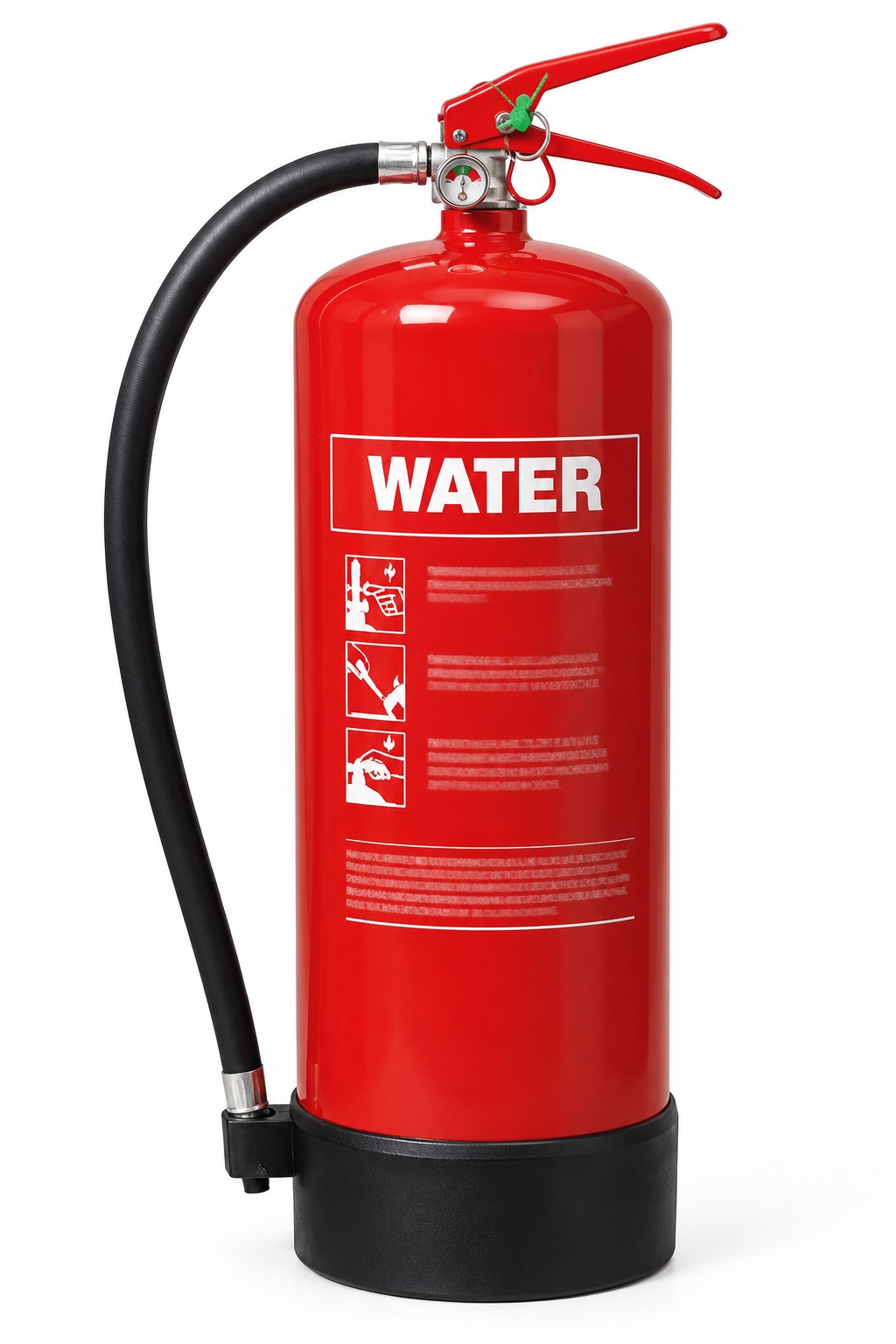  | Normally A Cools burning solid material such as paper, wood or fabric. | Check the limitation Ordinary water is unsuitable for live electrical equipment, flammable-liquid pools, cooking oil and reactive metals: shock, spreading fuel or violent reaction can result. |
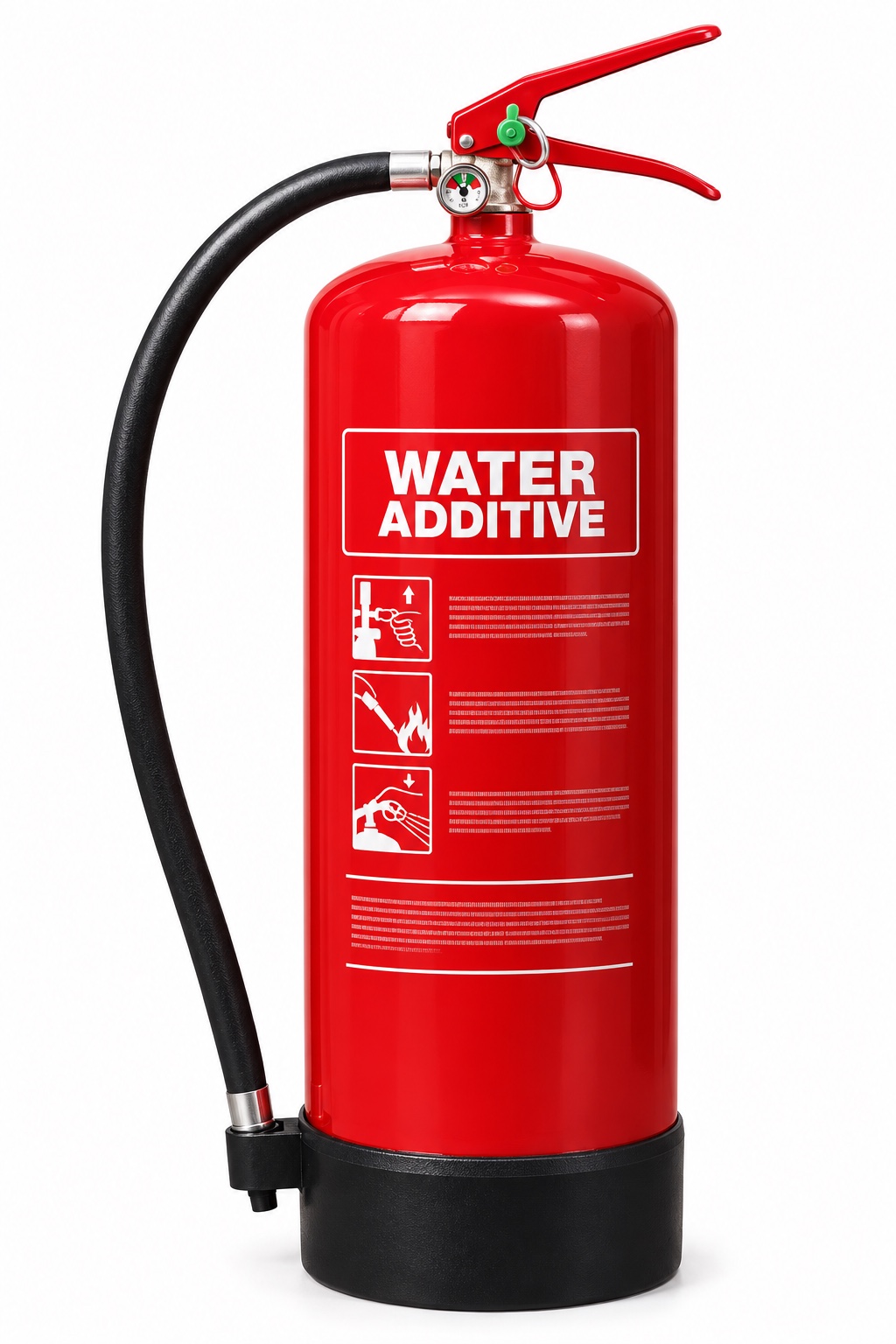 | A; B only if explicitly rated Improved wetting or spray performance can help on the hazards stated on that model’s label. | Check the limitation An additive does not make every water extinguisher safe for electricity, oils or reactive chemicals. Check the specific exclusions. |
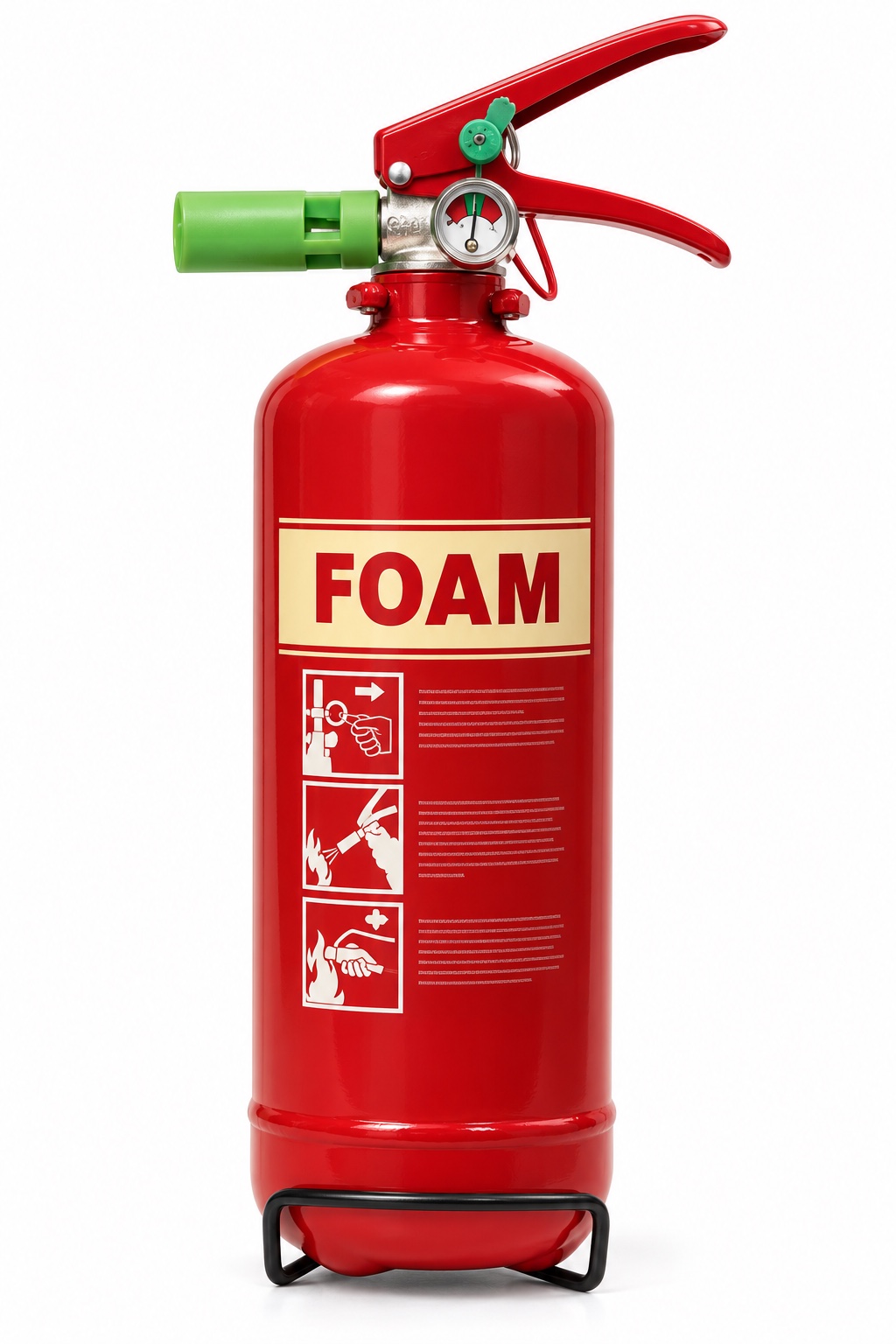 | Commonly A and B Cools and forms a surface blanket on suitable liquid fires. The agent must suit the actual fuel; some alcohols need alcohol-resistant foam. | Check the limitation Ordinary foam is not a general answer for live electricity, cooking oil or metal fires. Unsuitable foam may break down on a solvent; a jet can spread fuel. Free-flowing fuel needs specialist response. |
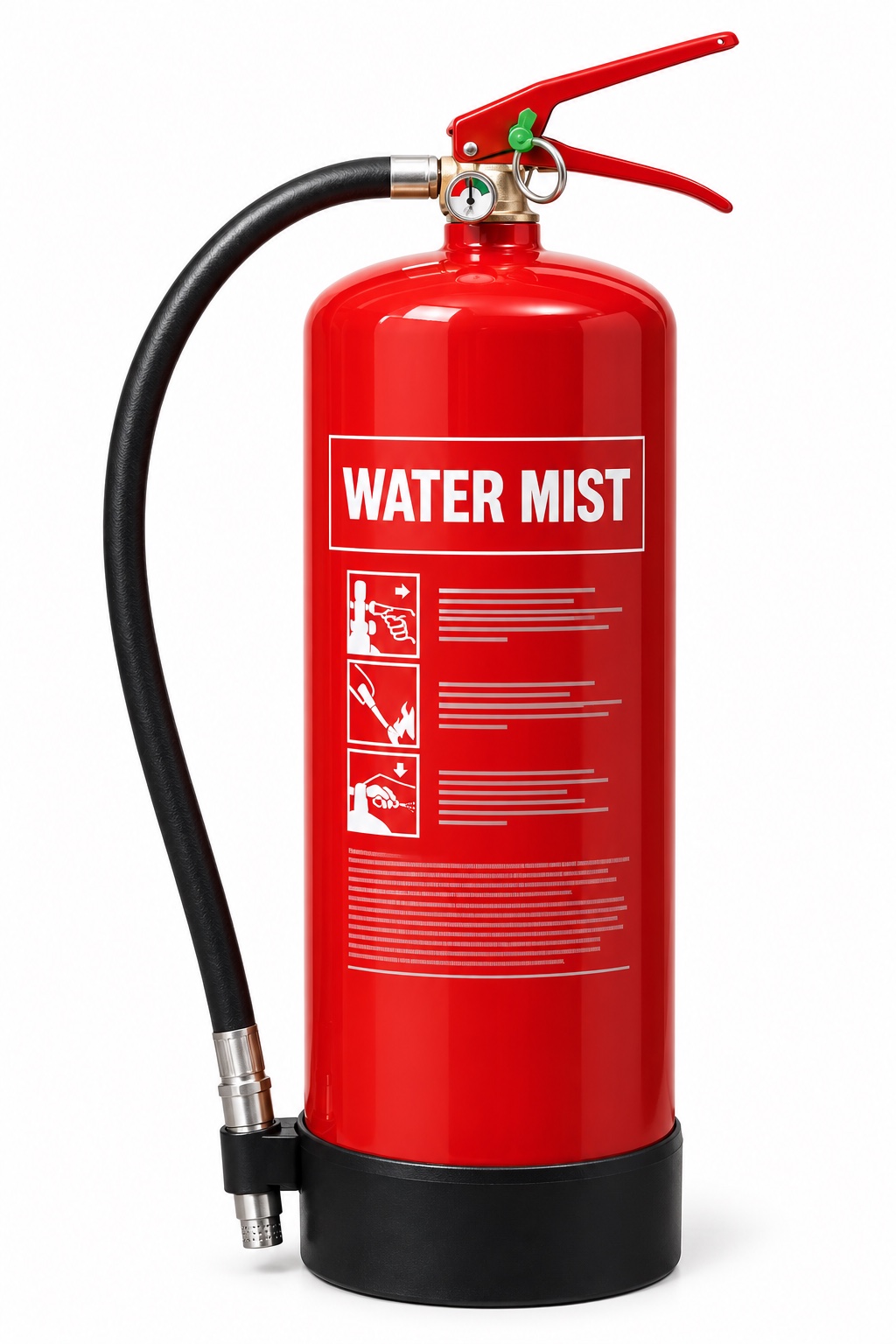 | Model-specific; commonly A, some F Fine droplets absorb heat. Some products have additional ratings or tested electrical suitability, with stated voltage and distance conditions. | Check the limitation ‘Mist’ is not universal approval. Use only the classes and electrical conditions actually declared for that model; do not assume it covers metals, liquids or batteries. |
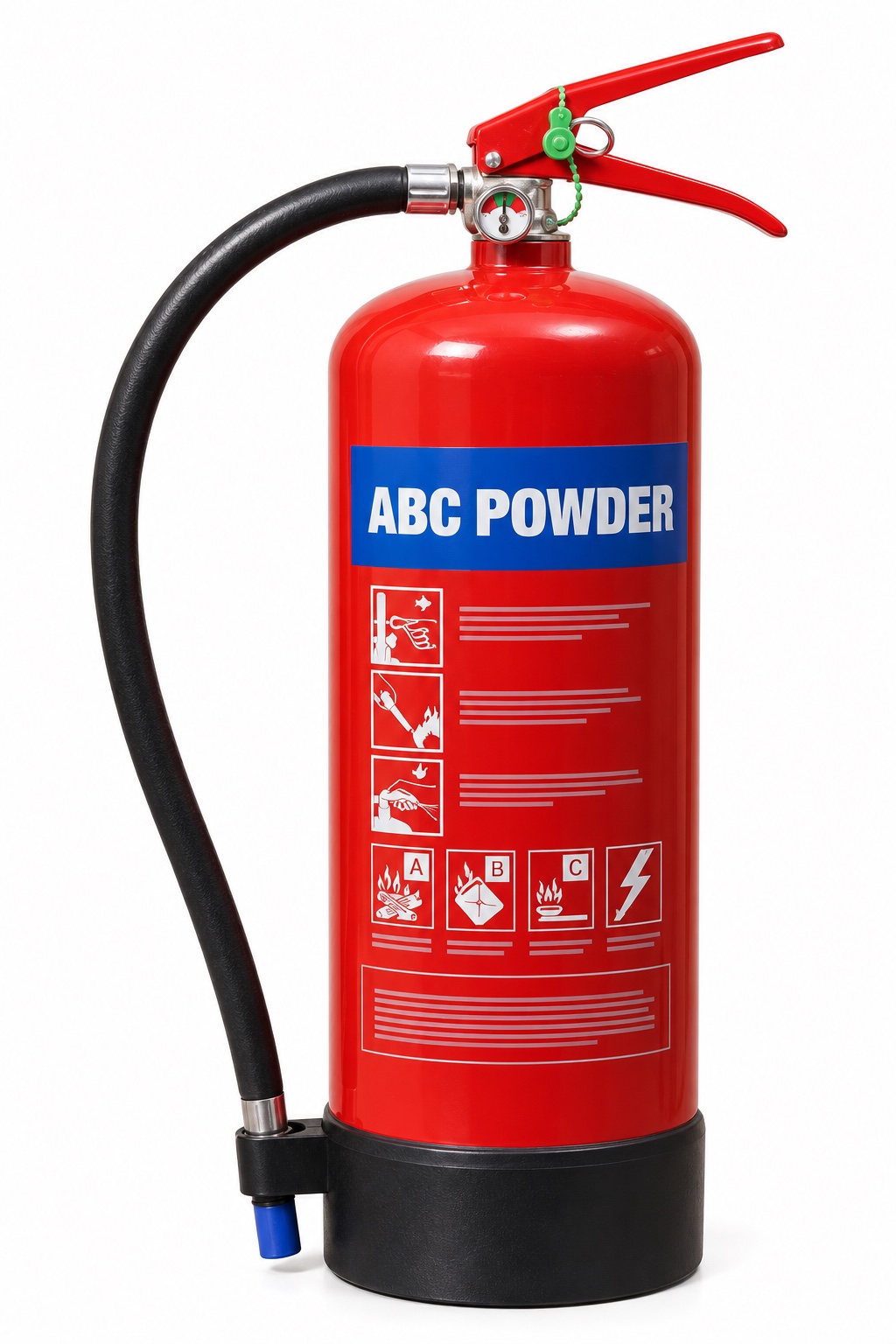 | A, B and C if marked Interrupts flame chemistry; multipurpose powder also acts on Class A material. A C marking does not authorise tackling a gas leak. | Check the limitation Powder can obscure escape and impair breathing; it is not generally recommended indoors. Limited cooling allows reignition. It is not metal-specific D powder or a substitute for F-rated cooking-oil equipment. |
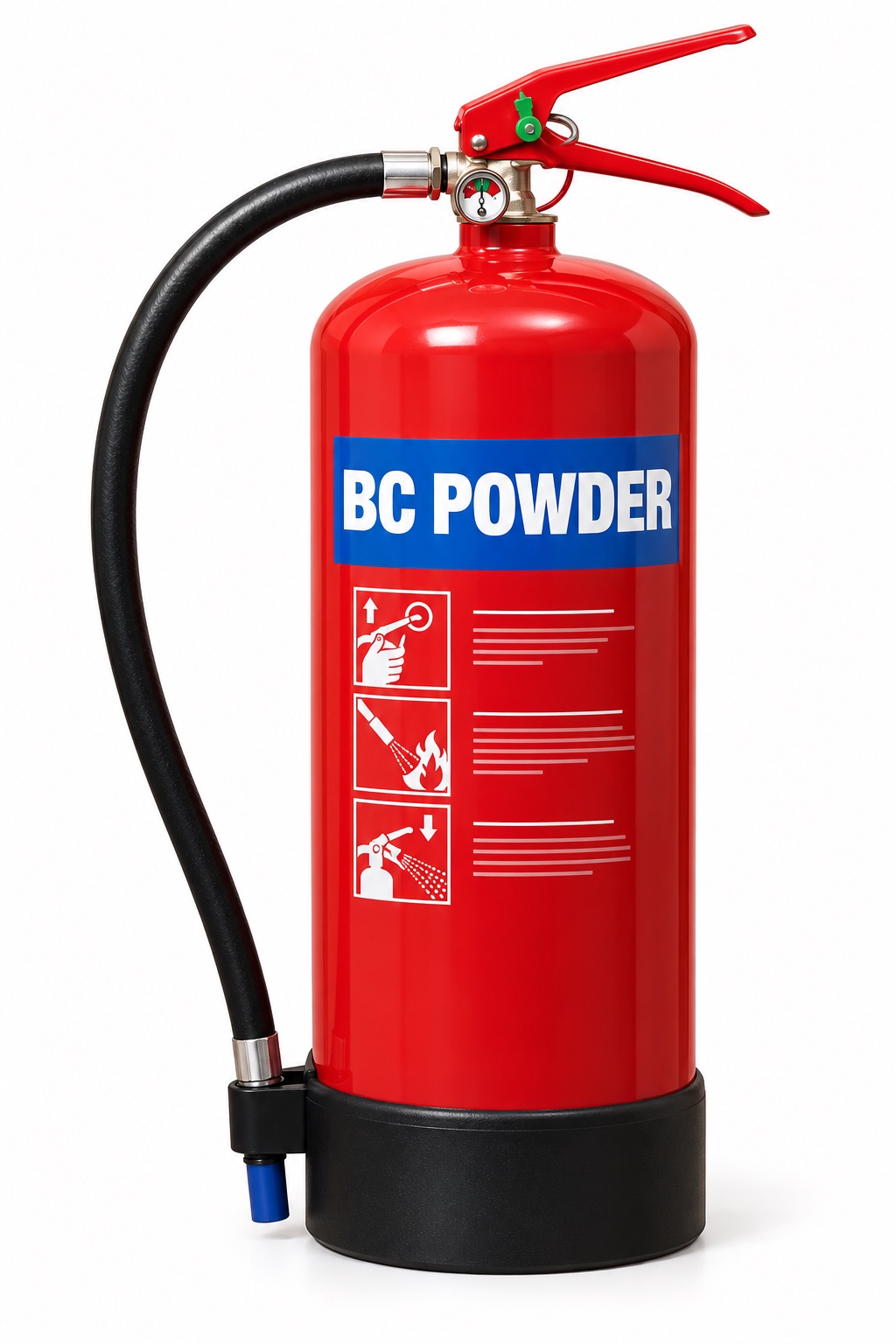 | B and C if marked; not A Selected for particular liquid or gas hazards under the assessed plan. Electrical use must follow the actual unit’s instructions. | Check the limitation Do not assume all blue powder extinguishers protect wood or paper. It has the visibility, breathing and reignition limitations of powder; it does not provide Class D or F protection. |
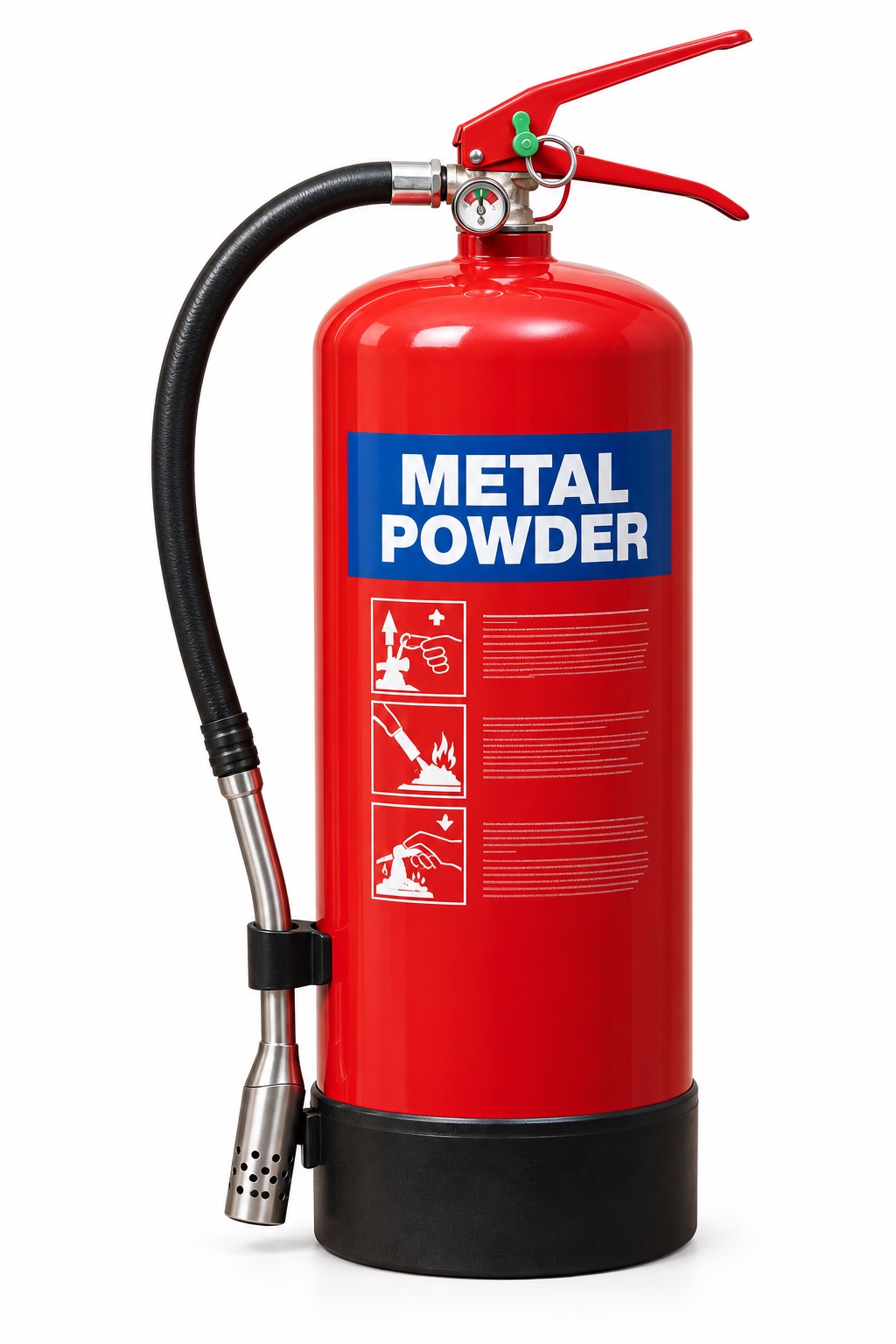 | D, for the specified metal A specialist powder can isolate or absorb heat from a compatible burning metal. Selection requires knowledge of the metal and its form. | Check the limitation The wrong powder can fail or react. Water, foam and CO₂ can be dangerous on certain burning metals. A powder suitable for magnesium is not automatically suitable for metallic lithium. |
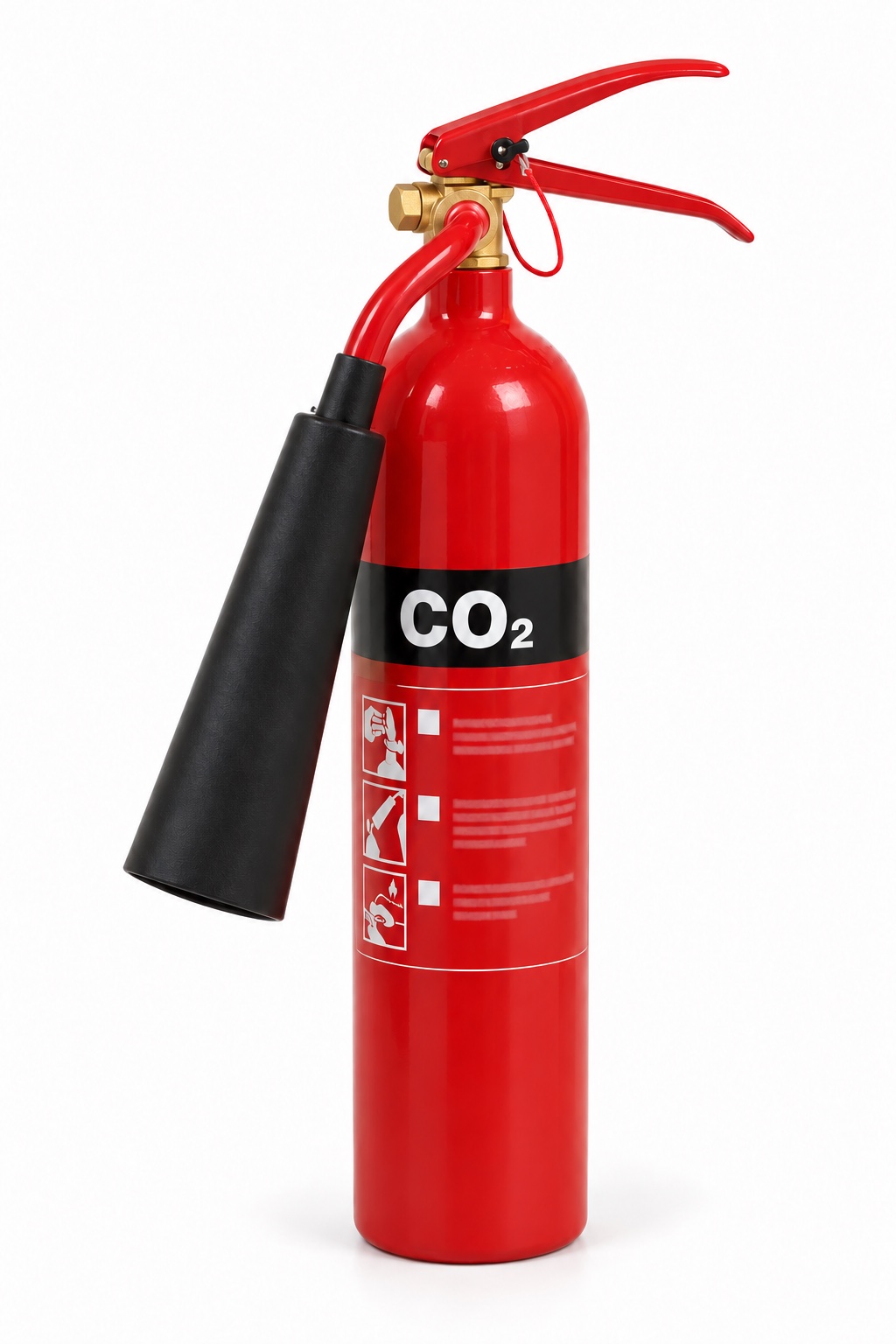 | B; electrical use as instructed Displaces the atmosphere around a small flame and leaves no powder residue. Often selected around electrical equipment. | Check the limitation Poor cooling means reignition is possible. CO₂ can create a dangerous atmosphere in enclosed spaces; discharge can cause frostbite. Hold only the designated insulated parts. Not a cooking-oil or metal-fire substitute. |
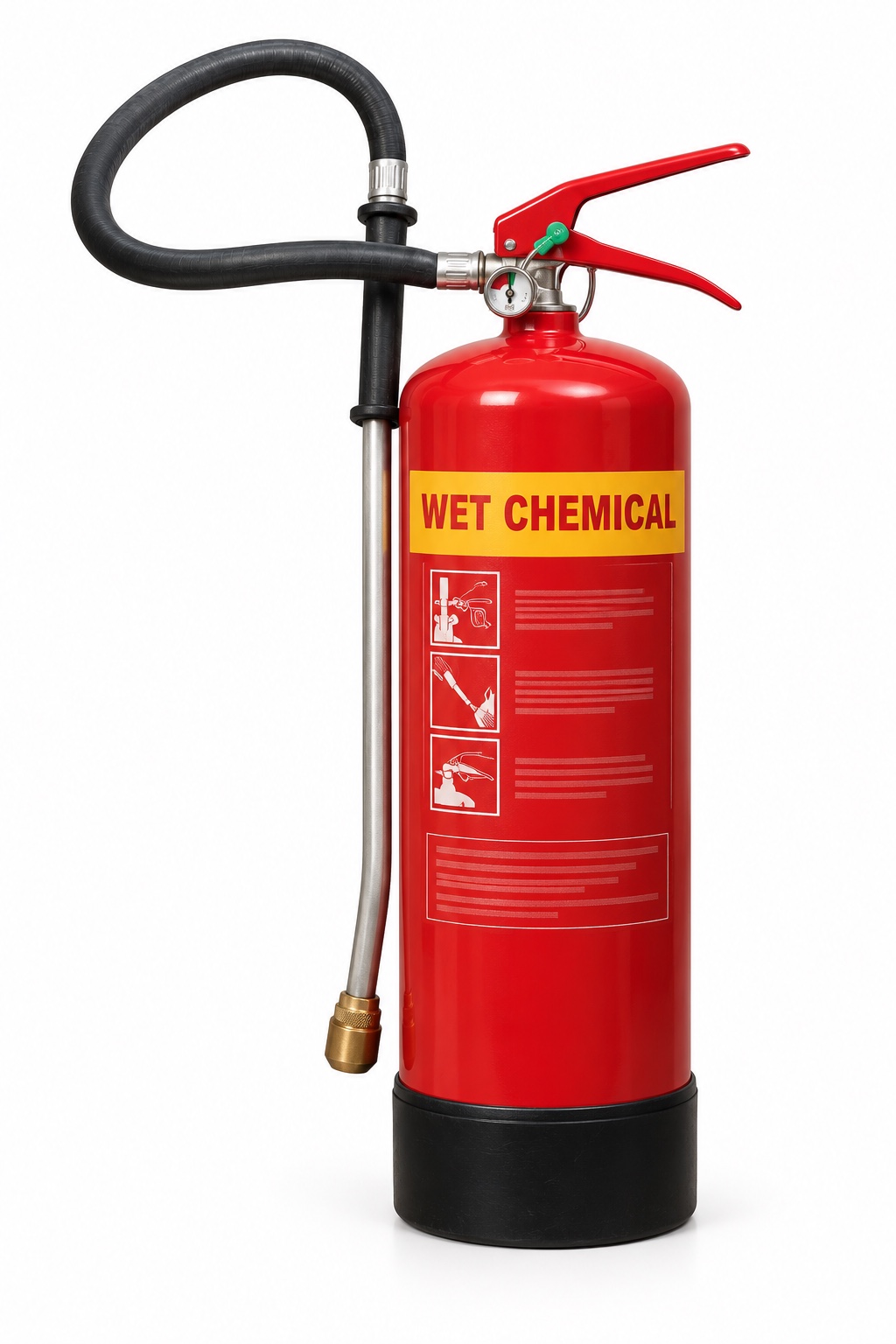 | F; often A if marked Cools cooking oil and creates a protective surface layer through reaction with the fat. Use only within the actual unit’s rating and instructions. | Check the limitation Do not mistake it for a general liquid-fire or electrical extinguisher. Incorrect application or moving the fryer can splash hot oil; apparent flame-out does not establish safe temperature. |
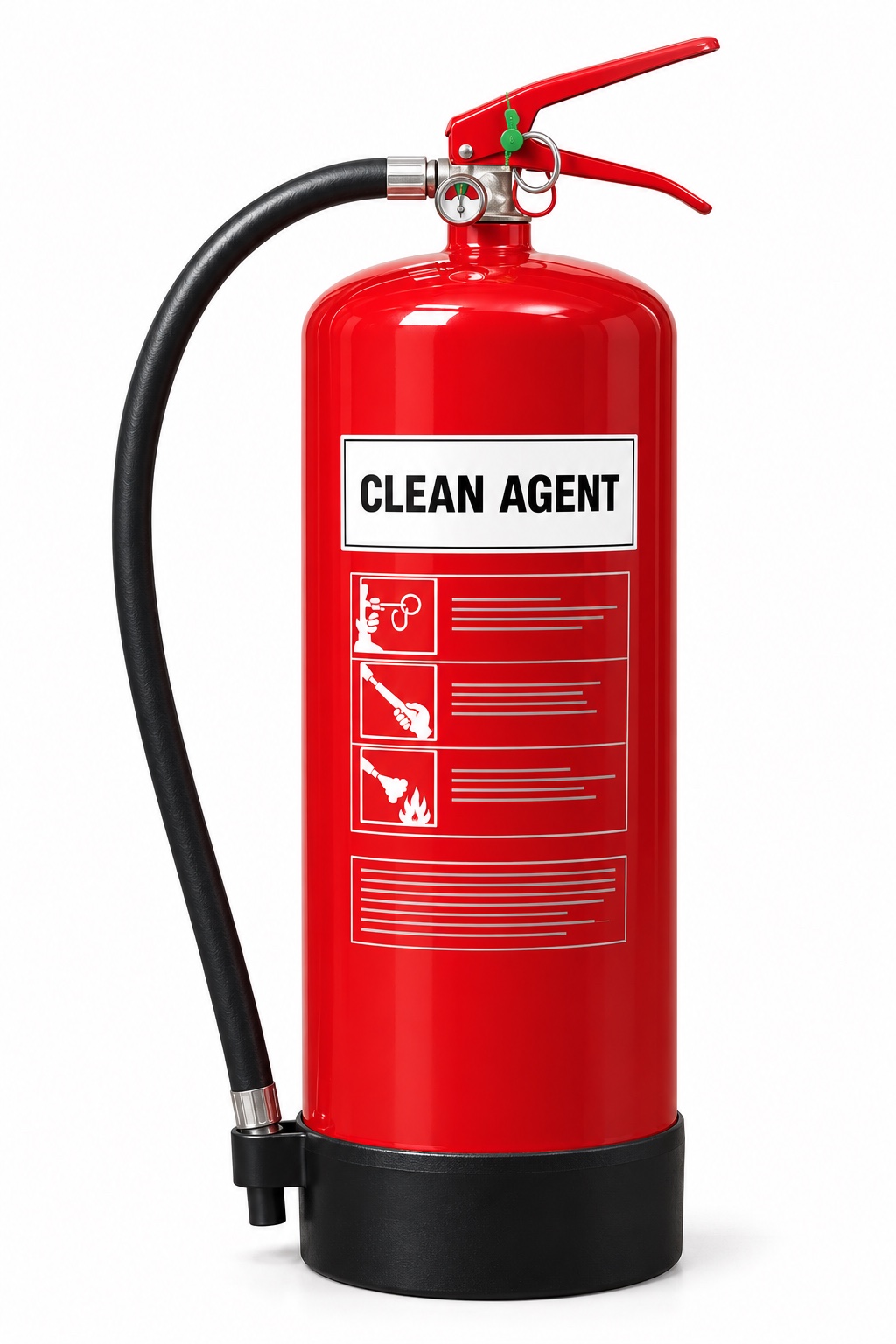 | Product- and jurisdiction-specific Specialist low-residue agents may protect sensitive equipment. Confirm the UK-approved application and the manufacturer’s limits. | Check the limitation Low residue does not mean safe to breathe. Do not copy a US A:B:C rating as UK gas-fire approval. Legacy halon is restricted to permitted critical uses and applicable deadlines. |
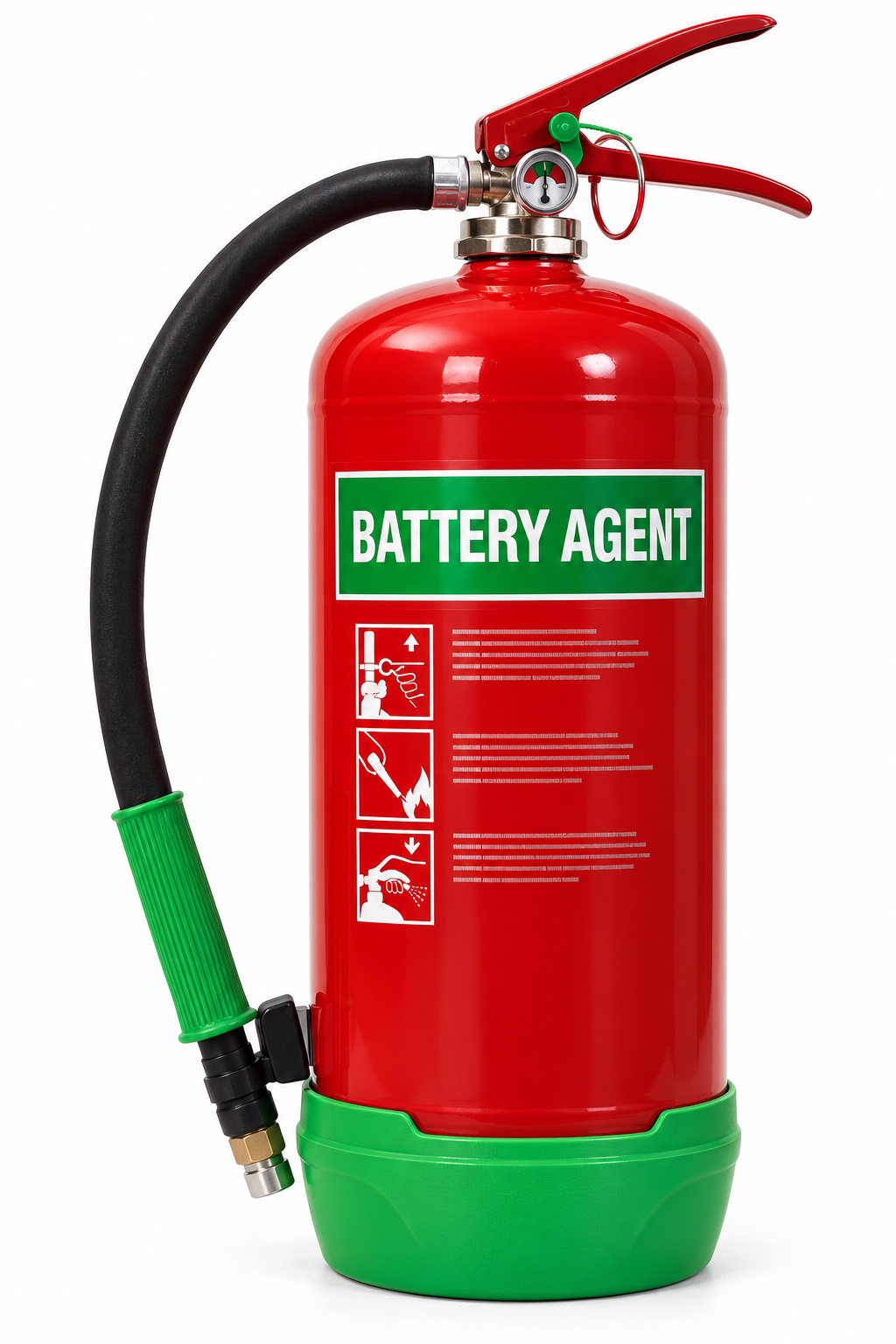 | Check independent scope and instructions Some products use water-based cooling or specialist media such as aqueous vermiculite for specified battery scenarios. Selection depends on chemistry, capacity and location. | Check the limitation A ‘lithium’ label is not proof it will stop thermal runaway in a large pack. Flame suppression may not prevent reignition or gas release. Do not approach, carry or submerge a failing battery as a learner exercise. |
Lithium-ion product example · Firechief 6 L Lith-Ex

A named product example helps connect the generic table to an actual unit. Confirm the exact product before using its claims.
- Agent and intended application
- The linked Seton example uses aqueous vermiculite dispersion (AVD) for specified lithium-ion battery fire applications. Water content cools; the dispersed mineral helps form a barrier. This is not generic Class D metal-fire powder.
- Read the actual rating
- Seton lists a 6 L product with a 13A rating. That A rating describes its solid-material test performance; it does not, by itself, certify a universal Class L battery capability.
- Match the exact model and generation
- The manufacturer’s current 6 L G2 page identifies FLE6X and different discharge details from the retailer’s older listing. Do not mix their time, range or pressure values. Match the delivered label, product sheet and manual.
- Check the battery scope
- Confirm the allowed battery chemistry, energy capacity, state and scenario with the current manufacturer information and competent fire assessment. A large EV or energy-storage pack cannot be treated as a small-device fire.
- Electrical conditions are product-specific
- The supplied product label includes a voltage and minimum-distance condition. Do not transfer that condition to another battery extinguisher or infer that it makes an unsafe electrical approach acceptable.
- After the flame disappears
- Heat, off-gas and reignition can remain. Follow the planned withdrawal, exclusion and fire-service response; do not pick up, submerge or return a failed battery to charging.
Seton · supplied 6 L Lith-Ex example ↗
Firechief · current 6 L G2 model information ↗
Read the actual label
Read the agent, fire-class letters, performance rating, electrical warnings, operating instructions and service condition. Numbers such as 13A or 55B describe standardised test performance, not a safe room size or permission to tackle that amount of fire. Colour is a clue; the actual label and assessed plan decide suitability.
Spot the dangerous assumption
Pause at each question, then open the explanation. These are unscored learning prompts alongside the course assessment.
Keep prevention, alarms, compartmentation and escape effective. Report a missing, obstructed, damaged or discharged extinguisher; do not return a partly used unit to service. Competent selection, maintenance and practical training belong in the fire arrangements.
What should a good fire drill actually test?
A good drill tests the full evacuation system, not just how quickly people reach an assembly point.
A drill should help the responsible person see whether the written plan survives real behaviour. This includes alarm recognition, route choice, warden action, PEEPs, visitor control, blocked-route response, roll call/accountability, re-entry control and management of unusual groups such as contractors or night staff.
The best drill findings are practical. If people use the wrong route, if a sweep is unsafe, if roll call takes too long, if a refuge call is unanswered or if people re-enter early, the drill has done its job by revealing what needs to change.
| Drill test point | What to look for | Action if weak |
|---|---|---|
| Recognition | Do people act immediately when alarm sounds or message is given? | Improve warning, briefing or alarm message. |
| Alarm coverage | Can people in noisy, remote or public areas detect the warning? | Review audibility, visual alarms and any competent, verified supplementary warning; a sweep alone is not automatic alarm equivalence. |
| Routes | Do people use safe routes without obstruction or confusion? | Correct signage, route condition and instruction. |
| PEEPs and assistance | Do planned helpers, equipment and refuges work? | Update plan, train helpers or change equipment. |
| Warden sweep | Do wardens understand areas and limits? | Rebrief role boundaries and zone allocation. |
| Blocked route | Do people know the alternative route? | Add scenario drills and route signage. |
| Roll call/accountability | Can missing-person concern be raised without delaying escape? | Improve visitor, contractor and shift records. |
| Re-entry control | Is return prevented until authorised? | Clarify duty manager/security authority. |
Plan exercises safely: represent an unavailable route or helper through a briefing or simulation while keeping real emergency exits usable. Agree participation and assistance with the person. Use trained operators and suitable manual-handling assessment; simulate carry-down where practice would create avoidable injury risk. Stop the exercise if it threatens anyone’s safety.
When should fire training or warden arrangements be escalated?
Escalate when people may not know what to do, roles do not match staffing or drill evidence shows the plan is not working.
Training gaps become serious where escape depends on staff direction, assisted evacuation, high public occupancy, night staffing, complex premises, dangerous substances, contractors or process shutdowns.
The responsible person should not accept training completion as proof on its own. Understanding, drill performance and supervisor observations matter.
| Trigger or question | Immediate action | Evidence before normal operation |
|---|---|---|
| Has the premises, occupancy or work activity changed? | Review the fire risk assessment and decide whether the current controls still work. | Updated assessment, action tracker and briefing record. |
| Is a critical fire precaution impaired? | Stop or restrict the affected activity where warning, escape or assistance cannot be relied on; obtain a competent temporary strategy and repair the control. | Impairment record, competent repair and retest evidence. |
| Is the finding outside internal competence? | Seek competent fire safety advice before making assumptions. | Scope of advice, report, decision record and action closure. |
| Did a drill, alarm, inspection or incident reveal weakness? | Investigate the cause and update the arrangement. | Learning record, corrective action and re-test. |
| Could delay expose people to smoke, heat or blocked escape? | Stop normal reliance on the weak arrangement until a safe interim control exists. | Temporary control approval and communication record. |
Where do fire training, marshals and wardens fail?
They fail when training is generic, drills are superficial, wardens lack authority or people with non-standard roles are missed.
The risk is not only untrained workers. It is people trained in arrangements that have changed, wardens who cannot leave their own safety-critical post, public-facing workers who cannot direct visitors and managers who do not close defects.
Training should be treated as a control that needs design, delivery, practice and evidence.
| Failure or weak practice | How it develops | What good looks like |
|---|---|---|
| Paper compliance | fire training exists as a document but does not describe real conditions. | Walk the premises, talk to staff and compare records with the work as done. |
| Unowned actions | Findings are made but no one owns budget, deadline or close-out. | Assign accountable owner and escalate high-risk delay. |
| Poor coordination | Landlord, tenant, contractor or shared-premises controls do not join up. | Record responsibilities and information sharing. |
| Unmanaged change | Refurbishment, layout, stock, staffing, plant or contractor changes undermine controls. | Add fire review to change and handover. |
| Weak evidence | Certificates and tick sheets exist but do not prove the control works today. | Check defects, retests, drill learning and close-out quality. |
| Unsafe warden expectation | Wardens are expected to search areas with smoke or delay escape. | Define limits and train safe reporting. |
| Completion-only records | Attendance is recorded but understanding is not tested. | Sample questions, drill observations and supervisor checks. |
What evidence shows fire safety training, marshals and wardens is controlled?
Evidence should show that fire precautions are suitable, available, maintained, tested, understood and reviewed.
Fire evidence should connect the fire risk assessment to real controls. A log book alone is not enough if defects remain open, staff do not know the procedure or equipment cannot be reached during normal work.
Good records show what was checked, what failed, who owned the action, when it was closed and how the responsible person knows the arrangement still protects relevant persons.
| Evidence item | What it should show | Assurance question |
|---|---|---|
| Training matrix | Who needs what training and when. | Covers shifts, contractors, agency workers and role-specific needs. |
| Warden appointment and zone map | Roles, areas and cover are defined. | Matches actual staffing and building layout. |
| Drill learning record | Drill observations lead to actions. | Actions are closed and retested where needed. |
| Fire risk assessment | Hazards, people at risk, controls, significant findings, action plan and review triggers are current. | Assessment reflects real premises, not just a template. |
| Action tracker | Actions have owner, date, priority, interim control and close-out evidence. | High-risk actions are escalated when overdue. |
| Inspection and test records | Alarms, emergency lighting, doors, routes, extinguishers and relevant systems are checked. | Records show defects and repairs, not just completed ticks. |
| Training and drill evidence | People understand their role and drills produce learning. | Records include observations and improvements. |
| Management review | Trends, repeat defects, enforcement feedback and major changes are reviewed. | Resources and priorities follow the risk. |
How should fire safety training, marshals and wardens be assured?
Assurance should test whether the fire arrangement works in the building, at the time, with the people who may need it.
First-line assurance comes from suitable routine checks, scheduled system tests, warden observations and immediate defect reporting; competent specifications and premises guidance determine the actual intervals. Second-line assurance reviews fire risk assessment actions, drills, maintenance, contractor records and repeat findings. Specialist assurance may include competent fire risk assessor review, fire alarm contractor reports, extinguisher servicing, emergency lighting testing and enforcement feedback.
The test is practical: if the alarm operates today, can everyone hear, understand, move, escape, account for vulnerable people and keep routes safe without relying on luck?
| Assurance layer | What to check | What good looks like |
|---|---|---|
| Frontline checks | Workers, supervisors and wardens check that fire training controls are present, usable and understood during normal work. | Defects are corrected or escalated before people rely on weak controls. |
| Manager review | Managers review assessment actions, drills, inspections, contractor effects, training, maintenance and repeat weak signals. | Action ownership, resources and deadlines match the fire risk. |
| Competent review | Competent fire safety support reviews complex premises, technical assumptions, enforcement concerns or uncertainty. | Advice is recorded, risk-ranked and converted into practical action. |
| Leadership review | Senior leaders review overdue high-risk actions, notices, significant impairments, insurance concerns and recurring failures. | Important fire risks are visible in governance and business planning. |
Which fire duties apply across the UK jurisdictions?
England and Wales, Scotland and Northern Ireland have separate non-domestic premises fire routes; work and dangerous-substance duties must also be checked for the actual location and activity.
The Fire Safety Order is the England and Wales premises route. Scottish and Northern Irish instruments are separate. GB work-health rules and DSEAR do not silently apply in NI; use the corresponding NI rules where in scope. This table identifies routes, not legal approval for a site-specific strategy.
For current record rules, Home Office England guidance explains that every E&W responsible person records the full assessment and arrangements; Welsh Government guidance is the Wales authority. The old significant-findings-only wording is no longer sufficient in E&W.
For the exact premises duties in England and Wales, Article 14 covers emergency routes and exits; Article 15 covers serious/imminent-danger procedures; Article 21 requires suitable employee fire-safety training. Scotland and Northern Ireland use different fire-law routes.
| Jurisdiction | Duty or guidance | What it means | How to apply it |
|---|---|---|---|
| E&W | Regulatory Reform (Fire Safety) Order 2005 | Requires the responsible person to assess fire risk and maintain suitable fire precautions in non-domestic premises. | Use as the main fire safety legal framework for England and Wales. |
| GB | Health and Safety at Work etc. Act 1974 | Requires employers to protect employees and others affected by work so far as reasonably practicable. | Use for work activities that create fire, emergency or firefighting risk. |
| GB | Management of Health and Safety at Work Regulations 1999 | Requires suitable and sufficient risk assessment, preventive arrangements, competent help, emergency arrangements and review. | Use for management arrangements, competence and emergency procedures. |
| GB | Dangerous Substances and Explosive Atmospheres Regulations 2002 | Requires fire and explosion risk from dangerous substances to be assessed and controlled. | Use where flammable substances, gases, vapours, dusts or oxygen enrichment affect the fire arrangements. |
| England | Building Safety Act Section 156 implementation guidance | England guidance on the Fire Safety Order amendments: full FRA record, information sharing and uncommenced appointed-assessor competence provision. | Record the full assessment and fire-safety arrangements; share relevant information. |
| Wales | Welsh Government Section 156 guidance | Wales guidance on the same Fire Safety Order amendments: full FRA record, information sharing and uncommenced appointed-assessor competence provision. | Record the full assessment and fire-safety arrangements under the Wales route. |
| Scotland | Fire (Scotland) Act 2005 | Scottish non-domestic premises fire framework. | Assess people and fire precautions in the actual premises. |
| Scotland | Fire Safety (Scotland) Regulations 2006 | Scottish detailed premises precautions. | Warning, escape, maintenance and coordination. |
| NI | Fire and Rescue Services (NI) Order 2006 | NI non-domestic premises fire framework. | Identify the appropriate person and affected premises. |
| NI | Fire Safety Regulations (NI) 2010 | NI detailed premises precautions. | Warning, escape, maintenance and review. |
| NI | Health and Safety at Work (NI) Order 1978 | NI general work-health and safety route. | Control work-created fire and emergency risks. |
| NI | Management Regulations (NI) 2000 | NI risk-assessment and emergency arrangements. | Coordinate workers, contractors, competence and emergency action. |
| NI | DSEAR (NI) 2003 | NI dangerous-substance work-risk route where relevant. | Plan release, ignition and emergency controls. |
In England and Wales, Article 14 of the Fire Safety Order addresses emergency routes and exits; Article 15 addresses procedures for serious and imminent danger, including appropriate drills. The Workplace Regulations 1992 address ordinary traffic routes, not emergency escape routes.
For the England and Wales Fire Safety Order amendments, Home Office Section 156 guidance explains the England implementation, full recorded assessment and uncommenced appointed-assessor provision; Welsh Government guidance gives the corresponding Wales implementation. Scotland and Northern Ireland have different recording tests.
Separate the premises and work-process routes: Fire Safety Order Article 4 defines general fire precautions in England and Wales; HSE work-process fire guidance explains that HSE or the local authority generally enforce process precautions such as flammable storage, ventilation and ignition control under work-health rules. The appropriate enforcing body can differ by premises or activity.
How can BS EN ISO 45001 support fire safety training, marshals and wardens management?
A voluntary occupational health and safety system can help assign fire-learning roles, test practical competence, review drill findings and close weaknesses after changes in occupancy or work.
HSE public guidance supports practical management themes. Exact ISO clause mapping requires authorised licensed text and specialist review; no clause-level compliance or certification is asserted.
Who needs competence, and how should it be demonstrated?
Test the decisions and actions each role must make in a realistic fire scenario, including faults, absent staff and hand-back.
| Role | Learning to test | Competence demonstration | Assessor and record | Reassessment trigger |
|---|---|---|---|---|
| Workers, agency staff and volunteers | Recognise the actual alarm, nearest usable route and reporting channel. | Walk the route and demonstrate action from the work position. | Host supervisor observes and records induction. | Start, route or alarm change. |
| Wardens and marshals | Know assigned zone, safe sweep limit, visitor direction, assistance and withdrawal. | Rehearse an absent colleague, blocked route and refuge call. | Fire lead observes exercise and roster. | Role, staffing or plan change. |
| Supervisors and event leads | Keep routes clear, provide cover and escalate critical defects. | Lead a peak-shift or public-event scenario and authorise a hold. | Responsible person samples field decision and record. | Event or shift change. |
| Specialist equipment users | Know when a suitable first-response extinguisher is permitted and when to withdraw. | Demonstrate agent/route decision without approaching a growing fire. | Competent trainer records task-specific assessment. | Equipment or fuel change. |
| Responsible persons and auditors | Connect FRA, training matrix, drills, faults and closeout. | Trace a failed drill observation to repaired control and retest. | Senior dutyholder reviews evidence and resources. | Incident or repeated failure. |
Plan exercises safely: represent an unavailable route or helper through a briefing or simulation while keeping real emergency exits usable. Agree participation and assistance with the person. Use trained operators and suitable manual-handling assessment; simulate carry-down where practice would create avoidable injury risk. Stop the exercise if it threatens anyone’s safety.
How could Riverside Leisure Ltd manage this in practice?

Riverside Leisure Ltd would train staff for the actual fire plan, provide competent cover on relevant shifts and use exercises to find and resolve gaps.
Riverside Leisure Ltd · practical example
Test a night team's roles in the hotel's evacuation plan
The key lesson A warden title or attendance certificate does not demonstrate that the complete evacuation arrangement works with the people present.
The situation: In an England-and-Wales hotel example, the usual daytime fire warden is absent from the night shift. A new receptionist is unsure who calls the fire service and how guests needing assistance are supported.
Why this matters: Sleeping or unfamiliar guests, assistance needs and limited night staffing require roles that fit the real hotel and its assessed strategy.
How Riverside Leisure Ltd would manage it
- Match roles to the plan — Hotel Manager. Review the current fire risk assessment and emergency plan with appropriate competent input. Identify the staff actions and cover needed for each shift, including guest assistance and contractor interfaces.
- Teach the actual response — Department Supervisor. Give staff instruction relevant to their responsibilities, alarm arrangements and routes. Explain limits clearly: a warden role is not permission to enter smoke, delay escape or undertake an unplanned rescue.
- Check understanding — Duty Manager. Ask new and temporary staff to explain their first actions, communication route and assistance responsibilities. Resolve uncertainty before relying on them to perform the role.
- Exercise the arrangement safely — Hotel Manager. Plan an appropriate exercise that tests the scenario and staffing without exposing people to harm. Record observations about communications, assistance, accountability and practical difficulties.
- Close the learning loop — Facilities Coordinator. Resolve equipment or route defects through competent maintenance and feed the results into the plan and training. The Hotel Manager checks that staff understand the changes and that the improvement works.
When the conditions change
- Recognise the trigger
- Required role cover or understanding is absent, or an exercise reveals an essential gap.
- Make the immediate decision
- Apply the assessed restrictions to affected use while the responsible person resolves the arrangement.
- Verify the next step
- The Hotel Manager checks the necessary night-shift role cover, staff understanding and corrected exercise findings against the hotel’s assessed evacuation strategy.
What good looks like
The people present can explain complementary roles, appropriate cover exists and exercise findings lead to verified changes rather than another certificate.
Evidence to look for: Current plan and role allocation, training and cover records, exercise observations and checked corrective actions.
Common mistake to avoid: Assuming wardens can make an unsuitable evacuation strategy work by being more vigilant.
Apply this to your work: Could your night team explain the same workable response without the daytime warden?
Guidance behind the management approach: GOV.UK: fire-safety equipment, drills and training. Use the topic's legal and technical guidance for the applicable work and location.
Riverside Leisure Ltd uses different fire training for reception, pool staff, cafe staff, cleaners, contractors and duty managers.
| Management element | How the business would manage it | Evidence to review |
|---|---|---|
| Induction | All starters walk routes and learn alarm response. | Induction checklist. |
| Wardens | Zones and limits are defined. | Appointment and training record. |
| Drills | Drills test public, assisted and out-of-hours arrangements. | Observation and action record. |
| Manager review | Training gaps and drill findings are reviewed. | Monthly fire action tracker. |
Riverside hotel fire safety examples
Use these fictional hotel policies and records to see how a manager documents local fire precautions, evacuation arrangements and decisions on shift. Adapt the examples to the premises and obtain local approval before use.
- England Word and PDF pack (ZIP) · England reading copy (PDF)
- Northern Ireland Word and PDF pack (ZIP) · Northern Ireland reading copy (PDF)
- Scotland Word and PDF pack (ZIP) · Scotland reading copy (PDF)
- Wales Word and PDF pack (ZIP) · Wales reading copy (PDF)
Browse all Riverside fire examples in the Policy Builder library
What do the acronyms and key terms mean?
These terms distinguish fire roles, people at risk and legal routes.
Acronyms can exclude newer readers if they are not explained. This section keeps the main terms available at the end of the page so the article stays readable while still supporting learners and audit users.
| Acronym | Meaning | Plain-English use |
|---|---|---|
| FRA | Fire Risk Assessment | A structured assessment of fire hazards, people at risk, controls, emergency arrangements and review needs. |
| FRS | Fire and Rescue Service | The emergency service and enforcing authority for many fire safety matters in England and Wales. |
| HSE | Health and Safety Executive | Great Britain workplace health and safety regulator. |
| HSWA | Health and Safety at Work etc. Act 1974 | Great Britain general work-health and safety statute; Northern Ireland has a separate 1978 Order. |
| MHSWR | Management of Health and Safety at Work Regulations 1999 | Regulations requiring suitable and sufficient risk assessment and management arrangements. |
| PEEP | Personal Emergency Evacuation Plan | A person-specific plan for someone who may need assistance to evacuate safely. |
| DSEAR | Dangerous Substances and Explosive Atmospheres Regulations | Great Britain work-process fire and explosion duties; NI has separate corresponding rules. |
| RP | Responsible person | Employer or person in control with E&W Fire Safety Order duties for the premises. |
| ERICPD | Eliminate, Reduce, Isolate, Control, PPE, Discipline | Decision aid for selecting and sustaining controls; not a statutory six-step duty. |
Unlock another resource
You have used this month’s two free downloads. Publish a post in your own words to unlock one more resource, or choose SHARE Individual for 10 downloads per month.
You decide whether to share. If you do, use the relevant platform disclosure tools and do not make claims you do not genuinely hold.