
SHARE Knowledge Hub
Occupational Leukaemia
Work-related benzene exposure can increase the risk of leukaemia, especially acute myeloid leukaemia; significant ionising-radiation exposure is a separate recognised risk. Prevention means identifying the real task and route, eliminating avoidable exposure, controlling residual exposure and verifying the controls. A clinician, not a manager, investigates symptoms or an individual diagnosis.
Understanding Occupational Leukaemia
Occupational leukaemia is not a single exposure label. Leukaemia comprises several acute and chronic blood cancers, and the strength and specificity of occupational evidence differ by agent and subtype. Benzene has an established link with acute myeloid or acute non-lymphatic leukaemia; ionising radiation can cause leukaemia other than chronic lymphocytic leukaemia. Other diagnoses require case-specific evidence.
Why this matters at work
Short, very high exposure can produce headache, tiredness, nausea, dizziness and unconsciousness. Repeated exposure can suppress bone marrow and cause serious blood disorders; benzene is an established human leukaemogen, particularly linked with AML. Acute solvent effects and long-term cancer risk require different emergency and control responses.
A high exposure result requires investigation and better control even if the worker feels well. An abnormal health finding requires medical assessment and review of exposure, but does not by itself prove occupational leukaemia. Keep exposure, health and medical records distinct and linked by controlled references.
How organisations manage this in practice
HSWA provides the general duty to protect employees and others. COSHH applies to benzene and other hazardous substances and requires assessment, prevention or adequate control, maintenance, monitoring where needed, health surveillance where appropriate, information and emergency planning. Carcinogens and mutagens attract additional control measures.
Appoint radiation protection supervisors where required to help secure compliance with local rules in controlled areas and, where appropriate, supervised areas. RPSs need authority, time, local knowledge and a clear escalation path. They are not substitutes for trained workers or engineering control.
Validate the change at work scale. Confirm quality, emissions, LEV needs, PPE compatibility, maintenance and waste. Inform workers and update assessments, training, inventories and emergency arrangements. Record why substitution was or was not reasonably practicable and revisit as methods and markets change.
Complete a suitable and sufficient radiation risk assessment before work. Identify radiation sources and types, who may be exposed, estimated normal doses, reasonably foreseeable accidents, engineering controls, maintenance, monitoring, designated areas, pregnancy considerations and emergency arrangements.
Classified outside workers entering another employer's controlled area require cooperation between their employer and the area-controlling employer. Exchange the work scope, radiation type, estimated dose, controls, local rules, RPA and RPS arrangements, dose constraints, pregnancy information where volunteered and contingency arrangements.
What medical boundary should readers understand?
This page gives workplace guidance, not medical advice. Suspected leukaemia, unexplained blood symptoms or significant exposure concerns require qualified medical assessment.
Leukaemia can only be diagnosed by medical professionals using blood tests and specialist investigations. A manager, supervisor or HSE adviser should not interpret tiredness, bruising or infections as proof of leukaemia. Their role is to make sure workers know how to access NHS or occupational-health support and to review any workplace exposure that may still be present.
Where a worker has a relevant diagnosis and a history of benzene, radiation or other carcinogen exposure, the employer should handle the matter sensitively, protect confidentiality, involve occupational health and competent hygienists where needed, and review whether current controls could expose others.
Not diagnosis
Do not use workplace observations to diagnose leukaemia.
Medical route
Signpost concerning symptoms to a GP or the appropriate urgent-care route: 111 in England, Scotland and Wales and NI GP out-of-hours. A life-threatening emergency needs 999.
Work history
Encourage workers to tell clinicians about benzene, radiation, chemical or refinery/process work history.
Privacy
Health details should be handled under UK GDPR, the Data Protection Act 2018 and occupational-health confidentiality.
What are the key facts about occupational leukaemia?
Occupational leukaemia is mainly a prevention topic because disease may appear long after poor exposure control.
Latency matters
Cancer can appear years after relevant exposure, so waiting for symptoms is not prevention.
Benzene is central
Benzene exposure is a known risk factor for acute myeloid leukaemia in adults.
Radiation can matter
Significant ionising radiation exposure is another recognised risk factor for some leukaemias.
Control before exposure
Carcinogen exposure should be eliminated or reduced as low as reasonably practicable.
Monitoring is evidence
Air monitoring and biological monitoring help test whether controls are working where relevant.
Symptoms are not specific
Tiredness, infections and bruising can have many causes but should be medically checked when persistent or concerning.
What is occupational leukaemia in plain English?
Leukaemia is cancer of blood-forming cells. Occupational leukaemia means workplace exposure may have contributed to that cancer.
The workplace lesson is not that every worker with leukaemia has been poisoned at work. The lesson is that certain agents, especially benzene, are serious carcinogenic hazards and must be controlled before harm appears. The disease may not show until long after the exposure, so prevention depends on exposure knowledge and control evidence rather than symptom watching.
A high-quality workplace page should therefore explain both sides: the medical topic belongs with clinicians, while the exposure-control topic belongs with the employer, competent COSHH support, occupational hygiene, occupational health and management review.
| Element | Plain-English meaning | Workplace significance |
|---|---|---|
| Condition | Cancer affecting blood-forming cells. | Medical diagnosis and treatment sit with clinicians. |
| Occupational link | Work exposure to a recognised carcinogen may increase risk. | Requires exposure history and competent review. |
| Classic chemical agent | Benzene. | Petrochemical, fuel, rubber and solvent-related contexts need tight controls. |
| Other relevant agent | Significant ionising radiation exposure. | Requires radiation protection arrangements, dose records and specialist competence. |
| Management focus | Prevent exposure, verify controls and keep records. | Do not wait for disease to prove controls were weak. |
How can workplace exposure contribute to leukaemia risk?
The mechanism differs by agent, but the core principle is damage to blood-forming cells or genetic material.
Benzene is absorbed into the body and can affect bone marrow, where blood cells are made. Long-term or repeated exposure can contribute to serious blood disorders, including leukaemia. Ionising radiation can damage DNA. Estimated cancer risk increases with dose; very small additional risks at low doses do not establish individual causation. Optimise exposure and keep within applicable limits.
For prevention, the precise biochemical pathway is less important than the control message: identify the carcinogen, understand the route into the body, prevent or minimise exposure, confirm controls through monitoring where needed and act on any evidence of failure.
| Agent | Mechanism idea | Control implication |
|---|---|---|
| Benzene | Can affect bone marrow and blood-forming cells after absorption. | Control vapour exposure, skin contact, spills, fuel handling and maintenance releases. |
| Ionising radiation | Can damage DNA; estimated cancer risk increases with dose, including small additional risks at low doses. | Use time, distance, shielding, controlled areas, dose monitoring and specialist advice. |
| Mixed refinery/process exposure | Multiple hydrocarbons, vapours and maintenance residues may be present. | Assess actual substances, not just the job title. |
| Historic exposure | Disease may appear long after past controls failed. | Keep exposure records and encourage full occupational history. |
What is the exposure-to-health pathway for occupational leukaemia?
A simple pathway helps learners connect the hazard, the route into the body, the delay before disease and the management evidence needed.
Occupational leukaemia is best understood as a chain, not as a single event. The chain starts with a recognised carcinogen such as benzene or a significant ionising radiation exposure. It then moves through a route into the body, dose over time, latency, possible health concern, medical assessment and workplace control review.
The management value of the pathway is that it shows where prevention can intervene. The employer cannot diagnose leukaemia, but it can identify benzene sources, prevent vapour and skin exposure, verify controls, record exposure groups, provide surveillance where required and learn from any monitoring result, spill, leak or symptom concern.
1. Benzene or radiation exposure
Identify the agent, source, task, frequency and whether the exposure is routine, non-routine, accidental or historical.
2. Route into the body
Check inhalation, skin contact, ingestion or radiation dose rather than assuming one control covers everything.
3. Dose over time
Consider concentration, duration, frequency, peak tasks, PPE/RPE usability and whether biological monitoring is needed.
4. Latency
Recognise that cancer may appear years later, so exposure records and competent review matter.
5. Health concern
Use NHS, GP, occupational health or specialist routes for symptoms, diagnosis and advice.
6. Surveillance, records and control review
Use exposure monitoring, health surveillance where required, action tracking and management review to improve prevention.
| Pathway stage | Workplace question | Evidence or response |
|---|---|---|
| Carcinogen present | Is benzene, radiation or another relevant agent present or historically likely? | Inventory, SDS, radiation source register and work-history prompt. |
| Exposure route | How could exposure deliver a dose? | COSHH/radiation assessment covering inhalation, skin, ingestion and dose. |
| Dose and task pattern | What concentration, duration, frequency and peaks are credible? | Air monitoring, biological monitoring where appropriate and task observation. |
| Latency | Could the health effect appear long after exposure? | Long-term exposure records and incident history. |
| Health concern | Is medical or OH signposting needed? | Private referral route and work-history information for clinicians. |
| Control review | What must change if exposure evidence is weak? | Action tracker, permit review, training refresh and management review. |
Which occupational exposures should be considered?
Relevant exposure depends on the agent, task, duration, controls and work history.
For workplace learning, benzene is the key named chemical. It may be present in petrol, crude oil, natural gas, certain refinery and petrochemical streams, some contaminated land settings and historic rubber or solvent uses. Modern controls have reduced many exposures, but tasks that open systems, drain fuel, disturb contaminated ground or involve maintenance can still create peaks.
Radiation exposure is a separate route and should not be mixed casually with chemical exposure. It requires specialist radiation protection arrangements and dose records. A strong occupational-history review asks about industries, tasks, periods, incidents, controls and whether exposure was routine, accidental or poorly controlled.
UKHSA benzene information supports the chemical exposure route. A workplace category alone is not proof of exposure or causation. Cytotoxic work is omitted from the leukaemia list here because the page does not establish an agent-specific causal link; assess each actual material under its own evidence and rules.
| Setting | Possible exposure | Control focus |
|---|---|---|
| Petrochemical and refinery work | Benzene in process streams, tank work, sampling, maintenance and leaks. | Closed systems, permits, monitoring, gas testing and hygiene. |
| Fuel handling and vehicle repair | Petrol contains benzene at restricted levels, but fuel draining and vapour contact can occur. | Fuel retrievers, no compressed-air line blowing, gloves, ventilation and washing. |
| Contaminated land/tunnelling | Volatile organic chemicals including benzene can be released from former industrial sites. | Ground investigation, air/biological monitoring, ventilation, PPE/RPE and heat-stress planning. |
| Rubber or chemical manufacturing | Historic or specialist benzene/solvent exposure. | Substitution, enclosure, LEV, monitoring and exposure records. |
| Radiography/nuclear/radiation work | Ionising radiation exposure. | Radiation protection adviser/supervisor controls, controlled areas and dose records. |
Why is benzene important for occupational leukaemia?
Benzene is a known human carcinogen: map the task, inhalation and skin routes before choosing a control.
UKHSA benzene guidance links long-term exposure with leukaemia and describes inhalation and skin contact. Potential exposure at a fuel terminal is task-specific: line breaking, open sampling, spills and contaminated equipment deserve closer assessment than a generic job title. Petrol contains benzene, but handling petrol does not automatically mean a high exposure.
HSE exposure-limit guidance says carcinogen or mutagen exposure must be reduced as low as reasonably practicable, even where a workplace exposure limit is met. A competent hygienist should design monitoring for the task and explain what a result can and cannot establish. Odour or the absence of immediate symptoms is not proof of safety.
| Task trigger | Immediate control decision | Evidence and escalation | Direct source |
|---|---|---|---|
| Opening a fuel line | Isolate, drain and use a closed method where practicable; control any residual vapour and splash. | Permit, isolation proof and control check; hold the job if the line state is uncertain. | HSE carcinogen control |
| Sampling or transfer | Use sealed sampling/transfer and maintain capture or vapour recovery where needed. | Method and monitoring record; stop if a connection leaks. | UKHSA benzene |
| Cleaning or spill | Exclude unnecessary people, contain release and use a planned cleaning method. | Incident, exposure and repair records; competent review before restart. | GB COSHH |
How does radiation fit into this topic?
Ionising radiation needs its own risk assessment, competent radiation protection and dose-control regime.
HSE IRR17 guidance covers notification/registration/consent, radiation protection advisers, local rules and dose arrangements in Great Britain. Northern Ireland has a separate Ionising Radiations Regulations (NI) 2017 and HSENI guidance. The radiation specialist must decide which requirements apply to the source and work.
Do not apply benzene COSHH controls as a substitute for radiation protection. A source inventory, work authorisation, appropriate shielding, access control and dose evidence should be checked before the task; abnormal dose or loss of containment is escalated under the site radiation procedure.
Which exposure routes matter?
Exposure route decides what controls are needed.
Inhalation is often central for benzene because vapour can be breathed in. Skin contact can also matter, especially with liquid fuels or contaminated surfaces. Ingestion can occur through contaminated hands, cigarettes, food, drink and phones, even where airborne exposure is lower.
A mature COSHH assessment checks each route rather than assuming that a respirator solves the problem. It also considers peak exposures during non-routine tasks such as draining, cleaning, maintenance, sampling, spill response and line breaking.
| Route | How it occurs | Control focus |
|---|---|---|
| Inhalation | Breathing vapour, fume, gas or aerosol. | Closed systems, ventilation, gas testing, monitoring and RPE for residual risk. |
| Skin absorption | Liquid contact, splash, soaked gloves or contaminated surfaces. | Substitution, closed transfer, compatible gloves, washing and clothing rules. |
| Ingestion | Contaminated hands, food, drink, cigarettes, facial hair or phones. | Clean/dirty separation, washing, no eating or smoking in contaminated areas. |
| Injection/sharps | A generic medical/lab context does not establish an occupational-leukaemia pathway; an identified agent and credible task-specific source are required. | Retain sharps controls for their separate hazards; do not infer a leukaemia association without agent-specific evidence. |
| Radiation dose | External exposure from sources or equipment. | Time, distance, shielding, controlled areas and dose monitoring. |
What symptoms and signposting should be understood?
Unexplained fatigue, pallor, breathlessness, infection, bruising or bleeding needs medical assessment; symptoms do not prove an occupational cause.
NHS acute myeloid leukaemia (AML) symptom advice is an AML example, not a symptom rule for every leukaemia subtype. Seek prompt GP advice for concerning symptoms. For urgent help use the relevant nation’s service: NHS 111 routes in England, Scotland and Wales or NI GP out-of-hours guidance; call 999 for a life-threatening emergency. The worker can give the clinician an accurate work and exposure history, including past jobs and monitoring, while the employer reviews current controls for other exposed people. A manager should not diagnose, order an individual test or infer causation from a job title.
How can the hierarchy of controls reduce workplace exposure to agents linked to leukaemia?
Eliminate avoidable benzene exposure first; verify each remaining layer before opening a fuel system.
The practical sequence is ERICPD mapped to the five-level hierarchy. HSE carcinogen guidance makes “below the limit” insufficient by itself. The operator, supervisor and hygienist need to agree what evidence permits the task to start and what event stops it.
A fuel-terminal valve replacement should be held when isolation is unverified, a closed drain is unavailable, a vapour-recovery/ventilation control fails or selected protection cannot be worn safely. Repair and a confirming check precede hand-back.
Five-level decision: replace a benzene-bearing valve
Benzene vapour at a fuel-system opening can enter the breathing zone; long-term exposure is associated with blood and bone-marrow harm. The engineer first tests whether a closed or remote method removes the opening, then whether an approved lower-benzene material or process is compatible. If the break is essential, engineered isolation, closed drainage, recovery, purge and ventilation come before the permit, vapour checks and task-selected RPE. The competent isolator proves the actual break point and the supervisor checks the result before work. A workplace exposure limit does not excuse a preventable carcinogen release. Sources: Benzene toxicological overview; Workplace exposure limits and carcinogens; COSHH exposure monitoring.
ERICPD response: purge proof fails at the break
Eliminate the immediate opening, reduce people and inventory around the job, and isolate the line and bay. Control the retained product through a revised recovery and test plan; use suitable PPE only for the residual risk of that approved method. “Discipline” is the maintained permit, defect report, retest and learning review, not a penalty for raising the concern. The process owner considers any possible exposure and the competent isolator demonstrates the corrected state before the supervisor authorises restart. Ionising-radiation work follows its separate statutory assessment and is not made safe by this benzene method. Sources: Workplace exposure limits and carcinogens; Ionising radiations guidance L121; COSHH exposure monitoring.
How can the ERICPD hierarchy of controls reduce workplace exposure to agents linked to leukaemia?

| ERICPD source label | ESEAP control level | Valve-change choice | Owner, proof and stop |
|---|---|---|---|
| Eliminate | Elimination | Avoid opening the line by redesigning or replacing the task where feasible. | Engineer documents feasibility; uncertain line contents hold work. |
| Reduce | Substitution / Administrative controls | Select a benzene-free or lower-benzene material where compatible; minimise open inventory. | Procurement and process owner verify compatibility; no undocumented substitute. |
| Isolate / Control | Engineering controls | Physically isolate, drain closed, contain vapour and use suitable extraction/ventilation. | Supervisor checks isolation and capture; leak or failure stops work. |
| Control | Administrative controls | Permit, exclusion, task monitoring, cleaning, handwashing and change briefing. | Shift lead observes task and records results; changed conditions trigger reassessment. |
| PPE | PPE | Select chemical-compatible gloves/clothing and task-suitable RPE for residual exposure. | Competent selector checks fit, duration and condition; failed PPE/RPE stops work. |
| Discipline | Administrative controls | Review monitoring, defects, worker reports and exposure records; repair root causes. | Manager checks closed actions and later work; recurrence escalates to redesign. |
How can the ISO 45001 hierarchy of controls reduce workplace exposure to agents linked to leukaemia?

| ERICPD source label | ESEAP control level | Valve-change choice | Owner, proof and stop |
|---|---|---|---|
| Eliminate | Elimination | Avoid opening the line by redesigning or replacing the task where feasible. | Engineer documents feasibility; uncertain line contents hold work. |
| Reduce | Substitution / Administrative controls | Select a benzene-free or lower-benzene material where compatible; minimise open inventory. | Procurement and process owner verify compatibility; no undocumented substitute. |
| Isolate / Control | Engineering controls | Physically isolate, drain closed, contain vapour and use suitable extraction/ventilation. | Supervisor checks isolation and capture; leak or failure stops work. |
| Control | Administrative controls | Permit, exclusion, task monitoring, cleaning, handwashing and change briefing. | Shift lead observes task and records results; changed conditions trigger reassessment. |
| PPE | PPE | Select chemical-compatible gloves/clothing and task-suitable RPE for residual exposure. | Competent selector checks fit, duration and condition; failed PPE/RPE stops work. |
| Discipline | Administrative controls | Review monitoring, defects, worker reports and exposure records; repair root causes. | Manager checks closed actions and later work; recurrence escalates to redesign. |
How can a benzene exposure scenario be worked through?
A short valve job on a benzene-bearing line can release vapour at the break point; proved isolation and exposure control must come before the first bolt is loosened.
A fuel terminal maintenance team plans to replace a small valve on a line that may contain benzene-bearing product. The job is non-routine, short and easy to underestimate. The important controls are not only gloves and a mask; they include isolation, draining, purging, vapour testing, temporary ventilation, waste capture, clean/dirty separation, emergency arrangements and competent authorisation.
If the job is done on a hot day inside a congested area, vapour release may be higher and PPE may be harder to tolerate. If workers remove RPE to speak or drink, actual exposure can exceed the planned scenario. The supervisor must design the work so controls are usable, not merely written.
| Step | Competent decision | Evidence expected |
|---|---|---|
| Scope | Confirm product, benzene content, line condition and whether work can be avoided. | Work pack and SDS/process information. |
| Isolation | Apply positive isolation where required and verify zero energy/product flow. | Isolation certificate and permit. |
| Drain/purge | Remove residual product and vapour safely before opening. | Drain/purge record and waste control. |
| Gas/exposure test | Test atmosphere and plan monitoring for worker exposure where relevant. | Gas test and monitoring plan. |
| Ventilation | Provide temporary ventilation or local capture where vapour could accumulate. | Ventilation check and layout. |
| PPE/RPE | Select compatible gloves/clothing and suitable RPE for residual risk. | PPE/RPE selection and face-fit/training. |
| Hygiene | Control washing, breaks, contaminated clothing and no eating/smoking. | Welfare inspection and briefing. |
| Close-out | Confirm no leak, no contamination and no exposure concern before handback. | Permit close-out and lesson record. |
How should exposure monitoring be used?
Monitoring should answer a clear management question and lead to action.
For carcinogens, monitoring is not a paperwork exercise. It should help decide whether exposure is below WELs, whether controls are effective, whether non-routine tasks create peaks and whether worker behaviour or heat stress is undermining the planned controls.
Biological monitoring can be valuable for some substances because it reflects actual uptake into the body. It must be managed confidentially, interpreted by competent people and used to improve controls, not to blame workers.
HSE COSHH exposure monitoring explains when workplace exposure monitoring is needed. HSE carcinogen and WEL guidance makes clear that a WEL pass does not end the duty to minimise carcinogen exposure. Record sampling strategy, task conditions, result interpretation and the decision made; use biological monitoring only where a competent programme can interpret it ethically.
| Question | Monitoring route | Management action |
|---|---|---|
| Are WELs complied with? | Personal air monitoring by competent occupational hygienist. | Review controls and restrict work if exposure is not adequately controlled. |
| Are short tasks creating peaks? | Task-based sampling and direct-reading checks where suitable. | Change method, isolation or ventilation. |
| Is RPE/PPE use effective? | Observation plus biological monitoring where relevant. | Improve work design, heat control, training and supervision. |
| Are controls deteriorating? | LEV checks, gas detection trends and maintenance records. | Repair, retest and review maintenance frequency. |
| Are workers actually exposed? | Biological monitoring where appropriate and ethically managed. | Competent interpretation and control improvement. |
Separate oxygen/flammability/process-entry tests, substance-specific screening and representative personal benzene-exposure measurements. A normal flammable-gas or %LEL result does not demonstrate low-level carcinogen exposure control. Competent selection considers the substance, concentration range, sample location, response time and actual task. External irradiation delivers dose without the chemical-uptake route; internal radioactive contamination is a separate branch. Optimise radiation exposure and keep within applicable limits; a low dose is neither a prevention exemption nor proof of individual causation. Sources: HSE exposure monitoring.
How should health surveillance and records be handled?
Health surveillance should be risk-based, clinically governed and confidential.
HSE makes a clear distinction between exposure monitoring, health surveillance and general health screening. For carcinogenic substances, the employer should use competent occupational health advice to decide whether surveillance is required or useful, what records are needed and how results should feed back into exposure control.
Health records are management records about surveillance participation and fitness outcomes where lawful and necessary. Medical records belong under clinical confidentiality. Managers should receive enough information to control risk and support work, not unnecessary diagnostic detail.
HSE COSHH surveillance guidance sets the criteria for a surveillance scheme. For workers actually under COSHH health surveillance, both GB COSHH and NI COSHH regulation 11 require the employer health record to be kept at least 40 years from its last entry. HSE record guidance distinguishes that work-related health record from a confidential clinical medical record held by occupational health. This is not a blanket retention rule for every exposure note.
For a diagnosed cancer, the employer reviews reporting only when there is evidence linking the type of cancer to occupational exposure. HSE GB occupational-cancer guidance describes an established causal link and a current-work exposure boundary; HSENI occupational-cancer guidance gives the separate NI route. A past exposure history alone does not prove reportability or an individual cause. Keep the diagnosis and clinical detail confidential while a competent person checks the applicable reporting criteria.
| Record or activity | Purpose | Privacy boundary |
|---|---|---|
| Exposure record | Shows who may have been exposed, to what, when and under which controls. | Keep factual and work-related. |
| Health surveillance record | Shows surveillance was provided and outcome/action status. | Do not include unnecessary clinical detail. |
| Medical record | Clinical details held by occupational health/doctor. | Confidential medical record. |
| Biological monitoring result | Shows body uptake for specific substances. | Special category data with competent interpretation. |
| Management action | Shows control improvement after results or symptoms. | Record action without excess medical detail. |
| RIDDOR review | Assess a diagnosed occupational cancer against the GB or NI reporting route; do not infer causation from a job title or past exposure alone. | Use competent advice and the minimum diagnosis/work-exposure information needed for the reportability decision. GB HSE; NI HSENI. |
What evidence shows the risk is controlled?
Evidence should show that carcinogen exposure was identified, prevented or reduced, checked and reviewed.
Evidence should be read as a chain rather than a filing exercise. A single record rarely proves good management on its own; stronger assurance comes from matching records, observations, interviews, trends and verified action closure.
| Evidence | What it proves | Quality check |
|---|---|---|
| Chemical inventory | Benzene or other relevant agents are known. | Does it include process-generated and residual materials? |
| COSHH assessment | Routes, exposure groups and controls are defined. | Does it cover maintenance, sampling and emergencies? |
| Monitoring plan/results | Exposure has been measured where needed. | Are results interpreted and acted on? |
| Control checks | Ventilation, containment and detection are maintained. | Are defects closed promptly? |
| Permit/isolation records | Non-routine tasks were controlled. | Were isolations verified before opening systems? |
| Training records | Workers know routes, symptoms, controls and escalation. | Is training task-specific? |
| Health surveillance/OH records | Health evidence is managed appropriately. | Is privacy protected and control feedback used? |
| Incident learning | Spills, leaks or high results improve controls. | Are lessons applied to similar tasks? |
When should work stop or escalate?
Carcinogen exposure work should stop when control is uncertain, because a short uncontrolled release can matter.
Hold a fuel-system opening if contents, isolation, containment or respiratory protection is uncertain. Leave an area after a release or alarm, investigate the route and verify the repaired control before return. HSE carcinogen guidance supports acting on loss of control without waiting for a limit exceedance.
| Trigger | Why it matters | Immediate response |
|---|---|---|
| Unknown substance or benzene content | The assessment may be invalid. | Stop and obtain SDS/process/competent information. |
| Gas/vapour alarm or odour concern | Possible release or failed containment. | Leave area, isolate if safe, investigate and retest. |
| Failed ventilation or detection | Key control unavailable. | Stop affected task until restored and verified. |
| PPE/RPE cannot be worn as planned | Residual controls may be unreliable. | Replan work, reduce exposure and seek competent advice. |
| Spill or uncontrolled release | Acute and chronic exposure risk. | Emergency response, decontamination and incident review. |
| Monitoring result above expectation | Controls may not be adequate. | Review task, restrict work and improve controls. |
| Worker reports concerning symptoms | Could indicate health impact or unrelated condition needing care. | Signpost medical/OH support and review exposure control. |
Which UK legal duties apply to occupational leukaemia risk?
Apply the legal route for the work location and test the actual controls, responsibilities and records.
Great Britain and Northern Ireland have distinct primary and management regulations. Official guidance helps interpret practical arrangements, but is not a replacement for the applicable instrument. Specialist legal advice is needed for a disputed duty or enforcement decision.
| Jurisdiction | Direct instrument or guidance | Operational decision supported |
|---|---|---|
| Great Britain | Health and Safety at Work etc. Act 1974 | General employer, worker and public protection duties. |
| Northern Ireland | Health and Safety at Work (NI) Order 1978 | The separate NI general-duty route. |
| Great Britain | Management of Health and Safety at Work Regulations 1999 | Risk assessment, arrangements, competence and emergency planning. |
| Northern Ireland | Management of Health and Safety at Work Regulations (NI) 2000 | The separate NI management and risk-assessment route. |
| Great Britain | COSHH Regulations 2002 | Benzene exposure prevention, control, monitoring and health-surveillance decision. |
| Northern Ireland | COSHH Regulations (NI) 2003 | Separate NI chemical-exposure route. |
| Great Britain | Ionising Radiations Regulations 2017 | Separate radiation work requirements. |
| Northern Ireland | Ionising Radiations Regulations (NI) 2017 | Separate NI radiation work requirements. |
How could Crownway Fuels Ltd manage this in practice?

Crownway Fuels Ltd would manage occupational leukaemia risk by treating benzene as a critical occupational-health hazard, not a routine fuel nuisance.
Crownway Fuels Ltd is a fuel storage and maintenance business. It handles petrol, condensate and hydrocarbon residues, so it uses COSHH, permit-to-work, isolation, exposure monitoring and occupational-health review to prevent benzene exposure.
| Management element | How the business would manage it | Evidence to review |
|---|---|---|
| Assessing | Crownway maps benzene sources in fuel draining, tank work, sampling, maintenance and contaminated waste. | Chemical inventory, COSHH assessments and task exposure matrix. |
| Analysing | The HSE team reviews routine and non-routine tasks for inhalation, skin and ingestion routes, including heat and PPE usability. | Exposure review and monitoring plan. |
| Implementing | Closed draining, fuel retrievers, isolation, vapour control, hygiene and no compressed-air line clearing are built into procedures. | Work instructions, permits and supervisor observations. |
| Training | Workers learn benzene health risks, symptoms, hygiene, RPE/PPE, emergency response and when to stop. | Training matrix and toolbox talks. |
| Checking | Managers review gas tests, air monitoring, biological monitoring, spills, PPE use and welfare conditions. | Assurance dashboard and action tracker. |
| Learning | Any elevated result, spill or symptom concern triggers investigation and review of task design, heat stress and control usability. | Incident review and control improvement record. |
What training supports occupational leukaemia prevention?
Training should make carcinogen exposure understandable without turning workers into medical specialists.
Training should be role-based. General awareness creates a baseline, but supervisors, managers, advisers and senior leaders need different levels of decision-making, verification and escalation competence.
At a mock line break, require the operator and authoriser to identify the product, prove the isolation and drain path, interpret the vapour test, challenge a missing sample point and rehearse the stop and exposure-report route. A competent assessor records each demonstration and repeats it after a process, equipment or method change. The exercise tests control decisions; it does not ask a supervisor to diagnose leukaemia.
| Training level | Who needs it | What it should cover |
|---|---|---|
| General awareness | Everyone who may encounter the topic. | Plain-English awareness of occupational leukaemia and benzene exposure, why it matters, common situations, basic controls, reporting routes and where to get help. |
| Topical practical training | Workers most directly involved in the task or support process. | Task examples, control expectations, warning signs, stop-work points, escalation and records. |
| Supervisor and manager training | People allocating work, authorising tasks, holding conversations or checking controls. | Decision quality, private conversations, supervision, risk assessment, evidence, escalation and review. |
| Specialist or competent-person training | COSHH assessors, occupational hygienists, occupational health professionals, fuel/process supervisors, radiation protection specialists, permit issuers and managers of carcinogen-exposure tasks. | Technical assessment, occupational health, fire safety, process safety, auditing, investigation or legal/privacy support where needed. |
| Refresher and learning | People in roles where drift, rare tasks or changing work creates risk. | Scenario refreshers, incident learning, audit findings, drills, reassessment and updates after change. |
How should learners study occupational leukaemia?
Strong learner answers connect disease, agent, route, control and evidence.
A strong answer identifies the actual agent and route, explains how the chosen higher-order control prevents exposure, then names the evidence that would reveal failure. Separate benzene COSHH decisions from specialist ionising-radiation decisions, and leave diagnosis and causation to qualified clinicians and investigators.
| Prompt | Strong answer should include | Weak answer |
|---|---|---|
| Explain occupational leukaemia. | Work-related contribution from recognised carcinogens such as benzene, with long latency and medical diagnosis boundary. | Leukaemia caused by chemicals. |
| Explain benzene controls. | Substitution, closed systems, vapour control, hygiene, monitoring, RPE/PPE and surveillance where needed. | Wear a mask. |
| Use a scenario. | Maintenance line breaking, isolation, purge, gas test, ventilation, PPE, monitoring and handback. | Fill in a COSHH form. |
| Discuss records. | Exposure records, monitoring, surveillance, training, maintenance, incidents and privacy. | Keep medical notes. |
| Explain RIDDOR. | Report occupational cancer where criteria and reasonable evidence apply. | Report all cancers. |
How should managers review carcinogen and radiation controls?
Assign a decision owner, test whether the actual work control works and act on failures before returning to the task.
Keep benzene line-opening and ionising-radiation work in separate control plans. The process or radiation owner records the authorised method, the workers consulted, the evidence that the control works and the point at which the job stops. A failed purge or missing radiation assessment triggers a competent recheck before restart.
HSE management guidance supports the Great Britain management route; HSENI health and safety made simple provides the Northern Ireland route. The task-specific sources elsewhere on this page govern the particular exposure or adjustment decision.
What warning signs show occupational leukaemia risk is not controlled?
Control failure is usually visible before disease appears.
Warning signs are included because failure usually appears before a serious event. Treat these points as prompts for inspection, audit, supervision and management review rather than as simple compliance statements.
| Warning sign | What it suggests | Action |
|---|---|---|
| Benzene source not identified | Chemical inventory and COSHH are incomplete. | Stop relevant work and review information. |
| Open draining or line blowing | Vapour and splash controls are poor. | Use controlled fuel retrieval and safer methods. |
| PPE removed because task is uncomfortable | Work design is undermining controls. | Review heat, duration, ventilation and communication. |
| No monitoring despite uncertainty | Exposure evidence is weak. | Use competent occupational hygiene support. |
| No hygiene separation | Ingestion and take-home contamination risk. | Improve welfare and clean/dirty controls. |
| Symptoms ignored or discussed openly | Medical boundary and privacy are weak. | Signpost privately and protect health data. |
| High monitoring result not investigated | Learning system is failing. | Restrict work, investigate and verify improvement. |
Chemical hazard symbols: what do they mean?
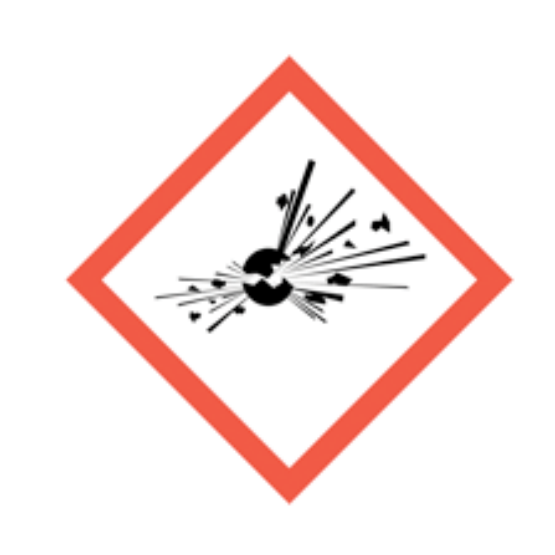
Exploding bomb
Explosive, self-reactive or organic peroxide hazards.
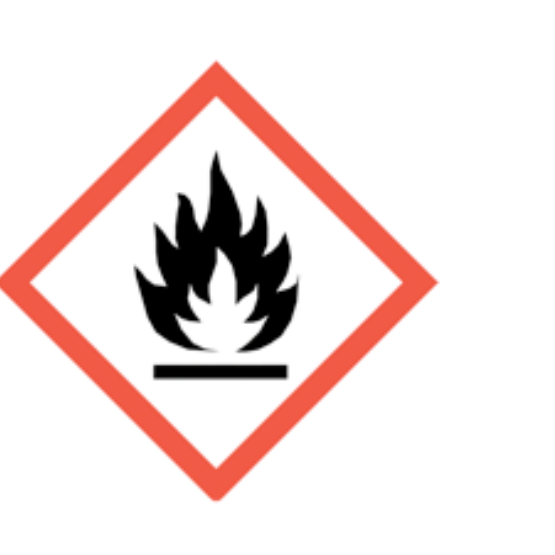
Flame
Flammable, self-heating or pyrophoric substances.
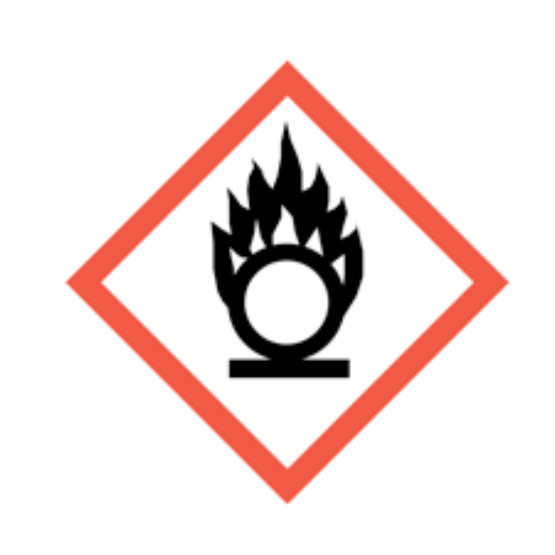
Flame over circle
Oxidising substances that can intensify fire.

Gas cylinder
Gas under pressure.
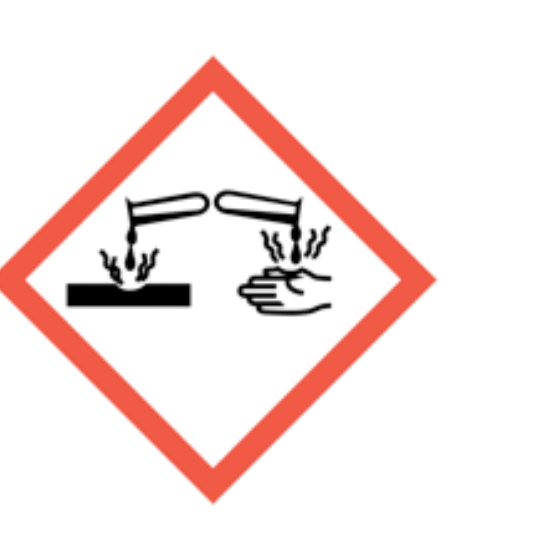
Corrosion
Skin burns, eye damage or corrosive to metals.
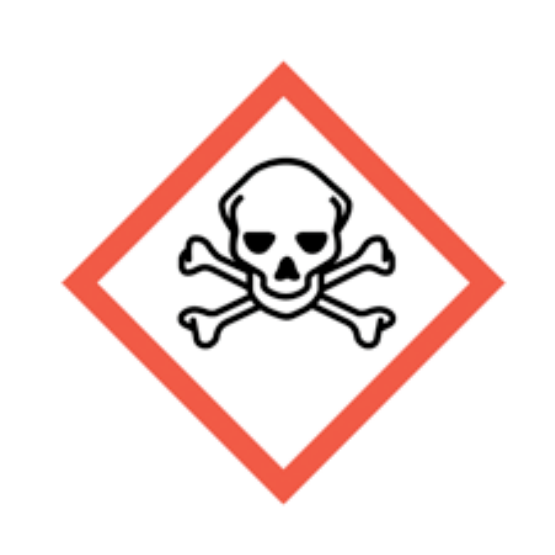
Skull and crossbones
Acute toxicity.

Exclamation mark
Irritation, harmful effects or skin sensitisation; some classifications cover drowsiness, dizziness or ozone-layer hazard. Read the actual hazard statements. Skin sensitisation differs from respiratory sensitisation.
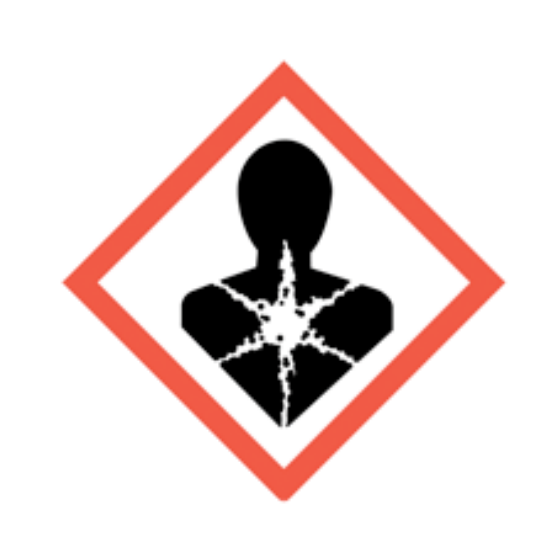
Health hazard
Serious health hazards, including organ damage, aspiration hazard, respiratory sensitisation, cancer and reproductive effects; some can follow a single exposure.
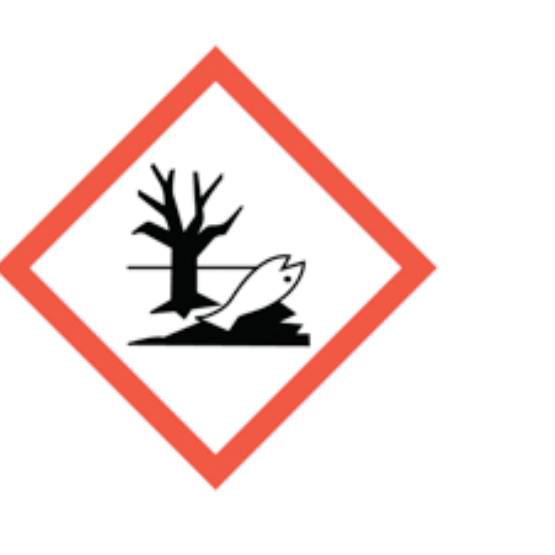
Environment
Hazardous to the aquatic environment.
Which acronyms and terms are useful for occupational leukaemia?
These terms connect the cause, control and evidence.
| Term | Meaning | Use here |
|---|---|---|
| AML | Acute myeloid leukaemia | One leukaemia type associated with benzene; only clinicians diagnose. |
| COSHH | Control of Substances Hazardous to Health | Chemical-exposure law; GB and NI have separate instruments. |
| IRR17 | Ionising Radiations Regulations 2017 | GB radiation route; NI has its own 2017 instrument. |
| ALARP | As low as reasonably practicable | Carcinogen exposure control beyond a WEL pass. |
| WEL | Workplace exposure limit | An exposure benchmark, not proof that a carcinogen is fully controlled. |
| RPE | Respiratory protective equipment | Residual protection selected and checked for the task. |
| ERICPD | Eliminate, Reduce, Isolate, Control, PPE, Discipline | Planning aid; Discipline sustains all selected levels. |
Unlock another resource
You have used this month’s two free downloads. Publish a post in your own words to unlock one more resource, or choose SHARE Individual for 10 downloads per month.
You decide whether to share. If you do, use the relevant platform disclosure tools and do not make claims you do not genuinely hold.