
SHARE Knowledge Hub
Line Management Accountability
Line managers translate the employer’s health and safety arrangements into safe daily work: they allocate competent people and resources, verify critical controls, listen to workers, hold unsafe tasks and close defects. Safety specialists advise and challenge, while directors and the employer retain their own duties. An assigned owner, a test of control and a clear escalation route make accountability visible.
Understanding Line Management Accountability
Line managers translate the employer’s health and safety arrangements into safe daily work: they allocate competent people and resources, verify critical controls, listen to workers, hold unsafe tasks and close defects. Safety specialists advise and challenge, while directors and the employer retain their own duties. An assigned owner, a test of control and a clear escalation route make accountability visible.
Why this matters at work
When a significant failure is found, protect people, identify affected scope, appoint an accountable owner and set evidence for release. Review similar sites and tasks rather than correcting only the observed instance. Inform workers and representatives about material risk and action.
Verify correction through field evidence and performance over time. A policy rewrite or reminder is rarely enough where design, staffing, maintenance or incentives created the problem. Escalate repeated recurrence as a failure of leadership review.
How organisations manage this in practice
The necessary level of supervision depends on the seriousness of risk, complexity of work, competence and experience of workers, stability of the task, degree of change and available safeguards. Young, new, temporary or unfamiliar workers may need closer support even where an experienced person works independently. Supervision includes planning, briefing, observation, checking controls, coaching, intervening and confirming completion. Remote review of forms cannot replace field presence where conditions or behaviour need direct verification. Supervisors should understand the job and know the critical decisions expected during abnormal or emergency conditions. Define frequency and depth for routine and higher-risk work. Use purposeful observations focused on significant controls rather than counting minor rule deviations. Ask workers what makes the safe method difficult, and fix system obstacles.
Occupational health supplies confidential clinical and functional advice; management owns work design and operational decisions. Frame necessary questions about capability, restrictions, adjustments and return to work. A diagnosis is not an automatic employer entitlement. Define controller roles, purpose, lawful basis and applicable health-data condition, professional confidentiality and report permissions separately. ICO guidance is under review after the Data Use and Access Act; current operative law controls.
During work, monitor significant controls and co-operation without taking over the contractor's employer duties. Intervene on danger or material deviation. Contractor workers should receive relevant site induction and be able to raise concerns through accessible routes.
What are the key facts about line management accountability?
The practical test is whether the person who controls the work also controls the risk.
Best-practice guide: Line Management Accountability
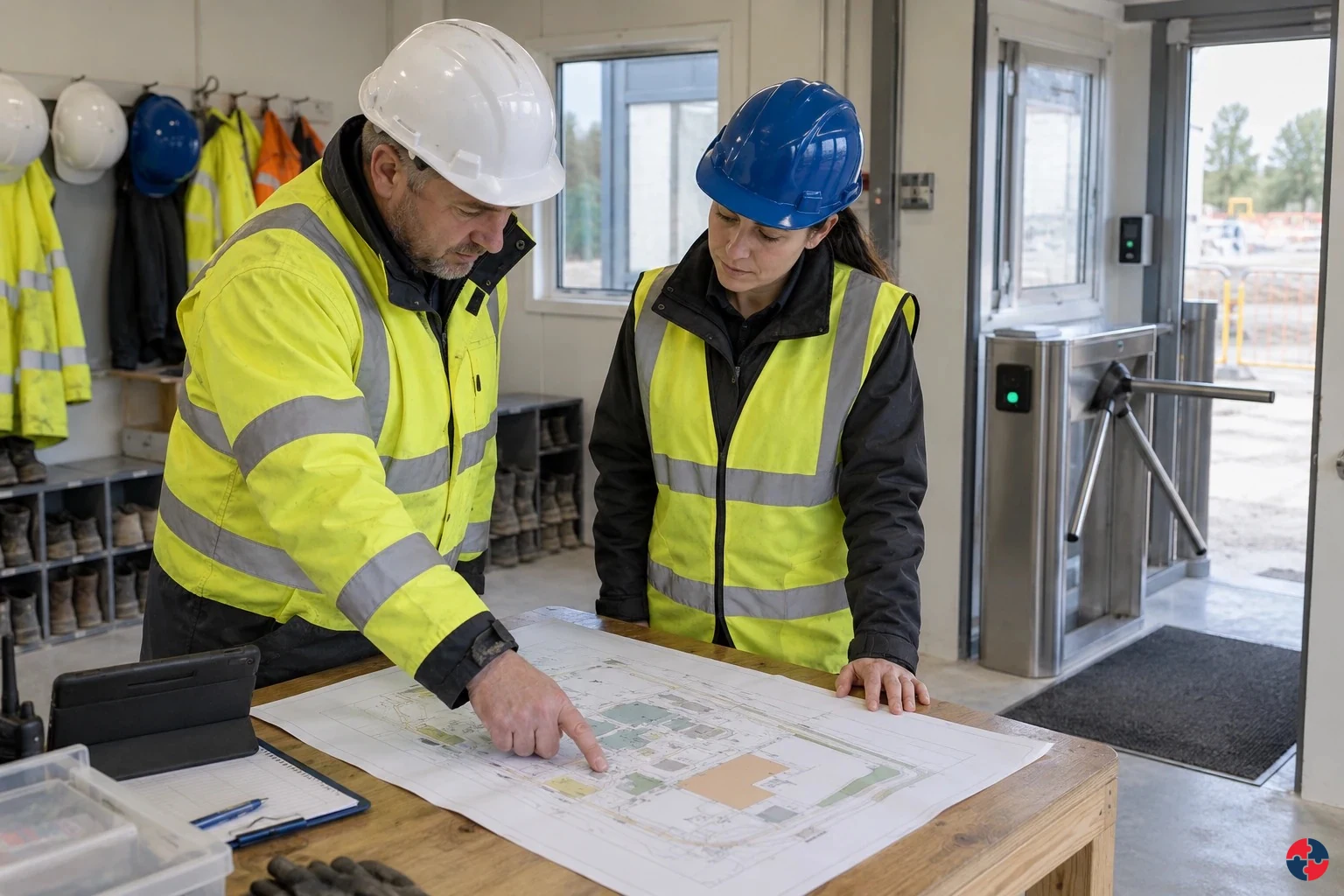
What are the key facts about line management accountability?
The practical test is whether the person who controls the work also controls the risk. Line managers translate the employer’s health and safety arrangements into safe daily work: they allocate competent people and resources, verify critical controls, listen to workers, hold unsafe tasks and close defects.
Turn line management accountability knowledge into a decision
Line managers translate the employer’s health and safety arrangements into safe daily work: they allocate competent people and resources, verify critical controls, listen to workers, hold unsafe tasks and close defects. Safety specialists advise and challenge, while directors and the employer retain their own duties. Risk profile and role accountability matrix.
the process operator worked example
Assessing: the process operator defines top risks for each line manager: fuel transfer, tank entry, hot work, contractor control, benzene exposure and emergency response. Evidence / response: Risk profile and role accountability matrix. Analysing: Managers review critical controls, weak signals, overdue defects, audit findings and worker concerns in monthly risk reviews. Evidence / response: Risk review pack and action tracker.
Warning signs and actions
Safety actions assigned to departments: No clear owner. Supervisors cannot explain controls: Paperwork has not become understanding. Same audit findings recur: Learning and verification are weak.
Choose controls for line management accountability
Eliminate: Avoid unnecessary transfers or manual connection by redesign where feasible. Reduce: Choose a less leak-prone connection compatible with the fuel and site. Isolate: Provide containment, overfill protection and verified bonding/earthing. Control: Permit, exclusion, sequence and driver/operator briefing. PPE: Fuel-compatible gloves, eye and other residual exposure protection. Read the full control table for qualifications, ownership and verification. Use the actual task and applicable jurisdiction; existing technical approval remains unchanged.
Use the full line management accountability lesson
Use the full topic for the decision points, practical examples, detailed control tables and source scope. HSE guidance applies to Great Britain; use HSENI for the Northern Ireland route and the source’s stated jurisdiction. A simplified guide does not change the page’s technical-review or approval status.

Read all six steps as text
1. What are the key facts about line management accountability?
The practical test is whether the person who controls the work also controls the risk.
- Avoid / redesign: Avoid unnecessary transfers or manual connection by redesign where feasible.
- Control the task: Provide containment, overfill protection and verified bonding/earthing.
- Verify before release: Operations owner documents feasibility; change is not used before review.
The practical test is whether the person who controls the work also controls the risk. Line managers translate the employer’s health and safety arrangements into safe daily work: they allocate competent people and resources, verify critical controls, listen to workers, hold unsafe tasks and close defects.
Apply it: Which part of this plan would you check at the workface before authorising the task?
2. Turn line management accountability knowledge into a decision
Use the evidence to improve the actual work arrangement.
- Change at source: Avoid unnecessary transfers or manual connection by redesign where feasible.
- Make it observable: Operations owner documents feasibility; change is not used before review.
- Keep useful evidence: Risk profile and role accountability matrix.
Line managers translate the employer’s health and safety arrangements into safe daily work: they allocate competent people and resources, verify critical controls, listen to workers, hold unsafe tasks and close defects. Safety specialists advise and challenge, while directors and the employer retain their own duties. Risk profile and role accountability matrix.
Apply it: What evidence would show that the change improves this task, rather than only completing a record?
3. the process operator worked example
Example: a practical application of the existing topic lesson.
- Assessing: the process operator defines top risks for each line manager: fuel transfer, tank entry, hot work, contractor control, benzene exposure and emergency response.
- Analysing: Managers review critical controls, weak signals, overdue defects, audit findings and worker concerns in monthly risk reviews.
- Implementing: Supervisors brief tasks, verify permits, check competence and stop work when controls are missing.
Assessing: the process operator defines top risks for each line manager: fuel transfer, tank entry, hot work, contractor control, benzene exposure and emergency response. Evidence / response: Risk profile and role accountability matrix. Analysing: Managers review critical controls, weak signals, overdue defects, audit findings and worker concerns in monthly risk reviews. Evidence / response: Risk review pack and action tracker.
Apply it: At which point would you hold this example, and what evidence would allow it to proceed?
4. Warning signs and actions
Connect the task, the route to the person and the control that can fail.
- Safety actions assigned to departments: No clear owner.
- Supervisors cannot explain controls: Paperwork has not become understanding.
- Same audit findings recur: Learning and verification are weak.
Safety actions assigned to departments: No clear owner. Supervisors cannot explain controls: Paperwork has not become understanding. Same audit findings recur: Learning and verification are weak.
Apply it: Who could be exposed, including other trades, cleaners, maintainers and people nearby?
5. Choose controls for line management accountability
Start with the stronger practicable options and verify their effect.
- Eliminate: Avoid unnecessary transfers or manual connection by redesign where feasible.
- Reduce: Choose a less leak-prone connection compatible with the fuel and site.
- Isolate: Provide containment, overfill protection and verified bonding/earthing.
- Control: Permit, exclusion, sequence and driver/operator briefing.
- PPE: Fuel-compatible gloves, eye and other residual exposure protection.
Eliminate: Avoid unnecessary transfers or manual connection by redesign where feasible. Reduce: Choose a less leak-prone connection compatible with the fuel and site. Isolate: Provide containment, overfill protection and verified bonding/earthing. Control: Permit, exclusion, sequence and driver/operator briefing. PPE: Fuel-compatible gloves, eye and other residual exposure protection. Read the full control table for qualifications, ownership and verification. Use the actual task and applicable jurisdiction; existing technical approval remains unchanged.
Apply it: Which stronger option can be used here, and who will verify it before accepting the remaining risk?
6. Use the full line management accountability lesson
Follow the official sources below and retain the task-specific evidence.
- Official guidance: Managing for health and safety (HSG65)
- Task decision: Risk profile and role accountability matrix.
Use the full topic for the decision points, practical examples, detailed control tables and source scope. HSE guidance applies to Great Britain; use HSENI for the Northern Ireland route and the source’s stated jurisdiction. A simplified guide does not change the page’s technical-review or approval status.
Apply it: Which official source and full-topic section will you use to resolve the next decision?
Ownership follows work
The manager who plans and resources work should own the controls for that work.
HSE advises and assures
The HSE function supports the system but should not become the substitute for management.
Role clarity matters
Responsibilities must be specific enough to act on, not vague phrases like 'ensure safety'.
Feedback must close
Information from inspections, incidents and workers must lead to action and communication back.
Evidence beats intention
Policies and slogans do not prove control; live evidence does.
Accountability needs fairness
Just culture supports learning while still holding people accountable for choices and duties.
What is line management accountability in plain English?
It means safety is managed by the people who manage the work, with HSE support and assurance around them.
A company can have excellent policies and still fail if line managers do not plan the work properly, check competence, provide resources, verify controls, listen to workers, stop unsafe work and learn from problems. Line management accountability is the bridge between the statement of intent and the job as done.
The HSE adviser may write guidance, interpret law and check the system, but they do not normally allocate the shift, approve the method, release the plant, manage the contractor, decide the deadline or supervise the task. Those decisions sit in the line, so the line must own the risk.
| Question | Strong answer | Weak answer |
|---|---|---|
| Who owns the risk? | The manager responsible for the work, supported by competent advice. | The safety department. |
| What is the role of HSE? | Advise, coach, challenge, monitor and assure. | Do all safety paperwork for managers. |
| What proves ownership? | Decisions, resources, checks, escalation and action close-out. | A responsibility statement in a policy. |
| How is drift found? | Worker feedback, observations, inspections, audits and incident learning. | Wait for accidents. |
| What should leaders ask? | Are critical controls working and what evidence proves it? | How many forms were completed? |
Why does line management accountability matter?
Weak accountability creates the gap between written arrangements and operational reality.
Many serious failures are not caused by a missing policy. They are caused by unclear ownership, production pressure, poor supervision, weak competence, unresolved defects, contractor interface problems, copied risk assessments, overdue actions or leaders who receive data without asking what it means.
Good line accountability makes safety part of ordinary management: planning work, allocating competent people, checking equipment, briefing changes, challenging shortcuts, escalating weak signals and verifying actions. It prevents safety becoming a parallel paperwork universe.
| Weak pattern | Likely result | Mature response |
|---|---|---|
| Actions assigned to 'operations' | No real owner and overdue closure. | Named owner, due date and verification evidence. |
| Supervisors rely on HSE forms | Controls not understood in the task. | Supervisor can explain critical controls and stop points. |
| Production pressure overrides maintenance | Drift becomes normal. | Escalation route and risk-based decision record. |
| Worker concerns disappear | Weak signals are missed. | Feedback loop with response to the workforce. |
| Audits find repeat issues | Learning is not embedded. | Root/system action and management review. |
What does good accountability architecture look like?
The employer sets and resources the system; the line manager owns implementation in the work they control.
HSE HSG65 is aimed at leaders, owners and line managers and uses Plan, Do, Check, Act. HSE/IoD leadership guidance expects directors to set direction, involve workers and review performance. A written responsibility chart helps only when it matches authority to stop a task, release resources and correct a failed control.
For a loading operation, the board defines the risk appetite and resources barriers, the operations manager sets the loading method, the shift supervisor checks the bay and people, the operator reports defects, and the safety adviser tests the quality of the arrangement. A serious failed barrier should reach an owner who can stop and repair it that shift.
| Decision | Accountable owner | Proof before work | Failure escalation |
|---|---|---|---|
| Approve loading method | Operations manager | Task assessment and worker input | Hold a changed method until competent review. |
| Release a bay | Shift supervisor | Barrier check and competent crew | Block bay when isolation or interlock fails. |
| Repair a critical barrier | Engineering owner | Repair and confirming functional test | Escalate overdue repair to operations director. |
| Assure system | Board or senior leader | Sampled tests, worker concerns and action closure | Resource redesign when recurring failure persists. |
How does policy become real control?
The chain from policy to work should be visible and testable.
A policy statement is only the top of the chain. It should flow into risk profile, risk register, standards, competent people, procurement, contractor rules, procedures, permits, supervision, monitoring, audit, incident learning and management review.
The best way to test the chain is to pick one high-risk activity and follow it from board expectation to the frontline. If the policy says lifting is controlled, can the site manager show lift planning, competence, equipment inspection, exclusion zones, supervisor checks and learning from previous lifting issues?
| Step | Management question | Evidence |
|---|---|---|
| Policy | What does the organisation commit to? | Signed policy and objectives. |
| Risk profile | What can kill, seriously harm or cause major loss? | Risk profile and critical risk list. |
| Risk register | Who owns each risk and control? | Risk register with owners. |
| Standards/procedures | What must be done? | Standards, permits and work instructions. |
| Competence | Who is allowed to do or authorise the work? | Training, authorisation and assessment records. |
| Verification | How do we know controls worked today? | Inspections, observations and checklists. |
| Review | What changed because of evidence? | Management review and action close-out. |
What role clarity is needed?
Role clarity should describe activities, not just titles.
A role description should say what the manager owns, what decisions they make, what controls they verify, what meetings or checks they complete, and what they must escalate. It should also say where HSE, HR, maintenance, procurement and contractors contribute.
Vague duties create defensive behaviour after an incident. Specific duties create better prevention before one.
| Role | Accountability examples | Evidence |
|---|---|---|
| Director | Sets risk appetite, resources critical controls and challenges assurance. | Board minutes and assurance review. |
| Operations manager | Owns operational risk profile, standards and action closure. | Risk register and KPI review. |
| Line manager | Plans work, allocates competent people and verifies controls. | Work plans and observation records. |
| Supervisor | Briefs tasks, checks conditions, stops unsafe work and reports weak signals. | Briefings and frontline checks. |
| HSE adviser | Provides competent advice, coaching, audit and challenge. | Advice records, audits and improvement plans. |
| Worker | Follows controls, reports defects and participates in improvement. | Training and worker feedback. |
How should decision rights and escalation work?
Managers need to know which decisions they can make and which must go higher.
A recurring failure is leaving managers with responsibility but not authority. If a supervisor is expected to stop a job but is punished for delay, accountability is not real. If a line manager owns maintenance risk but cannot secure parts or downtime, the system is setting them up to fail.
Decision rights should cover stop-work authority, permit authorisation, contractor acceptance, change approval, defect escalation, impairment of safety-critical controls and action closure.
| Decision | Line manager can | Escalate when |
|---|---|---|
| Stop work | Pause work where critical controls are missing or conditions change. | Production, contract or customer pressure challenges the stop. |
| Approve routine method | Authorise standard controlled work within competence. | Non-routine, high-risk or conflicting work arises. |
| Close action | Close only when risk reduction is verified. | Action needs capital, design or specialist support. |
| Accept contractor | Check induction, competence and method compliance. | Contractor standard is below site rules. |
| Manage change | Screen minor changes and trigger review. | Change affects critical controls, people, process or legal duties. |
| Impair controls | Apply temporary controls only within defined rules. | Alarm, guard, LEV, fire or process safety barrier is unavailable. |
What should happen when a defect owner is absent at shift change?
A named owner is useful only when that person can act, and an effective handover must explain the operational state. The next shift needs to know what is held, why, what can safely continue and whose competent decision is needed for release. Passing an overdue ticket to another inbox does not transfer control of the risk. Related guidance: Managing for health and safety (HSG65).
In an illustrative workshop, a supervisor holds a finishing station after its extraction check fails. The maintenance contact has left and the planned replacement is unavailable. The evening shift is told only that maintenance is dealing with it. The incoming supervisor must establish the affected activity and keep the restriction in place; silence from the owner is not authorisation to use the station. Related guidance: Managing for health and safety (HSG65).
The line manager activates the agreed cover and escalation arrangement, names a reachable decision owner and confirms resources and competent technical support. That owner may arrange repair and alternative work within assessed limits, but cannot personally declare the extraction effective without the required evidence. If no suitable cover exists, maintain the hold and escalate the operational consequence. Related guidance: Managing for health and safety (HSG65).
A usable handover records the asset and task, defect evidence, current restriction, physical indication of status, people informed, competent recovery requirement and reachable contact. The receiving supervisor acknowledges the restriction and briefs affected workers and contractors. Verify that the old queue or work order will not direct someone back to the held station. Related guidance: Managing for health and safety (HSG65).
Release requires the specific control recovery and hand-back evidence, followed by communication to the people whose work changes. The manager reviews why cover was missing and checks another shift, rather than closing the organisational action after writing a new contact list. The technical recovery and management improvement are separate actions, each with its own evidence. Related guidance: Managing for health and safety (HSG65).
Guidance for these decisions: Managing for health and safety (HSG65); Leading health and safety at work. Apply the legal route for the work location; illustrative scenarios are SHARE teaching examples.
How should feedback loops work?
Information is only useful if it reaches someone who can act and then returns as learning.
Feedback loops include inspections, audits, conversations, near misses, maintenance defects, worker concerns, sickness trends, exposure results, training feedback and customer or regulator observations. A loop is incomplete if the data is collected but no decision is made.
A mature line manager closes the loop by acknowledging the issue, deciding what to do, assigning action, verifying completion and telling workers what changed. That final communication is often the missing piece.
| Feedback source | Line manager action | Closure evidence |
|---|---|---|
| Worker concern | Listen, triage risk, respond and update the worker. | Concern log and response note. |
| Inspection finding | Rank, assign and verify corrective action. | Action tracker and photo/evidence. |
| Near miss | Investigate learning and update controls. | Incident record and revised briefing. |
| Maintenance defect | Prioritise by risk and control impairment. | Defect record and handback. |
| Audit finding | Identify system weakness and owner. | Management action plan. |
| Health/exposure data | Review work design and controls. | COSHH/OH action record. |
What communication lines should be managed?
Good accountability needs downward, upward and horizontal communication.
Downward communication tells people what is expected. Upward communication tells management what is really happening. Horizontal communication manages interfaces between shifts, teams, contractors and departments. Weakness in any one line can create risk.
For example, a maintenance team may know a guard is defective, operations may know production is behind, HSE may know a previous incident trend and procurement may know a replacement part is delayed. The line manager's job is to connect those signals before they become an incident.
| Line | Purpose | Example |
|---|---|---|
| Downward | Set expectations, methods and stop points. | Task brief, permit conditions and supervisor instruction. |
| Upward | Raise weak signals and resource needs. | Worker concern, defect escalation and near-miss report. |
| Horizontal | Coordinate interfaces and SIMOPS. | Shift handover, contractor coordination and maintenance/operations meeting. |
| External | Coordinate clients, regulators, insurers and emergency services. | Client risk review, insurer survey and regulator response. |
| Feedback | Tell people what changed. | Learning bulletin and close-out briefing. |
How should line accountability be assured?
Assurance checks whether managers can prove that controls are alive.
The assurance question is not whether managers attend meetings. It is whether they understand their risks, know the condition of controls, act on weak signals and can show evidence. Assurance should sample real work, records and conversations.
A good assurance review might ask a line manager to explain the top five risks in their area, show the controls, provide current evidence, describe the last weak signal and explain what changed after the last incident or audit.
HSE HSG65 supports sampling the actual control and action closure. Ask a supervisor to show one current failed-barrier report, the stop decision, repair owner and verifying check; an injury-rate dashboard alone cannot answer that question.
| Question | Good evidence | Weak evidence |
|---|---|---|
| What are your critical risks? | Manager can explain current risk profile. | Reads from generic register. |
| Which controls must not fail? | Critical controls and checks are known. | All controls treated equally. |
| What has changed recently? | Change log and risk review. | Change managed informally. |
| What are workers telling you? | Concerns, observations and responses. | No worker feedback route. |
| What actions are overdue? | Ranked action tracker with escalation. | Spreadsheet with old items. |
| How do you know controls work? | Observation, test, maintenance and audit evidence. | No accidents this month. |
How do the three lines of defence support accountability?
The three lines help avoid both over-reliance on frontline checks and over-reliance on periodic audits.
First line verification is done within the line: supervisors and frontline leaders check that the job is being done safely today. These checks should often be simple, repeatable and closed-question based, so the data can show patterns. For example, if six out of ten workers answer 'no' to having received a new PPE briefing, the line manager has a communication problem.
Second line assurance is more experienced and topical. Managers, HSE advisers or functional specialists compare requirements against work as done, sample records and observe tasks. Findings can involve judgement and should be ranked, assigned and verified. In the IIA Three Lines Model, internal audit provides independent third-line assurance on governance and risk management. Operational technical authorities and topic specialists retain management or second-line roles when they own, design or support controls; expertise alone does not create independence. External consultants and certification auditors provide a separate external-assurance relationship. Their engagement must define scope, conflicts and reporting rather than relabel them automatically as internal audit.
| Line | Typical activity | Top tip |
|---|---|---|
| First line: operational verification | Supervisors and workers use repeatable checksheets for tasks, controls and briefings. | Use mostly closed questions where possible so yes/no data reveals patterns across people, shifts and sites. |
| Second line: management/HSE assurance | Managers and HSE advisers carry out topical audits of activities and risk controls. | Prioritise quality over quantity; sample documents and work as done, rank findings and assign verifiable actions. |
| Third line: independent internal audit | Independent internal audit reviews governance and risk management; technical specialists and external assurance providers have separately defined roles and independence safeguards. | Use strong audit plans, evidence sampling, interviews, site observation and clear escalation of systemic findings. |
Give internal audit access and reporting to the governing body, identify conflicts and prevent self-review of controls the reviewer owns or designed. If a local assurance programme combines these services, label it an adapted assurance programme and record who is independent of which decision. The organisation’s “HSE function” means its health, safety and environment advisory function, distinct from the regulator HSE. Sources: IIA current Three Lines statement.
How can the hierarchy of controls guide line managers' decisions on stronger risk controls?
A supervisor should follow the hazard from task plan through control check, stop decision and management feedback.
Consider loading a fuel tanker. HSG65 supports planning the task, doing it under a controlled method, checking actual barriers and acting on defects. ERICPD below maps to the five-level hierarchy for the fuel-release hazard; “Discipline” sustains controls, rather than blaming a worker who reports failure.
If a bonding/earthing test fails, the supervisor blocks the bay, records the defect, tells the maintenance owner and gives drivers an alternative plan. Restart depends on a repaired and witnessed functional check, with recurring faults escalated for design review.
How can the ERICPD hierarchy of controls guide line managers' decisions on stronger risk controls?

| ERICPD | Five-level hierarchy | Loading-bay choice | Owner, proof and stop |
|---|---|---|---|
| Eliminate | Elimination | Avoid unnecessary transfers or manual connection by redesign where feasible. | Operations owner documents feasibility; change is not used before review. |
| Reduce | Substitution | Choose a less leak-prone connection compatible with the fuel and site. | Engineer verifies specification; incompatibility blocks commissioning. |
| Isolate / Control | Engineering controls | Provide containment, overfill protection and verified bonding/earthing. | Supervisor checks barriers; failed test stops bay. |
| Control | Administrative controls | Permit, exclusion, sequence and driver/operator briefing. | Shift lead observes transfer; unbriefed change triggers hold. |
| PPE | PPE | Fuel-compatible gloves, eye and other residual exposure protection. | Competent selector checks condition; damage stops task. |
| Discipline | Sustaining all levels | Review failed tests and near misses, repair causes and verify hand-back. | Manager samples records and escalates recurring failure. |
How can the ISO 45001 hierarchy of controls guide line managers' decisions on stronger risk controls?

| ERICPD | Five-level hierarchy | Loading-bay choice | Owner, proof and stop |
|---|---|---|---|
| Eliminate | Elimination | Avoid unnecessary transfers or manual connection by redesign where feasible. | Operations owner documents feasibility; change is not used before review. |
| Reduce | Substitution | Choose a less leak-prone connection compatible with the fuel and site. | Engineer verifies specification; incompatibility blocks commissioning. |
| Isolate / Control | Engineering controls | Provide containment, overfill protection and verified bonding/earthing. | Supervisor checks barriers; failed test stops bay. |
| Control | Administrative controls | Permit, exclusion, sequence and driver/operator briefing. | Shift lead observes transfer; unbriefed change triggers hold. |
| PPE | PPE | Fuel-compatible gloves, eye and other residual exposure protection. | Competent selector checks condition; damage stops task. |
| Discipline | Sustaining all levels | Review failed tests and near misses, repair causes and verify hand-back. | Manager samples records and escalates recurring failure. |
HSG65 supports the accountability chain, while the suitability of flammable-liquid transfer safeguards needs competent technical assessment. HSG176 (second edition, 2015) supplies the relevant tank-storage/transfer guidance within its stated scope; it does not approve this layout. Bonding, overfill protection and hand-back must match the actual fuel, installation and work method. Sources: HSE HSG176 flammable liquids in tanks.
What decisions show whether accountability is real?
Accountability becomes visible when managers make decisions under pressure.
Leadership statements are easy when everything is going well. Accountability is tested when production is late, a worker stops a job, a contractor challenges a rule, maintenance needs downtime or a customer wants the job finished. Those moments show what the business truly rewards.
The best examples for learners are ordinary decisions: whether to defer maintenance, accept a contractor's method, close an action without verification, let a permit condition slide or slow the job to investigate a weak signal.
| Scenario | Weak accountability | Strong accountability |
|---|---|---|
| Production pressure | Supervisor lets bypassed guard stay in use to hit target. | Manager stops/replans work and escalates resource conflict. |
| Deferred maintenance | Defect stays open because downtime is inconvenient. | Risk-ranked defect triggers planned outage or temporary controls. |
| Worker stops job | Worker is labelled difficult. | Concern is thanked, checked and fed back fairly. |
| Contractor concern | Contractor told to follow local shortcut. | Concern reviewed against site rule and contract standard. |
| Overdue action | Closed because procedure was reissued. | Closed only after control is verified in the field. |
| Incident response | Blame a worker for not following rule. | Review task design, supervision, resources and human factors. |
What does good and weak line accountability look like?
Comparison helps managers recognise the difference between intention and control.
Compare a written responsibility with a live decision: could the manager stop an unsafe task, get the barrier repaired and verify hand-back? A role chart without authority or action closure is weak evidence.
| Area | Weak accountability | Strong accountability |
|---|---|---|
| Ownership | Safety owned by HSE department. | Risk owned by the manager of the work. |
| Actions | Assigned to departments or left open. | Named owner, due date, risk ranking and verified close-out. |
| Meetings | Review statistics without decisions. | Review critical controls, weak signals and overdue risk actions. |
| Supervision | Focus on output and paperwork. | Observe work, challenge drift and coach controls. |
| Worker voice | Concerns seen as complaints. | Concerns treated as weak signals and learning. |
| Audit | Pass/fail compliance only. | Evidence-based review of system effectiveness. |
| Learning | Same issue repeats. | Root causes, standards and training improve. |
What evidence proves line management accountability?
Evidence should show decisions, not just documents.
A RACI chart is useful only when managers can show the actual decision, test, stop and hand-back. Sample a completed loading permit, watch the control check, ask an operator what happens after a failed test and trace the defect to closure.
| Evidence type | What it proves | Quality check |
|---|---|---|
| Risk register with owners | Managers own specific risks. | Are owners named and current? |
| Role descriptions | Accountability is specific. | Do they describe activities and authority? |
| Action tracker | Controls improve after findings. | Is close-out verified? |
| Supervisor observations | Work as done is checked. | Are observations linked to critical controls? |
| Worker feedback | Upward communication works. | Is feedback answered and tracked? |
| Management review | Leaders make decisions from evidence. | Do minutes show challenge and action? |
| Audit findings | Second/third line assurance tests the system. | Do findings identify root/system weakness? |
| Incident learning | Events change controls and standards. | Is learning shared and embedded? |
Which KPIs support accountability?
KPIs should test control health and decision quality, not just activity volume.
A line manager can complete many inspections while still missing critical-control failure. Useful measures combine leading and lagging indicators, action quality, overdue risk, worker feedback and verification evidence.
The best KPI is often one that forces a management conversation: why is action closure slow, why are supervisors finding the same issue, why are workers not reporting near misses, why did a third-line audit find a gap the first and second lines missed?
| Weak KPI | Better KPI | Why it is stronger |
|---|---|---|
| Number of inspections completed | Percentage of critical controls verified effective. | Measures control quality, not paperwork volume. |
| Zero accidents | Near-miss quality, learning actions and repeat-event reduction. | Encourages reporting and learning. |
| Training completed | Competence observed in task. | Checks whether learning transfers to work. |
| Actions closed | Actions closed with verified risk reduction. | Prevents cosmetic close-out. |
| Audit score | High-risk findings closed and recurrence reduced. | Focuses on improvement. |
| Briefings delivered | Workers can explain key controls and stop points. | Tests communication effectiveness. |
Which legal duties support line management accountability?
Apply the legal route for the work location and test the actual controls, responsibilities and records.
Great Britain and Northern Ireland have distinct primary and management regulations. Official guidance helps interpret practical arrangements, but is not a replacement for the applicable instrument. Specialist legal advice is needed for a disputed duty or enforcement decision.
| Jurisdiction | Direct instrument or guidance | Operational decision supported |
|---|---|---|
| Great Britain | Health and Safety at Work etc. Act 1974 | General employer, worker and public protection duties. |
| Northern Ireland | Health and Safety at Work (NI) Order 1978 | The separate NI general-duty route. |
| Great Britain | Management of Health and Safety at Work Regulations 1999 | Risk assessment, arrangements, competence and emergency planning. |
| Northern Ireland | Management of Health and Safety at Work Regulations (NI) 2000 | The separate NI management and risk-assessment route. |
How could Crownway Fuels Ltd manage this in practice?

Crownway Fuels Ltd would make line managers accountable for control decisions while using advisers and specialists to support, rather than inherit, those responsibilities.
Crownway Fuels Ltd · practical example
Give an open safety defect an owner with authority
The key lesson Accountability needs a defined decision, authority and resources; assigning a name to an action list is insufficient.
The situation: A site defect appears in several handovers as “with maintenance”. Nobody can explain who decides whether the affected activity may continue.
Why this matters: A defect can remain open because each team believes another team owns the operating restriction.
How Crownway Fuels Ltd would manage it
- Name the operating owner — Operations Director. Define the Site Manager’s responsibility for the affected activity and the escalation route when local authority or resources are insufficient.
- Separate the tasks — Site Manager. State what maintenance must investigate, what technical advice is needed and what operations must keep restricted. Give each action a due decision and required evidence.
- Provide competent support — Maintenance Coordinator. Arrange the relevant specialist assessment and repair information. Explain limitations clearly so an operating manager does not mistake progress for technical acceptance.
- Maintain continuity — Shift Supervisor. Carry the current restriction, outstanding actions and named contacts into handover. Raise ambiguity immediately rather than recording the same unexplained phrase again.
- Check completion — Area Operations Manager. Review the evidence with the responsible people, confirm the accepted condition and check whether the allocation of duties prevented further delay.
When the conditions change
- Recognise the trigger
- The repeated “with maintenance” entry has no clear operating decision owner.
- Make the immediate decision
- The Site Manager retains the defect-related operating restriction and escalates responsibility to the Operations Director.
- Verify the next step
- The Site Manager records the competent technical findings, accepted operating condition and named owner for remaining work.
What good looks like
Each person can explain their decision and limits. The adviser advises, maintenance provides technical evidence, and the operating manager owns the operational status.
Evidence to look for: Responsibility map, restriction, assigned actions, technical findings and accepted close-out.
Common mistake to avoid: Sending every safety decision to the Health and Safety Lead while line management continues the activity.
Apply this to your work: For an overdue defect, who has both the responsibility and authority to resolve the next decision?
Guidance behind the management approach: HSE: responsibilities and practical policy arrangements. Use the topic's legal and technical guidance for the applicable work and location.
Crownway Fuels Ltd is a fuel storage and maintenance business. It uses HSG65-style Plan, Do, Check, Act and three lines of defence to make sure operations, maintenance and contractor managers own their risks.
| Management element | How the business would manage it | Evidence to review |
|---|---|---|
| Assessing | Crownway defines top risks for each line manager: fuel transfer, tank entry, hot work, contractor control, benzene exposure and emergency response. | Risk profile and role accountability matrix. |
| Analysing | Managers review critical controls, weak signals, overdue defects, audit findings and worker concerns in monthly risk reviews. | Risk review pack and action tracker. |
| Implementing | Supervisors brief tasks, verify permits, check competence and stop work when controls are missing. | Briefing, permit and observation records. |
| Checking | First-line checks verify tasks; second-line management and the internal health, safety and environment advisory function review topics; independent internal audit provides third-line assurance. Technical-authority and external COMAH/process or certification reviews have separately defined roles, conflicts and reporting. | Three-lines assurance plan. |
| Learning | Incidents, near misses and audit findings update standards, training, procurement and contractor rules. | Learning register and management review. |
How can accountability be assessed through an actual decision?
Use an observed handover and exception exercise rather than a quiz asking for job titles. The participant needs to show how policy changes an operating decision, where authority ends and how an unresolved defect stays visible. A competent assessor should know the operation and the expected management arrangements. Related guidance: Managing for health and safety (HSG65).
Give each role the extraction-failure case, then make the usual owner unavailable. Test the decision made, who is informed and whether a held activity stays held until competent evidence supports release. Do not reward confidence unsupported by evidence or treat asking for competent help as failure. Related guidance: Managing for health and safety (HSG65).
Record the scope, observation, assessor, decision limits and follow-up. Reassess after a role or organisational change, poor handover, recurring overdue actions or an incident exposing an unclear owner. Refresher learning follows the actual capability gap; there is no universal certificate renewal in this page. Related guidance: Managing for health and safety (HSG65).
| Role and assessor | Observed decision | Limits and failure response | Record and reassessment |
|---|---|---|---|
| Worker — competent supervisor | Describe the restriction and report a conflicting work order to the current contact. | Do not resume because the queue, colleague or old instruction says the task is due. | Observed state/reporting understanding; reassess changed task or communication route. Related guidance: Managing for health and safety (HSG65); Leading health and safety at work; HSE management guidance for Great Britain. |
| Supervisor — competent operational assessor | Receive and acknowledge the hold, control access and brief the next shift. | Maintain restriction where recovery or authority is unclear. | Handover, affected people and stop/escalation response; review failed handover. Related guidance: Managing for health and safety (HSG65); Leading health and safety at work; HSE management guidance for Great Britain. |
| Line manager — competent management reviewer | Provide reachable cover, resources and distinct technical release criteria. | Cannot close technical recovery on an invoice or absent-owner assumption. | Owner, authority, resources and verified action; review role/cover change. Related guidance: Managing for health and safety (HSG65); Leading health and safety at work; HSE management guidance for Great Britain. |
| Specialist/adviser — competent discipline reviewer | Explain the advice, evidence needed and limits of own release recommendation. | Support the operating owner without accepting every operational action by default. | Scoped advice and unresolved questions; review changed technical conditions. Related guidance: Managing for health and safety (HSG65); Leading health and safety at work; HSE management guidance for Great Britain. |
| Auditor/senior leader — competent assurance reviewer | Trace one held defect across shifts and test whether closure changed actual work. | State sampling limits and escalate missing authority or resources. | Evidence trail, contradiction and effectiveness check; review repeat failure or restructuring. Related guidance: Managing for health and safety (HSG65); Leading health and safety at work; HSE management guidance for Great Britain. |
Guidance for these decisions: Managing for health and safety (HSG65); Leading health and safety at work; HSE management guidance for Great Britain. Apply the legal route for the work location; illustrative scenarios are SHARE teaching examples.
What training supports line management accountability?
Training should develop operational judgement, not just awareness of duties.
Training should be role-based. General awareness creates a baseline, but supervisors, managers, advisers and senior leaders need different levels of decision-making, verification and escalation competence.
| Training level | Who needs it | What it should cover |
|---|---|---|
| General awareness | Everyone who may encounter the topic. | Plain-English awareness of line management accountability, why it matters, common situations, basic controls, reporting routes and where to get help. |
| Topical practical training | Workers most directly involved in the task or support process. | Task examples, control expectations, warning signs, stop-work points, escalation and records. |
| Supervisor and manager training | People allocating work, authorising tasks, holding conversations or checking controls. | Decision quality, private conversations, supervision, risk assessment, evidence, escalation and review. |
| Specialist or competent-person training | Directors, senior managers, line managers, supervisors, HSE advisers, auditors and contractor managers who own or assure operational risk. | Technical assessment, occupational health, fire safety, process safety, auditing, investigation or legal/privacy support where needed. |
| Refresher and learning | People in roles where drift, rare tasks or changing work creates risk. | Scenario refreshers, incident learning, audit findings, drills, reassessment and updates after change. |
How should learners study line management accountability?
Strong answers show how accountability turns a management system into live control.
A strong answer distinguishes the employer’s legal duty, the manager’s operational authority, the supervisor’s release check, worker reporting and competent advice. Follow one hazard through the decision and evidence chain instead of reciting job titles.
| Prompt | Strong answer should include | Weak answer |
|---|---|---|
| Define line accountability. | Operational managers own risk controls for the work they manage; HSE advises and assures. | Everyone is responsible for safety. |
| Apply HSG65. | Plan risk ownership, do through control, check through assurance, act through review. | Mention PDCA only. |
| Use evidence. | Risk register, action tracker, observations, worker feedback, audits and review. | Policy and training records only. |
| Explain three lines. | First line verification, second line assurance, third line independent internal audit; distinguish external assurance. | More audits are better. |
| Discuss culture. | Fair accountability, worker voice, no lazy blame, clear consequences. | No-blame culture. |
How should controls be owned and reviewed?
Assign a competent owner, check that task controls work, involve workers and act when evidence changes.
For Line management accountability, record the actual hazard and task, the chosen control, the person responsible, the evidence that it works and the point at which work must stop or be reassessed. HSE management guidance for Great Britain describes planning, worker consultation, checking and action. HSENI guidance for Northern Ireland describes competent help, risk control and review. These management steps do not prove that a particular task control is suitable; use the topic-specific evidence and the applicable GB or NI law elsewhere on this page.
Where ISO 45001 is used, connect line accountability to named operating decisions, sufficient authority, worker input and tested action closure. A responsibility chart or certificate cannot release an impaired control. The operational owner still needs actual evidence and competent technical advice within the applicable legal duties. HSE: ISO 45001 management standard.
What warning signs show accountability is weak?
Warning signs appear when ownership is vague and information does not lead to action.
Warning signs are included because failure usually appears before a serious event. Treat these points as prompts for inspection, audit, supervision and management review rather than as simple compliance statements.
| Warning sign | What it suggests | Action |
|---|---|---|
| Safety actions assigned to departments | No clear owner. | Assign named accountable person and due date. |
| Supervisors cannot explain controls | Paperwork has not become understanding. | Coach, observe and simplify critical controls. |
| Same audit findings recur | Learning and verification are weak. | Root cause review and management escalation. |
| HSE closes operational actions | Line ownership is displaced. | Return action ownership to responsible manager. |
| Worker concerns receive no feedback | Feedback loop is broken. | Create response and communication route. |
| Production pressure routinely wins | Leadership messages are not reinforced. | Escalate risk decisions and resource conflicts. |
| KPI pack has no decisions | Monitoring is passive. | Review indicators and require action decisions. |
Which acronyms and terms are useful for line management accountability?
These terms distinguish assignment of a task from accountability for its result.
| Term | Meaning | Use here |
|---|---|---|
| GB | Great Britain | England, Scotland and Wales legal route. |
| NI | Northern Ireland | Separate management instrument. |
| HSG65 | HSE Managing for health and safety | Plan, Do, Check, Act arrangements. |
| PDCA | Plan, Do, Check, Act | Design and verify controls, then improve them. |
| RACI | Responsible, Accountable, Consulted, Informed | A role map; it does not itself prove control. |
| ERICPD | Eliminate, Reduce, Isolate, Control, PPE, Discipline | Task hazard planning and control sustainment. |
| Critical control | A measure essential to prevent or limit serious harm | Requires a named check and failure decision. |
Unlock another resource
You have used this month’s two free downloads. Publish a post in your own words to unlock one more resource, or choose SHARE Individual for 10 downloads per month.
You decide whether to share. If you do, use the relevant platform disclosure tools and do not make claims you do not genuinely hold.