
SHARE Knowledge Hub
Load-Handling Equipment and Lifting Operations
Choose a safer way to move the load before designing a lift. Where lifting equipment is needed, a competent person plans the operation, selects equipment and accessories for the load and environment, keeps people away from a suspended load and verifies pre-use checks, maintenance and statutory examination. A valid examination report is only one layer of control.
Understanding Load-Handling Equipment and Lifting Operations
Choose a safer way to move the load before designing a lift. Where lifting equipment is needed, a competent person plans the operation, selects equipment and accessories for the load and environment, keeps people away from a suspended load and verifies pre-use checks, maintenance and statutory examination. A valid examination report is only one layer of control.
Why this matters at work
Plan loss of power, vacuum or magnetism. Use secondary retention or redundancy where required by design and risk; restrict travel and keep loads as low as practicable. Do not pass over people or critical services where detachment could cause injury or catastrophic damage.
Plan credible emergencies before lifting: power or control failure, stuck or suspended load, overload alarm, overturn, collapse, entrapment, person stranded aloft, dropped load, hydraulic leak, electrical contact and severe weather. The response must protect rescuers from the original and stored-energy hazards. Stop movement, raise the alarm, isolate the danger zone and contact emergency services where needed. People-lifting equipment needs a prompt, tested recovery method with trained responders and accessible ground or auxiliary controls. Consider an incapacitated occupant, blocked descent and communication failure. Practice without exposing people to unnecessary risk and correct any delay or inaccessible control. After a dropped load, overload, collision, uncontrolled descent, structural movement or safety-device activation, quarantine equipment and accessories and preserve the scene and data.
How organisations manage this in practice
Define the inspection scope, frequency, method, competence and record for the actual equipment, risks and manufacturer information. Intermediate lifting inspections, suitable PUWER inspections of other equipment or non-lifting systems, pre-use checks, maintenance and thorough examination are different controls. A shared visit may cover several tasks only if competence and the recorded scope are adequate.
A new attachment, changed control system, increased speed, altered structure, software change, repaired load-bearing part or changed purpose can affect capacity, stability, conformity and examination. Use formal engineering change control and consult the manufacturer or competent designer.
The supervisor should remain able to observe or receive reliable information about the critical operation, not be diverted by unrelated tasks. Where shifts or locations change, use a formal handover that covers load state, suspended or stored energy, equipment status, weather, exclusions and unresolved deviations.
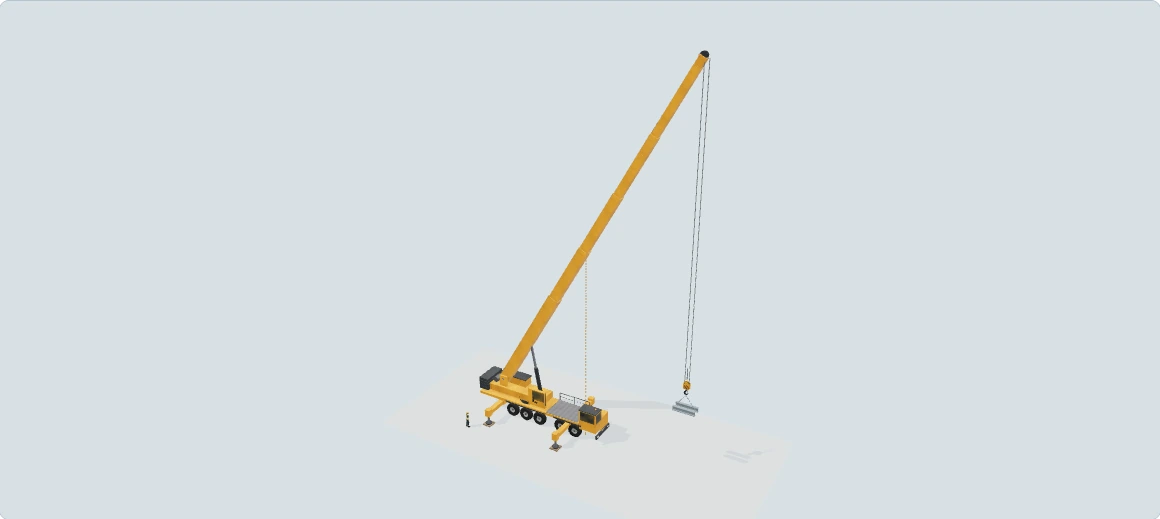

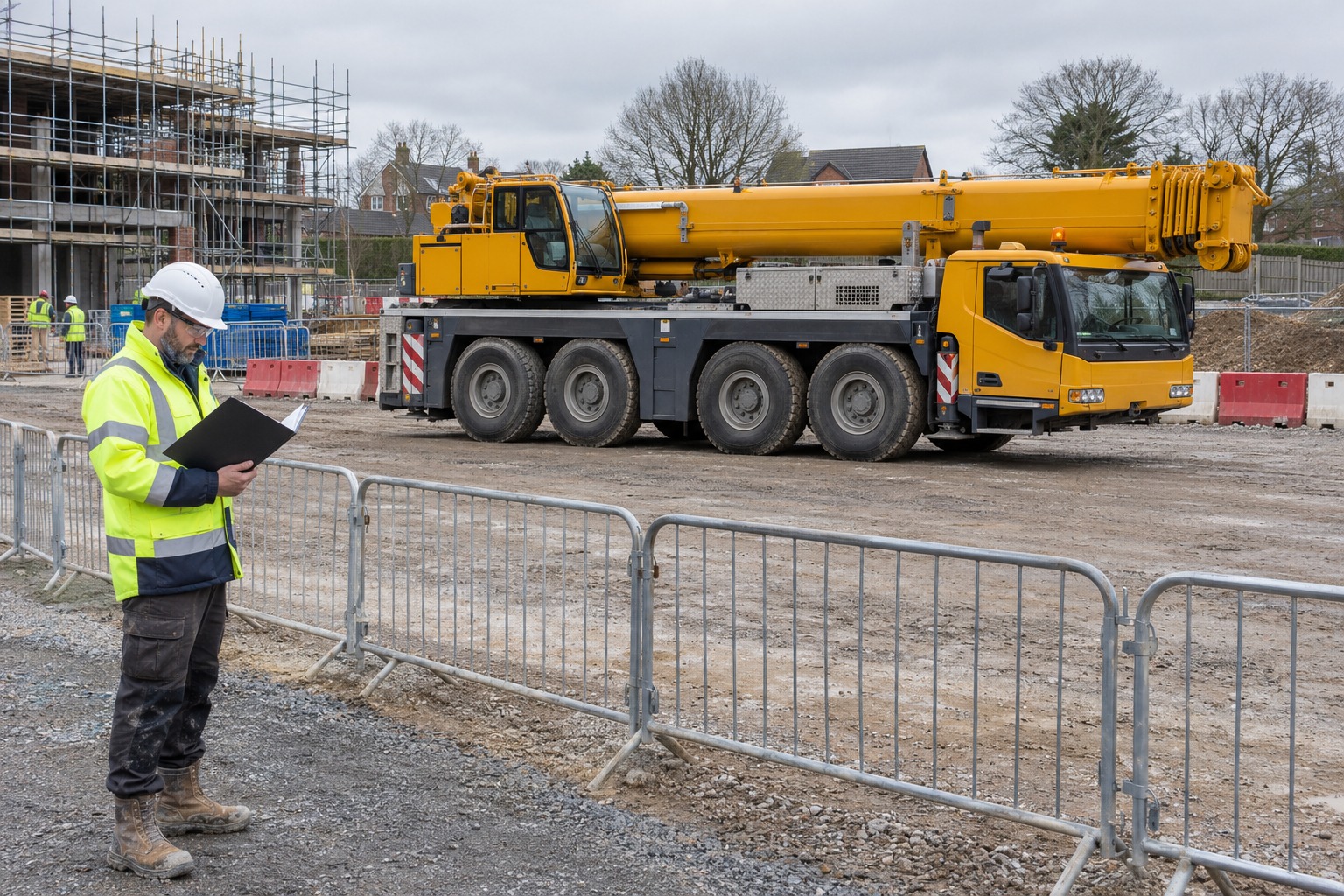
Mobile cranes: follow the load, support and people through a lift
Explore how this equipment can harm its users and other people, then follow the practical measures that interrupt each pathway. This is a hazards and good-practice lesson; the separate checklist remains the pre-use/safety-check activity.
Hazards and good practice: learn what can hurt people during use, change and maintenance. Pre-use and safety checks stay in the separate checklist.
Checksheets and risk assessments
Equipment checksheets
- Mobile cranes and planned lifts — 3D checks · Word · PDF
- Lifting accessories — 3D checks · Word · PDF
Risk assessment forms
Risk assessment examples
Forms and tools
Full written walkthrough — all 8 steps
1. Start with the complete lifting operation
What is happening: The crane, supporting ground, load, route and people form one operation.
How harm can occur: A technically sound crane can still overturn or drop a load in an unsuitable plan.
Best practice to apply: Resource and plan the actual lift through a person with competence proportionate to its complexity and risk.
Why this works: Planning joins equipment selection to the real task instead of treating examination as approval to lift anything.
Load-Handling Equipment and Lifting Operations · What does load-handling equipment and lifting operations mean?2. Establish the real load and configuration
What is happening: The load includes relevant attachments and accessories, not only the labelled object.
How harm can occur: An incorrect mass, centre of gravity or configuration can overload equipment or destabilise the lift.
Best practice to apply: Establish load information and use the actual crane/attachment data and planned configuration; the model supplies no capacity.
Why this works: Correct input data is needed before the equipment's limits can be applied.
Load-Handling Equipment and Lifting Operations · How should a motor lift change when the load is not as expected?3. Trace reactions into the ground
What is happening: Outriggers and spreaders transmit reactions into the supporting surface or structure.
How harm can occur: A void, inadequate support or movement can cause overturn and crush people.
Best practice to apply: Obtain suitable ground/support information and competent design of the set-up and spreading arrangements.
Why this works: Load-spreading and support must be based on reactions and capacity, not how firm the ground feels.
Load-Handling Equipment and Lifting Operations · What technical lifting details should learners understand?4. Connect the load with suitable accessories
What is happening: Hooks, slings and connections form the load path between the crane and the item.
How harm can occur: Failure, unsuitable sling angles or an unstable attachment can drop or shift the load.
Best practice to apply: Use accessories suitable for the load, arrangement and actual duties, with competent selection and required condition/examination controls.
Why this works: Every link has to suit the task; a marked component does not validate the complete arrangement.
Load-Handling Equipment and Lifting Operations · Documents to download5. Keep people out of the load and machine routes
What is happening: The load route, slewing equipment and landing area create different danger interfaces.
How harm can occur: A moving or falling load can strike or crush a person, including someone guiding or receiving it.
Best practice to apply: Plan separation, a controlled landing area and safe positions; avoid lifting over people and protect other operations.
Why this works: The safest contact with the load path is often no contact at all.
Load-Handling Equipment and Lifting Operations · Load-Handling Equipment and Lifting Operations FAQs - what do people ask?6. Coordinate signals and visibility
What is happening: The operator may not see the full load or landing interface.
How harm can occur: Lost signals or conflicting instructions can create unintended movement towards people or obstructions.
Best practice to apply: Agree the communication and responsible roles; stop when essential visibility or communication is lost.
Why this works: An agreed single control arrangement prevents incompatible instructions during a critical movement.
Load-Handling Equipment and Lifting Operations · What should stop a lifting operation?7. Keep the plan valid as conditions change
What is happening: Radius, load condition, weather and nearby work may change during the operation.
How harm can occur: A changed configuration or new obstruction can invalidate the planned controls.
Best practice to apply: Stay within the actual plan and manufacturer limits; pause and re-plan a material change rather than improvise.
Why this works: The plan applies to its stated conditions, not every variation that occurs later.
Load-Handling Equipment and Lifting Operations · What technical lifting details should learners understand?8. Separate lifting from maintenance and hand-back
What is happening: A crane at rest may still contain hydraulic, gravitational and other stored energy.
How harm can occur: Unexpected descent or release can injure a fitter or someone handling equipment.
Best practice to apply: Use competent machine-specific isolation/support and defect arrangements; verify readiness before the next lifting task.
Why this works: A stopped lift does not establish a safe maintenance condition or approve the next operation.
Load-Handling Equipment and Lifting Operations · What checks, inspections and examinations are needed?
Illustrative awareness learning. Geometry, colours and movement do not establish safe distances, capacity, exposure, isolation or work permission. Use the actual assessment, equipment information and competent arrangements.
The wider workplace has its own account and subscription access. Exploring this lesson does not grant access, record course completion or authorise work.
UK guidance for further reading
HSE: Mobile cranesHow can I practise this topic in 3D?
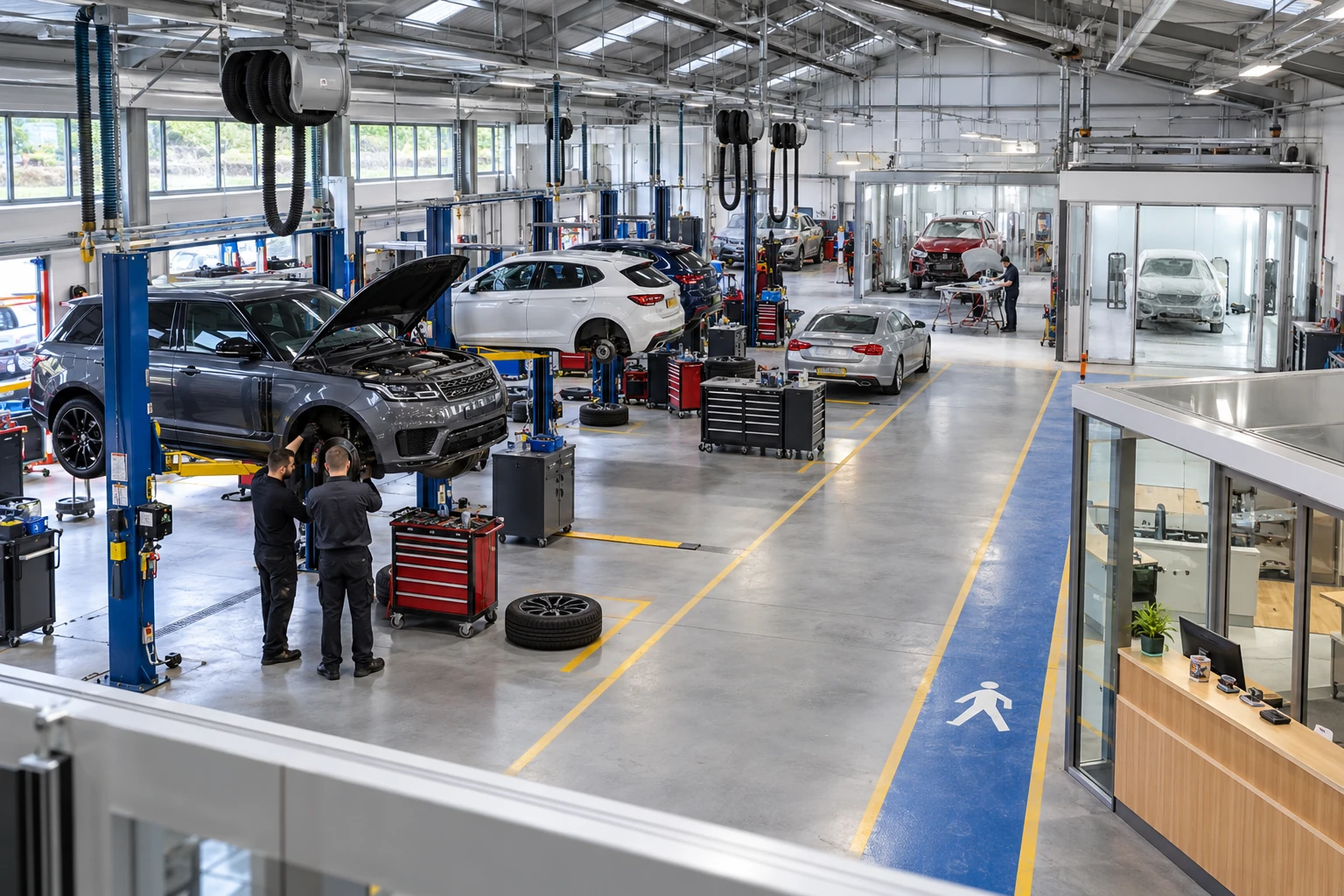
Incorrect support on the two-post lift

A long load is lifted without a suitable plan
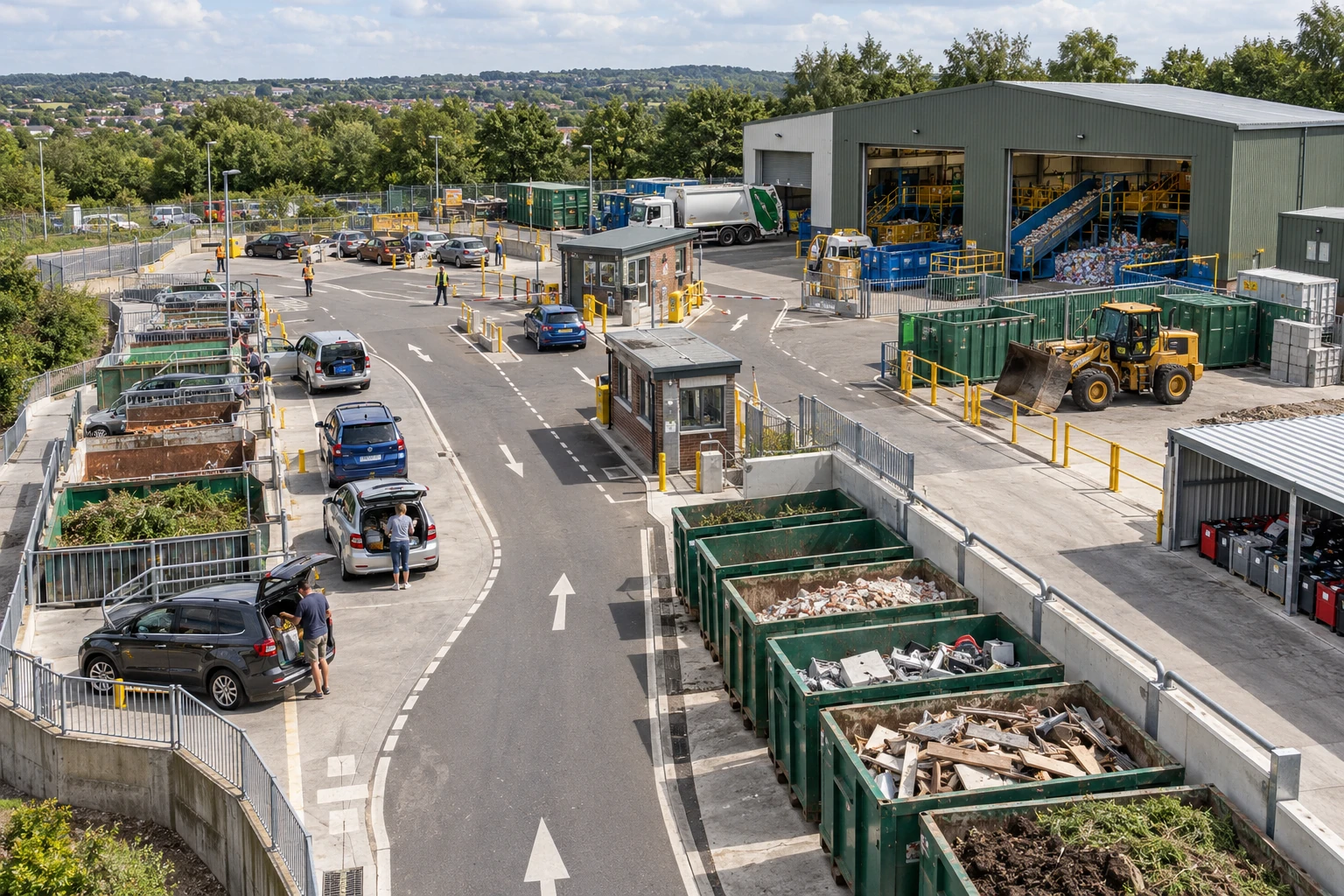
Public beneath a container exchange
All related inspection points 11 across 4 locations
Garage workshop 2 inspection points
Construction site 6 inspection points
Recover materials. Protect people. 1 inspection point
Aerosystems Engineering 2 inspection points
Practice in the SHAREhub environment. Browser practice is separate from workplace competence and formal learning records.
What does load-handling equipment and lifting operations mean?
It means moving loads using suitable aids or lifting equipment under a planned, supervised and competent system.
Best-practice guide: Load-Handling Equipment and Lifting Operations
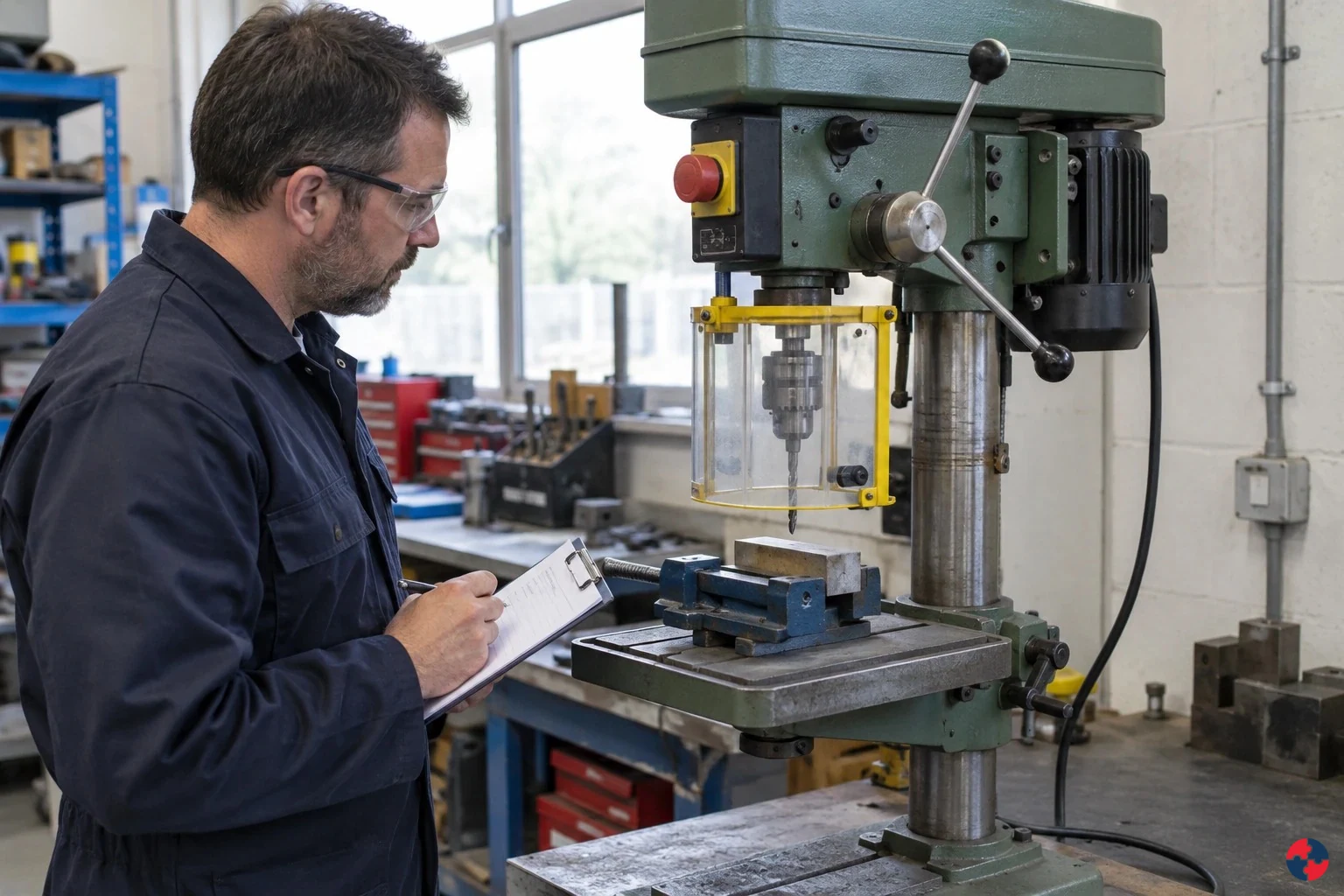
What does load-handling equipment and lifting operations mean?
It means moving loads using suitable aids or lifting equipment under a planned, supervised and competent system. Choose a safer way to move the load before designing a lift.
Turn load-handling equipment and lifting operations knowledge into a decision
Choose a safer way to move the load before designing a lift. Where lifting equipment is needed, a competent person plans the operation, selects equipment and accessories for the load and environment, keeps people away from a suspended load and verifies pre-use checks, maintenance and statutory examination. Shrink-wrapped pallet, weight confirmed, no leaning, no damaged pallet.
Worked lifting assessment example
Load: What is being lifted and where is the centre of gravity? Evidence / response: Shrink-wrapped pallet, weight confirmed, no leaning, no damaged pallet. Equipment: Is the lift truck and attachment suitable? Evidence / response: Correct rated capacity, fork length suitable, daily check complete.
Follow the load and the people in its path
An unsuitable attachment or insecure load can fall or shift. A swinging load or moving lifting equipment can trap or strike people. Ground, capacity or setup failures can overturn equipment or destabilise the lift. Use the full topic for the detailed mechanism, task limits and source scope.
Choose controls for load-handling equipment and lifting operations
Eliminate: Avoid moving the motor by redesigning work at its current position where feasible. Reduce: Use a lighter modular component or a lower-risk delivery/move method. Isolate: Use rated lifting gear, secure attachments and a segregated travel route. Control: Approved lift plan, signaler, exclusion, weather/ground checks and communication. PPE: Head, foot, hand protection for residual contact hazard. Read the full control table for qualifications, ownership and verification. Use the actual task and applicable jurisdiction; existing technical approval remains unchanged.
Use the full load-handling equipment and lifting operations lesson
Use the full topic for the decision points, practical examples, detailed control tables and source scope. HSE guidance applies to Great Britain; use HSENI for the Northern Ireland route and the source’s stated jurisdiction. A simplified guide does not change the page’s technical-review or approval status.
Read all six steps as text
1. What does load-handling equipment and lifting operations mean?
It means moving loads using suitable aids or lifting equipment under a planned, supervised and competent system.
- Avoid / redesign: Avoid moving the motor by redesigning work at its current position where feasible.
- Control the task: Use rated lifting gear, secure attachments and a segregated travel route.
- Verify before release: Planner records feasibility; unclear task holds lift.
It means moving loads using suitable aids or lifting equipment under a planned, supervised and competent system. Choose a safer way to move the load before designing a lift.
Apply it: Which part of this plan would you check at the workface before authorising the task?
2. Turn load-handling equipment and lifting operations knowledge into a decision
Use the evidence to improve the actual work arrangement.
- Change at source: Avoid moving the motor by redesigning work at its current position where feasible.
- Make it observable: Planner records feasibility; unclear task holds lift.
- Keep useful evidence: Shrink-wrapped pallet, weight confirmed, no leaning, no damaged pallet.
Choose a safer way to move the load before designing a lift. Where lifting equipment is needed, a competent person plans the operation, selects equipment and accessories for the load and environment, keeps people away from a suspended load and verifies pre-use checks, maintenance and statutory examination. Shrink-wrapped pallet, weight confirmed, no leaning, no damaged pallet.
Apply it: What evidence would show that the change improves this task, rather than only completing a record?
3. Worked lifting assessment example
Example: a practical application of the existing topic lesson.
- Load: What is being lifted and where is the centre of gravity?
- Equipment: Is the lift truck and attachment suitable?
- Route: Can the load travel safely?
Load: What is being lifted and where is the centre of gravity? Evidence / response: Shrink-wrapped pallet, weight confirmed, no leaning, no damaged pallet. Equipment: Is the lift truck and attachment suitable? Evidence / response: Correct rated capacity, fork length suitable, daily check complete.
Apply it: At which point would you hold this example, and what evidence would allow it to proceed?
4. Follow the load and the people in its path
Connect the task, the route to the person and the control that can fail.
- Load failure: An unsuitable attachment or insecure load can fall or shift.
- Movement: A swinging load or moving lifting equipment can trap or strike people.
- Stability: Ground, capacity or setup failures can overturn equipment or destabilise the lift.
An unsuitable attachment or insecure load can fall or shift. A swinging load or moving lifting equipment can trap or strike people. Ground, capacity or setup failures can overturn equipment or destabilise the lift. Use the full topic for the detailed mechanism, task limits and source scope.
Apply it: Where is this harm route present in the actual work, and which control breaks it before anyone is exposed?
5. Choose controls for load-handling equipment and lifting operations
Start with the stronger practicable options and verify their effect.
- Eliminate: Avoid moving the motor by redesigning work at its current position where feasible.
- Reduce: Use a lighter modular component or a lower-risk delivery/move method.
- Isolate: Use rated lifting gear, secure attachments and a segregated travel route.
- Control: Approved lift plan, signaler, exclusion, weather/ground checks and communication.
- PPE: Head, foot, hand protection for residual contact hazard.
Eliminate: Avoid moving the motor by redesigning work at its current position where feasible. Reduce: Use a lighter modular component or a lower-risk delivery/move method. Isolate: Use rated lifting gear, secure attachments and a segregated travel route. Control: Approved lift plan, signaler, exclusion, weather/ground checks and communication. PPE: Head, foot, hand protection for residual contact hazard. Read the full control table for qualifications, ownership and verification. Use the actual task and applicable jurisdiction; existing technical approval remains unchanged.
Apply it: Which stronger option can be used here, and who will verify it before accepting the remaining risk?
6. Use the full load-handling equipment and lifting operations lesson
Follow the official sources below and retain the task-specific evidence.
- Official guidance: LOLER overview
- Official guidance: Safe use of lifting equipment (L113)
- Task decision: Shrink-wrapped pallet, weight confirmed, no leaning, no damaged pallet.
Use the full topic for the decision points, practical examples, detailed control tables and source scope. HSE guidance applies to Great Britain; use HSENI for the Northern Ireland route and the source’s stated jurisdiction. A simplified guide does not change the page’s technical-review or approval status.
Apply it: Which official source and full-topic section will you use to resolve the next decision?
This topic sits between manual handling, work equipment, workplace transport and lifting operations. A sack truck, trolley or pallet truck may reduce manual handling effort, but it can introduce new risks such as runaway loads, poor steering, trapping, slopes, unsuitable wheels or overloading. A crane, hoist, lift truck or lifting accessory can remove manual effort but creates higher-energy hazards such as suspended loads, overturning, dropped loads, crushing, striking structures or instability.
The first professional judgement is whether the load needs to be handled at all. Can the task be eliminated, delivered closer to the point of use, split into smaller units, palletised, mechanised, redesigned or completed at a better height? If handling remains, the task, individual, load and environment still matter. If lifting equipment is used, the organisation must also consider suitability, strength, stability, marking, pre-use checks, maintenance, inspection, thorough examination, competent planning and supervision.
For learners, the key is not to memorise equipment names. The useful mental model is: what is the load, how will it move, what could fail, who could be struck, trapped, fall or strain, what prevents the event, and what evidence proves the control is live today?
Lifting Operations and Lifting Equipment Regulations (LOLER) scope depends on what the equipment actually does. HSE’s LOLER overview says simple pallet trucks that raise a load only just clear of the ground, and many conveyors, are outside LOLER but remain subject to the Provision and Use of Work Equipment Regulations (PUWER). HSE L113 identifies high-lift pallet trucks able to raise forks above 300 mm as LOLER examples. Do not assign the LOLER six-/12-month examination cycle to every load-handling aid; first check whether it is lifting equipment within scope.
| Equipment or activity | What it is used for | Main risk questions |
|---|---|---|
| Sack trucks and trolleys | Moving smaller loads over short distances. | Is the load stable, route suitable, slope controlled and pushing/pulling force reasonable? |
| Pallet trucks | Moving palletised loads on suitable floors. | Is the pallet sound, floor level, load within capacity and pedestrian route controlled? |
| People-handling aids | Reducing manual effort in health and social care or assisted movement. | Is the aid suitable for the person, maintained and used by trained workers? |
| Fork-lift trucks | Lifting and transporting palletised or compatible loads. | Is the operator trained, load secure, route segregated and attachment suitable? |
| Hoists and lifting accessories | Raising, lowering or positioning loads. | Is the safe working load / working load limit marked, accessory compatible and pre-use check complete? |
| Conveyors | Moving loads continuously through a process. | Are trapping points guarded, emergency stops working and maintenance isolated? |
| Cranes and complex lifts | Moving heavier, unusual or high-risk loads. | Is there a competent lifting plan, appointed person, exclusion zone and ground/load assessment? |
How should lifting operations be planned?
Plan the load, route, equipment, people and failure response before anyone attaches a hook or starts a truck.
HSE LOLER overview says lifting operations must be properly planned by a competent person, supervised and carried out safely. For a workshop motor lift, record load mass and centre of gravity, rated capacity, sling angles, attachment points, travel route, floor condition, pedestrian exclusion and who signals and stops the move.
The lift plan should be proportionate: a routine well-controlled pallet lift may use a standard method, while an unusual, fragile, tandem or people-lifting operation needs more detailed competent planning. A change in load, ground, weather, equipment or people reopens the plan.
| Check | Release evidence | Hold trigger | Direct source |
|---|---|---|---|
| Load and route | Known mass/centre, stable path, exclusion of people. | Unknown mass or pedestrian interface. | HSE LOLER |
| Equipment | Rated lift/accessories, compatible attachments and pre-use condition. | Damaged sling, missing mark or inadequate capacity. | HSE equipment selection |
| People | Competent operator/signaller and supervisor proportionate to task. | Unclear signalling or unbriefed change. | HSE lift planning |
What technical lifting details should learners understand?
A good lift plan turns physical facts into safe decisions before the load leaves the ground.
LOLER planning should start with a simple hierarchy: avoid the lift if possible, reduce the amount of handling, choose suitable lifting equipment, plan the lift by competent people, establish the load and route, control the area, execute the lift under supervision, then inspect, examine and learn from defects or near misses. The higher the uncertainty, the more the plan needs engineering judgement rather than habit.
The most common serious failures are not mysterious. A load is heavier than assumed, the centre of gravity is not where people expect, the accessory angle reduces capacity, the ground cannot take outrigger loading, pedestrians enter the lift zone, weather changes, a blind lift relies on weak communication, or a damaged sling stays in use because nobody quarantined it. Learners should read a lifting plan as a chain of assumptions that all need evidence.
A professional lifting assessment should therefore make the invisible parts visible: how the load weight was confirmed, how the centre of gravity was understood, how stability will be maintained, which lifting points are rated, which accessory has been selected and why, what the ground can support, who owns exclusion zones and what evidence proves the equipment remains safe to use.
HSE’s LOLER planning guidance supports competent planning, suitable equipment, supervision and safe execution. Confirm load mass and centre of gravity, sling configuration and rated capacity, ground support for outriggers where relevant, and a clear signaller/operator arrangement before releasing a non-routine lift.
| Role | Typical contribution | Evidence of competence or control |
|---|---|---|
| Appointed person | Plans complex or higher-risk lifting operations, selects lift method and confirms controls are suitable. | Appointment, lift plan, calculation or method review and experience record. |
| Lift supervisor | Controls the lift on site and checks that the plan is followed in real conditions. | Briefing record, field checks, stop-work decisions and supervision evidence. |
| Slinger-signaller | Attaches the load, selects or confirms accessories, signals and protects communication. | Training, authorisation, observed competence and accessory pre-use checks. |
| Operator | Operates crane, lift truck, hoist or other lifting equipment within limits. | Training, authorisation, daily check and equipment-specific competence. |
| Banksman or traffic marshal | Controls vehicle movement and interface where lifting and transport overlap. | Role briefing, communication plan and site traffic control. |
| Competent examiner | Carries out statutory thorough examination or specialist inspection. | Report of thorough examination, defect grading and close-out evidence. |
| Site or operations manager | Provides resources, time, ground preparation, exclusion-zone authority and contractor coordination. | Lift coordination record, simultaneous operations review and action close-out. |
| Technical issue | Why it matters | What good looks like |
|---|---|---|
| Load weight | Capacity decisions are meaningless if the load weight is guessed. | Weight confirmed from drawings, delivery data, weighbridge, markings or competent calculation. |
| Centre of gravity | An off-centre load can tilt, rotate, overload one leg of a sling or strike nearby people. | Lift points, trial lift and rigging arrangement account for the actual balance point. |
| Load stability | Loose, flexible, liquid, live or poorly packaged loads can shift during lifting. | Load secured, contained, levelled and lifted using a method suited to its behaviour. |
| Lifting accessory angle | Sling angle can significantly increase leg tension and reduce effective capacity. | Angles are planned, working load limit / safe working load is suitable and spreader beams are used where needed. |
| Ground bearing and support | Cranes, outriggers, MEWPs and lift trucks can overturn or sink where support is poor. | Ground assessment, mats, bearing pressure checks and exclusion from voids or excavations. |
| Exclusion zones | People under, beside or near a suspended load can be struck, trapped or crushed. | Physical control, clear ownership, no lift over people and active supervision. |
| Weather and environment | Wind, visibility, rain, ice, slope, lighting or overhead services can invalidate the plan. | Defined limits, weather checks, route control and stop criteria. |
| Communication | Blind lifts and noisy areas make signals and commands safety-critical. | Agreed signals, radios if needed, single point of command and emergency stop word. |
| Accessory | Used for | Selection mistake to avoid |
|---|---|---|
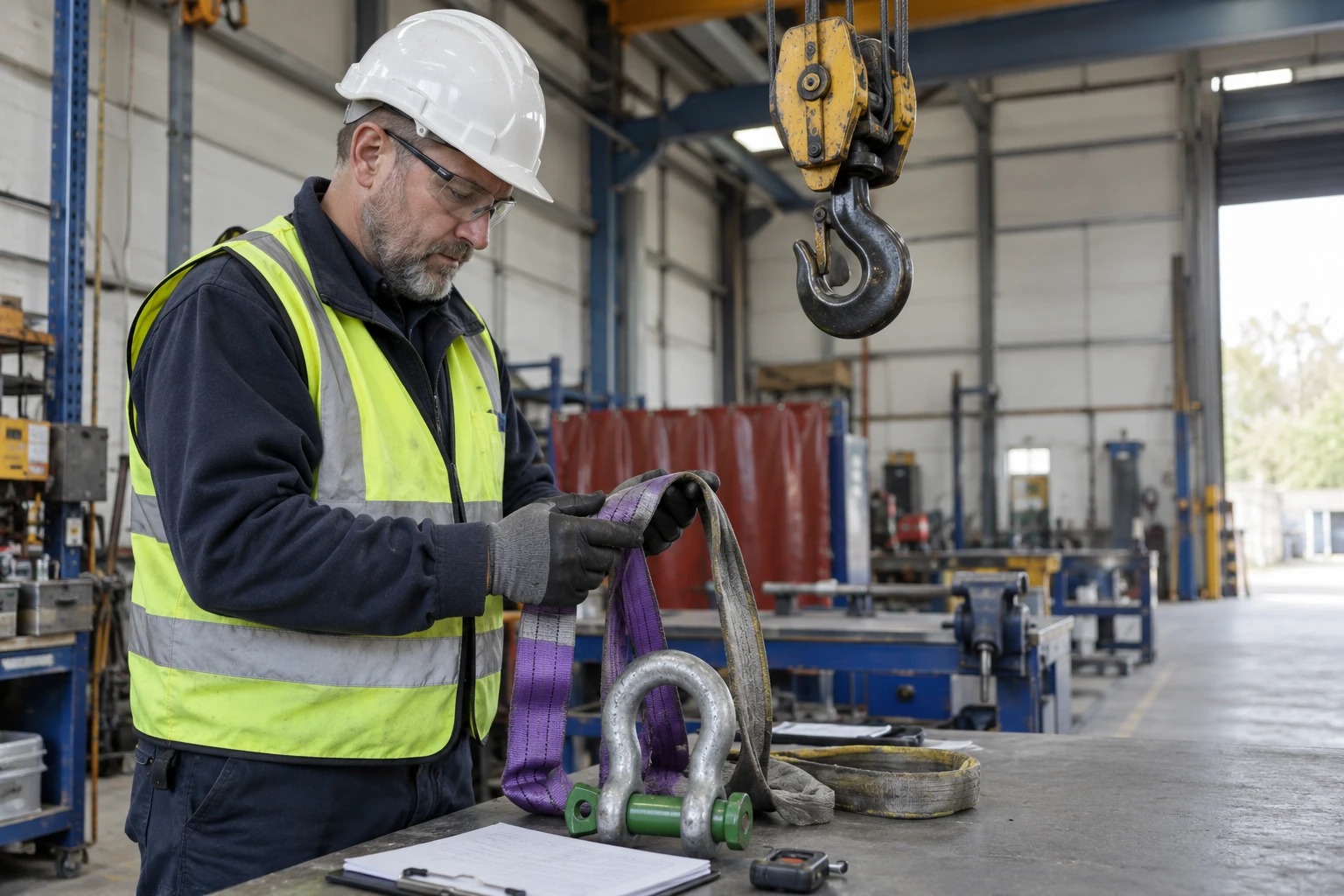
| Webbing sling | General loads where soft contact reduces damage. | Using on sharp edges without protection or with illegible identification tag. |
| Chain sling | Robust lifting, hot or abrasive environments and certain engineered loads. | Ignoring angle, shortening method, hook latch damage or chain wear. |
| Wire rope sling | Heavier or industrial lifting where wire rope properties suit the load. | Using kinked, crushed, corroded or bird-caged rope. |
| Shackle | Connecting sling, hook, lifting point or accessory. | Wrong pin type, side loading, missing markings or no compatibility check. |
| Spreader or lifting beam | Controls sling angle or supports long/fragile loads. | Using without verifying beam rating, connection points and centre of gravity. |
| Clamp, magnet or vacuum lifter | Specialist handling of plates, sheets or smooth materials. | Using on unsuitable surface, wrong orientation or without fail-safe checks. |
| Fork attachment | Adapts lift-truck forks for specific loads. | Using uncertified attachments, reducing capacity unknowingly or failing to secure attachment. |
| Finding | Why it matters | Expected action |
|---|---|---|
| Missing or illegible sling tag | Capacity, identity and inspection status cannot be confirmed. | Remove from service, quarantine and replace or seek competent decision. |
| Damaged hook latch or bent hook | Load may detach or hook strength may be compromised. | Stop use, tag out and refer for competent inspection. |
| Cracked shackle or damaged pin thread | Connection may fail under load. | Quarantine immediately and record defect. |
| Lift truck hydraulic leak or brake fault | Control of the load may be lost. | Remove from service until repaired and verified. |
| Failed thorough examination item | Statutory examination has identified a defect or restriction. | Follow report timescale, prevent use where required and keep close-out evidence. |
| Overload, shock load or dropped load event | Equipment may be damaged even if no defect is obvious. | Stop, isolate, investigate and arrange exceptional examination if needed. |
How can the hierarchy of controls prevent dropped loads and unsafe lifting operations?
Remove the need for hazardous handling where feasible, then select equipment and controls for the residual lift.
Eliminate, Reduce, Isolate, Control, Personal protective equipment (PPE) and Discipline (ERICPD) below maps to the five-level hierarchy for a motor lifted from a workshop bay. HSE lifting overview sets the planning and equipment principles. The supervisor holds the move if load identity, attachment, travel clearance or equipment condition is uncertain.
The five levels are elimination, substitution, engineering, administrative controls and PPE. “Discipline” is the sustained inspection, feedback and repair that keeps each selected level effective.
How can the ERICPD hierarchy of controls prevent dropped loads and unsafe lifting operations?

| ERICPD | Five-level hierarchy | Motor-move choice | Owner, proof and stop |
|---|---|---|---|
| Eliminate | Elimination | Avoid moving the motor by redesigning work at its current position where feasible. | Planner records feasibility; unclear task holds lift. |
| Reduce | Substitution | Use a lighter modular component or a lower-risk delivery/move method. | Engineering verifies compatibility and mass. |
| Isolate / Control | Engineering controls | Use rated lifting gear, secure attachments and a segregated travel route. | Lift supervisor checks setup; failed rating or attachment stops move. |
| Control | Administrative controls | Approved lift plan, signaler, exclusion, weather/ground checks and communication. | Supervisor briefs crew; change in route or load triggers hold. |
| PPE | PPE | Head, foot, hand protection for residual contact hazard. | Selector checks suitability; PPE never justifies entry under load. |
| Discipline | Sustaining all levels | Record checks, defects, examination, repairs and near misses. | Manager verifies hand-back and recurring defect review. |
How can the ISO 45001 hierarchy of controls prevent dropped loads and unsafe lifting operations?

| ERICPD | Five-level hierarchy | Motor-move choice | Owner, proof and stop |
|---|---|---|---|
| Eliminate | Elimination | Avoid moving the motor by redesigning work at its current position where feasible. | Planner records feasibility; unclear task holds lift. |
| Reduce | Substitution | Use a lighter modular component or a lower-risk delivery/move method. | Engineering verifies compatibility and mass. |
| Isolate / Control | Engineering controls | Use rated lifting gear, secure attachments and a segregated travel route. | Lift supervisor checks setup; failed rating or attachment stops move. |
| Control | Administrative controls | Approved lift plan, signaler, exclusion, weather/ground checks and communication. | Supervisor briefs crew; change in route or load triggers hold. |
| PPE | PPE | Head, foot, hand protection for residual contact hazard. | Selector checks suitability; PPE never justifies entry under load. |
| Discipline | Sustaining all levels | Record checks, defects, examination, repairs and near misses. | Manager verifies hand-back and recurring defect review. |
What checks, inspections and examinations are needed?
Pre-use checks, maintenance and LOLER thorough examination answer different questions.
HSE thorough-examination guidance says that, without a competent examination scheme specifying another interval, equipment and accessories lifting people and all lifting accessories are examined every six months, while other lifting equipment is examined every 12 months. Examination may also be needed after installation/assembly or exceptional circumstances. Serious defects need immediate dutyholder notification and documented removal from use.
The operator still checks the sling, hook, controls and condition before each use. Maintenance prevents deterioration; the competent examiner independently assesses safety-critical condition. Do not use an in-date examination report to override a cracked hook or changed configuration.
| Assurance | When/what | Failure action | Direct source |
|---|---|---|---|
| Pre-use | Task and visible condition before operation. | Tag out damaged kit. | HSE lifting overview |
| Thorough examination | Six months for people-lifting equipment/accessories; six for all lifting accessories; 12 for other lifting equipment, unless competent scheme. | Withdraw on dangerous defect and notify as required. | HSE examination intervals |
| After exceptional event | Re-examine after damage, critical repair or other jeopardising event. | Do not hand back until competent release. | HSE exceptional circumstances |
Under the applicable LOLER regulation 10 route, the examiner immediately notifies the user of a defect that is or could become dangerous and supplies the required written report. Where the examiner considers there is an existing or imminent risk of serious personal injury, a copy goes to the relevant enforcing authority; immediate repair does not erase that reporting duty. The dutyholder separately quarantines, repairs and verifies recovery before release. Use the GB or NI instrument and enforcing authority applicable to the installation. Sources: HSE lifting examinations and defects.
How should a motor lift change when the load is not as expected?
A routine method covers only the load, equipment and conditions for which it was assessed. When the item, attachment, centre of gravity or route changes, a competent planner must determine whether the original plan still works. A lifting machine’s maximum marked capacity is not a universal capacity for every position or configuration. Related guidance: LOLER overview.
In an illustrative workshop, a motor due for removal is still attached to a base and contains components absent from the old drawing. The supervisor holds the lift before tensioning the rigging. The planner establishes the actual mass, centre of gravity, attachment points and condition from defensible information. A trial lift is not a method of discovering an unknown mass or testing an unverified attachment. Related guidance: LOLER overview.
The planner checks the selected machine and accessories against the load and rated configuration, including load distribution, accessory geometry, capacity reductions, reach and stability as relevant. Equipment instructions and competent technical advice govern the actual arrangement; no universal sling-angle calculation or lifting-point capacity is supplied here. Do not assume an eye or convenient pipe is a rated lifting point. Related guidance: LOLER overview.
The route includes the floor, receiving position, overhead/side clearances and exclusion of people. Establish where the item will be supported before removing accessories and how the team communicates during the move. A changed receiving area or unexpected movement holds the operation for a competent revised decision. Keep people out of the falling-load and trapping routes; nobody goes beneath the suspended load to correct alignment. Related guidance: LOLER overview.
Before release, the supervisor checks that the agreed plan, equipment and team match the actual setup. At completion, establish that the motor is stable and the work area is safe before removing the boundary. Record changed assumptions, equipment defects and the hand-back state. A routine pallet-handling authorisation does not by itself establish competence for this non-routine suspended motor lift. Related guidance: LOLER overview.
Guidance for these decisions: LOLER overview; Safe lifting by machine; Safe use of lifting equipment (L113). Apply the legal route for the work location; illustrative scenarios are SHARE teaching examples.
How would a supervisor assess a warehouse pallet lift?
At a warehouse dispatch bay, a supervisor must decide whether a pallet of boxed parts can be lifted and moved by fork-lift truck.
The pallet weighs 640 kg and is stable on a sound pallet; the rated truck and forks are suitable, the floor and turning route are clear, and pedestrians wait behind the barrier. If the wrapping tears or the driver loses a clear view at the crossing, stop, re-secure the load or change the route, and release only after another check. The pre-use record and observed segregation support the decision.
| Step | Question | Good answer |
|---|---|---|
| Load | What is being lifted and where is the centre of gravity? | Shrink-wrapped pallet, weight confirmed, no leaning, no damaged pallet. |
| Equipment | Is the lift truck and attachment suitable? | Correct rated capacity, fork length suitable, daily check complete. |
| Route | Can the load travel safely? | Segregated route, no blind corner conflict, floor intact, sufficient lighting. |
| People | Who could be harmed? | Pedestrians excluded, visiting driver in safe waiting area, banksman only if trained and needed. |
| Control | What stops the job? | Damaged pallet, unstable load, blocked route, pedestrian incursion, equipment defect or unclear instructions. |
| Evidence | What proves control? | Training record, pre-use check, route inspection, incident/near-miss learning and supervisor observation. |
Why does a satisfactory examination report not release every lifting task?
Examination, maintenance, user checks and lift planning answer different questions. A thorough examination records the competent examiner’s findings within its scope and date. It does not select the machine for today’s load, establish the floor condition or prove that the current rigging arrangement is correct. Related guidance: Thorough examination of lifting equipment.
Match the report to the actual asset and accessories and read defects, due dates and any examination scheme. A report for a similar hoist or an accessory with a different identity is not evidence for the item being used. A serious defect needs the response required by the applicable law and competent examiner, not an administrative extension because replacement equipment is late. Related guidance: Thorough examination of lifting equipment.
A newly damaged sling remains held even if its next periodic examination is months away. Conversely, ordinary maintenance is not itself the statutory thorough examination. Where exceptional damage, failure, installation or other circumstances raise an examination requirement, obtain the competent decision for that equipment and applicable legal route before relying on it. Related guidance: Thorough examination of lifting equipment.
The person undertaking examination needs the relevant theoretical and practical equipment competence and sufficient independence and impartiality. HSE distinguishes this role from the person doing routine maintenance to avoid assessing their own maintenance. Do not treat an employer job title as evidence of that competence. Record the actual report, defect response and equipment release; separately verify the task-specific lift plan. Related guidance: Thorough examination of lifting equipment.
Guidance for these decisions: Thorough examination of lifting equipment; LOLER overview; Safe lifting by machine. Apply the legal route for the work location; illustrative scenarios are SHARE teaching examples.
What good evidence looks like
Good evidence shows the lift was suitable, planned, supervised, checked and learned from.
Trace a real lift from the load description and approved method through pre-use check, exclusion, operator/signaller briefing, examination status and any defect close-out. A certificate cannot prove the lift was planned for the load and route.
| Evidence | What it should show | Common weakness |
|---|---|---|
| Risk assessment | Task, load, people, route, environment and control hierarchy. | Copied assessment ignores local conditions. |
| Lifting plan | Load details, equipment, accessories, roles, exclusion zones, sequence and stop criteria. | No named competent person or lift-specific information. |
| Equipment register | What equipment exists, safe working load / working load limit, location, owner and examination due date. | Accessories missing from the register. |
| Training and authorisation | Operators, slingers, signallers, lift supervisors and users are competent for the task. | Attendance record used as proof of competence. |
| Examination and maintenance | Reports are current, defects are actioned and equipment is safe to use. | Reports filed but defects not closed. |
| Field verification | Supervisors observe real lifts and challenge drift. | Assurance checks only count paperwork. |
Which legal duties apply to lifting and load handling?
Use the instrument for the work location and verify the actual task, people and equipment.
Great Britain and Northern Ireland have distinct primary and management law. Equipment-specific rules apply only when the equipment and activity fall within their scope; guidance helps make the practical decision.
| Jurisdiction | Direct instrument or guidance | Operational decision supported |
|---|---|---|
| Great Britain | Health and Safety at Work etc. Act 1974 | General duties. |
| Northern Ireland | Health and Safety at Work (NI) Order 1978 | Separate NI general duties. |
| Great Britain | Management Regulations 1999 | Risk assessment and arrangements. |
| Northern Ireland | Management Regulations (NI) 2000 | Separate NI risk and management route. |
| Great Britain | LOLER 1998 | Planning, suitability and thorough examination of GB lifting equipment. |
| Northern Ireland | LOLER (NI) 1999 | Separate NI lifting-equipment instrument. |
| Great Britain | PUWER 1998 | General suitability and maintenance of work equipment. |
| Northern Ireland | PUWER (NI) 1999 | Separate NI work-equipment route. |
Handling aids excluded from LOLER can still need PUWER and manual-handling assessment. Use the Manual Handling Operations Regulations 1992 for GB and the separate NI 1992 manual-handling instrument as applicable. Assess residual push/pull effort, route, gradient, wheel condition, stopping force and the actual users; deciding “not LOLER” does not settle suitability. Sources: HSE push/pull assessment and RAPP; HSENI manual handling.
How should controls be owned and reviewed?
Assign a competent owner, check that task controls work, involve workers and act when evidence changes.
For Load-handling equipment and lifting operations, record the actual hazard and task, the chosen control, the person responsible, the evidence that it works and the point at which work must stop or be reassessed. HSE management guidance for Great Britain describes planning, worker consultation, checking and action. HSENI guidance for Northern Ireland describes competent help, risk control and review. These management steps do not prove that a particular task control is suitable; use the topic-specific evidence and the applicable GB or NI law elsewhere on this page.
Where ISO 45001 is adopted, connect lift planning, equipment defects, contractor coordination and verified hand-back to management arrangements. The actual load, rated configuration, competent plan and equipment condition determine the lifting decision. Certification cannot verify a sling arrangement, authorise lifting people or replace applicable examination duties. HSE: ISO 45001 management standard.
How should lifting competence be demonstrated for the assigned role?
Assess against the actual equipment and complexity. Ordinary awareness protects people near a route; operating, attaching, signalling, planning and examining need different capabilities. No single course title establishes every role, and an equipment operator is not automatically the competent planner or examiner. Related guidance: LOLER overview.
Use the changed-motor case as a safe planning exercise with the load remaining supported. The assessor introduces an unknown component or blocked landing position and observes the hold and revised planning route. Practical demonstrations must use a separately assessed safe setup; do not expose people to an unverified lift for training. Related guidance: LOLER overview.
Record the equipment/configuration, task, assessor competence, demonstrated role and limits. Reassess after a new attachment, equipment type, complex task, failed demonstration or incident. Refresher learning follows the identified gap; it cannot repair an unsafe load or unsuitable machine. Related guidance: LOLER overview.
| Role and assessor | Observed decision | Limits and failure response | Record and reassessment |
|---|---|---|---|
| Nearby worker — competent supervisor | Recognise the load route/exclusion and report a person or obstruction entering it. | Do not walk below a load or intervene inside the trapping area. | Observed boundary/reporting understanding; review changed layout or route. Related guidance: LOLER overview; Thorough examination of lifting equipment; Safe lifting by machine. |
| Operator — competent equipment/task assessor | Check the specific machine and rated configuration; explain limits and stop on changed load or conditions. | Do not use nominal capacity as permission for any reach or attachment. | Actual machine/configuration demonstration; reassess new equipment or task. Related guidance: LOLER overview; Thorough examination of lifting equipment; Safe lifting by machine. |
| Slinger/signaller — competent rigging/task assessor | Identify suitable accessories/points within the plan and demonstrate agreed signals. | Hold an unverified point, damaged accessory or lost communication. | Accessory arrangement and communication evidence; reassess changed load or rigging. Related guidance: LOLER overview; Thorough examination of lifting equipment; Safe lifting by machine. |
| Supervisor/planner — competent lift reviewer | Establish load, configuration, route, people and proportionate supervision; revise the unknown-motor plan. | Maintain hold where mass, stability or attachment evidence is missing. | Reasoned plan and verification/hand-back; review changed conditions or failed operation. Related guidance: LOLER overview; Thorough examination of lifting equipment; Safe lifting by machine. |
| Equipment manager — competent equipment/legal-scope adviser | Trace asset to maintenance, examination, defects and competent recovery. | Cannot treat maintenance, a label or overdue-report extension as examination. | Asset-specific evidence and action verification; review defect trends or inventory/scope change. Related guidance: LOLER overview; Thorough examination of lifting equipment; Safe lifting by machine. |
| Examiner — suitably competent independent reviewer | Identify scope, safety-critical parts, defect significance and reporting/release implications. | Stay within equipment expertise and impartial examination arrangements. | Compliant report, scheme where used and defect communication; review new equipment/scope or uncertain findings. Related guidance: LOLER overview; Thorough examination of lifting equipment; Safe lifting by machine. |
Guidance for these decisions: LOLER overview; Thorough examination of lifting equipment; Safe lifting by machine. Apply the legal route for the work location; illustrative scenarios are SHARE teaching examples.
What training is needed?
Training must match the equipment, task, complexity and role.
Competence is checked against the actual task, equipment, abnormal event and role. Briefing alone is insufficient when a person must make a stop or rescue decision.
| Level | Who it is for | What it should cover |
|---|---|---|
| General awareness | People near load routes | Know exclusion, blind-corner reporting and what to do when a pallet or sling looks defective. |
| Task-specific practical training | Operators and slinger-signallers | Demonstrate pre-use checks, load/rating confirmation, attachment and signals for the equipment they use. |
| Supervisor and line manager training | Lift supervisors and planners | Check the plan against mass, route, ground and people; stop changed or uncertain lifts and control hand-back. |
| HSE, HR, OH or technical adviser coordination | Equipment managers and safety advisers | Maintain registers, defects, PUWER/LOLER scope decisions, examination schedules and action close-out. |
| Specialist competence | Competent lift planners and examiners | Plan complex lifts or independently examine lifting equipment within their actual scope of competence. |
How could BuildOut Ltd manage this in practice?

BuildOut Ltd would arrange a lifting operation around its load, equipment, environment and competent team, then verify the plan before the lift.
BuildOut Ltd · practical example
Plan the delivery lift around the real load and landing point
The key lesson Equipment examination and planning a particular lifting operation are different requirements.
The situation: A packaged plant item arrives for installation inside a refurbishment. Its packaging obscures the lifting information and the planned landing area is partly occupied. A certificate for the lifting equipment does not resolve those job-specific questions.
Why this matters: A sound lifting appliance can still be involved in an unsafe lift when load information, access or coordination is wrong.
How BuildOut Ltd would manage it
- Confirm the load information — Project Manager. Obtain reliable weight, lifting-point and handling information from the supplier. Clarify anything uncertain with competent technical support before choosing or changing the lifting arrangement.
- Prepare the operation — Competent lift planner. Plan equipment, accessories, ground or supporting conditions, travel, landing area and exclusion arrangements for the actual operation. Define the competent roles, supervision, communications and relevant stop conditions.
- Coordinate the site — Site Manager. Provide the agreed space and control other trades, deliveries and public access. Confirm that the route and landing area remain suitable rather than assuming the delivery booking reserves them.
- Check readiness — Trade Supervisor. Confirm the assigned team, equipment condition and required examination or inspection evidence against the plan. Resolve load or site differences with the planner; do not improvise attachments or capacities.
- Review completion and change — Site Manager. Record the accepted landing condition and any restriction affecting follow-on work. If the load or position changes, return to the planner before a further lift.
When the conditions change
- Recognise the trigger
- Load details, equipment, ground, route or landing conditions do not match.
- Make the immediate decision
- Do not lift while the load’s weight or lifting points, equipment selection or landing area remains unresolved.
- Verify the next step
- The competent lift planner accepts verified load information and the revised plan; the lift supervisor confirms the specified equipment, clear landing area and controlled lifting zone before proceeding.
What good looks like
The team can identify the load and plan, communicate consistently and keep uninvolved people clear. Equipment records support the operation without substituting for competent job planning.
Evidence to look for: Load information, lift plan, role and competence checks, equipment records, site readiness check and handover restrictions.
Common mistake to avoid: Assuming a thorough-examination certificate proves every use of the equipment is safe.
Apply this to your work: Does your lifting paperwork describe today's load and landing point?
Guidance behind the management approach: HSE: LOLER overview. Use the topic's legal and technical guidance for the applicable work and location.
On a construction project, lifting risk changes daily: deliveries arrive out of sequence, ground conditions change, pedestrians move through the site, subcontractors need access and weather affects crane operations. BuildOut would not treat the lift plan as a static document; it would connect procurement, delivery bookings, lifting plans, briefings and supervisor checks.
| Management element | How the business would manage it | Evidence to review |
|---|---|---|
| Plan | Lift plans are matched to the load, ground, route, crane or telehandler capacity, exclusion zone and nearby activities. | Lift plan, delivery schedule and ground assessment. |
| Procure | Materials are ordered in manageable packs and compatible lifting points or pallets are specified. | Procurement specification and delivery note. |
| Brief | Operators, slingers, banksmen, supervisors and affected trades are briefed before lifting starts. | Briefing record and attendance. |
| Check | Pre-use checks, accessory tags, safe working load / working load limit and exclusion zones are checked in the field. | Daily check and supervisor verification. |
| Learn | Dropped loads, near misses, damaged pallets and pedestrian incursions are trended and used to change logistics. | Action tracker and logistics review. |
Which acronyms and terms are useful for load-handling equipment and lifting operations?
These terms identify the equipment control and its evidence.
| Term | Meaning | Use here |
|---|---|---|
| LOLER | Lifting Operations and Lifting Equipment Regulations | Separate GB/NI instruments govern lifting. |
| PUWER | Provision and Use of Work Equipment Regulations | General equipment suitability and maintenance. |
| SWL | Safe working load | Rated load limit marked for equipment/accessory. |
| Thorough examination | Competent systematic examination | Different from daily checks and maintenance. |
| ERICPD | Eliminate, Reduce, Isolate, Control, PPE, Discipline | Control selection and sustained verification. |
| WLL | Working load limit | Rated lifting accessory limit for the chosen configuration. |
| MEWP | Mobile elevating work platform | People-lifting equipment requiring task-specific planning. |
| PPE | Personal protective equipment | Residual protection, never a substitute for load control. |
Which BuildOut documents support this topic?
Download individual editable BuildOut documents for this topic. Procedures and plans contain completed arrangements; forms, checklists, assessments, RAMS and permits are blank masters. Registers include separate worked examples.
| Document | Purpose and content | Editable download |
|---|---|---|
| Lift planning, equipment acceptance and examination procedure BOUK-PRO-LIFT · Completed worked example · v1.0 | Categorise lifts, plan load/path/ground/interface controls and verify examination evidence. | Download DOCX Read preview |
| Lifting operation plan BOUK-PLN-LIFT-01 · Completed worked example · v1.0 | Define load, equipment, configuration, ground support, people, communications and exclusion zones. | Download DOCX Read preview |
| Lifting interface and ground-bearing assessment BOUK-RA-LIFT-01 · Blank editable master · v1.0 | Assess overturn, suspended loads, public interfaces, weather and adjacent structures. | Download DOCX Read preview |
| Lifting equipment and accessory examination register BOUK-REG-LIFT-01 · Blank register with separate worked entries · v1.0 | Track identification, examination reports, intervals and defects. | Download XLSX Read preview |
| Lift readiness and pre-use equipment check BOUK-CHK-LIFT-01 · Blank editable master · v1.0 | Verify the agreed plan, competent team, load path and equipment before lifting. | Download DOCX Read preview |
| Lift briefing, deviation and completion record BOUK-FRM-LIFT-01 · Blank editable master · v1.0 | Record authorisation, unexpected changes and handback. | Download DOCX Read preview |
| Structural steel erection and bolting RAMS BOUK-RAMS-LIFT-01 · Blank editable master · v1.0 | Lift sequence, stability, temporary bracing, work at height and falling objects. | Download DOCX Read preview |
| Glazing, windows and large doors RAMS BOUK-RAMS-LIFT-02 · Blank editable master · v1.0 | Fragile loads, mechanical handling, suction equipment, cuts and falling objects. | Download DOCX Read preview |
| Mechanical plant and HVAC installation RAMS BOUK-RAMS-LIFT-03 · Blank editable master · v1.0 | Load movement, supports, overhead work, manual handling and commissioning interfaces. | Download DOCX Read preview |
Review and adapt the documents for your organisation, activities and jurisdiction before approval and issue. Open the SHAREms management-system hierarchy to find each document under its parent policy.

Unlock another resource
You have used this month’s two free downloads. Publish a post in your own words to unlock one more resource, or choose SHARE Individual for 10 downloads per month.
You decide whether to share. If you do, use the relevant platform disclosure tools and do not make claims you do not genuinely hold.