SHARE Knowledge Hub
Hazard group - chemical hazards
Chemical hazards arise when substances can harm health or create dangerous physical reactions during storage, use, manufacture, cleaning, maintenance or disposal. Dusts, fumes, vapours, gases, liquids and contaminated surfaces may cause harm through inhalation, skin or eye contact, swallowing or injection. Examples include construction silica dust, solvent vapour, cleaning chemicals, fuels and substances that can cause occupational asthma or dermatitis. Chemical risk assessment considers the actual task, substance properties, quantities, exposure routes, incompatible materials and affected people. Safety data sheets support that assessment but do not replace it. Controls should remove or substitute hazardous processes where practicable, then contain releases and verify ventilation or other engineering measures. COSHH health risks, DSEAR fire and explosion risks, and environmental releases may overlap and need coordinated management.
Understanding Hazard group - chemical hazards
Chemical hazards arise when substances can harm health or create dangerous physical reactions during storage, use, manufacture, cleaning, maintenance or disposal. Dusts, fumes, vapours, gases, liquids and contaminated surfaces may cause harm through inhalation, skin or eye contact, swallowing or injection. Examples include construction silica dust, solvent vapour, cleaning chemicals, fuels and substances that can cause occupational asthma or dermatitis. Chemical risk assessment considers the actual task, substance properties, quantities, exposure routes, incompatible materials and affected people. Safety data sheets support that assessment but do not replace it. Controls should remove or substitute hazardous processes where practicable, then contain releases and verify ventilation or other engineering measures. COSHH health risks, DSEAR fire and explosion risks, and environmental releases may overlap and need coordinated management.
Why this matters at work
Corrosive and cleaning hazards depend on the actual formulation and handling route. Decanting, contact with contaminated equipment and mixing can change exposure for staff beyond the main user. HSE cleaning guidance warns that incompatible combinations can release harmful gases; it is not an invitation to test mixtures. Storage compatibility depends on substance information, not simply putting all containers with one hazard pictogram together. Prefer assessed closed or otherwise suitable handling and maintain identity and segregation. Emergency arrangements should reflect the material and foreseeable exposure, rather than a universal neutralisation or spill instruction.
Evaporation and atomisation create different release conditions. Opening surfaces, heating, spraying and equipment cleaning can expose workers and nearby people while also changing ignition risk. Match containment or capture to the actual source and worker position, and consider contamination of surfaces and waste. A general air-movement system is not evidence that a task's cloud is captured. Health assessment and dangerous-substance assessment need coordinated decisions: a ventilation or enclosure change should not solve breathing-zone exposure while moving a release toward an ignition source or occupied route.
How organisations manage this in practice
Skin contact, repeated wet work and contamination during cleaning need their own prevention questions, rather than being inferred from an air result. HSE's skin guidance follows avoiding exposure, protection and checking for signs, with task-specific controls. Health surveillance may be appropriate where work can cause an identifiable disease, suitable detection can reduce harm and workplace conditions make occurrence plausible; competent advice determines the arrangement. Surveillance is separate from diagnosis, exposure monitoring and fitness decisions. Review changes and control defects even if no health concern has been reported.
For cleaning, coating or decanting work, identify every substance and task, including generated dust and fumes. Observe quantities, temperature, transfer points, exposure routes, maintenance and waste handling. Consider elimination and substitution before enclosure, extraction and other engineering controls. Address storage compatibility, process conditions, spills, ventilation performance and worker competence. Use DSEAR sources for fire and explosion risks. Substance inventory; current supplier safety data sheets; task COSHH assessments; extraction commissioning and examination records; storage plan; spill arrangements; relevant exposure monitoring and health surveillance. Follow the assessment through procurement, implementation, briefing, supervision and verification rather than stopping at a document.
The interface record identifies who controls the room, adjoining routes, ventilation plant, ignition sources and handover. Record task conditions, people present, capture or containment evidence, communication of changes and the basis for releasing restrictions. Check that building management has not changed ventilation in a way that defeats the contractor's assessment. A useful learning exercise traces contaminated cloths and equipment after the applicator leaves and asks which person owns the remaining release. Procurement should preserve the assessed product and method or trigger review of the change.
What are chemical hazards and what does their assessment cover?
Chemical hazards include ill health from exposure and safety risks from reactions, ignition, release and incompatible storage. A safety data sheet informs assessment but is not itself a workplace risk assessment. Asbestos, lead and ionising radiation have separate regulatory routes. Great Britain (GB) chemical arrangements must not be applied unchanged to Northern Ireland. Obtain substance and process specific advice. See Working with substances hazardous to health: A brief guide to COSHH and Controlling airborne contaminants at work: A guide to local exhaust ventilation (LEV).
Start with the hazard group overview, then use the related topic links for task-specific background. A group checklist helps discovery; it does not establish that the controls at your site are effective. Read the hazard group overview.
Which hazards should the assessment consider?
Check each relevant mechanism during normal work, cleaning, maintenance, foreseeable failure and emergencies. Several entries can share a harm pathway; follow the linked explanation rather than treating each label as a separate assessment. See Working with substances hazardous to health: A brief guide to COSHH and Controlling airborne contaminants at work: A guide to local exhaust ventilation (LEV).
Hazard or exposure and practical application — part 1 of 4


Read the complete visual as text
- Toxic gases: Read the mechanism and controls: Toxic gases and oxygen displacement
- Solvents: Read the mechanism and controls: Solvents vapours and mists
- Vapours: Read the mechanism and controls: Solvents vapours and mists
- Mists: Read the mechanism and controls: Solvents vapours and mists
Hazard or exposure and practical application — part 2 of 4


Read the complete visual as text
- Acids: Read the mechanism and controls: Acids alkalis and corrosive substances
- Alkalis: Read the mechanism and controls: Acids alkalis and corrosive substances
- Corrosive substances: Read the mechanism and controls: Acids alkalis and corrosive substances
- Dust respirable and combustible: Read the mechanism and controls: Dust fumes and respirable material
Hazard or exposure and practical application — part 3 of 4


Read the complete visual as text
- Fumes: Read the mechanism and controls: Dust fumes and respirable material
- Flammable liquids: Read the mechanism and controls: Flammable combustible and oxidising materials
- Combustible liquids: Read the mechanism and controls: Flammable combustible and oxidising materials
- Oxidising agents: Read the mechanism and controls: Flammable combustible and oxidising materials
Hazard or exposure and practical application — part 4 of 4


Read the complete visual as text
- Chemical spills and leaks: Read the mechanism and controls: Spills leaks and hazardous reactions
- Hazardous reactions: Read the mechanism and controls: Spills leaks and hazardous reactions
- Compressed gases: Read the mechanism and controls: Compressed gases and combustible dust
Describe when the source is created or released and how it reaches someone. Compare normal operation with receipt, setup, blockage, breakdown, disposal and contractor access. The list below is a discovery aid: an omitted mechanism may still be important, while an irrelevant item does not require a fabricated assessment. Follow the mechanism explanation and test controls against the actual circumstances before scoring risk.
| Hazard or exposure | Read the mechanism and controls |
|---|---|
| Toxic gases | Toxic gases and oxygen displacement |
| Solvents | Solvents vapours and mists |
| Vapours | Solvents vapours and mists |
| Mists | Solvents vapours and mists |
| Acids | Acids alkalis and corrosive substances |
| Alkalis | Acids alkalis and corrosive substances |
| Corrosive substances | Acids alkalis and corrosive substances |
| Dust respirable and combustible | Dust fumes and respirable material |
| Fumes | Dust fumes and respirable material |
| Flammable liquids | Flammable combustible and oxidising materials |
| Combustible liquids | Flammable combustible and oxidising materials |
| Oxidising agents | Flammable combustible and oxidising materials |
| Chemical spills and leaks | Spills leaks and hazardous reactions |
| Hazardous reactions | Spills leaks and hazardous reactions |
| Compressed gases | Compressed gases and combustible dust |
How does the task change chemical exposure?
Chemical risk depends on the substance, form, route of entry, concentration and duration, not only its supply label. Exposure can occur through breathing, skin or eye contact, ingestion or injection. Include materials generated by work such as welding fume, dust and combustion products. Observe how opening, transfer, spraying, heating, cleaning and maintenance change release. Safety data sheets inform the assessment but do not describe every actual workplace condition. See Working with substances hazardous to health: A brief guide to COSHH and HSE How to carry out a COSHH risk assessment.
Follow the substance through receipt, storage, transfer, use, cleaning and waste. A supplied solid can become airborne dust during cutting; a liquid can become vapour or mist during heating or spraying. Containment suitable for normal use may be opened during maintenance. The assessor therefore needs the formulation and task conditions, with competent exposure evidence where needed, before selecting capture, handling and residual protective measures.
How do chemical health risks differ from fire and process risks?
Control of Substances Hazardous to Health (COSHH) addresses harmful exposure; Dangerous Substances and Explosive Atmospheres Regulations (DSEAR) addresses relevant fire, explosion and other dangerous substance safety risks. One task may require both. Distinguish hazardous chemical supply classification from exposure assessment and from storage or reaction design. Substitution should reduce overall risk without introducing a new sensitiser, incompatibility or ignition problem. Asbestos and lead require separate routes; do not interpret this broad document as their specialist assessment. See HSE How to carry out a COSHH risk assessment and Chemical classification, labelling and packaging (CLP).
A process can need both exposure and dangerous-substance safety controls. For example, an extraction change can affect contaminant capture and the movement of a flammable release. Keep those decisions coordinated with competent design, storage and ignition assessment. A safety data sheet supplies important information but does not settle actual exposure, a hazardous-area design or permission to mix materials. A substitution review must address both pathways and disposal.
How can toxic gas or oxygen displacement harm a worker?
Leaks and generated gases can cause toxic exposure, while other gases displace oxygen without being toxic. Enclosed spaces, low points and ventilation failures change consequences. See Working with substances hazardous to health: A brief guide to COSHH and Control of Substances Hazardous to Health (COSHH).
A refrigerant leak, process gas release or inert-gas purge can affect a maintenance worker and anyone arriving to help. Toxicity and oxygen displacement are separate mechanisms; a gas can be dangerous without a strong smell. Low points, enclosed rooms and a failed ventilation system can change where the release reaches people.
Which source controls and checks change the outcome?
Eliminate an unnecessary gas use or choose a safer process where suitable, then contain connections, provide competent ventilation and separate people from release points. Select detection for the actual gas and oxygen risk, with a defined response rather than a generic alarm. The responsible manager checks maintenance and monitoring performance. Stop and keep people out after an unexplained alarm, leak or failed critical ventilation; respiratory protection and rescue require specialist selection and planning.
How should the controls be applied?
Eliminate or contain releases; use appropriate ventilation, leak prevention and competent detection and emergency planning. Link cylinder handling and confined space arrangements.
When should work stop or be escalated?
Hold the affected activity if a critical safeguard is missing, fails its check or no longer matches the assessed conditions. Do not rely on smell or a generic detector. Identify the gas and competent measurement strategy before exposure.
How are solvent vapours and mists released during ordinary work?
Evaporation and spraying can expose breathing zones and skin; heating, open surfaces and atomisation may increase release. Some products also create ignition risks. See Working with substances hazardous to health: A brief guide to COSHH and Controlling airborne contaminants at work: A guide to local exhaust ventilation (LEV).
An open degreasing bath releases vapour, a paint sprayer produces airborne droplets and a cleaner contacts residues through the skin. Heating, open surface area, spraying pressure and poor extraction change breathing-zone exposure. Vapour can also travel to ignition sources, so controlling inhalation alone may leave a fire risk.
Which source controls and checks change the outcome?
Remove the cleaning step or substitute a suitable less hazardous process, assessing the replacement rather than assuming a water-based label means harmless. Enclose transfer and capture emissions close to their source. A competent person commissions extraction for the task; operators check its condition and report drift, leaks or changed materials. Select compatible gloves and any required respiratory protection for the actual substance and method; failed capture or unidentified material requires a hold.
How should the controls be applied?
Prefer safer processes and substances, closed transfer and suitable extraction. Control contaminated surfaces, cleaning and waste as well as the main operation.
When should work stop or be escalated?
Hold the affected activity if a critical safeguard is missing, fails its check or no longer matches the assessed conditions. Verify extraction capture during the task and obtain relevant exposure assessment. Respirator selection needs task and substance information.
How can corrosive substances cause burns or dangerous reactions?
Corrosives can burn skin and eyes or injure airways. Mixing incompatible materials can release dangerous heat or gases. Decanting and cleaning expose people outside normal production. See Working with substances hazardous to health: A brief guide to COSHH and Chemical warehousing: The storage of packaged dangerous substances.
A catering employee pours concentrate into a damaged dispenser, a cleaner mixes incompatible products, or a laboratory worker transfers a corrosive reagent. Splashing can injure skin and eyes; incompatible mixing may also produce heat or dangerous gas. Dilution and disposal are part of the task, not minor steps outside the assessment.
Which source controls and checks change the outcome?
Remove unnecessary concentrate handling or select a suitable safer formulation; use compatible closed dispensing and segregated labelled storage. A competent assessment sets the handling and emergency arrangements using the actual formulation and supplier information. Supervisors verify container integrity, identification and accessible response arrangements. Gloves, protective clothing and eye or face protection must be compatible with the liquid and task. Stop on unknown contents, damaged dispensing or unexpected reaction; do not improvise neutralisation.
How should the controls be applied?
Use compatible closed handling, secure labelled storage and suitable containment. Prevent incompatible mixing and provide task appropriate emergency arrangements.
When should work stop or be escalated?
Hold the affected activity if a critical safeguard is missing, fails its check or no longer matches the assessed conditions. Check the actual formulation and supplier information; do not invent neutralisation recipes or permit untrained spill response.
How do dust, fume and respirable particles reach the lungs?
Airborne particles differ in size and composition. Respirable fractions may reach deeper into the lungs; process generated fume is not the same as a supplied powder. Harm may develop after repeated exposure. See Working with substances hazardous to health: A brief guide to COSHH and Controlling airborne contaminants at work: A guide to local exhaust ventilation (LEV).
Cutting masonry, tipping flour or welding generates different contaminants even when no hazardous product is supplied. Fine particles or fume can enter the breathing zone; some effects develop after repeated exposure rather than a single noticeable event. Cleaning settled dust can reintroduce exposure to cleaners and nearby staff.
Which source controls and checks change the outcome?
Avoid dusty work through pre-cut material or a different process, then use an appropriate lower-emission method and effective source capture. A competent person verifies containment or extraction under the actual work, including maintenance and cleaning. Do not substitute dry sweeping or compressed-air cleaning for a suitable controlled method. Relevant monitoring and health surveillance are separate checks, not proof that a failed control is acceptable. Stop when the assessed capture or cleaning arrangement cannot be maintained.
How should the controls be applied?
Avoid dusty methods, enclose or capture contaminants near the source and use suitable cleaning rather than dispersing settled dust. Address skin contamination and nearby workers.
When should work stop or be escalated?
Hold the affected activity if a critical safeguard is missing, fails its check or no longer matches the assessed conditions. A visibly clear atmosphere does not establish low exposure. Use competent monitoring where needed and assess relevant health surveillance.
When can flammable, combustible or oxidising materials escalate a fire?
Flammable vapours and combustible material can ignite; oxidisers can intensify combustion. Compatibility, temperature, inventory and confinement affect risk. A combustible liquid is not automatically harmless. See Chemical warehousing: The storage of packaged dangerous substances and Dangerous substances and explosive atmospheres.
A workshop keeps open solvent containers near a heater, while a warehouse stores an oxidising product next to combustible packaging. A release can reach ignition outside the immediate task, and an oxidiser can make a fire more severe. The inventory, formulation, packaging, ventilation and segregation influence escalation.
Which source controls and checks change the outcome?
Remove an unnecessary flammable material or choose a suitable safer process, reduce inventory and provide compatible contained storage and transfer. A competent assessment determines the fire, explosion and chemical compatibility arrangements, rather than selecting a universal separation distance. Check storage condition and ignition controls during deliveries and maintenance as well as production. Personal protective equipment (PPE) cannot prevent formation of an explosive atmosphere; incompatible stock, a leaking container or uncontrolled ignition calls for isolation and competent response.
How should the controls be applied?
Reduce inventory, segregate incompatible materials and control transfer and ignition. Link storage decisions to competent DSEAR and premises fire assessment.
When should work stop or be escalated?
Hold the affected activity if a critical safeguard is missing, fails its check or no longer matches the assessed conditions. Do not assign hazard zones or storage separation distances without current substance and site evidence.
How can a leak, spill or reaction develop into a larger incident?
Loss of containment exposes people and can lead to reaction, fire and environmental release. Reactions may accelerate with temperature or unsuitable mixing, including during scale up and cleaning. See Chemical reaction hazards and the risk of thermal runaway and Chemical warehousing: The storage of packaged dangerous substances.
A seal leaks during transfer, incompatible residues meet in a waste container, or a larger batch loses cooling. People can be exposed before a visible incident develops, and rising temperature or pressure can accelerate a reaction. A laboratory result cannot simply be scaled into a production method without competent process review.
Which source controls and checks change the outcome?
Avoid unnecessary reactive steps and select compatible materials, then design containment, process control and protective systems for the actual conditions. Operators must understand operating limits and the planned response without experimenting with corrective mixing. Supervisors check changes, alarms and maintenance interfaces. Stop and escalate unexplained heat, pressure, leakage or loss of a critical control; keep untrained people away and use the competent emergency plan rather than a generic spill-cleaning instruction.
How should the controls be applied?
Use compatible plant, controlled process conditions and planned isolation; define containment and trained response. Specialist process design may be needed.
When should work stop or be escalated?
Hold the affected activity if a critical safeguard is missing, fails its check or no longer matches the assessed conditions. Do not extrapolate laboratory behaviour to a large batch or recommend mixing residues. Verify emergency access and escalation.
Why do compressed gases and combustible dust need more than a COSHH assessment?
Stored gas adds pressure and release hazards. Fine combustible dust may form an explosive cloud or sustain deposits that fuel an event. Toxicity, pressure and ignition need separate tags. See Pressure systems and Dangerous substances and explosive atmospheres.
A damaged cylinder connection releases gas while a grain or powder process disperses combustible dust during cleaning. Pressure release, harmful exposure and ignition are distinct hazards that can interact. A dust cloud can reach an ignition source while deposits elsewhere provide additional fuel.
Which source controls and checks change the outcome?
Remove unnecessary gas or powder handling, substitute a safer form where suitable and contain the process. Competent specialists assess the gas system or dust properties, ignition control and explosion protection; these cannot be derived from a COSHH score. Operators check connections, containment and the assessed cleaning method within their competence. Stop for damage, unidentified dust, loss of extraction or unexpected release; do not improvise fittings, relief settings or explosion vent arrangements.
How should the controls be applied?
Secure and maintain suitable gas systems; control releases and competent isolation. Prevent dust dispersion and ignition using substance specific explosion assessment.
When should work stop or be escalated?
Hold the affected activity if a critical safeguard is missing, fails its check or no longer matches the assessed conditions. A COSHH assessment alone does not resolve explosion risks. Refer dust properties and protection design to competent specialists.
How should this hazard group be assessed and managed in practice?
For cleaning, coating or decanting work, identify every substance and task, including generated dust and fumes. Observe quantities, temperature, transfer points, exposure routes, maintenance and waste handling. Consider elimination and substitution before enclosure, extraction and other engineering controls. Address storage compatibility, process conditions, spills, ventilation performance and worker competence. Use DSEAR sources for fire and explosion risks. Substance inventory; current supplier safety data sheets; task COSHH assessments; extraction commissioning and examination records; storage plan; spill arrangements; relevant exposure monitoring and health surveillance. Follow the assessment through procurement, implementation, briefing, supervision and verification rather than stopping at a document. See Working with substances hazardous to health: A brief guide to COSHH and Controlling airborne contaminants at work: A guide to local exhaust ventilation (LEV).
Agree the activity, affected people and prerequisites with operations, workers and any contractor before work. Test whether the task can be removed or redesigned, then verify selected controls in the place they will operate. During work, the supervisor compares conditions with the assessed method and has authority to stop. Completion includes safe waste or equipment handling, outstanding defects and a named hand-back decision; a completed risk form is not the end of the control process.
What must be established before assigning a risk score?
Identify the actual activity, foreseeable harm, people exposed and controls already demonstrated to work. Consider start up, normal operation, cleaning, maintenance, breakdown, emergency response and simultaneous work. A numerical matrix may support prioritisation but cannot establish compliance or replace a specialist assessment. Do not assign a residual risk score merely because a proposed control has been written into a form. Keep unknowns explicit and obtain site evidence before deciding that work can proceed. See Managing risks and risk assessment at work and Managing for health and safety (HSG65).
Write a short causal description: the work creates or releases something, a person is exposed by a particular route, and a specified injury or ill-health outcome is foreseeable. Establish whether existing measures work in the actual task before estimating likelihood. An unknown material, unverified safe state or absent critical control is a decision gap, not a reason to select a reassuring number. The responsible manager records what must be resolved and who can authorise the next step.
Who owns each control and how should it be verified?
The dutyholder provides resources and arrangements. The operational manager assigns each control to someone able to implement it. Supervisors verify the controls at the point of work and respond to defects. Workers and representatives explain work as done and report problems. Specialist advisers address limits of local competence. Record the control, responsible role, evidence, check method, due date and escalation route. Completion of a training course or signature alone does not demonstrate effective risk control. See Managing for health and safety (HSG65).
Separate the person who funds and owns the control from the person who performs its check. For an engineered measure, record the accepted performance or condition, who verifies it, what a failed result means and how maintenance is coordinated. For a staffing or organisational measure, check actual cover, authority and staff experience. A signature confirms a recorded action, not effectiveness. The supervisor must be able to hold work and obtain a competent remedy when the required condition is not met.
Who might be affected, including people outside the work team?
Include employees, agency workers, apprentices, contractors, cleaners, maintainers, delivery drivers, service users, visitors and nearby public. Consider inexperience, pregnancy, disability, health conditions, language needs and lone work individually and without stereotyping. Consultation should identify barriers to controls rather than collect unnecessary medical details. Share relevant interface information between employers. A single activity may require several hazard groups; avoid splitting the assessment so that interacting controls have no clear owner. See Managing risks and risk assessment at work and Managing for health and safety (HSG65).
Walk through the job from the perspective of someone who has not received the operator briefing: a cleaner, visiting driver, contractor, new starter or occupant of an adjoining area. Ask whether a control protects them during arrival, normal work, waste removal and emergencies. Agree who controls each shared boundary and how changes are communicated. Individual needs influence a suitable arrangement but do not justify treating an employee, disability or health condition as the hazard.
When should the assessment be reviewed and what evidence matters?
Reassess when equipment, materials, staffing, layout, working hours or environmental conditions change; after incidents, near misses, complaints, symptoms or evidence of failed controls; and through planned risk based review. Verify improvements under realistic demand, not only during an announced inspection. Retain dated observations, measurements where relevant, maintenance records and action closure evidence. No single review interval suits every risk. Health surveillance, exposure monitoring and clinical diagnosis are different activities and require their own competent arrangements. See Managing risks and risk assessment at work and Managing for health and safety (HSG65).
Use a change or failure to test the original assumptions, not merely change the date on the form. A different product, higher throughput, altered route, new shift or contractor may change the harm pathway. Keep observations, applicable measurements, defects and authorisation evidence linked to the task. After correction, verify under representative demand and with affected workers. Repeated workarounds or symptoms require investigation of the design and organisation, even when no injury has been recorded.
How could chemical hazards arise in construction and civil engineering?
In construction and civil engineering, cutting masonry produces inhalable and respirable dust. Choose a suitable lower dust method and extraction. Task dust assessment and control performance. This is an illustrative application, not a documented case or a complete method statement. See Working with substances hazardous to health: A brief guide to COSHH and Controlling airborne contaminants at work: A guide to local exhaust ventilation (LEV).
Sequence the job with adjacent trades, delivery routes and the changing work area; the contractor supervisor must check the actual stage before releasing work. The assessment must test the stronger source-control option, then verify the remaining safeguards under representative demand. Hold the affected activity if a critical control fails or conditions no longer match the plan; the responsible competent person determines correction and release. Keep the task observation, decision, check and hand-back evidence, not just a course attendance record.
How could chemical hazards arise in manufacturing and engineering?
In manufacturing and engineering, metal fabrication produces welding fume and metalworking mist. Capture releases and assess skin exposure separately. Local exhaust ventilation (LEV) commissioning and worker feedback. This is an illustrative application, not a documented case or a complete method statement. See Working with substances hazardous to health: A brief guide to COSHH and Controlling airborne contaminants at work: A guide to local exhaust ventilation (LEV).
Include startup, product change, cleaning and maintenance as well as the normal cycle; the production supervisor and maintainer agree who can stop and hand back the equipment. The assessment must test the stronger source-control option, then verify the remaining safeguards under representative demand. Hold the affected activity if a critical control fails or conditions no longer match the plan; the responsible competent person determines correction and release. Keep the task observation, decision, check and hand-back evidence, not just a course attendance record.
How could chemical hazards arise in warehousing and logistics?
In warehousing and logistics, damaged containers leak in a warehouse. Segregate incompatible materials and define trained response. Storage compatibility and spill exercise records. This is an illustrative application, not a documented case or a complete method statement. See Chemical warehousing: The storage of packaged dangerous substances.
Assess peak demand, vehicles, loads and visiting drivers together; the shift manager verifies separation and handling arrangements before releasing the route. The assessment must test the stronger source-control option, then verify the remaining safeguards under representative demand. Hold the affected activity if a critical control fails or conditions no longer match the plan; the responsible competent person determines correction and release. Keep the task observation, decision, check and hand-back evidence, not just a course attendance record.
How could chemical hazards arise in agriculture and forestry?
In agriculture and forestry, farm workers handle hazardous cleaning products. Choose suitable formulations and prevent uncontrolled mixing. Supplier information and task assessment. This is an illustrative application, not a documented case or a complete method statement. See Working with substances hazardous to health: A brief guide to COSHH and Chemical warehousing: The storage of packaged dangerous substances.
Consider seasonal work, lone locations, animals, terrain and access to help; the task manager verifies the method and communication before the crew starts. The assessment must test the stronger source-control option, then verify the remaining safeguards under representative demand. Hold the affected activity if a critical control fails or conditions no longer match the plan; the responsible competent person determines correction and release. Keep the task observation, decision, check and hand-back evidence, not just a course attendance record.
How could chemical hazards arise in hospitality and food production?
In hospitality and food production, bakers tip flour into mixers. Reduce airborne release and improve cleaning. Dust control observation and exposure assessment. This is an illustrative application, not a documented case or a complete method statement. See Working with substances hazardous to health: A brief guide to COSHH and Controlling airborne contaminants at work: A guide to local exhaust ventilation (LEV).
Check food operations, cleaning, public access and busy service periods together; the kitchen or service supervisor must be able to interrupt the task without leaving another exposure uncontrolled. The assessment must test the stronger source-control option, then verify the remaining safeguards under representative demand. Hold the affected activity if a critical control fails or conditions no longer match the plan; the responsible competent person determines correction and release. Keep the task observation, decision, check and hand-back evidence, not just a course attendance record.
How could chemical hazards arise in retail and public services?
In retail and public services, shop cleaners decant products into unlabelled bottles. Maintain product identity and compatible handling. Inventory and task briefing records. This is an illustrative application, not a documented case or a complete method statement. See Working with substances hazardous to health: A brief guide to COSHH and Chemical warehousing: The storage of packaged dangerous substances.
Include customers, visitors and staff who arrive without the task briefing; the premises manager verifies access and a safe service alternative before the activity starts. The assessment must test the stronger source-control option, then verify the remaining safeguards under representative demand. Hold the affected activity if a critical control fails or conditions no longer match the plan; the responsible competent person determines correction and release. Keep the task observation, decision, check and hand-back evidence, not just a course attendance record.
How could chemical hazards arise in offices and professional services?
In offices and professional services, maintenance contractors coat office interiors. Separate occupants and control vapours and ignition. COSHH and DSEAR interface review. This is an illustrative application, not a documented case or a complete method statement. See Working with substances hazardous to health: A brief guide to COSHH and Dangerous substances and explosive atmospheres.
Include contractors, hybrid working and occupied-space interfaces; the facilities or team manager checks the actual setup and how problems are reported. The assessment must test the stronger source-control option, then verify the remaining safeguards under representative demand. Hold the affected activity if a critical control fails or conditions no longer match the plan; the responsible competent person determines correction and release. Keep the task observation, decision, check and hand-back evidence, not just a course attendance record.
How could chemical hazards arise in education and laboratories?
In education and laboratories, laboratories heat or mix reagents. Use scale appropriate containment and reaction assessment. Reaction review and extraction checks. This is an illustrative application, not a documented case or a complete method statement. See Chemical reaction hazards and the risk of thermal runaway and Controlling airborne contaminants at work: A guide to local exhaust ventilation (LEV).
Separate learner awareness from authorised operation and specialist intervention; the responsible teacher, technician or laboratory manager checks material identity and supervision. The assessment must test the stronger source-control option, then verify the remaining safeguards under representative demand. Hold the affected activity if a critical control fails or conditions no longer match the plan; the responsible competent person determines correction and release. Keep the task observation, decision, check and hand-back evidence, not just a course attendance record.
How could chemical hazards arise in utilities and waste management?
In utilities and waste management, waste operators encounter unknown drums. Isolate identify and use competent handling arrangements. Waste identification and response plan. This is an illustrative application, not a documented case or a complete method statement. See Chemical warehousing: The storage of packaged dangerous substances and Managing risks and risk assessment at work.
Plan for unknown material, remote access and interfaces with the public or other operators; the supervisor holds the job until necessary identification and control evidence is available. The assessment must test the stronger source-control option, then verify the remaining safeguards under representative demand. Hold the affected activity if a critical control fails or conditions no longer match the plan; the responsible competent person determines correction and release. Keep the task observation, decision, check and hand-back evidence, not just a course attendance record.
How could chemical hazards arise in energy and process industries?
In energy and process industries, process operators change batch ingredients. Manage reaction compatibility and process change. Competent process review and change records. This is an illustrative application, not a documented case or a complete method statement. See Chemical reaction hazards and the risk of thermal runaway.
Manage plant state, material change, connected systems and maintenance through competent process arrangements; the shift authority checks prerequisites and controls hand-back. The assessment must test the stronger source-control option, then verify the remaining safeguards under representative demand. Hold the affected activity if a critical control fails or conditions no longer match the plan; the responsible competent person determines correction and release. Keep the task observation, decision, check and hand-back evidence, not just a course attendance record.
How could chemical hazards arise in events and transport operations?
In events and transport operations, event crews use fuels and cleaning materials. Control transfer storage and ignition near public. Inventory and containment checks. This is an illustrative application, not a documented case or a complete method statement. See Chemical warehousing: The storage of packaged dangerous substances and Dangerous substances and explosive atmospheres.
Consider temporary equipment, weather, crowds, routes and limited setup time; the coordinator verifies the current layout and a workable stop or closure route. The assessment must test the stronger source-control option, then verify the remaining safeguards under representative demand. Hold the affected activity if a critical control fails or conditions no longer match the plan; the responsible competent person determines correction and release. Keep the task observation, decision, check and hand-back evidence, not just a course attendance record.
How do you put the controls into practice?
Move from recognising harm to deciding, implementing, checking and improving the controls. Give each critical control an owner, a check method and a clear escalation route. See Managing risks and risk assessment at work and Managing for health and safety (HSG65).
- Understand the taskObserve people, equipment, materials and interfaces.
- Describe the harmIdentify exposure, energy release and foreseeable failure.
- Control at sourceAvoid, redesign, substitute, contain or separate the hazard.
- Check in real workVerify performance, defects, ownership and change triggers.
| Stage | Action | Who acts | Evidence to retain |
|---|---|---|---|
| Before work | Confirm the actual task, people, equipment, substances, location and abnormal conditions. | Operational manager with competent advice | Assessment, observations, consultation and required specialist checks |
| Control delivery | Consider elimination and substitution before enclosure, extraction and other engineering controls. Address storage compatibility, process conditions, spills, ventilation performance and worker competence. Use DSEAR sources for fire and explosion risks. | Responsible manager and authorised implementers | Substance inventory; current supplier safety data sheets; task COSHH assessments; extraction commissioning and examination records; storage plan; spill arrangements; relevant exposure monitoring and health surveillance. |
| During work | Supervise the real activity; check that critical controls remain effective and workers can report problems. | Supervisor and workers | Checks, defects, changes and escalations |
| Stop and restart | Stop the affected activity when serious danger or a failed critical control is suspected. Restart only through the competent site authorisation arrangements. | Supervisor and authorised competent person | Reason for stopping, corrective action, verification and restart authority |
| Review | Revisit controls after change, incidents, near misses, symptoms or repeated defects. Check effectiveness rather than counting completed forms. | Manager, Occupational safety and health (OSH) adviser and worker representatives | Dated review, closure evidence and lessons for design and procurement |
How does ERICPD apply to chemical hazards?
ERICPD stands for Eliminate, Reduce, Isolate, Control, PPE and Discipline. For chemical hazards, start by removing the hazardous task or source where practicable, then reduce and separate the remaining exposure. Combine suitable safeguards and work arrangements, use relevant personal protective equipment for residual risks, and keep all selected measures effective in everyday work. See HSE: Managing risk using PPE and Managing for health and safety (HSG65).
- 1 · E Eliminate
Remove the hazardous task or source where practicable; confirm that the alternative still fulfils the task and assess remaining hazards.
- 2 · R Reduce
Use a suitable less hazardous material, process or equipment, or reduce the hazard at source. Check any new risks introduced.
- 3 · I Isolate
Separate people from the hazard through suitable containment, guarding, barriers or other task-specific separation.
- 4 · C Control
Put remaining safeguards and workable task arrangements in place. Engineering controls and administrative arrangements have different strengths.
- 5 · P PPE
Select personal protective equipment for relevant residual exposure. Check suitability, fit, compatibility, use and maintenance.
- 6 · D Discipline
Sustain the controls through management support, supervision, maintenance and learning. Resolve workarounds and failures without blaming workers.
Eliminate, Reduce and Isolate focus attention on the hazard and the exposure pathway before reliance on behaviour or PPE. Controls usually work together: an enclosure may still need safe access, maintenance and instruction. Record the reasons for choosing or rejecting stronger options and check the complete task, including cleaning, maintenance and foreseeable changes.
ERICPD is a practical learning mnemonic. The five-level hierarchy is elimination, substitution, engineering controls, administrative controls and PPE. Reduce may include substitution or source reduction; Isolate commonly involves engineering. Control can include engineering and administrative measures. Discipline supports every selected level and is not an additional protective barrier. These frameworks are related; their labels do not form identical statutory ladders.
What does each role need to know and demonstrate?
People need learning and demonstrated competence for the decisions they actually make, not the same course at every organisational level. See Working with substances hazardous to health: A brief guide to COSHH and Controlling airborne contaminants at work: A guide to local exhaust ventilation (LEV).
For chemical hazards, frontline learning must enable staff to identify the product or generated contaminant and use assessed containment. Supervisors need to recognise failed extraction, incompatible storage and process changes. Design, procurement and specialist assessment require deeper competence in substitution, extraction commissioning and substance-specific assessment. Awareness, supervised practice, assessment and authorisation are different stages; an attendance record alone does not establish competence or permit specialist intervention.
Assess practical understanding with the actual task and credible abnormal conditions. The assessor must be competent for the scope being tested; authorisation should state its boundaries. Reassess after a material change, a defect, a demonstrated gap or work outside that scope rather than assuming one fixed refresher interval suits every role.
| Role | Learning and decisions | Assessment, evidence and reassessment |
|---|---|---|
| Nearby staff and new starters | Recognise the relevant exposure, usable routes, warning signs and reporting or emergency arrangements. | Supervisor checks a practical explanation and scenario response; retain briefing scope and gaps. Repeat when routes or conditions change. |
| Frontline users | Demonstrate how to identify the product or generated contaminant and use assessed containment, including the checks, limits and stop decision. | Competent task assessor observes representative practice and a defect scenario; record task, equipment/material scope and authorisation. Reassess for changed methods or performance gaps. |
| Specialist workers and maintainers | Demonstrate the applicable technical method, safe state, interface controls and hand-back; do not infer specialist skill from general awareness. | Competent specialist assesses work within a defined scope; retain method, assessment and authorisation evidence. New equipment, material or fault type may need a new decision. |
| Supervisors and coordinators | Demonstrate how to recognise failed extraction, incompatible storage and process changes, manage a changed condition and hold or release work. | Manager or competent reviewer tests a realistic planning and stop/restart scenario; retain observed decisions and corrective actions. Review following interface failures. |
| Managers, purchasers and designers | Make and resource decisions on substitution, extraction commissioning and substance-specific assessment, including the stronger-control options and residual risks. | Competent review of specifications, trials, procurement acceptance and effectiveness evidence; record decision owner and outstanding actions. Reassess after process or organisational change. |
| OSH advisers, technical specialists and auditors | Distinguish jurisdiction and source limits, test representative evidence and recognise the boundary of their competence. | Appropriately competent review of the actual assessment, sources, sampling and closed actions; retain scope and limitations. Escalate missing technical information rather than inventing a conclusion. |
How can the hierarchy of controls reduce exposure to chemical hazards?
Workers degrease parts at an open bench. Vapour can enter the breathing zone and splashes can contact skin or eyes. The cleaner may also create fire risks, which require their own assessment.
Illustrative SHARE example: assess stronger options first, then combine the measures needed for the remaining task. If elimination removes the task entirely, later measures address only remaining or different hazards. Each stage below explains what changes, how harm is reduced and who verifies it.
How can the ERICPD hierarchy of controls reduce exposure to chemical hazards?

| ERICPD step | Example control and how it reduces harm | Who checks it and when to stop |
|---|---|---|
1 · E Eliminate | Specify parts or a production process that no longer needs solvent degreasing. Removing the cleaning step removes its vapour and contact exposure at this workplace. Check that quality requirements and downstream tasks are still met. | Process owner: approve and verify the revised specification. Hold the change if it simply creates an uncontrolled cleaning step elsewhere. |
2 · R Reduce | Trial a suitable lower-hazard cleaner or non-chemical cleaning method. Substitution reduces the hazard at source. Check the new formulation, temperature, contact risks, ignition potential and waste; water-based does not automatically mean harmless. | Purchaser and competent Control of Substances Hazardous to Health (COSHH) assessor: document the assessment and representative trial before authorising substitution. |
3 · I Isolate | Use compatible closed transfer and cleaning equipment, with properly designed local exhaust ventilation where needed. Containment and capture keep contaminants from escaping towards people. Design must allow safe loading, cleaning and maintenance. | Engineering owner: verify capture and enclosure performance. Stop the affected process for failed extraction or damaged containment. |
4 · C Control | Define loading, storage, spill response, waste handling and access arrangements; control changes to chemicals or quantities. A task-specific method reduces remaining contact and release opportunities. Training supports physical controls rather than replacing them. | Supervisor: observe the actual task and ensure workers can report faults. Hold work when the substance or method differs from the assessment. |
5 · P PPE | Select chemically suitable gloves and eye or body protection; assess respiratory protection where necessary. PPE addresses remaining exposure routes. Selection must consider substance compatibility, contact duration and fit; tight-fitting respiratory protection needs appropriate face-fit arrangements. | Competent selector: verify selection and practical use. Stop tasks needing PPE if it is unsuitable, damaged or unavailable. |
6 · D Discipline | Maintain and examine control equipment, review exposure evidence and follow up leaks, symptoms and workarounds. Sustained checks prevent gradual loss of protection. Health surveillance, where needed, has a different purpose from testing extraction performance. | Manager and competent advisers: retain relevant checks and close actions. Restart after a critical failure only once control is verified. |
How can the ISO 45001 hierarchy of controls reduce exposure to chemical hazards?

| ERICPD step | Example control and how it reduces harm | Who checks it and when to stop |
|---|---|---|
1 · E Eliminate | Specify parts or a production process that no longer needs solvent degreasing. Removing the cleaning step removes its vapour and contact exposure at this workplace. Check that quality requirements and downstream tasks are still met. | Process owner: approve and verify the revised specification. Hold the change if it simply creates an uncontrolled cleaning step elsewhere. |
2 · R Reduce | Trial a suitable lower-hazard cleaner or non-chemical cleaning method. Substitution reduces the hazard at source. Check the new formulation, temperature, contact risks, ignition potential and waste; water-based does not automatically mean harmless. | Purchaser and competent Control of Substances Hazardous to Health (COSHH) assessor: document the assessment and representative trial before authorising substitution. |
3 · I Isolate | Use compatible closed transfer and cleaning equipment, with properly designed local exhaust ventilation where needed. Containment and capture keep contaminants from escaping towards people. Design must allow safe loading, cleaning and maintenance. | Engineering owner: verify capture and enclosure performance. Stop the affected process for failed extraction or damaged containment. |
4 · C Control | Define loading, storage, spill response, waste handling and access arrangements; control changes to chemicals or quantities. A task-specific method reduces remaining contact and release opportunities. Training supports physical controls rather than replacing them. | Supervisor: observe the actual task and ensure workers can report faults. Hold work when the substance or method differs from the assessment. |
5 · P PPE | Select chemically suitable gloves and eye or body protection; assess respiratory protection where necessary. PPE addresses remaining exposure routes. Selection must consider substance compatibility, contact duration and fit; tight-fitting respiratory protection needs appropriate face-fit arrangements. | Competent selector: verify selection and practical use. Stop tasks needing PPE if it is unsuitable, damaged or unavailable. |
6 · D Discipline | Maintain and examine control equipment, review exposure evidence and follow up leaks, symptoms and workarounds. Sustained checks prevent gradual loss of protection. Health surveillance, where needed, has a different purpose from testing extraction performance. | Manager and competent advisers: retain relevant checks and close actions. Restart after a critical failure only once control is verified. |
Applying ERICPD to other hazards in this group
Apply the same sequence to welding fume, corrosive liquids and dusty materials: first avoid the hazardous process, then consider a suitable alternative, containment and capture. Assess the actual substance, route and task; a safety data sheet supports the assessment but does not complete it.
Keep an assessment record of the chosen controls, reasons for the selection, action owner, verification evidence and failure response. A failed critical control requires the affected activity to be held and corrected through the competent site arrangements; PPE or a completed form does not override that decision.
Guidance supporting these teaching examples
- HSE: Managing risk using PPE
- Managing for health and safety (HSG65)
- HSE How to carry out a COSHH risk assessment
- The Dangerous Substances and Explosive Atmospheres Regulations 2002
- Controlling airborne contaminants at work: A guide to local exhaust ventilation (LEV)
- Chemical warehousing: The storage of packaged dangerous substances
- Working with substances hazardous to health: A brief guide to COSHH
- Control of Substances Hazardous to Health (COSHH)
How would a kitchen chemical-dispensing failure be managed?
Manage this activity by preventing exposure at source, coordinating the affected people and verifying the planned controls before release. A catering team finds that a cleaning concentrate dispenser leaks. Staff may contact corrosive liquid, cleaners may breathe mist and another employee may slip while carrying hot food. Replacing the container without investigating the dispensing failure leaves several harm routes open. See HSE How to carry out a COSHH risk assessment and Chemical warehousing: The storage of packaged dangerous substances.
Illustrative SHARE workplace example
What must be agreed before work starts?
The kitchen manager stops use of the affected dispenser, separates the spill area and obtains the assessed response. Before restarting, the purchaser and competent assessor consider whether a safer formulation or closed ready-to-use method suits the cleaning task. The replacement must remain compatible with surfaces, food operations, storage and disposal. Only trained people carry out the authorised repair or spill method; unknown contents are a hold, not a reason to test a mixture.
What changes, stops or hand-back decisions matter?
The supervisor verifies identification, dispensing integrity, containment and usable emergency arrangements. Staff demonstrate the revised handling, cleaning and reporting method, with residual protection selected for the actual formulation. Restart follows competent correction and safe-route checks. Retain the fault, substitution decision and instruction record, and review other dispensers for the same condition. A food-hygiene requirement does not override chemical exposure control.
How should jurisdiction, local rules and management assurance be handled?
Select the chemical-law jurisdiction
Northern Ireland has separate COSHH 2003 and DSEAR 2003 instruments. GB CLP/UK REACH and the EU CLP/REACH routes applicable in Northern Ireland must be selected for the actual activity and market; a COSHH assessment does not replace a use-specific restriction or authorisation. DSEAR also addresses relevant gases under pressure and substances corrosive to metals, beyond fire and explosion.
COSHH Regulations (Northern Ireland) 2003 · DSEAR Regulations (Northern Ireland) 2003 · HSE: CLP regulation
Apply the law and regulator guidance for the work location, then use competent task and equipment information to establish the practical arrangements. See Managing risks and risk assessment at work and Managing for health and safety (HSG65).
Health and Safety Executive (HSE) guidance generally addresses Great Britain; Northern Ireland has its own instruments and Health and Safety Executive for Northern Ireland (HSENI) route. Construction, dangerous substances, equipment and other specialist topics need the applicable instrument, not a GB duty copied into a Northern Ireland (NI) answer. Fire arrangements also differ across the United Kingdom (UK) nations. Foreign project examples require destination-specific official advice and competent local assessment.
Distinguish a legal duty, regulator guidance, an organisation's rule and an illustrative SHARE method. A management system can link assessment, procurement, competence, maintenance, consultation and corrective action; a certification label or an unverified standard clause does not authorise work. For this group, sample evidence on substitution, extraction commissioning and substance-specific assessment and compare the recorded method with the activity observed on site. Resolve conflicts or missing technical information with the responsible competent person.
How would replacing open solvent degreasing in a workshop work in practice?
Operators degrease components at an open bench while nearby staff pass through the area. Vapour inhalation and skin contact can cause ill health; ignition is a separate concern. The manager first considers removing the cleaning step or choosing a demonstrably suitable less hazardous process. Substitution must also be assessed for its new hazards. See HSE How to carry out a COSHH risk assessment and Controlling airborne contaminants at work: A guide to local exhaust ventilation (LEV).
Illustrative SHARE workplace example
What is required before and during the activity?
Before introducing the process, a competent assessment checks the substance, quantities, temperature, contact routes and supplier information. Where enclosure or extraction is selected, verify its design and performance for the actual task. During work, supervisors check containment, extraction condition and handling arrangements. Stop if a critical control fails, an unidentified substance appears or the process conditions depart from the assessment.
What does safe completion and hand-back require?
After the task, manage residues, containers and waste through the assessed arrangements. Record commissioning, worker instruction, defects and any exposure evidence required by the assessment. An odour becoming less noticeable does not demonstrate adequate control. Food production or a laboratory needs its own compatibility, contamination and disposal assessment.
Chemical hazard symbols: what do they mean?
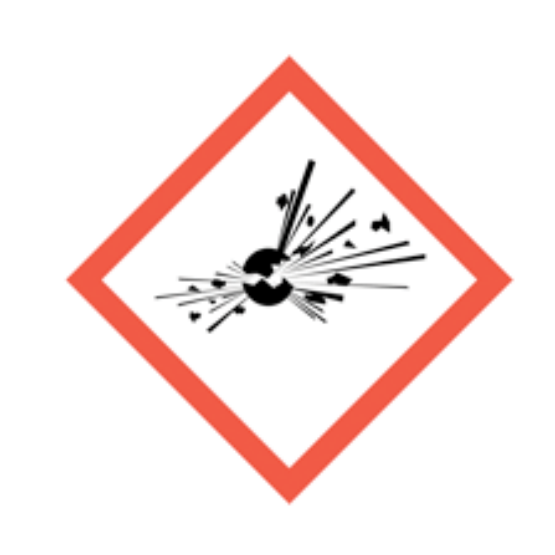
Exploding bomb
Explosive, self-reactive or organic peroxide hazards.
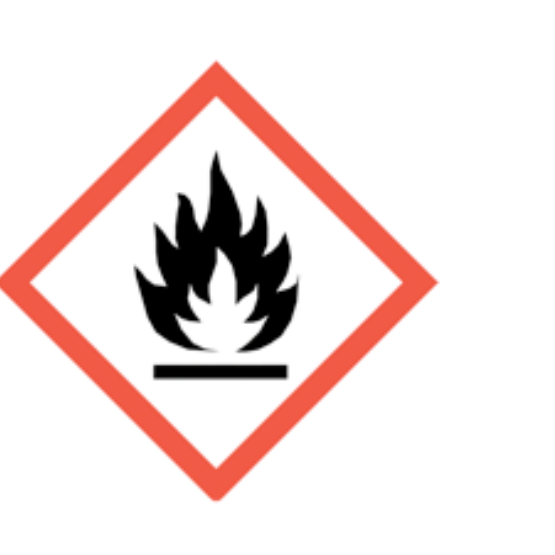
Flame
Flammable, self-heating or pyrophoric substances.
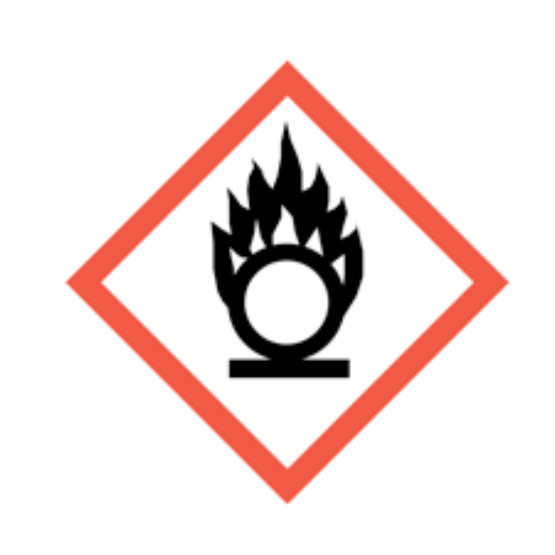
Flame over circle
Oxidising substances that can intensify fire.

Gas cylinder
Gas under pressure.
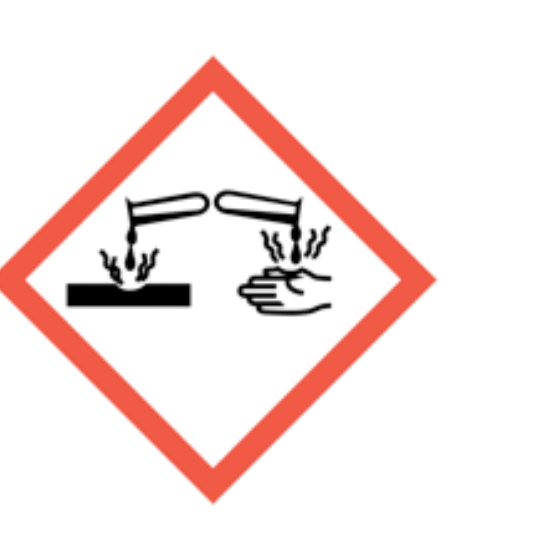
Corrosion
Skin burns, eye damage or corrosive to metals.
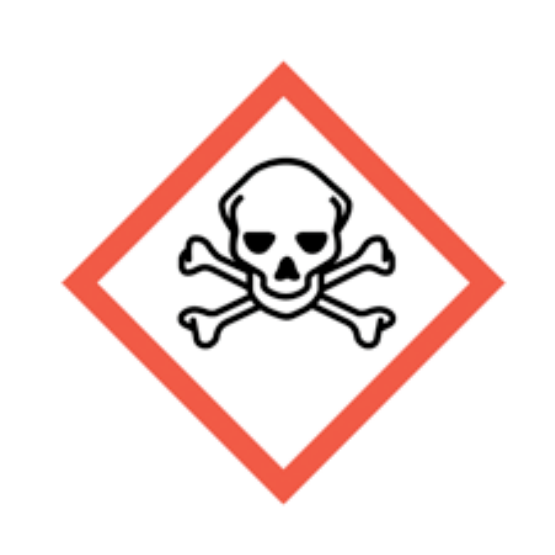
Skull and crossbones
Acute toxicity.
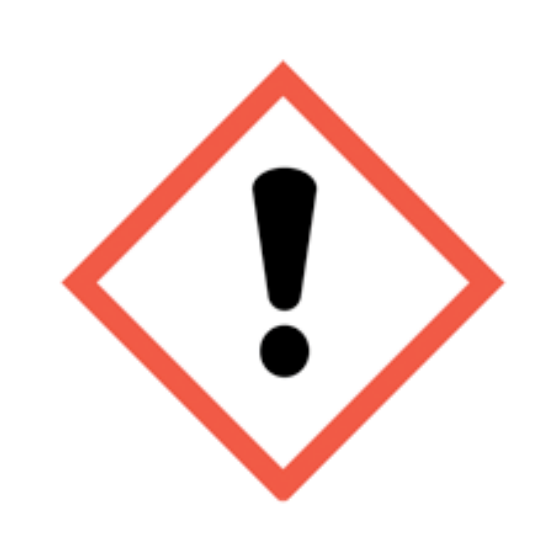
Exclamation mark
Irritation, harmful effects or skin sensitisation; some classifications cover drowsiness, dizziness or ozone-layer hazard. Read the actual hazard statements. Skin sensitisation differs from respiratory sensitisation.
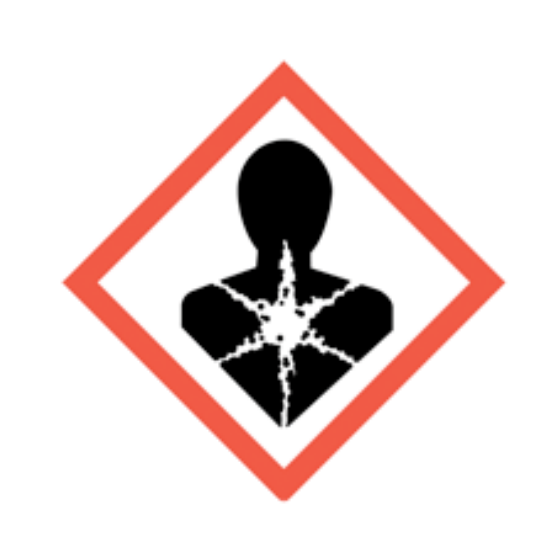
Health hazard
Serious health hazards, including organ damage, aspiration hazard, respiratory sensitisation, cancer and reproductive effects; some can follow a single exposure.
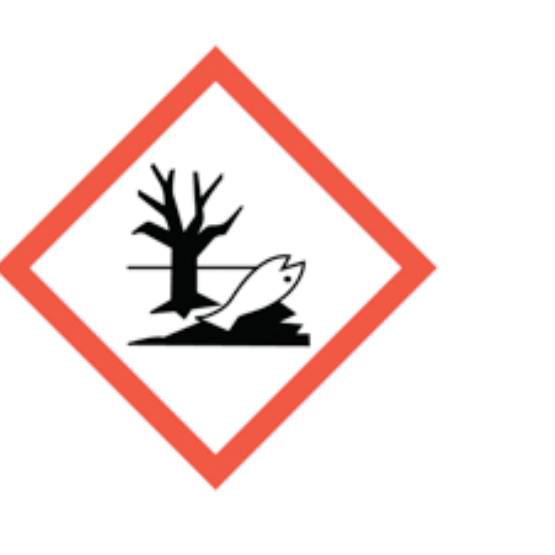
Environment
Hazardous to the aquatic environment.
Acronyms and terms
These terms distinguish the source of harm, the exposure route and the controls needed for the actual work.
| Letters or term | Expansion or definition | Meaning in this topic |
|---|---|---|
| UK | United Kingdom | A geographical description, not one identical set of health-and-safety instruments. |
| GB | Great Britain | England, Scotland and Wales; HSE guidance is generally framed for this jurisdiction. |
| NI | Northern Ireland | A separate health-and-safety legal route overseen by HSENI. |
| HSE | Health and Safety Executive | The GB regulator and a publisher of official workplace guidance. |
| HSENI | Health and Safety Executive for Northern Ireland | The NI regulator; check its applicable requirements and advice. |
| OSH | Occupational safety and health | Preventing work-related injury and ill health. |
| PPE | Personal protective equipment | Equipment worn for remaining exposure; it does not replace stronger source controls. |
| LEV | Local exhaust ventilation | Engineered capture of airborne contaminant near its source. |
| COSHH | Control of Substances Hazardous to Health | The GB hazardous-substance assessment and exposure-control route. |
| DSEAR | Dangerous Substances and Explosive Atmospheres Regulations | The GB route for relevant dangerous-substance fire, explosion and other safety risks. |
| ERICPD | Eliminate, Reduce, Isolate, Control, PPE, Discipline | A learning mnemonic for selecting and sustaining controls; not a statutory ladder. |
| Hazard | A source or condition with potential for harm | Describe what creates harm, rather than calling a person the hazard. |
| Exposure | A route or contact connecting source and person | Consider dose, duration and circumstances where relevant. |
| Critical control | A measure essential to the safe arrangement | Define its required condition, check, owner and failure response. |
| Hand-back | Controlled return to operation or use | Confirm people, equipment, protection and outstanding conditions before release. |
Example handy documents
Useful records connect the actual task to control ownership, checks, stop decisions and verified hand-back. See Managing risks and risk assessment at work and Managing for health and safety (HSG65).
The following are examples of documents an organisation could create or adapt, not downloadable files or a complete safe system. Use the task-specific information and competent review before applying them. Keep private health information outside general operational records.
What should a task and harm-route assessment contain?
Record people, source, exposure or energy, foreseeable harm, existing controls, stronger options, residual uncertainty and the responsible decision owner.
What should a critical-control check and defect log contain?
Record the required condition, check method, responsible person, failed result, restricted work and verified corrective action.
What should a change and hand-back record contain?
Capture changed material, equipment, staffing, layout or conditions; prerequisites, hold decisions, competent verification and restart authority.
What should a competence and authorisation record contain?
Name the assessed task and scope, practical evidence, assessor, limits, supervision and reassessment triggers.
What should an operational learning review contain?
Link observations, complaints, near misses or relevant exposure evidence to a design or organisational change and an effectiveness check.