SHARE Knowledge Hub
Scaffolding Safety
A scaffold is a temporary access and working structure whose safety depends on design, ground and ties, competent erection, inspection and controlled use. Falls from an unprotected platform, collapse after an unauthorised alteration and falling materials can harm workers or the public. The user needs a safe handover and current condition, while only competent people may design, erect, alter or inspect within their scope.
Understanding Scaffolding Safety
A scaffold is a temporary access and working structure whose safety depends on design, ground and ties, competent erection, inspection and controlled use. Falls from an unprotected platform, collapse after an unauthorised alteration and falling materials can harm workers or the public. The user needs a safe handover and current condition, while only competent people may design, erect, alter or inspect within their scope.
Why this matters at work
Critical controls deserve direct verification: edge protection and rescue, scaffold ties and loading, demolition sequence and stability, plant stand-off, excavation support and inspection, service isolation and dust capture. Define owner, performance standard, check frequency and response to failure. Leading indicators should measure control health, not just attendance or injury absence.
Plan work at height under the avoid, prevent and minimise hierarchy. Where a scaffold is the right control, specify the actual task, users, loads, location, public interface, weather exposure and duration. Use a competent scaffolding contractor and supervisor; control erection and alteration as high-risk phases, with collective fall protection installed as early as practicable. Do not use an incomplete or materially changed scaffold until safe status is established.
How organisations manage this in practice
Handover should establish what has been erected, which design or configuration applies, its duty, permitted working lifts, access, loading restrictions, incomplete areas, inspection status and responsibilities. The user should inspect the physical structure and confirm it suits the intended task before release. A scaffold tag can communicate status but is not a legal substitute for competent inspection or a sound scaffold.
Audit should test whether design, planning and field conditions form one coherent system. Sample a significant risk from PCI through design decision, CPP, RAMS, permit, briefing, physical control, inspection and change. Interview workers and observe work across shifts. Volume of paperwork is not evidence of effectiveness.
The client should appoint capable organisations early enough to influence design and preparation. On projects with more than one contractor, the principal designer and principal contractor require written appointments. The number of contractors is determined across the project, not by who happens to be present on one day. A specialist subcontractor remains a contractor under CDM and must cooperate with the principal contractor's arrangements.
Identify the component, then verify the accepted scaffold
A component drawing can teach names but cannot establish scaffold stability, tie adequacy, loading or safe access. Check the accepted design or recognised configuration and the inspected condition.

Identification only
Use the anatomy plate to identify components and distinguish end/side views. A labelled bracing member does not prove that a particular arrangement is adequate.
Accepted arrangement
Confirm the scaffold’s design or applicable standard configuration, ties, loading and foundations with the competent provider. This diagram gives no dimensions or permissible loads.
Access and gate
Check the specified access, gate operation, platforms and edge protection in the actual scaffold. A gate symbol alone cannot validate closing action or prevent an exposed opening.
Loading information
Use the provider’s accepted loading limits and arrangements, including any loading bay. Consider materials, people, sheeting and changes that affect the design basis.
Change: stop and obtain review
Hold affected access and obtain the scaffold contractor/designer’s review before removing a tie or altering the scaffold. Inform the people whose work depends on it.
Inspect and release
Competent inspection and handover verify the accepted completed arrangement before use, with further checks when required or conditions change. Record defects and keep affected areas out of use.
Read the complete controls: ERICPD planning prompts
Discipline verifies and sustains all the controls; it is not a separate substitute for them.
| Prompt or level | Complete task-specific example |
|---|---|
| Eliminate | Change delivery or assemble from ground level where that removes the need for this scaffold alteration. |
| Reduce | Use a suitable alternative loading arrangement or access design after assessing loads, structure and the new handling risks. |
| Isolate | Close the affected scaffold and segregate the erection and falling-material zone from users and the public. |
| Control | Provide the designed ties, support, platforms, edge protection and load provision; maintain safe protection while components are changed. Competent scaffold personnel follow the approved design/standard configuration and alteration sequence; communicate loading limits and handover conditions. |
| PPE | Select assessed erection PPE and any required fall protection with suitable anchors and rescue provision; it does not replace feasible collective protection. |
| Discipline | Inspect the completed alteration and hand over the accepted configuration before access; recheck after changes or events affecting stability. Read the accompanying source table for the framework distinctions. |
Read the complete controls: ESEAP effectiveness order
Compare stronger feasible controls while preserving the actual task, checks and release requirements.
| Prompt or level | Complete task-specific example |
|---|---|
| Elimination | Change delivery or assemble from ground level where that removes the need for this scaffold alteration. |
| Substitution | No separate measure is specified in this example. |
| Engineering controls | Use a suitable alternative loading arrangement or access design after assessing loads, structure and the new handling risks. Close the affected scaffold and segregate the erection and falling-material zone from users and the public. Provide the designed ties, support, platforms, edge protection and load provision; maintain safe protection while components are changed. |
| Administrative controls | Competent scaffold personnel follow the approved design/standard configuration and alteration sequence; communicate loading limits and handover conditions. Inspect the completed alteration and hand over the accepted configuration before access; recheck after changes or events affecting stability. |
| PPE | Select assessed erection PPE and any required fall protection with suitable anchors and rescue provision; it does not replace feasible collective protection. Read the accompanying source table for the framework distinctions. |
Do not infer tie spacing, bracing geometry, foundation capacity or loading limits from this identification schematic.
Further source background retained from this topic
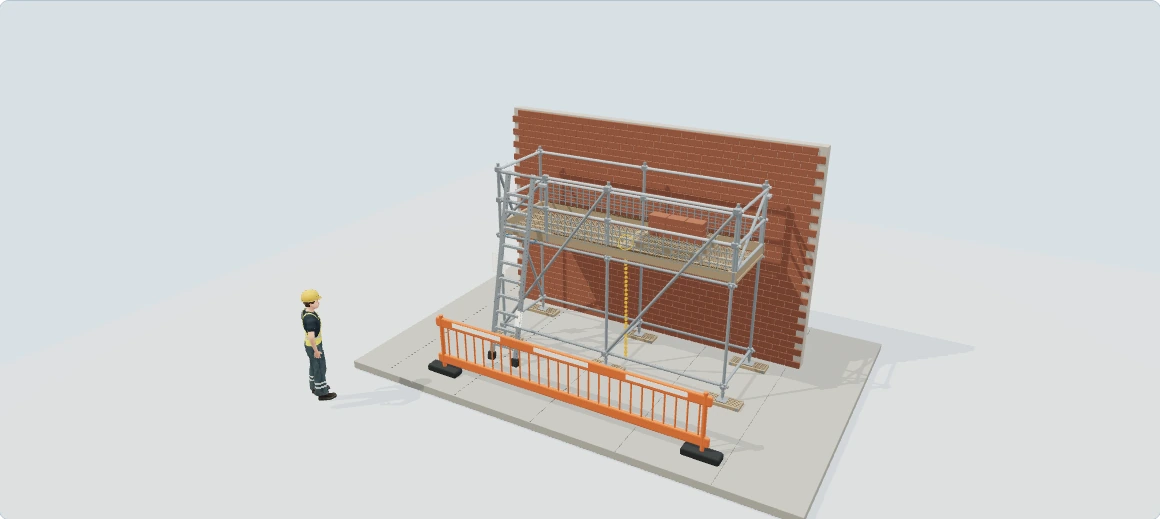

Scaffolds: load paths, falls and the people below
Explore how this equipment can harm its users and other people, then follow the practical measures that interrupt each pathway. This is a hazards and good-practice lesson; the separate checklist remains the pre-use/safety-check activity.
Hazards and good practice: learn what can hurt people during use, change and maintenance. Pre-use and safety checks stay in the separate checklist.
Checksheets and risk assessments
Equipment checksheets
Risk assessment forms
Risk assessment examples
Full written walkthrough — all 8 steps
1. Choose protection for the work
What is happening: A tied tube-and-fitting example provides a platform, access and collective protection.
How harm can occur: An unsuitable platform or working method can expose people to a fall or collapse.
Best practice to apply: Avoid height work where practicable and select a suitable designed arrangement for the task and location.
Why this works: Selecting the method before work reduces the need to improvise from an unsuitable platform.
Scaffolding Safety · What does scaffolding safety involve?2. Follow the load into the supporting ground
What is happening: Boards, transoms, standards and bases form a connected load path.
How harm can occur: Inadequate support or altered components can lead to settlement or structural failure.
Best practice to apply: Use the actual compliant configuration or issued design, verified foundations and competent erection/handover.
Why this works: A sound-looking upper platform still depends on its complete load path and supporting ground.
Scaffolding Safety · How should a scaffold be managed from planning to dismantling?3. Understand ties and stability
What is happening: The ties and bracing stabilise the structure and interact with its surroundings.
How harm can occur: Removing a tie or adding sheeting can change loads and cause instability or collapse.
Best practice to apply: Protect the issued tie/bracing arrangement; obtain competent design review before alterations or added loading such as sheeting.
Why this works: Stability depends on the whole arrangement, not merely each component looking intact.
Scaffolding Safety · Identify the component, then verify the accepted scaffold4. Keep collective fall protection continuous
What is happening: Guardrails, toe boards and protected openings keep the working route within protection.
How harm can occur: A gap, incomplete platform or unprotected edge can lead to a fall or falling material.
Best practice to apply: Provide the required complete platform and protection for the actual arrangement; keep access openings controlled.
Why this works: Continuous protection addresses the route a person or object could actually take off the platform.
Scaffolding Safety · What does scaffolding safety involve?5. Use planned access instead of climbing the frame
What is happening: The access route connects ground, landing and working platform.
How harm can occur: Improvised climbing or an unsafe transfer can cause a fall before the task begins.
Best practice to apply: Use the provided suitable access and a controlled transfer; keep routes free from stored material and trailing equipment.
Why this works: The journey to the workplace is part of the fall risk, not a separate assumption.
Scaffolding Safety · How can harm occur and when must work stop?6. Control materials and people below
What is happening: Stored material affects platform loading and can fall into the area below.
How harm can occur: Overload can destabilise the arrangement; falling items can strike workers or the public.
Best practice to apply: Keep to the actual loading arrangement and provide suitable material handling, containment and protection below.
Why this works: Managing the platform and the area below controls both structural load and object-fall pathways.
Scaffolding Safety · How does scaffold control fail on a refurbishment project?7. Treat changes as a new decision
What is happening: Wind, impact, excavations nearby and alterations can invalidate earlier acceptance.
How harm can occur: A tag or previous inspection cannot remove a new defect or changed loading.
Best practice to apply: Restrict affected access, obtain competent review and only return the arrangement through the required verified handover.
Why this works: Evidence of earlier acceptance describes an earlier condition, not every later state.
Scaffolding Safety · When should scaffold work stop or escalate?8. Plan rescue and interfaces with other work
What is happening: Rescue, deliveries and adjacent activities need a workable route around the structure.
How harm can occur: A delayed rescue or conflicting activity can expose occupants and people below to further harm.
Best practice to apply: Agree suitable rescue, communication and adjacent-work controls with responsible people before work and after change.
Why this works: A complete method accounts for how people can leave or be helped, not only how they arrive.
Scaffolding Safety · How should scaffold controls be assured?
Illustrative awareness learning. Geometry, colours and movement do not establish safe distances, capacity, exposure, isolation or work permission. Use the actual assessment, equipment information and competent arrangements.
The wider workplace has its own account and subscription access. Exploring this lesson does not grant access, record course completion or authorise work.
UK guidance for further reading
HSE: ScaffoldsHow can I practise this topic in 3D?
A gated scaffold route still needs safe-entry release
All related inspection points 4 across 1 location
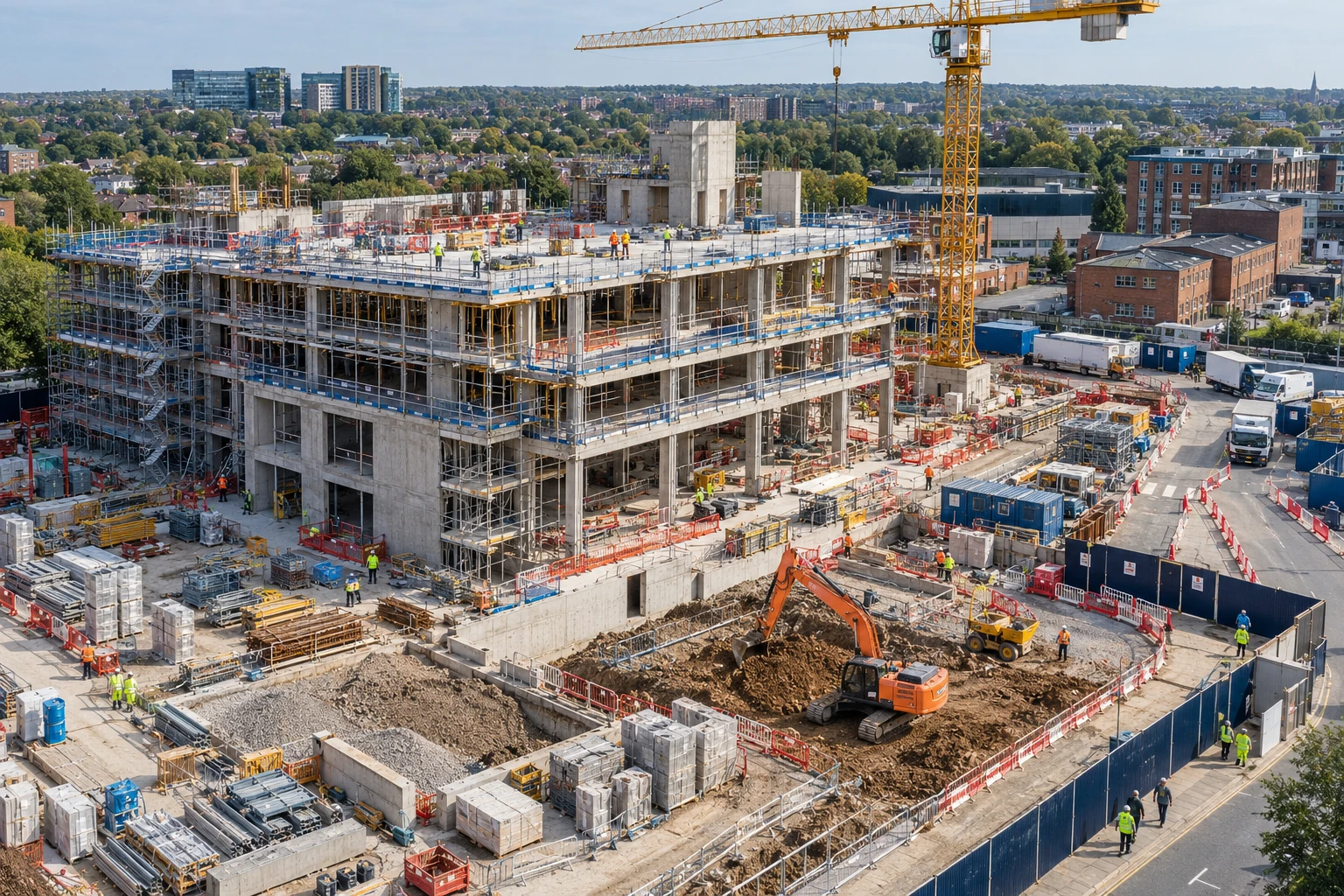
Construction site 4 inspection points
Practice in the SHAREhub environment. Browser practice is separate from workplace competence and formal learning records.
What does scaffolding safety involve?
A scaffold is a temporary access and working structure whose safety depends on design, ground and ties, competent erection, inspection and controlled use. Falls from an unprotected platform, collapse after an unauthorised alteration and falling materials can harm workers or the public. The user needs a safe handover and current condition, while only competent people may design, erect, alter or inspect within their scope.
Best-practice guide: Scaffolding Safety
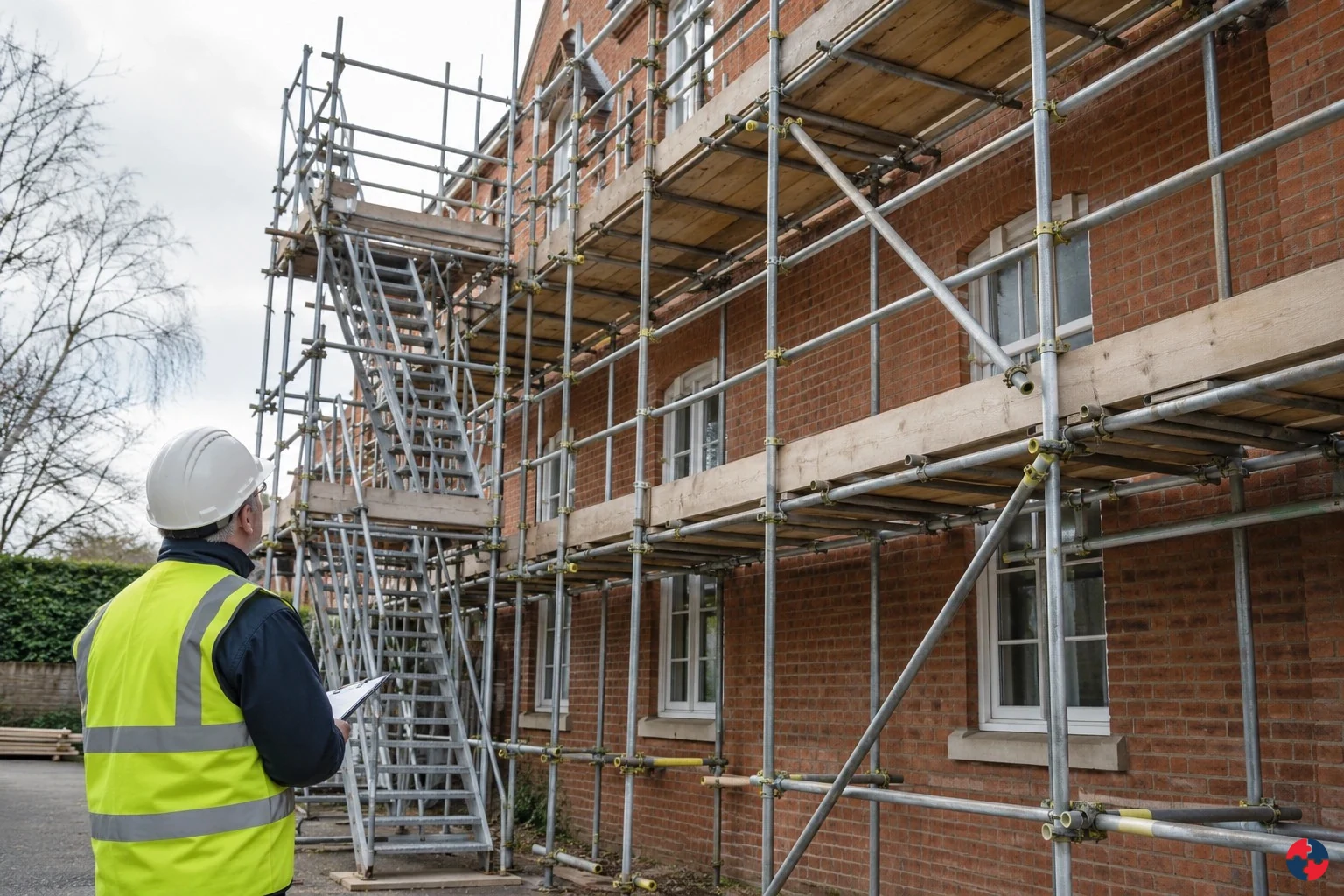
What does scaffolding safety involve?
A scaffold is a temporary access and working structure whose safety depends on design, ground and ties, competent erection, inspection and controlled use. Falls from an unprotected platform, collapse after an unauthorised alteration and falling materials can harm workers or the public. A scaffold is a temporary access and working structure whose safety depends on design, ground and ties, competent erection, inspection and controlled use.
Turn scaffolding safety knowledge into a decision
A scaffold is a temporary access and working structure whose safety depends on design, ground and ties, competent erection, inspection and controlled use. Falls from an unprotected platform, collapse after an unauthorised alteration and falling materials can harm workers or the public. Loading bay and platform loads defined, marked and supervised.
Facade scaffold worked example
Material loading: Loading bay and platform loads defined, marked and supervised. Tie removal: No tie alteration without scaffold contractor and design review.
How can harm occur and when must work stop?
A facade scaffold handed over for light repair can become overloaded when materials are stacked on a lift.
Choose controls for scaffolding safety
Eliminate: Change delivery or assemble from ground level where that removes the need for this scaffold alteration. Reduce, including substitution: Use a suitable alternative loading arrangement or access design after assessing loads, structure and the new handling risks. Isolate: Close the affected scaffold and segregate the erection and falling-material zone from users and the public. Control: Provide the designed ties, support, platforms, edge protection and load provision; maintain safe protection while components are changed. Control: Competent scaffold personnel follow the approved design/standard configuration and alteration sequence; communicate loading limits and handover conditions. Read the full control table for qualifications, ownership and verification. Use the actual task and applicable jurisdiction; existing technical approval remains unchanged.
Use the full scaffolding safety lesson
Use the full topic for the decision points, practical examples, detailed control tables and source scope. HSE guidance applies to Great Britain; use HSENI for the Northern Ireland route and the source’s stated jurisdiction. A simplified guide does not change the page’s technical-review or approval status.
Read all six steps as text
1. What does scaffolding safety involve?
A scaffold is a temporary access and working structure whose safety depends on design, ground and ties, competent erection, inspection and controlled use.
- Avoid / redesign: Change delivery or assemble from ground level where that removes the need for this scaffold alteration.
- Control the task: Close the affected scaffold and segregate the erection and falling-material zone from users and the public.
- Verify before release: If the hazardous step remains, keep it within the task assessment and select the stronger feasible remaining controls.
A scaffold is a temporary access and working structure whose safety depends on design, ground and ties, competent erection, inspection and controlled use. Falls from an unprotected platform, collapse after an unauthorised alteration and falling materials can harm workers or the public. A scaffold is a temporary access and working structure whose safety depends on design, ground and ties, competent erection, inspection and controlled use.
Apply it: Which part of this plan would you check at the workface before authorising the task?
2. Turn scaffolding safety knowledge into a decision
Use the evidence to improve the actual work arrangement.
- Change at source: Change delivery or assemble from ground level where that removes the need for this scaffold alteration.
- Make it observable: If the hazardous step remains, keep it within the task assessment and select the stronger feasible remaining controls.
- Keep useful evidence: Loading bay and platform loads defined, marked and supervised.
A scaffold is a temporary access and working structure whose safety depends on design, ground and ties, competent erection, inspection and controlled use. Falls from an unprotected platform, collapse after an unauthorised alteration and falling materials can harm workers or the public. Loading bay and platform loads defined, marked and supervised.
Apply it: What evidence would show that the change improves this task, rather than only completing a record?
3. Facade scaffold worked example
Example: a practical application of the existing topic lesson.
- Material loading: Loading bay and platform loads defined, marked and supervised.
- Tie removal: No tie alteration without scaffold contractor and design review.
- Guardrail gap: Work stopped until edge protection restored and inspected.
Material loading: Loading bay and platform loads defined, marked and supervised. Tie removal: No tie alteration without scaffold contractor and design review.
Apply it: At which point would you hold this example, and what evidence would allow it to proceed?
4. How can harm occur and when must work stop?
Connect the task, the route to the person and the control that can fail.
- Source / exposure: A facade scaffold handed over for light repair can become overloaded when materials are stacked on a lift.
- Possible consequence: Removing a tie for cladding changes stability; removing a guardrail creates an immediate fall route.
- Control failure: The supervisor should stop access, segregate people below, and have a competent scaffold designer or contractor assess, correct and inspect the structure before release.
A facade scaffold handed over for light repair can become overloaded when materials are stacked on a lift.
Apply it: Who could be exposed, including other trades, cleaners, maintainers and people nearby?
5. Choose controls for scaffolding safety
Start with the stronger practicable options and verify their effect.
- Eliminate: Change delivery or assemble from ground level where that removes the need for this scaffold alteration.
- Reduce, including substitution: Use a suitable alternative loading arrangement or access design after assessing loads, structure and the new handling risks.
- Isolate: Close the affected scaffold and segregate the erection and falling-material zone from users and the public.
- Control: Provide the designed ties, support, platforms, edge protection and load provision; maintain safe protection while components are changed.
- Control: Competent scaffold personnel follow the approved design/standard configuration and alteration sequence; communicate loading limits and handover conditions.
Eliminate: Change delivery or assemble from ground level where that removes the need for this scaffold alteration. Reduce, including substitution: Use a suitable alternative loading arrangement or access design after assessing loads, structure and the new handling risks. Isolate: Close the affected scaffold and segregate the erection and falling-material zone from users and the public. Control: Provide the designed ties, support, platforms, edge protection and load provision; maintain safe protection while components are changed. Control: Competent scaffold personnel follow the approved design/standard configuration and alteration sequence; communicate loading limits and handover conditions. Read the full control table for qualifications, ownership and verification. Use the actual task and applicable jurisdiction; existing technical approval remains unchanged.
Apply it: Which stronger option can be used here, and who will verify it before accepting the remaining risk?
6. Use the full scaffolding safety lesson
Follow the official sources below and retain the task-specific evidence.
- Official guidance: Primary source
- Task decision: Loading bay and platform loads defined, marked and supervised.
Use the full topic for the decision points, practical examples, detailed control tables and source scope. HSE guidance applies to Great Britain; use HSENI for the Northern Ireland route and the source’s stated jurisdiction. A simplified guide does not change the page’s technical-review or approval status.
Apply it: Which official source and full-topic section will you use to resolve the next decision?
A scaffold tag is a useful visual aid, not the statutory inspection report. Construction inspection timing and records must be read against the GB or NI work-at-height instrument and the actual configuration; a user check does not replace competent inspection. Primary source.
A scaffold is a temporary structure, but it must be treated like a designed workplace. It needs stable foundations, appropriate load capacity, suitable platforms, edge protection, safe access, ties or stability measures, falling-object protection, inspection and clear rules for use.
The central risk is not only a worker falling from an incomplete platform. Scaffold failure can involve collapse, falling boards, falling tools, unauthorised removal of guardrails or ties, overloading, vehicle impact, adverse weather, contact with overhead lines, public access or poor dismantling sequence.
Good scaffold management starts before erection. The work must be planned, the scaffold type selected, the ground and loading understood, interfaces controlled, and the scaffold contractor's competence checked. Once erected, handover and inspection evidence must be actively used rather than filed away.
| Control area | What good looks like | Common failure |
|---|---|---|
| Design and selection | Scaffold type, configuration and loading match the work. | Using a generic scaffold where loading, access or geometry needs design input. |
| Competence | Erection, alteration, dismantling and inspection by competent people under supervision. | Untrained workers altering lifts or removing ties. |
| Foundations | Ground, sole boards, base plates and settlement risk checked. | Scaffold founded on soft ground, voids, drains or unstable surfaces. |
| Edge protection | Guardrails, midrails, toe boards and safe platform widths maintained. | Gaps, missing rails, incomplete platforms or poor access points. |
| Access | Safe ladders, stair towers or access gates provided and maintained. | Climbing frames, blocked ladders or unsecured access. |
| Loading | Materials, loading bays and working loads controlled. | Brick packs, plasterboard or plant stored beyond capacity. |
| Ties and stability | Ties, bracing, buttressing and stability measures protected from unauthorised change. | Trades remove ties to complete work without approval. |
| Inspection | Inspect before first use and after events liable to jeopardise safety. Apply the statutory seven-day construction-platform provision where a person could fall 2 m or more; distinguish broader guidance and any stricter site rule. Lower/non-construction equipment still needs suitable inspection. | Tag present but statutory inspection report missing or out of date. |
How can harm occur and when must work stop?
A facade scaffold handed over for light repair can become overloaded when materials are stacked on a lift.
Removing a tie for cladding changes stability; removing a guardrail creates an immediate fall route. Wind or sheeting can increase loads. The supervisor should stop access, segregate people below, and have a competent scaffold designer or contractor assess, correct and inspect the structure before release. A green tag cannot override a visible defect or changed design. HSE
How can the hierarchy of controls reduce risks while altering a scaffold loading lift?
Remove or reduce the hazard before relying on procedures or personal protection.
For scaffolding, assess the actual task and first look for a way to remove the hazard. Where that is not possible, consider a safer substitute, engineered separation and then clear work procedures. PPE protects against remaining exposure; it does not make an uncontrolled task safe. HSE hierarchy of controls
The selected measures need a named owner, a usable stop point and a check that they still work when the task or conditions change. In Northern Ireland, verify the separate legal route and site instructions.
How can the ERICPD hierarchy of controls reduce risks while altering a scaffold loading lift?

| Control level | Control for this activity | Owner and verification | Stop / restart decision |
|---|---|---|---|
| Eliminate | Change delivery or assemble from ground level where that removes the need for this scaffold alteration. | Task owner verifies that the proposed change removes the named hazardous step, including foreseeable cleaning, maintenance and work transferred elsewhere. | If the hazardous step remains, keep it within the task assessment and select the stronger feasible remaining controls. |
| Reduce, including substitution | Use a suitable alternative loading arrangement or access design after assessing loads, structure and the new handling risks. | Competent task/process owner validates suitability, compatibility and new hazards against the actual operating requirements before the alternative is adopted. | Reject an alternative if its performance is unproved or its new hazards are unresolved. |
| Isolate | Close the affected scaffold and segregate the erection and falling-material zone from users and the public. | Supervisor checks the actual boundary, affected people and connected work; verify separation or isolation before allowing access. | Hold or stop for unapproved alteration, missing tie/edge protection, unstable support or loading outside the design. |
| Control: physical safeguards | Provide the designed ties, support, platforms, edge protection and load provision; maintain safe protection while components are changed. | Competent equipment/process owner checks design/configuration, load and tie requirements, erection sequence, protection and inspection. | Hold or stop for unapproved alteration, missing tie/edge protection, unstable support or loading outside the design. |
| Control: work method and response | Competent scaffold personnel follow the approved design/standard configuration and alteration sequence; communicate loading limits and handover conditions. | Supervisor confirms the work limits, competent cover, communication and stop/restart authority with the people doing this activity. | Hold work when the agreed limits, competent cover or effective communication cannot be maintained. |
| PPE | Select assessed erection PPE and any required fall protection with suitable anchors and rescue provision; it does not replace feasible collective protection. | Assessor confirms whether personal protection is needed and checks suitability, condition, compatibility and any required fit evidence. | Do not use unsuitable protection or rely on PPE to continue after an essential source control fails. |
| Discipline | Inspect the completed alteration and hand over the accepted configuration before access; recheck after changes or events affecting stability. | Release only after competent scaffold owner accepts the inspection and formal handover before user access. Retain verification and unresolved restrictions at handover. | Keep the task on hold until required reinstatement evidence and unresolved defects are accepted by the responsible owner. |
How can the ISO 45001 hierarchy of controls reduce risks while altering a scaffold loading lift?

| Five-level control stage(s) | Control for this activity | Owner and verification | Stop / restart decision |
|---|---|---|---|
| Elimination | Change delivery or assemble from ground level where that removes the need for this scaffold alteration. | Task owner verifies that the proposed change removes the named hazardous step, including foreseeable cleaning, maintenance and work transferred elsewhere. | If the hazardous step remains, keep it within the task assessment and select the stronger feasible remaining controls. |
| Engineering controls | Use a suitable alternative loading arrangement or access design after assessing loads, structure and the new handling risks. | Competent task/process owner validates suitability, compatibility and new hazards against the actual operating requirements before the alternative is adopted. | Reject an alternative if its performance is unproved or its new hazards are unresolved. |
| Engineering controls | Close the affected scaffold and segregate the erection and falling-material zone from users and the public. | Supervisor checks the actual boundary, affected people and connected work; verify separation or isolation before allowing access. | Hold or stop for unapproved alteration, missing tie/edge protection, unstable support or loading outside the design. |
| Engineering controls | Provide the designed ties, support, platforms, edge protection and load provision; maintain safe protection while components are changed. | Competent equipment/process owner checks design/configuration, load and tie requirements, erection sequence, protection and inspection. | Hold or stop for unapproved alteration, missing tie/edge protection, unstable support or loading outside the design. |
| Administrative controls | Competent scaffold personnel follow the approved design/standard configuration and alteration sequence; communicate loading limits and handover conditions. | Supervisor confirms the work limits, competent cover, communication and stop/restart authority with the people doing this activity. | Hold work when the agreed limits, competent cover or effective communication cannot be maintained. |
| PPE | Select assessed erection PPE and any required fall protection with suitable anchors and rescue provision; it does not replace feasible collective protection. | Assessor confirms whether personal protection is needed and checks suitability, condition, compatibility and any required fit evidence. | Do not use unsuitable protection or rely on PPE to continue after an essential source control fails. |
| Administrative controls | Inspect the completed alteration and hand over the accepted configuration before access; recheck after changes or events affecting stability. | Release only after competent scaffold owner accepts the inspection and formal handover before user access. Retain verification and unresolved restrictions at handover. | Keep the task on hold until required reinstatement evidence and unresolved defects are accepted by the responsible owner. |
For work at height, first avoid the work where practicable, then prevent falls, then minimise the distance and consequences. Prefer collective protection to personal systems and connect the selected method to emergency/rescue planning.GB Work at Height Regulations 2005 NI Work at Height Regulations 2005
How does the decision transfer between workplaces?
Apply the risk and barrier decision to the actual work and location.
A short internal maintenance task may need a suitable tower with manufacturer instructions; a multi-storey facade needs a design or recognised configuration, ties, loading limits and public protection. On a construction site, inspection follows installation, no more than seven days thereafter and events liable to jeopardise safety. In each case, a change in loading, tie pattern, sheeting or weather requires a competent reassessment before users rely on the platform. HSE
LEARN THE STRUCTURE · 15 IDENTIFIED PARTS
Identify the parts of a tube-and-fitting scaffold
 Enlarge the labelled diagram ⤢
Learn the names before inspecting the platform: follow the load from the boards through the transoms, ledgers and standards to the base plates and sole boards. Compare the bracing along the length with the bracing across the width.
What do the 15 scaffold parts do?
- Top guardrailToprailThe upper horizontal barrier at an exposed platform edge. It helps prevent people falling from the working platform.
- Intermediate guardrailMidrailThe rail between the top guardrail and platform. It reduces the unprotected gap in the edge-protection system.
- Scaffold boardsPlanks / working platformThe supported boards that form the walking and working surface. Their condition, support, securing and loading must suit the accepted arrangement.
- StandardPost / full-height uprightA main vertical tube carrying scaffold loads down to its base plate and the supporting foundation arrangement.
- Transverse bracingBracing across the breadthDiagonal bracing across the scaffold's width. It helps stabilise the scaffold in a different direction from longitudinal bracing.
- TransomBearer / full-width cross-memberA horizontal tube running across the scaffold's width. Transoms support the boards and connect the inner and outer rows of the scaffold.
- CouplerTube-and-fitting connectionA fitting that connects scaffold tubes. The correct coupler type, condition and connection arrangement depend on its function and the scaffold design.
- Base plateSteel plate beneath a standardThe plate at the foot of a standard. It transfers the leg load into the specified sole board or other suitable supporting arrangement.
- Sole boardSill / timber sole boardA timber load-spreading member below the base plate. It forms part of the designed support arrangement and does not make unsuitable ground safe by itself.
- Self-closing drop barMovable access protectionThe hinged bar shown at the ladder access. It returns to its protective position as part of the complete designed access-protection arrangement; a single bar alone does not establish safe edge protection.
- PuncheonFalse / short uprightA short upright supported by another scaffold member, rather than extending to a ground-level base plate. Here it supports the access-protection arrangement.
- Toe boardEdge board at platform levelAn upstand at the platform edge that helps stop materials and objects being kicked or rolling off. It forms part of the edge-protection arrangement.
- LedgerRunner / lengthwise memberA horizontal tube running along the scaffold's length, connecting standards and helping form the scaffold framework.
- Longitudinal bracingBracing along the long faceDiagonal tubes running along the scaffold's length. They help resist sideways distortion, or racking, in that direction.
- Base liftKicker lift / low-level horizontalsThe low-level horizontal framework near the feet of the scaffold. Its position and connections follow the accepted scaffold arrangement.
Component identification only. The full site arrangement, foundations, ties, loading, bracing and safe access must follow the accepted scaffold design or configuration. Only competent people may erect, alter or dismantle the scaffold under competent supervision. A visible ladder or drop bar alone does not establish a safe access arrangement.
Explore the scaffold components in 3D
Turn the scaffold, select a numbered part and see where it sits and what it does. The 15 numbers match the labelled drawing above.
Use the model to learn component names and roles. Follow the accepted design, site rules and competent guidance for actual scaffolding work. Practise the separate scaffold user checks.
How should a scaffold be managed from planning to dismantling?
The management sequence should control design, competence, handover, use, inspection, alteration and dismantling as one continuous process.
Scaffold risk changes over time. The structure may be safe at handover, then become unsafe because materials are loaded, ties are removed, edge protection is damaged, sheeting increases wind loading, the weather changes or other trades alter access. HSE.
This is why scaffold management needs both formal inspection and everyday control. The seven-day inspection is important, but it does not replace supervisor checks, user vigilance, defect reporting and control of alterations.
| Stage | Key control question | Evidence expected |
|---|---|---|
| Plan | Is a scaffold the right access method and is work at height unavoidable? | Work at height assessment and access-selection rationale. |
| Design/select | Is the scaffold standard, bespoke or requiring design input? | Design drawing, supplier standard, an applicable recognised configuration/compliance sheet or manufacturer’s design instructions, with competent design outside that scope or engineer design. |
| Appoint | Is the scaffold contractor competent and adequately supervised? | Competence records, RAMS and supervision arrangements. |
| Erect | Are incomplete-scaffold controls and fall prevention arrangements in place? | Exclusion zones, scaffold contractor method and progressive handover where relevant. |
| Handover | Has a competent person confirmed the scaffold is safe for intended use? | Handover certificate and loading/use restrictions. |
| Use | Are users following loading, access, edge protection and no-alteration rules? | Supervisor checks, briefings and defect reports. |
| Inspect | Is inspection current and repeated after weather, alteration or damage? | Inspection reports and tag-system support. |
| Alter/dismantle | Are changes controlled by scaffold competent persons? | Change request, revised handover and dismantling exclusion plan. |
How does scaffold control fail on a refurbishment project?
A worked refurbishment scenario shows how a safe scaffold at handover can drift into an unsafe working platform.
A facade scaffold is erected for window replacement and external repairs. It is handed over with loading limits and tie locations, but the programme changes. Materials are stored on working lifts, a trade removes a guardrail to bring in cladding, a tie is removed to access brickwork, and sheeting is added without review. The scaffold tag still shows green, but the actual scaffold no longer matches the handover condition. HSE.
A competent site manager treats the scaffold as a live temporary works control. They stop unauthorised alteration, quarantine affected lifts, call the scaffold contractor, review loading and sheeting, re-inspect after change and brief all trades that only scaffolders may alter the scaffold.
| Issue | Weak control | Stronger control |
|---|---|---|
| Material loading | Materials stacked wherever space is available. | Loading bay and platform loads defined, marked and supervised. |
| Tie removal | Tie removed by trade to complete repair. | No tie alteration without scaffold contractor and design review. |
| Guardrail gap | Rail removed temporarily and not replaced. | Work stopped until edge protection restored and inspected. |
| Weather change | High winds after sheeting installed. | Wind loading reviewed and scaffold checked after adverse weather. |
| Public interface | Pedestrians pass under work area. | Fans, netting, exclusion routes and falling-object controls maintained. |
| Evidence | Tag relied on without reading inspection report. | Handover, seven-day inspection and alteration records checked. |
How should different scaffold types be selected?
The scaffold type should follow the task, load, duration, ground, access, public interface and fall-risk profile.
A scaffold is not automatically the best access solution, but where it is selected it must suit the work. A short inspection may be better served by a MEWP if ground and rescue are suitable; long-duration facade work may need an independent tied scaffold; internal ceiling work may need a birdcage; mobile towers are suitable only when properly selected, erected, inspected and used.
Selection should also consider material movement, rescue, weather, vehicle impact, overhead lines, adjacent premises, vulnerable people and emergency access.
| Access type | Typical use | Key controls |
|---|---|---|
| Independent tied scaffold | Facade work, repairs, painting, window replacement. | Ties, bracing, foundations, loading limits and inspections. |
| Birdcage scaffold | Ceiling, M&E or internal high-level work. | Platform completeness, access, edge protection and load control. |
| Mobile tower | Short-duration access where movement is needed. | demonstrated competence for the tower type and task, stabilisers, level ground, locking wheels and inspection. |
| Loading bay | Material loading to scaffold or floor level. | Design load, gates, lifting plan and exclusion below. |
| Cantilever or suspended scaffold | Restricted ground access or special geometry. | Design, specialist competence, anchorage and rescue arrangements. |
| MEWP alternative | Short or changing access task. | Ground, overhead hazards, rescue plan, operator competence and segregation. |
How should scaffold inspection and tags be understood?
Inspection reports are the formal evidence; tag systems are useful visual aids but do not replace inspection duties.
HSE construction guidance calls for competent scaffold inspection following installation and before first use, at intervals of no more than seven days, and after circumstances liable to jeopardise safety, including high winds, alteration or damage. A more frequent inspection may be needed where the assessment or conditions justify it. HSE scaffold inspection.
A tag can help users see whether a scaffold is available, restricted or incomplete. It is not the legal inspection record by itself. Users and supervisors still need to know what the tag means, what the restrictions are and when work must stop. HSE tag and inspection-report guidance.
| Inspection point | What should be checked | Evidence |
|---|---|---|
| Before first use | Structure, platforms, edge protection, access, ties, foundations, loading and restrictions. | Handover and inspection report. |
| Every seven days | Continued safe condition and any deterioration or alteration. | Dated inspection report by competent person. |
| After adverse weather | Wind, settlement, sheeting, debris, damaged boards or displaced components. | Post-weather inspection record. |
| After alteration | Changed lift, tie, access, guardrail, loading bay or sheeting. | Revised inspection and handover where needed. |
| After impact or damage | Vehicle strike, dropped load, fire, vandalism or unauthorised change. | Quarantine, inspection and repair record. |
| Tag review | Status, restrictions and latest inspection date visible to users. | Tag supports but does not replace the report. |
Distinguish guidance and site rules from the statutory construction-platform provision: the seven-day requirement applies to construction working platforms from which a person could fall 2 m or more. Other equipment still needs suitable inspection and control. GB regulation 12/Schedule 7 and NI regulation 12/Schedule 8 have separate report provisions. A move of a mobile platform within the same site does not automatically require a new statutory report, but suitability and condition checks still apply.GB Work at Height Regulations 2005 NI Work at Height Regulations 2005
What does a full scaffold lifecycle look like?
A scaffold should be controlled from design and selection through erection, use, change, weather events and dismantling.
The best scaffold control is lifecycle control. The project team should be able to explain how the scaffold was selected, who designed or checked it, who erected it, what it was handed over for, what inspections are current, how users check it, how changes are authorised and how dismantling will protect people below and nearby.
This matters because many scaffold failures are not present at handover. They develop later through programme change, unauthorised alteration, material loading, weather, impact, public access or dismantling pressure.
| Lifecycle stage | What good looks like | Failure to prevent |
|---|---|---|
| Design and selection | Access need, loading, duration, ground, public interface and scaffold type are defined before erection. | Generic scaffold selected without considering loading bay, sheeting or pedestrian route. |
| Erection | Competent scaffolders erect under competent supervision with exclusion zones and incomplete-scaffold controls. | Other trades work below or enter incomplete lifts. |
| Handover | Handover certificate defines safe status, intended use, restrictions and loading. | Users rely on a green tag without understanding restrictions. |
| Initial use | Supervisor checks access, platforms, edge protection, loading and user briefing. | Trades begin storing materials on working lifts. |
| Seven-day inspection | Inspection report confirms continued safe condition and defects are closed. | Inspection is overdue or defects are noted but still in use. |
| Weather event | Wind, rain, ice, sheeting and settlement are reviewed before restart. | Work resumes after high winds with no competent check. |
| Unauthorised change | Work stops if guardrails, ties, boards or access are altered by non-scaffolders. | Tie removed to make room for cladding or brickwork access. |
| Authorised alteration | Scaffold contractor alters, rechecks and updates status before use. | Alteration happens informally to keep programme moving. |
| Dismantling | Dismantling sequence, exclusion zones and falling-object controls are planned. | Materials dropped, lifts stripped above occupied routes or public areas exposed. |
What makes tower scaffold work go wrong?
Tower scaffolds often fail through poor erection, instability, movement while occupied, poor ground, missing guardrails or users reaching beyond the platform.
Mobile towers can look simple because they are modular, but they still need competent erection and use. A tower that is safe in the training room may become unsafe on uneven ground, near doors, in wind, beside traffic or when users overreach. HSE.
Supervisors should check tower suitability before use and after movement. Users should not improvise height, climb the outside, move the tower while occupied, or use it where ground, weather or overhead hazards make it unsuitable.
| Failure | Why it matters | Control |
|---|---|---|
| Incomplete erection | Missing stabilisers, guardrails or platform components create fall or overturn risk. | Trained competent erection and pre-use check. |
| Uneven ground | Tower can become unstable or roll. | Level firm surface, locked wheels and stabilisers. |
| Moved while occupied | Loss of balance and overturn risk. | Never move a tower with people or any materials on the platform. |
| Overreaching | User shifts centre of gravity outside safe area. | Descend, clear people and all materials, then reposition only by the approved movement method. Follow manufacturer limits, check the route and overhead hazards, apply manual force at the base and recheck at the new position. HSE’s generic movement height limit is 4 m; any lower manufacturer limit governs. |
| Wind or outdoor exposure | Light structures can become unstable. | Follow supplier limits and stop in unsuitable weather. |
| Vehicle or door impact | Tower struck by plant, doors or pedestrians. | Protect the position and segregate traffic, or use an authorised alternative route that preserves evacuation. Never lock or obstruct a door required for emergency escape. |
What should scaffold users check before work?
Users are not scaffold inspectors, but they should recognise obvious defects, restrictions and changes before stepping onto the scaffold.
A user check is a practical pre-use sense check. It does not replace formal inspection, but it can stop work before a person enters an unsafe lift. Users should know what normal looks like and who to contact when something is missing, damaged, overloaded or altered.
The check should be simple enough to remember during busy site work: status, access, platform, edge protection, loading, ties, boards, weather, falling objects and nearby interfaces.
| Check | Stop-work trigger | Immediate action |
|---|---|---|
| Guardrails and toe boards | Missing, loose or removed edge protection. | Do not access affected lift; report to supervisor and scaffold contractor. |
| Ties and bracing | Tie, brace or anchor removed, damaged or visibly altered. | Stop use in affected area and request competent scaffold review. |
| Boards and platforms | Damaged, displaced, bouncing, incomplete or gapped boards. | Prevent access until repaired and checked. |
| Loading | Materials stacked beyond loading bay or working platform limits. | Stop use and keep people out of the potential collapse/drop zone. A competent person must assess stability and control a planned unloading/recovery method before release; do not send untrained users onto a suspect structure. |
| Access | Ladder, stair tower, gate or access point blocked, unsecured or incomplete. | Use only approved access and escalate defect. |
| Tag/status | Missing, incomplete, out-of-date or inconsistent tag. | Check inspection report and do not rely on tag alone. |
| Weather and condition | Ice, high wind, debris, settlement or impact evidence. | Stop and request post-event inspection. |
| Falling objects | Loose tools, waste, materials or missing brick guards/netting. | Secure materials and protect people below before work. |
What should scaffold users be briefed on?
A scaffold user briefing should explain the scaffold status, restrictions, access route, loading, no-alteration rule and stop-work conditions.
The users of a scaffold are often not scaffolders. They need plain instructions: where they can work, what they can load, how they access the scaffold, what not to change, what defects to report and who can authorise alterations.
Briefings should be repeated when work changes. A scaffold that supports painting may not automatically be suitable for heavy materials, sheeting, lifting, blasting or demolition work.
| Briefing topic | What users need to know | Supervisor check |
|---|---|---|
| Status | Which lifts are open, restricted or incomplete. | Tag and inspection report align with actual scaffold. |
| Access | Approved ladders, stair towers or gates. | No climbing frames or improvised routes. |
| Loading | Permitted materials and loading bay rules. | No uncontrolled stockpiling. |
| Edge protection | Guardrails, toe boards and platform boards must not be removed. | Defects reported and work stopped where needed. |
| Alterations | Only competent scaffolders may alter scaffold. | Unauthorised changes challenged immediately. |
| Falling objects | Tools, materials, exclusion below and debris netting. | Public and workers below protected. |
| Weather | Wind, ice, rain and visibility stop conditions. | Condition checked after adverse weather. |
When should scaffold work stop or escalate?
Stop work when scaffold condition, inspection status, stability, access, edge protection, loading or public protection is uncertain.
Scaffold stop-work decisions should be simple. If the scaffold has been altered without control, damaged, overloaded, affected by weather, missing edge protection or lacking a current inspection, affected work should stop until competent confirmation is obtained.
A supervisor should not negotiate with scaffold defects because the programme is under pressure. The scaffold is the workplace. If it is not safe, the work is not safe.
| Trigger | Immediate action | Who to involve |
|---|---|---|
| Missing guardrail, toe board or platform board | Stop affected lift and prevent access. | Site manager and scaffold contractor. |
| No current inspection report | Do not use until competent inspection is completed. | Scaffold inspector or competent person. |
| Unauthorised alteration | Quarantine scaffold or affected area. | Scaffold contractor, temporary works lead and site manager. |
| Overloading or poor material storage | Stop use, exclude people from the collapse/drop zone and obtain competent assessment. Remove loading only through a planned method that does not destabilise the structure or expose users. | Supervisor, scaffold contractor and lifting/materials lead. |
| Adverse weather or impact | Stop use until post-event inspection confirms condition. | Competent inspector. |
| Public or vehicle interface compromised | Reinstate exclusion, hoarding or protection. | Principal contractor, traffic marshal and scaffold contractor. |
| Overhead line or electrical risk | Stop and review isolation, diversion or exclusion arrangements. | Electricity network operator and site management. |
Where does scaffold management commonly fail?
Failures usually come from treating the scaffold as static after handover, or allowing informal changes to solve short-term access problems.
Scaffold incidents often involve drift. A scaffold is erected correctly, then other work changes around it. Materials, weather, interfaces, public access and trade needs change faster than the paperwork.
The control standard should make one point unmistakable: scaffold users do not alter scaffolds. If work cannot be done without alteration, the work plan needs review.
| Failure or weak practice | How it develops | What good looks like |
|---|---|---|
| Unauthorised alteration | Guardrail, tie or board removed to complete work. | No-alteration rule, scaffold contractor response and supervisor checks. |
| Inspection gap | Scaffold used after weather or alteration without re-inspection. | Inspection triggers and access restriction. |
| Overloading | Palletised materials stored on working lift. | Loading plan, loading bays and signage. |
| Poor foundations | Settlement after rain or loading. | Ground review, sole boards and inspection. |
| Falling objects | Tools and materials fall to public area. | Toe boards, brick guards, tool lanyards, fans and exclusion. |
| Tower misuse | Tower moved while occupied or used on uneven ground. | Training, pre-use check and supervision. |
| Public access | Children or trespassers climb scaffold out of hours. | Hoarding, ladder removal, lighting and security checks. |
What evidence shows scaffold risk is controlled?
Evidence should prove that the scaffold was suitable, competently erected, inspected, used within limits and controlled during change.
Scaffold records matter because they show the control chain. They should connect the access need, design or standard configuration, contractor competence, handover, inspection, user briefing, defect control and dismantling.
Evidence should be live enough to help supervisors. A handover certificate locked in an office does little if users do not know loading limits or if inspection dates are not checked.
| Evidence item | What it should show | Assurance question |
|---|---|---|
| Access selection assessment | Why scaffold was selected and what alternatives were considered. | Does it match the work duration, height, load and access need? |
| Design or compliance record | Design drawing, calculation or standard compliance details. | Is the scaffold within standard configuration or does it need bespoke design? |
| Contractor competence | Competence of scaffold contractor, supervisor and inspector. | Are roles clear for erection, inspection and alteration? |
| Handover certificate | Safe status, intended use, restrictions and loading. | Can users understand what the scaffold is suitable for? |
| Inspection reports | Before first use, seven-day inspections, post-weather and post-alteration checks. | Are reports current and actioned? |
| Defect and quarantine records | Defects, access restriction, repair and reinspection. | Was unsafe access prevented until safe? |
| User briefings | No alteration, load limits, access routes and stop-work triggers. | Can trades explain the key rules? |
| Dismantling plan | Sequence, exclusion zones and interface controls. | Are people below and adjacent work protected? |
How should scaffold controls be assured?
Assurance should sample the scaffold as actually used, not only the paperwork produced at handover.
First-line assurance is daily supervisor visibility: edge protection, access, loading, tags, public interface and visible defects. Second-line assurance should sample inspection records against the actual scaffold and test alteration control. Third-line assurance should review contractor competence, temporary works interfaces, inspection quality and recurring defects.
A useful scaffold audit includes a walkdown. The auditor should compare the scaffold to the drawing or handover, look for unauthorised change and speak to users about restrictions.
| Assurance layer | What to verify | Example question |
|---|---|---|
| First line | Pre-use condition, access, loading and visible defects. | Would you allow your own team onto this lift right now? |
| Second line | Inspection currency, defect close-out and user briefings. | Does the inspection report match the scaffold on site? |
| Third line | Contractor competence, design control and temporary works coordination. | Are complex scaffolds receiving the right design and review? |
| Worker feedback | Whether users feel able to report defects and stop work. | What happens if a guardrail is missing? |
| Change assurance | Whether scaffold alterations are authorised and re-inspected. | How are urgent access changes controlled? |
| Public protection review | Whether out-of-hours and public interface controls remain effective. | Could an unauthorised person access the scaffold? |
Which duties and guidance apply in Great Britain and Northern Ireland?
Use the instrument for the work location and task; regulator guidance and voluntary standards have a different legal status.
Check the current statutory scope and site conditions before using a general lesson as an operational decision. GB duty; NI duty.
| Route | Direct instrument or guidance | Supporting source | Decision supported |
|---|---|---|---|
| GB work at height | GB Work at Height Regulations 2005 | HSE scaffolds construction guidance | Plan, select and inspect suitable height equipment under the GB route. |
| NI work at height | NI Work at Height Regulations 2005 | HSENI working at height | Use the separate NI instrument and regulator guidance. |
| GB construction coordination | GB Construction (Design and Management) Regulations 2015 | HSE construction work-at-height FAQ | Coordinate scaffold design, handover, users and changes in construction work. |
| NI construction coordination | NI Construction (Design and Management) Regulations 2016 | HSENI working at height | Apply separate NI construction dutyholder and work-at-height routes. |
| GB overarching duties | Health and Safety at Work etc. Act 1974 | Management of Health and Safety at Work Regulations 1999 | Assess and control exposure of workers and others. |
| NI overarching duties | Health and Safety at Work (Northern Ireland) Order 1978 | Management of Health and Safety at Work Regulations (Northern Ireland) 2000 | Apply separate NI duties to workers and others. |
How should management check this work?
Use a defined plan, carry out the controls, check performance and correct what does not work.
For scaffolding, assign a competent owner to set the work controls, check their use and review them after change, failure or new evidence. HSE managing health and safety
A management-system label or certificate is not approval of a site limit, procedure or individual work decision. Apply GB and NI duties to the correct location.
What competence does each level need?
Assess the decision a person must make on the real task; attendance alone does not prove competence.
Record who assessed the demonstration, the authorised scope and the change or defect that should trigger reassessment. Users must recognise a failed control even when a training or inspection record exists.
| Role | Learning to test | Demonstration, assessor, record and reassessment |
|---|---|---|
| Nearby or public-facing worker | Recognise exclusion zones and falling-object warnings | Point out safe route and report a missing barrier; site induction record, revisit after layout change. |
| Scaffold user | Check status, access, guardrails, loads and no-alteration rule | Pre-use walk and stop on missing rail or changed tie; supervisor records briefing and observes after handover. |
| Scaffolder or designer | Erect or alter within design and recognised configuration | Practical task and design/handover record assessed by competent lead; reassess after new system or complex alteration. |
| Competent inspector | Inspect the actual scaffold and document defects | Observed inspection against structure, loads and weather exposure; competency record and reassessment after new type. |
| Site manager or temporary-works lead | Coordinate design, handover, user limits, change and release | Scenario hold/release decision backed by design and inspection report; senior manager samples after alteration or event. |
How could BuildOut Ltd manage this in practice?

BuildOut Ltd would specify what the scaffold must support and control alterations through competent design, erection and inspection arrangements.
BuildOut Ltd · practical example
Control a scaffold change requested by another trade
The key lesson An inspection record concerns an identified configuration; it is not approval for a different scaffold or loading arrangement.
The situation: A cladding contractor asks to add sheeting and store more materials on an existing access scaffold. The scaffold has a recent inspection record, but its original configuration may not cover those changes.
Why this matters: Sheeting, attachments and materials can change the loads and behaviour of the structure, including how weather affects it.
How BuildOut Ltd would manage it
- Define the proposed use — Site Manager. Record the task, intended materials, access needs and proposed sheeting or attachments. Compare them with the scaffold specification and restrictions supplied for the current arrangement.
- Refer the change properly — Project Manager. Ask the scaffold provider and appropriate designer to assess the change. Obtain the required configuration and loading information instead of accepting a trade's assurance that the scaffold looks strong enough.
- Protect access during alteration — Site Manager. Keep the affected scaffold unavailable while authorised scaffolders make the agreed changes. Maintain the physical access restrictions and communicate the closure to every trade using it.
- Check the delivered configuration — Site Manager. Obtain the necessary handover and competent inspection evidence for the altered scaffold. Confirm that the documented configuration, loading limits and access arrangements match what is on site.
- Maintain control in use — Trade Supervisor. Brief the users on restrictions and defect reporting. Escalate missing protection, unauthorised changes, excessive materials or adverse effects of weather rather than trying to repair the scaffold informally.
When the conditions change
- Recognise the trigger
- A trade proposes an alteration, attachment or different loading.
- Make the immediate decision
- Keep the affected scaffold unavailable while proposed sheeting, attachments or extra loading lie outside its accepted configuration.
- Verify the next step
- The scaffold provider supplies the accepted sheeting and loading configuration; required competent handover and inspection evidence matches the altered scaffold before the Site Manager releases it to users.
What good looks like
The scaffold specification fits the work, changes go through the scaffold contractor and the relevant inspection evidence identifies the arrangement being used. Trades respect access and loading restrictions.
Evidence to look for: Scaffold brief, design or recognised configuration information, change approval, handover, inspection reports and user briefings.
Common mistake to avoid: Treating a tag or yesterday's inspection as permission to alter the scaffold.
Apply this to your work: Who would assess a request to add sheeting to your scaffold?
Guidance behind the management approach: HSE: scaffolds. Use the topic's legal and technical guidance for the applicable work and location.
The key is preventing drift between the scaffold handed over and the scaffold actually being used during a changing construction programme.
| Management element | How the business would manage it | Evidence to review |
|---|---|---|
| Facade repair | Independent tied scaffold with public footpath interface. | Design, fans, debris netting, inspection, loading and out-of-hours security. |
| Internal fit-out | Birdcage scaffold for ceiling services. | Platform completeness, access and interaction with other trades. |
| Mobile maintenance | Tower scaffold for high-level repairs. | Training, ground check, stabilisers and movement controls. |
| Material loading | Loading bay used for blocks or plasterboard. | Design loading, lifting interface, gates and exclusion below. |
| Programme change | Sheeting or heavy work added after handover. | Temporary works review and scaffold contractor reinspection. |
How does this topic align with ISO 45001?
Use these examples to connect the relevant clauses to your own occupational health and safety management system. For each clause, identify the person responsible, the control in use and the evidence that it works.
Scroll across the table to read all four columns.
| ISO 45001 clause | How it applies | What to put in place | How to verify it works |
|---|---|---|---|
| 8.1.3 Management of change | Adding sheeting or changing how a scaffold is loaded can change the risks after it has been handed over. The change needs its own review before the altered scaffold is used. | Give scaffold users a route to request changes. The person coordinating temporary works checks the proposal with the appropriate competent specialists, agrees access restrictions while it is assessed and confirms who can release the scaffold for use. | Trace one request for sheeting or extra storage from proposal to approval. Check that the scaffold on site matches the authorised arrangement and that users received the current restrictions. |
| 8.1.4.2 Contractor coordination and control | The scaffold contractor and the trades who use the scaffold can each create risks for the others. Coordination has to cover both the work on the scaffold and who controls access below. | Agree at handover who controls alterations, how users report a defect and how changes are communicated to every affected trade. Cover exclusion arrangements for people below and who checks they are in place. | Compare the handover and briefing records with what a supervisor and a scaffold user say they would do if they found a missing component. |
| 8.1.1 Operational planning and control | Inspection and release arrangements turn a scaffold assessment into a decision about whether people can use the scaffold today. | Set out who arranges inspections, the events that trigger further checks and how access is restricted while a defect or alteration is resolved. Give the person releasing access the inspection outcome and current use restrictions. | Sample an inspection that found a defect. Check when access was restricted, how the defect was resolved and who authorised access again. |
Selected applications of ISO 45001:2018 with Amendment 1:2024. Use the current standard for a full assessment and check the legal duties that apply to the work and location.
ISO 45001:2018 · 2024 climate action amendment · ISO 45002 implementation guidance · ISO technical committee clause FAQ
Hop-up, podium and mobile tower: parts and pre-use checks
A guarded podium and a basic unguarded hop-up provide different protection. Select equipment for the task, reach, force, support and fall route. Use the actual model instructions; these illustrations identify parts and do not approve a setup.
Printable pre-use checklists
Download a check sheet with a labelled parts reference. Any No or Unsure means hold use and resolve the concern through the responsible workplace route. These are user aids, not competent-person inspection reports or permission to work.
- Hop-up and podium pre-use checklist (PDF, 2 pages)
- Mobile scaffold tower pre-use checklist (PDF, 2 pages)
Low-level platform: eight visible parts
View labelled parts and enlarge image

Read the numbered parts explanations
- Working deck. The standing surface: check condition, cleanliness and the actual load limit.
- Upper guardrails. Part of the edge protection. They are not steps or extra working height.
- Intermediate rails. Help reduce the opening below the upper rails.
- Frame and support legs. Carry the load to the floor in the manufacturer’s specified setup.
- Access steps. Use the intended access route; keep steps clean and undamaged.
- Hinges and locking points. Secure folding sections as instructed. A picture cannot confirm engagement.
- Feet and ground contacts. Check condition and firm, level support; do not pack with loose blocks.
- Transport castors. Small wheels help move the empty unit. Use its specified movement controls.
Check the actual manual for access closure, brakes or anti-movement devices, required protection, platform positions and load limits.
Mobile tower: eleven component groups
View labelled parts and enlarge image

Read the numbered parts explanations
- Guardrails. Upper and intermediate rails help prevent falls from the working platform.
- Toe boards. Edge boards help prevent small items falling from the platform.
- Fixed platform. A deck without an access hatch. Its position and use follow the actual manual.
- Trapdoor platform. A deck with a hatch for the specified internal access route.
- Ladder frame. A frame with rungs for the access arrangement specified by the manufacturer.
- Span frame. Connects the uprights across the tower width as part of the frame structure.
- Horizontal brace. Connects frames horizontally in the positions required by the actual system.
- Diagonal brace. Resists racking: the frame changing shape sideways under load.
- Adjustable leg. Allows limited levelling within the manufacturer’s instructions.
- Locking castor. A wheeled support with a brake. Secure it as instructed before use.
- Stabiliser. Extends the support footprint where the actual tower instructions require it.
Match the actual tower to its current instructions. Module sizes, quantities, stabiliser type, heights and loads are model-specific.
After a defect, impact, alteration or move, verify the checks, any competent inspection and the handback required for the actual equipment and conditions. Never move a tower with people or materials aboard. Workplace competence and authorisation remain separate from reading a diagram or ticking a checklist.
Scaffold and mobile tower awareness course · HSE tower guidance · PASMA low-level guidance
Checklist and parts section reviewed 1 November 2026. HSE guidance concerns Great Britain; apply the relevant country rules and exact-system instructions.
What do the acronyms and key terms mean?
These terms separate the source, mechanism and decision used in the lesson.
| Term | Full expression | Meaning here |
|---|---|---|
| Scaffold | Temporary access or working structure | Must suit the task, loads and location. |
| Tie | Connection to supporting structure | Part of stability; removal needs competent assessment. |
| TG20 | NASC tube-and-fitting guidance | Recognised configuration route for specified scaffolds, not a universal design approval. |
| CISRS | Construction Industry Scaffolders Record Scheme | One industry competence route; suitability still depends on task and complexity. |
| MEWP | Mobile elevating work platform | Alternative access equipment where selected by assessment. |
| Inspection report | Competent inspection record | Formal record; a tag is only a visual aid. |
Which BuildOut documents support this topic?
Download individual editable BuildOut documents for this topic. Procedures and plans contain completed arrangements; forms, checklists, assessments, RAMS and permits are blank masters. Registers include separate worked examples.
| Document | Purpose and content | Editable download |
|---|---|---|
| Work-at-height planning, authorisation and inspection procedure BOUK-PRO-WAH · Completed worked example · v1.0 | Select suitable collective protection/access equipment, verify competence and plan rescue. | Download DOCX Read preview |
| Work-at-height selection and rescue assessment BOUK-RA-WAH-01 · Blank editable master · v1.0 | Evaluate avoidance, collective protection, access suitability and rescue needs. | Download DOCX Read preview |
| Roof, fragile surface and edge work RAMS BOUK-RAMS-WAH-01 · Blank editable master · v1.0 | Set access, fall/falling-object prevention, weather limits and emergency controls. | Download DOCX Read preview |
| Scaffold, tower and MEWP work RAMS BOUK-RAMS-WAH-02 · Blank editable master · v1.0 | Set erection/use limits, ground/access checks, competence and exclusion controls. | Download DOCX Read preview |
| Work-at-height equipment inspection report BOUK-FRM-WAH-01 · Blank editable master · v1.0 | Record required inspections, defects, restrictions and release of access equipment. | Download DOCX Read preview |
| Ladder and short-duration access justification/check BOUK-CHK-WAH-01 · Blank editable master · v1.0 | Demonstrate suitability for low-risk work and check condition and positioning. | Download DOCX Read preview |
| Suspended-person and MEWP rescue plan BOUK-PLN-WAH-01 · Completed worked example · v1.0 | Define competent rescue actions, equipment, communication and rehearsal. | Download DOCX Read preview |
| Temporary works coordination and permit procedure BOUK-PRO-TW · Completed worked example · v1.0 | Maintain a register and design briefs, confirm checks and release hold points before loading or striking. | Download DOCX Read preview |
| Temporary works register and design-category record BOUK-REG-TW-01 · Blank register with separate worked entries · v1.0 | Identify each temporary works item, design/check needs and status. | Download XLSX Read preview |
| Temporary works design brief and check certificate BOUK-FRM-TW-01 · Blank editable master · v1.0 | Capture loads, assumptions, interfaces, design/check responsibilities and approval. | Download DOCX Read preview |
| Temporary works erection/conformance inspection BOUK-CHK-TW-01 · Blank editable master · v1.0 | Verify constructed work matches design and required inspections. | Download DOCX Read preview |
| Temporary works permit to load / bring into use BOUK-PTW-TW-01 · Blank editable master · v1.0 | Record competent release after prerequisites and hold points are satisfied. | Download DOCX Read preview |
| Temporary works permit to strike / dismantle BOUK-PTW-TW-02 · Blank editable master · v1.0 | Confirm strength/stability, sequencing and authority before removal. | Download DOCX Read preview |
| Scaffold design, assembly, use and dismantling plan BOUK-PLN-WAH-02 · Completed worked example · v1.0 | Confirm recognised configuration or competent calculations/design and a suitable assembly/use/dismantling plan. | Download DOCX Read preview |
| Concrete placement, pumping and formwork RAMS BOUK-RAMS-TW-01 · Blank editable master · v1.0 | Temporary support, hose-whip/pressure, cement contact, access and concrete placement sequence. | Download DOCX Read preview |
| Roof covering and rooflight replacement RAMS BOUK-RAMS-WAH-03 · Blank editable master · v1.0 | Fragile surfaces, edges, material loading, weather and rescue. | Download DOCX Read preview |
| Facade and cladding installation RAMS BOUK-RAMS-WAH-04 · Blank editable master · v1.0 | Access, panel lifting, falling objects, temporary stability and public exclusion. | Download DOCX Read preview |
| Drylining and suspended ceilings RAMS BOUK-RAMS-WAH-05 · Blank editable master · v1.0 | Suitable access, overhead work, sharp edges, handling and trade interfaces. | Download DOCX Read preview |
Review and adapt the documents for your organisation, activities and jurisdiction before approval and issue. Open the SHAREms management-system hierarchy to find each document under its parent policy.
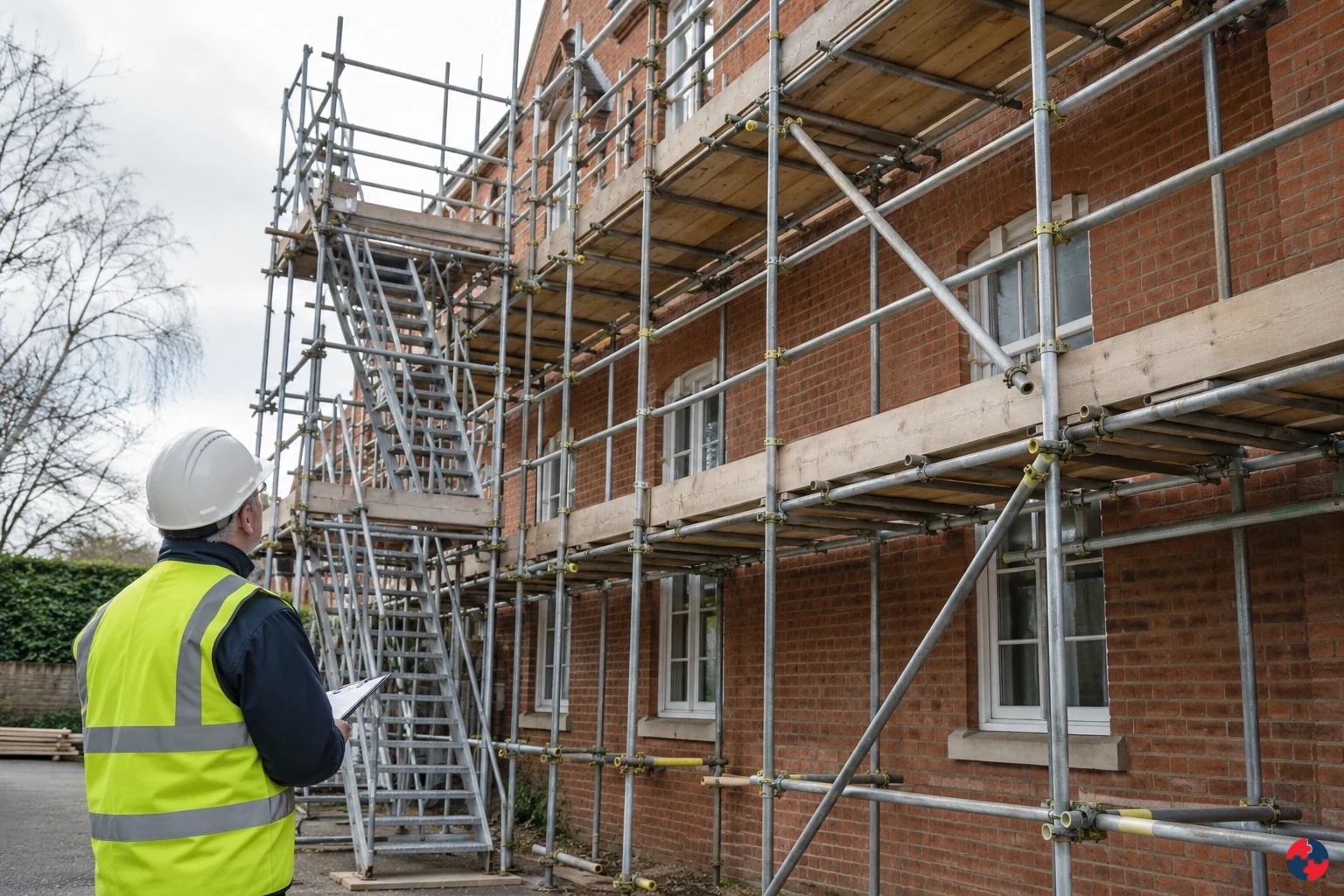

Unlock another resource
You have used this month’s two free downloads. Publish a post in your own words to unlock one more resource, or choose SHARE Individual for 10 downloads per month.
You decide whether to share. If you do, use the relevant platform disclosure tools and do not make claims you do not genuinely hold.